12 Stunning Kentucky Places Many Residents Live Their Whole Lives Without Ever Finding
Every state has places that are genuinely hard to get to. Kentucky has more than its share of them.
Some need a permit that you have to request in advance. Others sit at the end of a gravel road with no sign at all.
A few are only open on guided tours a handful of times a year. Weather closes a few of them seasonally.
None of this is a comment on your curiosity. It is a comment on geography, paperwork and gates.
Kentucky is a state of hollows, ridges and caves, which means things stay out of view by default. You can drive past an entrance for years without knowing what is behind it.
That is part of the appeal. The list ahead leans toward the places that ask something of you.
Bring a full tank of gas and a flexible schedule. The reward tends to match the effort.
1. Bad Branch State Nature Preserve
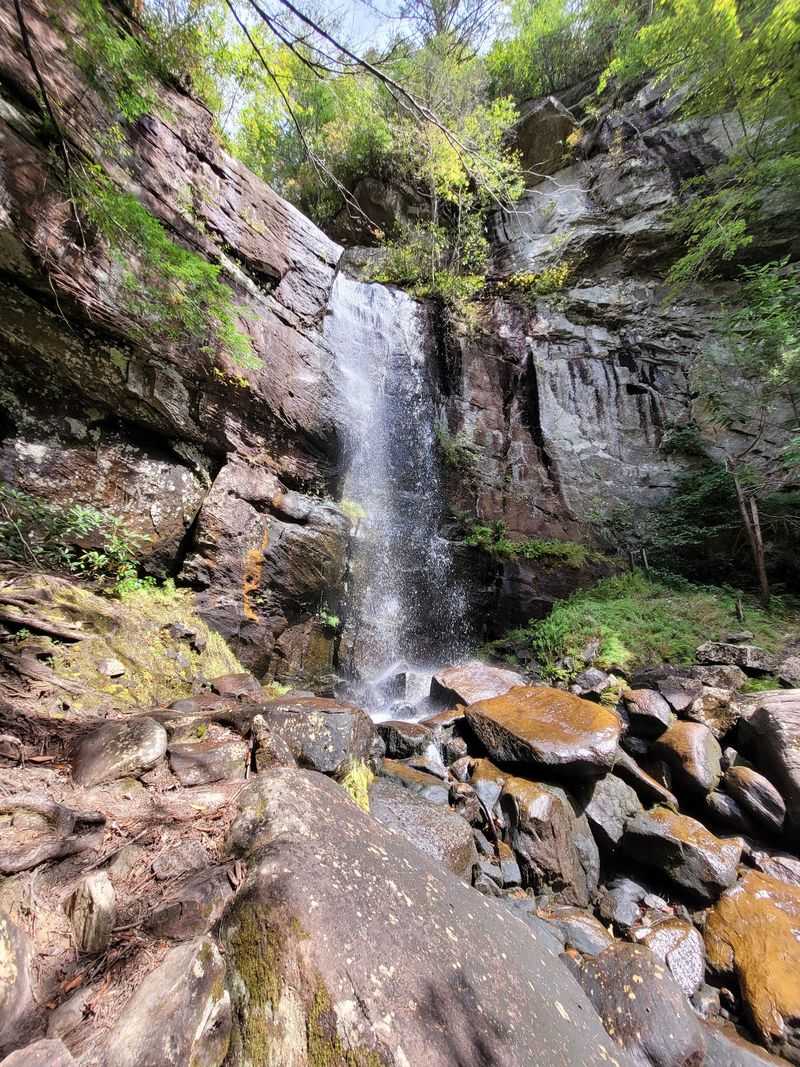
Your camera will work overtime here, and your shoes will earn their keep. Bad Branch State Nature Preserve sits on the flank of Pine Mountain near Eolia, reached by way of Highway 932 in Letcher County.
The draw is a roughly sixty-foot waterfall at the end of a rocky creekside hike of about a mile and a half each way.
The preserve protects one of the most biologically rich pockets in the state, with old growth forest, sandstone cliffs and rare plants that do not grow in many other places in Kentucky.
There is also a separate route up to High Rocks, where the view runs out across the Cumberland Plateau. Expect slick footing.
The trail crosses wet rock and tree roots, and mist off the creek keeps things damp long after the rain stops. Sturdy shoes with grip are not optional.
Spring gives you the loudest water, since the falls depend on runoff and can slow to a trickle in a dry August. Weekdays give you birdsong instead of conversation.
The drive in is long and curvy, so pack patience along with water. Remote is the whole point here.
2. Mantle Rock Preserve
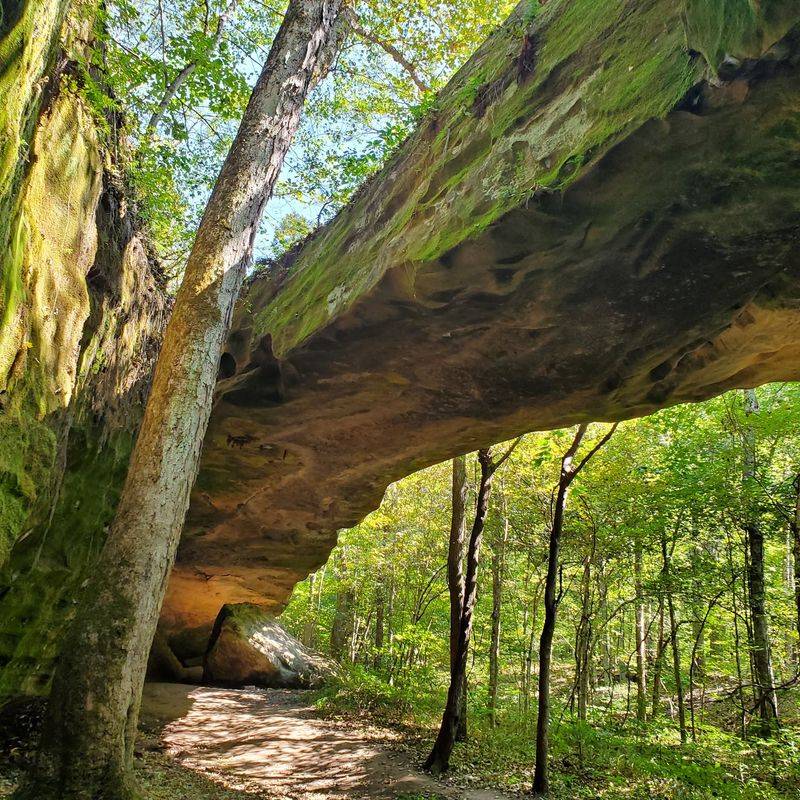
Western Kentucky has a reputation for being flat, and this place ruins it entirely. Mantle Rock Preserve sits in Livingston County near Joy, off Mantle Rock Road, on land The Nature Conservancy has protected since 1988.
The centerpiece is a natural sandstone bridge that spans 188 feet and rises about thirty feet, making it the largest freestanding arch east of the Mississippi River. That alone would justify the drive.
The history is heavier. The preserve is a certified site on the Trail of Tears National Historic Trail, and more than ten thousand Cherokee passed through this area during the brutal winter of 1838 and 1839, waiting for the Ohio River ice to clear.
Wayside exhibits along a retracement trail tell that story, developed with the National Park Service.
The National Park Service notes it is unlikely many people sheltered under the arch itself, since camps stretched for miles along the road.
Trail options run from about a mile to a loop near two and three quarter miles. Sandstone stays slippery after rain, so slow steps beat fast ones.
Bring water and look up often. The acoustics beneath that arch are genuinely strange.
3. Pilot Knob State Nature Preserve Trailhead
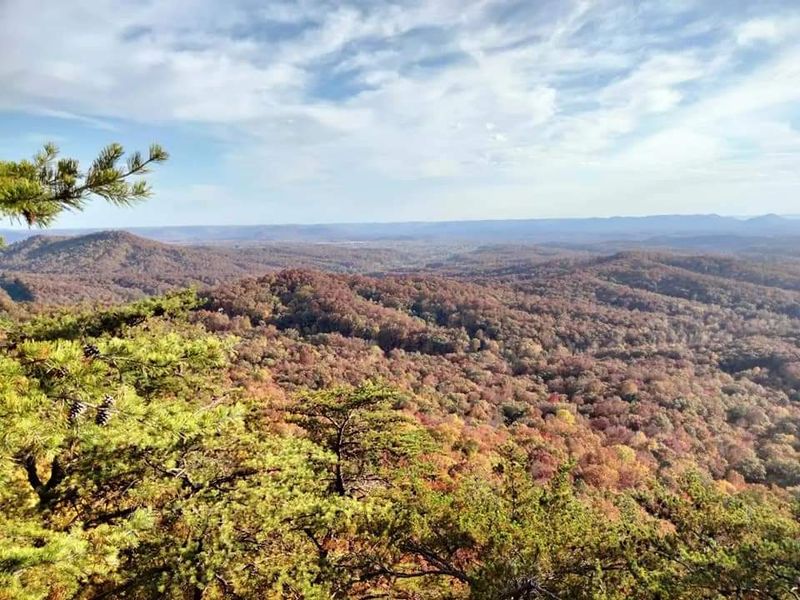
Some views make you stop mid-sentence, and this one is rude about it. Pilot Knob State Nature Preserve sits in Powell County, and the trailhead is at the end of Brush Creek Road near Clay City.
From the junction of the Mountain Parkway and KY 15, you follow KY 15 north a few miles and turn onto Brush Creek Road to reach a small gravel lot. Parking fits seven or eight cars, so early arrival helps.
The reason people come is the summit, widely held to be where Daniel Boone and John Finley first looked out over the Bluegrass in 1769.
From the sandstone outcrop known as Boone’s Overlook you can see the Bluegrass, the Knobs and the Cumberland Plateau at once.
Getting there costs you about a mile and a quarter one way with roughly seven hundred feet of gain, and Kentucky Nature Preserves rates it very strenuous. It is short, steep and steady.
There is also a Millstone Quarry trail of about a mile round trip. Leave the dog at home, since pets are not allowed.
There are no restrooms and camping is prohibited. Clear winter days give you the widest views.
4. Dupree Nature Preserve
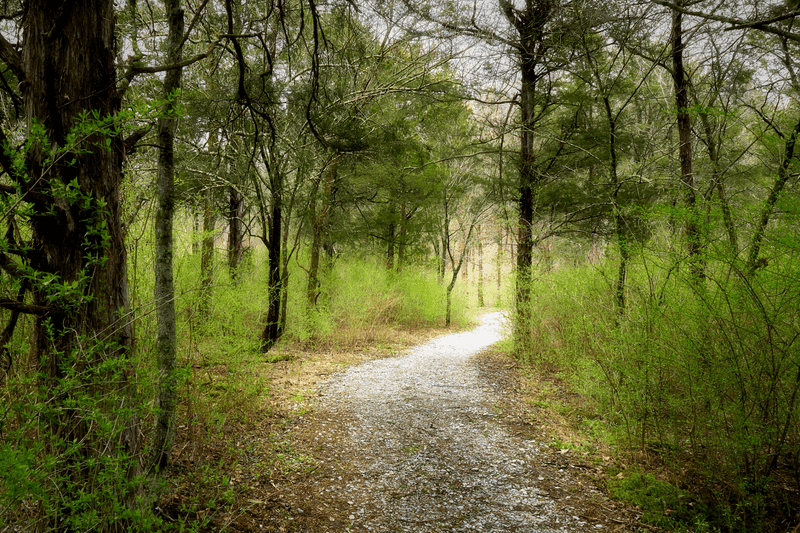
Birdsong runs this place, and the trees are content to play backup. Dupree Nature Preserve sits at 2991 Pollys Bend Road in Lancaster, in Garrard County, protecting three hundred acres in the Kentucky River Palisades.
The Nature Conservancy owns it, admission is free, and there are around five miles of trails plus roughly three miles of river frontage.
The forest here is some of the best upland woodland left in the Palisades region, with chinquapin oak, white ash, beech and the unusual yellowwood.
That combination makes it a strong birding stop, so bring binoculars if you own a pair. Do not mistake it for a stroll.
The Main Trail is gravel and gentle, but the River Trail takes you down toward the water and makes you earn every foot of it back. The Cliff Trail is steeper still.
There is also a Meditation Trail with a bench looking out over the river, which is exactly as pleasant as it sounds. Facilities are minimal, meaning a portable restroom at the trailhead.
Dogs are not permitted. Morning light is softer and the crowds are thin, since the preserve is not advertised much from the road.
5. Buckley Wildlife Sanctuary
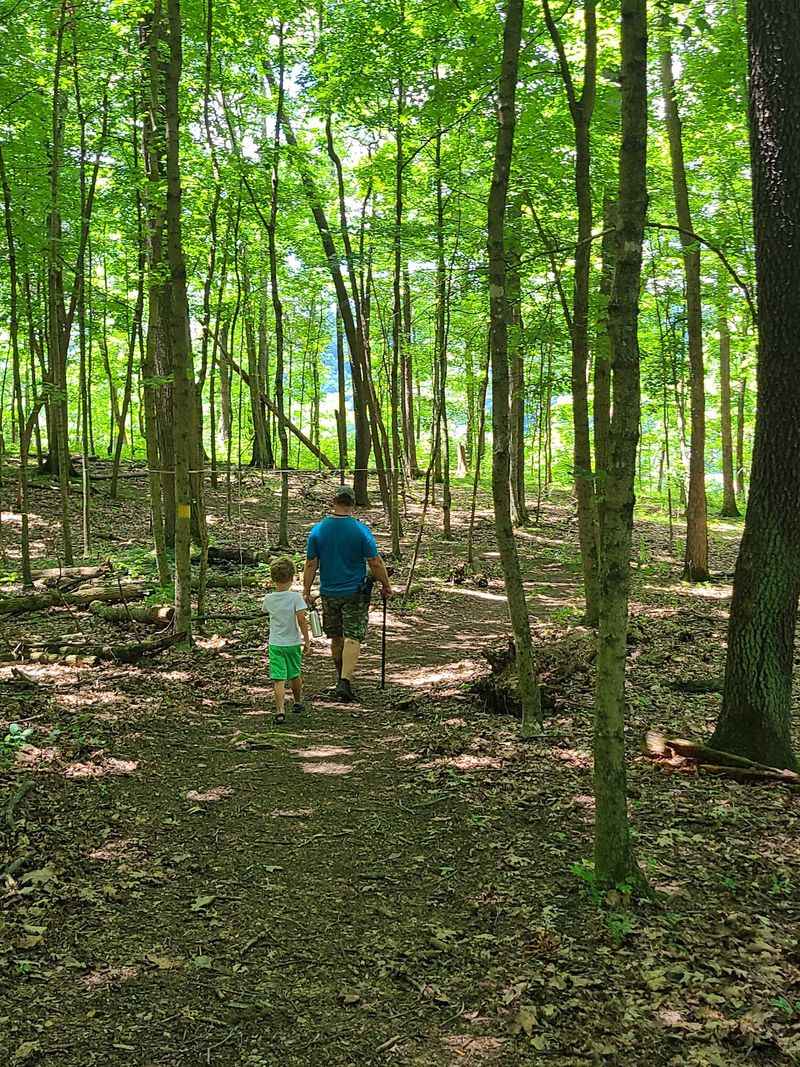
If your head feels loud, this place functions like a volume knob. Buckley Wildlife Sanctuary sits at 1305 Germany Road in Frankfort, spreading across more than 370 acres of woodland and meadow that border the Kentucky River.
Bluegrass Greensource manages it, and there are roughly six miles of trails plus a bird viewing blind, a pavilion and restrooms.
Entry has run eight dollars per car, paid on site, so bring a card or cash rather than assuming it is free. Hours shift seasonally, which makes a quick check worthwhile before you commit to the drive.
Frogs, insects and birds handle the soundtrack, and regular visitors report owls, woodpeckers and a long list of songbirds.
Sightings of larger wildlife are less reliable, so come for the sound rather than a guaranteed deer. The terrain is not flat, whatever the word sanctuary suggests.
This is palisades country, and the trails climb. The Red Trail is the friendliest for a relaxed pace.
Wear long socks and check yourself afterward, since ticks are a genuine and frequently mentioned nuisance here.
Bug spray earns its place from spring through early fall. Patience earns its place in every season.
6. Yahoo Falls Overlook
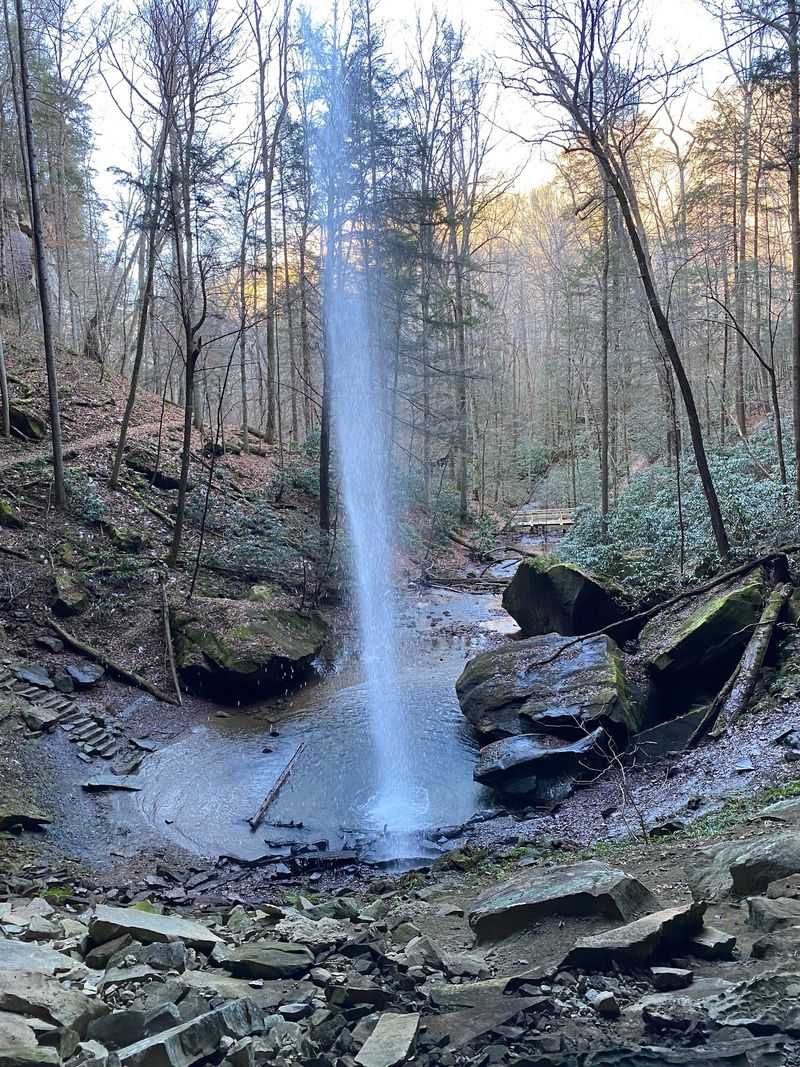
The name sounds like a joke, and then the scenery declines to laugh. Yahoo Falls Overlook sits on Yahoo Falls Road near Whitley City, inside the Big South Fork National River and Recreation Area in McCreary County.
This is Kentucky’s tallest waterfall, plunging 113 feet from a sandstone rim into a shallow pool. Cumberland Falls gets the fame and the moonbow, but Yahoo gets the height.
Two routes reach it.
The short loop runs about a mile with modest elevation and includes a steep set of steel stairs. The longer loop adds Yahoo Arch and Markers Arch and stretches nearer five miles with considerably more climbing.
Either way, the trail lets you pass behind the falls under one of the largest rock shelters in the region, which is the detail people remember. Timing matters more here than at most waterfalls.
Yahoo runs largely on rainfall and can thin to a trickle in a dry summer. Spring, or a day or two after real rain, gives you the version worth photographing.
Bring a light jacket in cooler months, because shaded air near the cliffs stays sharp. Pair it with nearby trails if you want a full day.
7. Creelsboro Natural Arch
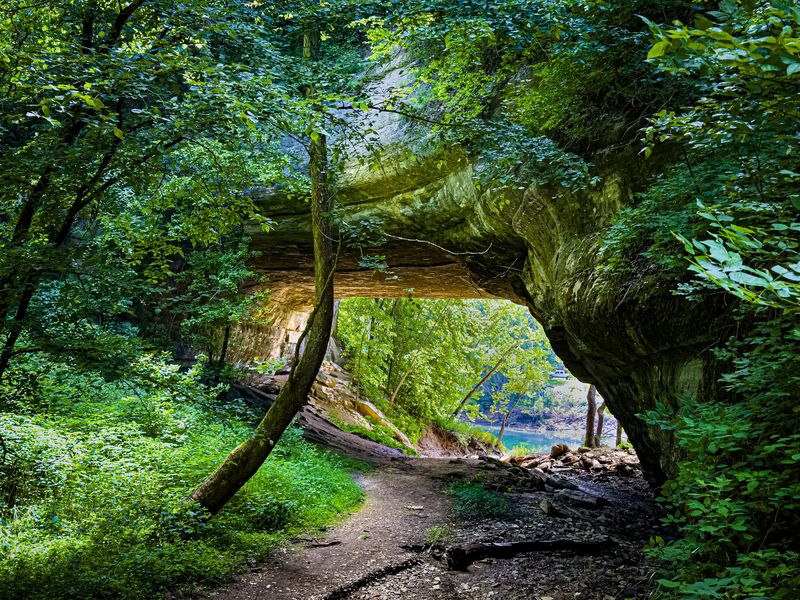
Rocks are not supposed to look this composed, and yet.
The Creelsboro Natural Arch, known locally as Rock House or the Rockhouse, sits in Russell County near the community of Creelsboro, off Highway 379 and about eleven miles downstream from Wolf Creek Dam.
Jamestown is the nearest town of any size. The National Park Service designated it a National Natural Landmark in 1987, and the geology is the reason.
This is a meander natural bridge, carved when the Cumberland River wore straight through a cliff on the outside of a sharp bend rather than going around it. Water took the shortcut, and the limestone obliged.
Worth knowing before you go: the arch remains privately owned, reached by a short walk from the highway, so treat the approach with the courtesy you would want on your own land.
Wear decent shoes, because the ground is uneven and you will be looking up rather than down. Bring curious company of any age, since the shape produces immediate questions and confident wrong answers.
Pack a snack and stay a while. The countryside around it is unusually quiet, even by rural Kentucky standards.
8. Chained Rock Trailhead
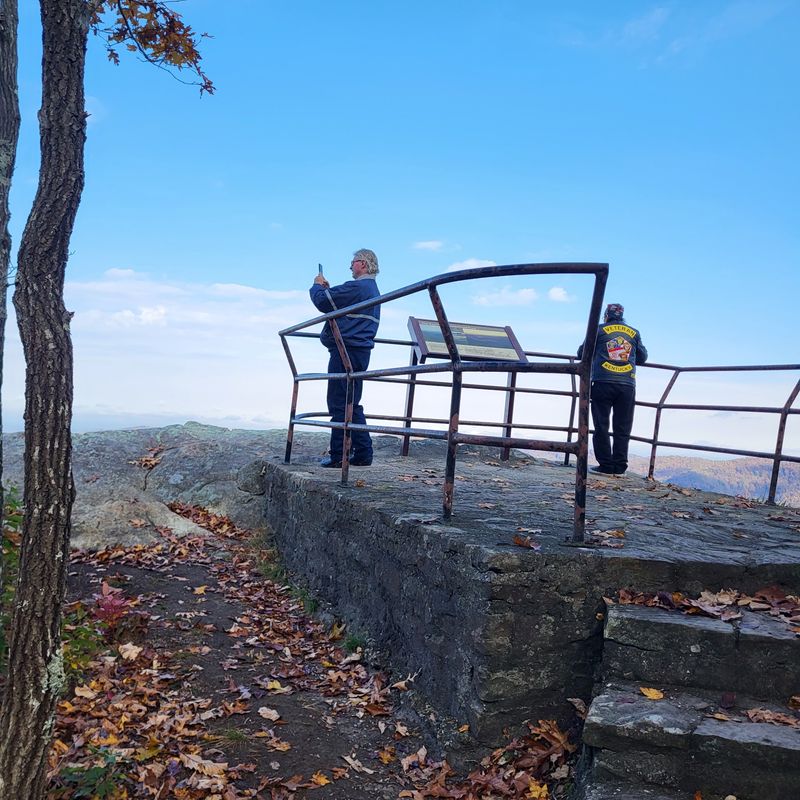
The story here is better than most roadside legends, mainly because it is true in reverse. For years, adults in Pineville told children the enormous boulder above town was held in place by a chain.
There was no chain.
In 1933, members of a newly formed Chained Rock Club decided to fix that, hauling a chain weighing well over a ton up Pine Mountain with mules and bolting it on so residents could see it from below. It is still there.
You reach the trailhead by way of Chained Rock Lookout Road in Pine Mountain State Resort Park, Kentucky’s first state park, in Bell County. Here is the part your legs will want to know.
You drive to the top, and the trail then descends by staircase toward the rock, running about nine tenths of a mile round trip.
The uphill arrives on the return, which surprises people who assumed the hard part was over. The overlook takes in Pineville and the Cumberland River valley below.
Clear days stack the ridgelines beautifully.
There is optional scrambling above the rock for a wider view, and it is steep, so mind your footing.
9. Wickliffe Mounds State Historic Site
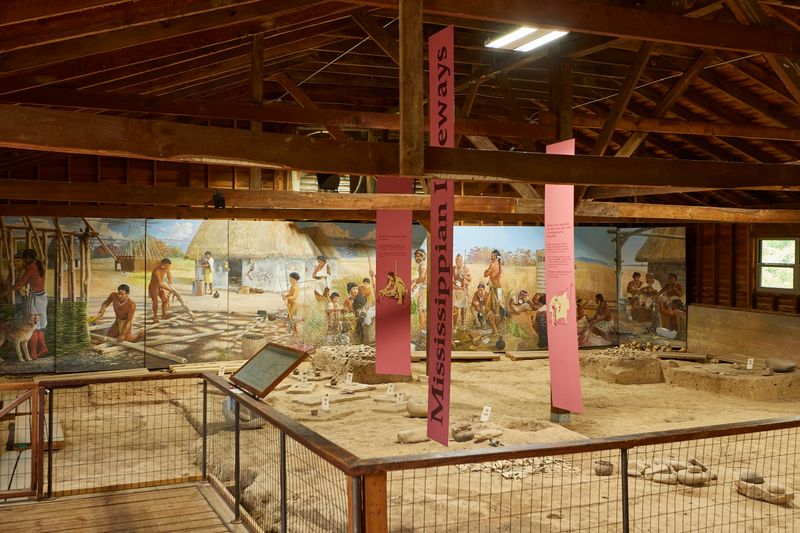
History lands differently when the ground itself is the exhibit. Wickliffe Mounds State Historic Site sits at 94 Green Street in Wickliffe, in Ballard County, near where the Ohio meets the Mississippi.
The site preserves earthen mounds and archaeological material from a Mississippian community that lived here centuries before European arrival, and the indoor displays do a good job of connecting artifacts to ordinary daily life rather than a list of dates.
Children tend to engage with the pottery and tools far more than expected. Check the calendar before you build a trip around it.
The site operates seasonally, running roughly April through mid-November, and it closes Mondays and Tuesdays.
Turning up on a Monday in February is a wasted drive, and that is the most common way visitors get burned here. Give yourself extra time outdoors once you are through the exhibits.
The mounds are much easier to comprehend at full scale than in a photograph, and standing beside one does the explaining for you.
You leave better informed than you arrived, which is a respectable outcome for a calm afternoon. Pair it with the river towns nearby.
10. Columbus Belmont State Park
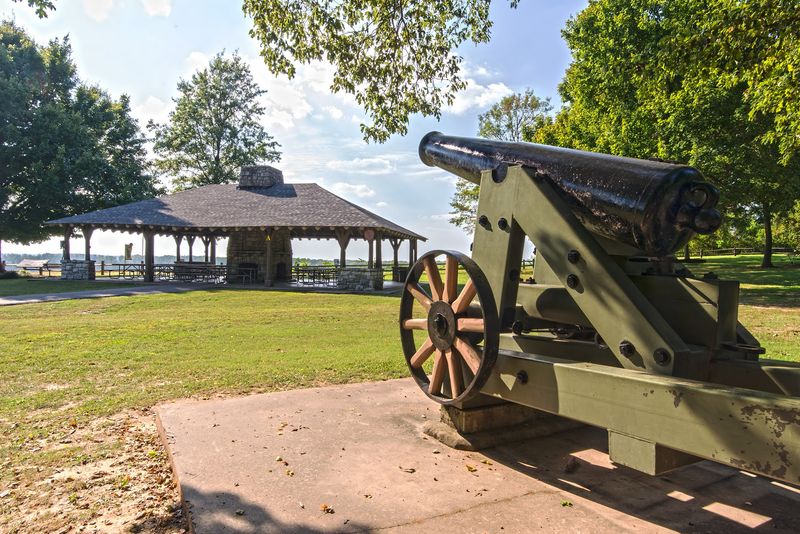
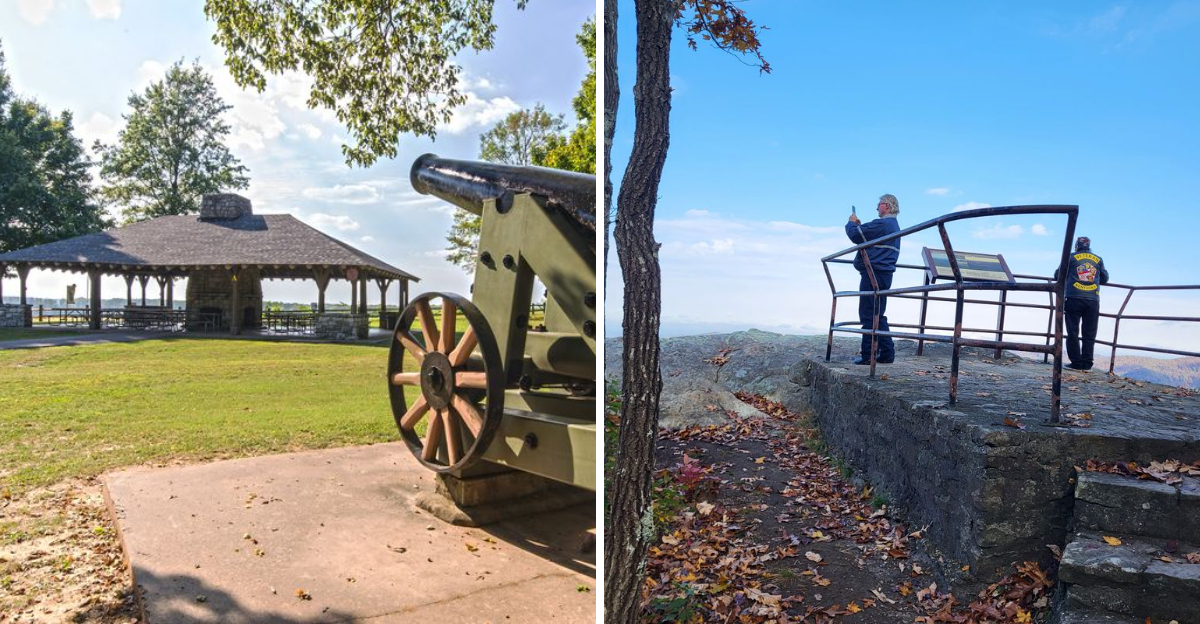
Big river views make even reserved people start describing the horizon out loud. Columbus Belmont State Park sits at 350 Park Road in Columbus, in Hickman County, on bluffs high above the Mississippi River.
The Civil War history is the anchor. Confederate forces fortified these heights early in the war and stretched an enormous iron chain across the river to stop Union gunboats from passing.
A surviving section of that chain and its anchor are on display in the park, and the scale of both is difficult to appreciate until you stand next to them. Earthworks remain visible on the grounds.
A museum housed in a period building fills in the rest, though hours vary by season, so confirm before counting on it. The rest of the park is refreshingly undemanding.
There are benches, open lawns and picnic space, which suits groups who want the view without committing to a hike. Sunset is the standout, since the Mississippi picks up color and keeps changing while you watch.
Bring a jacket, because the bluff catches wind that the parking lot does not. Let children run the lawns before you settle in.
11. Old Mulkey Meetinghouse State Historic Site
Old timber has a way of sounding louder than new construction.
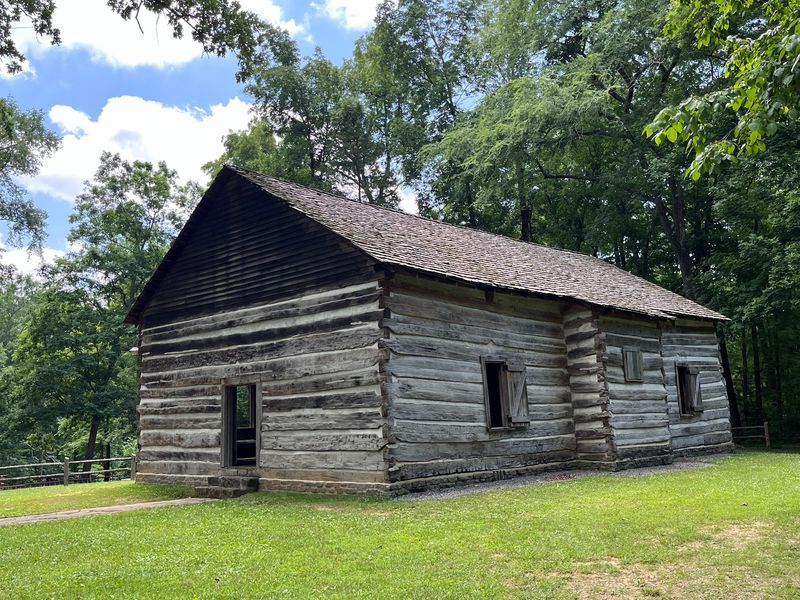
Old Mulkey Meetinghouse State Historic Site sits at 38 Old Mulkey Park Road in Tompkinsville, in Monroe County, and it preserves a log meetinghouse built in 1804 during a wave of religious revival.
It is the oldest freestanding log meetinghouse in Kentucky, and the design is the reason people photograph it. The building has twelve corners arranged in the shape of a cross and three doors.
Historians disagree about whether the corners represent the twelve apostles or the twelve tribes of Israel, and the three doors are read as the Trinity.
It began as the Mill Creek Baptist Church, founded by pioneer Baptists from the Carolinas. There is no fireplace, which tells you something about the congregation’s tolerance for winter.
The cemetery beside it is where the visit turns quiet. Revolutionary War soldiers are buried here, as is Hannah, sister of Daniel Boone.
A small museum and gift shop add context so the building reads as more than old logs. The twenty-acre grounds include a walking trail and picnic space.
Come on a mild day and take your time.
12. Elk & Bison Prairie
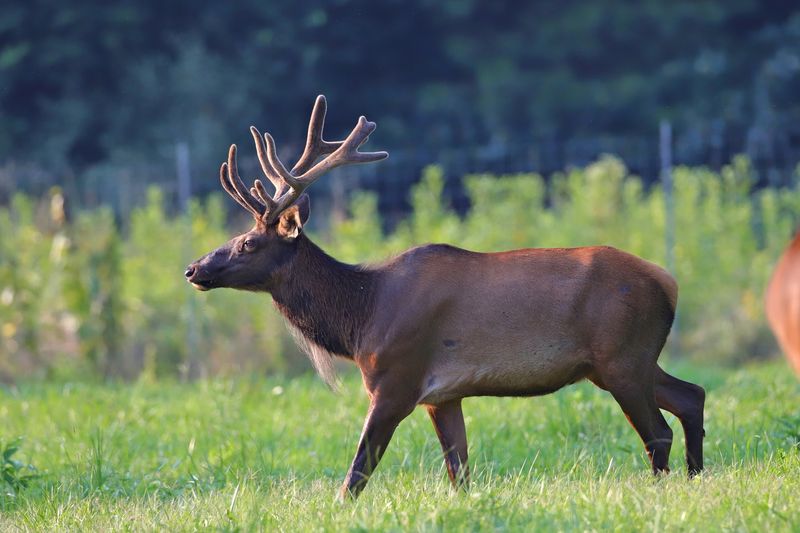
Few experiences beat watching enormous animals from the comfort of your own upholstery.
The Elk and Bison Prairie sits on Elk and Bison Prairie Road in Golden Pond, inside Land Between the Lakes National Recreation Area, just north of the Golden Pond Visitor Center off the Trace.
It is a 700-acre enclosure of restored native grassland, opened to the public in 1996, with a paved loop road running three and a half miles through it.
Entry has run five dollars per vehicle, purchased at the gate, and it is open every day from dawn to dusk. Go early or near evening, when the animals are most likely to be out in the open.
Midday in summer tends to be a lot of grass and very little wildlife. The rules exist for good reason.
Vehicles must be enclosed, meaning no motorcycles or bicycles, and you stay inside while elk or bison are in view.
Bison bulls turn aggressive during breeding season from July through September, so give them room and resist the urge for a better photograph.
Pull-offs with interpretive signs let you stop when nothing large is nearby. Bring patient eyes rather than a schedule.