This Ancient Kentucky Site Preserves A Native American City Few Travelers Know About
You learned about ancient cities in school and none of them were in Kentucky. Egypt got the pyramids.
Rome got the roads. Kentucky got a mention around the frontier chapter and that was about it.
That version leaves out several centuries. There was a real town in western Kentucky with houses, a plaza, and farmers who knew exactly what they were doing.
People lived there for roughly two hundred and fifty years. They shaped earth into flat-topped mounds and built their homes around an open center.
Archaeologists found something remarkable on one house floor. Someone had painted a symbol there in red and white, a cross inside a circle.
It meant a great deal to the people who made it.
The town sits on a bluff near where two enormous rivers meet. You have almost certainly crossed one of them.
Now you have a reason to stop.
A Thousand-Year-Old City Above The Mississippi
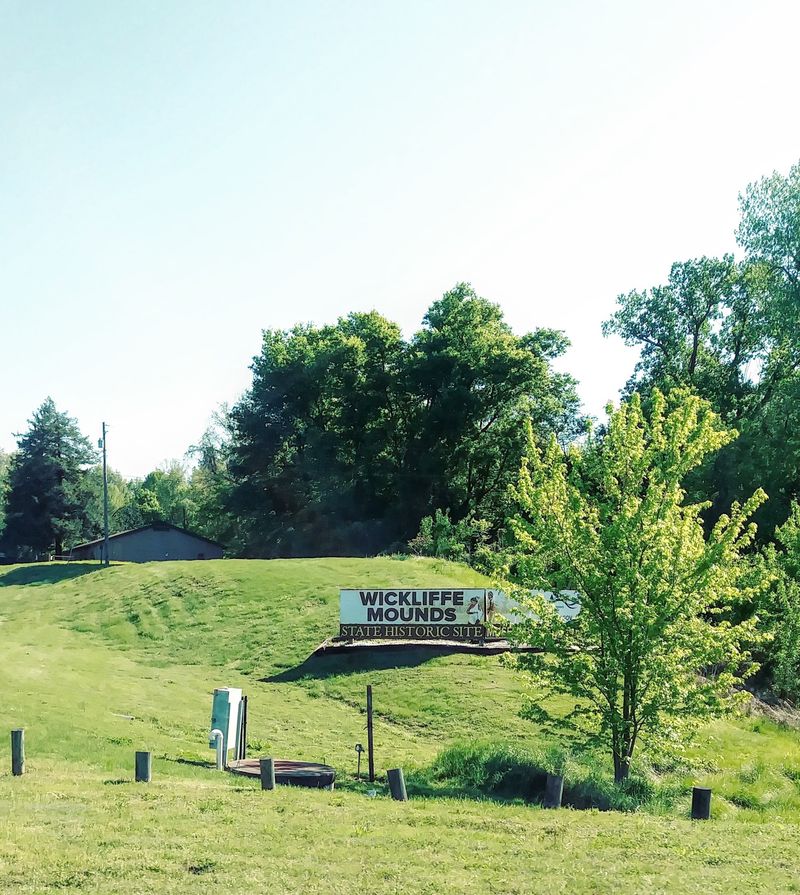
Wickliffe Mounds State Historic Site sits on a bluff where a Mississippian village once buzzed with daily life. People lived here roughly between 1000 CE and 1350 CE.
The population likely reached into the hundreds at its peak. That may sound small today, but it was a real town with leadership and structure.
Families built permanent houses around a central plaza. The village served as a ceremonial and administrative center for a Mississippian chiefdom.
The bluff location was no accident. Rivers meant travel, trade, food, and fresh water within easy reach.
Standing up there, the view stretches wide and open. You get a sense of why people chose this exact spot.
The site opened to the public back in 1932. It later shifted from a private roadside attraction into a serious research center.
In 2004, Kentucky State Parks took it over as a state historic site. It also carries National Register of Historic Places status.
Plan for about an hour if you move at a normal pace. History fans often stretch that much longer without noticing.
You will find it at 94 Green St, Wickliffe, Kentucky.
Meet Kentucky’s First Serious Farmers
Corn built this city. Maize was the main staple crop for the Mississippian people who lived on this bluff.
They also grew squash, hunted game, and fished the nearby waters. Their diet was varied and surprisingly well planned.
Homes were made using wattle and daub, a mix of woven branches and packed clay. These were permanent structures, not temporary shelters.
Society here followed a clear order. A hereditary chief led the community, and leadership passed through family lines.
Trade reached far beyond Kentucky. Goods and ideas moved between distant societies across the region.
Understanding that changes how the mounds look. You stop seeing dirt hills and start seeing city planning.
Museum exhibits explain all of it in plain language. Reviewers consistently mention how easy the information is to follow.
Kids tend to grab onto the food details fastest. Corn, squash, fishing, and cooking feel familiar even across a thousand years.
Take your time reading the panels near the artwork. Small details about tools and daily chores stick with you.
The story here is about ordinary life, not just ceremony. That makes it far more relatable than most ancient history lessons.
Mounds With Very Different Jobs
Not every mound here did the same work. The site includes two large platform mounds plus at least eight smaller ones scattered around the plaza.
Mound A is the Ceremonial Mound, and it is the biggest on the property. Its flat top once supported important structures.
Other mounds served residential purposes. Leaders lived on raised ground, literally above everyone else.
Mound C functioned as a cemetery. Treat that area with the quiet respect it deserves.
The central plaza tied everything together. Think of it as the town square where gatherings happened.
Walking the layout helps the whole thing click. Signs mark each mound so you never feel lost.
Visitors are allowed to walk the grounds and the mounds freely. That access is rare at archaeological sites.
The Ceremonial Mound gives you the best bluff view on site. Bring a camera and give yourself a few minutes up there.
Some guests expect towering pyramids and feel the mounds look modest. Remember these were built by hand, basket by basket, without wheels or metal tools.
Once that sinks in, modest is not the word you will use.
Pottery, Points, And A Painted Sun Circle
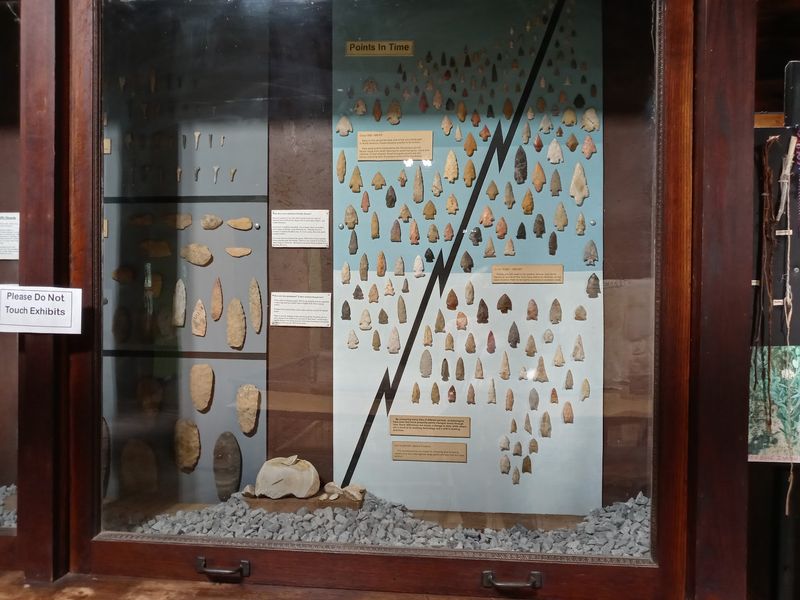
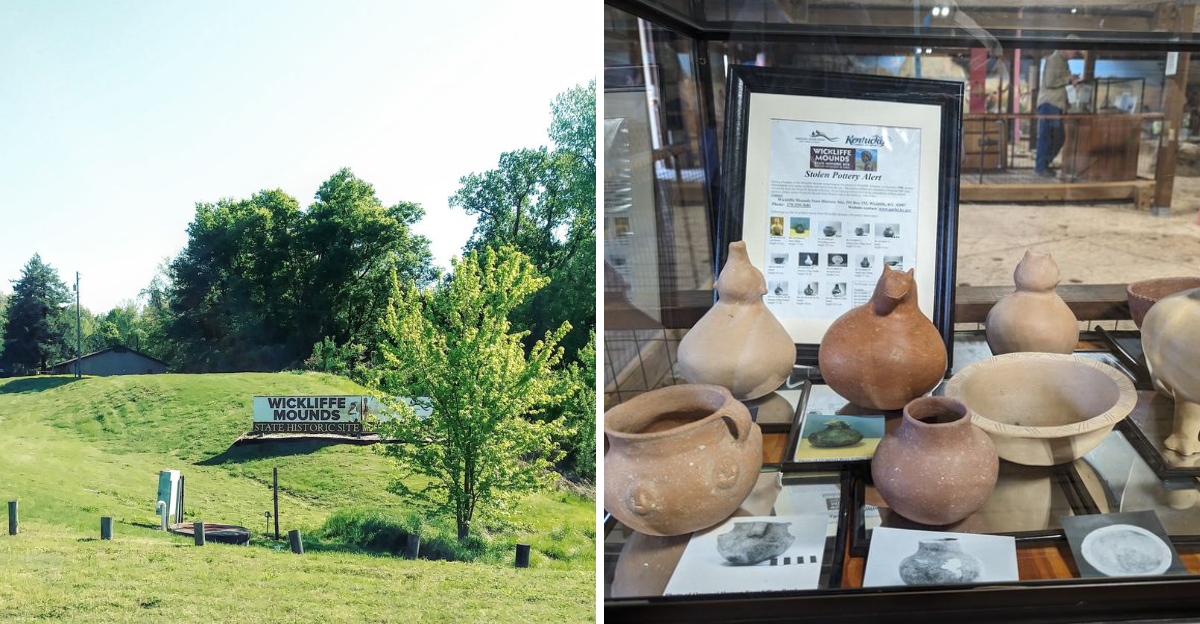
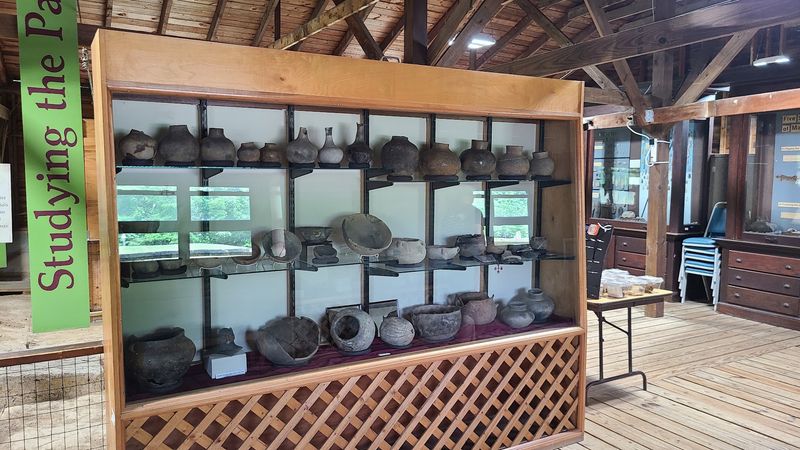
The artifact collection is the surprise star. Decades of excavation produced an outstanding assortment of pottery from this single site.
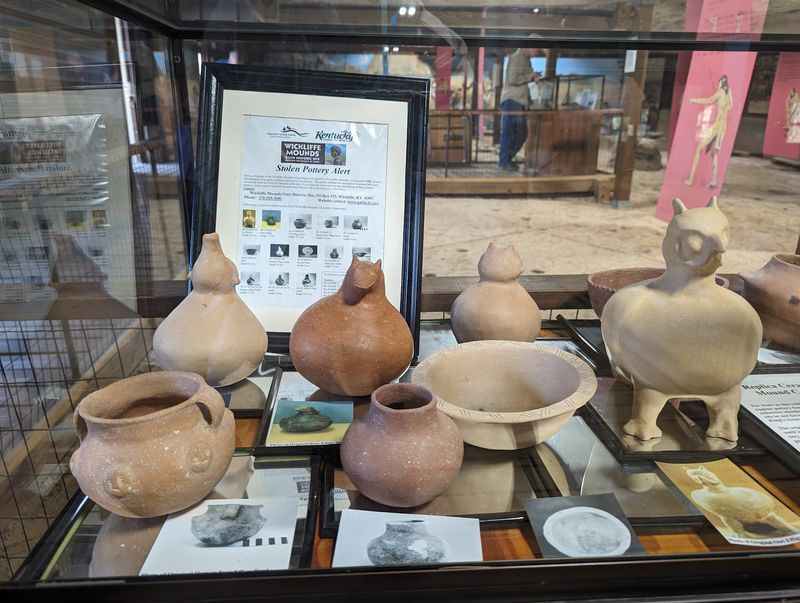
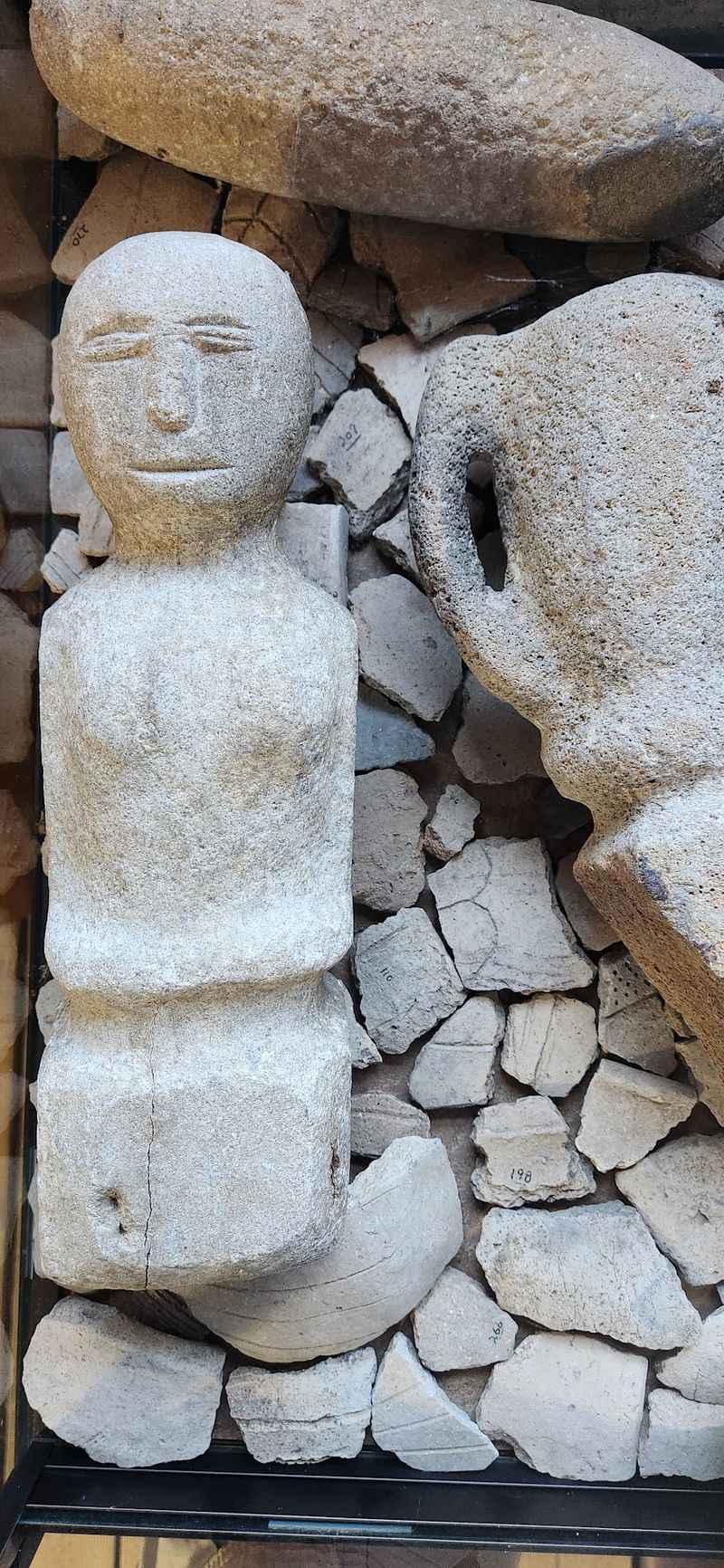
Rare painted and incised sherds sit alongside effigy vessels shaped like animals and figures. Some pieces show real artistry, not just function.
Stone tools fill other cases, including projectile points. Bone and shell implements show how resourceful these makers were.
One find stands out above the rest. Inside a house floor, archaeologists documented a red and white symbol known as the Sun Circle.
The design combines meanings tied to cardinal directions, the earth’s circle, sacred fire, and the sun. Four ideas packed into one clay drawing.
Details like that turn a museum stop into something memorable. You are looking at a belief system, not just decoration.
Audio-guided exhibits walk you through the highlights. You can move at whatever pace suits you.
Guests regularly say the sheer number of artifacts caught them off guard. For a small-town site, the collection punches well above its weight.
Give yourself extra time in the pottery section. The shapes and patterns reward slow looking more than a quick glance.
A Museum Built Right Over A Dig
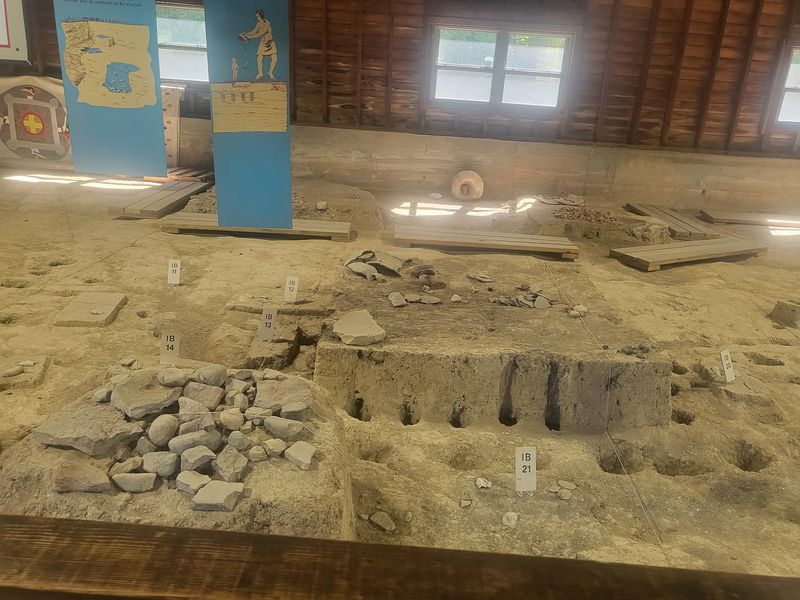
The building itself is part of the exhibit. The museum sits directly over an excavated mound, which almost never happens.
You look down into the dig instead of reading about it secondhand. Post holes and other archaeological features are visible below.
Those post holes marked where house walls once stood. Suddenly floor plans from a thousand years ago feel real.
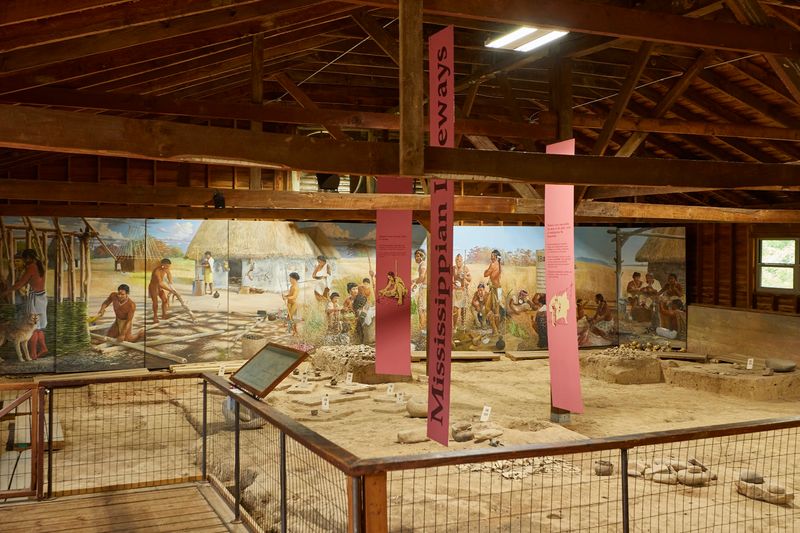
A large mural covers the village and daily activities in bright detail. It gives faces and motion to the artifacts nearby.
Displays cover Mississippian pottery, stone tools, and art. Everything on view came from this ground.
Exhibits also include artificial infant graves used for education. Those replicas replaced original remains, which is a story worth knowing.
The excavation exhibit is the most talked-about feature among visitors. It shows up in reviews again and again.
The museum does not have air conditioning, so dress smart in summer. Light clothing and water make the visit much more comfortable.
From Roadside Attraction To Respectful History
Back in the 1930s, this place had a very different name. It was marketed to travelers as the Ancient Buried City.
Early displays included excavated human remains on public view. Standards were different then, and the approach was closer to spectacle than scholarship.
Modern practice changed that completely. Those remains were reinterred, returning them to the ground with dignity.
Artificial skeletons now stand in for original burials in educational displays. Visitors still learn, without anyone being put on show.
Kentucky State Parks manages the site today with preservation and interpretation as the goals. Research replaced roadside marketing.
Murray State University conducted scientific archaeological work here. That research shaped much of what the exhibits explain.
Guests often describe the reburial story as genuinely moving. It shows history being corrected rather than hidden.
Staff will happily walk you through the timeline if you ask. Friendly and knowledgeable service comes up constantly in visitor comments.
Learning how a site changed its own ways adds real weight to the visit. That honesty is part of what makes this stop worth your time.
Short Trails That Pack A Lot In
Comfortable shoes are all you need here. The Woods Walk Trail is an easy loop measuring just 0.2 miles.
Interpretive signs along the way point out local plants and wildlife. It works well for kids and anyone who wants a gentle stroll.
A separate Archaeology Trail uses numbered posts. Each marker shows where past excavations took place.
Following those numbers turns the lawn into a map. You start noticing patterns you would otherwise miss.
Paths lead to the ceremonial, chief’s, and burial mounds. Everything connects without much walking between stops.
The climb to the top of the Ceremonial Mound is short. Your reward is a wide view across the bluff.
Picnic areas sit on the grounds, including a covered spot with tables. Packing lunch makes the visit feel unhurried.
The wooded section gets shady and atmospheric, which some visitors find delightfully eerie. Others just enjoy the cool break from open sun.
Because the tour is self-guided, you set the pace entirely. Spend twenty minutes or two hours, whatever the day allows.
Spring visitors often have the grounds nearly to themselves.
Birds, Gift Shop Finds, And Ongoing Discovery
Bring binoculars if you have them. The bluff and trails offer solid birdwatching throughout the year.
A Pileated Woodpecker might announce itself before you spot it. Great Blue Herons glide past thanks to the river nearby.
Cattle Egrets, Killdeer, and Red-winged Blackbirds round out the regular cast. Quiet mornings tend to be the most rewarding.
The welcome center handles the practical side of things. Restrooms, cold drinks, snacks, and Kentucky souvenirs are all available.
Shoppers often leave with more than they planned. The gift shop stocks something for nearly every age group.
Research here has not stopped. The site continues to provide archaeological opportunities for students and researchers.
That means future digs could reveal more mounds and more artifacts. The story is still being written underground.
The park also sits along the Great River Road National Scenic Byway. It serves as an interpretive center on the Lewis and Clark National Historic Trail route.
Special events pop up during the year, including Archaeology Day each September. Checking the parks website before you go is a smart move.