This Spooky Louisiana Museum Is Filled With Strange And Macabre Displays
A tiny museum can leave a huge impression when every object seems to carry a story.
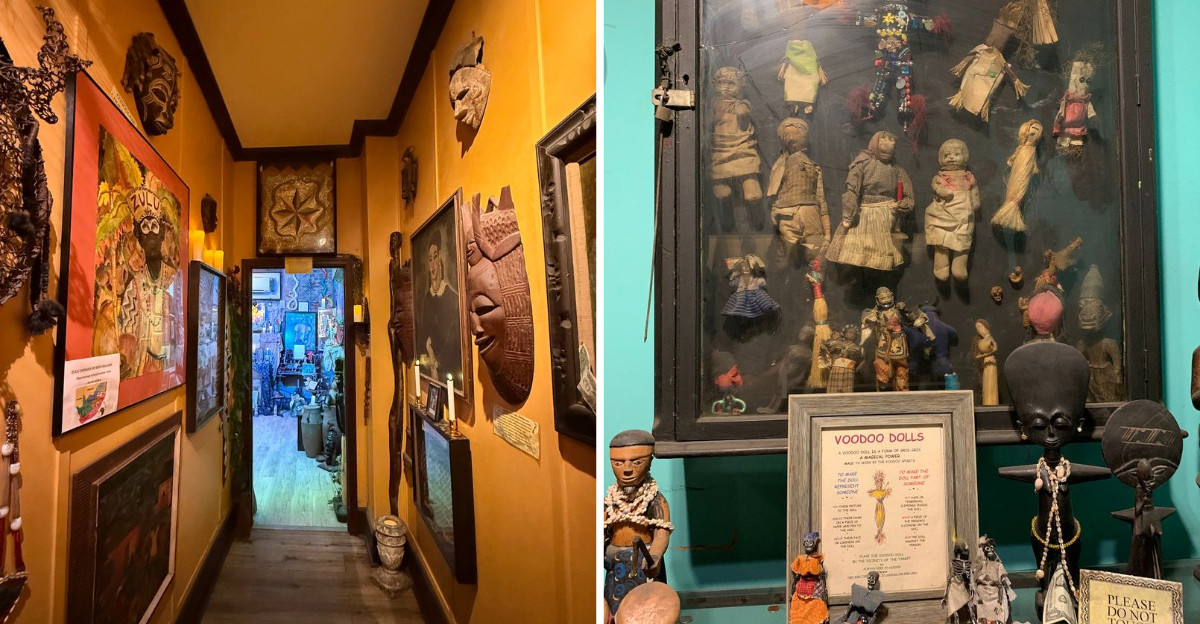
In Louisiana, this French Quarter collection explores spiritual traditions through ritual masks, gris-gris bags, dolls, snake skins, and other unusual artifacts.
The rooms are compact, so the details stay close.
Labels and displays add context to practices often flattened into stereotypes, giving the collection more depth than spectacle.
Curiosity pays off here!
Give yourself time to read instead of rushing through. The objects become far more interesting once their histories begin connecting.
For anyone drawn to folklore, belief, ritual, and unusual museums, this compact stop offers plenty to think about after the door closes behind you.
An Artist’s Dream Opens In 1972
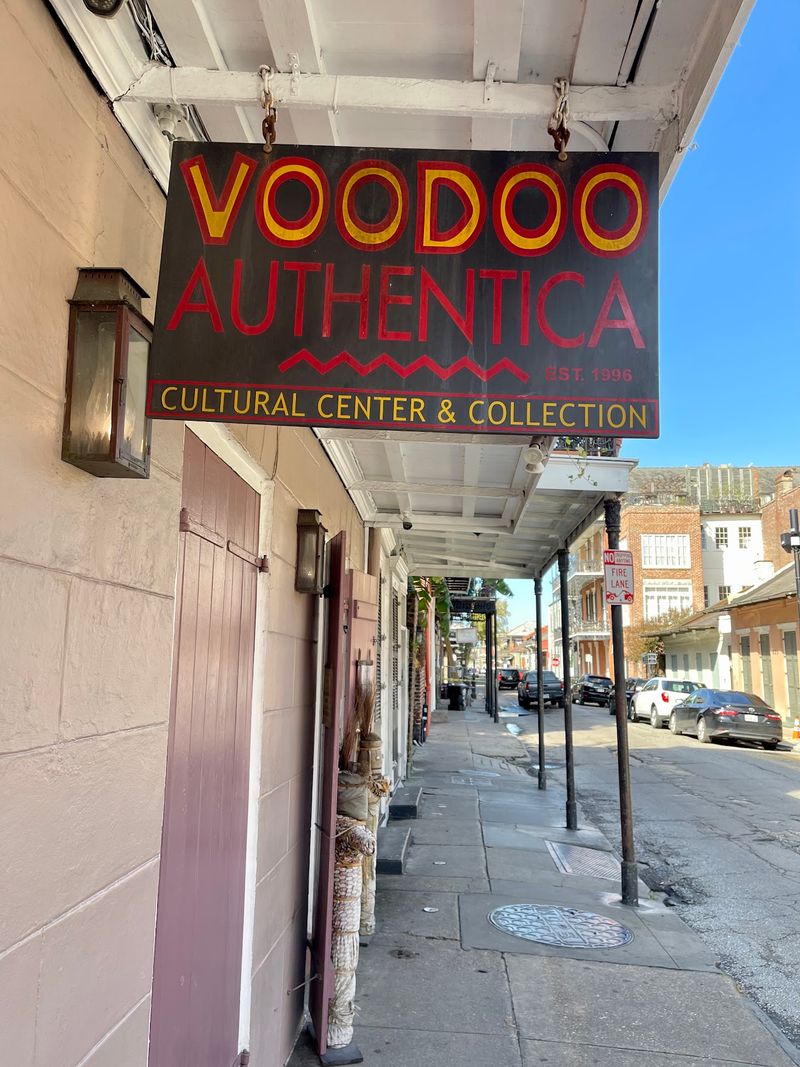
Back in 1972, a local artist named Charles Massicot Gandolfo turned a small French Quarter building into something nobody else had built.
Known around town as Voodoo Charlie, he painted swamps, culture, and spiritual scenes across Louisiana.
The museum developed as a place to collect, preserve, and explain New Orleans Voodoo history, folklore, art, and ritual traditions for curious visitors.
The New Orleans Historic Voodoo Museum grew from that idea, one artifact at a time. Rather than build a polished gallery, he filled the rooms with objects that felt used, loved, and meaningful.
His younger brother took over the museum in 2005 and continued its preservation work until his death in 2017. Later reporting identifies their younger sister, Suzette Gandolfo, as the family member carrying the museum forward.
I noticed right away how personal everything feels. Nothing looks mass produced or focus grouped.
The building itself is unassuming, easy to stroll past if you are busy studying balconies overhead. Slow down and look for the address, because that is exactly the point of this hidden doorway.
You will find it at 724 Dumaine St in New Orleans, sitting quietly among shops and old townhouses.
Roots That Crossed An Ocean
The roots of Louisiana Voodoo reached colonial Louisiana with enslaved West Africans, whose religious traditions interacted with Roman Catholic practices and later received additional influence from Haitian migrants.
Reading those panels slowed my pace considerably. History has weight, and this history has plenty.
West African religious traditions interacted with Catholicism, Creole culture, and later Haitian influences in New Orleans, helping Louisiana Voodoo develop its own recognizable forms and practices.
Displays trace that transformation with clear, readable text. You learn how healing, community, ancestors, and nature sit at the center of the faith.
What surprised me most was the resilience woven into every explanation. People kept their practices alive quietly, blending saints and spirits so worship could continue without punishment.
Voodoo became one strand of New Orleans’ broader cultural history, particularly through spiritual practice, music, ritual, community gatherings, and traditions associated with places such as Congo Square.
By the time I reached the hallway, the artifacts made far more sense. Context turns curiosities into evidence of survival. Give yourself time to actually read here instead of snapping quick photos.
Two Rooms, Endless Shadows
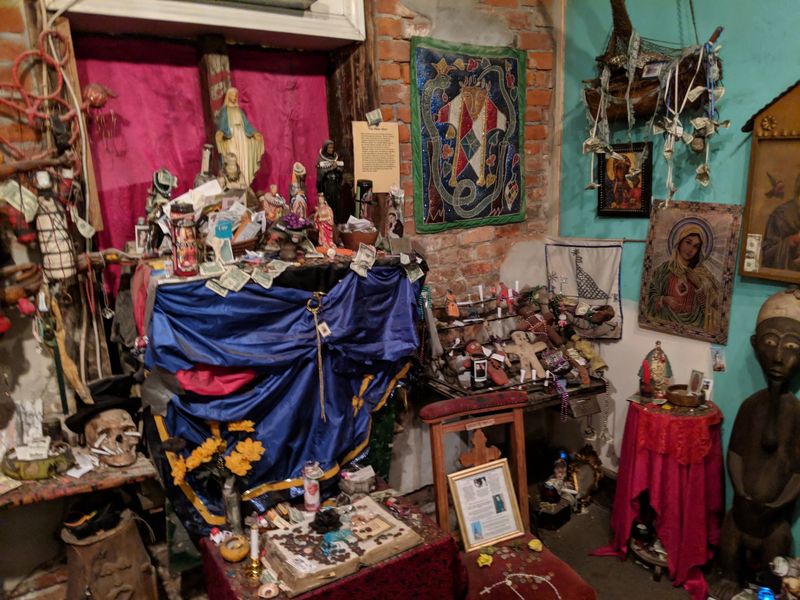
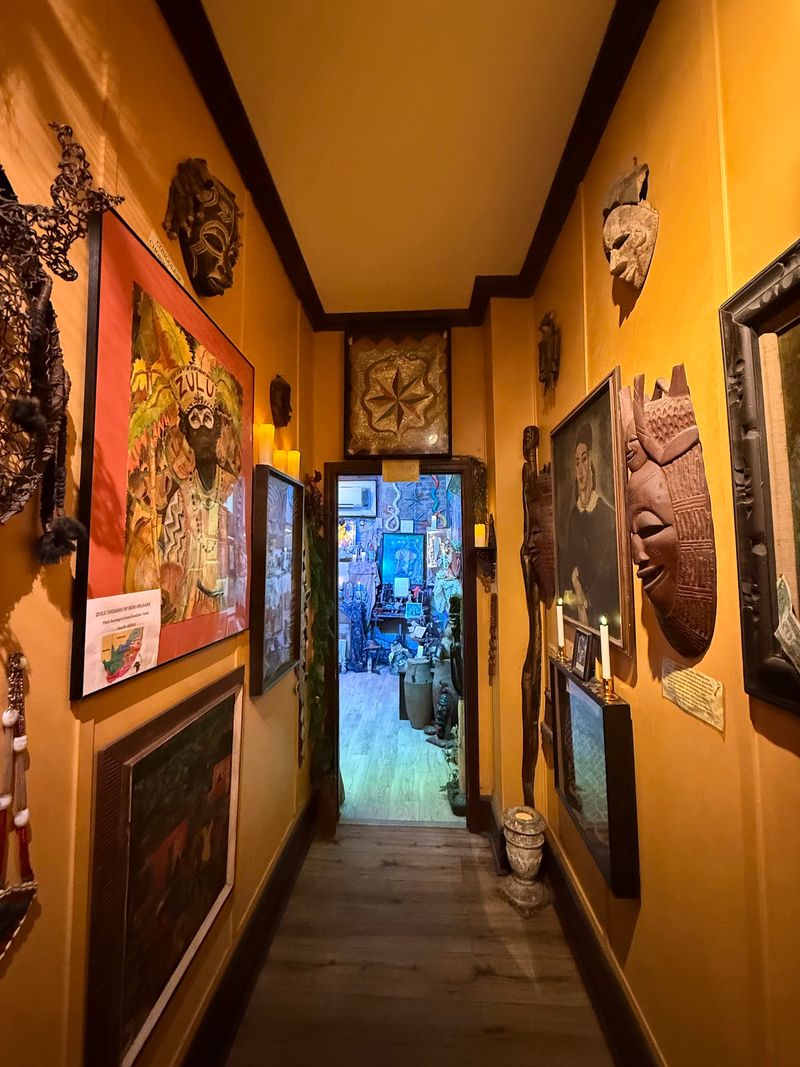
Small does not mean forgettable. The whole place is essentially two rooms joined by a narrow hallway, plus a lobby and shop.
Every inch is used. Objects sit stacked, hung, propped, and tucked into corners.
The museum is known for its dim, densely arranged rooms, where altars, artwork, photographs, and other objects create a markedly different atmosphere from a conventional gallery.
The effect feels less like a gallery and more like a working altar space someone actually tends. I found myself lowering my voice without deciding to.
Because the rooms are snug, movement can get tricky when several visitors stop at once. Taller guests and larger groups should expect some polite shuffling.
The museum is compact, but visit length varies considerably depending on how much time you spend reading and studying the densely arranged displays.
Honestly, the tight quarters add to the mood. Nothing feels sanitized or held at arm’s length behind velvet ropes.
Of all the odd little attractions I have visited across Louisiana, few create atmosphere this quickly. Two rooms, and yet the memory occupies far more space than that afterward.
Masks, Drums And Serpent Skins
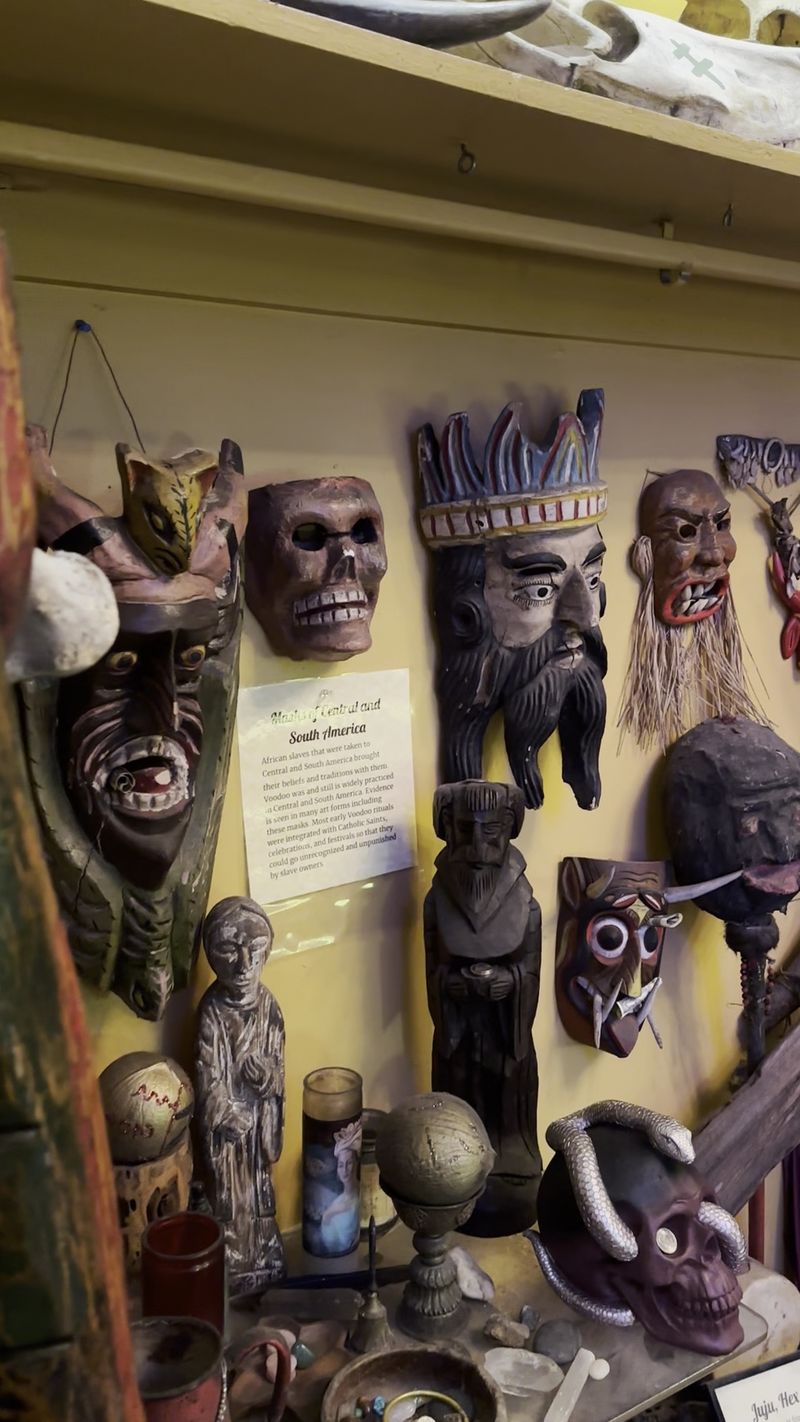
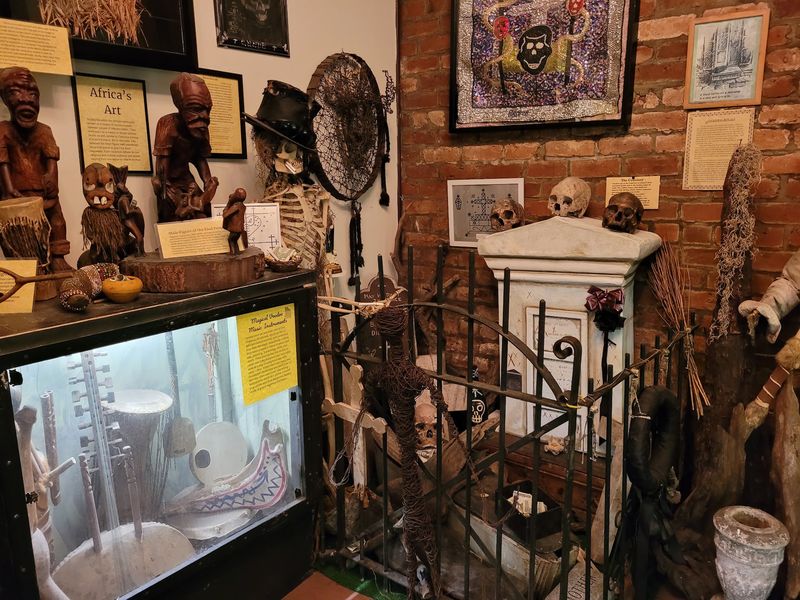
Masks, folk-art pieces, altars, sculptures, and other ceremonial or spiritual objects fill the collection, with items reflecting several cultural traditions connected to the museum’s interpretation of Voodoo.
Snake skins appear too, stretched and preserved. Serpents carry deep symbolic meaning in Voodoo belief, tied to spiritual power and connection.
Gris-gris bags appear among the museum’s best-known objects, representing charms that can be prepared for intentions ranging from protection and luck to love or success. Altars also hold candles, coins, notes, and other offerings left over time.
Taxidermy, talismans, wishing stumps, and objects known as killer sticks add to the eclectic collection, though interpretation is not provided through detailed labels for every individual object.
What I appreciated most was the honesty. Nothing is presented as a cheap thrill, even when the display looks genuinely eerie.
Take a moment with the altar in the back room. People still leave offerings there, which means the space remains active rather than frozen in time.
Photography is currently permitted according to the museum’s booking information, though visitors should still treat active altars and devotional objects respectfully.
Marie Laveau’s Lasting Influence
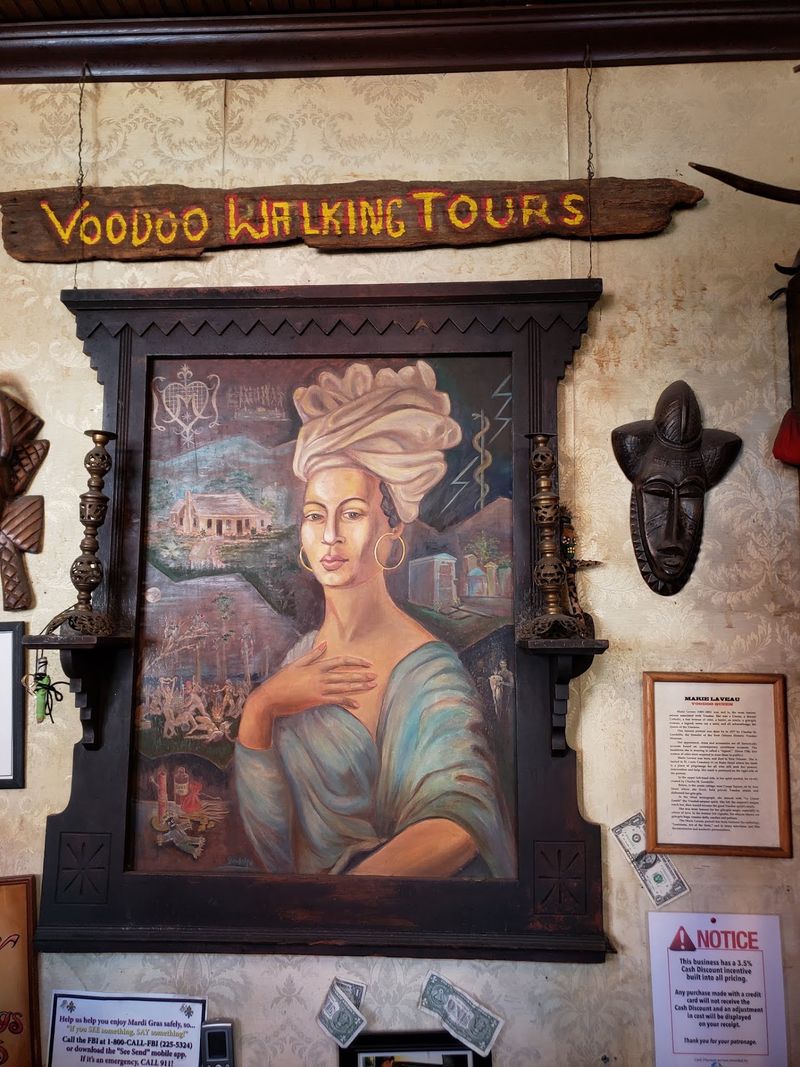
One name dominates New Orleans Voodoo history, and the museum gives her plenty of room.
Marie Laveau, born in New Orleans in 1801 according to archival research, was a free woman of color who became the city’s most celebrated Voodoo Queen.
She worked as a healer and spiritual leader. She also held real influence in a society built on rigid racial divisions.
Her reputation grew through consultations, ceremonies, healing work, gris-gris, and a wide network of community relationships. Despite later legends about great wealth, historical research indicates that she lived relatively modestly.
Displays separate documented facts from folklore, which I found refreshing. Both versions are interesting, but knowing the difference matters.
One notable artifact is a wooden kneeling board traditionally said to have belonged to Marie Laveau, although that provenance remains part of museum legend rather than firmly documented history.
Visitors often leave small tokens nearby as a sign of respect. The gesture continues traditions that stretch back generations.
The museum currently offers a two-hour Voodoo walking tour that includes Congo Square and the site of Marie Laveau’s house, with advance booking recommended.
The Truth About Voodoo Dolls
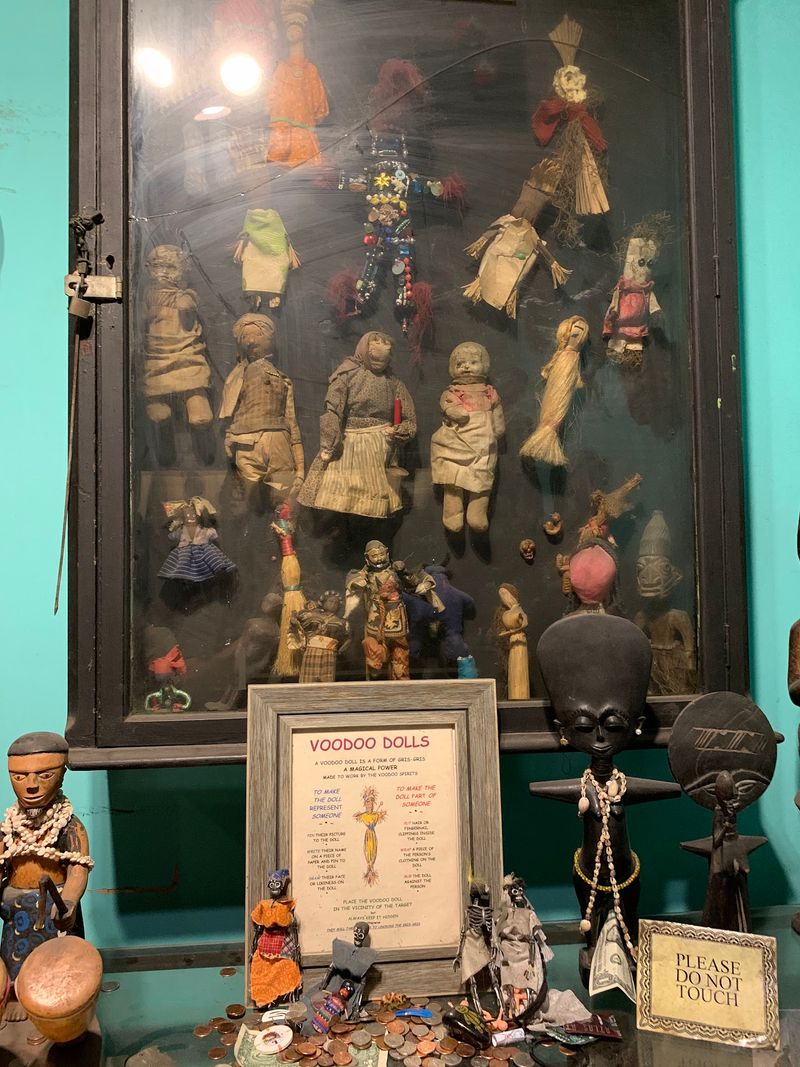
Movies helped popularize the image of a pin-stuck Voodoo doll used to harm an enemy, but that stereotype is not a central traditional feature of Louisiana Voodoo.
Dolls and effigies can serve as symbolic tools for spiritual intention, and some contemporary practitioners use pins or attached objects to focus attention on healing, blessing, protection, or another specific purpose.
Some spiritual traditions incorporate personal items or symbolic materials into an effigy to connect it with a particular person or intention.
Dolls appear within the museum and its current shop, where handcrafted New Orleans-style versions are sold for intentions including blessing, protection, happiness, and good luck.
Standing there, I thought about how quickly entertainment rewrites entire belief systems. One horror film scene can erase centuries of context.
The collection provides broader context for Voodoo beliefs and practices, though individual artifacts are not always accompanied by extensive explanatory labels.
Kids often find this section fascinating, though the dim lighting and taxidermy nearby can spook younger visitors. Use your judgment about age and sensitivity.
The gift shop sells handcrafted dolls if you want a souvenir with real meaning attached. Buy one and you will actually understand what you are carrying home.
Paintings, Flags And Folk Art
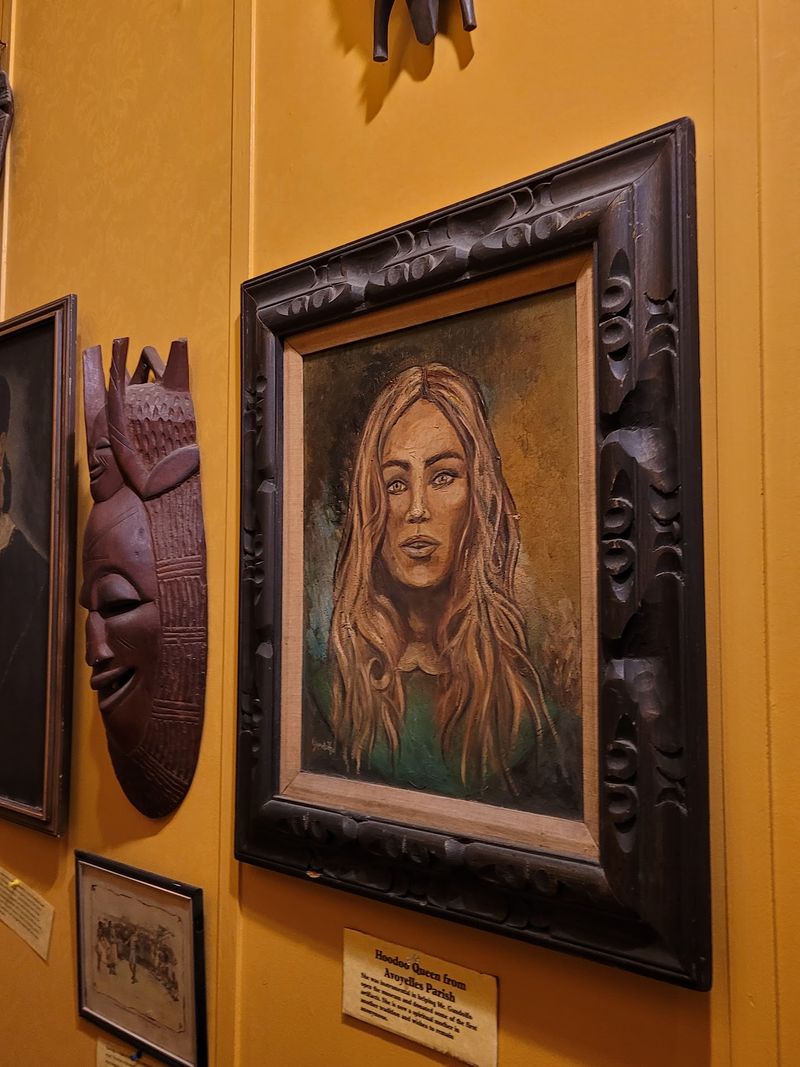
Art fills the gaps between artifacts, and some of it genuinely stops you. Original paintings by Voodoo Charlie hang throughout the museum, depicting rituals, Voodoo priestesses, and scenes drawn from Louisiana folklore.
His brushwork feels raw and heartfelt. You sense someone painting a culture he loved rather than studied from a distance.
Works by celebrated local artist Herbert Coon Singleton also appear, adding a bold folk art edge. Wood carvings and painted pieces bring texture to the crowded walls.
Then there are the flags. Elaborate ceremonial banners by Haitian artist Joseph Oldof Pierre shimmer with sequins and beadwork.
Traditionally used in sanctuaries and ceremonies, these flags function as sacred art rather than decoration. Light catches them constantly, which makes them hard to walk past quickly.
I spent longer here than anywhere else in the building. Color does something powerful in a space this dim.
If you enjoy folk art, this section alone justifies the ticket. The pieces feel devotional, energetic, and completely unlike gallery art elsewhere in Louisiana.
Planning Your Visit Wisely
Timing matters more than usual at a place this compact. Current official hours are 10 a.m. to 6 p.m. Monday through Thursday and 10 a.m. to 7 p.m.
Friday through Sunday, with later seasonal hours sometimes continuing while daylight lasts.
Because the museum consists of only a few compact rooms, visiting at a less busy moment can make it easier to stop and study the displays at your own pace.
Admission is self-guided by default, letting you move at whatever pace suits you. The museum also offers a current two-hour walking tour covering additional Voodoo history at sites including Congo Square and Marie Laveau’s former home.
Staff can help with current admission, walking-tour information, readings, and other visitor questions before you begin the self-guided museum experience.
Wear comfortable shoes since the French Quarter demands walking anyway. The museum sits within easy reach of Bourbon, Royal, and Jackson Square.
Avoid arriving with a large group unless you plan to split up. Space simply does not allow ten people to browse together comfortably.
Visit length depends on how closely you read the displays, and the museum’s French Quarter location makes it easy to combine with other nearby historic stops.