You Can Actually Visit District 12 And A Hunger Games Arena Waterfall In North Carolina
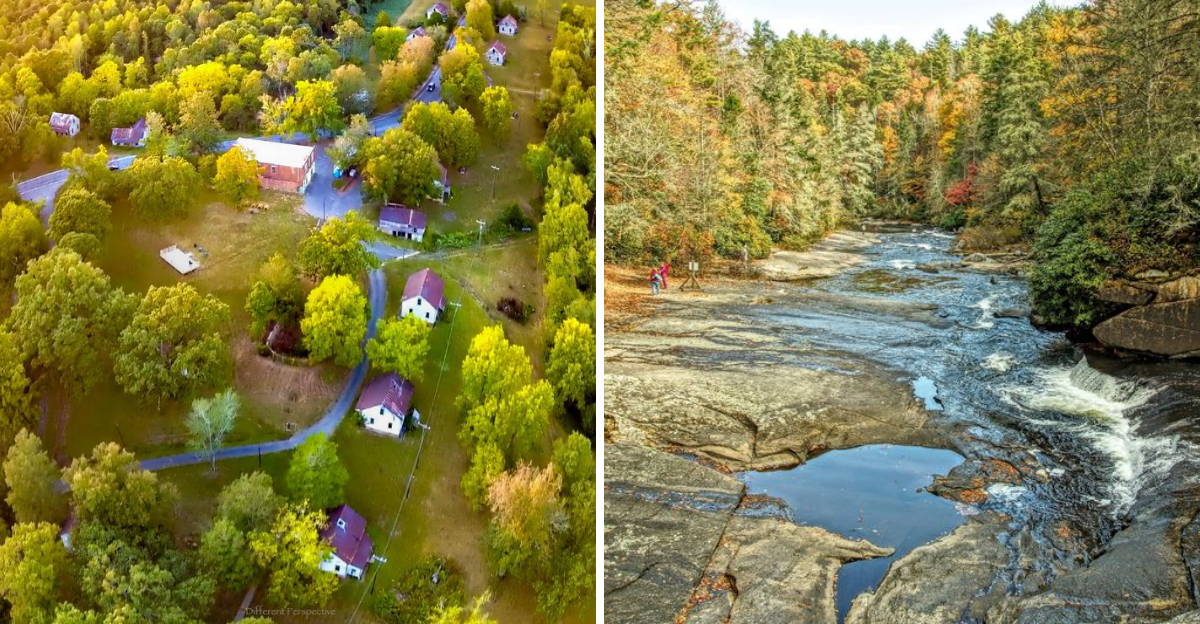
How charming that North Carolina still keeps pieces of Panem standing.
One forgotten village became District 12, its weathered houses turned into the kind of place the Capitol would prefer citizens not think about too deeply.
Farther into the mountains, a broad waterfall and surrounding forest supplied part of the arena scenery where survival became entertainment.
And yet both places remain.
More than a decade after The Hunger Games reached theaters, visitors can still walk through these landscapes and recognize the bones of the film beneath the real North Carolina scenery.
The village is quiet now. The waterfall keeps moving as if nothing happened.
Very peaceful. Almost suspiciously so.
For fans, that makes the road trip irresistible.
After all, the Capitol may control the story.
But the locations have refused to disappear.
District 12 Still Looks Strangely Familiar More Than A Decade After Filming
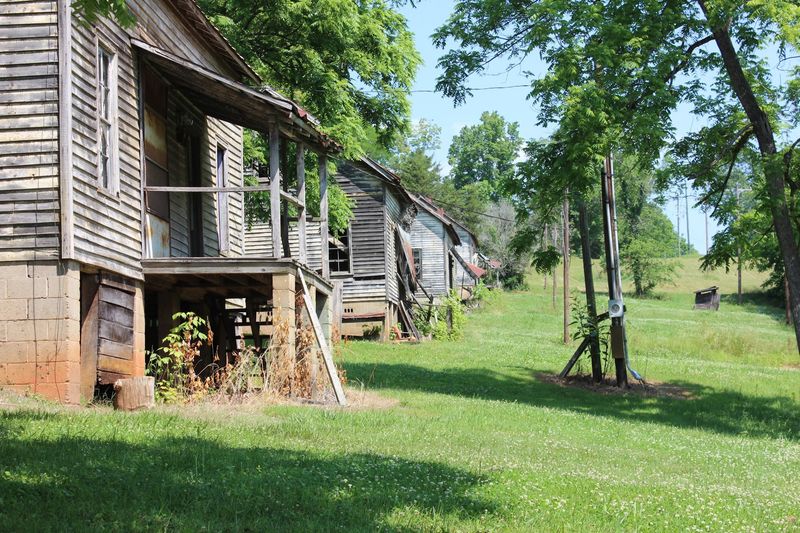
Long before movie crews arrived, this hillside was home to families working for a cotton-yarn manufacturer.
Henry River Manufacturing Company established the village around 1905 as a largely self-contained industrial community. It included worker housing, a boarding house, company store, dam, bridge, and three-story brick mill.
Water powered the operation initially, with newer forms of power added as the mill expanded. Production eventually ended, and the main mill was lost to a 1977 fire, leaving the residential area and company store as the strongest surviving pieces of the old village.
Twenty of the original 35 worker houses remain, and their unusually consistent scale and materials helped the Henry River Mill Village Historic District earn a place on the National Register of Historic Places in 2019.
That intact look also made the property unusually useful when The Hunger Games production needed District 12.
Rather than constructing an entire fictional neighborhood elsewhere, filmmakers could work with an existing early-20th-century mill village whose basic layout had survived for generations.
Katniss Everdeen’s Hometown Was Built Around These Weathered Mill Houses
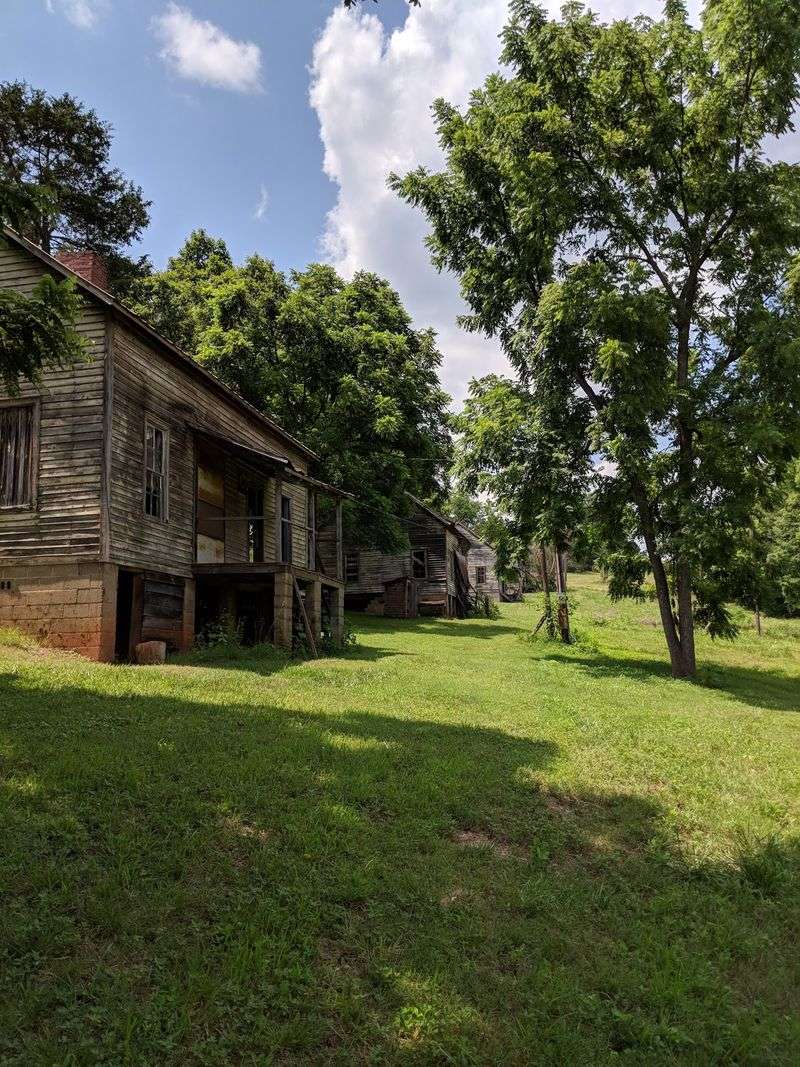
A row of remarkably similar wooden homes creates the strongest connection between the real village and the District 12 seen on screen.
Built along the slope above the river, the surviving residences began as modest worker houses and duplexes. Generous spacing around them gave the village a more rural feel than a dense industrial neighborhood.
The National Register documentation emphasizes how little modern construction disrupted the original pattern, which helps explain why the setting looked so convincing on film.
House 16 became associated with the Everdeen family home, while neighboring buildings completed the fictional Seam around it.
The property covers about 72 acres, so visiting is considerably different from pulling over for a single photograph beside one movie facade.
General admission allows guests to explore the historic setting during operating hours, and the village is currently open Friday through Monday from 10 a.m. to 5 p.m. after March 20, 2026.
The address is 4255 Henry River Rd, Hickory, NC 28602, about a mile south of Hildebran and close to I-40.
The Mellark Family Bakery Site Remains One Of The Most Recognizable Stops
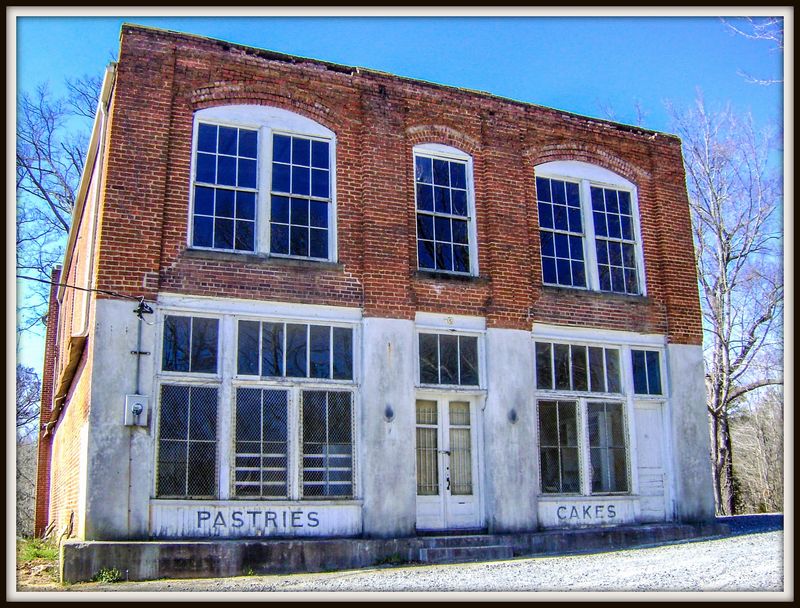
Brick makes one building immediately stand apart from all those wooden mill houses.
Serving as both a commercial center and mill office, the two-story company store played an important role in village life. Its upper floor also hosted school and church activities during part of the community’s early history.
When The Hunger Games arrived, filmmakers repurposed that surviving landmark as the Mellark family’s bakery, giving Peeta’s family business a setting that already looked as though it belonged to another era.
The building remains one of the easiest movie locations to recognize because its size, material, and position give it a much stronger visual presence than the cottages surrounding it.
Historically, it is important for exactly the same reason. With the original mill gone, the company store provides one of the clearest remaining links to the village’s commercial and community life.
Plans for future uses have surfaced over the years, but visitors should enjoy it for what it is now rather than expecting a functioning bakery or restaurant inside.
The combination of real mill history and instantly recognizable movie scenery makes the building one of Henry River Mill Village’s strongest stops.
Guided Tours Let Fans Explore The Village Instead Of Just Viewing It From The Road
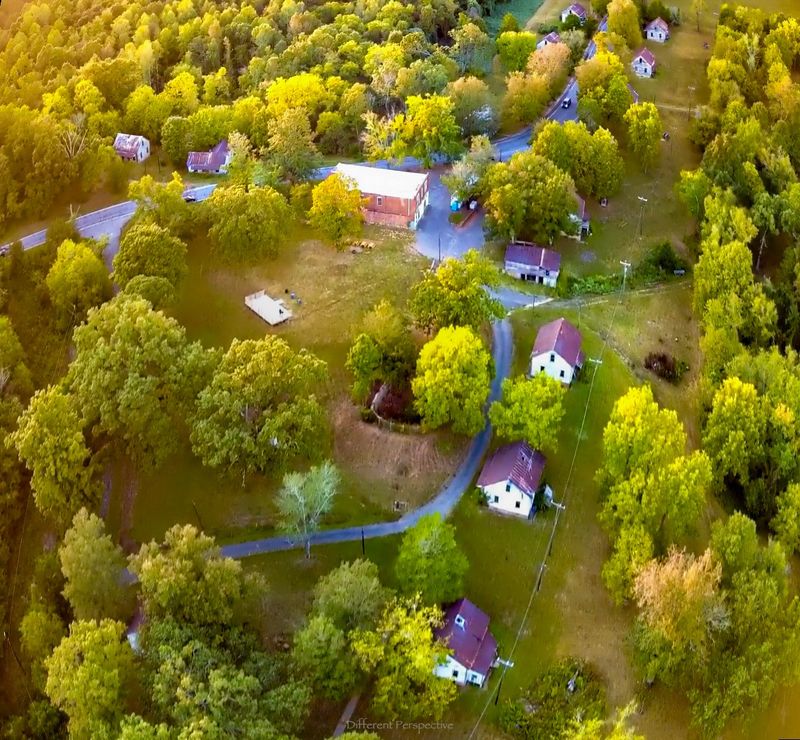
Walking the property with context adds considerably more than a roadside glimpse ever could.
Across the 72-acre village, the Henry River Preservation Fund offers guided historic tours that use the surviving buildings and landscape to tell the site’s story. Tours cover both the former textile community and the property’s later movie connection.
Tour information currently lists one-hour guided walks, with proceeds supporting preservation work at the historic district. General admission is $18 plus tax for adults, while visitors ages 17 and younger enter free with an adult ticket.
Tickets can be purchased online or on site. The village website also lists special events during the year, so operating days can offer more than a standard self-guided visit.
Current general-admission hours after March 20, 2026 are Friday through Monday from 10 a.m. to 5 p.m.
Because this remains a historic property with aging structures rather than a purpose-built movie theme park, visitors should follow posted boundaries instead of assuming every building can be entered.
That distinction actually makes the experience more interesting. Henry River Mill Village tells a genuine North Carolina industrial story first, with District 12 layered onto it more than a century after the community was established.
An Overnight Stay In A Restored Cabin Takes The Panem Connection Even Further
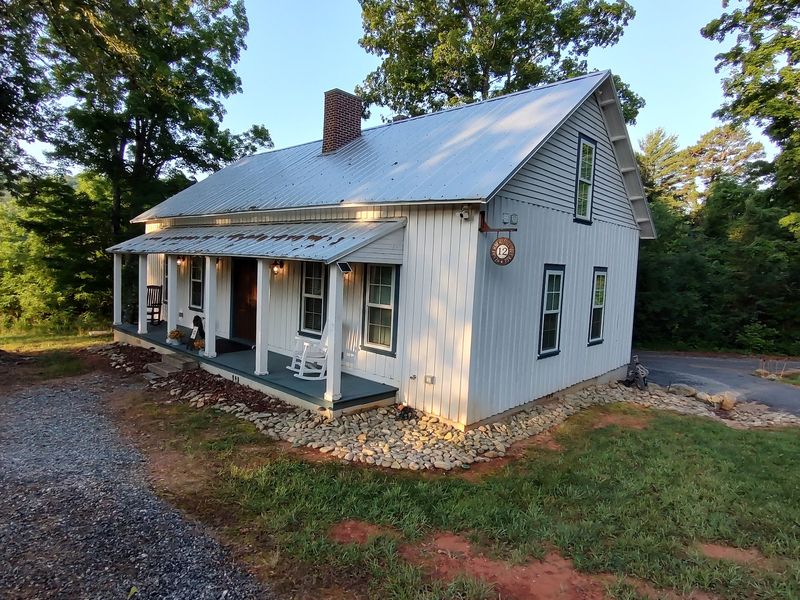
One historic residence has taken a very different path from the unrestored buildings surrounding it. House 12 has been fully renovated, giving Henry River Mill Village an overnight component without turning the entire property into modern lodging.
The restored house was featured on Magnolia Network’s In With The Old and contains two suites, each with its own bathrooms, living space, upstairs loft, refrigerator, and microwave.
The village currently promotes overnight accommodations alongside tours and special events, allowing guests to spend considerably more time on the historic property than a normal daytime ticket provides.
The contrast is part of the appeal. Step outside the renovated interior and the surrounding mill houses still preserve the simple forms and spacing that made Henry River such an effective District 12 location.
House 12 should not be confused with Katniss’s on-screen house, which was a different building used during filming. Instead, it offers a way to stay within the same historic village while enjoying modern comforts inside.
Availability can naturally vary with private events and bookings, so overnight plans are best made ahead rather than left until arrival.
Triple Falls Adds A Second Hunger Games Location To The Same Western North Carolina Trip
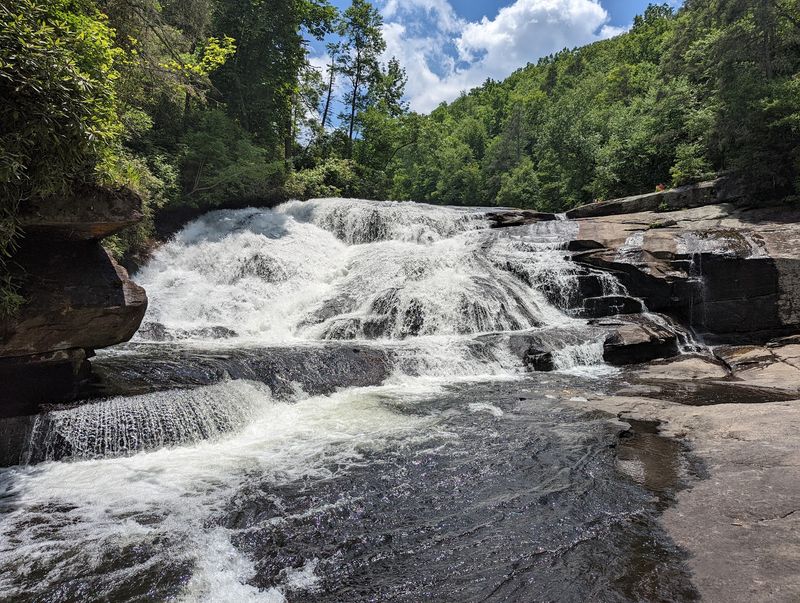
The movie connection becomes much greener and louder once the road reaches DuPont Forest. Triple Falls descends roughly 125 feet over three distinct tiers of the Little River, producing the staircase-like profile that makes the waterfall immediately recognizable.
Filming for The Hunger Games used this area for arena sequences, including footage around the river and falls.
Production even placed a board across part of the waterfall for Jennifer Lawrence to run across while secured with safety wires, something visitors should never attempt to recreate.
Today, Triple Falls Trail is open to foot traffic and can be reached from either the Hooker Falls or High Falls access areas.
There is one important 2026 detail: the Triple Falls stairs remain closed after damage caused by Hurricane Helene, and the North Carolina Forest Service continues to list them among the forest’s active closures.
The waterfall itself remains accessible from permitted trail areas, but fences and closure signs need to be respected. DuPont also prohibits climbing on waterfalls and entering closed areas, so the best movie-location view comes from staying on the designated route.
Scenes With Katniss And Peeta Were Filmed Around DuPont State Recreational Forest
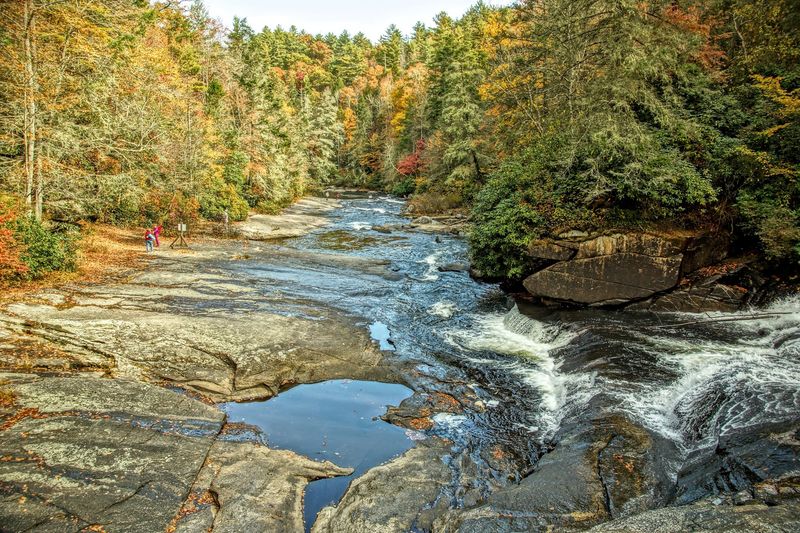
One waterfall only tells part of the filming story here. DuPont State Recreational Forest covers about 12,400 acres between Brevard and Hendersonville, with forest roads, lakes, granite formations, and several major waterfalls creating the varied scenery that appeared throughout the movie’s arena sequences.
Triple Falls provided one recognizable river location, while the section of the Little River below it was used when Katniss tracks down the camouflaged Peeta.
Another movie sequence was filmed around Bridal Veil Falls, where the Little River first drops over an overhanging ledge before sliding across a long granite surface.
Visitors can explore these places on the forest’s extensive trail and road network, but they are natural recreation sites rather than preserved movie sets. That means no replica props or artificial arena scenery are necessary.
The same river, waterfall ledges, and wooded surroundings provided the backdrop. DuPont is open daily from 5 a.m. to 10 p.m., and parking can fill early, particularly on busy weekends.
The Forest Service recommends arriving early or later in the afternoon when possible.
One Road Trip Can Take You From District 12 Straight Into The Arena Landscape
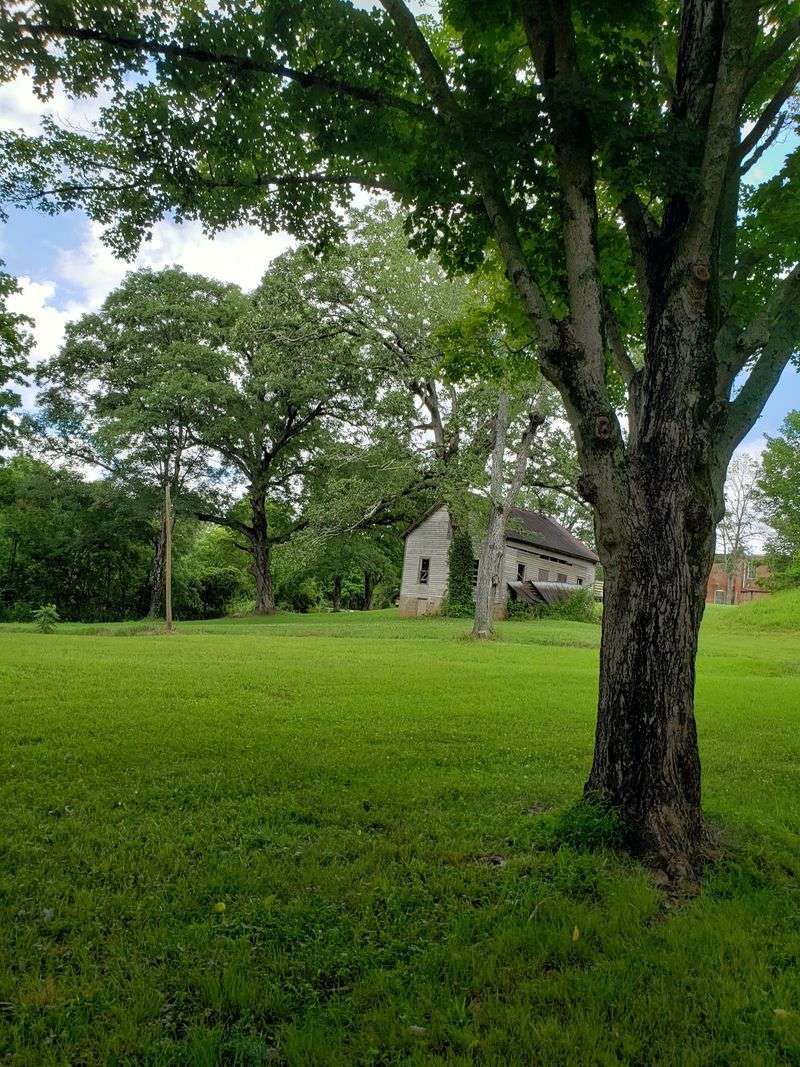
Putting both locations together makes more sense as a full day than a hurried pair of photo stops. Start at Henry River Mill Village while there is enough time to join a historic tour, see the worker houses, and recognize the company store that became part of District 12.
From there, the trip continues southwest toward DuPont State Recreational Forest, where the setting changes completely from an early textile village to broad mountain woodland and the Little River’s waterfalls.
Triple Falls Trail is less than half a mile long, and the Hooker Falls access area provides a practical starting point for reaching both Triple Falls and nearby waterfall routes.
Bringing water and planning food before entering DuPont is sensible because the state forest does not operate restaurants or shops, and visitors are expected to carry their trash back out.
Current closures also make checking the forest’s trail information worthwhile before departure, particularly because the Triple Falls stairs remain unavailable in 2026.
The two stops could hardly look more different, yet that contrast is exactly what makes this North Carolina movie road trip work: one preserves the real village behind District 12, while the other still holds the river and forest scenery that became the arena.