One Of Connecticut’s Most Unexpected Sights Is A Stunning Hindu Temple That Feels Worlds Away
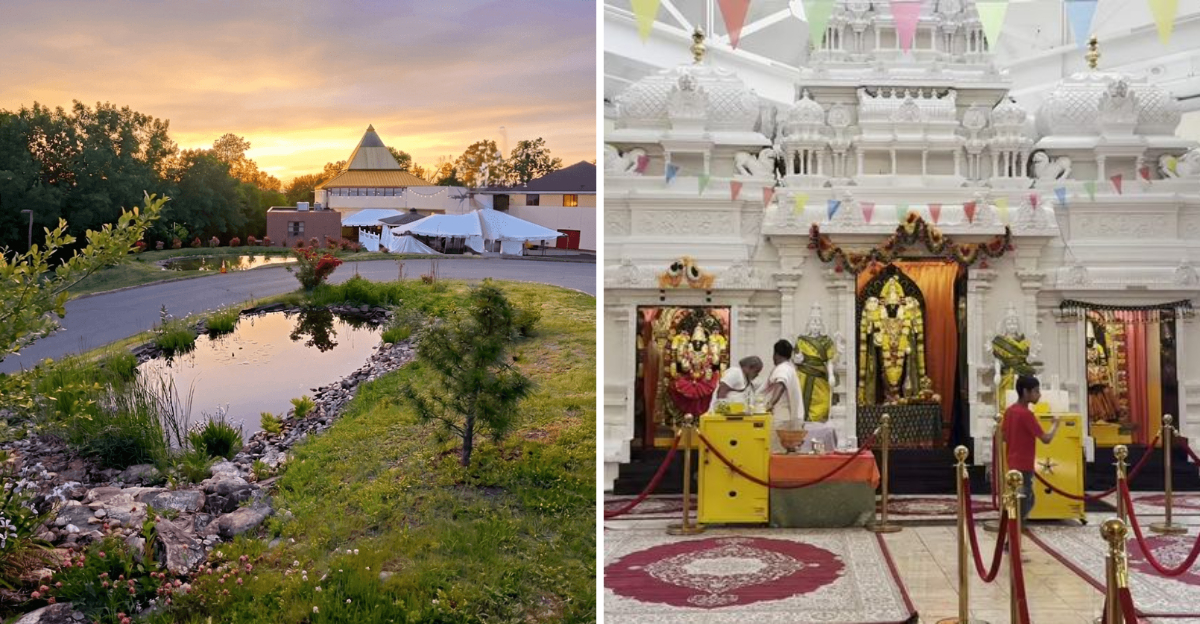
Connecticut can surprise you with a place that suddenly makes the ordinary world outside feel very far away.
The first impression comes from the architecture, which immediately feels different from anything around it.
Intricate details draw your eyes upward, and the whole setting carries a calm that makes you slow down without even thinking about it.
You do not need to know every symbol or tradition beforehand to appreciate how striking the space feels.
That sense of discovery is part of what makes the visit memorable.
One moment you are on a familiar road, and the next you are looking at a temple that seems to belong to a completely different landscape.
The atmosphere feels peaceful without becoming distant or formal.
It is the kind of place that makes you curious enough to look closer.
For such an unexpected sight, it leaves a remarkably strong impression.
1. Traditional Hindu Beauty Makes This Temple Remarkable
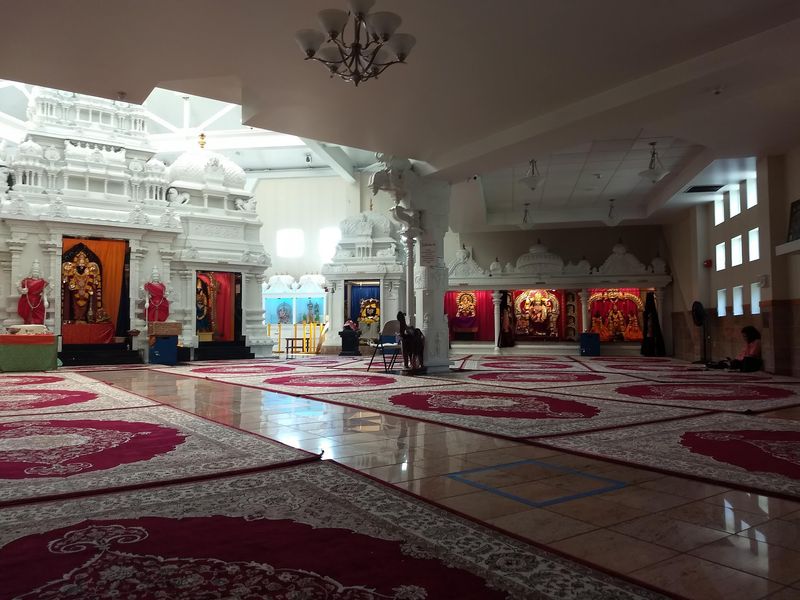
This is not what most people expect to see on a drive through the state. The architecture catches your attention almost immediately.
Then the details make you want to slow down and look closer.
Sri Satyanarayana Swamy Temple follows a traditional Hindu design rather than trying to blend into the surrounding New England landscape. Its distinctive forms and richly detailed sacred spaces give the property a visual character that feels dramatically different from everyday surroundings.
The Connecticut Valley Hindu Temple Society was founded in 1979 to serve the religious and cultural needs of Hindu families across the region. Land for the temple was later purchased in Middletown, and the main deity, Sri Satyanarayana, was formally consecrated in 1999.
The temple was designed to welcome worshippers from different Hindu traditions, which helps explain the variety of sacred spaces throughout the building.
Visitors unfamiliar with Hindu customs can still appreciate the craftsmanship and peaceful atmosphere while remembering that this remains an active place of worship.
Respectful newcomers are welcome to experience the setting for themselves. What makes the visit so memorable is the contrast between the familiar surroundings outside and the elaborate traditional design waiting within.
2. Local Hindu Families Started The Society In 1979
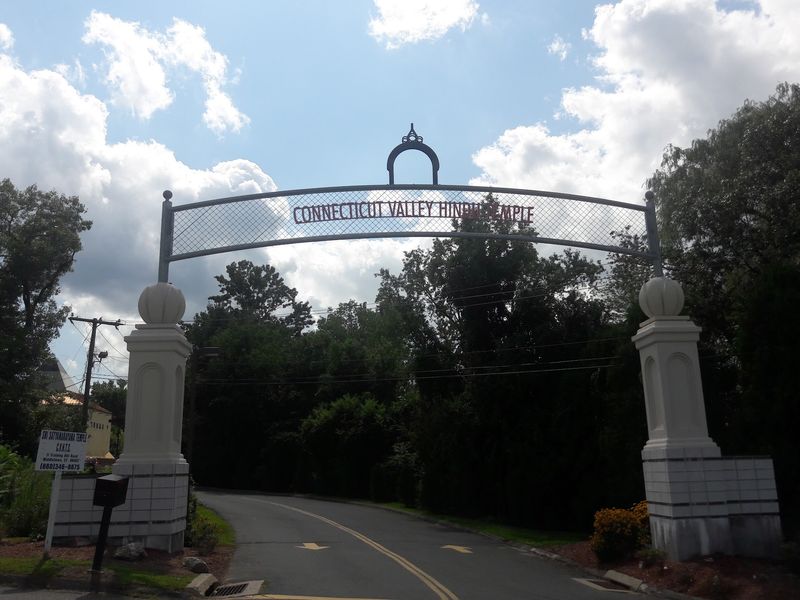
Every landmark begins with a small group of determined people. In 1979, a group of Hindu families in the region formed the Connecticut Valley Hindu Temple Society with a simple goal: create a proper place of worship close to home.
The society held its first Executive Committee meeting in June of that year. What followed was a long stretch of patient work rather than an overnight success story.
Land in Middletown was purchased in October 1985, and groundbreaking along with foundation work began in August 1986. That gap between the founding and the first shovel of dirt says a lot about the commitment involved.
Fundraising, planning, and volunteer labor filled the years in between, all driven by families who wanted their children to grow up with access to their traditions.
The result serves religious, cultural, and social needs across a wide area, and it spared many families the long drives out of state that were once necessary for ceremonies and festivals.
Volunteers remain central to how the place runs today, from event setup to preparing prasadam. Knowing that history changes how the building looks to you.
It was not dropped here fully formed. It was built, decade by decade, by hand.
3. Traditional Design Welcomes Several Hindu Traditions
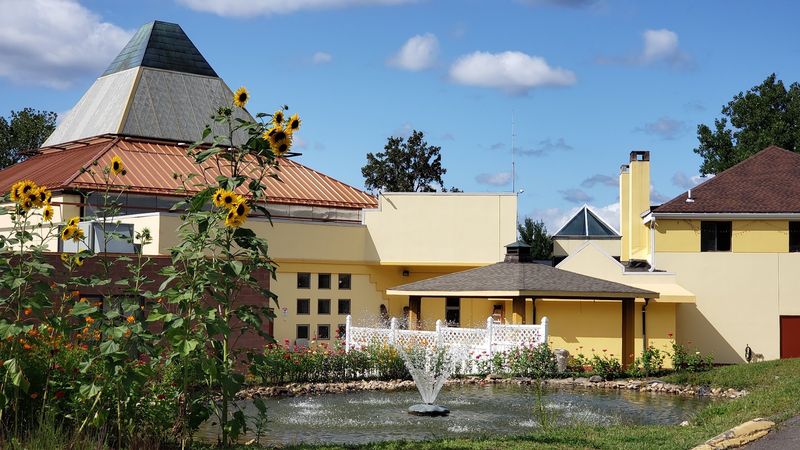
Hindu temples are often designed as small models of the universe, laid out according to ancient architectural principles known as Vastu Shastra along with sacred geometry. Concentric squares guide devotees inward, moving step by step from ordinary space toward the sacred center.
The two elements you will notice most are the garbhagriha, the inner sanctum, and the shikhara, the tower rising above it.
What makes this particular temple unusual is how many traditions it holds under one roof. Rather than serving a single regional community, the layout includes numerous shrines representing many principal forms of the Divine, so families from different parts of India can worship in one building.
Visitors regularly comment on finding deities from both northern and southern traditions consecrated here, which is not something you encounter everywhere.
There is also a meditation hall for those who simply want to sit quietly. Renovations in recent years have refreshed and improved the space, keeping the building in good condition for daily use and large gatherings alike.
The practical effect of all this design thinking is a space that feels ordered and calm rather than crowded. Walking the perimeter of shrines gives the visit a natural rhythm, and you never feel rushed through it.
4. A Quiet Hill Road Leads To The Temple
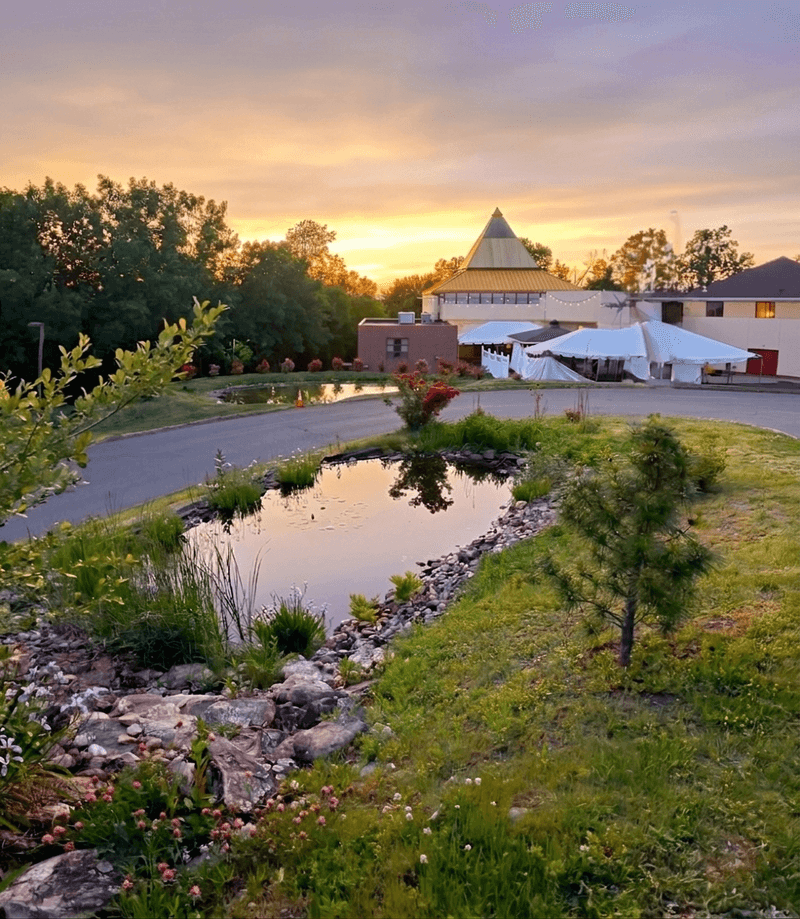
Even arriving here feels a little different. The surroundings grow quieter as the road rises toward the temple.
By the time the building comes into view, the everyday bustle feels farther away.
That peaceful approach suits Sri Satyanarayana Swamy Temple perfectly. Visitors arrive at an active place of worship, so the experience feels very different from touring an ordinary attraction.
Taking a moment to observe the setting and follow temple customs makes the visit more comfortable for newcomers.
Timing can shape the experience. Current weekday hours run from 9 a.m. to noon, followed by an evening opening from 6 to 9 p.m.
Weekends are much more flexible, with the temple open continuously from 9 a.m. until 9 p.m. Festival days can naturally bring more activity, so checking the temple calendar before making a special trip is worthwhile.
Shoes should be removed before entering worship areas, and visitors can follow the cues provided inside. The temple stands at 11 Training Hill Road in Middletown, where the elevated setting adds to its peaceful atmosphere.
Respectful visitors are welcome to experience the space while remembering that religious services may be underway. That balance between openness and tradition makes the visit feel especially memorable.
5. Black-Stone Deities Were Carved In India
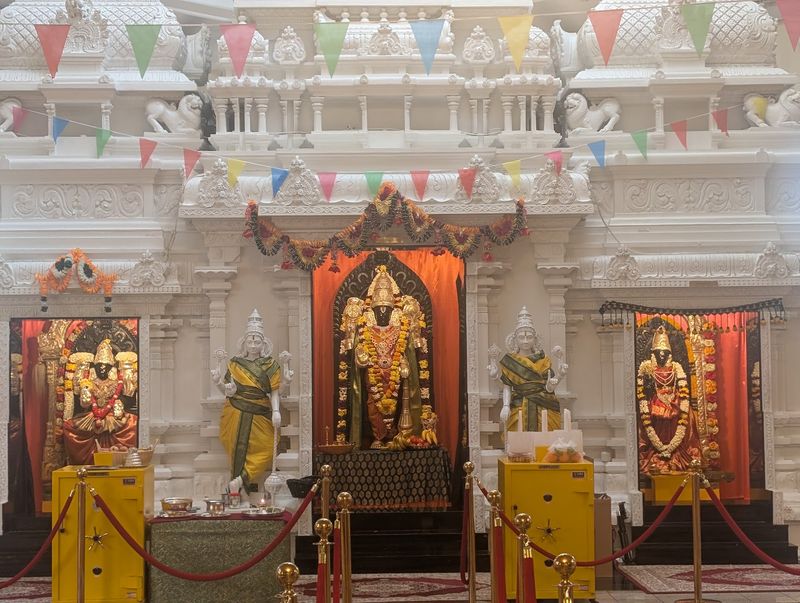
Seven tonnes of black stone crossed an ocean to get here. The main image of Sri Satyanarayana stands about 1.8 meters tall and was carved from krishnashila, a dark stone long favored for temple sculpture in southern India.
The carving work was done in Bangalore by a sculptor known for this craft, and the consecration ceremony took place in May 1999.
Sri Satyanarayana is the principal deity, joined by consorts Sri Devi and Sri Bhudevi, along with Sri Ganesha. Altogether the temple holds three life-size deity sculptures and seven smaller representations drawn from various Hindu traditions.
The detail work rewards slow looking. Fine lines in the jewelry, the folds of clothing, the expressions on each face, all of it was shaped by hand rather than machine.
Devotees often note how rare it is to find a temple dedicated primarily to Satyanarayana, even in India, which makes the presence of one in central state genuinely remarkable.
One practical note worth remembering: photography is not permitted inside the main worship areas. Save your camera for the entrance and outdoor spaces, and let the sanctum stay a place you experience with your own eyes instead of a screen.
6. The Gopuram Adds Striking Architectural Detail
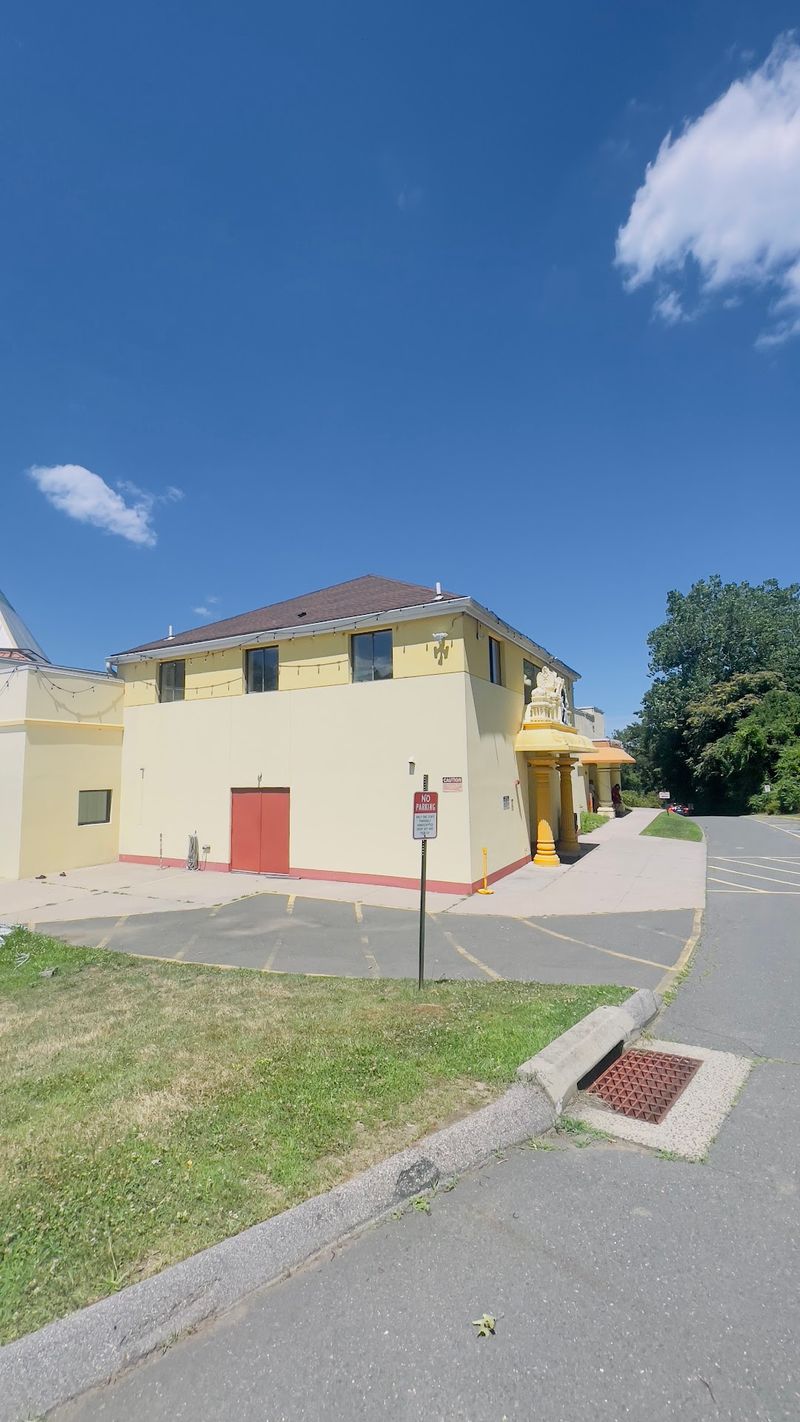
Look up. The gopuram, a grand entrance tower typical of South Indian temple architecture, is the feature that makes this building read as a Hindu temple from a distance rather than an ordinary hall.
Topped with a kalasha, the pointed finial that crowns the structure, it carries visual weight and religious meaning at the same time.
Renovation work has focused on making the gopuram and its kalasha easier to see and appreciate. A high, raised ceiling was created for exactly that purpose, since the tower plays an important role in welcoming devotees as they arrive.
Design choices like that one show a thoughtful approach to the building, treating architecture as part of the spiritual experience rather than just shelter.
For visitors interested in architecture generally, the tower is worth a few unhurried minutes from different angles outside. Morning light and late afternoon light both do interesting things to the tiered surfaces and shadows.
The Ganesha shrine area near the entrance is another good spot for photographs, and many families take pictures there before heading inside.
Set against state’s hills and hardwood trees, the silhouette is genuinely unexpected. That contrast is a good part of the appeal.
7. Festivals Bring The Community Together
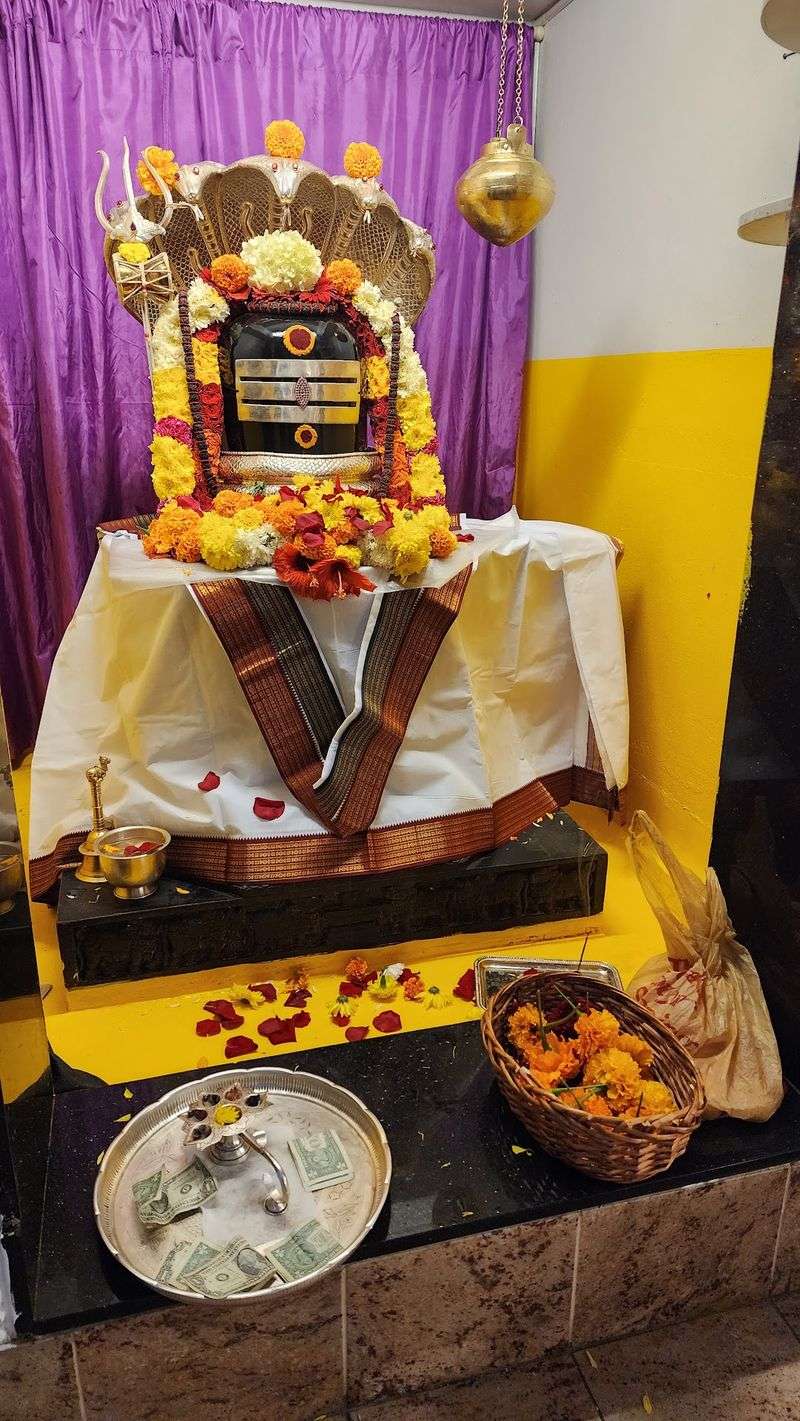
Show up on a festival day and the mood shifts completely. Diwali celebrations here have been hosted in collaboration with the city, a nice example of how deeply the temple has woven itself into local life.
Krishna Janmashtami pujas and food festivals also draw big turnouts, filling the halls with cooking smells, music, and conversation in several languages.
Weekly life follows a steadier rhythm. Various Abhishekam ceremonies, ritual bathings of the deities, are dedicated to Durga Mata, Satyanarayana, Ayyapa, Siva, Bhoodevi, Subramanya, Maha Lakshmi, Ganesh, Venkateswara, and Navagraha throughout the week.
The Satyanarayana Vratam puja takes place every Purnima, the full moon day, and typically draws a good crowd of devotees.
A Hindu Sunday School gives children a place to learn about their culture, and weekend classes led by the priests are frequently mentioned by families as a highlight.
The temple also hosts weddings, cultural programs, and concerts in its halls, and it operates as a vegetarian space throughout.
Volunteers keep all of this running, including the preparation and distribution of prasadam. If you want the festive version of the temple, check the event calendar first and plan to arrive early for parking.
8. Peaceful Details Make The Visit Memorable
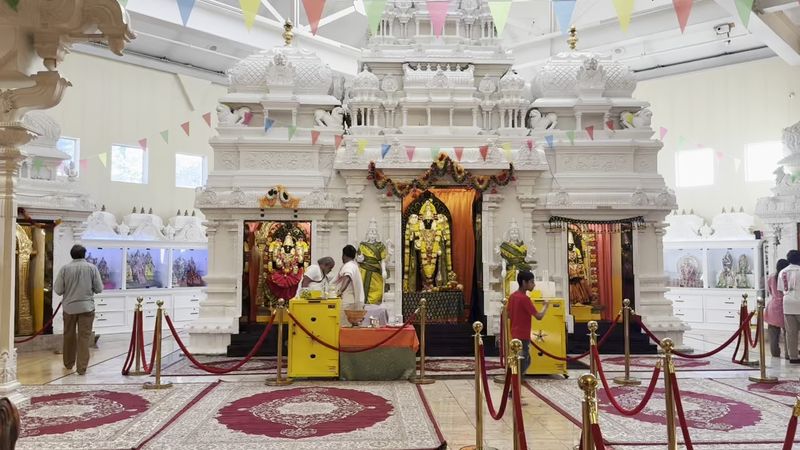
Quiet is the thing people remember. Sitting in the hall while mantras are chanted, watching lamps move in slow circles during Aarati, listening to the small sounds of bells and footsteps, all of it settles the mind in a way that is hard to describe until you have felt it.
Many who visit describe the atmosphere as uplifting and calm, and the Aarati light ceremony in particular gets singled out as a moving thing to witness.
The sculptural detail rewards attention too, and the building is consistently well maintained and clean. Priests here are frequently described as knowledgeable and welcoming, often taking time to explain what a ritual means for those unfamiliar with it.
That willingness to explain makes a real difference for first-time visitors and for families with members from different backgrounds.
Practically speaking, dress modestly, remove your shoes before entering worship spaces, and keep your phone silent and put away inside the sanctum.
Weekday mornings offer the most solitude if reflection is what you are after. Whether you arrive as a devotee or simply as someone curious about a beautiful building on a state hilltop, the visit tends to stay with you.