Massachusetts’ Largest Butterfly House Is A Magical Place You Need To See
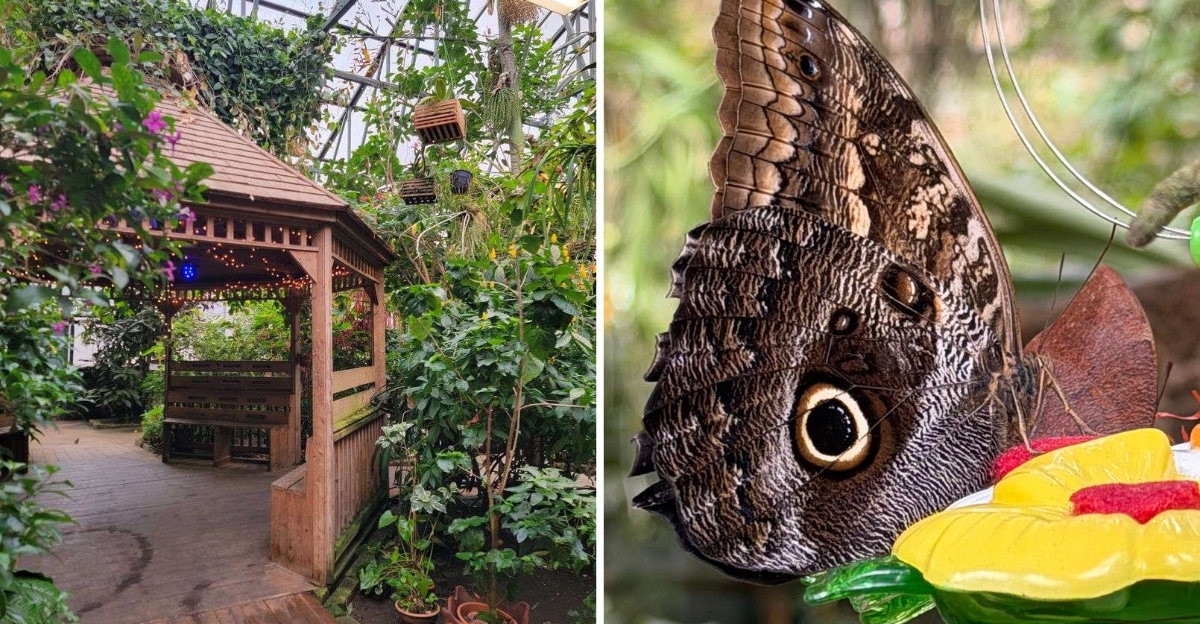
A winter coat feels absurd about thirty seconds after entering this place.
Inside Massachusetts’ largest butterfly house, tropical warmth, free-flying wings, orchids, koi, and small garden paths create a sudden change of season under glass.
Butterflies drift close enough to make everyone slow down.
Then the smaller details start appearing: quail near the path, tortoises moving at their own pace, chrysalises waiting to open. Summer just showed up indoors!
The greenhouse rewards patience more than speed. Stand still and the room becomes busier around you.
Come ready to wander slowly and watch carefully. A few warm, colorful minutes among all those fluttering wings can reset an entire afternoon.
A Rainforest Under Glass
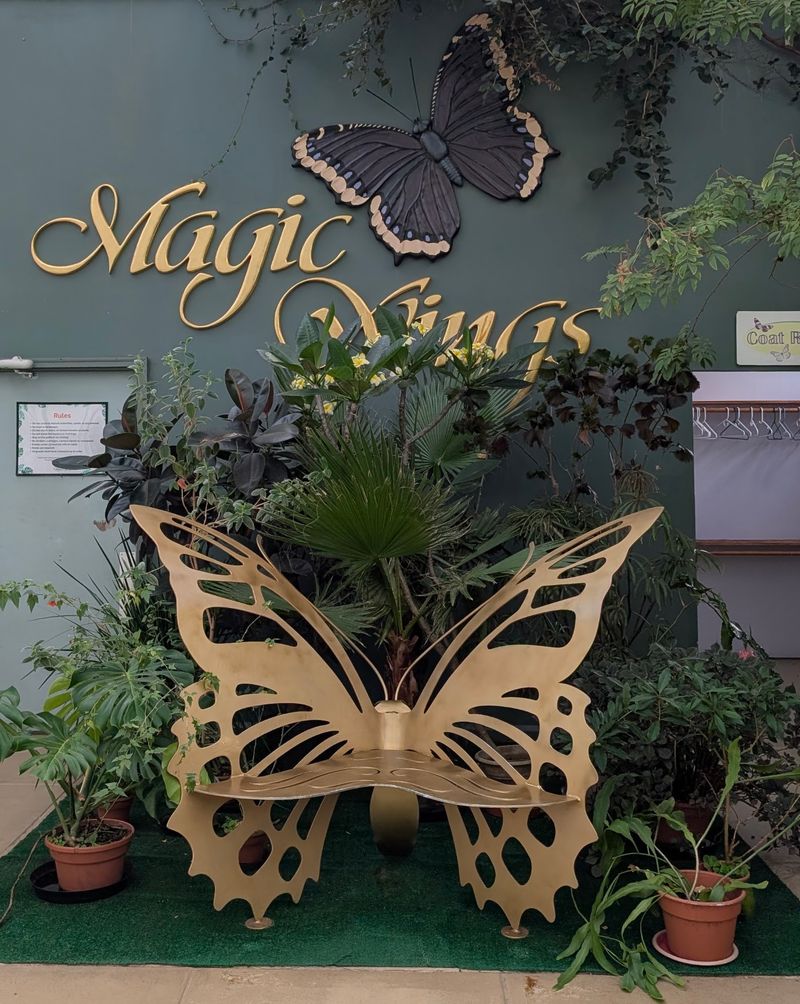
The temperature change is immediate, with the conservatory maintained between 78 and 82 degrees throughout the year.
The main flight room at Magic Wings Butterfly Conservatory covers roughly 8,000 square feet of glass-topped tropical space. Around 4,000 butterflies fly freely inside at any moment, representing more than 70 species.
More than 70 species of tropical and native butterflies currently share the conservatory, creating a remarkably varied display in one warm room.
Curving paths guide you through the greenery without any set route. I doubled back three times and found something new each pass.
Watch your feet as you walk, because butterflies rest on the pavement too. Staff members quietly remind guests to look before stepping.
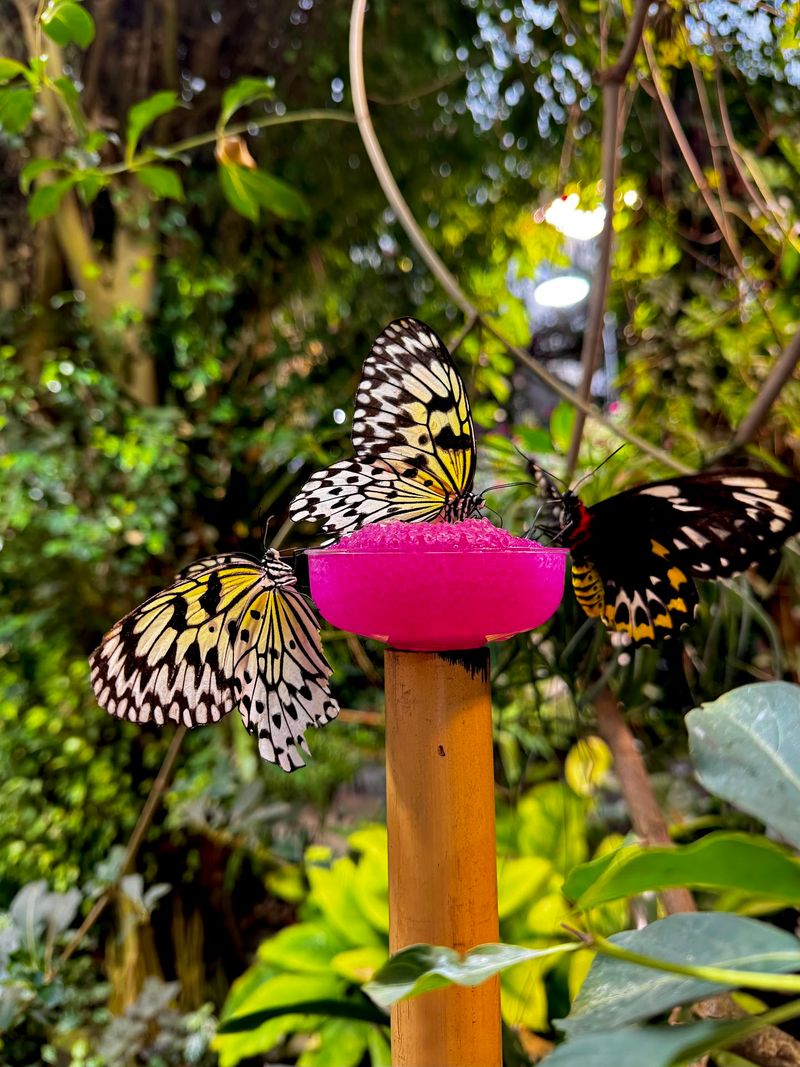
Tall ceilings let the larger tropical species climb high, then swoop low past your face. Feeding stations with fruit slices draw clusters of them to eye level.
If you want to find this tropical pocket of Massachusetts, the address is 281 Greenfield Rd, South Deerfield.
Frogs, Lizards And Hissing Roaches
Before the butterfly conservatory, the Wonderarium adds another substantial wildlife stop with more than 40 species of insects, reptiles, amphibians, and other critters.
Known as the Wonderarium, it holds rows of terrariums filled with reptiles, amphibians, and insects. Tiny poison dart frogs glow in shades of blue, orange, and lime green.
Vietnamese mossy frogs sit so still that spotting them becomes a game. Stick insects blend into twigs until one leg finally shifts.
There is also a display of Madagascar hissing cockroaches, which I admired from a respectful distance. Plenty of guests do the same.
Each enclosure has a plaque packed with odd facts about diet, camouflage, and habitat. Kids read them out loud without being asked, which says plenty.
The Wonderarium focuses instead on live animal displays, including dart frogs, Vietnamese mossy frogs, stick bugs, Madagascar hissing cockroaches, and other unusual species.
Give yourself fifteen or twenty minutes here rather than five. The lighting is dim and cool, so it doubles as a gentle warm-up before the humidity hits.
Small creatures rarely get top billing anywhere in Massachusetts, yet this room steals a surprising amount of attention.
Quail, Koi And Tortoises
Button quail share the conservatory with the butterflies and can be spotted moving along the ground between the tropical plantings.
They chirp, poke through mulch, and vanish under leaves before you can lift a camera. Watching where you step becomes a full-time job.
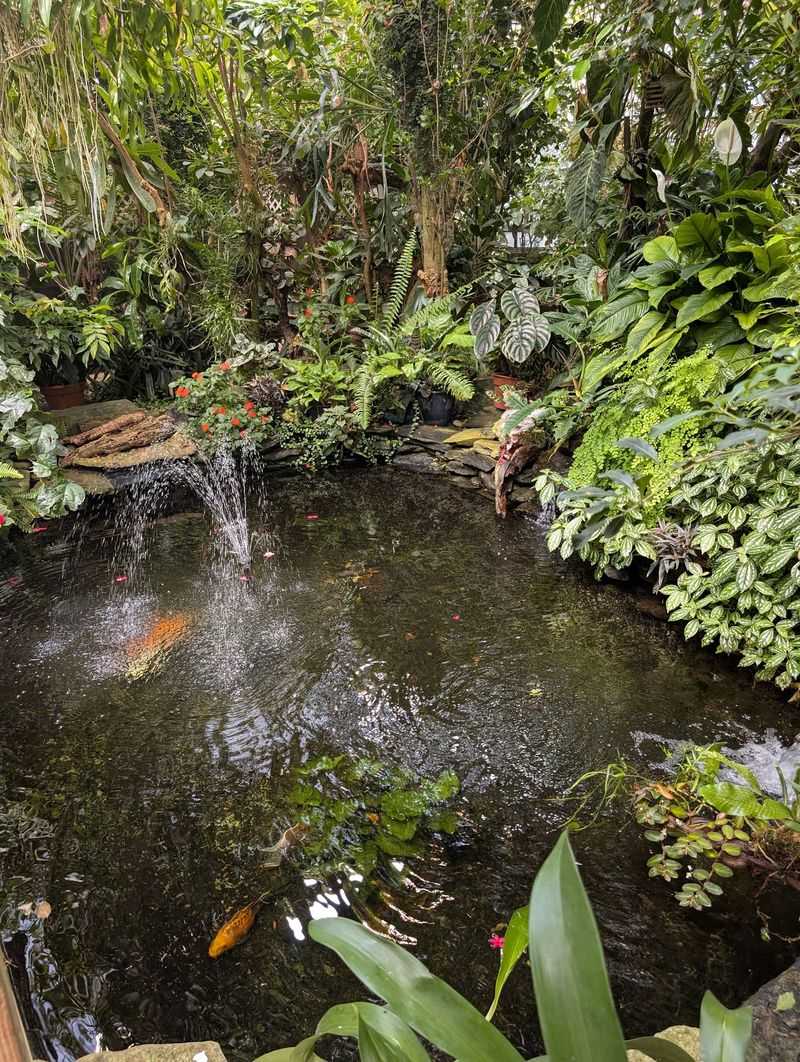
Two koi ponds anchor the flight room, with orange and white fish drifting under lily pads. The water sound blends with a soft waterfall and low classical music.
Red-footed and Russian tortoises also patrol the paths on their own unhurried schedule. Spotting one half-hidden beneath a broad leaf feels like winning a small prize.
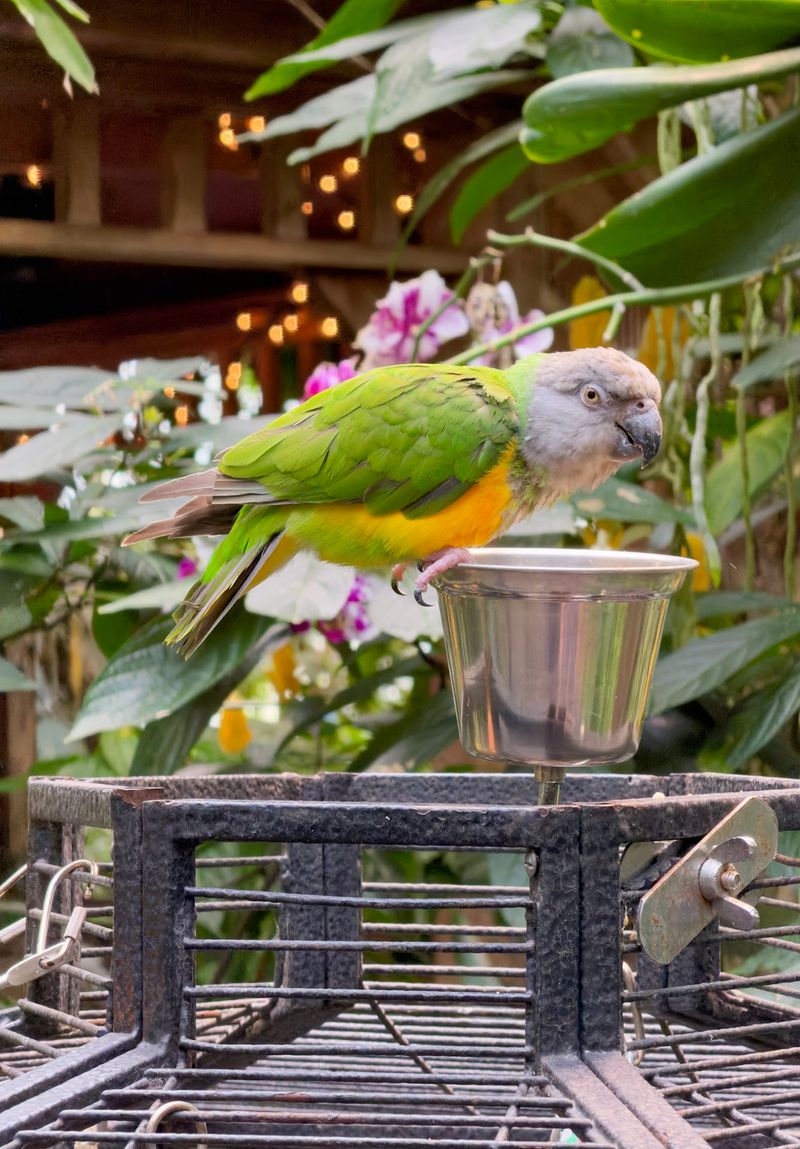
A 33-year-old Senegal parrot named Akbar has lived at Magic Wings for 24 years, making him one of the conservatory’s longest-running animal residents.
Additional birds and reptiles occupy enclosures tucked among the plants. Each one gives your eyes a reason to leave the sky for a moment.
Bring patience rather than a plan. The animals appear when they feel like it, not when you arrive.
Watching Wings Unfold Up Close
Rows of chrysalises hang like tiny jeweled lanterns behind glass. Some are jade green with gold flecks, others plain brown and easy to overlook.
A butterfly nursery and chrysalis display has long given visitors a closer look at the emergence stage, while Magic Wings continues to hatch and maintain butterflies year-round.
If timing favors you, a butterfly will split its case while you watch. The wings come out crumpled and damp, then slowly stretch flat over an hour or two.
I stood there far longer than planned, quietly rooting for one stubborn newcomer. Nobody around me seemed in a rush either.
Magic Wings raises and maintains butterflies as part of its living conservatory, with longtime butterfly curator Fred Gagnon overseeing the specialized ecosystem.
Staff-led educational tours and workshops now give visitors additional ways to learn about butterflies, other animals, and the conservatory’s living ecosystem.
Staff members can help identify butterflies and answer questions about the species and other animals currently on display.
Seeing a first flight begin is the quiet highlight of the whole building, and it costs nothing extra.
From Restaurant To Butterfly Haven
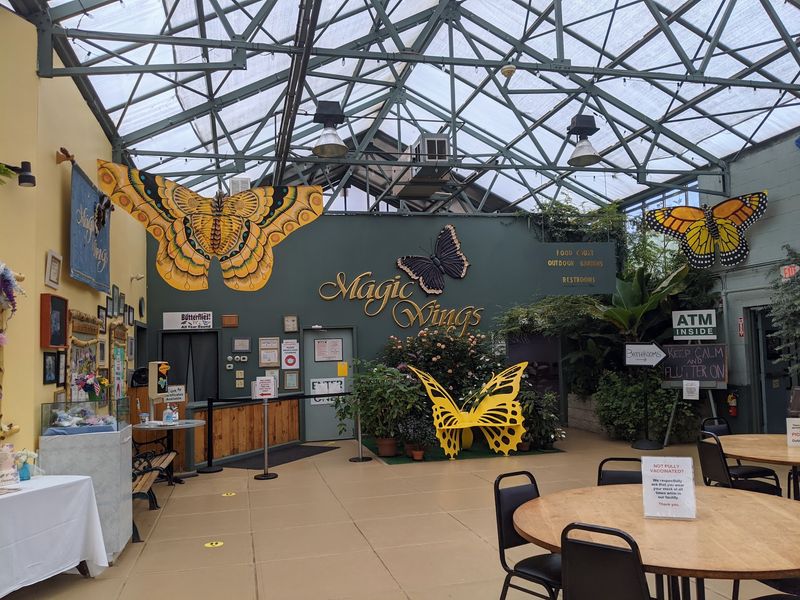
Long before butterflies moved in, this building served dinner. The property previously housed the established Candlelight Restaurant, which closed in 1999 shortly before construction of Magic Wings began.
In 1998, a contractor and military veteran named George Miller took on the job of converting the space. The plan called for tropical plants and free-flying insects instead of tables.
He found the idea interesting enough to become a partner in the project. The doors opened to the public in 2000.
A few years later Miller became sole owner, and his family carried the work forward after 2017. His children kept the greenhouse running and growing.
In January 2026, new owners Victoria Tubbs and Vytautas Sukys took the reins. Their focus leans toward education and community programs.
Recent changes under the new owners include a renovated Pollinator Playroom, expanded educational programming, workshops, events, and ongoing work toward reopening the café.
Knowing the backstory changes how the place feels. A former dining room turned into western Massachusetts’ largest butterfly house is a genuinely odd and wonderful piece of local history.
Getting A Butterfly To Land
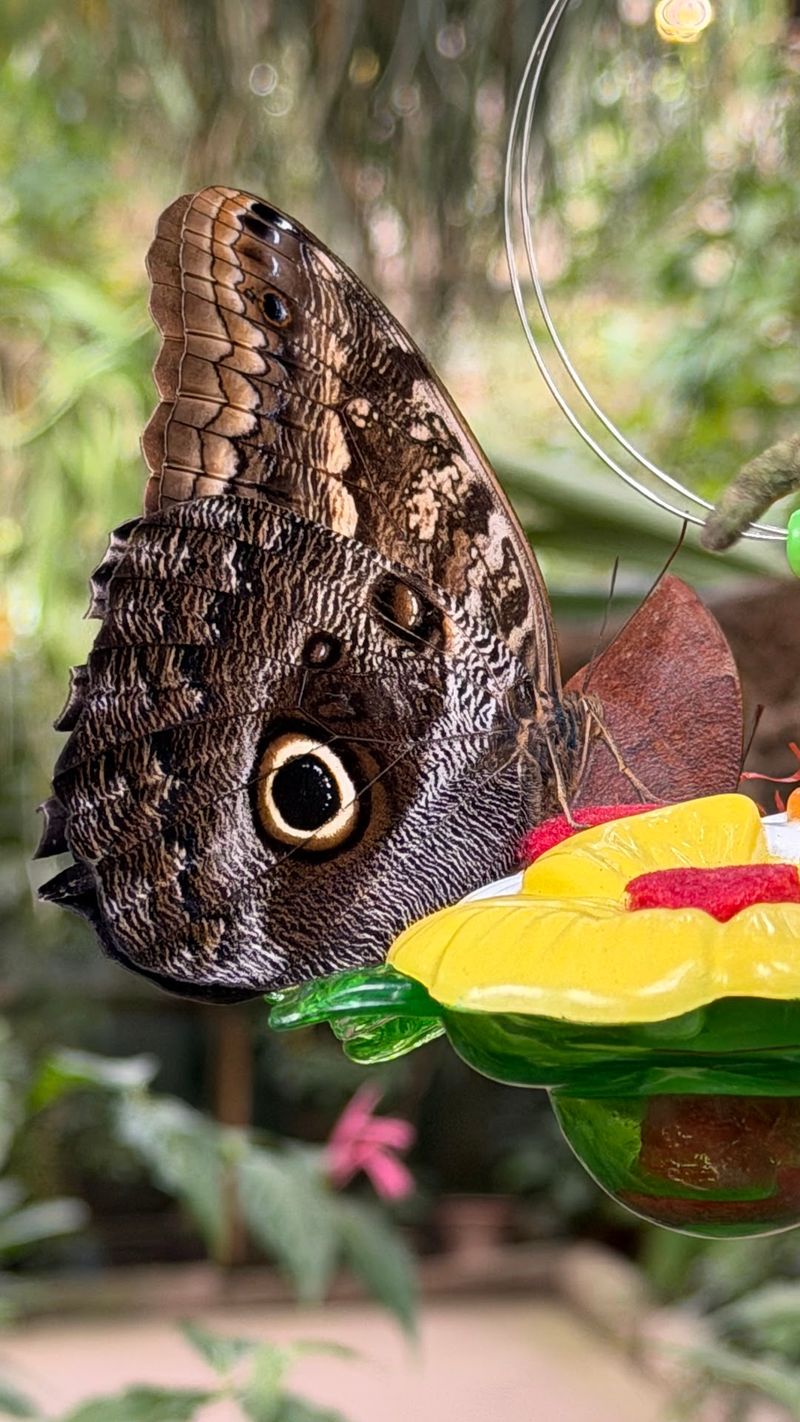
Everybody wants it to happen, and hardly anybody earns it by chasing. Butterflies land on people who stop moving.
Sitting quietly is one of the easiest ways to give the free-flying butterflies a chance to approach on their own.
Butterflies sometimes land on visitors who remain still, though guests should never touch or attempt to grab them.
Never touch or grab a butterfly, since their wing scales damage easily. Docents circulate through the room and will gently remind excited kids.
Check your shoulders and back before leaving the flight room. Mirrors near the exit exist for exactly that reason.
Families with young children will appreciate the renovated Pollinator Playroom, stocked with sensory toys and cozy corners. It gives restless kids somewhere to burn energy.
Sketching is welcome, and school groups do it often. Bring a small notebook if that appeals to you.
Magic Wings rewards slow visitors more than fast ones, and the conservatory says most guests spend about 60 to 90 minutes exploring.
Smart Tips Before You Go
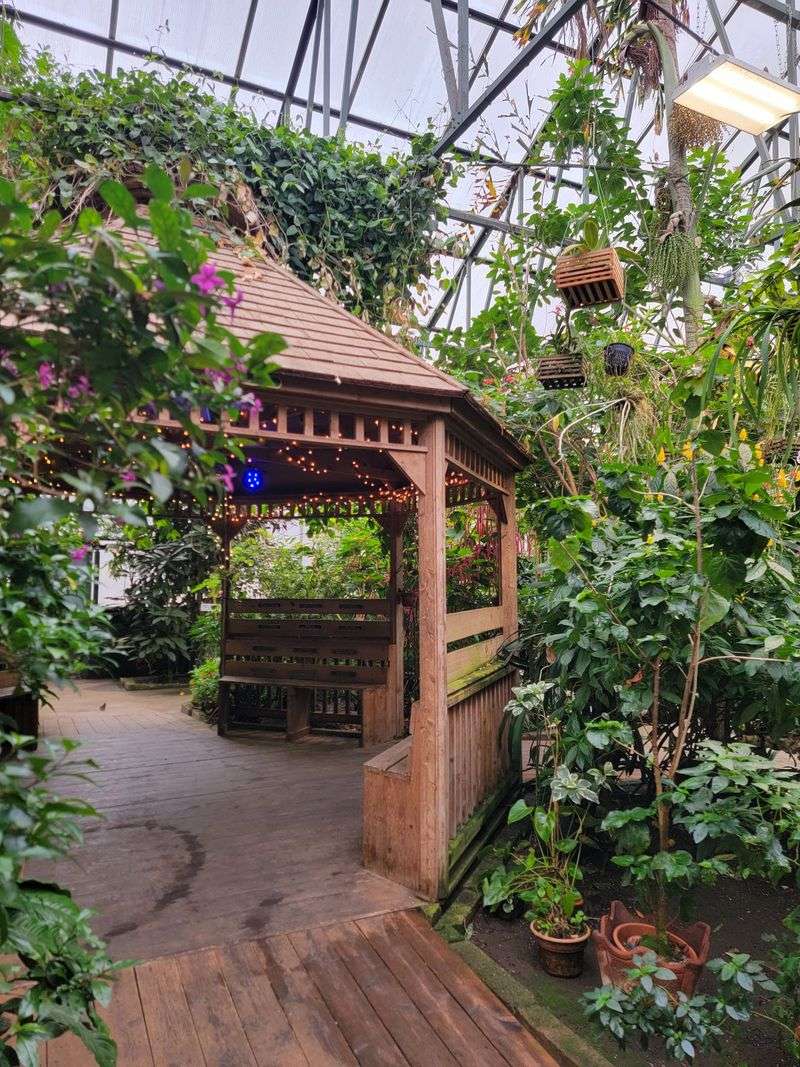
Leave the parka in the car or the coat room. Inside sits between 78 and 82 degrees with steady humidity, all year.
Hours currently run from 10 AM to 5 PM Wednesday through Sunday, with final admission at 4:30 PM. Magic Wings is closed to the public on Mondays and Tuesdays, except for certain school-vacation weeks and selected holidays.
On-site parking makes arrival straightforward, though visitor levels can vary with weekends, school vacations, and special events.
Wheelchairs and walkers are welcome throughout the building. Strollers are not allowed inside the flight room due to USDA rules protecting the butterflies.
Your hand gets stamped at the entrance, so you can leave and return the same day. That flexibility helps if you want lunch elsewhere.
A full cafe is expected back in fall 2026, and grab-and-go snacks are available meanwhile. Tables in the atrium give you somewhere to sit.
The gift shop currently carries locally crafted goods, educational books, toys, jewelry, butterfly art, and live items such as caterpillars and chrysalises when available.
Camera lenses can fog when moving into the warm, humid conservatory, so giving gear a few minutes to adjust can make photography easier.
Plants, Pollinators And Purpose
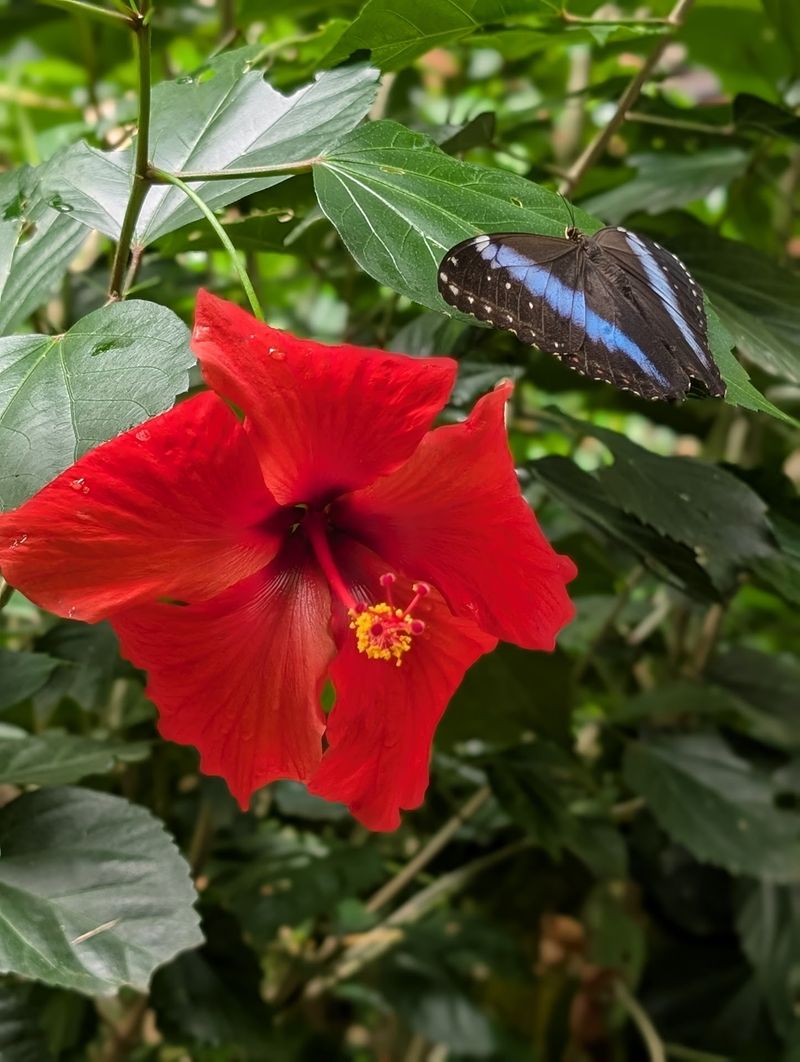
Tropical vegetation fills the 8,000-square-foot conservatory, providing food, shelter, and resting places throughout the butterflies’ living habitat.
Orchids and other tropical plants add to the dense greenhouse setting, with the plant collection maintained as part of the conservatory’s living ecosystem.
Staff maintain the greenery as a working habitat rather than a display. Every leaf offers a landing pad or a place to lay eggs.
Educational programming now includes staff-led tours, monthly workshops, community events, and other opportunities to learn more about butterflies and their ecosystem.
Butterfly gardening gets attention both indoors and outside, where the current garden features native pollinator plants and offers visitors ideas for creating wildlife-friendly spaces at home.
Magic Wings operates as a living butterfly ecosystem, with staff raising and maintaining butterflies and plants throughout the year while expanding its current education and community programs.
Magic Wings welcomes school and group visits, with advance booking required for groups of 20 or more and educational tours available through the current program.