This Free California Festival Takes Over Chinatown With Lion Dances, Mooncakes, And A Dumpling-Eating Contest
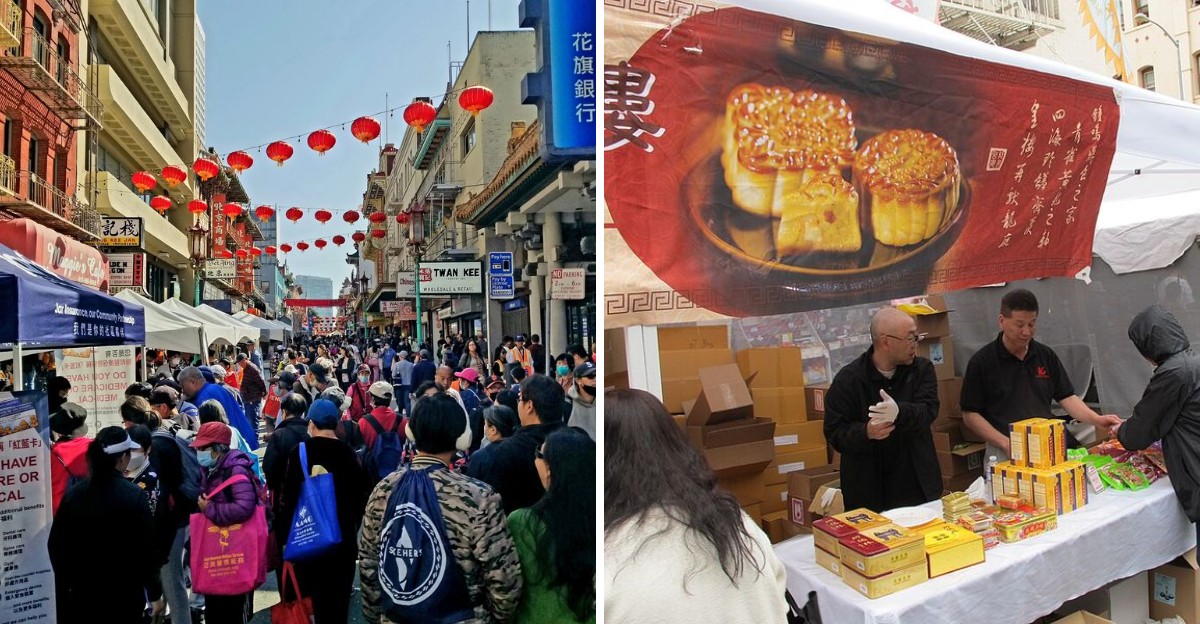
There are ordinary weekends in Chinatown, and then there are weekends when a lion comes dancing down the street.
That is a fairly good signal that something special is happening.
For this free California festival, the neighborhood becomes a celebration of the Mid-Autumn season, with traditions spilling beyond storefronts and into the streets.
Mooncakes appear at exactly the right moment, performances draw crowds, and the atmosphere feels built for wandering rather than following a rigid plan.
Come curious and preferably hungry.
The moon may inspire the celebration, but there is plenty happening at street level to keep your attention there.
Opening Parade And Ribbon Cutting
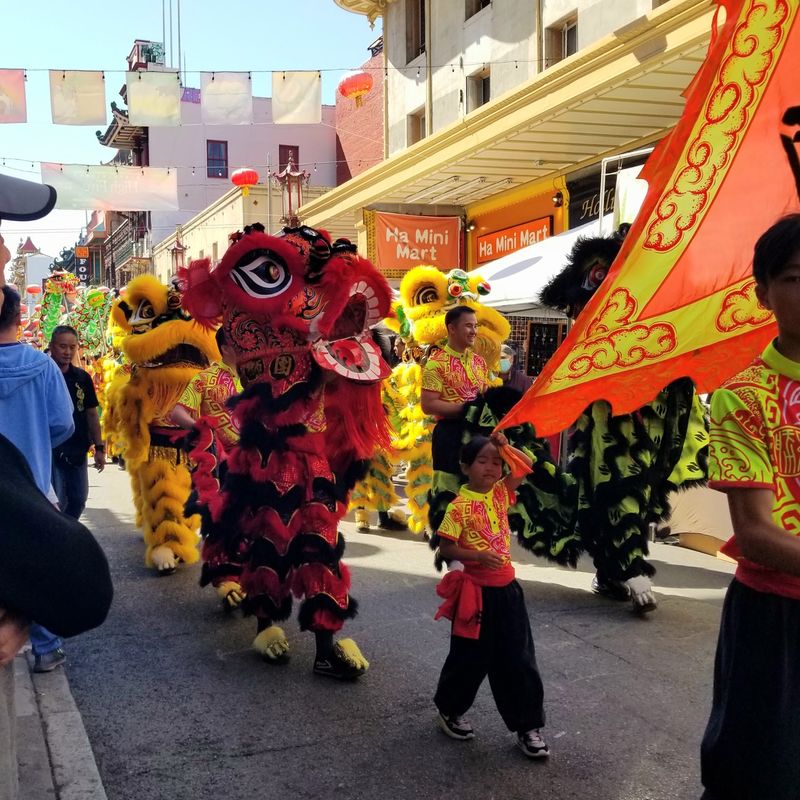
Everything kicks off at the corner of California Street and Grant Avenue, where the ribbon-cutting ceremony officially opens the weekend.
For the 2026 edition, the opening parade steps off Saturday, September 19, at 11:00 a.m.
Ribbon dancers, marching bands, giant puppets, and lion dancers all move through the same narrow stretch of street.
Traditional costumes make the procession easy to spot from a distance, even when the sidewalks fill in around you.
Arriving 15 to 20 minutes early gives a real advantage here. The kickoff pulls one of the biggest crowds of the entire weekend, and good viewing spots along the route disappear quickly once the drums start.
Standing near a corner rather than mid-block tends to help, since corners give a little more room to step back when the parade passes.
Weather in the city can shift between cool fog and bright sun within an hour, so a light layer makes the wait more comfortable.
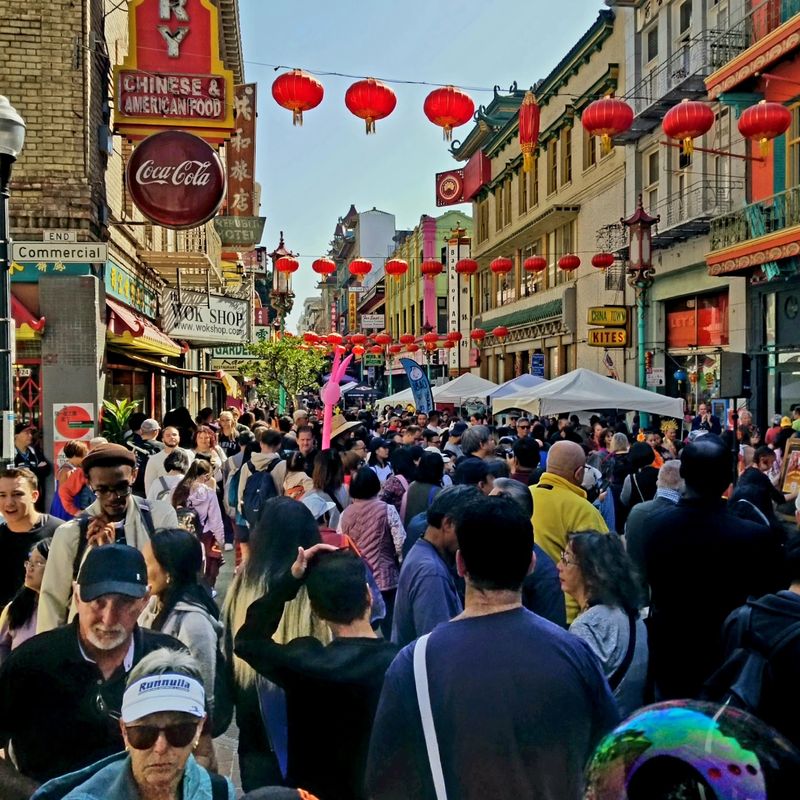
Once the ribbon is cut, the crowd spreads out along Grant Avenue and the pace of the day settles into something much easier to walk through.
The energy of that first half hour sets the tone for everything that follows.
Yau Kung Moon Lion Dance
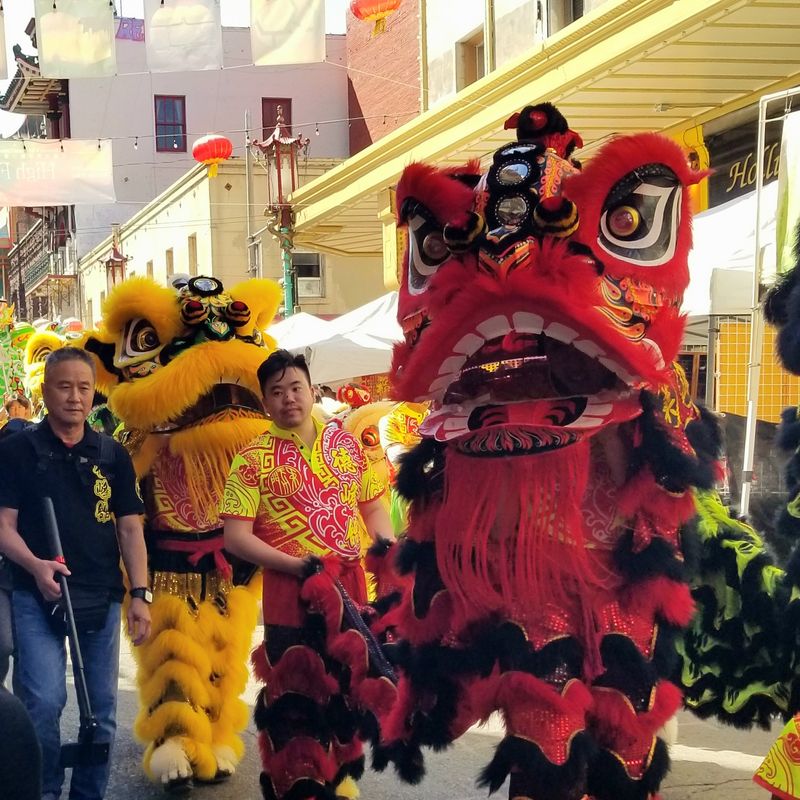
Right after the ribbon comes down, the lion dancers take over.
The Yau Kung Moon Lion Dance and Martial Arts group is scheduled for Saturday, September 19, 2026, at 11:30 a.m., and their set is one of the most photographed moments of the festival.
Two performers work inside each lion costume, one handling the head and one the body. Their coordination is what makes the lion appear to blink, shake, and pounce like a living animal rather than fabric and bamboo.
Drums drive the whole performance, and the beat carries down the block long before the lion comes into view.
Lion dancing has long been believed to bring good fortune and chase away bad luck, which is why it opens so many Chinese celebrations.
The Jing Mo Athletic Association also presents lion dancing and martial arts demonstrations, often staged near California and Grant.
Having more than one group means a second chance to see the tradition up close if the first crowd is too thick.
Sound levels get genuinely loud when the drums and cymbals hit together, something worth knowing if noise bothers younger kids. Standing a few feet back from the front row usually softens it while keeping the view clear.
Bright red and gold costumes photograph beautifully in daylight.
Traditional Martial Arts Performances
Discipline shows up in a different way once the martial arts demonstrations begin. Across both days of the festival, performers present traditional forms that mix strength, balance, and precise timing.
Shaolin-style martial artists have entertained visitors at past festivals with acrobatics and combat sequences.
Watching a group move through the same form in unison is quieter than a lion dance but somehow just as gripping.
Many of the movements come from centuries-old practice systems, and the demonstrations offer a real look at the history behind them.
Instructors sometimes explain what a form represents before performing it, which helps first-time viewers follow along.
Space around these performances is usually tighter than around the main stage.
Kids often get the best view from the front edge, though staying behind whatever boundary the performers set is important since weapons like staffs and swords may be part of the routine.
Sessions tend to run shorter than stage concerts, so checking the posted schedule near the performance area helps avoid missing them entirely.
Some local schools and athletic associations have taught these arts in Chinatown for generations, meaning the people performing often trained just a few blocks away.
Knowing that connection makes the demonstrations feel less like a show and more like a neighborhood tradition being shared openly with visitors.
Mooncakes Throughout The Festival
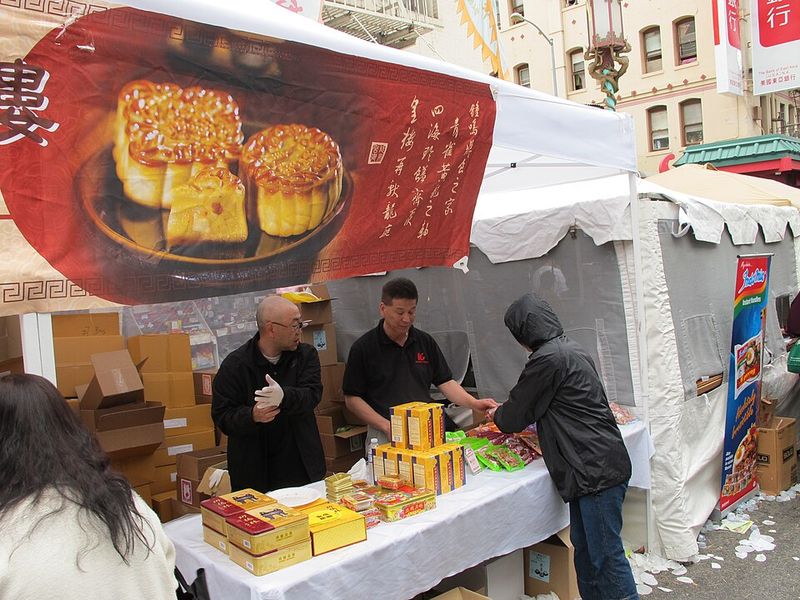
Round, dense, and stamped with decorative patterns on top, mooncakes are the single food most tied to this celebration.
Their circular shape traditionally stands for completeness and family reunion, which is exactly what the Mid-Autumn Festival honors.
Vendors along Grant Avenue sell them throughout both festival days.
Fillings vary widely and include sweet bean paste, salted duck egg, coconut, and mixed nuts, so tasting two or three side by side shows how different they can be.
Portions are richer than they look. A single mooncake is often sliced into small wedges and shared among several people rather than eaten alone, which is worth keeping in mind before buying a whole box.
Bakeries in the neighborhood stay open during the festival, and buying from a shop instead of a booth sometimes means more flavor choices and packaging built for carrying home.
Prices differ from vendor to vendor depending on size and filling, so a quick walk down the block before buying can be useful.
The pastries connect directly to the holiday behind the festival, which falls on the fifteenth day of the eighth lunar month when the moon appears at its fullest.
Eating one while standing in a crowded street feels like joining a tradition thousands of years old.
Saturday K-Pop Dance Contest
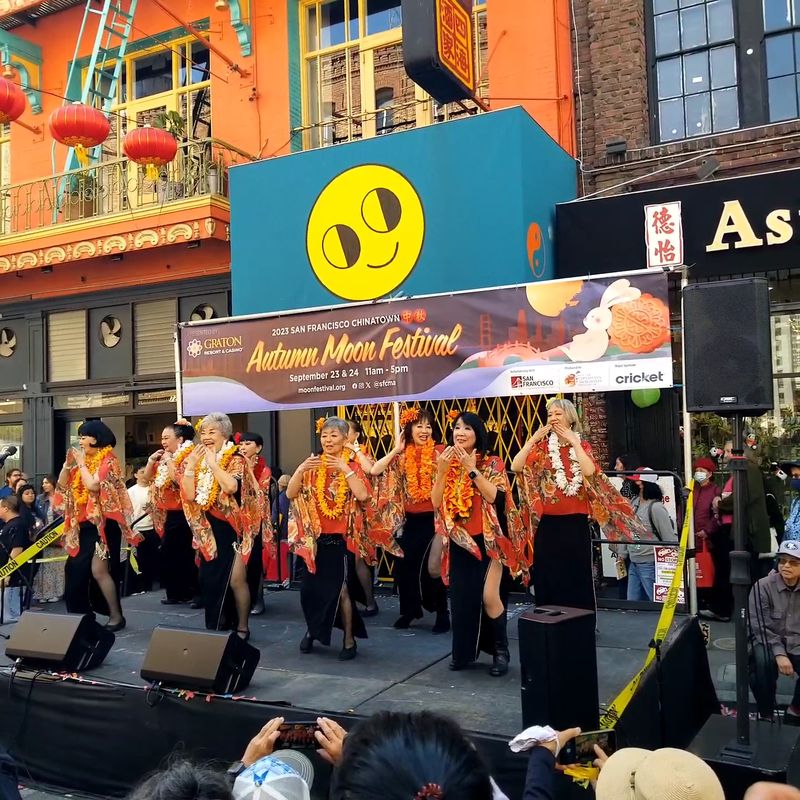
Not everything at the festival dates back centuries.
A K-Pop dance contest brings a completely modern sound to the main stage at Washington Street and Grant Avenue, usually running Saturday afternoon from 1:15 p.m. to 2:00 p.m.
Solo dancers, duos, and groups of up to eight performers can enter. Each act performs its own K-Pop choreography, and the mix of skill levels is part of what makes it fun to watch.
Registration is free, though space fills up because the contest has become popular. Anyone hoping to compete should check the official festival listings well ahead of the weekend rather than showing up expecting a spot.
Winners are typically chosen by audience response, which turns spectators into judges. Cheering genuinely affects the outcome, so the crowd tends to get loud.
Teenagers and younger adults make up much of the audience here, giving this block a different feel than the martial arts area a few streets over.
Arriving five or ten minutes early is enough for a decent view since the crowd turns over between acts.
Shade near the stage is limited on sunny days. A hat and water make the forty-five minutes considerably more comfortable, especially standing still on pavement.
Chinese Folk Dancing
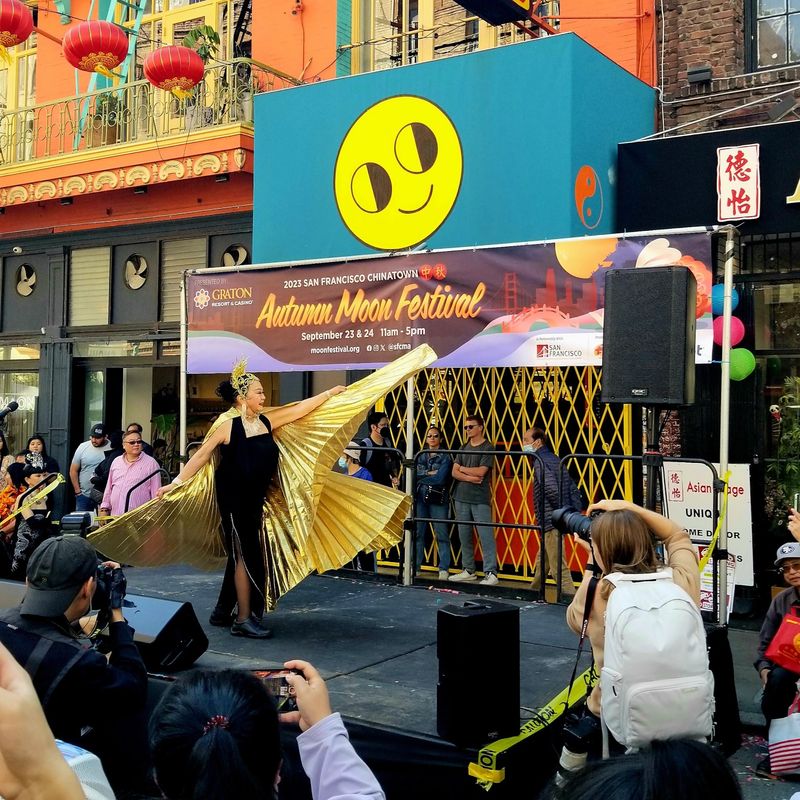
Softer and slower than the lion dances, folk dancing gives the festival a moment to breathe.
Groups including the Chinese Folk Dance Association perform across the weekend, bringing flowing costumes and carefully controlled movement to the stage.
Many of these dances tell stories. Gestures with fans, sleeves, or ribbons stand in for wind, water, birds, or harvest work, and the meaning becomes clearer the longer you watch.
Regional styles differ noticeably from one another. Seeing several groups in a row reveals how varied Chinese dance traditions are across different provinces and ethnic groups.
Costumes are worth looking at closely, since colors and embroidery patterns often carry their own significance.
Front-row viewing helps for catching that detail, but the choreography reads well from farther back too.
Performances like these tend to draw a calmer audience than the contests do. Families with strollers or grandparents in tow may find this a more comfortable stretch of the schedule.
Announcers usually introduce each piece and the group performing it. Listening to those introductions adds a lot, because a dance about a harvest festival lands differently once you know that is what it depicts.
Sitting on a curb during a set is perfectly acceptable and a smart way to rest mid-afternoon.
Moon Goddesses, Moon Gods, And The Festival Archer
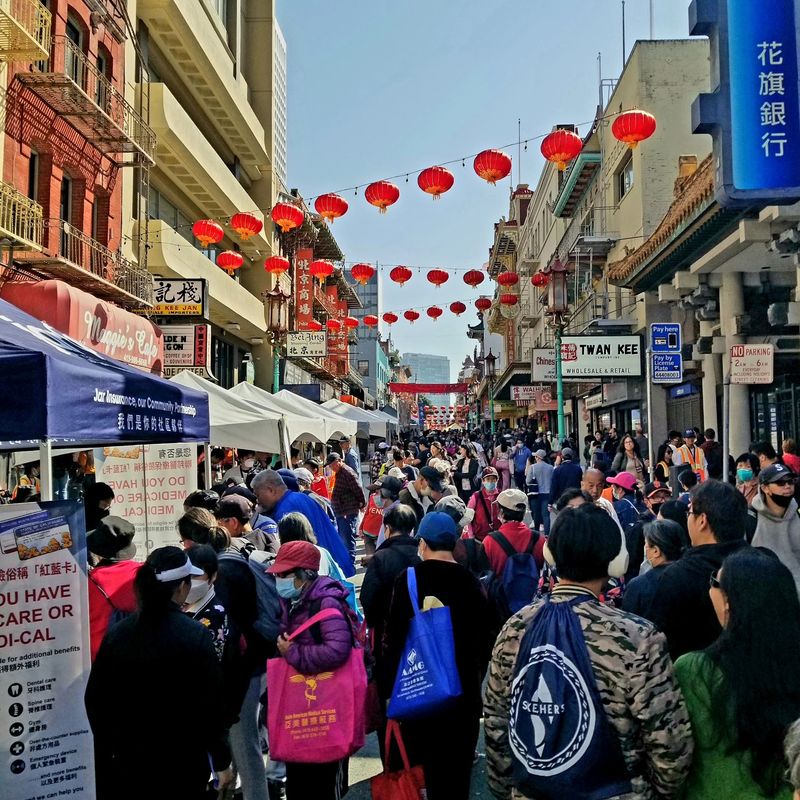
Legend walks the street in costume during this festival.
Characters representing Moon Goddesses, Moon Gods, and a Festival Archer move through the crowds, stopping for photos and greeting visitors along the way.
The story behind them centers on Chang’e, the Moon Goddess said to live on the moon with a jade rabbit.
Her legend sits at the heart of Mid-Autumn Festival mythology and explains why the holiday focuses so heavily on moon viewing.
In Chinese celestial tradition, the moon represents yin, the feminine principle, and connects to harvest cycles and abundance.
The costumed figures make those ideas concrete for anyone unfamiliar with the background.
Younger kids often react most strongly to these characters, treating them a bit like storybook figures come to life. Approaching politely and asking before taking a photo is the respectful approach.
Elaborate robes and headpieces mean the performers move slowly and need space to turn. Giving them a wide path helps them keep going through the crowd.
Spotting them is somewhat luck-based since they roam rather than staying in one place. Anyone hoping for a photo may simply need to keep an eye out while walking the festival route.
Sunday Dumpling-Eating Contest
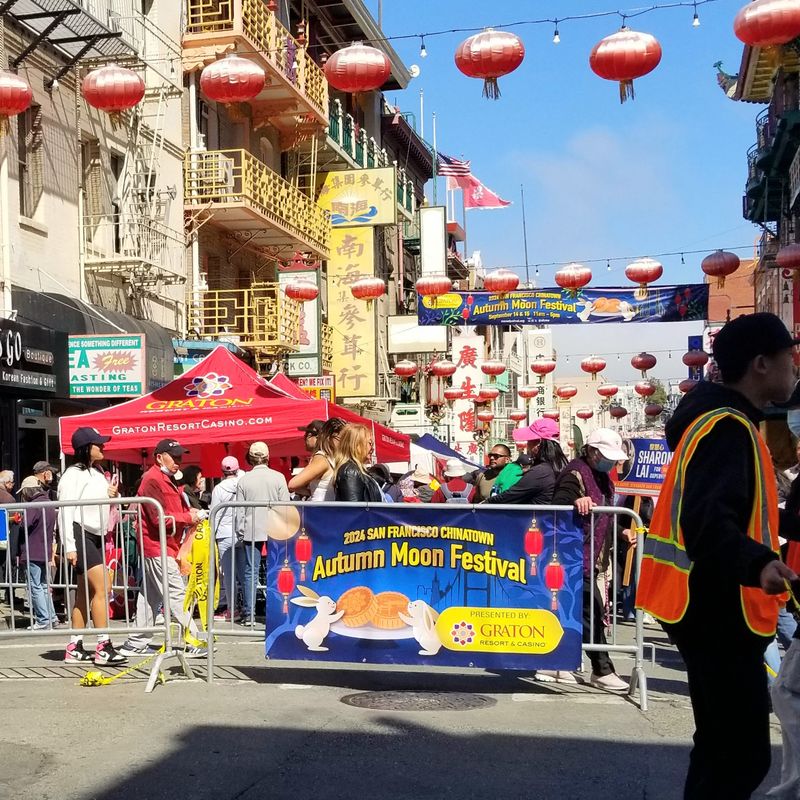
Pure spectacle arrives late Sunday afternoon. The dumpling-eating contest is scheduled for Sunday, September 20, 2026, at 2:45 p.m., billed as a fast and tasty eating showdown.
Contestants line up at a table and race to finish as many dumplings as they can. The crowd does most of the work, cheering, counting, and laughing through the whole thing.
Dumplings hold a special place in Chinese cooking, which makes this more than just a novelty event. Turning a beloved everyday food into a competition gets a big reaction from the audience.
Getting a good view takes some effort because people pack in tightly around the table. Standing at the edge of the crowd and watching the reactions is nearly as entertaining as seeing the plates empty.
Anyone interested in competing should look for official registration details ahead of the festival rather than assuming same-day signup is available.
Timing works out nicely for visitors staying through the afternoon, since the contest lands between the midday performances and the closing parade.
Grabbing food beforehand is smart, because watching people eat dumplings makes almost everyone hungry.
The whole thing wraps up quickly, so lingering nearby a few minutes early beats trying to squeeze in once it starts.
Closing White Crane Dragon Parade
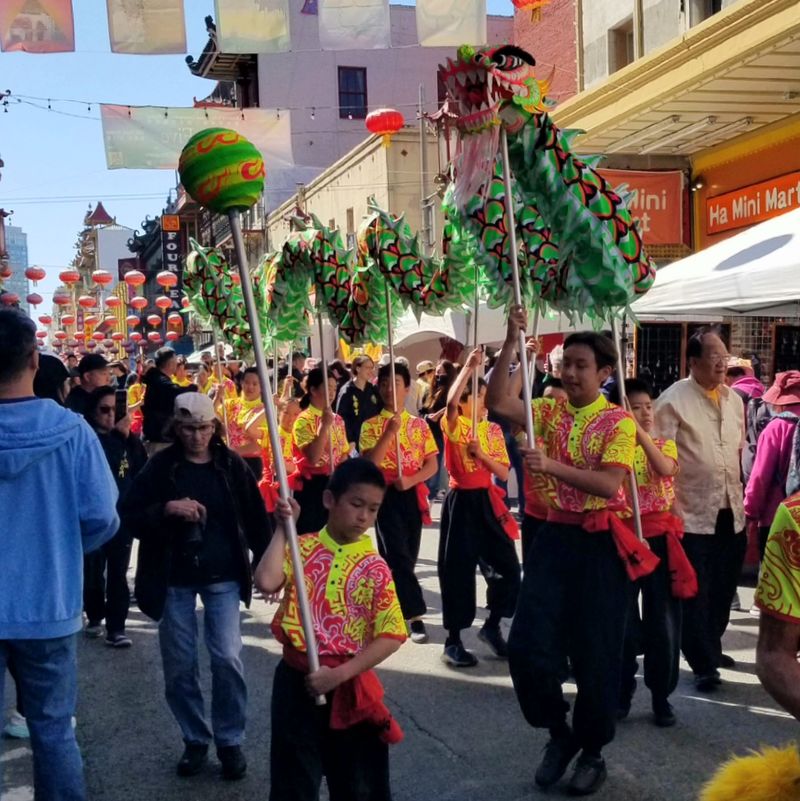
The final act saves the biggest visual for last. The Closing White Crane Dragon Parade steps off Sunday, September 20, 2026, at 4:30 p.m., moving along Grant Avenue to end the weekend.
A long dragon carried by many performers weaves and rises above the crowd. Dragons symbolize good luck and prosperity, and watching one travel the length of a closed street is a genuinely memorable sight.
Coordination is the whole trick. Each performer holds a pole supporting one section of the dragon, and the animal only looks alive when everyone moves in the same wave-like rhythm.
Late afternoon light along Grant Avenue works in favor of photos, with warmer tones than the harsh midday sun. Shooting from slightly uphill or from a corner gives a longer view of the dragon’s body.
Festival hours end at 5:00 p.m., so the parade essentially doubles as the closing bell. Crowds begin heading toward transit right afterward, meaning trains and buses fill up quickly.
Waiting fifteen or twenty minutes after the parade before leaving can make the trip out noticeably easier. Grabbing a final snack or stepping into a nearby shop passes that time well.