Nebraska Is Home To A Frontier Army Fort Whose Original Brick Officers’ Homes Still Stand And Welcome Overnight Guests
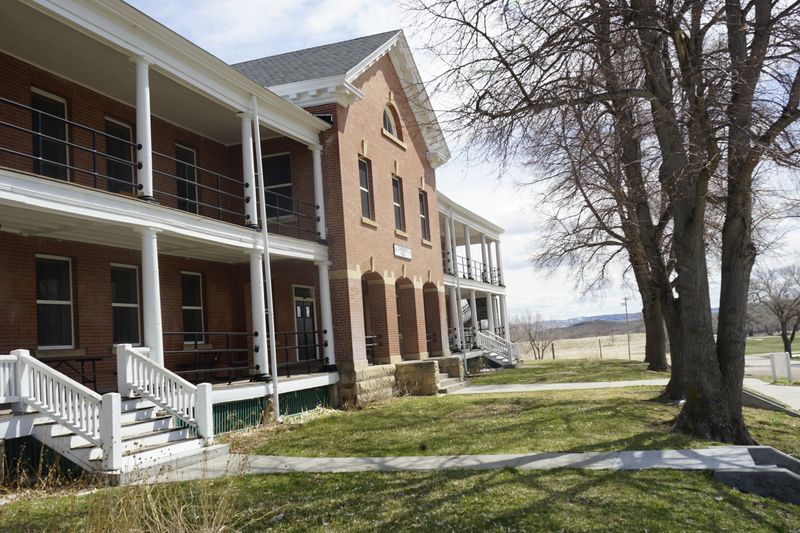
Driving the two-lane highways of northwestern Nebraska, you expect grass, buttes, and not much else. Then a long row of white-trimmed brick buildings appears along a parade ground, and you realize you have wandered into an actual frontier army post that never got torn down.
Better yet, some of those officers’ homes still take overnight guests, so you can sleep where cavalry families once lived. It is the kind of place that makes you wonder how you never heard about it before.
A Frontier Post on Highway 20 in Northwestern Nebraska
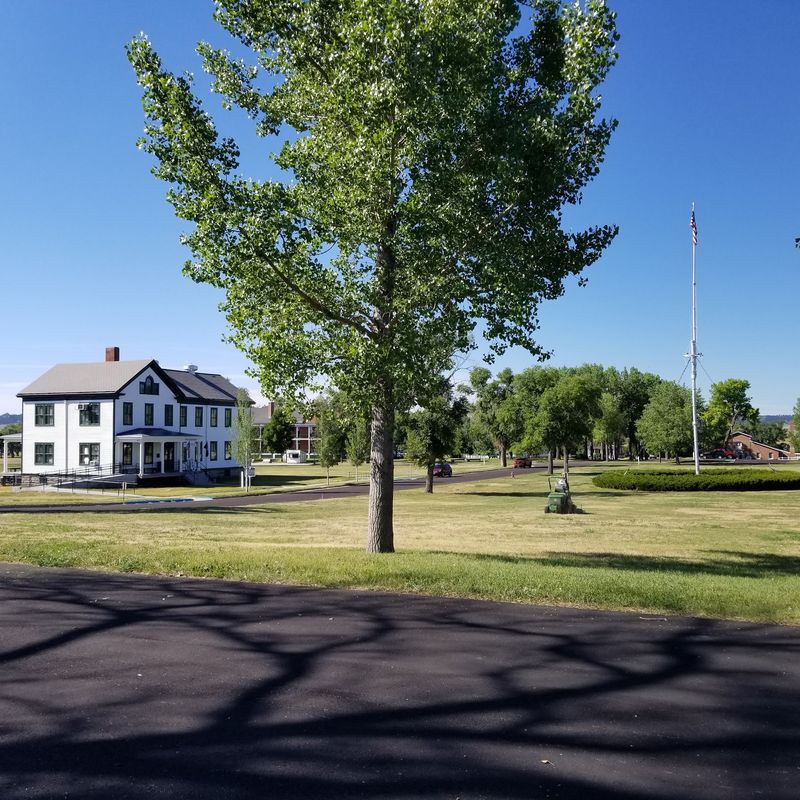
Head west from Chadron on U.S. Highway 20 and the road delivers you to a parade ground the size of several football fields, framed by buildings that have stood since the cavalry era.
The address reads 3200 US-20, Crawford, NE 69339, in Dawes County, deep in the pine ridge country of the state’s northwestern corner.
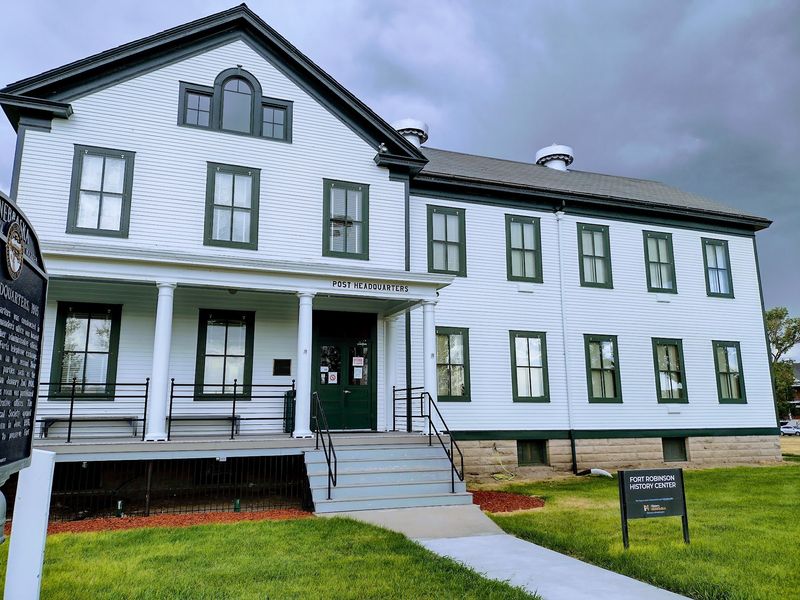
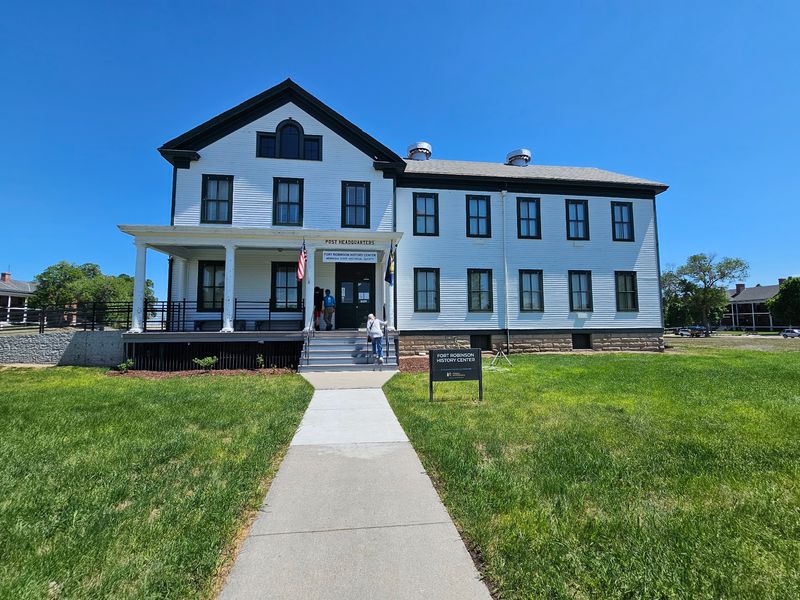
At the heart of it sits the Fort Robinson Museum & History Center, housed in the original 1905 post headquarters. A modest entry fee covers exhibits that run from the 19th century through World War II, and the staff will point you toward the short introductory film first.
The museum anchors a much larger site. Fort Robinson State Park is the biggest state park in Nebraska, wrapping the old military grounds in trails, ponds, pastures, and campgrounds.
Rating sits at 4.6 stars across more than 600 reviews, which for a small history museum on the plains says plenty. Doors open daily at 9 AM and close at 4 PM, and the phone line is 308-665-2919 if you want to confirm before the drive.
From Camp Robinson to Seventy Years of Service
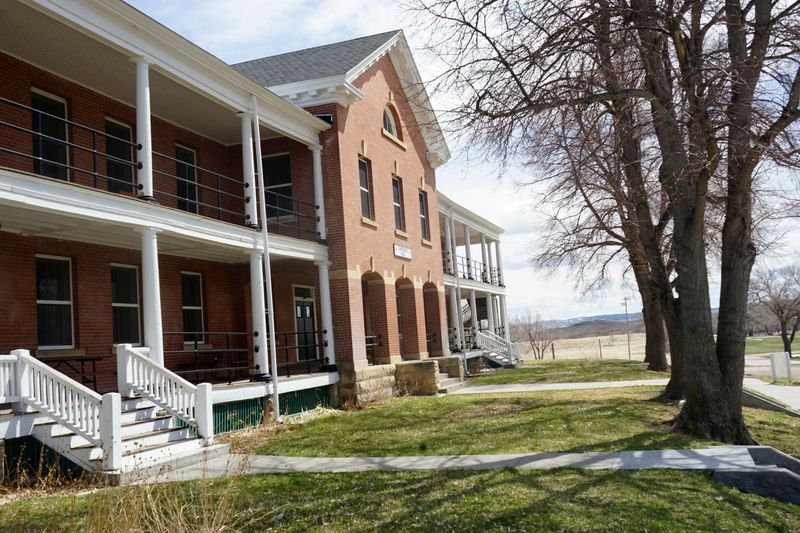
March 1874 marked the beginning, when the post was established as Camp Robinson to protect the nearby Red Cloud Agency. By January 1878 it had been formally redesignated Fort Robinson, and the name stuck for the next seven decades.
The Indian Wars period defined its early years, and the site carries the marker commemorating Crazy Horse, whose story ended here in 1877. Museum exhibits address the early cavalry units stationed at the post and the Native peoples of the region.
What happened later surprises most people. During World War I the fort became the largest military remount depot in the world, handling horses and mules on a scale hard to picture now.
World War II brought two more chapters: a K-9 Corps training center for war dogs, and a camp holding German prisoners of war on Nebraska soil.
Artifacts throughout the galleries are paired with the stories of the people who wore or owned them, which keeps the sweep of seventy years feeling personal rather than abstract. Plan roughly thirty to sixty minutes inside.
The Officer’s Bricks: Sleeping in Quarters Built for Cavalry Families
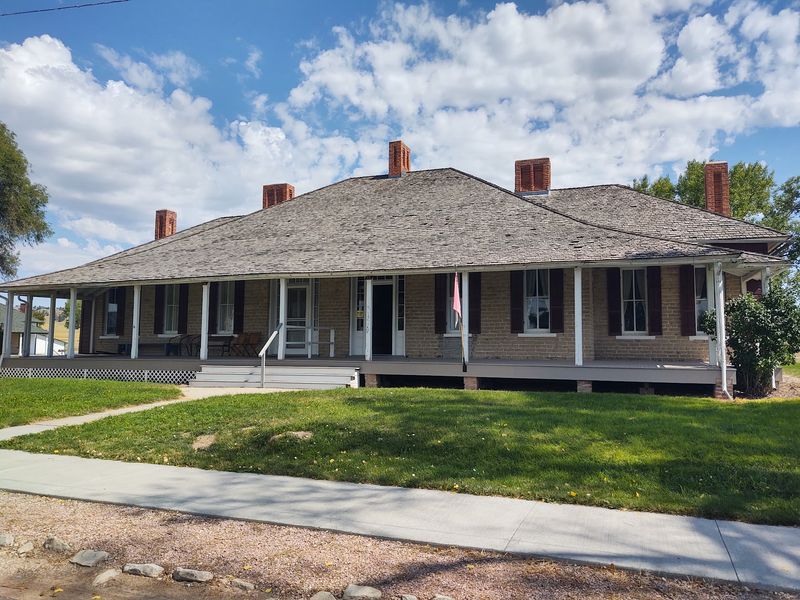
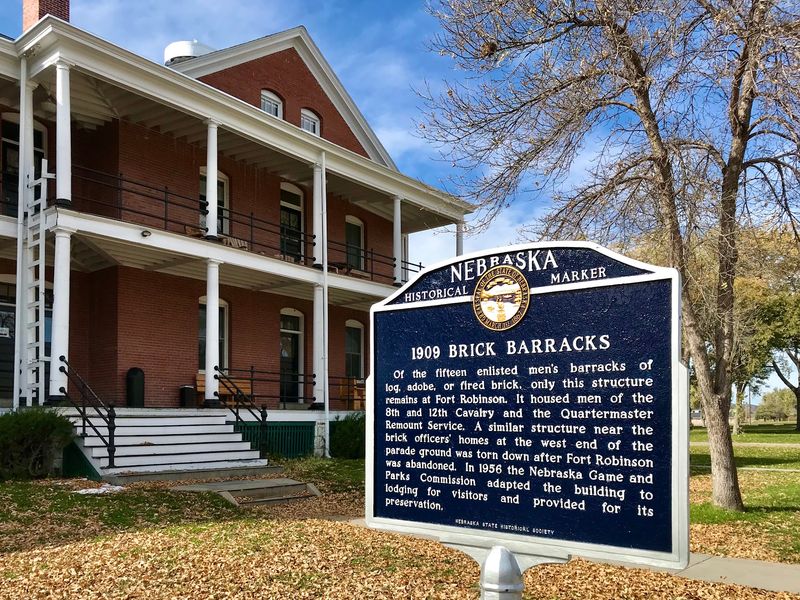
Picture unlocking the door of a two-story brick duplex where a lieutenant and his family once unpacked their trunks. That is the everyday reality of lodging at Fort Robinson, where the row of buildings locals call the officer’s bricks now serves as vacation rentals.
Some of the oldest original structures on the grounds are the adobe brick officers’ quarters dating to 1874 and 1875. Others have been carefully rebuilt on their original foundations, including a Commanding Officer’s Quarters reconstructed in 2015.
Inside, the arrangement leans practical rather than museum-precious. Each unit comes with a kitchen, bath, living room, and bedrooms, plus blankets, towels, a stove, refrigerator, silverware, and cooking utensils already in place.
Capacity varies widely, from a couple of people up to twenty, which is why family reunions turn up here so often. Comanche Hall, a 1909 bachelor officers’ quarters, pushes that further with 60 beds and 14 bathrooms under one roof.
Lodging generally runs from early April through late November, and reservations can be made up to a year ahead.
Inside the 1905 Post Headquarters
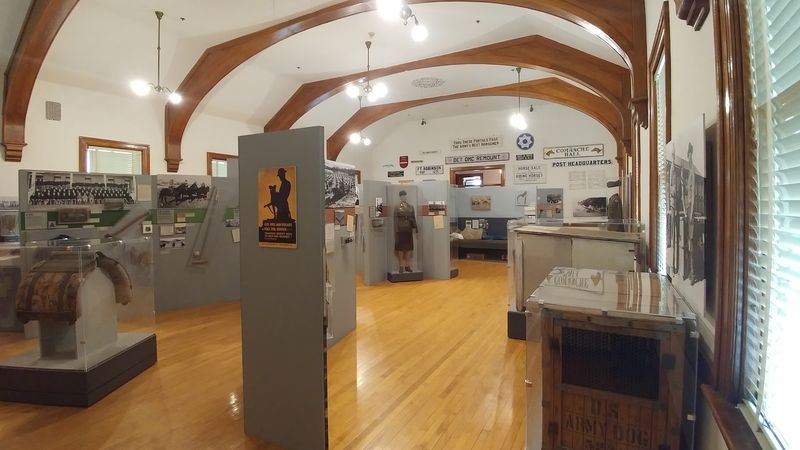
Nobody expects a small-town museum to hold your attention for an hour, and then the front desk suggests a viewing order and the time disappears. Staff greet arrivals warmly and steer visitors to the orientation film before the galleries, which is sound advice given how much ground the fort’s story covers.
Photographs and written accounts fill the walls, many of them material you will not encounter elsewhere. Uniforms, tools, and personal items sit beside short biographies of the soldiers and civilians who used them.
The building itself is part of the exhibit. Serving as post headquarters from 1905, it puts you inside the administrative heart of the fort while you read about it.
Scale works in its favor. The intimate footprint keeps things digestible, and children tend to stay engaged through the displays rather than drifting toward the exit.
One honest note: the introductory film covers a lot of the same territory as the panels, so budget your time accordingly. Half an hour suits a quick pass, an hour rewards the curious.
Horse Barns, Jeep Rides, and Trails Across the Buttes
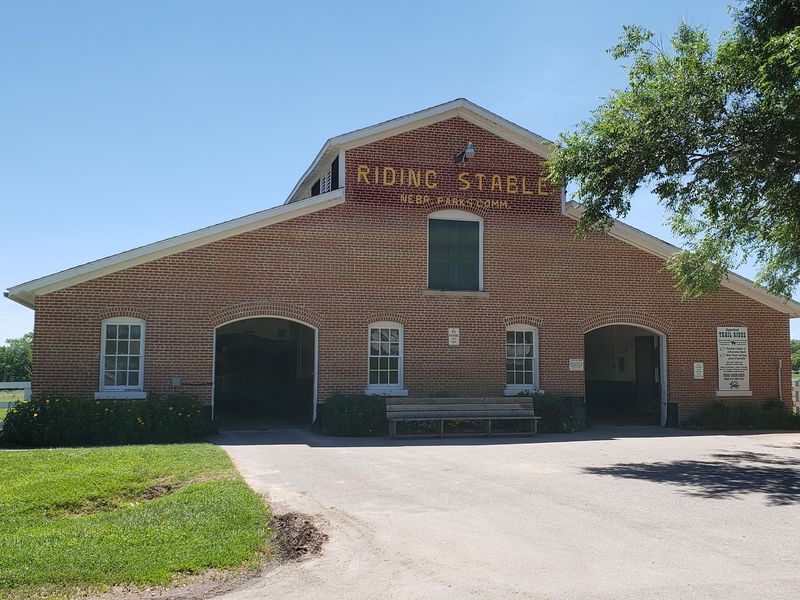
Stables still smell like stables here, and the enormous horse barns from the remount era remain standing and open to walk through. Given that the fort once moved army horses by the thousands, the barns feel less like decoration and more like the point.
Warm-weather months bring trail rides, open-air jeep tours across the buttes, hiking on well-marked paths, fishing ponds, and a swimming area that keeps kids occupied for hours. A summer playhouse adds evening theater to the mix.
Wildlife watching costs nothing extra. Bison, longhorn cattle, pronghorn, and burros roam pastures around the grounds, and the surrounding dirt-road drives, including the Sowbelly and Smiley Canyon loops, reveal country most highway travelers never see.
A cafe on site serves reasonably priced meals, handy when you have spent the afternoon outdoors.
Timing matters more than at most parks. Many of the guided activities operate from roughly Memorial Day through Labor Day, while camping, trails, and the ponds often stay accessible well outside that window.
Wide Skies and a Landscape That Steals the Show
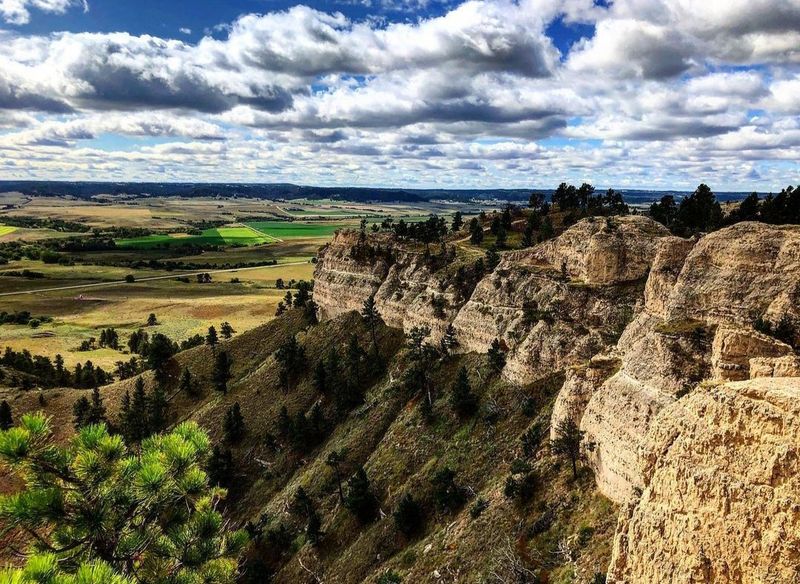
Cottonwoods line the creek bottoms, ponderosa pines climb the ridges, and buttes rise where flat Nebraska is supposed to be. The drive up from Scottsbluff is one of the prettiest stretches in the state, and the approach from the Black Hills of South Dakota is not far either.
Beauty comes up more than almost any other topic in conversations about this place, and the setting earns it. Mornings on the parade ground are quiet enough to hear meadowlarks.
Distances are worth planning for. The site sits in the far northwestern corner, so families from Omaha, Lincoln, Grand Island, or Kearney should treat it as a weekend rather than a day trip.
Nearby side excursions include Agate Fossil Beds National Monument and the Toadstool Geologic Park badlands, both within a couple of hours.
Allergy sufferers, one heads-up: the cottonwood cover is thick, and spring and early summer can be rough without antihistamines packed in the bag.
Who Fits Best on These Grounds
Reunions work beautifully here, and the numbers explain why. When one building sleeps twenty and another holds sixty, scattered families can gather under a single roof instead of splitting across motels forty miles apart.
History-minded travelers get plenty to chew on, though it helps to know the balance. The state runs the property as a full recreation destination, so lodging, swimming, and horseback riding share the stage with interpretation, and the Indian Wars story is covered more briefly than some would prefer.
Campers and RV owners are well served, with full-hookup sites and staff willing to steer you toward shady spots under mature trees. Tents fit too.
Retirees looking for quiet mornings, easy walks, and scenic drives will find the pace agreeable, especially outside peak summer weekends.
Anyone chasing atmosphere in the old brick homes gets that as a bonus. Creaky floors and century-old rooms have a way of feeling faintly haunted, which most people count as part of the appeal rather than a drawback.
Hours, Fees, and Getting There Without a Wrong Turn
Nine in the morning until four in the afternoon, seven days a week, is the museum schedule. A small admission fee applies at the History Center, and a Nebraska park entry permit is required for the grounds, so check current rates with the park before you arrive.
Reservations for the brick quarters and cabins run through the state park system and open as much as a year in advance, which matters for holiday weekends and reunion-sized groups.
Navigation deserves real attention. Following a mapping app straight to the center of the old fort has sent RV drivers coming from the east down long dirt roads with nowhere to turn around, so follow the highway signs to the campground entrance instead.
Crawford, just minutes away, covers basic supplies, and Chadron offers more if you need a larger store or extra lodging.
Call 308-665-2919 for museum questions, or check history.nebraska.gov for exhibit details. Seasonal activity schedules shift year to year, so confirm ride and tour availability before counting on them.
Why This Corner of the State Earns the Long Drive
Few states can point to a frontier army post where the officers’ homes not only survived but still have working kitchens and made beds waiting inside. Nebraska can, and the fact that so few residents have made the trip is a little remarkable.
Seventy years of history sit on these grounds, from cavalry patrols and the Crazy Horse marker to remount barns, war dog training, and a POW camp. The museum in the 1905 headquarters ties those threads together in under an hour.
Around it stretches the largest state park in Nebraska, with trails, ponds, barns, bison pastures, a cafe serving well-priced food, and scenic dirt-road loops that show off the pine ridge country.
Expect a real drive from the eastern half of the state, and expect summer to offer the fullest slate of activities. Autumn trades the guided rides for quieter grounds and cooler walks.
Come for one night in the officer’s bricks and you will likely start planning the next stay before checkout.