This Gorgeous Connecticut Botanical Paradise Spans 750 Acres And Is Completely Free To Visit
Free usually comes with a catch. Not here.
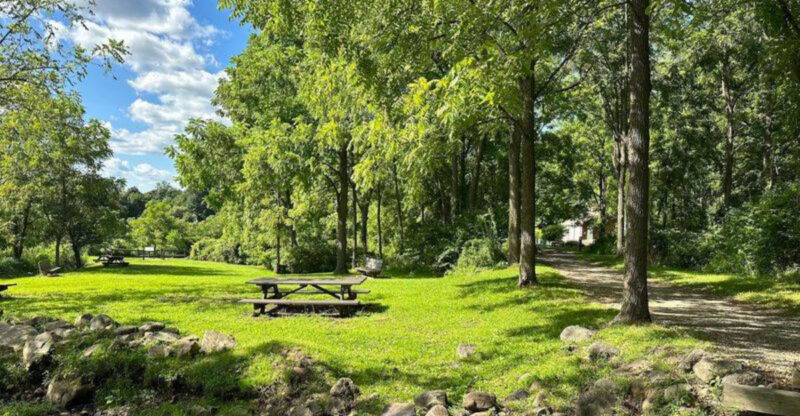
The grounds stretch far beyond what you expect, with gardens, wooded areas, open space, and trails giving you plenty of room to disappear for a while without spending anything at the gate.
The scale is what makes it surprising.
This Connecticut botanical escape covers 750 acres, yet the mood can still feel calm enough for an unhurried afternoon. Admission is free from sunrise to sunset throughout the year.
You can wander at your own pace, stop when something catches your eye, and leave the schedule mostly forgotten.
There is enough variety to keep the visit interesting without needing a packed itinerary. That makes it just as good for a quick reset as it is for a long, slow walk.
The fact that admission is free only makes the whole thing feel slightly unreal.
A beautiful place this large could easily charge for the privilege. Instead, it simply lets you come in and explore.
1. Hundreds Of Acres Create An Unexpected Botanical Escape
It feels bigger than expected. One path slips into quiet woods, while another opens beside water or reaches a completely different kind of landscape.
That constant change is what makes the Connecticut College Arboretum so easy to keep exploring.
The property spans 750 acres, including landscaped campus grounds, plant collections, and large natural areas. Bolleswood brings mature woodland into the mix, while Mamacoke Island reaches into the Thames River and connects to the mainland by a tidal salt marsh.
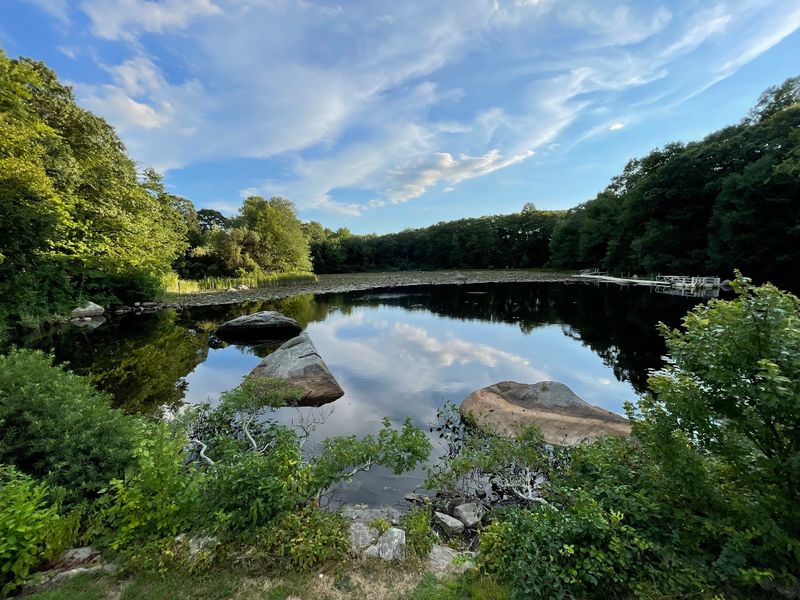
The pond helps anchor the main collection area and gives visitors an easy reference point before the side paths begin branching away. Around it, the scenery shifts between carefully managed plantings and wilder stretches where the setting feels surprisingly removed from nearby roads.
That contrast is part of the fun. A casual walk can turn into a much longer wander simply because another bend keeps looking worth following.
Birds and turtles may appear near the water, while the woods reward slower attention with changing textures underfoot and overhead.
Plan on lingering. The arboretum is free and open to the public from sunrise to sunset, and its mix of gardens, trails, and natural areas makes even a short visit feel pleasantly unhurried.
2. A Waterfront College Campus Wraps Around The Greenery
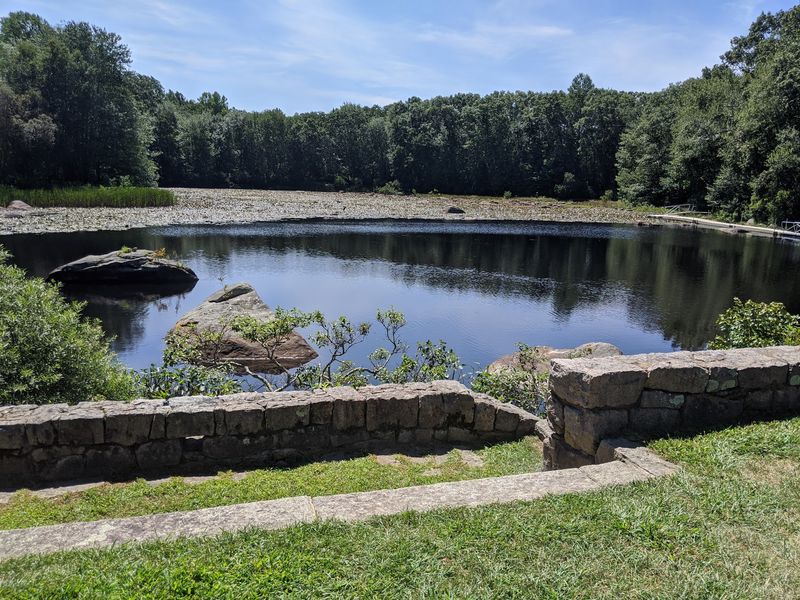
Water shapes this place more than you would guess from the entrance gate. Connecticut College occupies a hillside above the Thames River, and the Arboretum is woven directly into that campus rather than fenced off from it.
Walk to the right vantage points and the reward is a broad view of the Thames and, beyond it, Long Island Sound. The river light gives the grounds a particular clarity in the late afternoon, especially in autumn when the foliage catches it.
The college leans into that relationship openly. Its seal carries a Latin motto that translates to “Like a tree planted by rivers of water,” which is about as direct a mission statement as a school can offer.
What surprises many first-time visitors is that the campus landscape itself counts as part of the collection. Trees and shrubs from around the world grow among the academic buildings and walkways, tended as deliberately as anything in the formal garden areas.
That means a visit can easily combine two experiences: quiet woodland trails on one side, and a stroll past labeled specimens on a working college campus on the other. Students studying under the trees are simply part of the scenery.
3. The Arboretum Started With 64 Acres In 1931
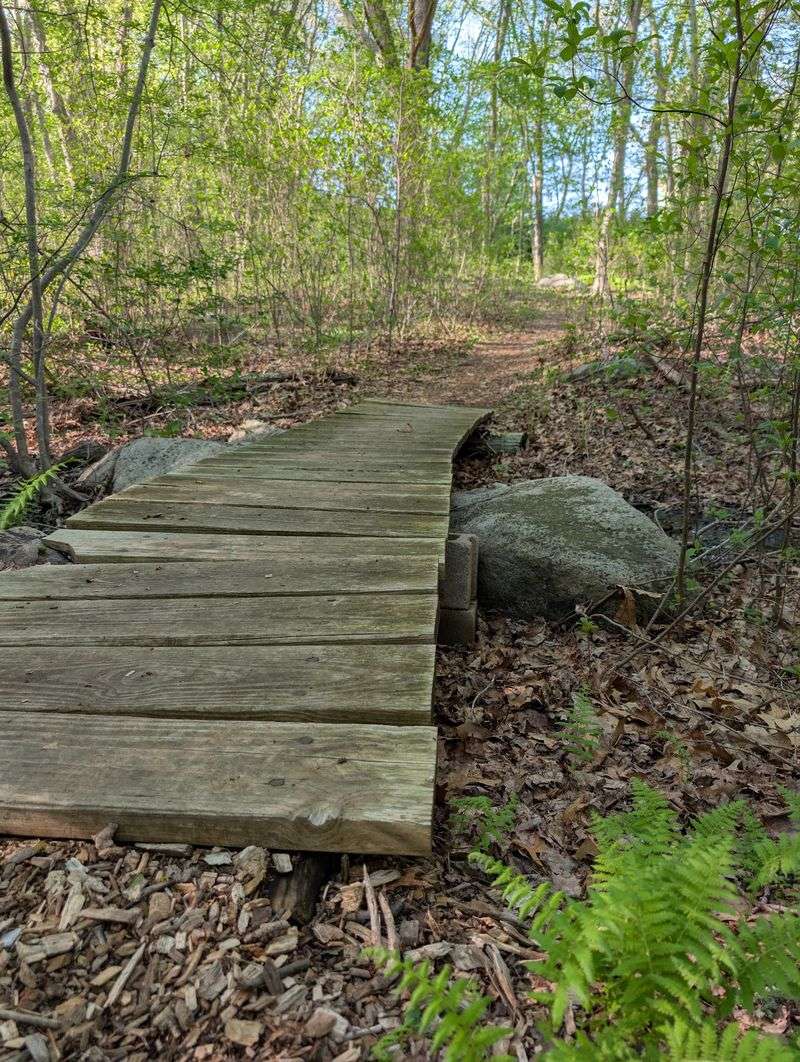
Every big landscape begins somewhere modest. Here, the starting point was a 64-acre parcel west of the campus along Williams Street, formally established as an arboretum in 1931.
A grove of mature hemlocks stood on that original land and became one of its defining features in the early years. Tall, dark, and cool underfoot, hemlock groves have a hush to them that people who visit older New England woods will recognize immediately.
The college president at the time had two purposes in mind. The land was meant to serve as a research site for students and faculty, and also as a genuine resource for the surrounding New London community.
That double role explains a lot about why the grounds still feel both scientific and welcoming today.
There was an even earlier chapter. In 1928, the first chair of the botany department created a small teaching garden of about four acres, three years before the Arboretum officially existed.
After her passing in 1930, that garden was named in her memory, and it remains one of the most distinctive corners of the property. Knowing this history makes the older trees feel less like decoration and more like living records.
4. Admission Stays Free Every Day Of The Year
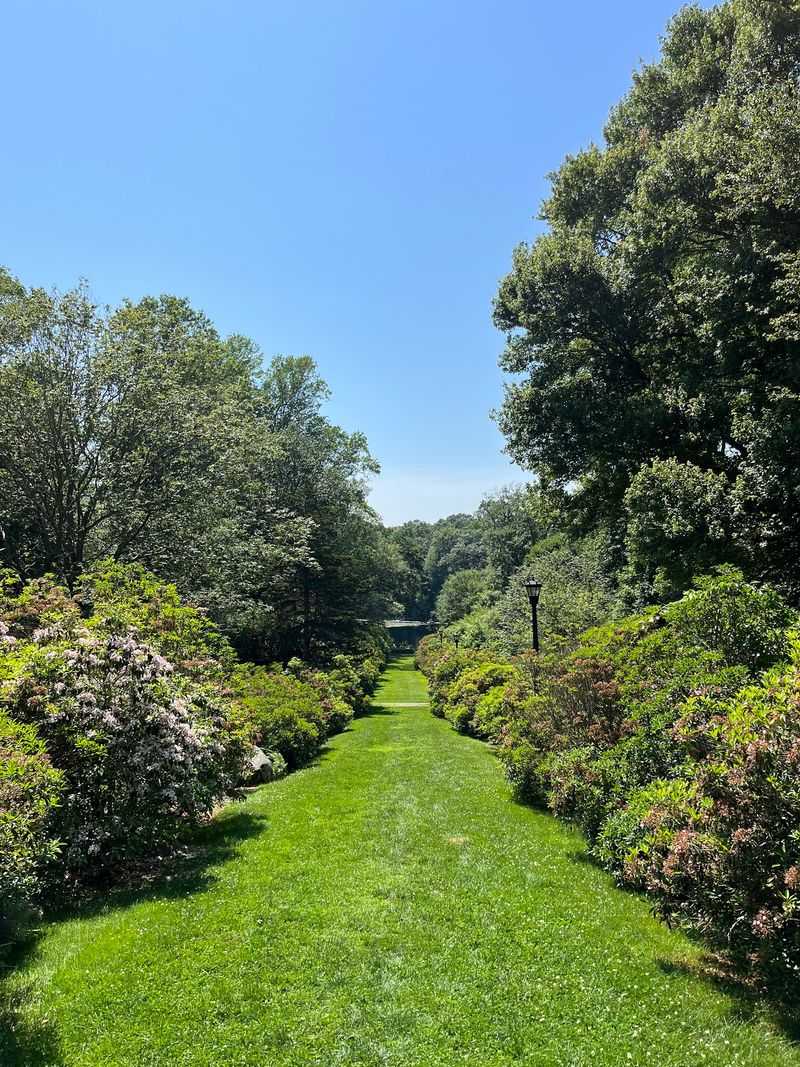
No ticket booth, no admission fee, no seasonal closures. The Arboretum opens to the public every day of the year from sunrise to sunset, and it costs nothing to walk in.
That policy changes how people use the place. Locals treat it as a regular habit rather than a special outing, dropping by for a short walk before work or a long ramble on a free Saturday.
Self-guided tour brochures are stocked at three convenient spots: the main entrance to the Native Plant Collection, near the north entrance gate, and at the Caroline Black Garden. Grabbing one costs nothing and turns a pleasant walk into something closer to a lesson.
If you prefer company and context, free public guided tours run on the first and second Sundays of each month from May through October. They typically begin at 10 a.m. and last between one and one and a half hours.
The main entrance to the Native Plant Collection sits at approximately 830 Williams Street, while the property’s general address is listed as 270 Mohegan Ave Pkwy, New London, CT 06320.
Street parking along Williams Street is common, with posted two-hour limits worth checking before you settle in.
5. Native Plants Fill One Remarkable Collection
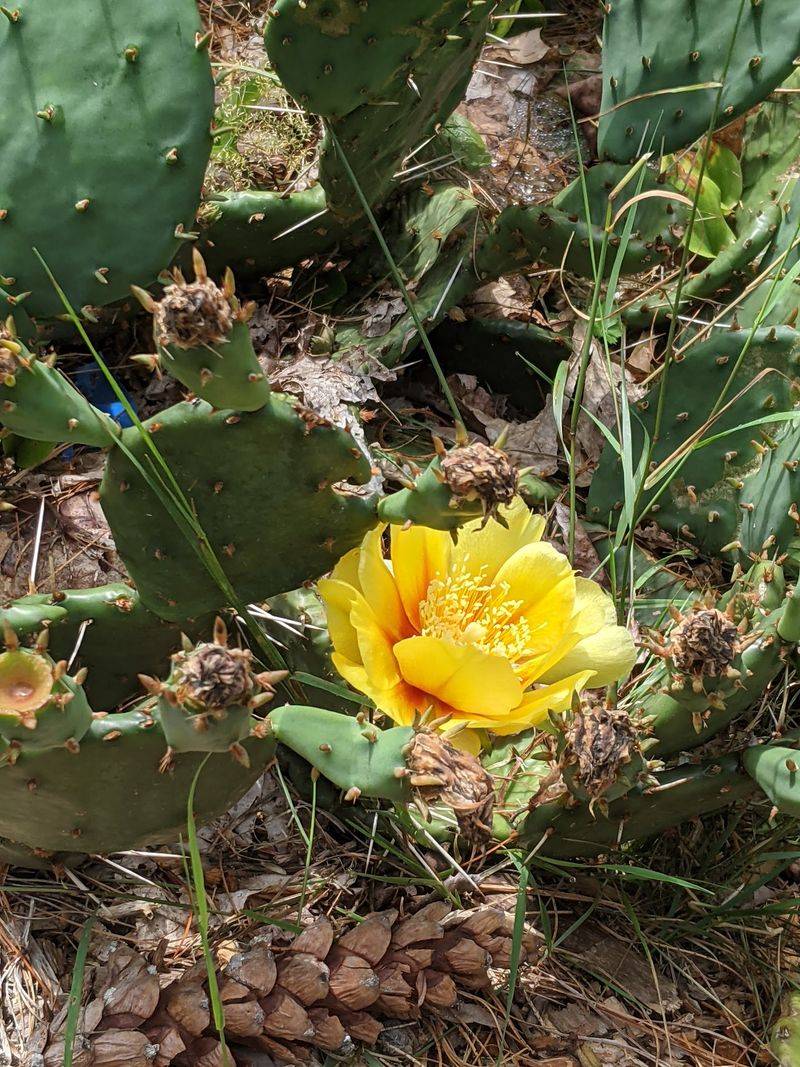
The numbers get impressive fast. Inside the Native Plant Collection, thousands of accessioned plants turn a simple walk into a living field guide.
As of June 2024, the collection held 2,398 plants representing 350 taxa.
The collection dates to 1931, the same year the Arboretum was founded, and focuses on woody plants native to eastern North America. Spread across about 30 acres, it includes trees, shrubs, and woody vines arranged for study as well as enjoyment.
Labels on many specimens make it easy to slow down and finally put names to plants that might otherwise blend into the scenery.
Seasonal changes keep repeat visits interesting. Shadbush brightens April, while dogwoods and azaleas become highlights in May.
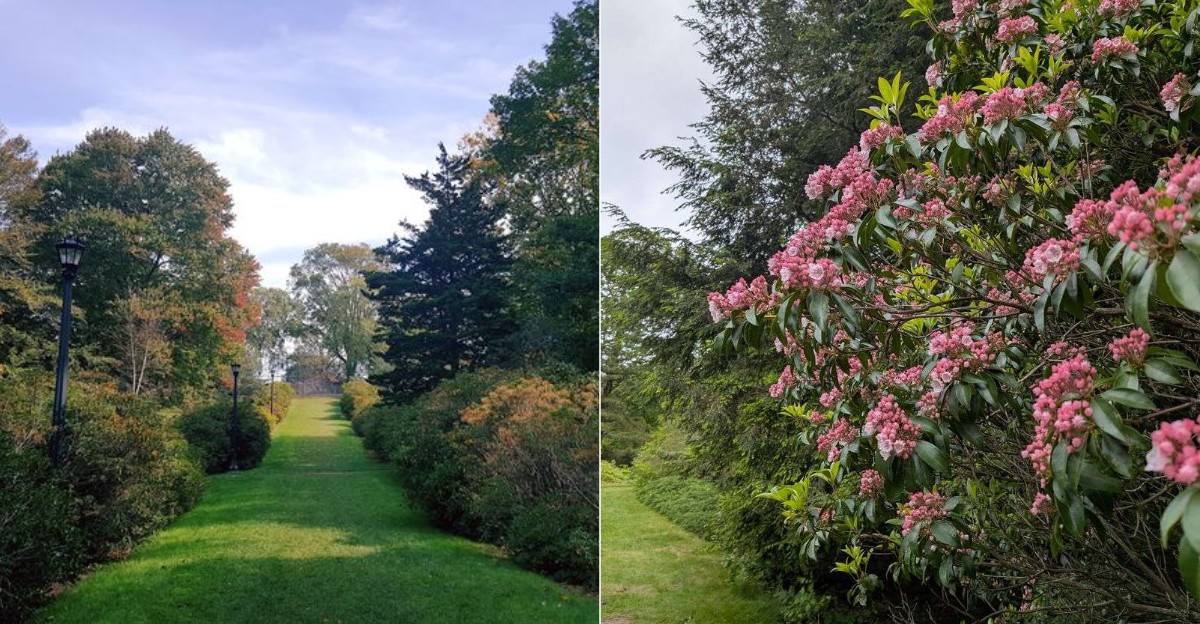
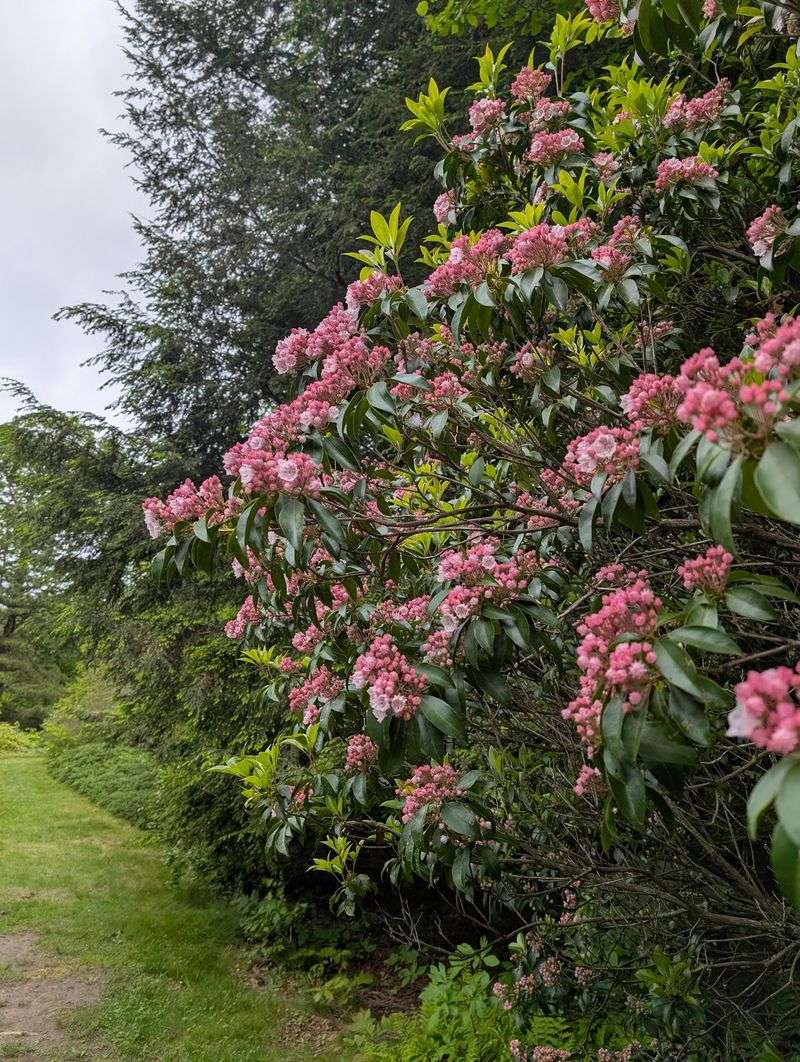
Mountain laurel takes over in June, and October brings brilliant foliage across the collection.
Special areas add even more variety. The wildflower garden fills a wooded slope, while the Gries Conifer Collection covers three acres beside the pond.
Benches and quiet paths make it easy to linger. Even familiar native species can feel fresh when their names are there.
Staying on marked trails is the best approach, especially around sensitive garden areas. The more slowly you explore, the more this carefully curated landscape reveals.
6. The Caroline Black Garden Adds Global Variety
Cross Mohegan Avenue, also known as Route 32, from the college’s main entrance and the mood shifts entirely.
The Caroline Black Garden covers about four acres and feels more composed than the woodland trails, arranged into distinct garden rooms rather than open forest.
It began in 1928 as a teaching garden created by the botany department’s first chairperson, and it was named in her memory after her passing in 1930.
Unlike the strictly native collection across the road, this space mixes ornamental trees and shrubs from around the world with regional species. The pairings are deliberate and often unexpected.
Standout features include a small stream and pool, unusually mature conifers, the Johnson Holly Collection, and the Harrison Entry Planting. Some corners have been described as having an almost Asian feel, thanks to the layering of evergreens, stone, and water.
It is a good choice when you have limited time or want something gentler than a two-mile loop. Four acres can be enjoyed slowly, with plenty of pausing.
Bring a book or a sketchpad. The garden rewards sitting still, and the sound of moving water makes the nearby road easy to forget.
7. Today The Grounds Stretch Across 750 Acres
Sixty-four acres to 750 is quite a jump, and it happened steadily across decades rather than overnight.
Growth came in stages. Under a former director, the property expanded from roughly 100 acres to 450, spreading west, north, and northeast of the campus core.
Each addition brought new habitat types into the fold, which is why today’s visitor can encounter woodland, wetland, and shoreline features on the same property.
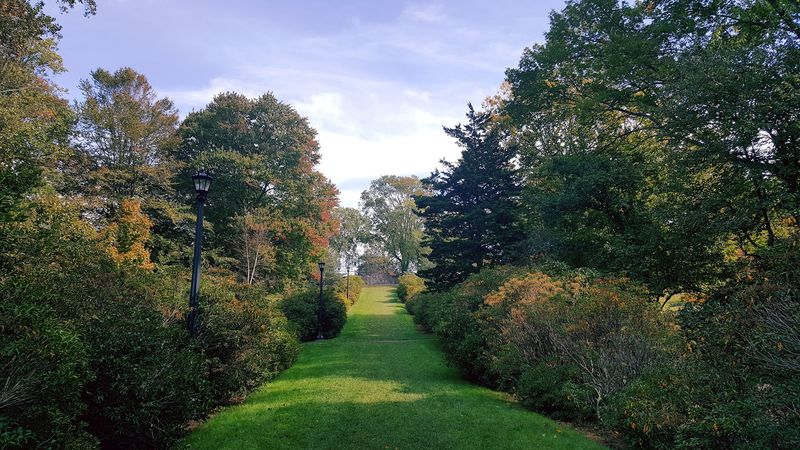
The final piece fell into place in 1996, when all 750 acres of college land, including the main campus landscape, were officially folded into the Arboretum. That decision effectively declared the entire property a living plant collection.
For a walker, the practical result is choice. You can commit to a single loop and be done in about an hour, or you can string together sections and cover several miles through completely different scenery.
The scale also explains the conservation focus. Land this large supports birds, insects, fungi, and native plant communities that smaller parks simply cannot hold, and it doubles as an outdoor classroom for environmental study.
Bring a water bottle and comfortable shoes. Hiking boots are not required, though the ground can turn soft after rain.
8. Trails Make Exploring The Landscape Easy

Nobody needs technical gear to enjoy this landscape. The trail network suits both a brisk hike and an unhurried wander, and the surfaces are generally described as clean and well maintained.
Inside the Native Plant Collection, the main trail runs about two miles and takes roughly an hour at a relaxed pace. Optional loops branch off from it, leading through a bog and an area that was once a hemlock forest, so you can extend the walk as your mood allows.
Runners have their own designated routes, including a cross-country loop and inner and outer campus loops. Jogging is limited to those marked paths, a rule that protects sensitive plantings and keeps the collection areas peaceful.
Self-guided pamphlets are available at the Native Plant Collection entrance and other points. For something more modern, Camel Tours let you use a smartphone to pull up audio clips and images covering history, plant details, and seasonal highlights.
Dogs are welcome as long as they stay leashed, which makes this a favorite destination for local walkers with four-legged company.
One gentle warning: with so many intersecting loops, brief disorientation happens. Keep the pond in view and you will find your way back.