A 1916 Miami Villa Holds Seventy Rooms Of European Antiques Above Biscayne Bay
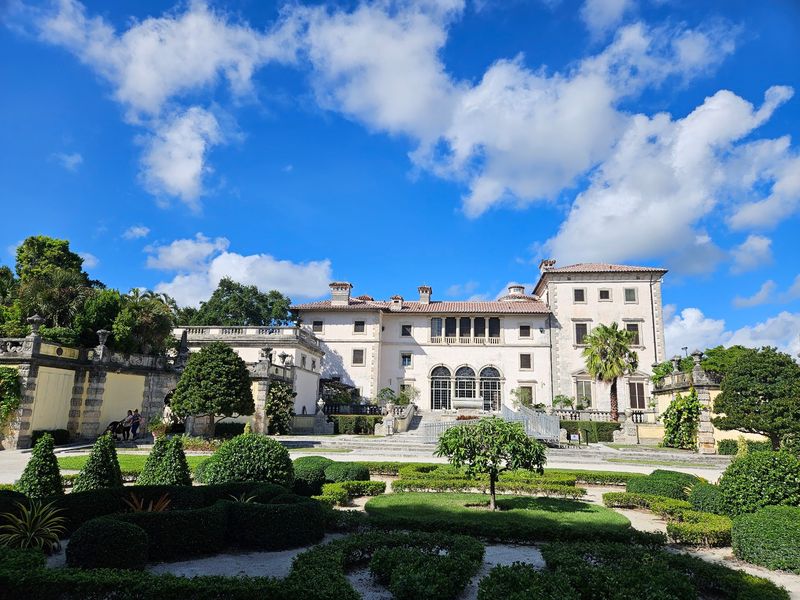
Somewhere in Florida, behind a wall of mangroves and hardwood forest, a winter home was built to look like it had been standing in northern Italy for three hundred years. The traffic hums on one side of the gate, and on the other side there are fountains, marble urns, and a stone boat floating in the bay.
It was finished in the middle of the 1910s by a man who came south on doctor’s orders and decided to bring half of Europe with him. What sounds like an odd idea on paper turns out to be one of the most beautiful things anyone ever built on this coastline.
Where the Villa Sits and What It Actually Is
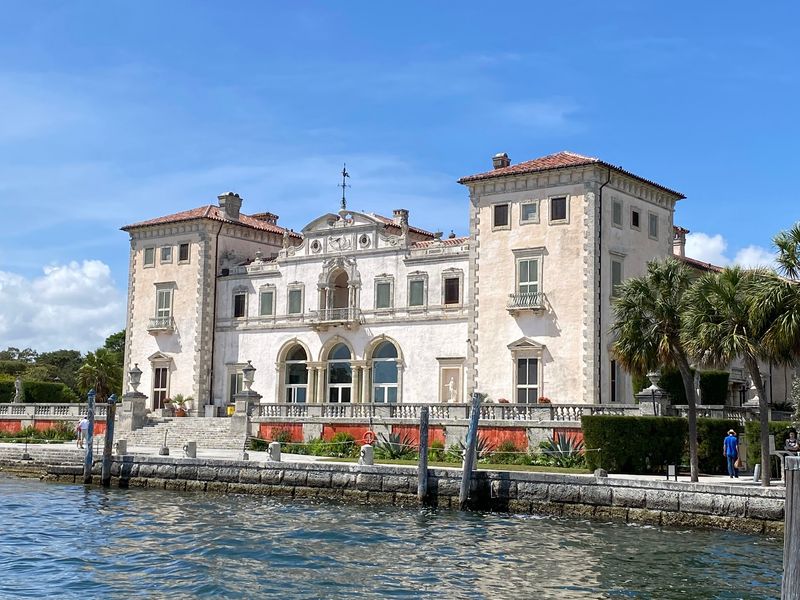
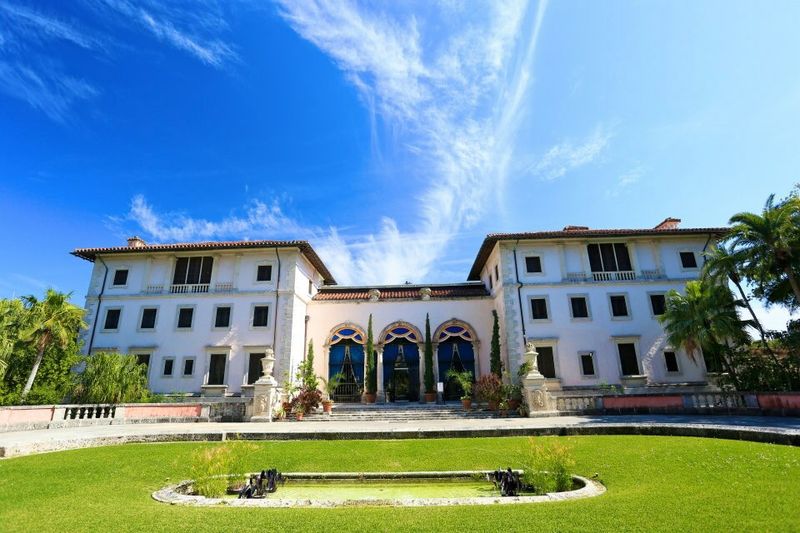
At 3251 S Miami Ave, in the Coconut Grove neighborhood, a fifty-acre estate runs straight down to the edge of Biscayne Bay. The official name is Vizcaya Museum & Gardens, though it spent its early life as Villa Vizcaya, the winter residence of industrialist James Deering.
Deering served as vice president of International Harvester Company, and after doctors advised him to spend cold months somewhere warm and sunny, he channeled that prescription into something far grander than a bungalow. Construction on the Main House began in 1914, and he moved in on Christmas Day of 1916.
Today the property operates as an art museum, and the county has owned it since 1952. Public tours started the following year under the name Dade County Art Museum, after Deering’s heirs handed over the furnishings and antiquities that fill the place.
Federal recognition arrived in 1994 with National Historic Landmark designation. The short version: a Gilded Age winter house, preserved with its collections intact, sitting on a subtropical shoreline where you would expect condos instead of Italian balustrades.
How a Harvester Executive Built an Italian Villa in Florida
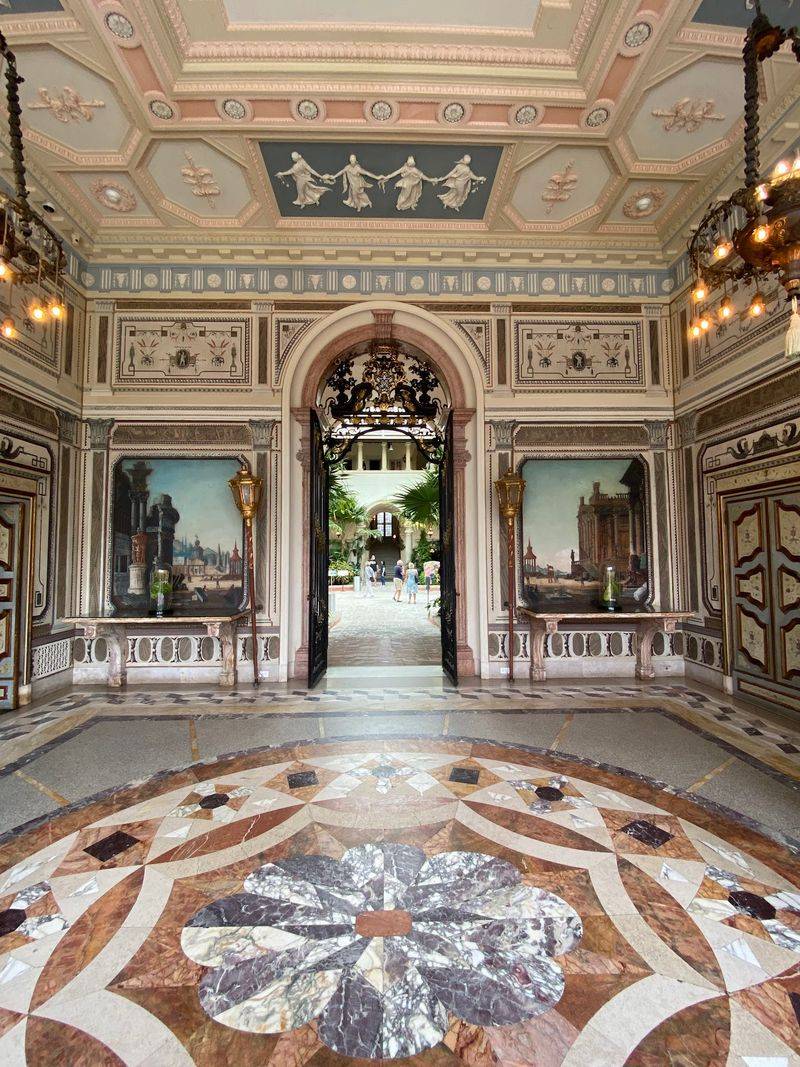
Picture the logistics for a moment. Shiploads of European paneling, fireplaces, ceilings, and iron gates crossing the Atlantic during a period when Miami was still a small coastal town with dirt roads and mosquitoes.
Deering wanted a South Florida estate built on European aesthetics, and he assembled a trio to pull it off. F.
Burrall Hoffman Jr. handled the architecture, Paul Chalfin directed the design, and Diego Suarez shaped the landscape.
The Main House went up first, finished in time for that 1916 Christmas arrival. Gardens and the surrounding village buildings took considerably longer, wrapping up in 1923.
Chalfin’s role deserves attention because he essentially built rooms around objects rather than the other way around. An antique ceiling would arrive, and a room would be designed to hold it.
Old carved gates would set the proportions of a doorway.
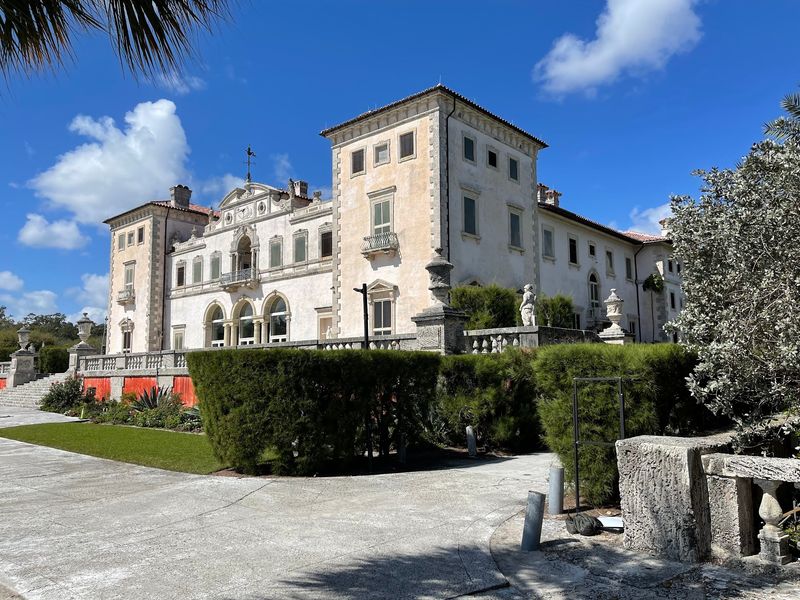
The result is a house that reads as centuries old while being constructed largely of reinforced concrete, a thoroughly modern material for its moment. Old bones, new skeleton, and a client with the patience and resources to wait for both.
Seventy Rooms, Thirty-Four Doors Open
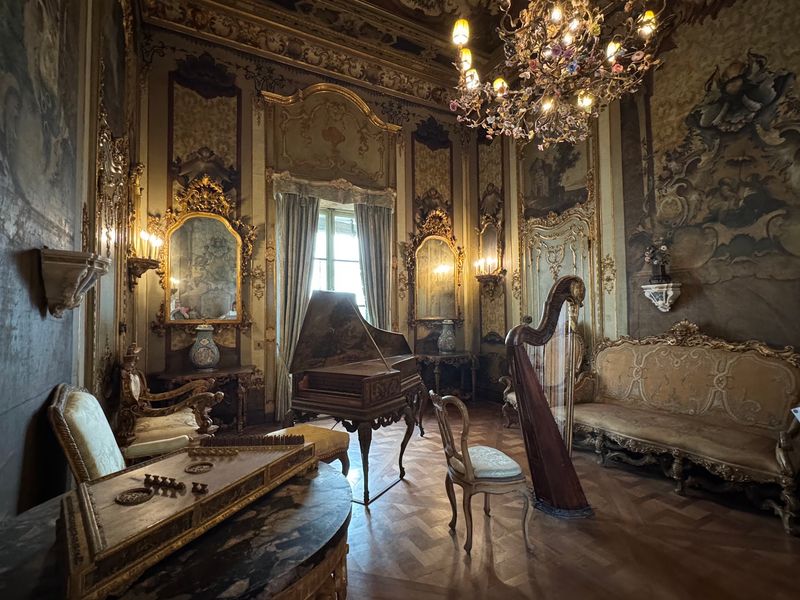
Seventy is a number that stops most people cold. That is how many rooms the Main House contains, and roughly thirty-four of them are decorated and open to the public.
Inside, the emphasis falls on European decorative arts from the 15th through the early 19th centuries. Paintings, sculpture, furniture, textiles, silver, and ceramics fill the spaces, arranged into ensembles rather than displayed like specimens behind rope.
Vizcaya holds one of the most significant collections of Italian furniture anywhere in the United States, which is a strange sentence to write about a house on Biscayne Bay. Chalfin blended commissioned pieces with genuine antiques so seamlessly that telling them apart takes practice.
Give yourself an hour minimum for the house alone, and closer to three if you plan to read labels and take the audio tour. Some rooms have been closed during ongoing renovation and conservation work, with admission prices reduced to reflect it.
Restoration on a property this size never fully ends. What remains open still amounts to more rooms than most historic homes offer in total.
Ten Acres of Formal Gardens Laid Out as Outdoor Rooms
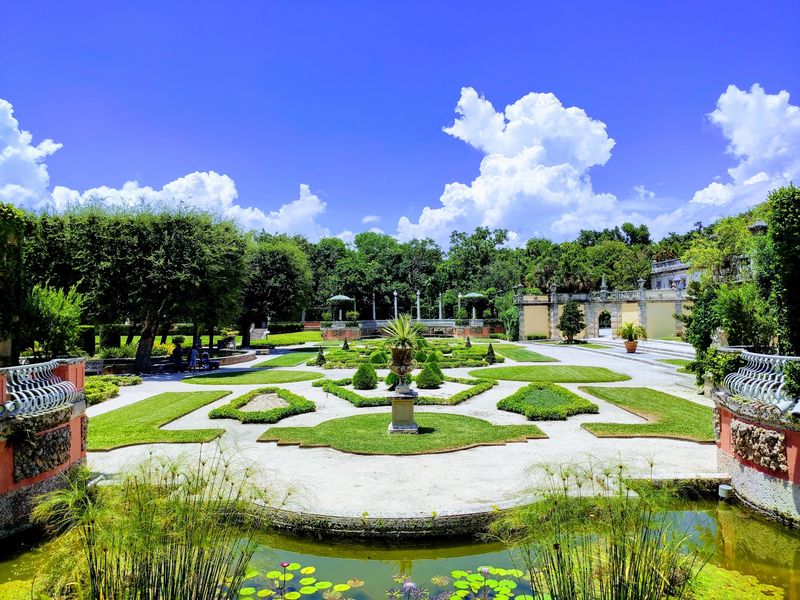
Step out the south side of the house and the architecture keeps going without a roof. Ten acres of formal Italian Renaissance gardens unfold as a sequence of outdoor rooms, each one framed by hedges, walls, or stone.
Geometric parterres set the structure. Fountains supply the sound.
Antique and commissioned sculpture, marble balustrades, busts, vases, and urns handle the punctuation.
Vizcaya claims the largest collection of Italian outdoor sculpture in the country, and walking the paths, that feels less like a boast and more like an inventory problem. There is a grotto.
There are shell-encrusted niches and limestone that has softened and pitted in the salt air, giving whole sections the look of ancient ruins.
Orchids grow in a dedicated area, water lilies float in the basins, and lizards dart across warm stone constantly. Birdwatching is unexpectedly good.
Beyond the formal ten acres, another forty acres hold native rockland hammock forest and mangrove shoreline, which is why the drive in feels like entering a jungle rather than a museum parking lot. Manatee sightings happen along the water.
The Stone Barge Anchored in the Bay
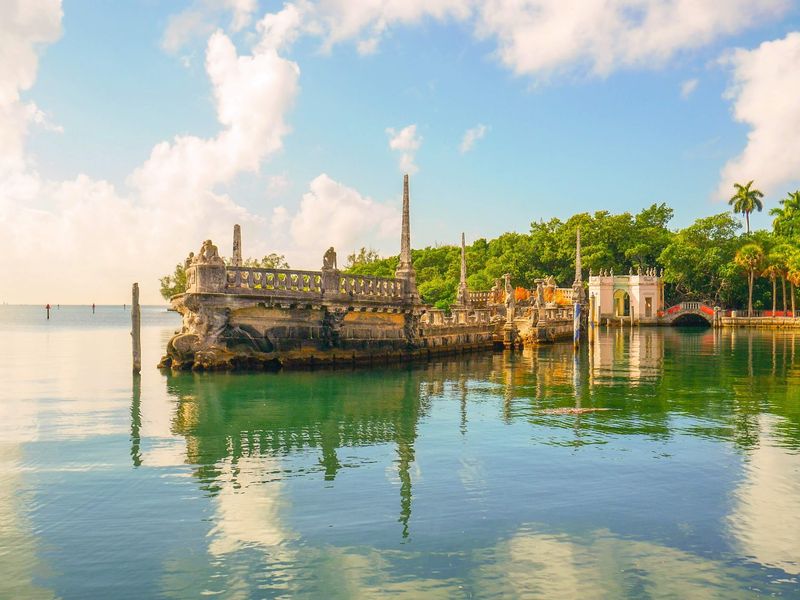
Out past the east terrace, sitting in the water, is a boat that will never move. The Barge is a stone structure shaped like a vessel, built to serve as a breakwater protecting the villa’s bayfront from waves.
Practical purpose aside, it doubles as a giant outdoor sculpture. Mythical sea creatures, figures, and obelisks decorate its length, carved to be seen from the house across a stretch of open water.
The effect is theatrical in the best sense. A stone ship moored permanently in Biscayne Bay tells you a great deal about the ambitions of the person who commissioned it and the designers who indulged him.
Photographs rarely capture the scale. From the terrace it reads as a decorative object, but the closer you get to the seawall the more it registers as a substantial piece of marine engineering with baroque ornament bolted on top.
Salt water and hurricanes have been working on it for over a century, which is part of why conservation crews are a permanent fixture here. Erosion has given the carvings a weathered, half-dissolved quality that suits the whole estate.
Florida’s Most Wired House of 1916
Behind all the Renaissance dressing, Deering built one of the most technologically advanced private homes in the region. The villa had an automated telephone switching system, the first in Miami-Dade County.
A central vacuum-cleaning system ran through the walls. An annunciator let staff know where they were needed.
An electric dumbwaiter moved food and supplies between floors, and two elevators handled the rest.
Refrigeration, heating, and ventilation rounded out the list at a time when plenty of American households were still managing without reliable electricity. The contrast is the fun part: 15th-century Italian furniture sitting in rooms served by cutting-edge 1916 infrastructure.
Reinforced concrete formed the structural core of the Main House, another forward-looking choice that has helped the building survive decades of storms battering the shoreline.
None of this is what draws crowds through the gate, and much of it stays out of sight. Ask about it, though, or listen carefully to the audio tour, and the house shifts from period fantasy into something closer to an engineering statement wearing a very convincing costume.
Quiet Corners, Cameras, and the Crowd You Will Share It With
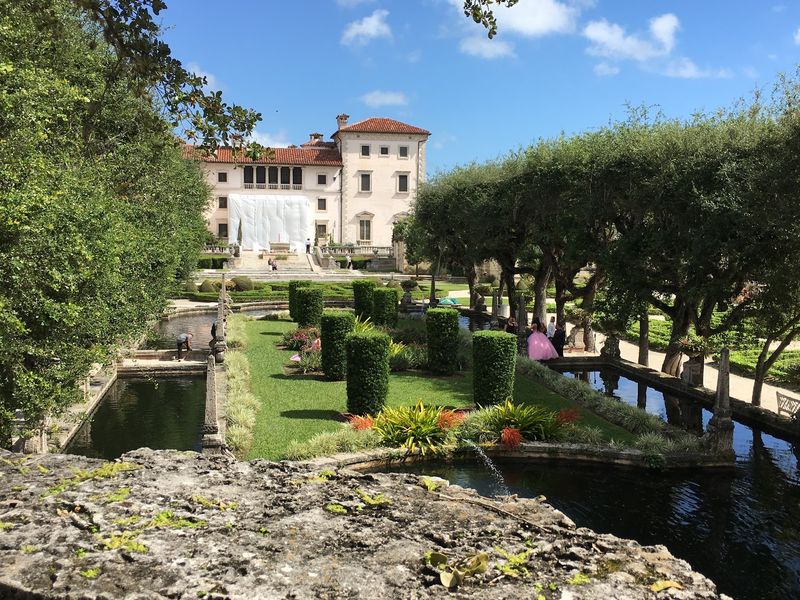
Quiet is the surprise. City noise sits just outside the walls, yet inside the gardens the volume drops to fountains, birds, and footsteps on gravel.
Photography drives a lot of the traffic here. Quinceañera shoots, engagement sessions, and anniversary portraits happen throughout the grounds, especially on weekends, and on a busy Saturday the sheer number of formal gowns can make certain paths hard to move through.
Weekdays run calmer. Morning light on the east terrace and late afternoon in the garden rooms both work well if you want photographs without navigating around someone else’s session.
The estate suits people who like history, architecture, plants, or slow walking with no particular agenda. Anyone hoping for a quick twenty-minute stop will misjudge it, and anyone allergic to reading interpretive panels can simply skip the house and spend the whole time outdoors.
A café operates on the property serving coffee and light food, useful if you plan to stay for several hours. Restrooms are clean and well maintained.
The rating sits at 4.7 stars across more than sixteen thousand reviews.
Hours, Tickets, Parking, and Other Useful Details
Closed Tuesdays. Every other day of the week, the gates open at 9:30 AM and close at 4:30 PM, which makes a mid-morning arrival the smart play if you want unhurried time in both the house and the gardens.
General admission has run around twenty dollars per person, with reduced pricing while restoration work limits access to parts of the property. Check vizcaya.org before you go, or call 305-250-9133 for current rates and any timed-entry requirements.
Two parking lots serve the site. One sits on the same side as the estate entrance, the other across the street, and choosing the far lot adds a pleasant but real walk before you have even started touring.
Plan on two to three hours. The house alone takes about an hour, and the gardens can absorb everything you have left.
Wear shoes you can walk stone paths in, bring water and sun protection, and consider the audio tour if context matters to you. A farmers market sometimes sets up within walking distance on weekends.
So, Is It Worth Your Afternoon in Miami?
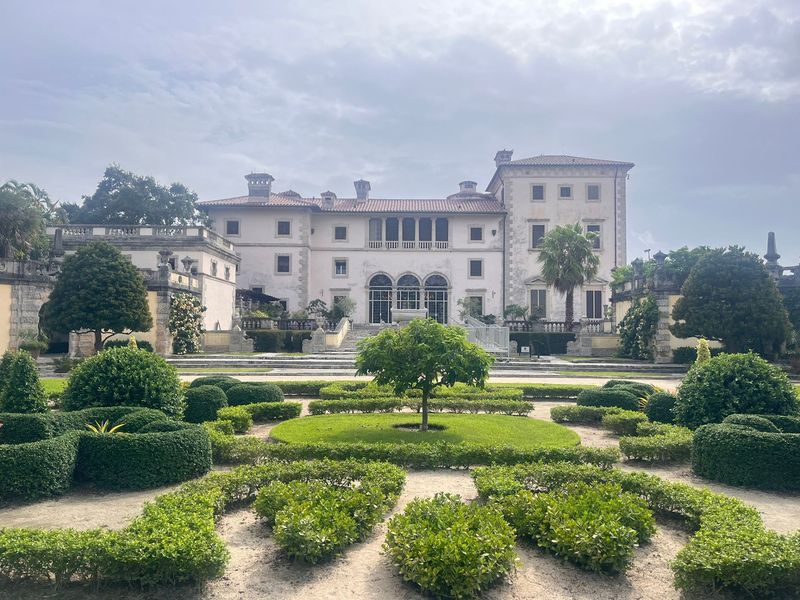
Few American cities offer a change of pace this sharp. Trade the beach and the neon for an afternoon among coral-stone walls, marble figures, and a bay view framed by balustrades, and Miami suddenly looks like a much older place than it is.
Restoration work is the honest caveat. Scaffolding covers portions of the exterior, a significant share of the interior rooms have been closed off, and someone arriving with high expectations for the full seventy-room experience will come away with less than the complete picture.
Ticket prices have been adjusted downward during the work, and what remains accessible still fills hours comfortably. The gardens are untouched by any of it.
For anyone drawn to architecture, decorative arts, tropical plants, or simply a quiet place to walk, the estate delivers on every one of those counts at once. That combination is rare anywhere, let alone on a shoreline better known for high-rises.
Come once now, and come back after the scaffolding disappears. The house has waited more than a century already, and it is in no hurry.