10 Secluded Virginia Campgrounds Even Longtime Locals Might Not Know
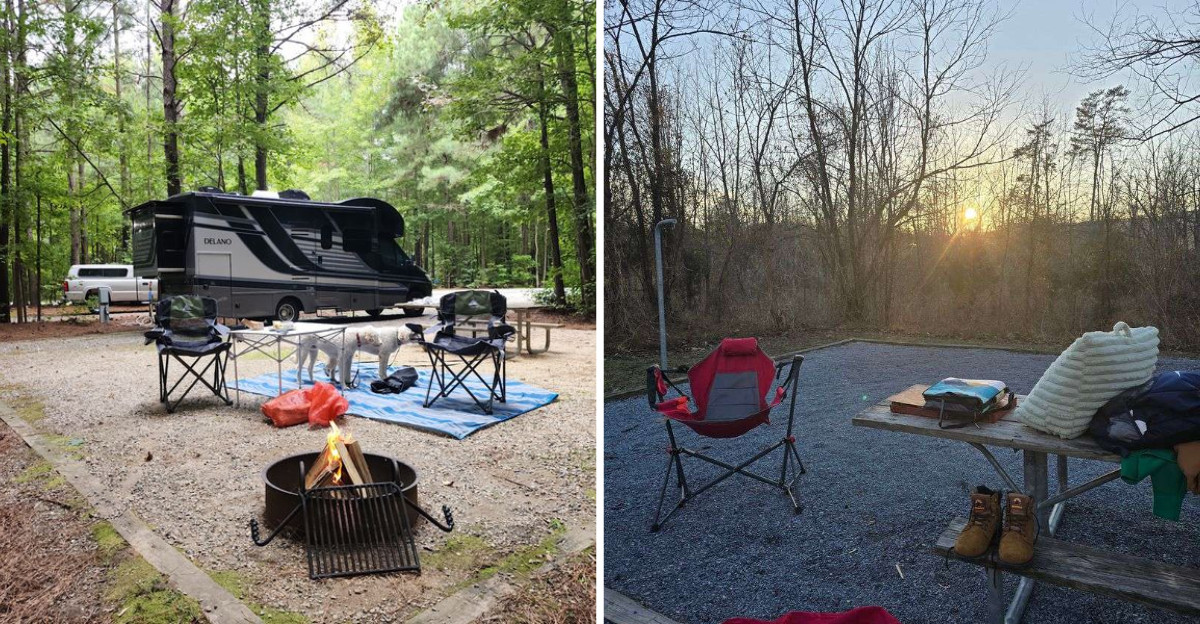
The campground nobody talks about may be exactly the one worth finding.
Across Virginia, quieter sites sit beside mountain creeks, rivers, forests, and lonely stretches of shoreline where getting there sometimes takes a little extra effort.
That effort often keeps the atmosphere pleasantly calm.
A forest road, short hike, bike ride, or paddle can separate these places from the busiest camping loops, while other spots still offer showers, picnic tables, and enough comfort for an easy weekend outdoors.
Peace without giving up everything? Yes, please!
Check access conditions before leaving, then settle in once you arrive.
The reward is simple: darker skies, quieter mornings, and fewer reasons to pack up early.
1. Hurricane Campground, Sugar Grove
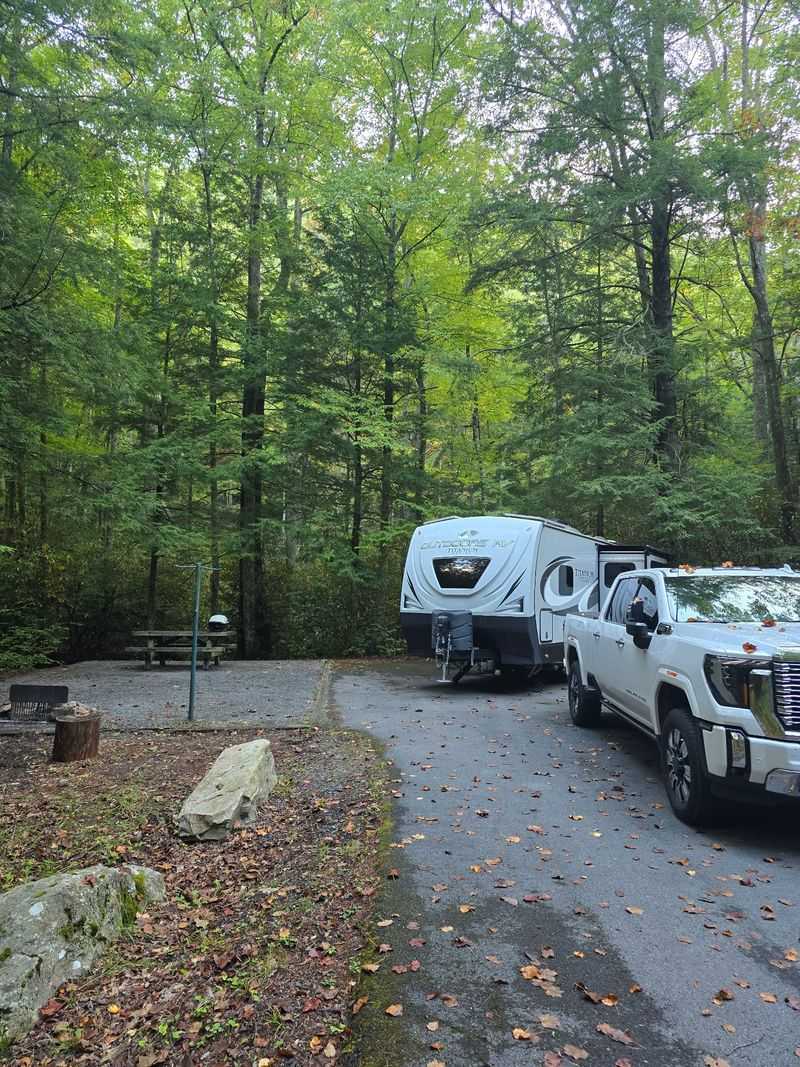
There is a mountain hideaway in Jefferson National Forest that stays blissfully quiet. Hurricane Campground near Sugar Grove sits right along a cold, tumbling creek.
That water becomes your soundtrack, running all night long. Sites here welcome both tents and RVs, so you can rough it or roll in comfortably.
The season generally stretches from April into October. Spring brings wildflowers, summer brings creek wading and trout fishing, and autumn brings colorful foliage through the surrounding forest.
Recreation.gov specifically describes Hurricane and Comers creeks as places for wading and stocked-trout fishing.
Trout fishing is the local pastime, and the creek runs cool enough for a quick dip. Hiking trails start close to the campsites, which saves you a drive.
Fall is reliably scenic here, and the campground uses a mix of reservable and first-come, first-served sites, so checking current availability before an October trip is the safer plan.
First-come, first-served sites may use Recreation.gov’s Scan & Pay system, but current payment details should be checked before arrival.
Hot showers are among the campground amenities, though current official information does not confirm separate paid shower access for non-campers. Bring layers, since mountain nights get chilly fast.
Cell service fades quickly, which honestly improves the whole trip. Campfires here feel earned after a long day on the trail.
The physical address is 2021 Hurricane Camp Rd in Sugar Grove, but Recreation.gov specifically advises visitors to follow its written directions rather than relying on GPS.
2. Stony Fork Campground, Wytheville
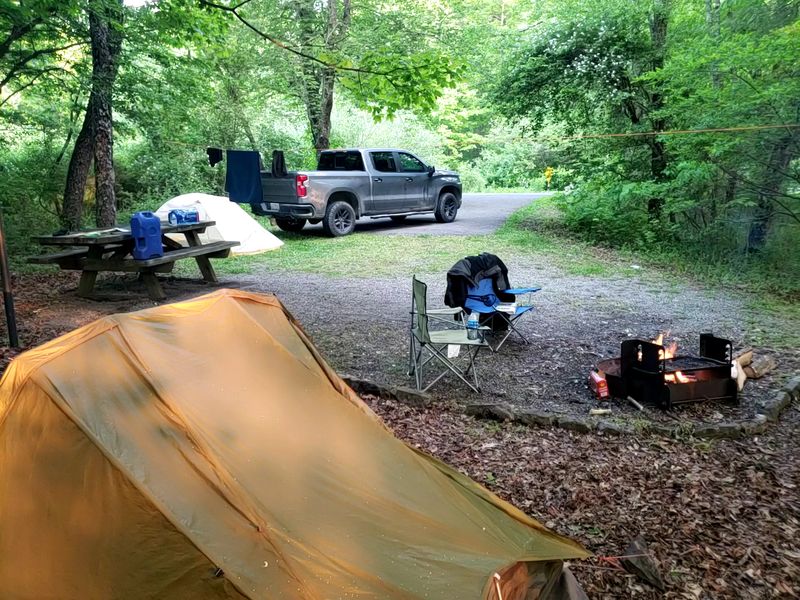
Believe me, my jaw dropped at how much this forest campground packs into one loop. Stony Fork Campground near Wytheville rests at the foot of Big Walker Mountain.
The East Fork of Stony Fork Creek slides right through the grounds. Trout anglers and barefoot waders both get their fill.
Amenities beat expectations for a national forest setting. Most campsites currently come with electric hookups, with some sites also offering water connections.
You will find flush toilets, warm showers, potable water, and a dump station. A horseshoe pit sits ready for evening competition.
The paved campground loop makes a scenic walk, while biking is also listed among the recreation options at Stony Fork. Hikers can start with the gentle 1-mile Stony Fork Nature Trail.
Pine and hardwood groves line that path the whole way. Tougher legs should aim for the 5-mile Seven Sisters Trail.
That climb tops out on Little Walker Mountain. The Appalachian Trail waits within about ten miles for day hikers.
Elevation hovers near 2,400 feet, so summer evenings stay comfortable. Spring wildflowers carpet the slopes before autumn sets them on fire.
Fall is reliably scenic around Stony Fork, so checking current October availability before making the trip is worthwhile. Address details point to 109 Krenning Rd, Wytheville.
Quiet forest havens rarely come this well equipped.
3. Cave Mountain Lake Family Camp, Natural Bridge Station
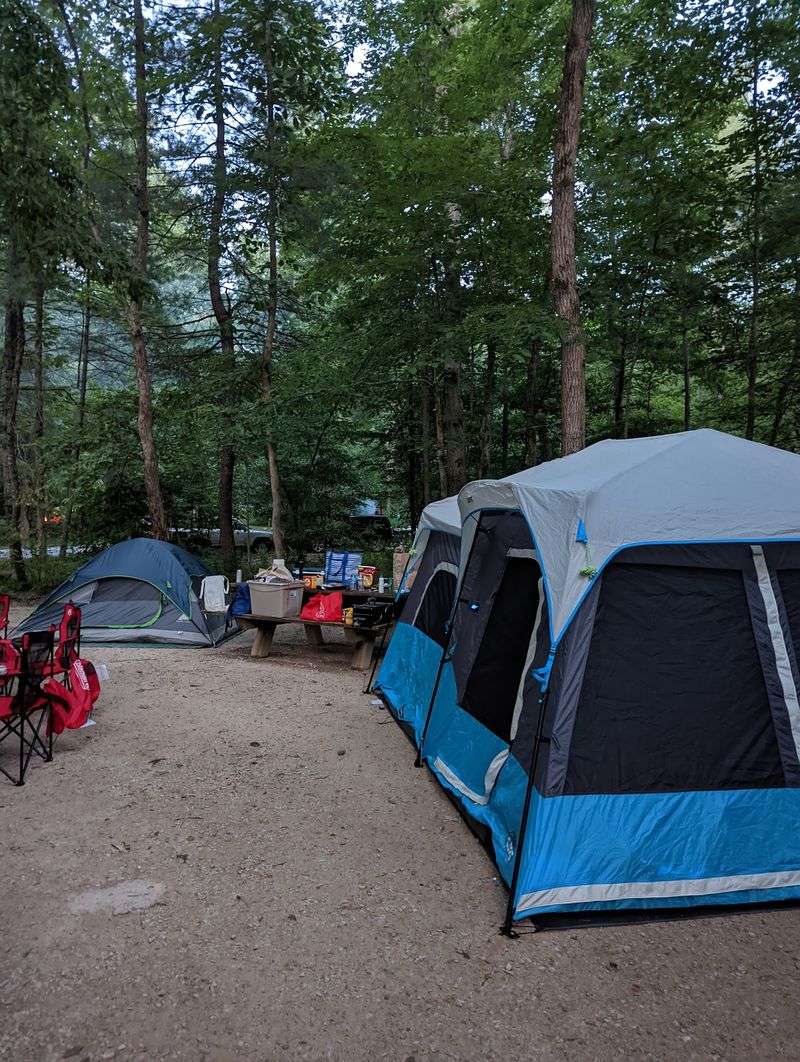
Just imagine for a second a small lake ringed by Blue Ridge foothills. Cave Mountain Lake Family Camp near Natural Bridge Station delivers exactly that scene.
The campground belongs to the George Washington and Jefferson National Forest and currently offers 41 reservable, nonelectric campsites, with sites accommodating tents and various sizes of RVs and trailers.
Camping season runs April 1 through October 30. Swimming and fishing top the list of daily activities.
Trails branch into the forest for anyone wanting a longer wander. Wildlife watching keeps mornings interesting near the shoreline.
Every site includes a picnic table, lantern post, and fire ring with a grill. Flush toilets and water spigots sit scattered through the loops.
A bathhouse with warm showers means you can stay clean between hikes. Bears roam this area regularly, so food storage rules matter.
Lock everything scented inside a vehicle or hard container overnight. Entrance gates close from 10 p.m. until 6 a.m., which keeps things calm.
A designated swimming area with a sandy beach sits along the seven-acre lake, while Natural Bridge State Park is a nearby attraction.
All camping currently requires a reservation before arrival. The campground’s physical address is 811 Cave Mountain Lake Rd, Natural Bridge Station. Long lake afternoons here turn into stories kids repeat for years.
4. False Cape State Park Primitive Campgrounds, Virginia Beach
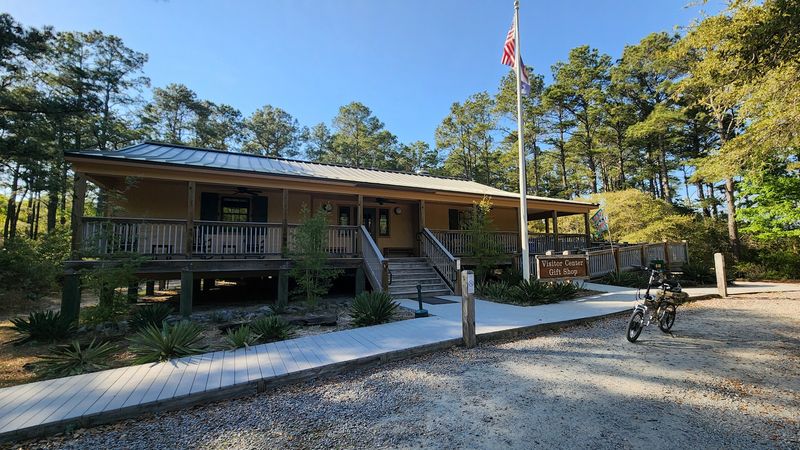
Call me crazy, but the wildest beach camping in the state hides inside a famous resort city. False Cape State Park in Virginia Beach guards 4,321 acres between the Atlantic Ocean and Back Bay.
It remains one of the last undeveloped stretches of this coastline. No road delivers you to the campsites.
Visitors can reach the park on foot, by bicycle, or by boat. The Blue Goose Tram operates as a guided visitor tour, but it does not transport campers.
Six miles of empty beach reward the effort. Nearly 17 miles of trails wind past dunes, maritime forest, and salt marsh.
Four primitive campgrounds each hold ten sites. Facilities are bare bones, which is entirely the point.
Overnight campers park at Little Island City Park, then travel roughly 6.9 to 8.4 miles to the primitive campsites depending on which camping area they reserved.
Reservations are required and handled by phone. Drinking water is available in the Barbour Hill area, while False Cape Landing campers need containers to transport potable water because water in that camping area is not suitable for drinking.
Pets are welcome inside False Cape, but they cannot travel through Back Bay National Wildlife Refuge. Visitors bringing pets must reach the park by boat or through an entrance from the North Carolina side.
Ocean-side campsites provide direct access to Atlantic sunrise views, though how much solitude visitors find depends on campground occupancy. The park’s main address is 4001 Sandpiper Rd, Virginia Beach.
Few coastal escapes on the East Coast stay this untouched.
5. Sky Meadows State Park Primitive Campground, Delaplane
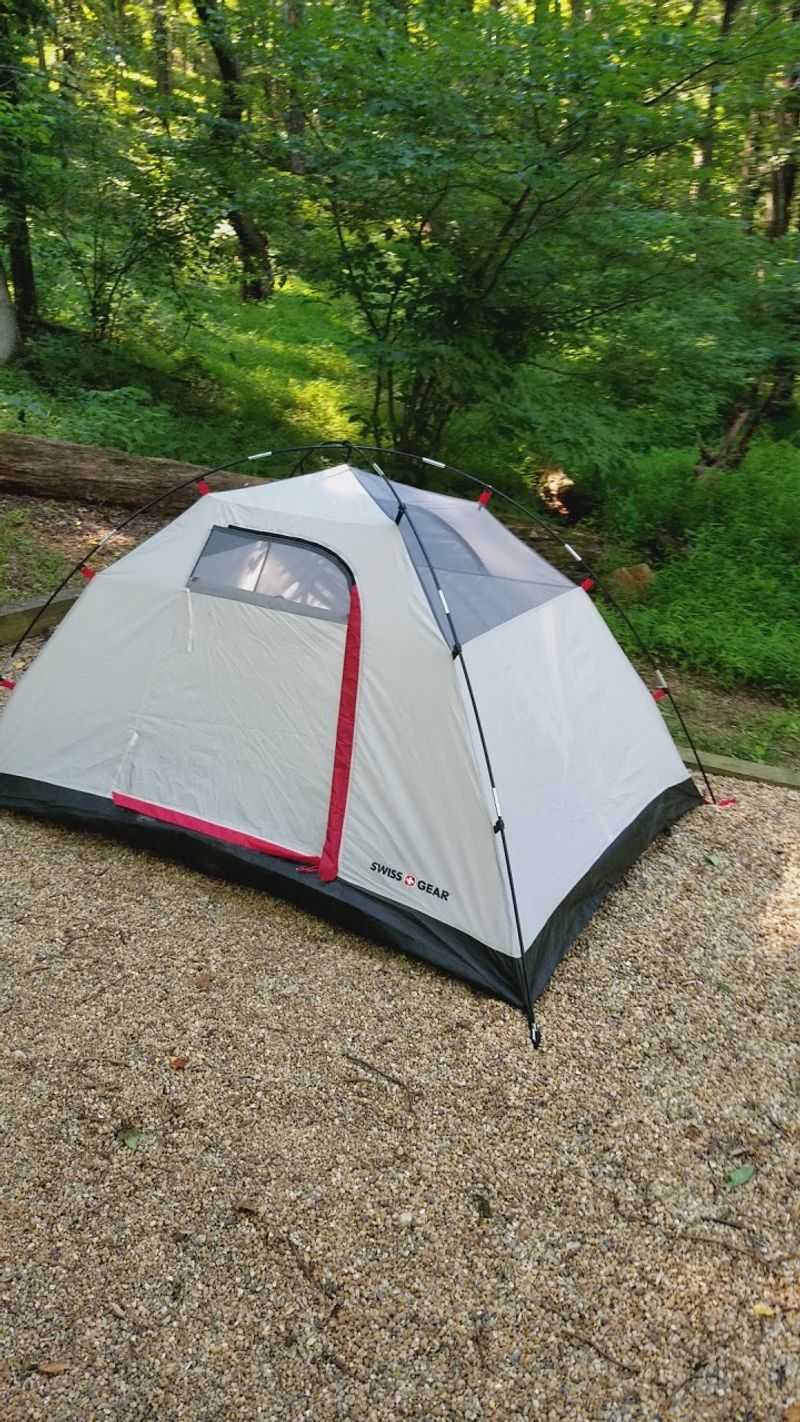
Sounds too good to be true, but a working farm landscape doubles as a dark sky sanctuary. Sky Meadows State Park in Delaplane spreads across 1,860 acres of pasture, woodland, and historic buildings.
Rolling hills roll straight up into the Blue Ridge. Camping here means hiking about one mile from the parking area.
Sites are primitive with no hookups, and campers must carry their gear about one mile from the overnight parking area because vehicles are not allowed at the campsites.
Trail options run deep across the property. Twenty-two miles of hiking paths connect fields and forest.
Add 10.5 miles of bridle trails and 9 miles of bike routes. A stretch of the Appalachian Trail even crosses the park.
Recognition as an International Dark Sky Park makes nights the main event. Monthly astronomy programs bring telescopes and guides.
Turner Pond gives anglers a quiet corner to cast. Piedmont Overlook rewards climbers with sweeping valley views.
Upper and Lower Piedmont Overlooks and South Ridge Overlook provide additional viewpoints across the surrounding pastoral landscape.
Bring warm layers, since open hilltops catch every breeze. Carry water up with you as well.
Head for 11012 Edmonds Ln, Delaplane, and time your trip near a new moon. Stargazing this good rarely sits an hour from a major highway.
6. Powhatan State Park Canoe-In/Hike-In Campground, Powhatan
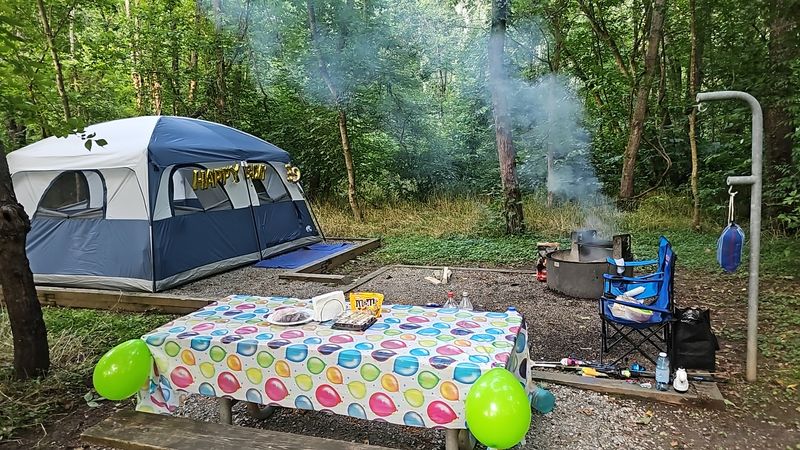
Let your paddle handle the check-in process. Powhatan State Park in Powhatan County sits along the historic James River with camping built for boaters.
Nine primitive sites make up the canoe-in and hike-in campground. They stay open all year long.
Paddlers land directly at Launch B. Walkers cover roughly 0.2 miles from the parking area instead. Each site includes a 12×12 foot tent pad and a picnic table. A grill sits ready for dinner duty.
There is also a larger 16×16 foot pad with a lantern hanger. A composting toilet serves the area. No bathhouse and no potable water exist here. Every camper must haul in drinking water.
Habitats shift from open fields to upland hardwood forest. Deer, hawks, and songbirds show up without much searching.
Ranger-guided paddle programs run from May through September. The park itself does not offer boat rentals, but Maiden Voyage Outfitters currently provides rentals and shuttle service.
Morning fog over the James makes early wake-ups worthwhile. Fishing from shore fills the slow afternoon hours nicely.
Bring a dry bag, since river landings rarely stay tidy. Directions lead to 4616 Powhatan State Park Rd, Powhatan.
Paddling to your own campsite turns an ordinary weekend into an expedition.
7. James River State Park Canoe Landing Campground, Gladstone
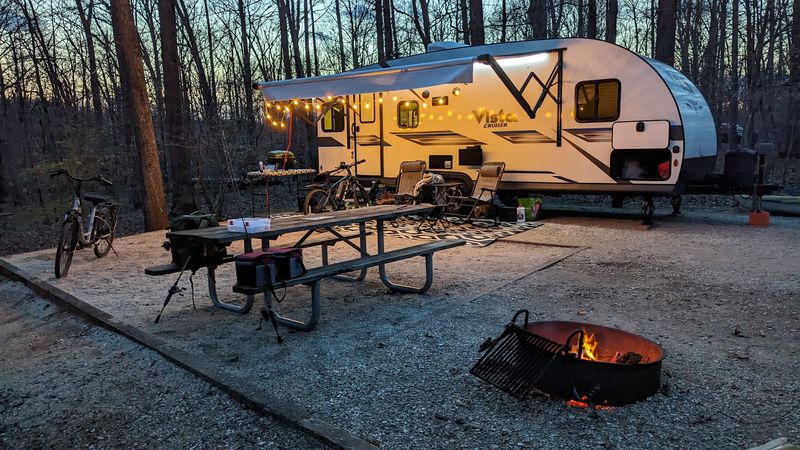
You are just like me if riverfront camping without a hike sounds ideal. James River State Park in Gladstone stretches through Blue Ridge foothills with three miles of shoreline.
Rolling grasslands meet quiet forest across the property. Canoe Landing campground holds ten primitive sites right beside the water.
Tents rule here, and parking sits next to each site. That means no long march with heavy gear.
Picnic tables and campfire rings come standard. Primitive restrooms serve the loop.
Potable water is not available at the primitive campgrounds themselves. Fill your jugs at the picnic shelters before setting up.
Dark Sky Park status makes the night sky spectacular. Rangers run night sky programs throughout the warmer months.
Paddling dominates daytime plans, with the James rolling right past camp. Fishing and hiking round out the options.
James River follows a trash-in, trash-out policy, with designated trash collection points that include the Canoe Landing campground.
Sunrise mist rising off the river is worth setting an alarm. Summer weekends book up, so grab dates early.
Punch in 104 Green Hill Dr, Gladstone, and pack a star chart. Falling asleep to moving water never gets old.
8. Shenandoah River State Park River Right Campground, Bentonville
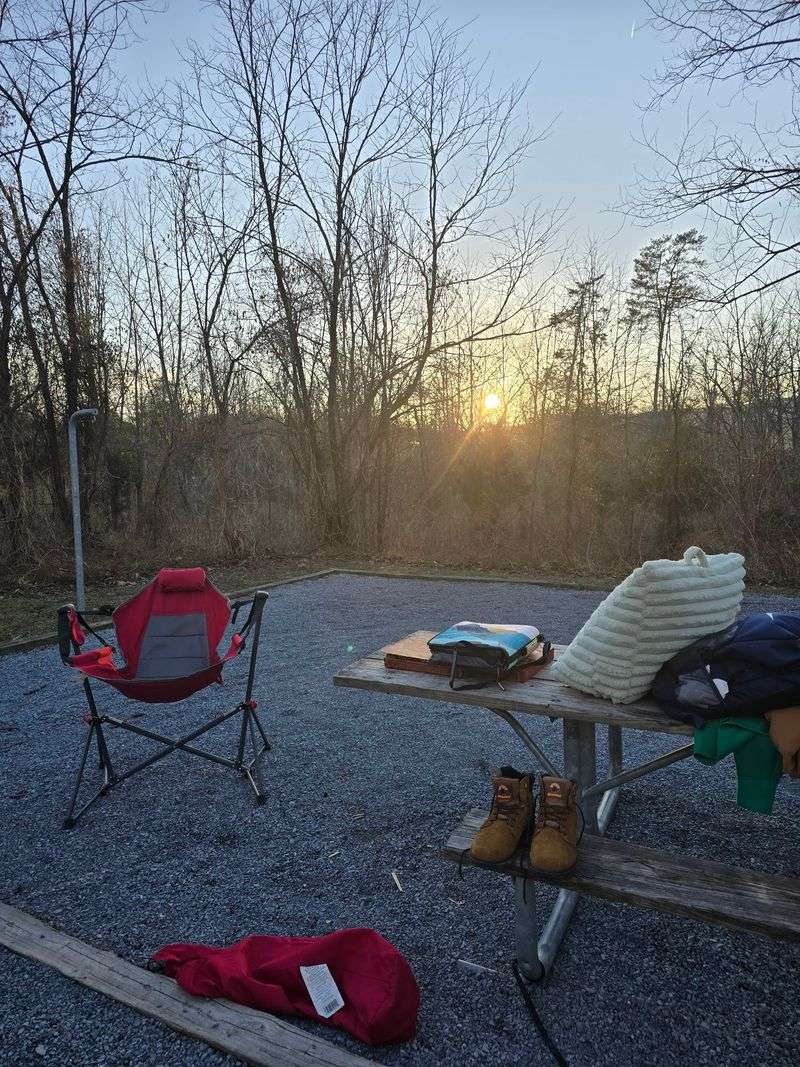
Walk-in tent sites beat parking lot camping every time. Shenandoah River State Park near Bentonville protects more than 1,600 acres along the South Fork.
Roughly 5.2 miles of river shoreline belong to the park. River Right Campground holds twelve walk-in, tent-only sites.
River Right has 12 walk-in tent sites, with some located less than 50 yards from the parking lot and wagons available for carrying supplies.
Paddlers can also reach River Right from the Shenandoah, with two river-access points serving the campground. Picnic tables, charcoal grills, and fire rings come with every site. Vault toilets serve the campground.
Potable water waits nearby, and a full-service bathhouse has hot showers. Comfort and seclusion rarely share a campground this well.
Over 25 miles of trails run through the park. Hikers, cyclists, and horseback riders all share the network.
Massanutten Mountain fills the western views. Shenandoah National Park rises to the east for a bigger day trip.
Tubing and fishing keep summer afternoons busy. Autumn turns the whole river corridor gold and crimson.
Steer toward 350 Daughter of Stars Dr, Bentonville, and pack a river shoe. Evenings by the Shenandoah slow everything down in the best way.
9. Wilderness Road State Park Primitive Campground, Ewing
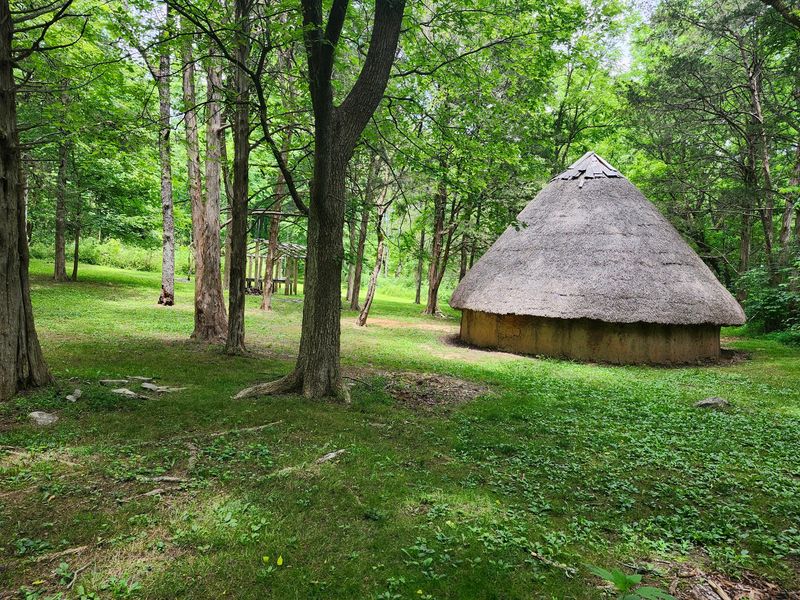
Wilderness Road State Park near Ewing combines primitive group camping and frontier history across roughly 327 acres.
The park sits astride the original Wilderness Road. Daniel Boone helped carve that route back in 1775.
The Wilderness Road became a major route for westward migration through Cumberland Gap, while a reconstructed Martin’s Station interprets life on Virginia’s 1775 frontier.
The 1870s-era Karlan Mansion also stands on the grounds, while the visitor center shows the award-winning docudrama Wilderness Road, Spirit of a Nation.
Primitive camping here is set up for groups. Bring your own drinking water without exception.
Portable toilets serve the sites, and showers are not available. Simple setups keep the focus on the surroundings.
The current Wilderness Road Trail is 6.5 miles long and is open to hikers, cyclists, and horseback riders.
Cumberland Gap National Historical Park lies about 10 miles west and adds an extensive network of hiking trails for visitors extending their stay in the area.
Living history events fill spring and fall weekends with costumed demonstrations. Mountain views ring the valley in every direction.
Navigate to 8051 Wilderness Rd, Ewing, and pack curiosity along with your tent. History under the stars hits differently out here.
10. Belle Isle State Park Brewer’s Point Primitive Campground, Lancaster
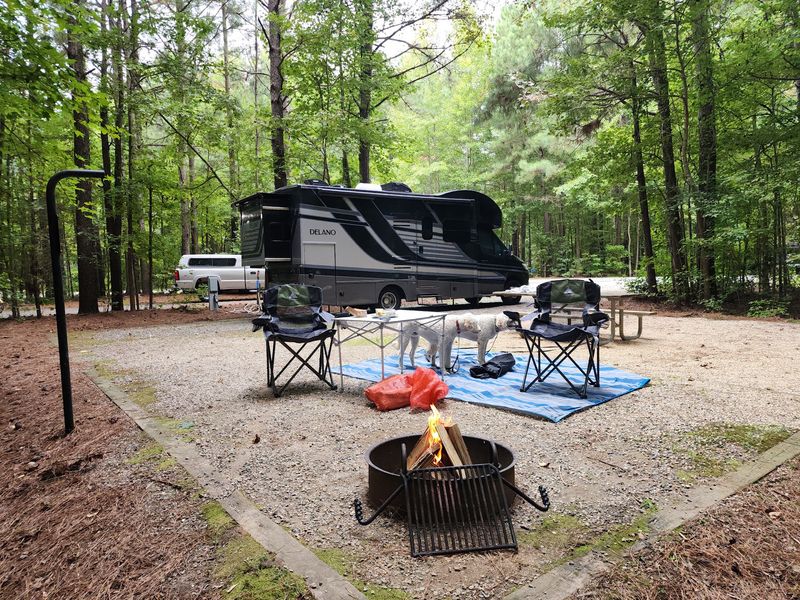
I’m still trying to wrap my head around how much shoreline hides in this coastal plain park. Belle Isle State Park in Lancaster holds seven miles of Rappahannock River frontage.
Mulberry and Deep creeks add even more water access. Tidal wetlands, farmland, and upland forest all share the property.
Brewer’s Point Primitive Campground has four hike-in or paddle-in sites. They remain open year-round.
Vehicles cannot reach them at all. Hikers cover about 1.5 miles from the nearest parking area.
Boaters simply land and set up. Each site generally includes a tent pad, picnic table, fire pit, and lantern post.
Some sites share a common area with neighbors. A pit toilet serves the campground. There is no electricity and no potable water. Haul in everything you need for drinking and cooking.
Birders do very well here. Ospreys are especially common along the park’s waterways in spring and summer, while bald eagles may be seen in fall and winter among the park’s wetlands and shoreline habitats.
Wildlife can appear across the park’s fields and forests, while nearly 10 miles of mostly gravel, multi-use trails currently cross the property.
Bicycle, canoe, and kayak rentals run seasonally. Sunset over the Rappahannock turns the water copper.
Aim for 1632 Belle Isle Rd, Lancaster, and bring binoculars. Solitude this close to the Chesapeake is a rare find.