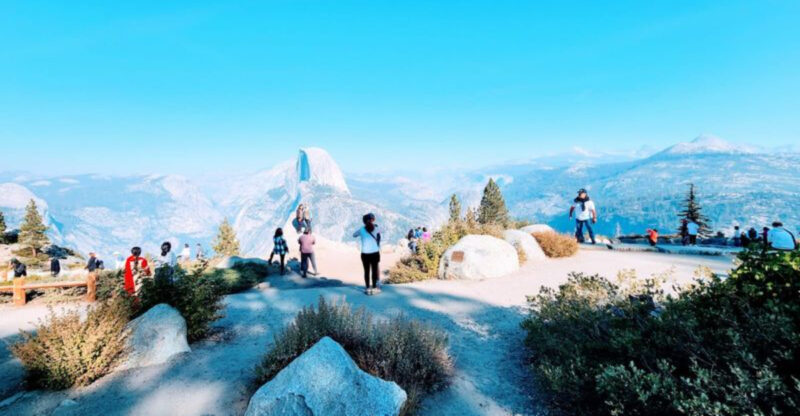
10 Tiny California Towns That Are Hiding Massive Historic Secrets
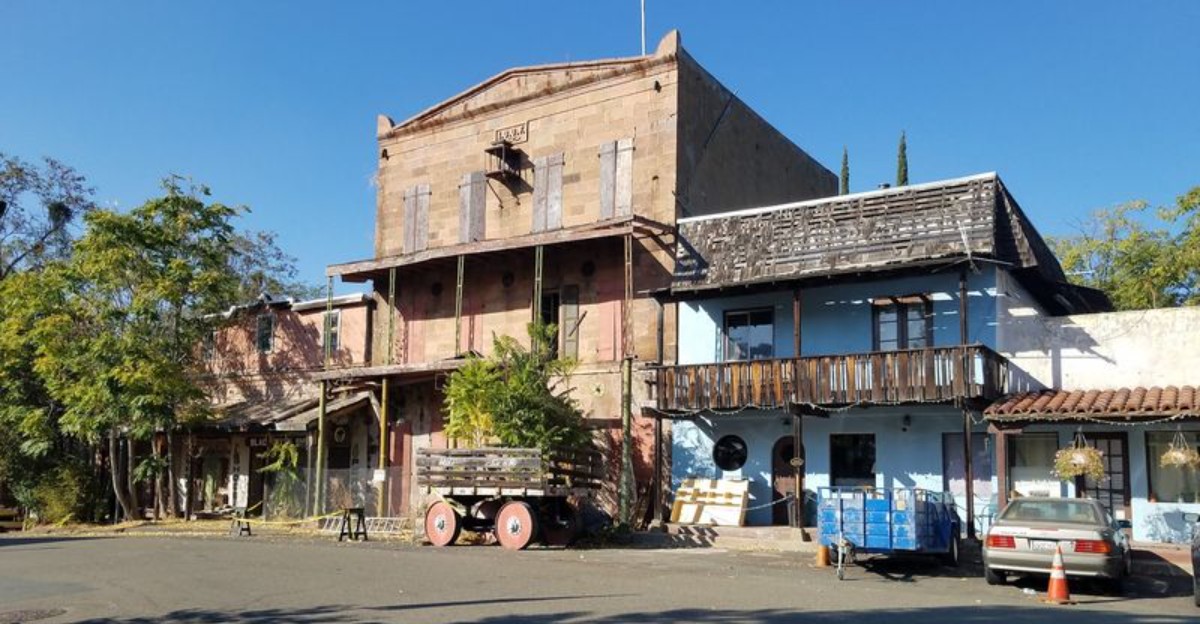
A quiet main street can be wildly misleading.
Behind a modest storefront, an old hotel, or a road that barely seems worth slowing down for, there may be a story big enough to completely change how you see the town.
Tiny communities across California are packed with history that rarely announces itself at first glance.
That is where this list gets interesting.
The places ahead have pasts tied to boom years, unusual local industries, long-forgotten ambitions, and chapters that still show up in buildings and traditions today.
You could drive through several of them without realizing any of it.
Then one detail pulls you in, and suddenly the sleepy little town becomes the most interesting stop of the day. Consider this your warning not to judge by population size.
1. Locke: A Delta Town Built By Chinese Immigrants
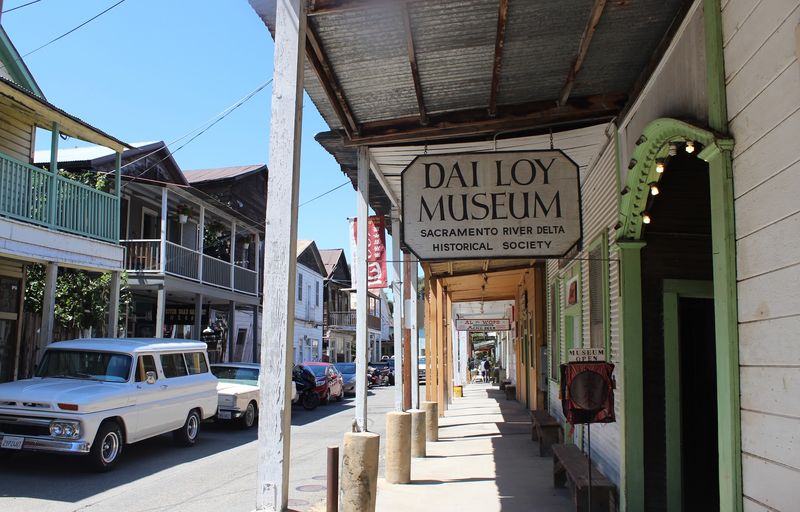
Wooden balconies lean over a narrow street here, and the whole place feels frozen sometime around 1925.
Locke is the largest and most intact rural Chinese-American settlement still standing anywhere in the United States.
The town got its start in 1915, after fire wiped out the Chinese section of nearby Walnut Grove.
Immigrants from Zhongshan in Guangdong Province rebuilt here, leasing land from a man named George Locke because California’s 1913 Alien Land Law barred non-citizens from owning property.
Business boomed from the 1920s through the 1940s. About 600 people lived here year-round, and seasonal farm workers could push that number toward 1,000.
Records list four restaurants, markets, dry goods shops, a flour mill, canneries, shipping wharves, an opera, and Prohibition-era speakeasies packed into a few short blocks.
Recognition arrived later. The Locke Historic District joined the National Register of Historic Places on May 6, 1971, and became a National Historic Landmark in 1990.
Walking the boardwalk today is quiet work. Fewer than a dozen current residents descend from the original Chinese settlers, and the population is now mostly white, which makes the preserved buildings feel even more precious.
Bring cash for the small museum and the old-school saloon, wear comfortable shoes, and take your time reading the interpretive signs.
Photographers love late afternoon here, when sunlight slides between the buildings and the levee glows gold.
2. Coloma: Where One Shiny Flake Changed Everything
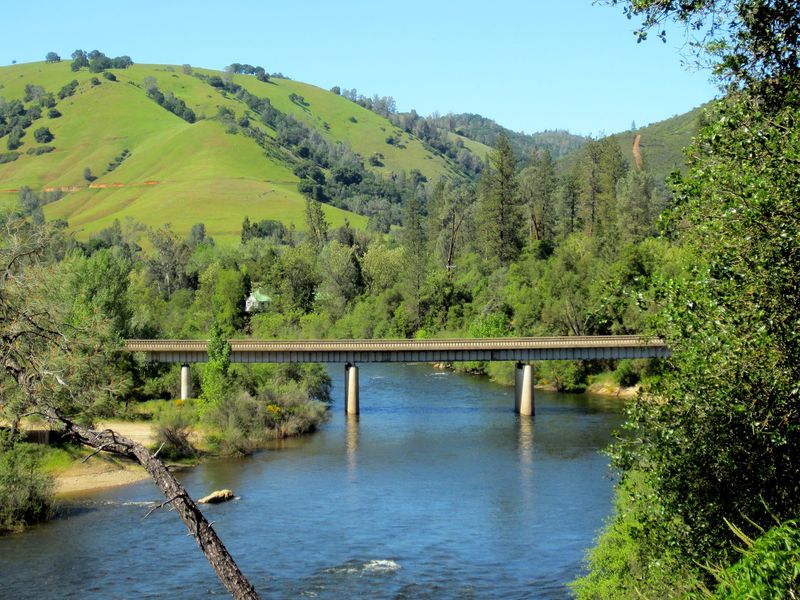
Picture a carpenter squinting at something glittery in a millrace. That moment in January 1848 belonged to James W.
Marshall, and it happened right here at Sutter’s Mill along the South Fork of the American River.
Word leaked, then exploded. Within a year, tens of thousands of hopeful miners were pouring toward California from around the world, reshaping the state’s population, economy, and future almost overnight.
The odd part is how peaceful Coloma feels now. Only a few hundred people live in the area, and the loudest sounds are usually rafters shouting on the rapids and wind moving through the pines.
Marshall Gold Discovery State Historic Park protects the heart of town.
A working replica of the sawmill turns beside the river, old brick and clapboard buildings line the street, and a monument marks Marshall’s grave on the hillside above.
Visitors can try panning for gold, which is genuinely fun and also a quick lesson in how backbreaking the real work was. Most people walk away with a few specks of pyrite and a lot more respect for 1849 miners.
Plan two or three hours minimum, longer if you add a rafting trip on the American River.
Spring brings wildflowers and comfortable temperatures, while summer afternoons get hot enough that shade and water bottles stop being optional.
Small town, enormous consequences. Very few places can claim they helped launch a mass migration.
3. Allensworth: A Bold Dream On The Valley Floor
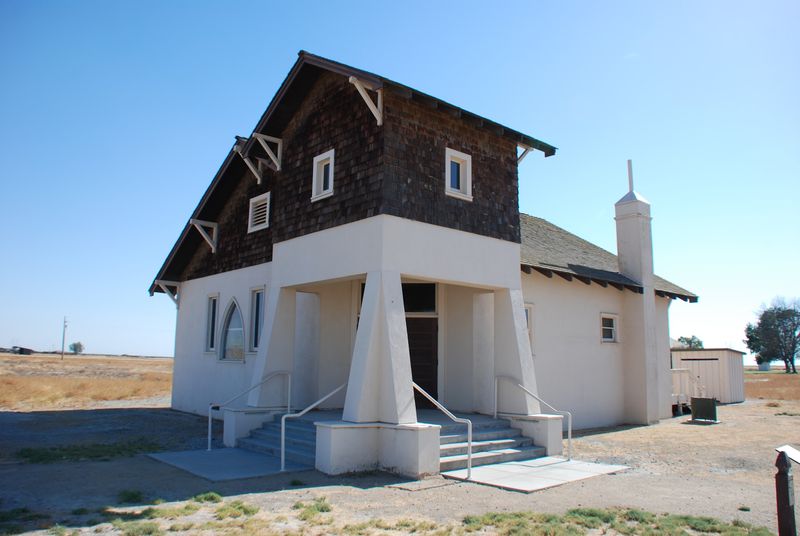
Colonel Allen Allensworth was born into slavery, served as a Union Army nurse, became a Baptist minister, a lecturer, and a politician. In 1908, he and four other Black settlers founded something California had never seen.
Allensworth stands as the only California town founded, financed, and governed entirely by African Americans.
The goal was self-determination: a community where Black families owned the land, ran the businesses, and made the decisions.
Progress came fast. By 1910 the settlement had California’s first African American school district, and by 1914 residents enjoyed a library, schoolhouse, post office, voting precinct, and judicial district of their own.
Then came setbacks that had nothing to do with effort. The Santa Fe railroad moved its stop away in 1914, and water was redirected elsewhere, leaving the farming community battling drought it could not win.
The original townsite survives as Colonel Allensworth State Historic Park, where restored buildings let you step inside the schoolhouse and imagine lessons in progress.
Census figures show 531 residents in 2020, with roughly 413 counted by 2024.
Go in cooler months if you can, since Central Valley summers are brutal and shade is limited.
Check the park calendar too, because rededication events and living history days bring the story alive in ways a plaque never could.
Few American towns represent this much courage packed into so few square blocks.
4. Volcano: One Hundred People, Endless Firsts
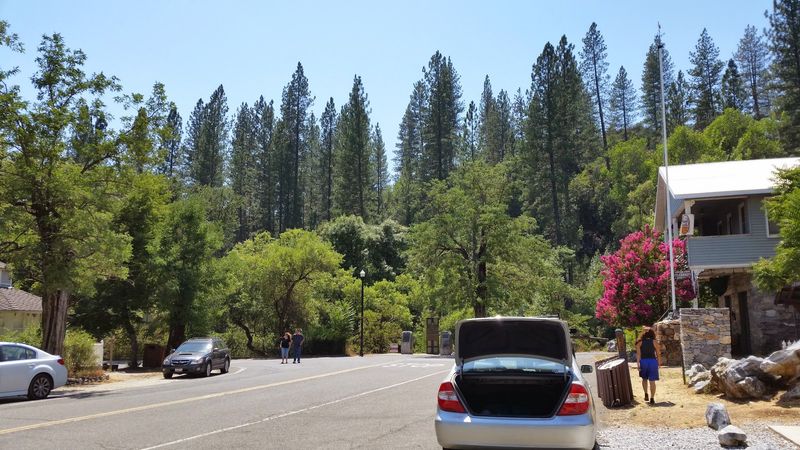
Roughly 100 to 130 people call Volcano home, which makes its resume almost comical. Somehow this speck in Amador County claims a string of early California milestones.
An astronomical observatory went up here in 1860, which was remarkable for a foothill mining camp.
Around 1852 or 1853, the town also hosted one of California’s earliest law schools, a private operation that trained future attorneys far from any city.
The name is a bit of a joke on geology. Early miners thought the bowl-shaped valley looked volcanic, though the limestone formations tell a completely different story.
Gold Rush crowds once filled the streets with hotels, stores, and saloons.
Today you find weathered stone walls, a historic hotel, a small theater company that has performed for decades, and a cannon named Old Abe with a Civil War era tale attached.
Springtime brings visitors for a different reason entirely. Nearby Daffodil Hill has drawn crowds for generations, though it has been closed to the public in recent years, so always check before planning a trip around it.
Pair Volcano with a stop at Indian Grinding Rock State Historic Park just up the road, where Miwok bedrock mortars and a reconstructed village round out the day.
Cell service can be patchy in these canyons, so download directions ahead of time and enjoy being slightly unreachable for an afternoon.
5. Knights Ferry: Big Bridge, Barely Any People
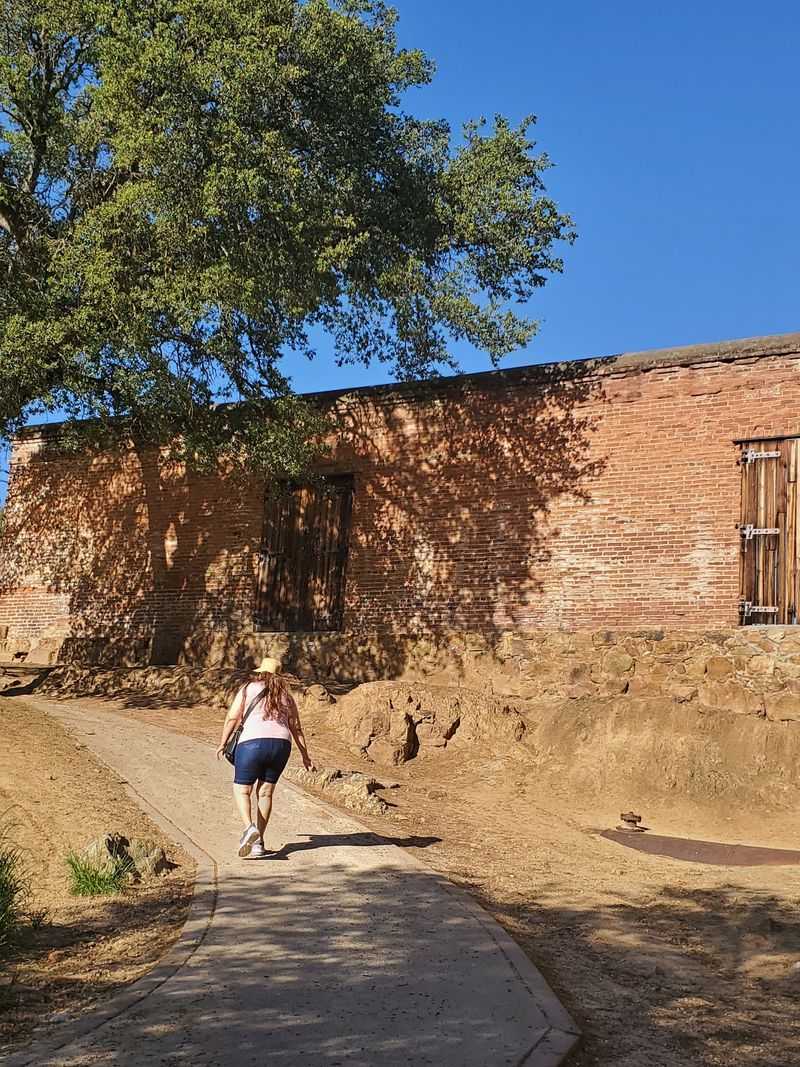
Barely 100 people live in Knights Ferry, yet the town owns a record. Its covered bridge stretches roughly 330 feet across the Stanislaus River and stands as the longest covered bridge west of the Mississippi.
Census counts here get slippery. The 2020 tally landed at 112 by one measure and 62 by another, with about 81 residents estimated in 2024.
Either way, the bridge outnumbers the crowd in sheer presence.
Gold Rush traffic built this place. A ferry crossing served miners heading for the southern mines, and the settlement grew into a supply point with mills and stores serving the river trade.
One of those stores still operates and is billed as California’s oldest working general store, which means you can buy a soda in a building that has been selling goods since the mining era.
The bridge itself is closed to cars but open to walkers, and the wooden trusses overhead are worth a slow look. Below, the Stanislaus draws kayakers, rafters, and picnicking families all summer long.
Bring a blanket and lunch, because the shaded riverbank near the recreation area makes an easy afternoon stop. Fishing gear works well here too.
Getting there is simple from Highway 108 near Oakdale, and the detour takes maybe twenty minutes out of your day. Skipping it would be a genuine shame.
6. Hornitos: Chocolate Fame From A Ghostly Plaza
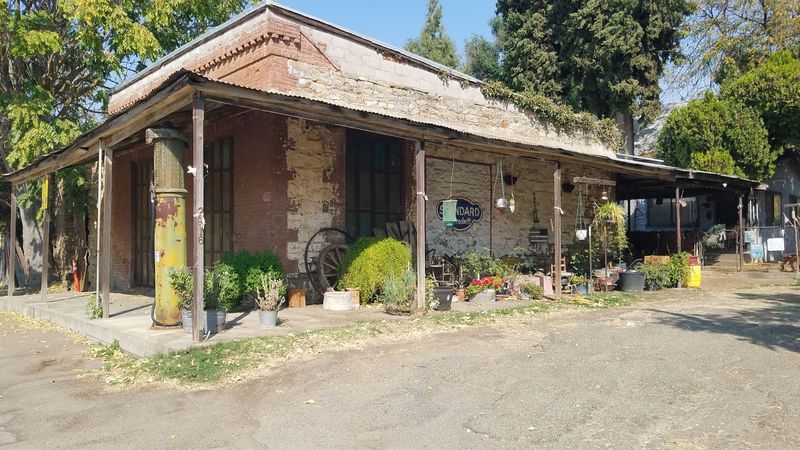
Thirty-eight residents. That was the entire 2020 count for Hornitos, a former incorporated town in Mariposa County that once buzzed with thousands of miners.
The famous footnote involves chocolate.
Domingo Ghirardelli, who would later build one of America’s best-known chocolate companies, ran a store here during the mining years before finding his sweeter calling in San Francisco.
Spanish and Mexican miners shaped the town’s layout, and the name refers to little ovens, describing above-ground tombs that early residents built. Walk the hillside cemetery and the nickname makes instant sense.
Ruins do the storytelling now. Crumbling adobe walls, a stone plaza, and a hilltop church sit under dry golden hills, and the silence can feel almost theatrical after you learn how rowdy this place once was.
Reputation matters here too. Hornitos earned a wild image during the Gold Rush, with gambling halls, fandango dances, and enough lawlessness to fill a dozen tall tales.
Roads in are narrow and winding, so take them slowly and watch for cattle. There are no services worth counting on, meaning gas up and pack water in Mariposa or Merced before you head out.
Respect the private property signs, since people do live among the ruins. Photograph from the road and public areas, and you will still come away with images that look a century old.
7. Chinese Camp: Trees, Tongs, And An 1854 Post Office
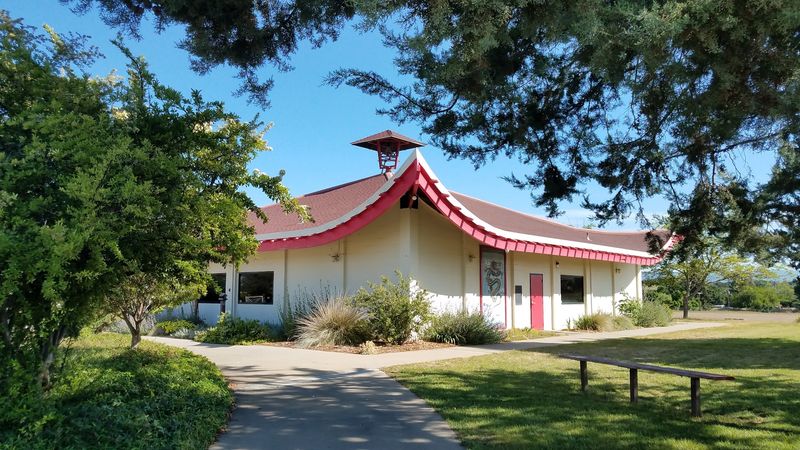
Around 5,000 Chinese miners once worked out of this settlement, originally called Camp Washington.
Today the census counts about 90 people, dropping to roughly 69 by 2024 estimates.
Its stone-and-brick post office dated all the way back to 1854, one of the oldest surviving structures of its kind in the Mother Lode.
Reports indicate the building was destroyed in a wildfire in September 2025, a heavy loss for California history.
Landmark status came in 1949, when the site became California Historical Landmark number 423. That recognition reflects how central the community was to the Southern Mines.
Transportation put it on the map. During the early 1850s, stagecoach lines and express offices used Chinese Camp as a hub, moving people, mail, and gold across the foothills.
A darker chapter also unfolded nearby. The first Chinese tong war in California was fought close to town between the Sam Yap and Yan Woo tongs, a conflict rooted in rivalries carried across the Pacific.
Tall ailanthus trees, sometimes called trees of heaven, still shade the roads. Early Chinese settlers are credited with planting them, and their descendants form a living link to the 1850s.
Highway 120 runs right past, making this an easy pause on the drive toward Yosemite. Give yourself a half hour to read markers, look at old brick walls, and consider what 5,000 voices sounded like here.
8. Mokelumne Hill: From 15,000 Miners To Sleepy Streets
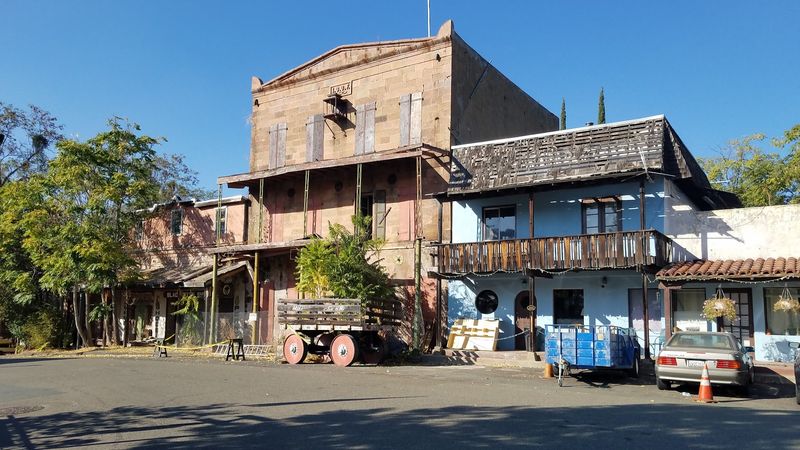
Around 1850, close to 15,000 people crowded into Mokelumne Hill. The placer gold deposits here ranked among the richest in California, and the town stood as one of the state’s principal mining centers.
Stories from those years border on legend, including claims that miners were limited to tiny plots because the ground was so productive. Fortunes and fights came fast, and the town earned a rough reputation.
Decline arrived just as quickly. Gold thinned out during the 1860s, and when San Andreas took over as county seat in 1866, Mokelumne Hill lost its last big advantage.
The 2020 census recorded 691 residents, with about 968 estimated by 2024, so the community is small but far from empty.
Historic brick and stone buildings line the main street, including a landmark hotel and the shell of an old mercantile.
Wandering here rewards slow eyes. Iron shutters, faded signs, and thick masonry walls tell you how many times fire swept through and how stubbornly people rebuilt.
Look for the historic cemetery on the edge of town, where headstones list birthplaces in France, Chile, Germany, and China, a reminder that the Gold Rush pulled people from everywhere.
Highway 49 makes access easy, and combining Mokelumne Hill with Jackson and San Andreas creates a solid day of foothill history without much driving between stops.
9. Port Costa: Ferried Trains And A Wheat Empire
Entire trains once floated across the water here. Before bridges spanned the Carquinez Strait, massive ferries carried railroad cars between shores, and Port Costa sat directly on the transcontinental route.
Wheat made the town rich. By 1887, its waterfront reportedly handled four-fifths of California’s wheat shipments, with sailing ships loading grain bound for Europe and beyond.
That kind of importance is hard to picture now, because the 2020 census counted just 190 residents. A single short street holds the whole village, tucked below steep hills at the water’s edge.
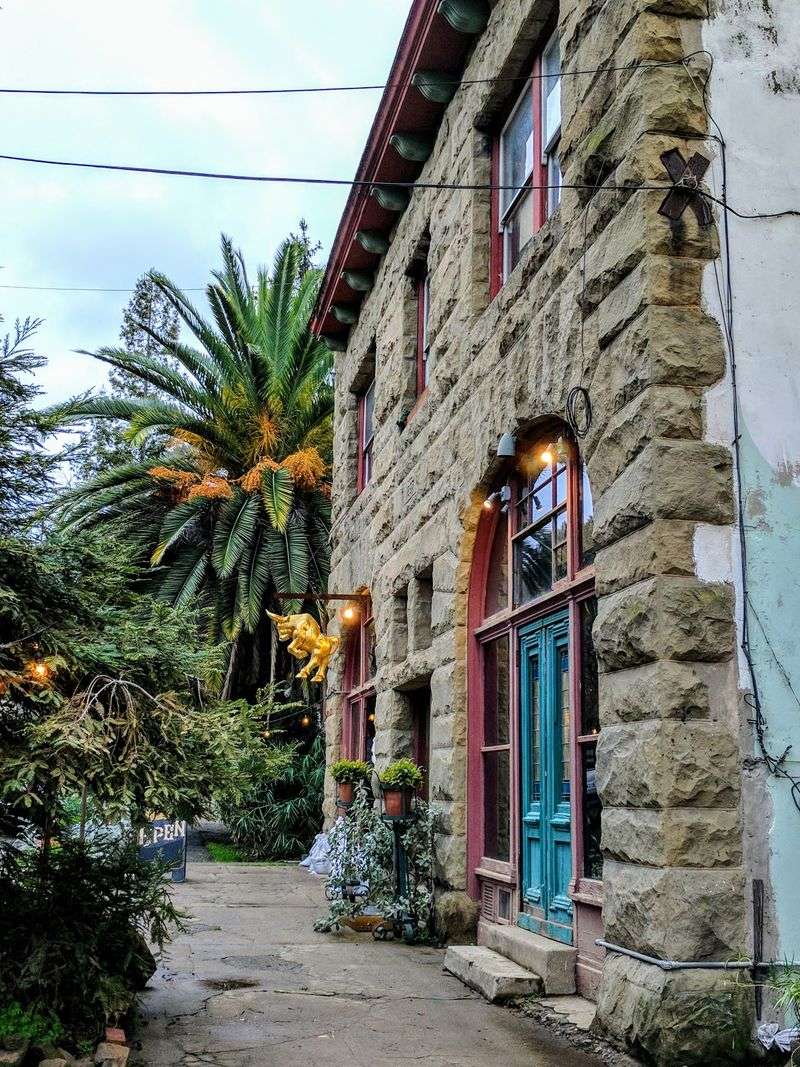
Old brick warehouses survive and have been repurposed into a hotel, a famously odd saloon, and shops that lean happily into the town’s eccentric reputation.
Weekends bring motorcyclists, cyclists, and day-trippers from all over the Bay Area.
Parking is genuinely limited, so arriving early on a Saturday saves headaches. The drive in along McEwen Road twists through golden hills that feel far more remote than the location actually is.
Views of the strait include enormous cargo ships sliding past close to shore, which never stops being impressive. Bring a camera and a jacket, since afternoon wind funnels through the channel.
Combine a visit with the nearby Carquinez Strait shoreline trails or historic Benicia across the water. Small footprint, outsized history, and a slightly weird charm you will remember longer than the photos.
10. Ferndale: Victorian Mansions Paid For By Cows
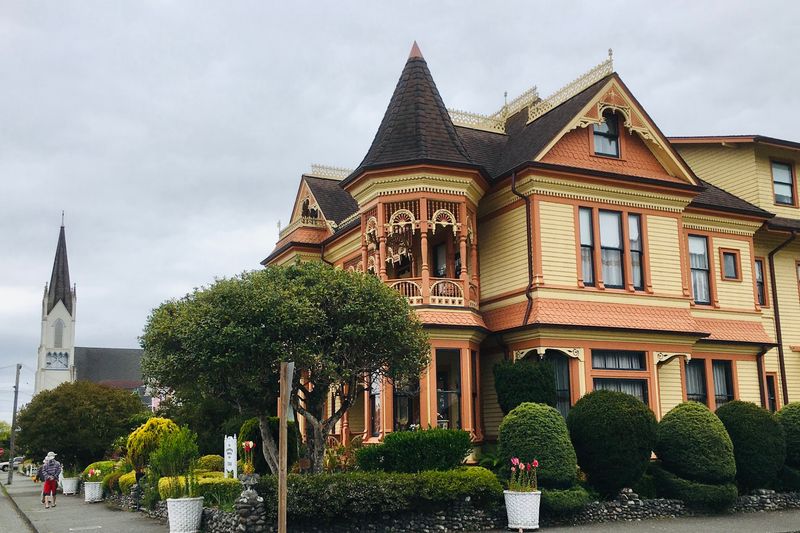
Dairy cows financed some of the fanciest houses in Northern California. Locals nicknamed Ferndale’s grandest Victorians the Butterfat Palaces, and the name stuck for good reason.
Butter and cheese production in the fertile Eel River valley made families wealthy in the late 1800s. Instead of leaving, they built ornate homes with turrets, gingerbread trim, and paint schemes bold enough to stop traffic.
The whole village is a state historic landmark, and Main Street looks so intact that filmmakers have used it as a stand-in for small-town America more than once.
About 1,353 people lived here at the 2020 census, which keeps the atmosphere friendly rather than commercial.
Shopkeepers chat, and the local repertory theater draws audiences from across Humboldt County.
Two quirky traditions deserve mention.
The Kinetic Grand Championship, a wild human-powered art sculpture race, finishes in town each Memorial Day weekend, and the Christmas lighting of America’s Tallest Living Christmas Tree fills the streets each December.
Take time for the cemetery on the hillside, where paths climb past pioneer graves to views over pastures and fog. It is peaceful and a little haunting.
Coastal weather runs cool and damp, so layers beat shorts most of the year. Ferndale sits a short drive off Highway 101 near Fortuna, and the Lost Coast begins just beyond, tempting anyone with an extra day to spare.