10 Georgia Hiking Trails Where Hikers Should Stay Snake-Aware
A rustle in the leaves stopped me mid step. I froze, waited, and watched a snake slide off the trail without a second glance my way.
That single moment changed how I read every trail sign after that. Georgia is full of quiet paths where wildlife outnumbers hikers, and most of it means no harm at all.
Still, a handful of species here can turn a peaceful walk into a serious situation fast. Some trails post real warnings for a reason, not just for show.
I started paying closer attention to those signs instead of walking past them. Somewhere in Georgia, a little caution turns into a much better hike.
Knowing what to expect underfoot changes how you move through the woods entirely. These trails ahead mix good scenery with honest warnings worth reading twice.
1. Big Rock Trail, Fort Mountain State Park, Chatsworth
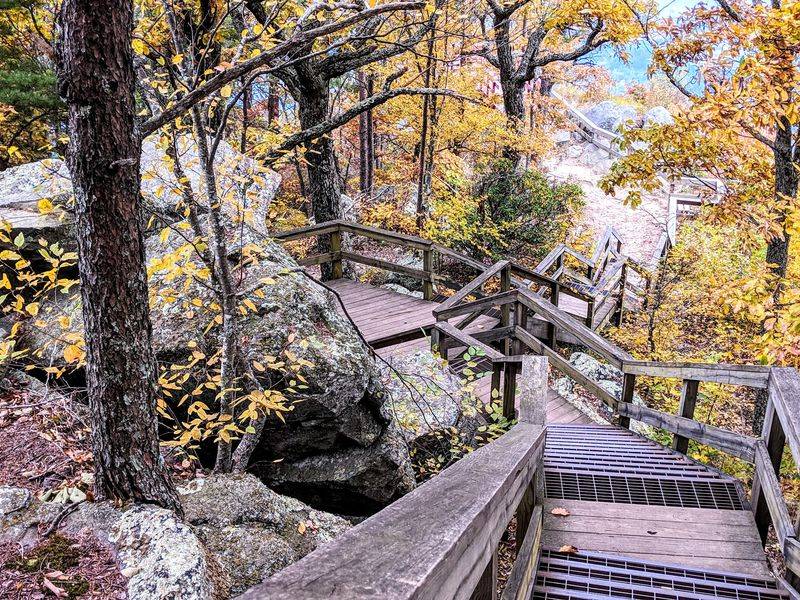
Stone walls, waterfalls, and a mountaintop that feels older than the map. Big Rock Trail packs all of that into a short, rugged loop.
The path drops past a small cascade and rolls over slabs of exposed rock. Those warm slabs are exactly where copperheads and timber rattlesnakes like to stretch out on cool mornings.
Park staff have reported king snake sightings here, which is genuinely good news. King snakes eat other snakes, including venomous ones, so spotting one means the ecosystem is doing its job.
Footing matters more than speed on this loop. Roots, leaf litter, and stone steps hide plenty, so step onto rocks rather than blindly over them.
Trekking poles earn their keep here. Tapping the ground ahead gives any resting snake a heads-up long before your ankle arrives.
You will find the trailhead at 181 Fort Mountain Park Rd, Chatsworth, GA 30705. Stop at the office first and ask what has been seen recently.
Long pants and sturdy boots are the simple uniform for this terrain. Ankle gaiters add another layer if you plan to hike in warmer months.
Should a snake appear, freeze, then back up several steps. Six feet of space solves nearly every encounter without drama.
Early starts pay off twice. Cooler air means fewer active reptiles and a much emptier overlook.
2. Red History Trail To The Mill Ruins, Sweetwater Creek State Park, Lithia Springs
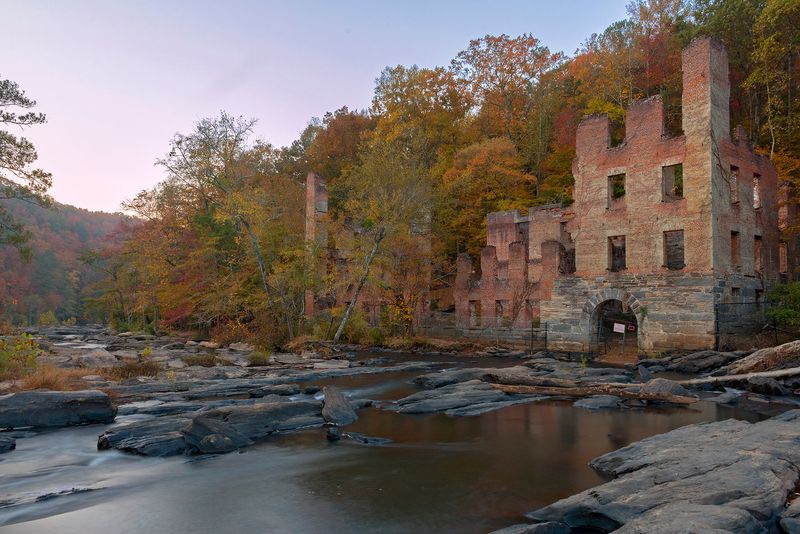
Few ruins in the region look this cinematic. Brick walls from an old textile mill rise straight out of the riverbank, and the trail to them is short and busy.
Georgia is home to timber rattlesnakes, so hikers should stay alert around rocky areas, logs, and dense vegetation.
Copperheads also do well along the creek, especially where damp rocks meet fallen wood. Both species blend into leaf litter with unsettling skill.
Water snakes swim these shallows constantly and get mistaken for cottonmouths almost daily. They are non-venomous and mostly interested in fish.
Black rat snakes show up too, sometimes draped across low branches. A long black snake stretched over a limb is a photo, not a problem.
Rock hopping near the mill is where hikers get careless. Never plant a hand in a crevice you have not looked into first.
The park sits at 1750 Mt Vernon Rd, Lithia Springs, GA 30122, close enough to Atlanta for a weekday escape.
Crowds thin dramatically before nine in the morning. Cooler stone also means fewer basking reptiles along the water.
Keep dogs leashed and off the boulder piles. Curious noses cause more trouble than careful boots ever will.
3. Canyon Loop Trail, Providence Canyon State Park, Lumpkin
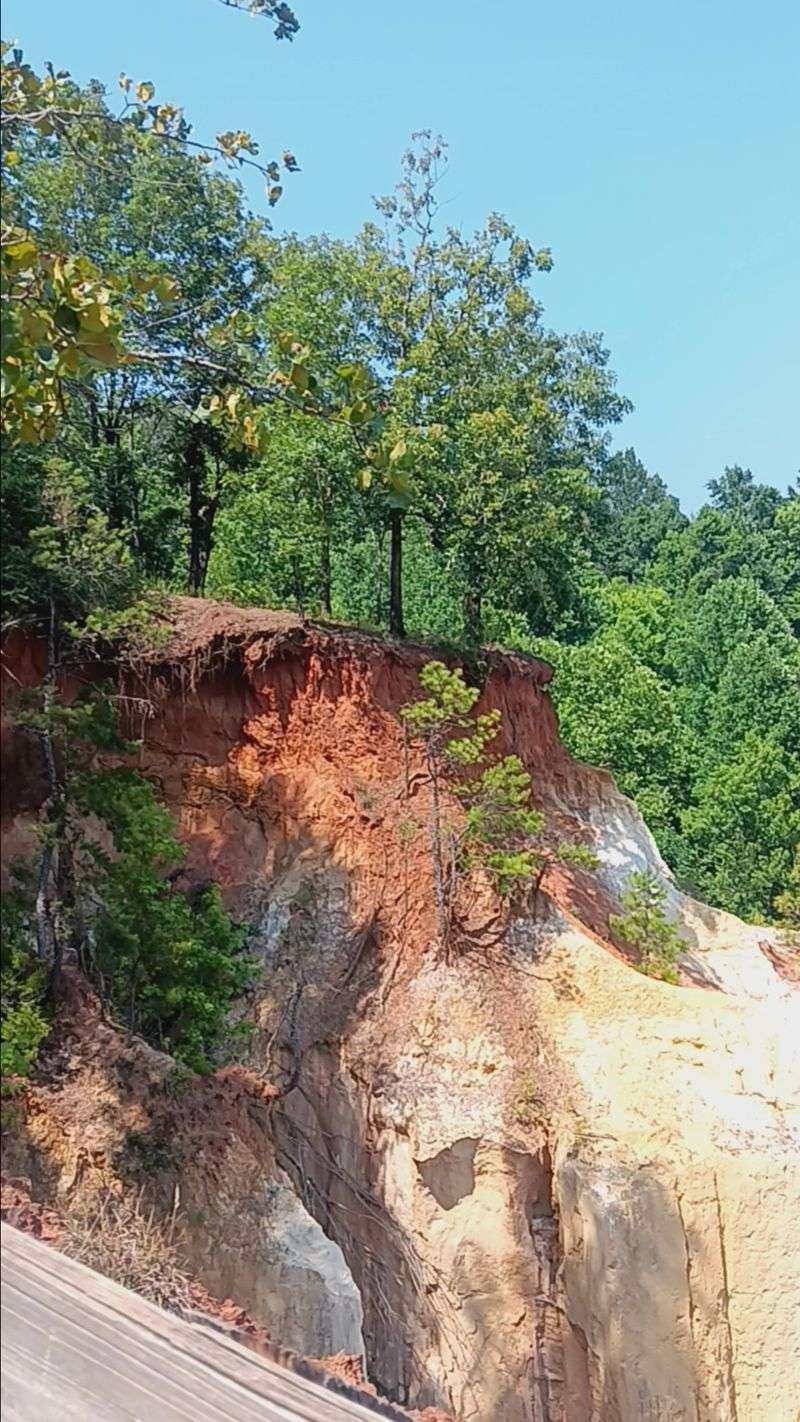
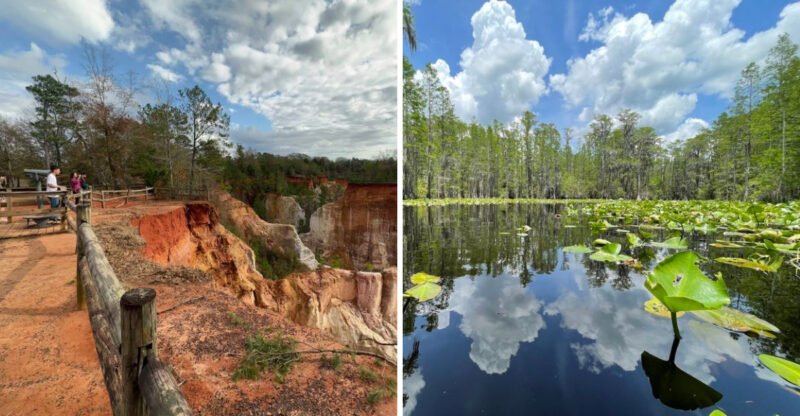
Pink, orange, and cream canyon walls make this place look imported from Arizona. The soil is soft, the colors are wild, and the canyon floor is sandy underfoot.
Woodlands and mixed forest surround the rim, which creates excellent snake habitat. Rat snakes, small ground snakes, and water snakes near streams all live here.
Venomous snakes occur in Georgia, so hikers should watch their footing around fallen wood, shaded edges, and dense vegetation.
The boulder field on the canyon floor deserves extra attention. Gaps between rocks make ideal shelter, so look before you place hands or feet.
Rattlesnakes do not always rattle before you notice them. Treating silence as safety is the mistake worth avoiding.
Wet feet come standard here since the trail crosses shallow water. Closed shoes with real grip beat sandals every single time.
Directions lead to 8930 Canyon Rd, Lumpkin, GA 31815, deep in the southwest corner of the region.
Central ratsnakes also patrol these slopes and climb surprisingly well. They are harmless and helpful for rodent control.
Give any snake plenty of clearance and simply walk around. Most snakes prefer to avoid people when left undisturbed.
4. Tennessee Rock Trail, Black Rock Mountain State Park, Mountain City
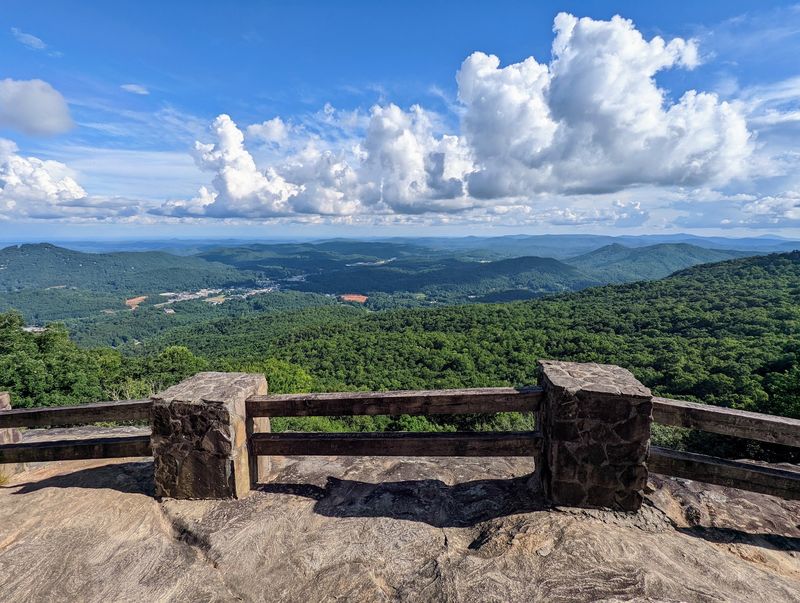
Sitting at the highest elevation of any state park in the region, this loop climbs through cool, mossy forest. The summit overlook shows ridge after ridge fading into blue.
Black rat snakes live here and grow impressively long. They climb trees, raid bird nests, and pose zero threat to hikers.
Copperheads and timber rattlesnakes are the venomous species common to these mountains. Both prefer sunny rock ledges and warm stone.
Park guidance is refreshingly specific about distance. Snakes can strike roughly one third to one half of their body length.
That math makes photography easy to solve. Use zoom, stay well back, and let the camera do the approaching.
Rhododendron tunnels along the trail create dense shade and thick ground cover. Stay centered on the path instead of cutting corners through brush.
The entrance address is 3085 Black Rock Mountain Pkwy, Mountain City, GA 30562, near the northern edge of the region.
Elevation keeps temperatures lower than the valleys below. Cooler air often means less reptile activity during midday.
Pack a headlamp if you plan a sunset descent. Seeing your footing is the entire strategy after dark.
5. Bear Hair Gap Trail, Vogel State Park, Blairsville
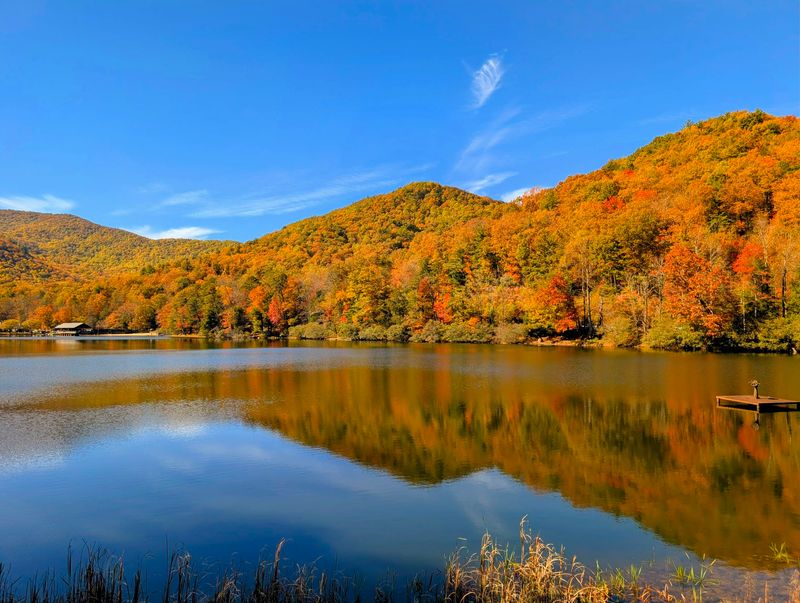
An overlook above a mountain lake rewards a solid four-mile climb. The trail wraps around a slope thick with hardwoods and small stream crossings.
Copperheads are active in this part of the mountains, particularly during evening hours. Warm summer nights bring them out to hunt.
Timber rattlesnakes share the same ridges and rocky benches. Both species rely on camouflage rather than confrontation.
Official advice for encounters is beautifully simple. Stop walking, back up a few steps, and create a wide margin around the animal.
Rushing past is where people get into trouble. A snake left alone almost always retreats on its own schedule.
Stream crossings deserve a second look before you hop. Damp rocks attract frogs, and frogs attract hungry snakes.
Trailhead parking is available at 405 Vogel State Park Rd, Blairsville, GA 30512, one of the oldest parks in the system.
Sturdy boots and long pants handle most of the risk. Ankle gaiters add real confidence on overgrown summer sections.
Finish before dusk if you can. Fading light hides both snakes and roots equally well.
6. Dowdell’s Knob Loop, F.D. Roosevelt State Park, Pine Mountain
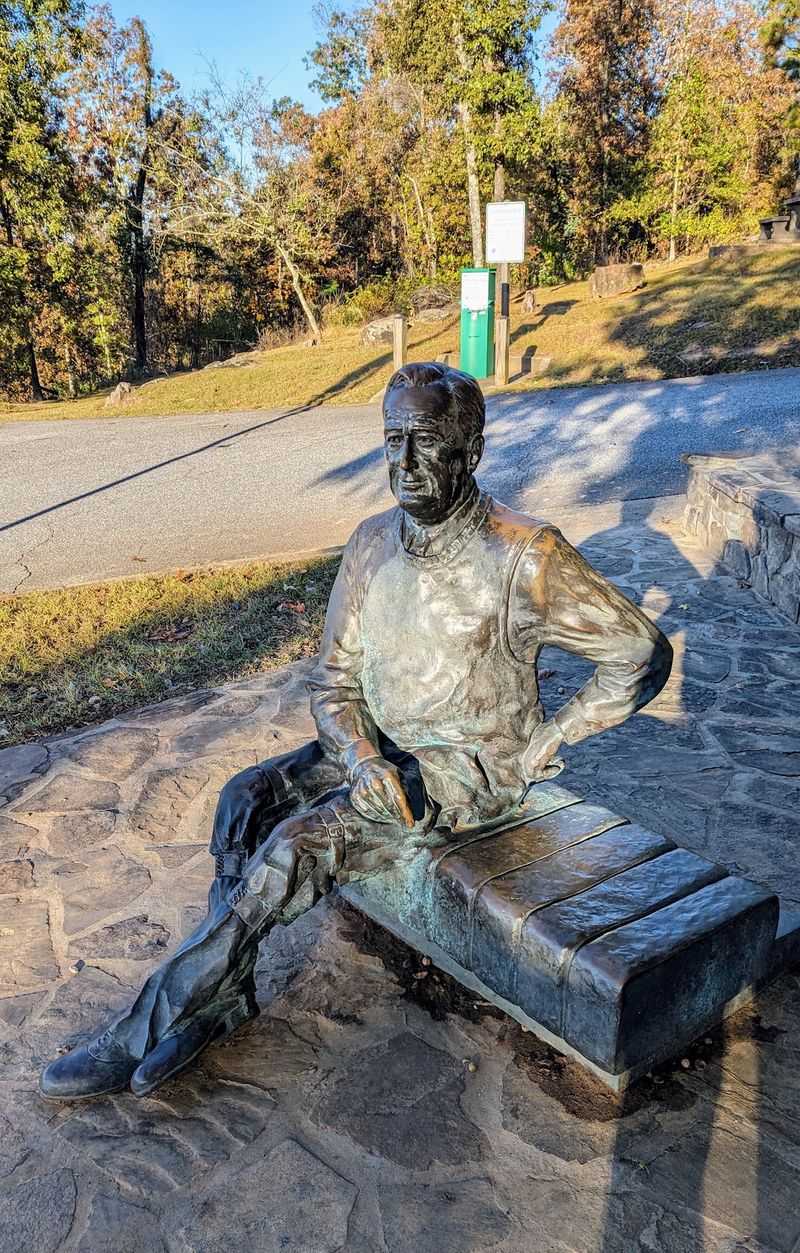
A quiet ridge with a famous view and a bronze bench honoring a president who loved the spot. The loop drops off the overlook into oak and pine woods.
Rocky outcrops line much of the route. Sun-warmed stone is prime real estate for any reptile looking to raise its body temperature.
General guidance for the state applies fully here. Six venomous species live within its borders, and copperheads are the most widespread.
Roughly 85 percent of the snakes you might meet are harmless. Identification is fun, but distance works better than guessing.
Many non-venomous snakes flatten their heads when frightened. That triangular shape fools plenty of hikers into panic.
Skip the urge to poke, move, or relocate anything. Most bites happen when someone tries to handle or chase a snake.
The trailhead area is reached from 2970 GA Hwy 190, Pine Mountain, GA 31822, along the scenic ridge road.
Leaf litter here gets deep in autumn and hides everything underneath. Slow, deliberate steps solve that problem cheaply.
Bring water and start early. Cooler mornings mean better views and calmer wildlife.
7. West Rim Loop Trail, Cloudland Canyon State Park, Rising Fawn
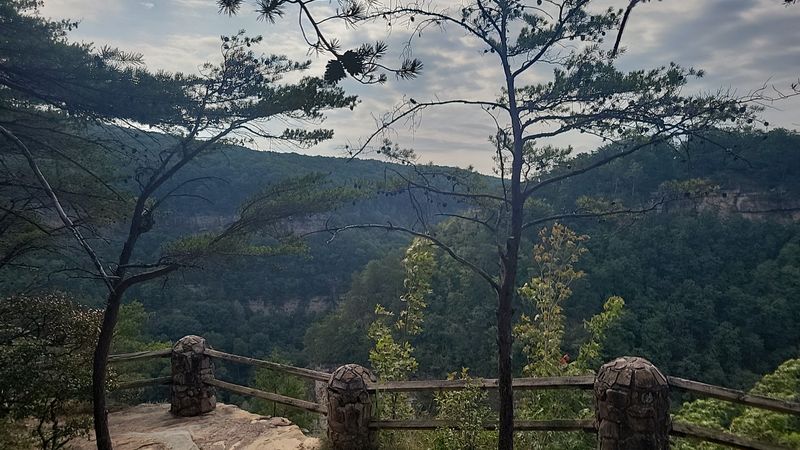
Sandstone cliffs drop into a deep green gorge, and the rim trail delivers overlook after overlook. Photographers lose track of time out here.
Snakes have been spotted directly on the West Rim Loop. Large harmless rat snakes and timber rattlesnakes both live in the park.
The Cumberland Plateau terrain suits them perfectly. Cracks, fallen logs, and wooded slopes offer shelter and easy ambush spots.
Ledges are the real caution zone. Look before stepping onto one, and check the base before sitting down for a snack.
Hands go into unseen crevices far too often here. Scrambling for a better photo angle is not worth the gamble.
Rat snakes in this park can reach impressive lengths. They are excellent climbers and completely non-venomous.
Access starts at 122 Cloudland Canyon Park Rd, Rising Fawn, GA 30738, in the northwest corner of the region.
Stick to the marked path instead of shortcutting between switchbacks. Off-trail brush hides both snakes and loose rock.
Hike the loop clockwise for better morning light. Fewer people and cooler stone make the whole trip smoother.
8. Nature Trail, Reed Bingham State Park, Adel
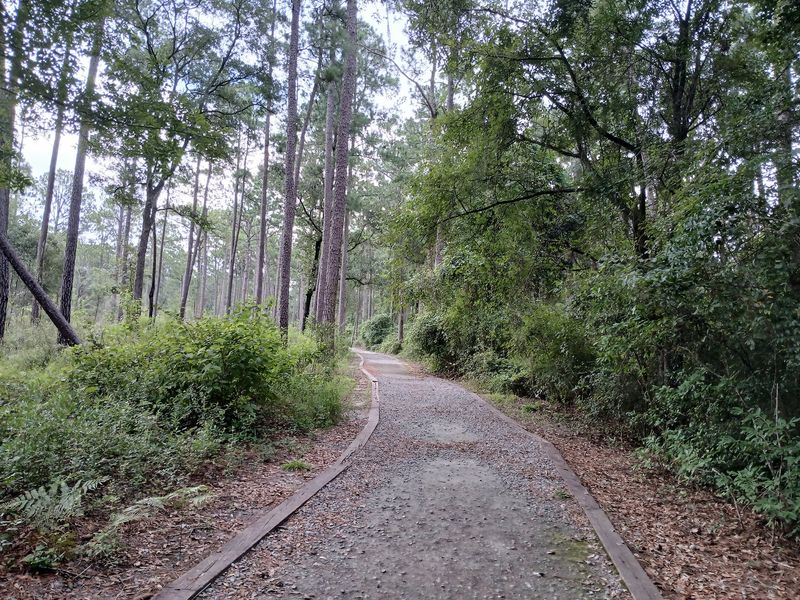
Wildlife density here is genuinely high. A wide lake, thick vegetation, and coastal plain habitat pull in birds, alligators, and plenty of snakes.
The Coastal Plain Nature Trail showcases unusual plant life along an easy route. That same variety supports an equally varied snake population.
Threatened indigo snakes live in this park, and they are protected for good reason. Large, glossy, and non-venomous, they are a rare treat to see.
Timber rattlesnakes and cottonmouths have both been spotted here. Southern portions of the region also host pygmy rattlesnakes and eastern diamondbacks.
Alligators are frequently seen along the lake edge. Keep back from the shoreline and never let pets wander near the water.
Flat terrain tempts hikers into autopilot mode. Watching your feet matters just as much on level ground.
The park is located at 542 Reed Bingham Rd, Adel, GA 31620, in the southern part of the state.
Warm months bring more activity across the board. Early morning and late evening walks reduce encounters considerably.
Binoculars beat curiosity every time. Observing from a distance keeps both you and the wildlife comfortable.
9. Upland Island Boardwalk Trail, Stephen C. Foster State Park, Fargo
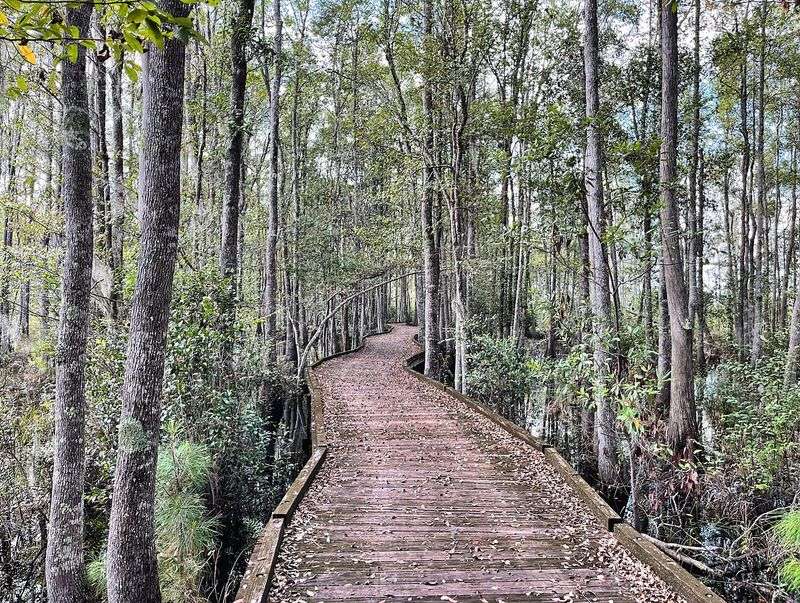
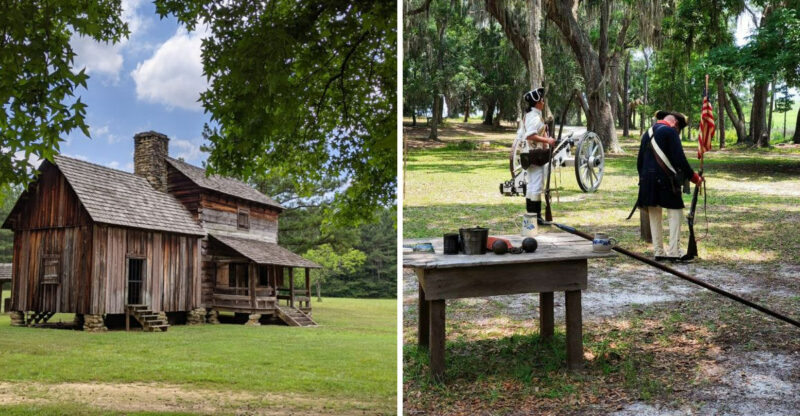
Roughly 38 snake species live in the Okefenokee Swamp. That number alone makes this boardwalk the most reptile-rich walk on the list.
Elevated planks keep your feet above the wet ground, which helps enormously. Staying on the boardwalk is the single best safety habit here.
Cottonmouths occur in the Okefenokee, but hikers should avoid assuming every waterside snake belongs to this venomous species.
Eastern diamondbacks, timber rattlesnakes, dusky pygmy rattlesnakes, and eastern coral snakes also occur in the region. Each prefers different pockets of habitat.
Non-venomous residents outnumber them handily. Brown water snakes, banded water snakes, rat snakes, corn snakes, southern black racers, swamp snakes, and the protected indigo all call this place home.
Ranger-led boat tours add real value beyond the walkway. Guides point out wildlife you would never notice alone.
The park sits at 17515 GA Hwy 177, Fargo, GA 31631, at the western edge of the swamp.
Dark water hides everything below the surface. Admire the reflections, but keep hands and gear inside the railings.
Sunset here turns the cypress gold. Bring a flashlight for the walk back to the car.
10. Fitness/Nature Trail, Panola Mountain State Park, Stockbridge
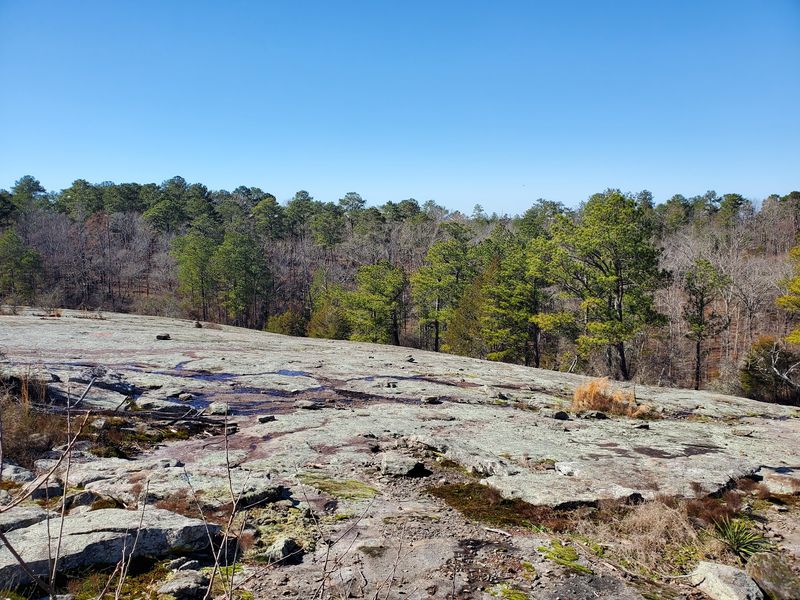
Granite outcrops and protected forest make this park a living classroom. The nature trail is short, shaded, and friendly for beginners.
Non-venomous snakes occur throughout the park, including species commonly found in Georgia’s wooded and rocky habitats.
Black rat snakes also patrol the woods and rock edges. Neither group poses any danger to hikers.
A black king snake was once found tangled in erosion netting near the Lake Loop Trail. King snakes eat other snakes, including venomous species, which makes them valuable neighbors.
That story carries a small lesson about litter and loose netting. Wildlife gets caught in materials people leave behind.
Guided hikes are a specialty at this park since much of it is protected. Rangers know exactly where wildlife tends to appear.
Look for the entrance at 2620 Hwy 155 SW, Stockbridge, GA 30281, a short drive southeast of Atlanta.
The trail surface stays clear and easy to read. Even so, avoid stepping over logs without checking the far side.
Sunny granite patches warm up fast in spring. Scan them before you sit down for a rest.
Kids do well here with simple rules: look, point, and never touch.