Florida’s Oldest Roadside Attraction Still Stages Live Mermaid Shows in a Spring-Fed Theater
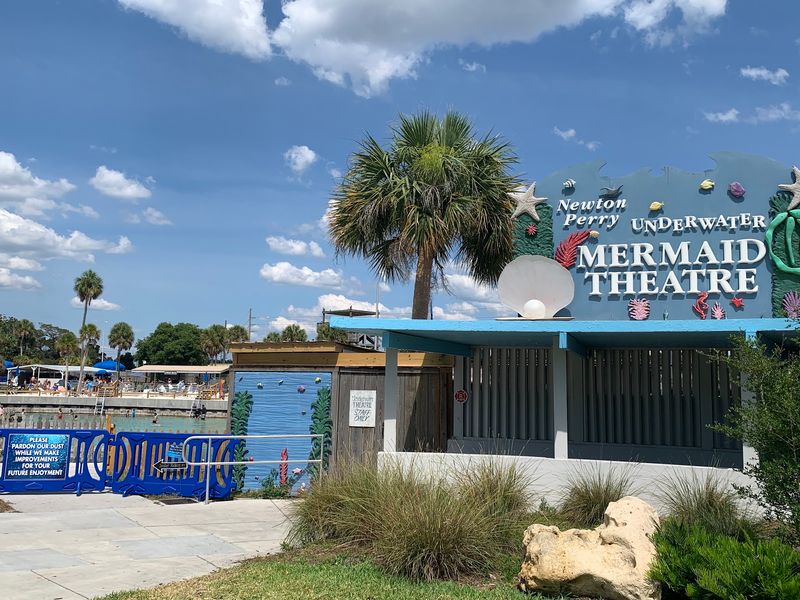
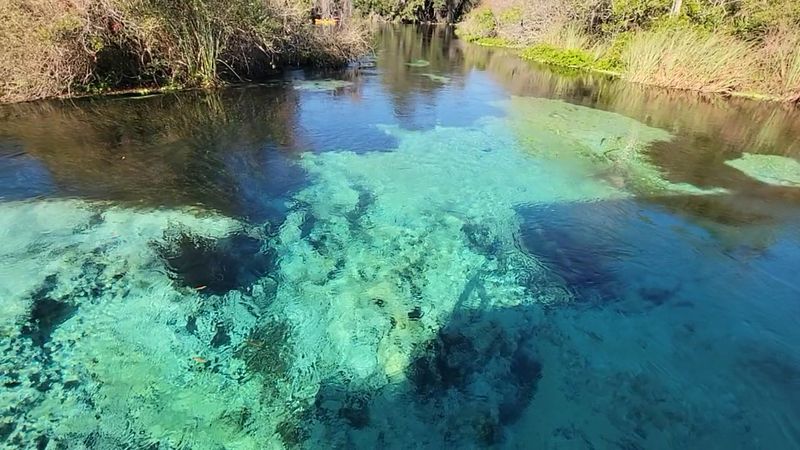
Somewhere along a busy Florida highway, past the gas stations and the strip malls, there’s a low sign and a parking lot that give away almost nothing. Behind it sits a spring so clear it looks fake, and a theater built right into the limestone bank sixteen feet below the waterline.
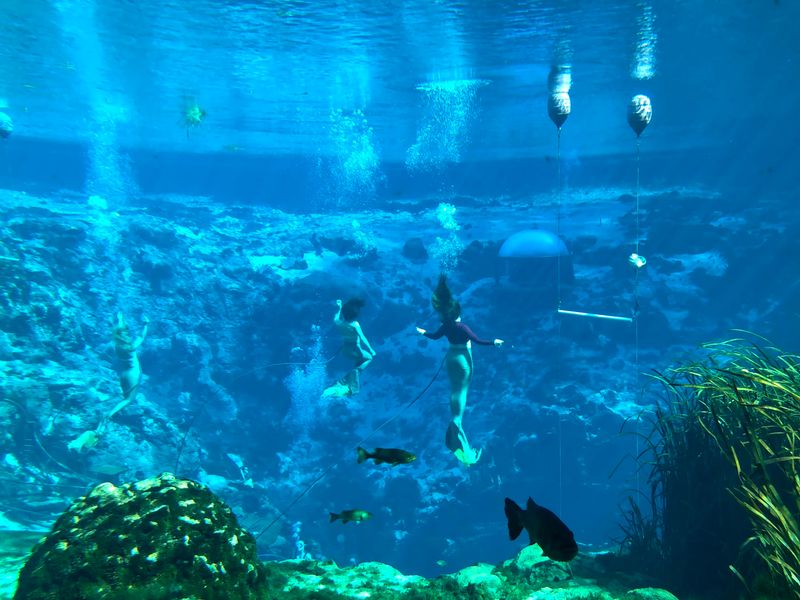
Performers in tails swim through that water every single day, breathing from hidden air hoses, the same way they have since the 1940s. It is one of the strangest and most charming things in the state, and it has been quietly running the whole time.
A Roadside Marvel on the Hernando County Coast
The address reads 6131 Commercial Way, Spring Hill, Florida, which sounds about as magical as a tire shop. Traffic hums past on the highway.
Then you walk through the gate and the whole register changes.
Weeki Wachee Springs State Park sits in Hernando County, roughly an hour north of Tampa on the Gulf side, and it opened to the public in October 1947. That makes it one of the oldest roadside attractions in a state that practically invented the genre.
It survived the interstate era, the theme park boom, and several changes of ownership.
Today it operates as a Florida State Park, which means rangers, boardwalks, and conservation signage share the grounds with an underwater theater and a waterslide. The combination should not work.
Somehow it does.
Google Maps lists it simply as a state park with mermaid shows and amusement rides, which is technically accurate and wildly incomplete. What’s really here is a spring pumping enormous volumes of water, a stage nobody else in the country has, and a performance tradition passed hand to hand for decades.
Little Spring, Winding River: Where the Name Comes From
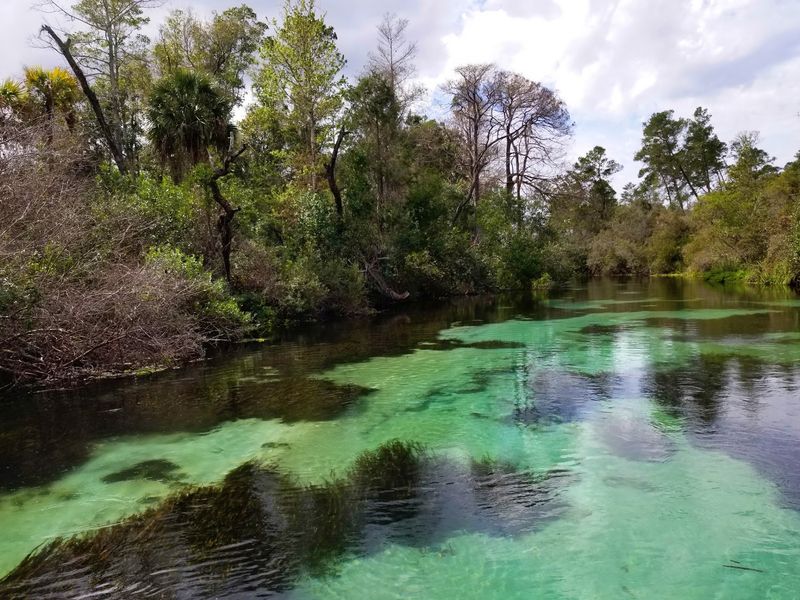
Long before anyone sold a ticket here, the Seminole people gave the place its name. Weeki Wachee translates roughly as Little Spring or Winding River, and both halves of that fit.
The spring itself is anything but little in output. More than 117 million gallons of water rise from underground caverns every day, holding a steady 74 degrees year round, cool enough to shock you in July and comfortably warm in January.
Clarity is the headline feature: fish hang suspended in it like they’re floating in air.
Here’s the part that unsettles divers. Nobody has found the bottom.
Explorers have pushed to a maximum depth of 407 feet inside what ranks among the deepest naturally formed underwater cave systems in the United States, and the passages keep going.
All that water has to go somewhere, so it becomes the Weeki Wachee River, curling west toward the Gulf through a corridor of cypress and sabal palm. The winding river half of the name earns itself within the first hundred yards downstream.
Newton Perry and the Air Hose That Started Everything
Picture a former Navy man who trained frogmen during the war, standing at the edge of a spring in 1946 and thinking about show business. Newton Perry was a stunt swimmer with a specific obsession: how to keep a performer underwater without the bulky helmet gear of the era.
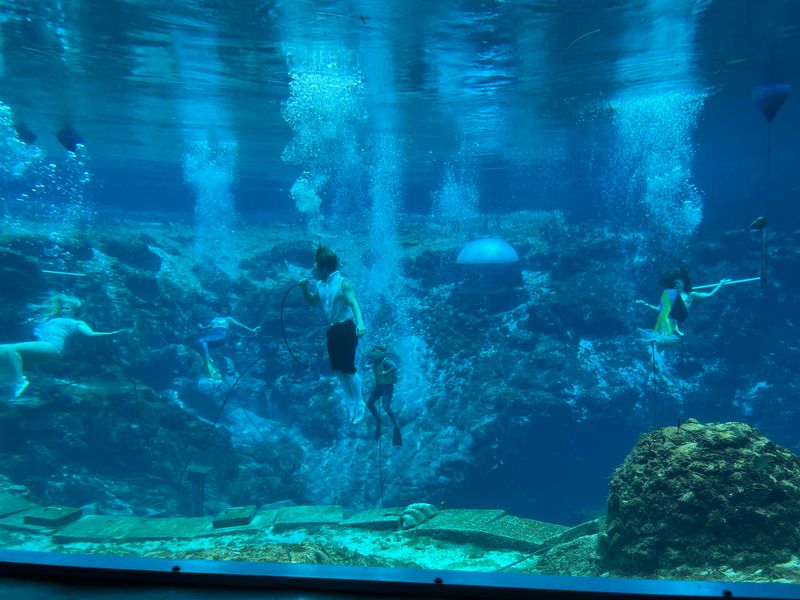
His answer was a free-flowing air hose. A swimmer takes a breath, tucks the hose out of frame, and exhales through the nose, which means the audience sees no tank, no mask, and no obvious cheat.
The illusion is that these people simply live down there.
Perry cleared old refrigerators and junk out of the spring, then built a small theater directly into the limestone bank. It held eighteen seats.
Eighteen. Cars had to be flagged down on the highway to fill even that.
The technique he developed is still taught today, and it remains harder than it looks. Performers fight a constant current while smiling, holding formation, and keeping their exhale controlled.
Everything charming about the show rests on a piece of rubber tubing and a lot of practice.
The Underwater Theater Built Into the Limestone
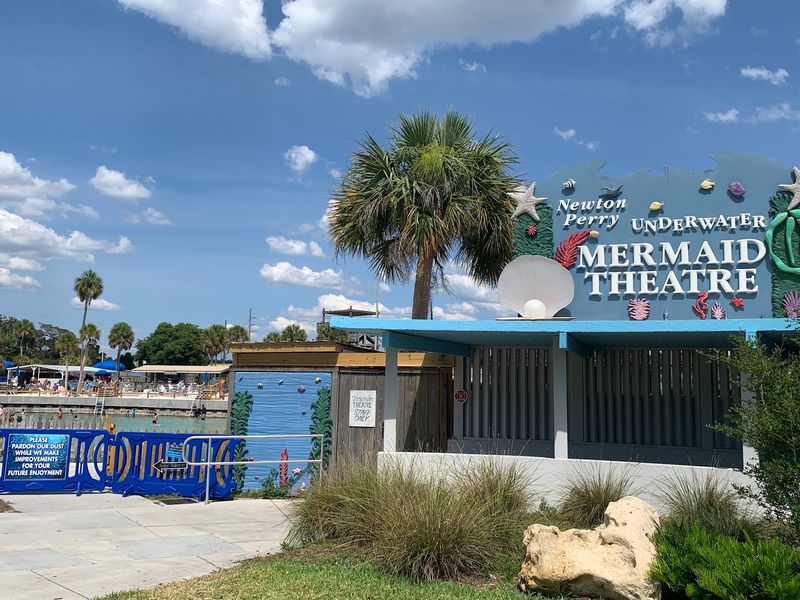
Down a ramp, into cool air, and suddenly you’re sitting below the waterline. The current theater seats 400 people and sits 16 feet beneath the surface, pressed against the spring’s edge so the glass looks straight into open water.
ABC bought the attraction in 1959 and built this structure, replacing Perry’s tiny original. The scale of that upgrade tells you how big the mermaids had become in the television age.
What makes the room work is that there’s no tank. The window frames a living spring, so a turtle may paddle through mid-number, and shafts of sunlight cut down through water that shifts color as clouds pass overhead.
Nothing is staged behind the performers because nothing needs to be.
The curtain opening is a small piece of theater in itself. Lights dim, music comes up, and a wall of blue appears with people already suspended in it.
Recognition eventually caught up with the place. The park joined the Florida State Park system in 2008 and landed on the National Register of Historic Places in 2020, protecting both the spring and the odd little auditorium carved beside it.
Tails, Ballets, and the Rise of the Aquabelles
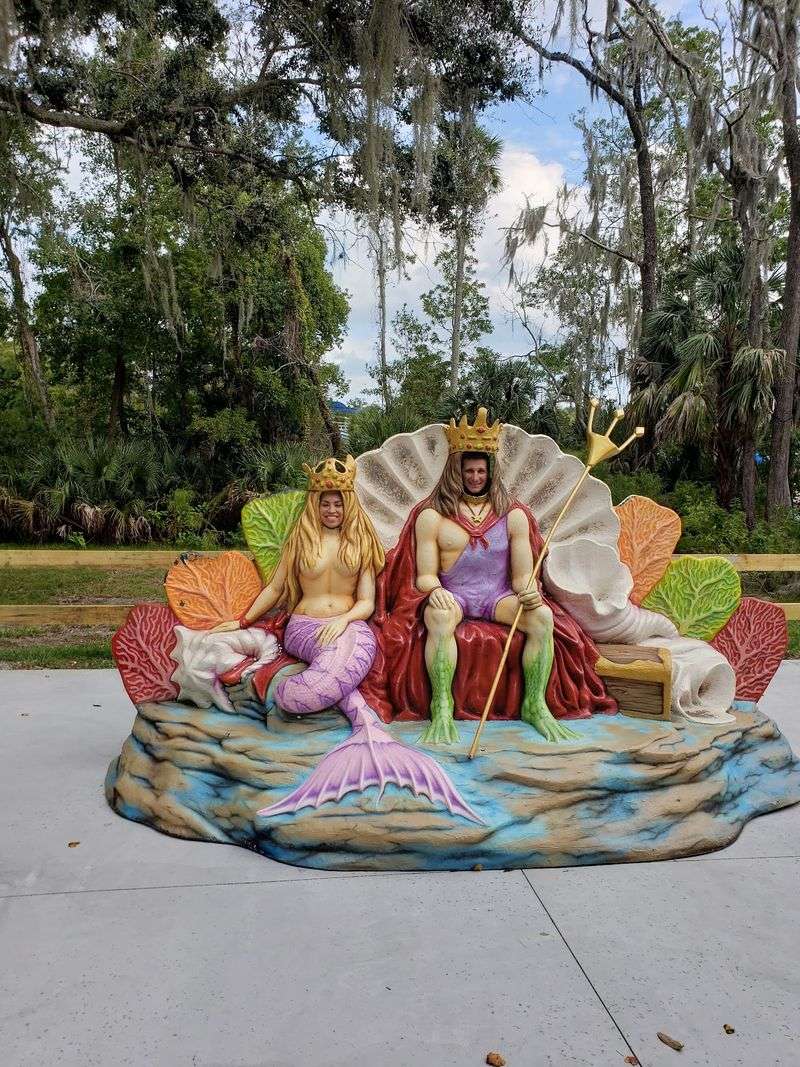
Tails came later than you’d think. The first performers were synchronized swimmers called the Aquabelles, and they worked barelegged, staging underwater ballets and party scenes as if a spring were the most ordinary place to spread a blanket.
By the 1960s the costumes arrived and the fantasy sharpened. Once you add a tail, the swimming has to change too, because a monofin kick reads completely differently from a flutter kick.
Production numbers grew ambitious across the decades. Titles included Underwater Circus, The Mermaids and the Pirates, Alice in Wonderland, The Wizard of Oz, Snow White, and Peter Pan, all performed with music piped through the water and choreography timed to it.
Veterans of those years are called Legendary Sirens, and they still return to swim and to coach newer performers. Skills here pass down in person rather than through a manual, which is part of why the style has stayed so consistent.
Shows run daily, all year. The current program folds in the history of the spring alongside the choreography, so the storytelling covers where the water comes from as well as who’s swimming in it.
Elvis, Hollywood, and a Premiere Held Underwater
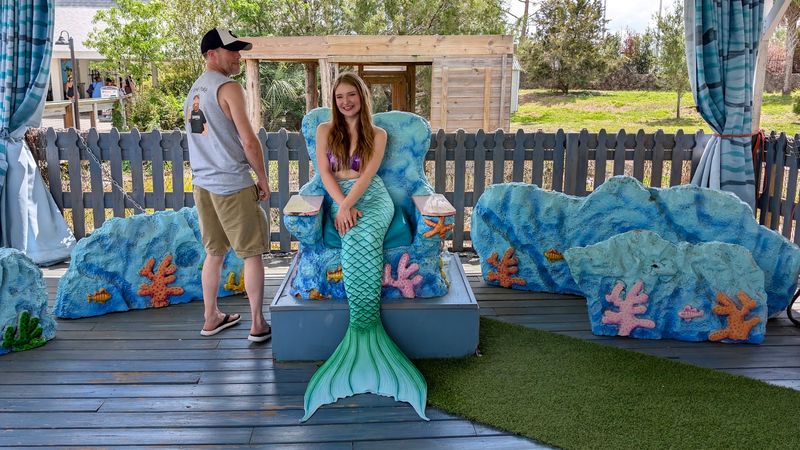
Fame found this spring fast. Through the 1950s, 60s, and 70s it ranked among the busiest stops in the state, back when a Florida vacation meant a station wagon and a sequence of roadside marvels rather than one giant resort.
Elvis Presley came. So did Don Knotts and Esther Williams, the last of whom knew a thing or two about swimming for a camera.
Hollywood used the water directly. The 1948 feature Mr. Peabody and the Mermaid was shot here, and in 1964 The Incredible Mr. Limpet held its world premiere inside the underwater theater, which may be the only movie premiere in history where the screen competed with a live spring behind it.
That golden run faded when the big central Florida parks arrived and pulled traffic inland. Plenty of comparable attractions closed for good during those years.
This one didn’t. State park status in 2008 gave it stable footing, and the historic listing in 2020 formalized what the swimming had already proven, which is that the place matters to how Florida sees itself.
Buccaneer Bay, the Only Spring-Fed Waterpark in Florida
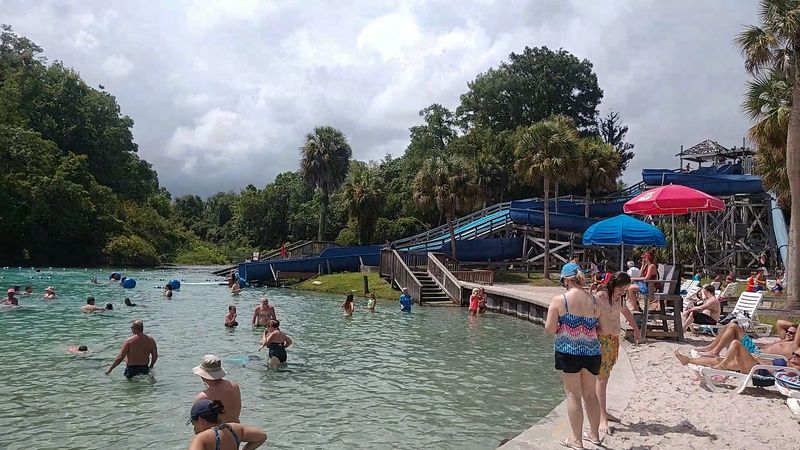
Two waterslides drop swimmers into water that came out of the ground rather than a pump. Buccaneer Bay opened in 1982 on the far side of the spring and remains a genuine oddity: a waterpark filled by a natural spring.
There’s a sandy beach, a shallow entry where toddlers can sit and splash, a lazy river, and a floating dock people jump off into deeper water where fish drift by underneath. Lifeguards are stationed in numbers.
Practical details shape the day more than you’d expect. Cabanas rent out, umbrellas and chairs are available, floats can be rented for the lazy river, and outside food is allowed, which softens the sting of on-site prices.
Snorkel gear earns its space in the bag.
A few honest limits: there are no showers, the lazy river carries an extra per-person fee and doesn’t always operate midweek, and it takes some paddling rather than pure drifting. Lightning shuts down spring access, standard practice across Florida in summer.
Renovations occasionally close individual areas, so checking ahead saves disappointment on a hot afternoon.
Paddling the Weeki Wachee River
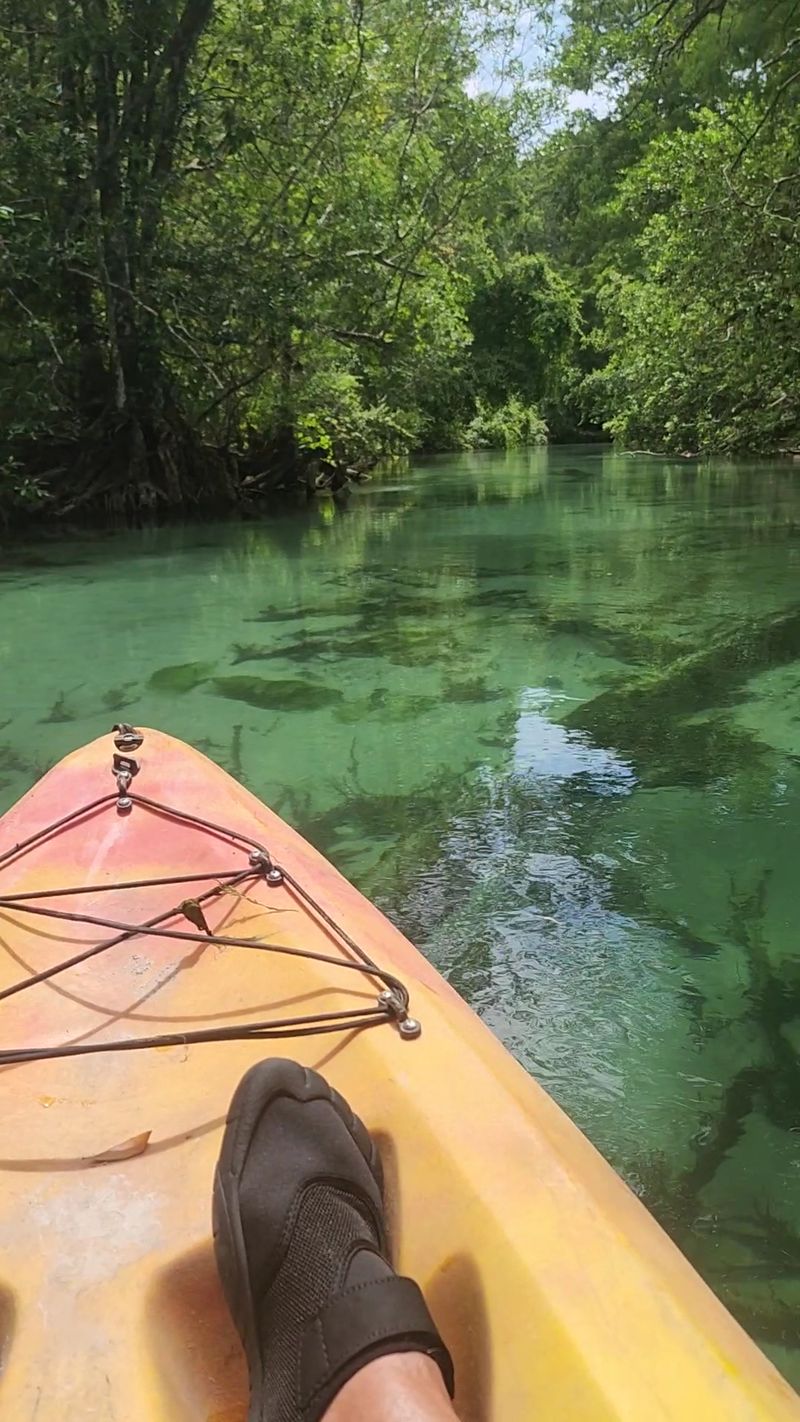
The kayaking here may outshine the mermaids, and that’s saying something. Launch from the park and the current does most of the work as the river winds downstream through a corridor of trees, sandbars, and water so transparent that the bottom looks close enough to touch.
Manatees turn up, including mothers with calves, and not only in winter. Owls, wading birds, turtles, fish, and the occasional snake round out the cast.
Guided tours run with staff who point out wildlife along the way.
Launch and shuttle service keeps logistics simple, and rentals are available at the park. The downstream run covers a few miles to the shuttle exit, and pushing past that point means joining heavier crowds.
Timing matters more than anything else. The earliest slots deliver a quiet river with almost nobody on it, while midday trips run busier and can eat the hours you’d otherwise spend at the springs.
A tour that ends at two leaves little runway before closing.
Reservations are worth locking in ahead, especially on weekends during warm months.
Riverboat Cruises, Trails, and Roaming Peacocks
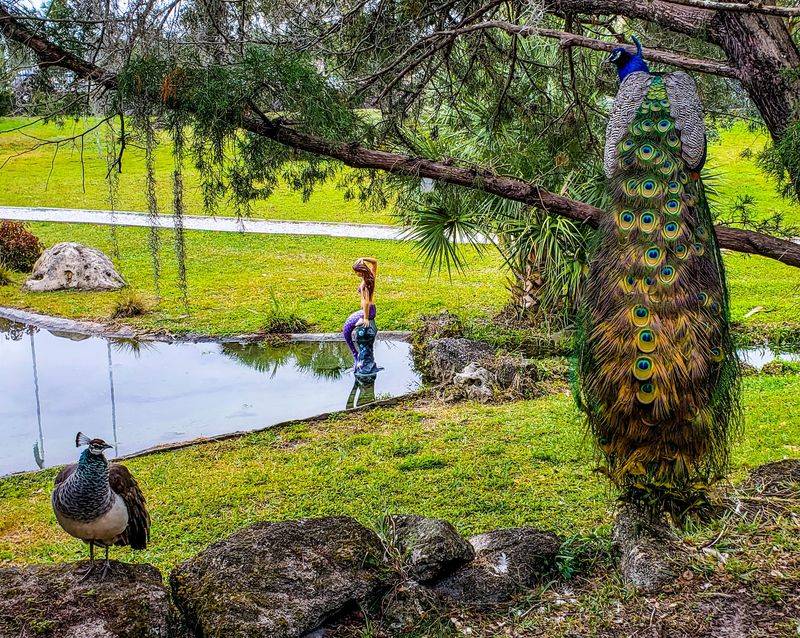
Peacocks wander the grounds like they hold season passes. They stroll past the beach chairs, fan out near the picnic areas, and generally act unbothered by the humans photographing them.
Beyond the mermaid theater, the park spreads into short walking trails, shaded picnic spots, a small playground pitched at younger kids, and ranger presentations that dig into the ecology of the spring system. A riverboat cruise runs on a regular rotation and gives a low-effort look at the upper river, though drought conditions and water levels can pause it.
Gift shops and food service sit near the main areas. Food prices run high for what it is, which is exactly why the allowance for outside coolers matters.
Canoe and kayak rentals operate from the same side of the park, so it’s possible to string together a paddle, a show, and a swim in one visit if the timing lines up.
Between attractions there’s shade, benches, and enough boardwalk to make an unhurried loop. Not every element runs every day, and that variability is part of dealing with a park built around a living spring.
The Mood on a Busy Saturday
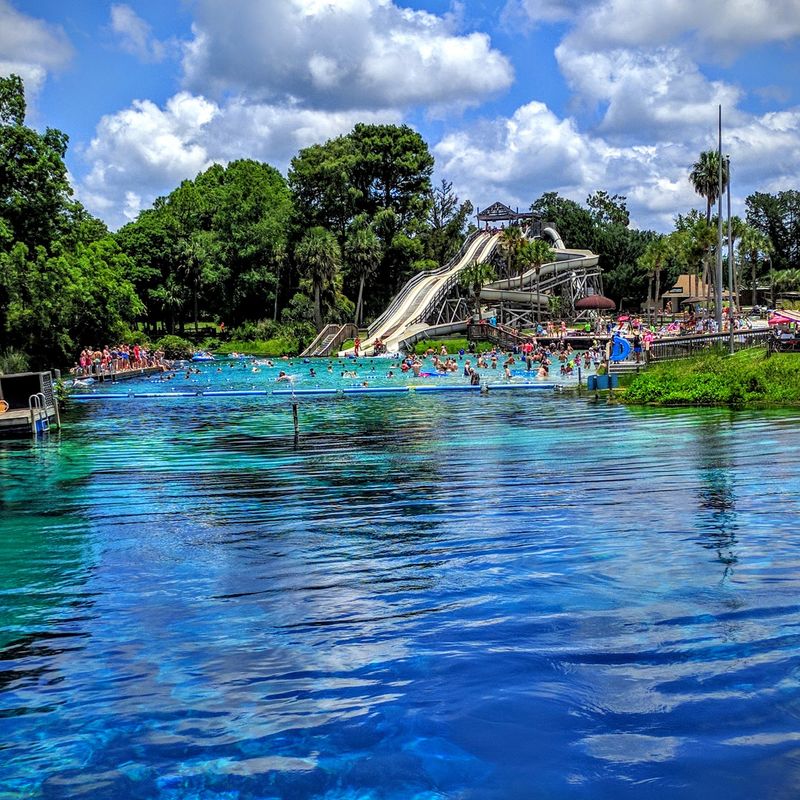
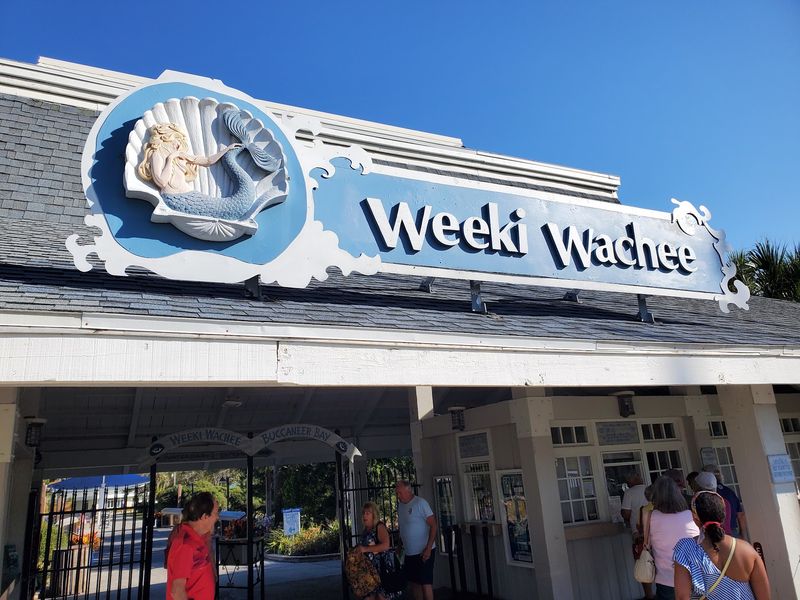
Arrive at nine on a Saturday and there’s already a line at the gate. The park caps attendance and turns people away once capacity is reached, so late arrivals in peak season can lose the day entirely.
Inside, the energy splits neatly in two. The Buccaneer Bay side runs loud and splashy with slides, shrieking kids, and towels claiming every lounger.
Cross toward the theater and the volume drops into something calmer, with shaded paths and the hush of a room built below water.
Staff keep the whole operation moving with visible good humor, and lifeguards are present throughout the swimming areas.
The park suits mixed groups well because those two moods coexist. Grandparents who remember the attraction from its heyday can watch a show while the rest of the family works the slides.
Slide waits stretch long when the crowd peaks, and lounge chairs run out before the demand does. Summer weekday mornings are the sweet spot, and rainy stretches bring lightning delays that can trim a show short or close spring access outright.
Hours, Tickets, and How to Plan the Day
Gates open at 9 AM and the park runs until 5:30 PM, seven days a week, with the phone line at 352-610-5660 and full details posted at floridastateparks.org/weekiwachee. Hours and closing times can shift seasonally, so confirming before a long drive is smart.
Admission covers the mermaid show, Buccaneer Bay, the riverboat cruise, trails, and the playground. A Florida State Park annual pass gets you through the gate at no additional cost, and military discounts are offered.
Extras stack on top. Lazy river tubes carry a separate per-person charge, cabanas and umbrellas rent by the day, and kayak rentals and shuttle service are booked apart from general admission.
Getting there is straightforward: the park fronts Commercial Way in Spring Hill, easily reached from the Suncoast Parkway and about an hour north of Tampa. Parking sits right at the entrance.
Pack like a beach day. Sunscreen, towels, snorkel, water shoes for the limestone, and a cooler, since outside food is permitted.
Lockers aren’t always available, and showers aren’t on site, so plan the drive home accordingly.
Why the Mermaids Still Matter
Something odd happens when the curtain opens. Grown adults who came for the kitsch go quiet, because watching a person hold formation in a moving spring while the sunlight bends around them is stranger and more beautiful than the postcards suggest.
Weeki Wachee has outlasted nearly every attraction of its generation by refusing to become a museum piece. The shows run daily, new performers keep training under the Legendary Sirens, and the spring keeps pushing out its 117 million gallons regardless of what the tourism market wants this decade.
Set expectations sensibly and the day lands well. Individual features close for weather, water levels, or maintenance, the food costs more than it should, and peak crowds test your patience at the slides.
Come early, bring your own lunch, book a morning paddle, and give yourself the full stretch from opening to close. Do that and you get a historic underwater theater, a first-magnitude spring you can swim in, a river with manatees in it, and peacocks strutting past your beach chair.
There is nowhere else quite like it, and that has been true since 1947.