Florida’s Winter Park Keeps the World’s Largest Tiffany Glass Collection Inside One Quiet Museum
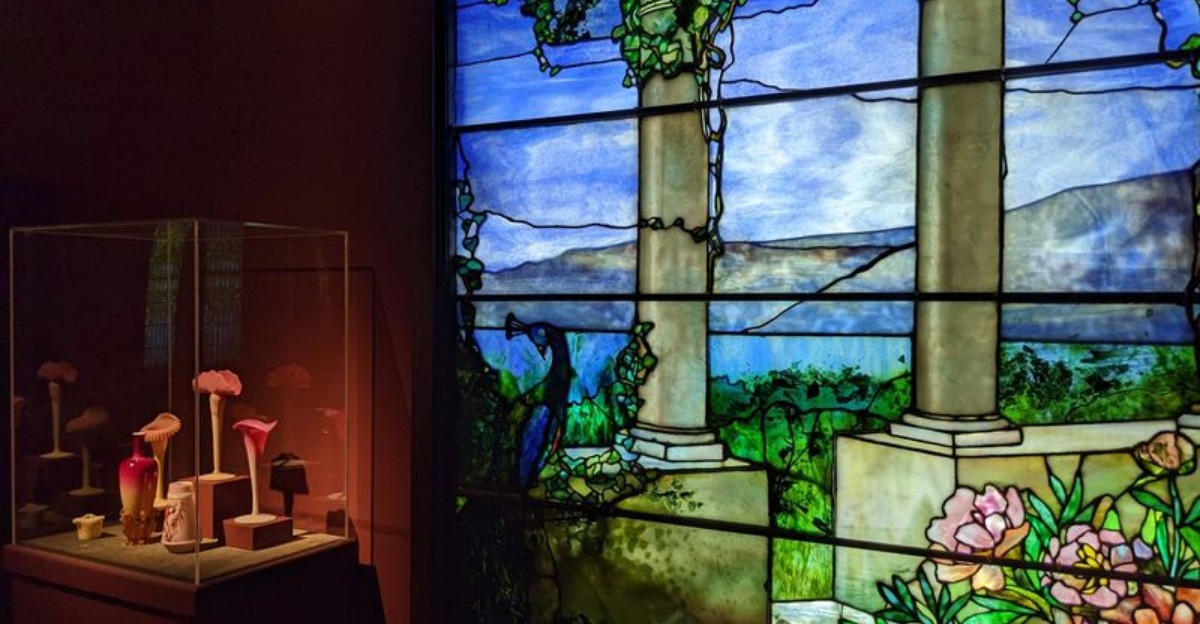
Some places in Florida hide their best cards completely. You can walk a shaded shopping street lined with cafes and boutiques, glance at a low brick building, and have no clue that behind those doors sits the most complete collection of Louis Comfort Tiffany’s work anywhere on the planet.
Glowing windows, a chapel built for a World’s Fair, columns crowned with glass daffodils, all of it a few steps from a train platform. It costs less than a sandwich to get in, and it will hold you far longer than you planned.
A Park Avenue Address With a World Record Inside
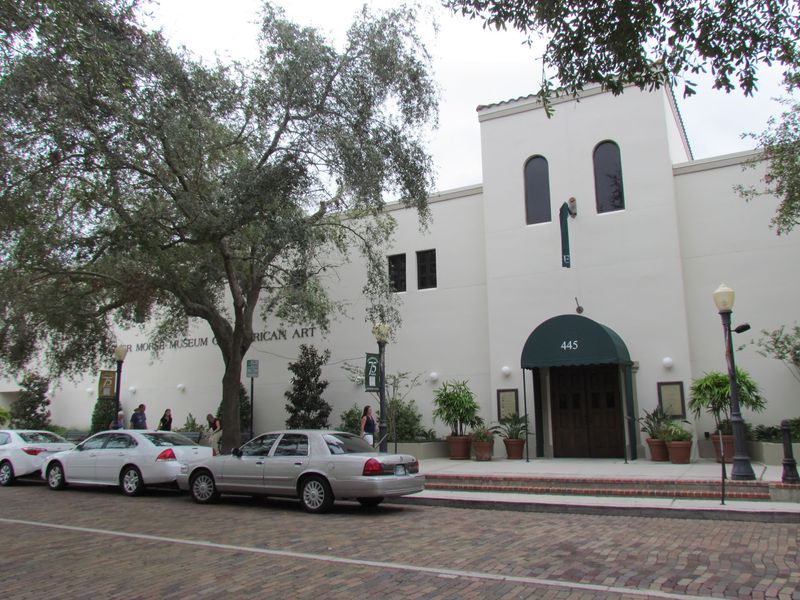
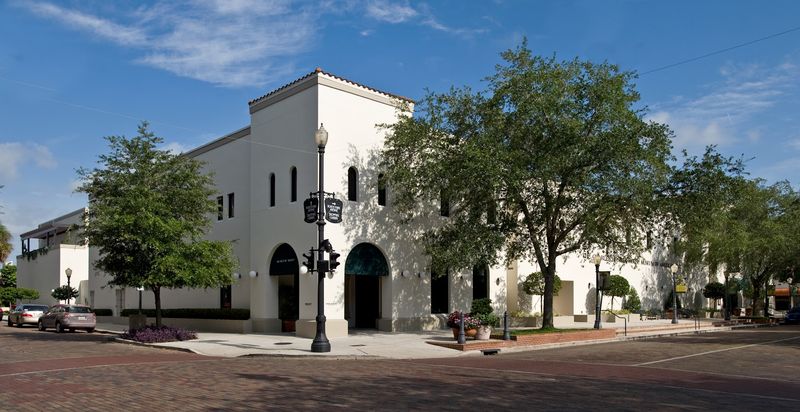
At 445 N Park Ave in Winter Park, Florida, the building keeps a low profile. Brick, restrained, easy to stroll past while window shopping along one of Central Florida’s prettiest commercial streets.
Inside sits the world’s most comprehensive collection of works by Louis Comfort Tiffany, the American designer whose name became shorthand for luminous glass. The Charles Hosmer Morse Museum of American Art holds his windows, lamps, jewelry, pottery, paintings, and entire architectural fragments rescued from his private estate.
Its focus runs broader than one artist. American decorative and fine arts from 1850 to 1920 fill the galleries, with Tiffany as the gravitational center that pulls everyone in.
The scale surprises people who expect a modest local gallery. More than thirty rooms unfold behind the entrance, arranged with enough breathing space that nothing feels crowded or rushed.
Winter Park itself adds to the effect. Brick streets, oak canopy, a train station within easy walking distance, and then this quiet interior full of colored light.
Central Florida rarely gets credit for holdings of this caliber, which makes the discovery land harder.
How Two Collectors Built Something Extraordinary
Back in 1942, Jeannette Genius McKean founded the museum and named it for her grandfather, Charles Hosmer Morse, a Chicago industrialist who became a Winter Park philanthropist. She was an artist herself, and the naming was an act of family devotion.
Her husband, Hugh F. McKean, served as the museum’s first director and stayed in that role until the end of his life.
Together the pair spent roughly half a century assembling the Tiffany holdings, piece by piece, long before the market caught up to what they were doing.
Timing mattered enormously. A fire tore through Tiffany’s Long Island estate, Laurelton Hall, in 1957, and the McKeans stepped in afterward to purchase what survived.
Columns, windows, mosaics, furniture, whole architectural elements that would otherwise have been scattered or lost.
Decades of research followed, tracking down furnishings that had been dispersed at auction years earlier.
Their persistence explains why the collection feels coherent rather than accidental. Nothing here reads as a random assortment of pretty objects.
It reads as one artist’s career, documented by two people who refused to let it disappear.
The 1893 Chapel That Traveled From Chicago
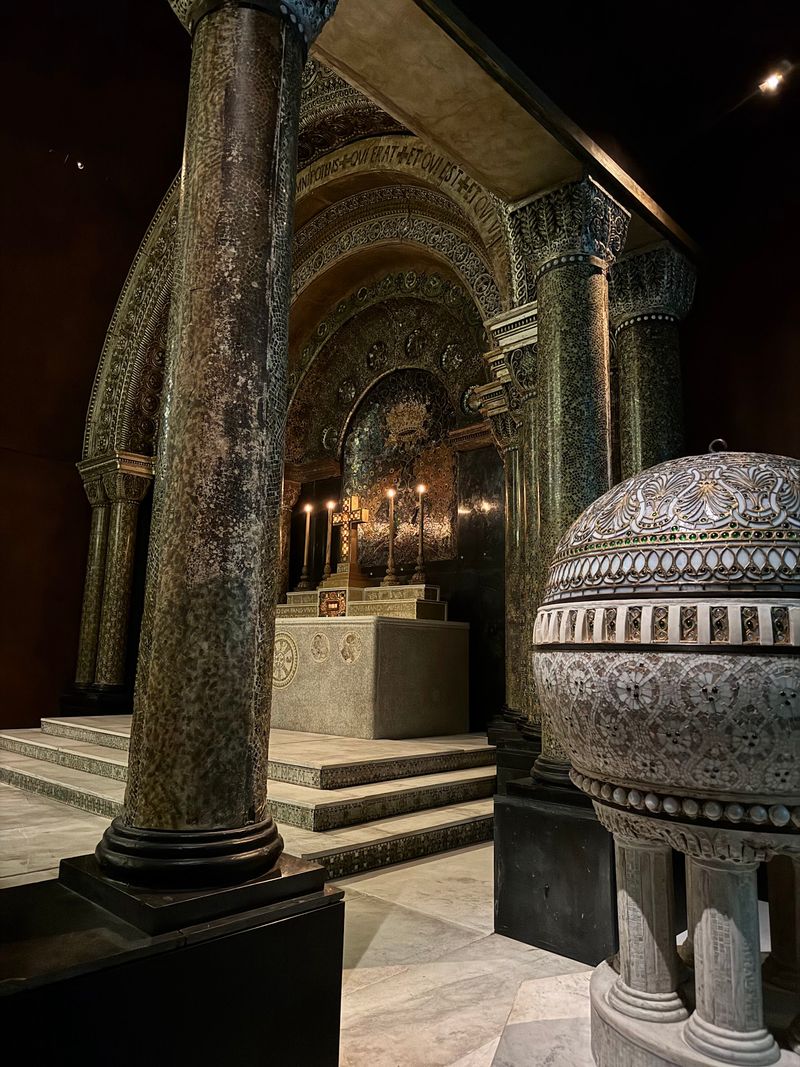
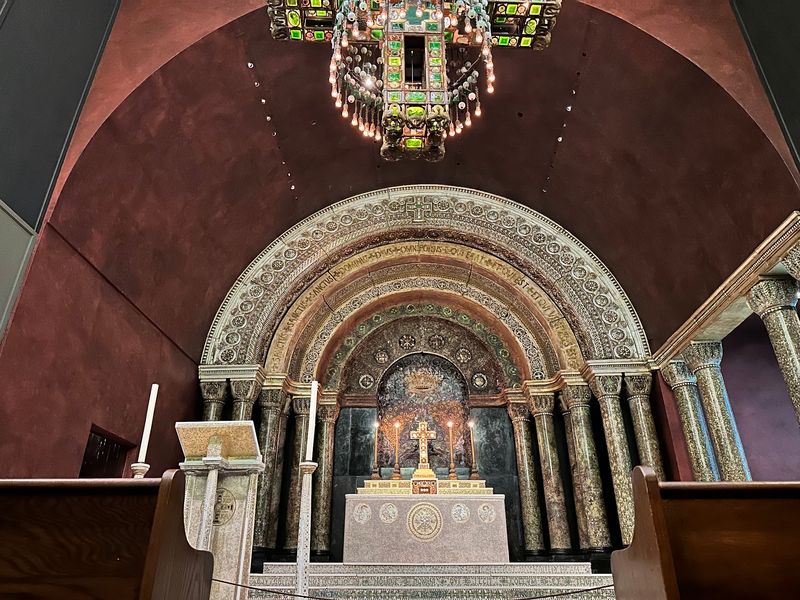
Louis Comfort Tiffany built a chapel interior for the 1893 World’s Columbian Exposition in Chicago, and it stunned the crowds who filed through it. That same chapel now occupies a gallery in Winter Park, restored down to its smallest tesserae.
Roughly 1,082 square feet including the baptistery, the space is Byzantine-Romanesque in spirit. Sixteen mosaic columns carry the eye upward.
A chandelier weighing about a thousand pounds hangs overhead, electrified at a moment when electric light itself still felt like a marvel.
Light behaves strangely in here. Glass surfaces catch and throw color across the mosaics, and the whole room shifts depending on where you stand.
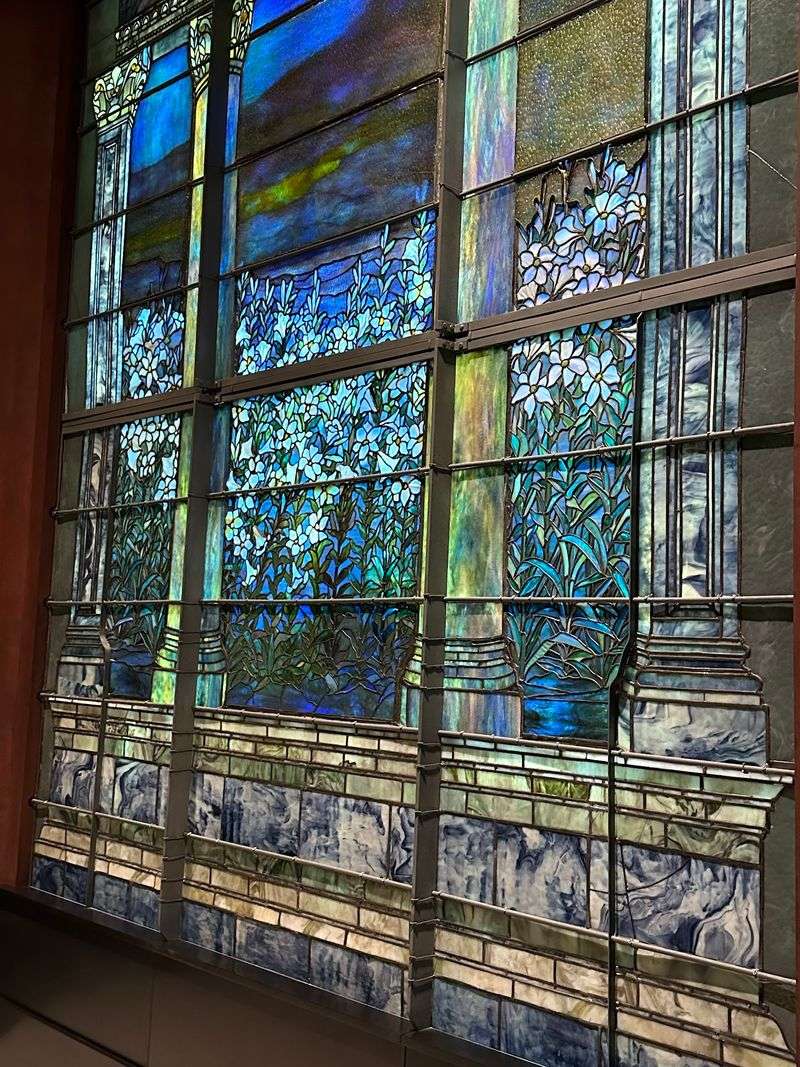
An eleven-by-nine-foot leaded-glass window of white lilies anchors one wall, delicate and enormous at once.
Reassembling all of this took decades of scholarship plus the hunt for furnishings scattered across the country. The restored chapel reopened at the museum in 1999.
Sitting on one of the benches for a few minutes is the right move. The craftsmanship reveals itself slowly, and hurrying through defeats the entire purpose of a room built to be dwelled in.
Laurelton Hall, Rescued From the Ashes
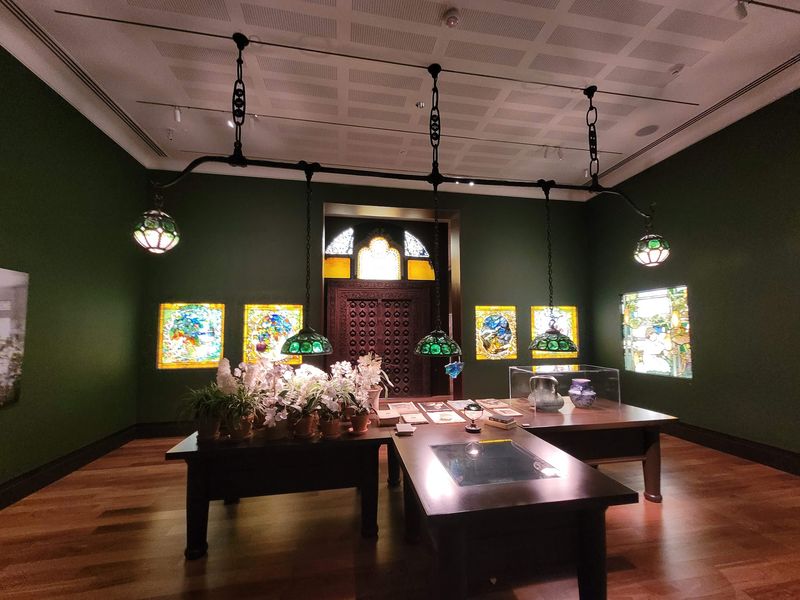
Tiffany’s Long Island country estate, Laurelton Hall, was his personal masterpiece, a house designed as a total work of art down to the doorknobs. After the 1957 fire, most people assumed the story ended there.
Nearly 6,000 square feet of the Morse Museum is now given over to what was saved. The permanent exhibition gathers architectural elements, windows, lamps, furniture, art glass, pottery, and paintings that Tiffany chose for his own walls.
Seeing an artist’s private taste is a different experience from seeing his commissions. These were the objects he lived alongside, the ones he wanted in view at breakfast.
The galleries are arranged so the fragments read as rooms rather than orphaned relics. Windows are lit from behind.
Furniture sits in relation to the pieces that once surrounded it.
Recovery of these materials took stubborn detective work, since so much had been dispersed after the fire and sold off to buyers who had no idea what they held.
What you get, walking through, is the closest thing anyone can offer to a tour of a house that no longer stands. It is preservation at its most generous.
Glass Daffodils on Eleven-Foot Columns
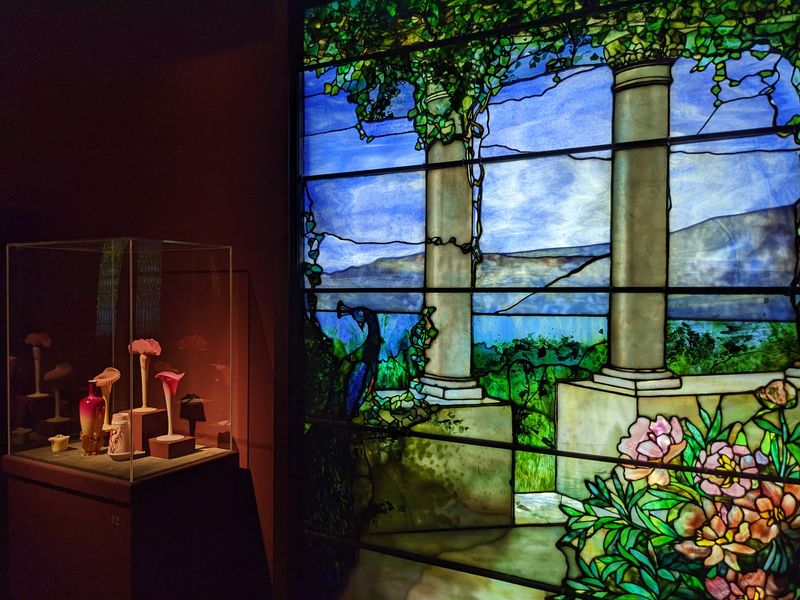
Picture a garden terrace where the flowers never wilt because they were made of glass. Tiffany did exactly that at Laurelton Hall, and the Daffodil Terrace survived to be rebuilt in Winter Park.
Eleven-foot columns rise from the floor, and instead of conventional carved capitals, clusters of glass daffodils bloom at the top. Pale, translucent, catching whatever light reaches them.
The idea sounds whimsical until you stand under it. Then the engineering becomes obvious: someone had to figure out how glass blossoms could sit convincingly on a load-bearing column and still look like they grew there.
Terrace architecture inside a museum is a tricky trick to pull off, and the gallery handles it by giving the columns room to breathe rather than crowding them with vitrines.
Detail work rewards a slow circle around the base. The daffodil forms vary, and the way light passes through the petals changes as you shift position.
Among all the celebrated windows and lamps in the building, the terrace is the piece that most often catches people off guard. It is architecture and botany and glassmaking folded into one very odd, very beautiful idea.
Windows Made of Thousands of Pieces
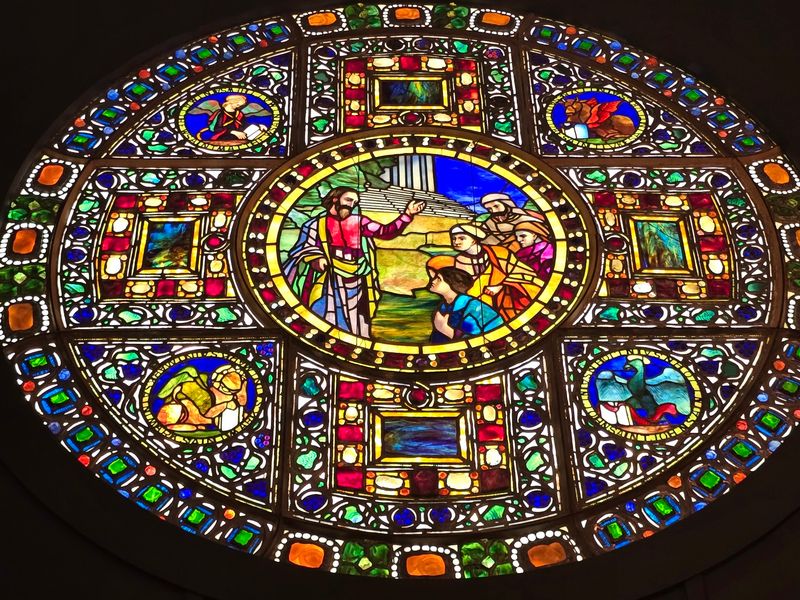
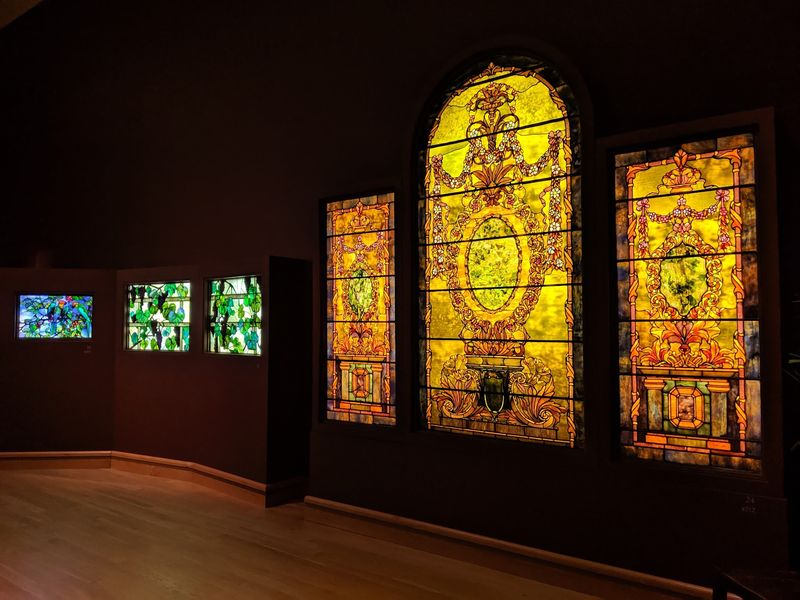
Thousands of individual glass pieces went into Tiffany’s 1906 Rose window, and he kept it for himself rather than selling it. Personal work, made without a client looking over his shoulder.
Displayed backlit in a dim gallery, it functions the way a rose window in a cathedral functions, drawing the eye and refusing to let go. The color saturation is difficult to convey in photographs.
Another standout is the Aurora window, made around 1894 and based on a painting by Will H. Low.
Here Tiffany used his plating technique, layering multiple sheets of glass so that light and shadow blend the way pigment does on canvas.
Plating was a solution to a real problem. Painters could mix tones freely; glassworkers were stuck with whatever the sheet gave them, until Tiffany started stacking layers.
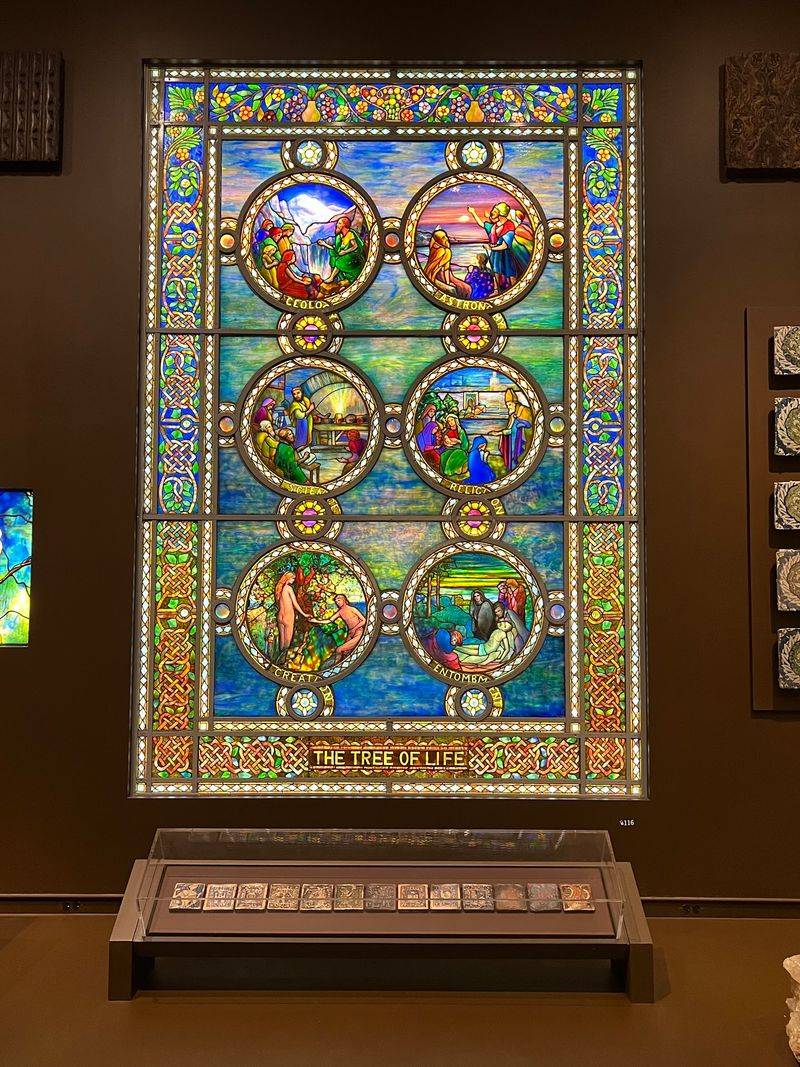
Stained glass dominates conversation about this museum for good reason, with visitors mentioning it more than any other feature.
Standing close enough to see the lead lines, then backing up until they vanish into image, is the best way to understand what the studio achieved. The technique disappears and only the light remains.
Lamps, Favrile Vases, and the Cobweb Rarity
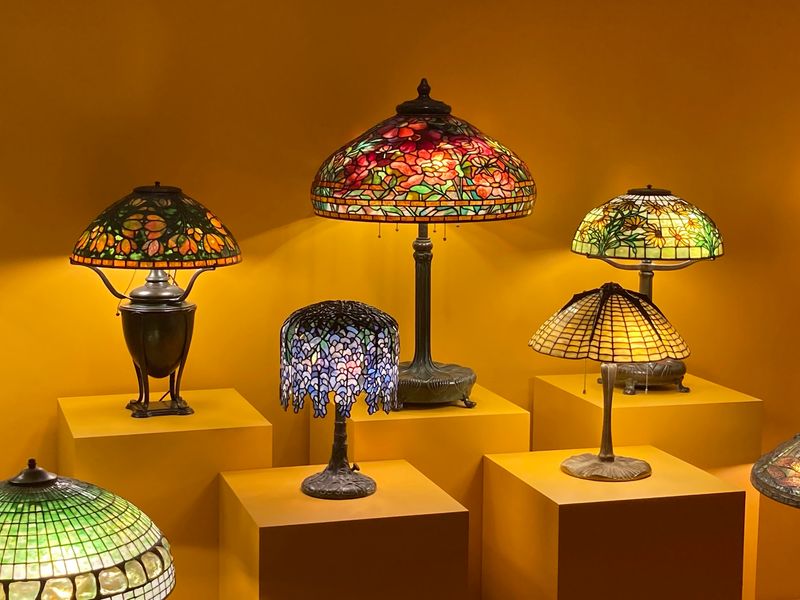
Lamp collectors have a short list of holy grails, and the Cobweb library lamp sits near the top of it. Eight web medallions wrap the shade, spun in glass with a fineness that seems impossible for the material.
The museum holds it alongside a broad range of leaded-glass lamps, each lit so the colors read properly rather than washing out under gallery spots.
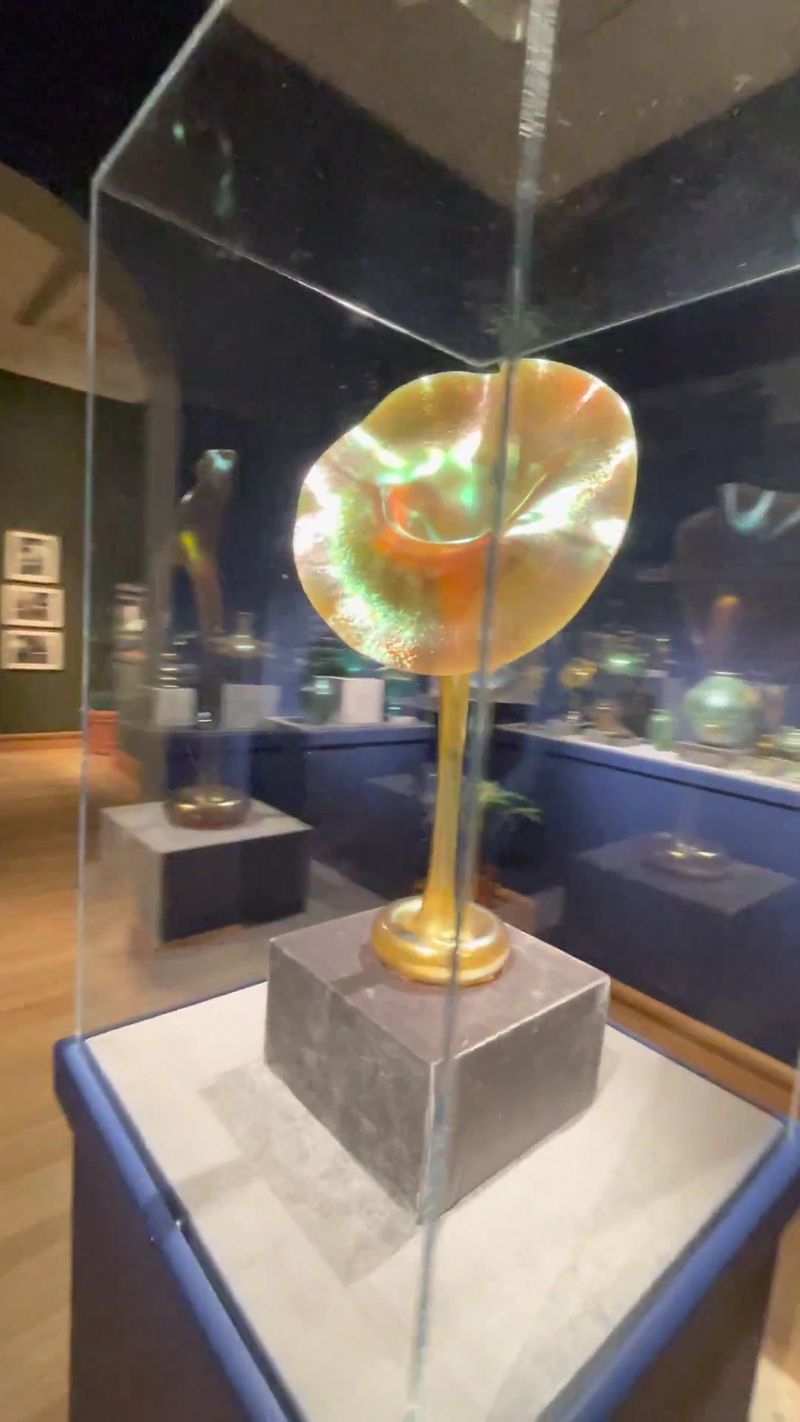
Favrile glass gets its own attention too. Tiffany patented the iridescent surface treatment, and the vases on display shift tone as you move around the case.
One example, the 1914 Morning Glory paperweight vase, earned an award at the Paris Salon that same year. The flowers appear suspended inside the glass wall rather than painted on it, which is precisely the effect the technique was invented to produce.
Pottery and jewelry round out the picture, reminders that Tiffany never confined himself to one medium.
He served as president and art director of his firm, steering both the artistic and technical sides. He was also the son of Charles Lewis Tiffany, who founded Tiffany and Company, a legacy the younger man expanded in his own direction entirely.
Quiet Galleries and an Unhurried Pace
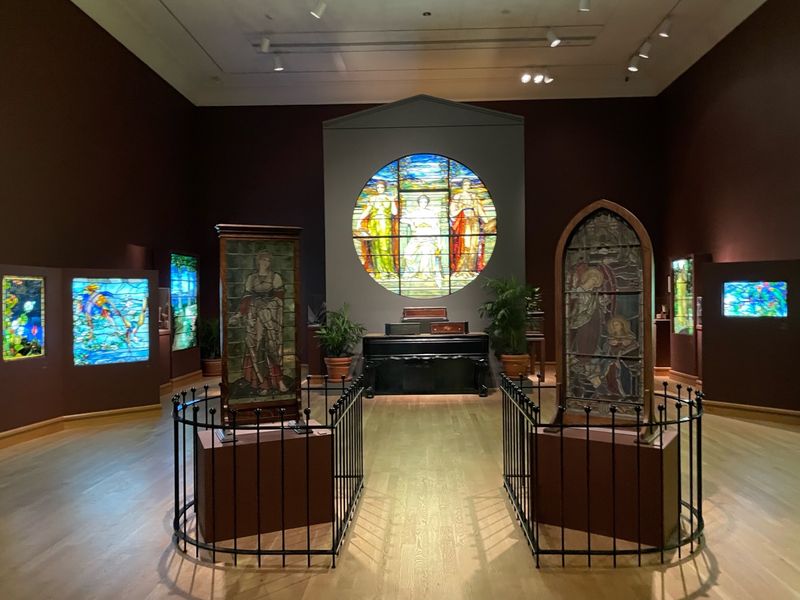
Hush is the operating condition here. Footsteps on polished floors, the occasional murmur, and not much else, which is unusual for any attraction within reach of Orlando.
Galleries are spread out deliberately. Displays get space around them, lighting is calibrated per object, and nothing competes for attention with the piece beside it.
Cleanliness is a consistent feature of the place, from the floors to the glass cases to the lobby.
A courtyard garden offers seating when your eyes need a break, and the large lobby gives groups somewhere to regroup without disturbing anyone mid-gallery.
Peaceful atmosphere comes up repeatedly in comments about the museum, and the layout is clearly engineered for it. You set your own speed.
Nobody herds you.
An hour covers the highlights if you keep moving. Two hours is more realistic if you want to sit in the chapel, watch a film, and circle back to the windows a second time.
The museum runs on private support, overseen by the Charles Hosmer Morse Foundation with help from the Elizabeth Genius Morse Foundation, without public funding. That independence shows in how carefully everything is maintained.
Guides, Films, and Ways to Learn as You Go
Skip the wall-plaque expectation. Interpretation at this museum works differently, and knowing that beforehand changes the experience considerably.
Each gallery stocks printed booklets and pamphlets explaining every object in the room. Objects carry numbers that correspond to the entries, and QR codes appear throughout for anyone who prefers a screen.
A complimentary cell-phone audio tour comes with admission. You bring your own device and headphones, and the narration walks you through the significant works at whatever pace suits you.
Documentary films are shown as well, covering both Tiffany’s life and the story of the McKeans who assembled the collection. Watching one before touring the galleries makes everything downstream more legible, especially the Laurelton Hall material.
Guided tours are available too, useful if you like having someone answer questions in real time.
The trade-off is that people who prefer reading a plaque and moving on will find the booklet system slower. Grab the booklet on the way into each room and it stops being an issue.
Staff at the front desk explain the layout when you arrive, which saves wandering. They are approachable and know the collection well.
What It Costs and When the Doors Open
Few museums of this caliber charge so little. Adult admission runs around six dollars, seniors slightly less, students a dollar, and children under twelve enter free.
Tickets can be booked ahead through the museum’s ticketing system, though check-in at the desk is quick either way.
Hours run Tuesday through Saturday from 9:30 AM to 4 PM, with Sunday shortened to 1 PM until 4 PM. Mondays the museum is closed, so plan around that.
From November through April, Friday evenings bring free admission between 4 PM and 8 PM, which turns a Park Avenue stroll into something more interesting.
Special open-house events happen through the year as well, including holiday celebrations and the Winter Park Sidewalk Art Festival, when entry is free.
The phone number is 407-645-5311 if you need to confirm anything, and morsemuseum.org carries current details on exhibitions and pricing.
Given how much there is to cover, arriving early in the day makes sense. A 9:30 start gives you the full run of the galleries before the afternoon fills in, and it leaves time to double back to the chapel without watching the clock.
Getting There Without the Parking Headache
Parking on Park Avenue is competitive, especially on weekends when the shopping district fills up. There is a free parking garage directly across the street from the museum, which solves most of the problem if you catch it at the right hour.
Train travel is the smarter option when the streets are busy. The Winter Park station sits within a short walk, and arriving on foot lets you take in the brick streets and oak canopy along the way.
Once you are on Park Avenue, everything is walkable. Cafes, shops, and the park across from the depot make an easy afternoon around the museum visit.
Coordinates land at roughly 28.6008 north, 81.3513 west, if you are dropping a pin.
Orlando’s theme park corridor is close enough that the museum works as a half-day break from all that noise, and the contrast between the two experiences is stark in the best possible way.
Arriving without a car is the low-stress route. Arriving early with a car and heading straight for the garage works nearly as well, provided you are not counting on a curbside space.
The Museum Shop Is Its Own Small Pleasure
Gift shops usually feel like an afterthought. Not this one.
The merchandise is curated to echo the collection, which means the aesthetic carries straight from the galleries into the retail space.
Books on Tiffany and American decorative arts sit alongside postcards, magnets, jewelry, and gift sets priced across a wide range. Something inexpensive for a souvenir, something considerably fancier if you are shopping seriously.
Postcards are a sensible buy since photographs rarely capture what the glass does in person.
Plenty of the stock is useful rather than purely ornamental, which is refreshing in a museum store.
Photography is permitted throughout the galleries, and the lighting design makes for striking shots, particularly around the chapel and the backlit windows. Security staff have been known to offer tips on getting the angle right.
Set aside ten or fifteen minutes at the end for the shop. It sits near the exit, so it naturally becomes the last stop before you head back onto Park Avenue.
Between the shop and the courtyard garden, the museum gives you two soft landings after several hours of concentrated looking. Both are welcome.
Why This Small Museum Punches So Far Above Its Size
Central Florida gets typecast. Roller coasters, character breakfasts, resort corridors.
A collection of this significance sitting a short train ride from all of that scrambles the usual expectations.
What makes the Morse work is not just the volume of Tiffany material, though the volume is unmatched anywhere. It is the coherence.
Chapel, estate salvage, windows, lamps, pottery, jewelry, all assembled by two people who understood the whole arc of one artist’s career.
Add the modest ticket price, the calm galleries, and the fact that a visit fits comfortably into an hour or two, and the value becomes hard to argue with.
Art and history enthusiasts will find plenty to chew on. So will anyone who simply wants a quiet, beautiful hour indoors on a hot Florida afternoon.
Rated 4.8 stars across thousands of reviews, the museum has clearly landed with the people who find it.
Go early, take the audio guide, sit in the chapel longer than you think you need to. Winter Park hands you something unexpected here, and the smart move is to slow down and let it register.