Nebraska Is Home To An 1870s Flour Mill That Still Has Its Original Grinding Machinery Inside
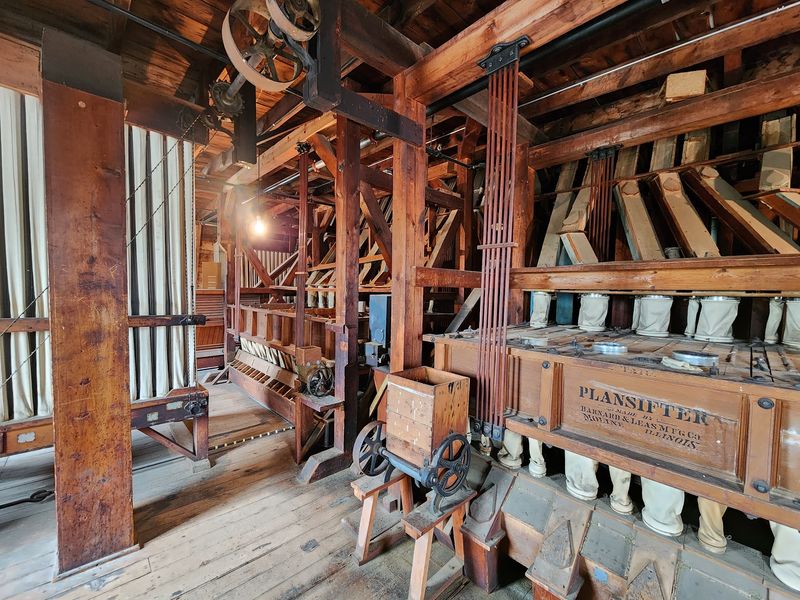
Some buildings in Nebraska look like nothing much from the road, and then you walk inside and your whole idea of the place flips. Picture a squat brick building beside a river in the northeast corner of the state, with belts, chutes, and wooden machines still standing exactly where workers left them.
It ground wheat, corn, and buckwheat for decades, powered by water pushed through a turbine in the basement. The surprising part is that nothing was hauled away or replaced with a display case, because the real equipment is still sitting there waiting to be looked at.
A Brick Mill on the Bank of the Elkhorn
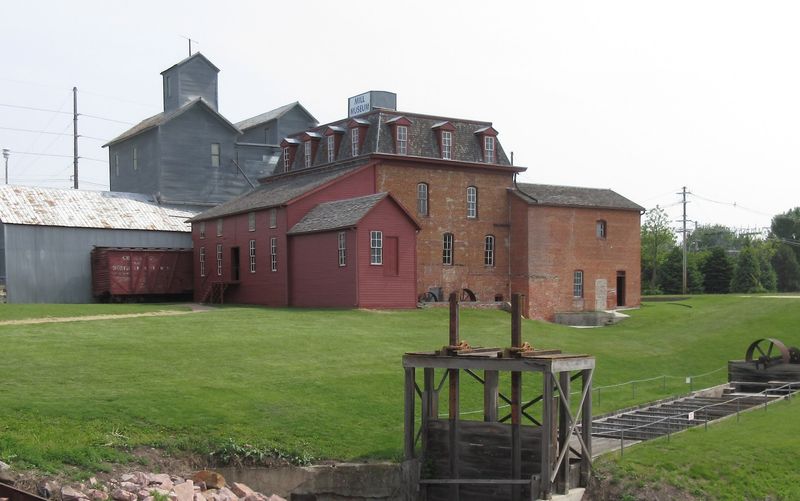
Red brick, tall narrow windows, and a river running just past the foundation. The Neligh Mill sits in Antelope County, in the northeast quadrant of Nebraska, right where the Elkhorn River bends past the edge of town.
Built in 1873, it is a museum now, run by History Nebraska, but the word museum undersells what is inside. Most historic mills across the country were stripped for parts, converted into shops, or lost entirely.
Here the milling equipment stayed put.
Drivers heading north toward the Niobrara or west into the Sandhills pass within a few blocks of it without realizing what the building is. From the outside it reads as an old warehouse, solid and plain, the kind of structure that blends into a small Nebraska main street.
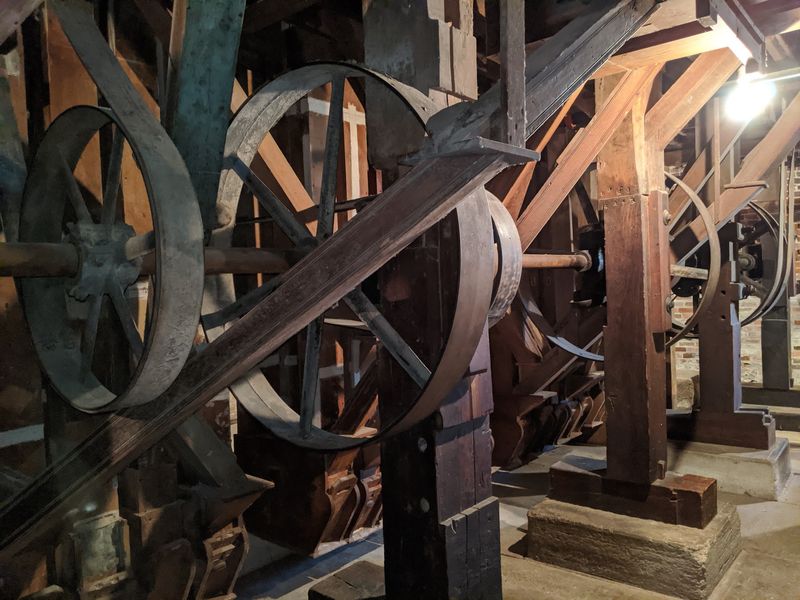
Then you step through the door and hear how the floors sound underfoot, and the scale of the operation becomes obvious. Belts run between floors.
Wooden hoppers wait above steel rollers. It is a working nineteenth-century factory that simply stopped one day and never got cleared out.
John D. Neligh, W. C. Gallaway, and a Dam Across the River
Town founders in the 1870s did not build mills for sentiment. They built them because a settlement without a mill had no reliable way to turn a wheat crop into food.
John D. Neligh, the man the town is named for, started construction in 1873.
Local businessman W. C.
Gallaway finished the job, and part of that work meant damming the Elkhorn River so its current could be put to use. Water was the engine, and the river had to be persuaded to cooperate.
By August 1874 the machinery was turning. Wheat, corn, and buckwheat went in one end; flour and meal came out the other, feeding families across a young state that was still filling in its county lines.
Those first years relied on traditional stone mill burrs, the same basic technology millers had used for centuries. It worked, but it was slow, and the wider industry was about to change fast.
The mill would keep grinding for roughly a hundred years, outlasting the men who built it by generations.
Steel Rollers, Stone Burrs, and the Machinery That Stayed
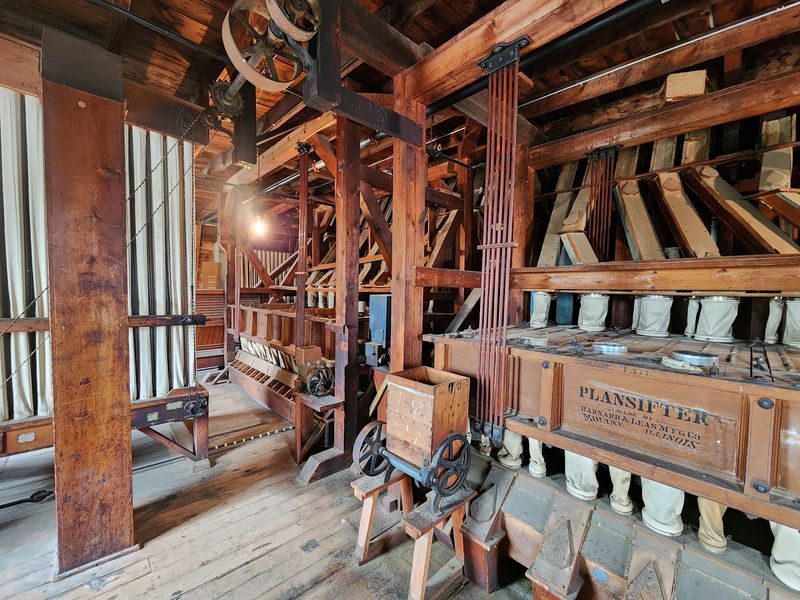
Walk the floors and you can trace an entire technological shift in one building. The stone burrs came first, then in 1886 the operation converted to steel rollers, which crushed grain faster and produced finer flour with less effort.
What makes the site unusual in Nebraska is simple: it is the only nineteenth-century mill in the state that still holds all of its original milling equipment. Not replicas.
Not a single representative machine in a glass box.
Down in the basement sits the water turbine that captured the river’s push and sent it up through shafts, belts, and gears to every floor above. Grain moved by gravity and elevator legs, sifting through screens and chutes in a sequence that looks complicated until someone explains the logic of it.
Wooden housings, iron fittings, and canvas belting all remain in place, worn smooth in the spots where hands and grain passed a million times.
For anyone who likes machines, this is the reason to drive out here. The building explains itself once you look up.
Ninety-Eight Thousand Pounds of Flour a Day
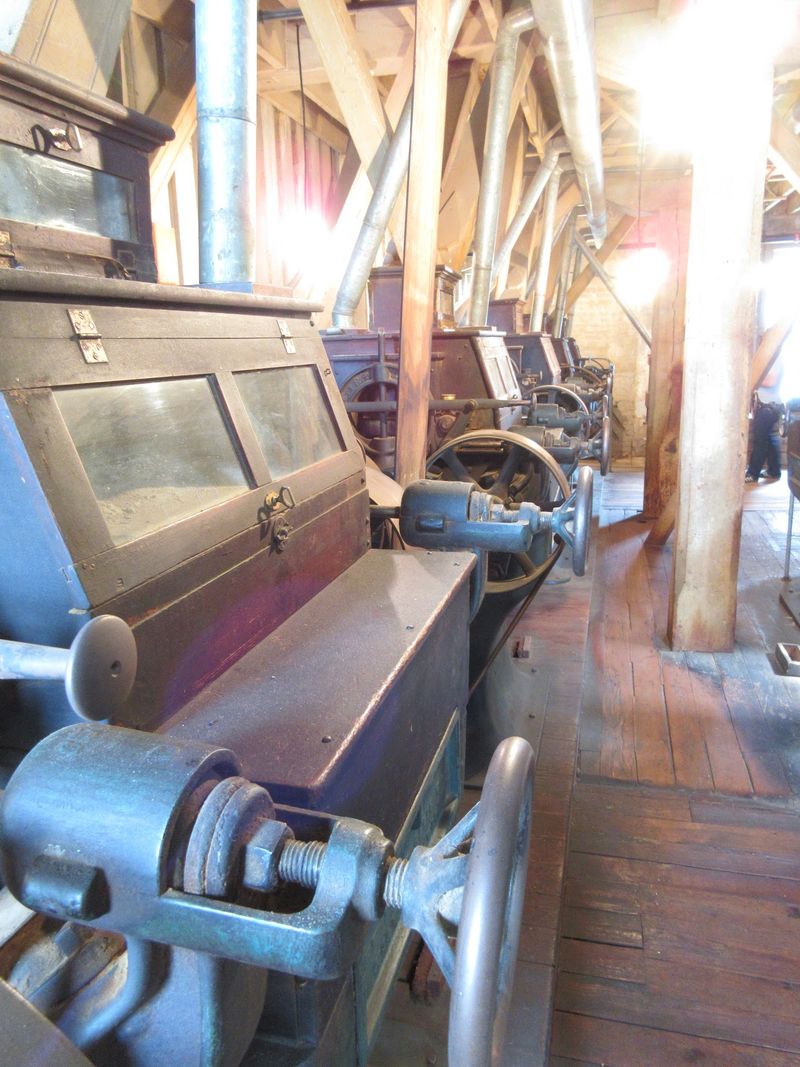
Nebraska once supported more than 270 flour mills. Nearly all of them are gone, and most people driving the state’s highways have no idea the industry ever ran at that scale.
Between 1900 and 1920, the Neligh operation ranked among the ten largest mills in Nebraska. At its peak it turned out 98,000 pounds of flour a day, running two twelve-hour shifts back to back so the machinery almost never rested.
Customers were not just neighbors. Flour and meal from this building went to buyers across the state, and also to the War Department and the Indian Bureau, which put a small Antelope County town on a federal supply list.
The mill did something else, too. Improved turbines eventually generated electricity for Neligh itself, keeping the town’s lights on until 1925, which means the same river current that ground wheat also powered streetlamps.
Numbers like that reframe what a river town could be in the early twentieth century. This was industry, not a quaint sideline to farming.
Penciled Notes and Yellowed Notices on the Walls
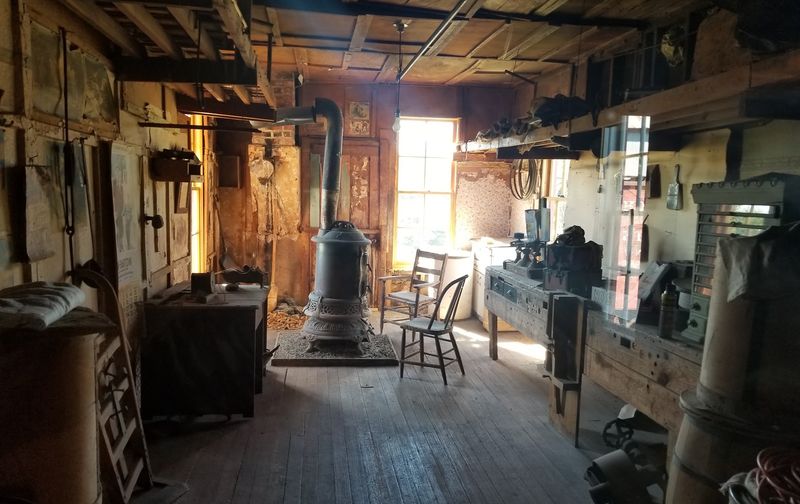
The smell hits first, that dry mix of old wood, grain dust, and machine oil that no reproduction can fake.
Beyond the milling floors, the restored mill office holds the paperwork side of the business. Yellowed notices and posters still hang where someone tacked them up, and penciled notes on the walls record transactions and weather events that mattered enough to write down on the spot.
Those scribbles are the human layer of the site. A price, a date, a note about a storm – small marks left by people doing a job, not preparing an exhibit for anyone’s benefit.
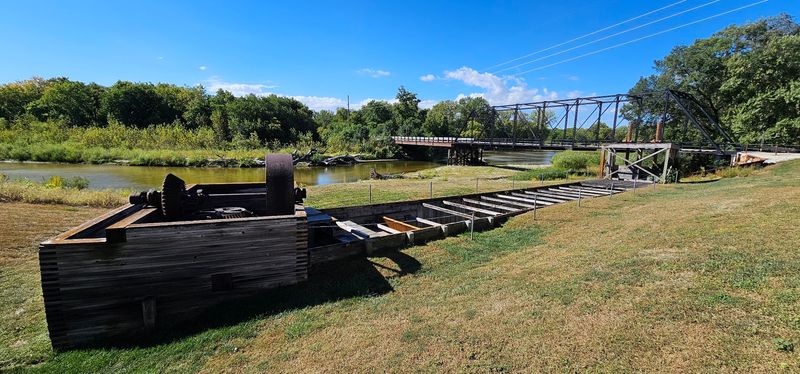
Outside, the reconstructed flume and penstock show how water was channeled toward the turbine, and remnants of the original mill dam are still visible along the river. Artifacts fill the buildings, and a train on the grounds adds another layer to the industrial scene.
Bring a little patience for reading walls. The details reward slow looking far more than a quick lap through the ground floor.
Guided Tours With People Who Know Every Belt
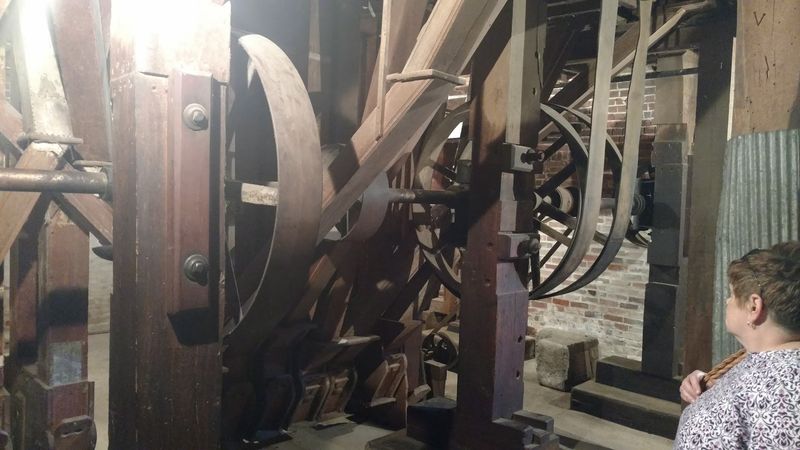
Ten separate mentions of the guided tour show up in what people write about this place, and there is a reason for that.
Staff and volunteers walk groups through the milling process floor by floor, explaining what each machine did and how grain traveled between them. Guides here tend to be deeply informed and clearly enjoy the subject, and the questions people ask usually get real answers rather than a rehearsed script.
Self-guided visits are possible too, and they still work well, though wandering alone means missing the explanations that make the machinery click. Anyone curious about how a specific piece of equipment functioned will get much more from a guided walk.
Time commitment varies with interest. A quick look takes a short stop; someone genuinely absorbed in mills could spend a couple of hours here without running out of things to study.
Tours can move at a good clip, but there is generally room to circle back afterward and linger over whatever caught your attention the first time through.
Planning the Drive to Antelope County
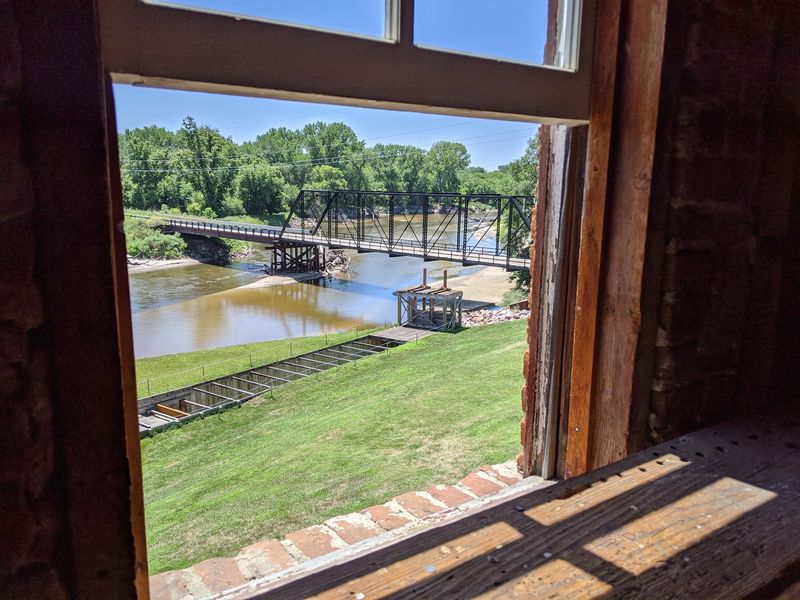
Wylie Drive in Neligh, Nebraska, is the address, and the site sits close enough to the highway that a stop barely disrupts a road trip.
Neligh lands in the northeast part of the state, an easy detour for anyone heading toward the Niobrara River country or angling west into the Sandhills. Norfolk and Battle Creek are within short driving distance, and the town itself is a straightforward county seat with places to stretch your legs.
Doors open midweek through the week’s end, with the site closed on weekend days, so checking ahead before driving out saves disappointment. Seasonal schedules shift, as they do at History Nebraska sites.
Admission has historically been an affordable proposition, and the value stacked against the drive is strong either way.
The steel bridge over the Elkhorn beside the mill deserves a few minutes of its own. Park, walk out, look at the water that once ran the whole operation, then head inside where the machinery that water powered still stands.
Why the Detour Pays Off
Not every historic site earns a highway exit. This one does, and the reason is preservation rather than presentation.
Plenty of small museums assemble collections. Far fewer preserve a complete industrial system in its original building, with the turbine, the shafts, the rollers, and the paperwork all still where they belong.
Standing between those machines gives you a sense of scale that photographs never quite deliver.
Families with curious kids do well here, especially ones who like seeing how things work. History readers, retirees, engineers, and anyone with farming in their background will find plenty to chew on.
Even people who stopped only to break up a long drive tend to stay longer than planned.
Nebraska lost hundreds of mills over the past century. That one survived intact, in a town of a few thousand people, is a piece of luck the state got to keep.
Set aside more time than you think you need, take the guided walk if it’s offered, and let someone who loves the place show you what all those belts were doing.