This Nebraska Candy Shop Still Makes Its Chocolates In-House, Priced By The Pound
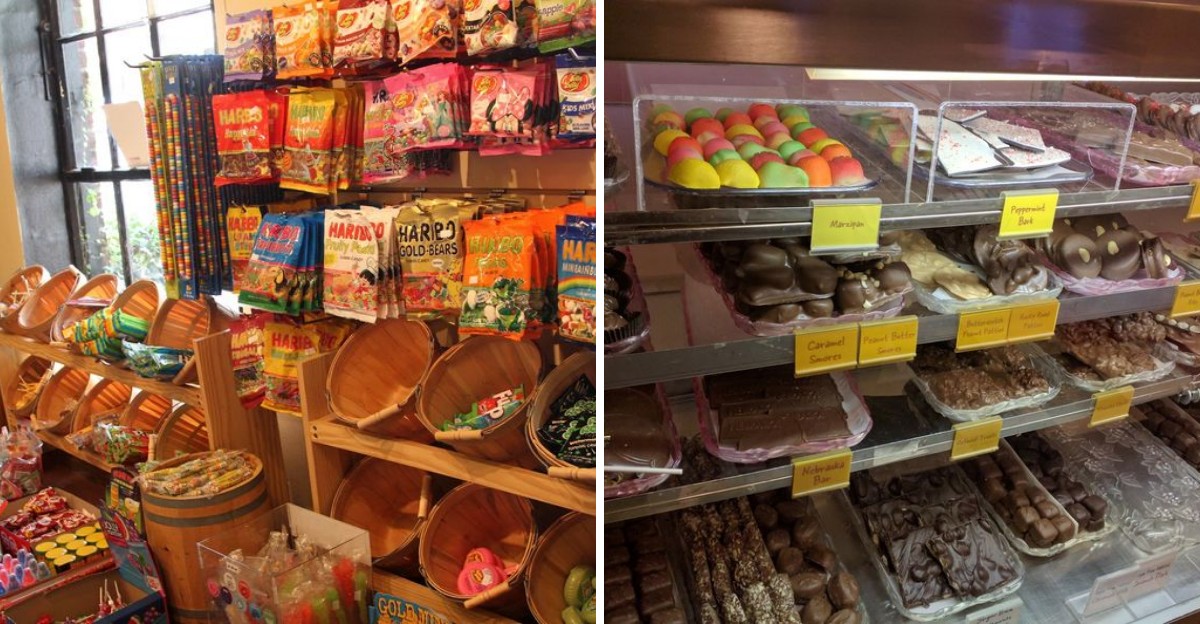
Some of the best stops in Nebraska announce themselves with nothing more than a smell. Cocoa and warm sugar drifting out an open door on a brick street will slow anybody down, even someone who had no plans to buy candy that afternoon.
Behind the glass is a case of chocolates made a few feet away, sold by weight so you can build your own box one piece at a time. It is a small shop, easy to walk past, and impossible to forget once you have been inside.
A Brick Storefront on Howard Street
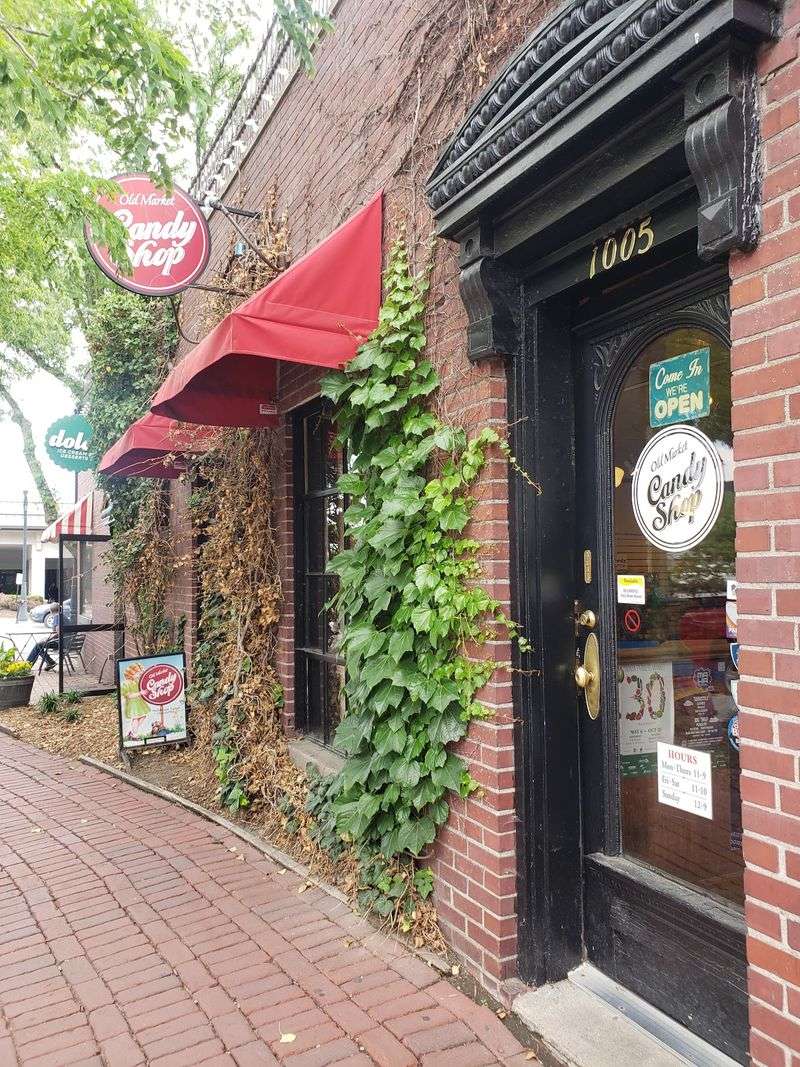
Brick pavers, iron awnings, and century-old warehouse walls set the stage in Omaha’s Old Market, and somewhere in that stretch sits a candy shop with big windows and an interior that glows warm against the dark brick.
The Old Market Candy Shop occupies a modest footprint. There is no grand entrance, no flashing sign competing with the district’s restaurants and galleries.
What pulls people in is the window display and the smell working its way onto the sidewalk.
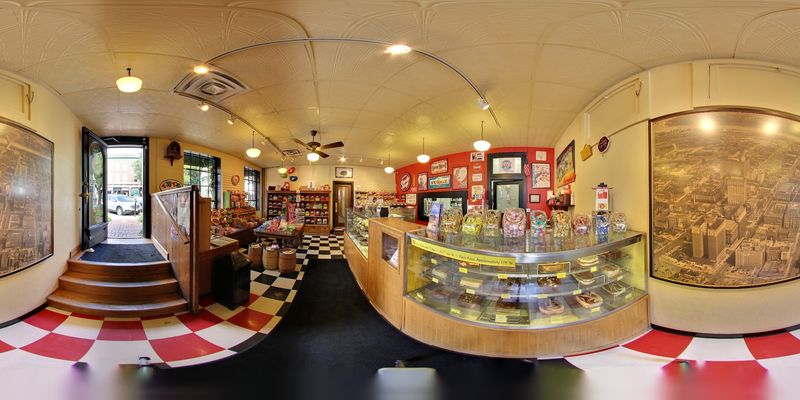
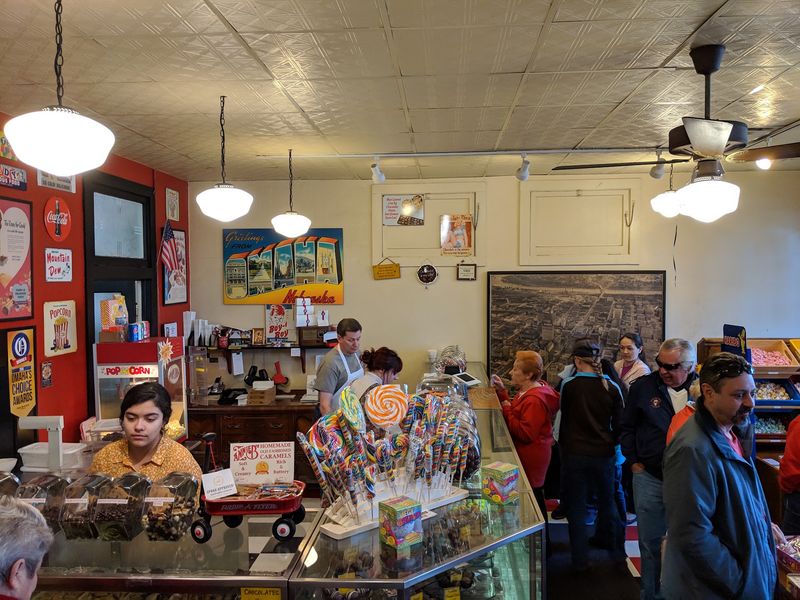
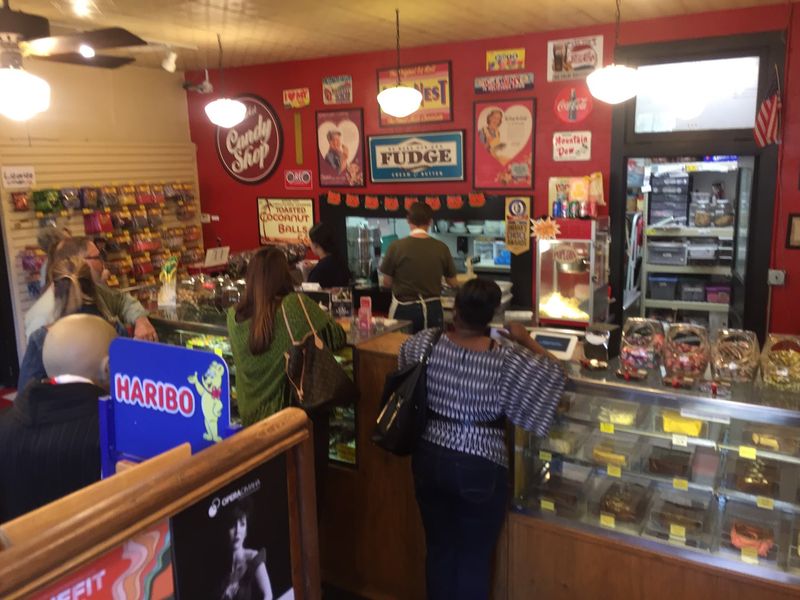
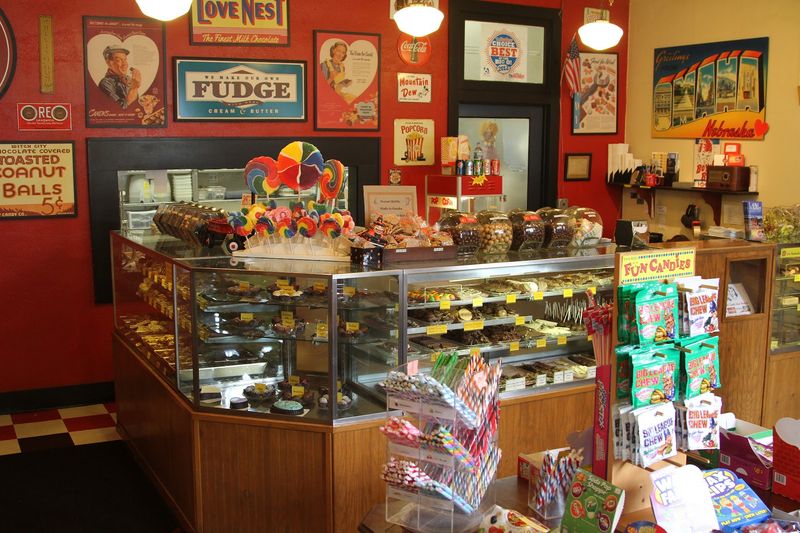
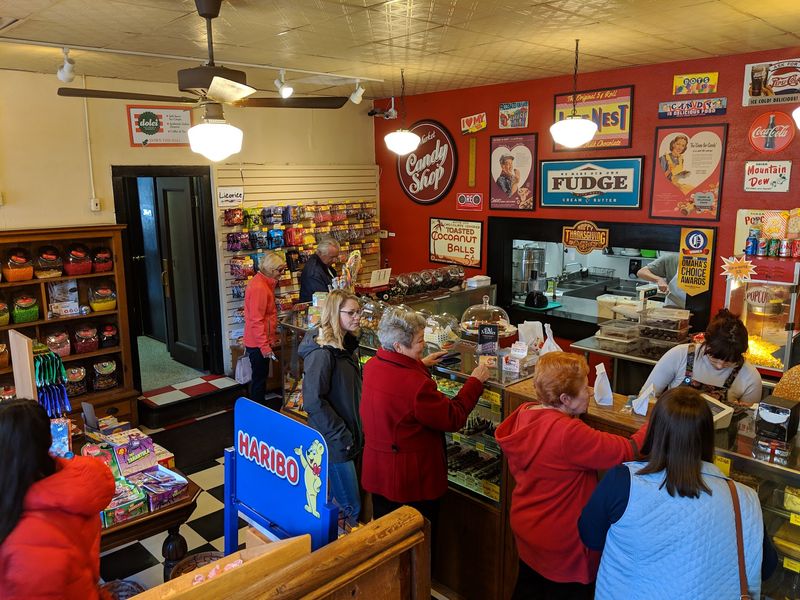
Inside, the room reads small and dense. Glass cases run along the counter, shelves climb the walls, and every horizontal surface holds something wrapped, poured, or dipped.
It takes about four steps to cross the shop and roughly twenty minutes to actually look at everything in it.
Douglas County has plenty of places to spend an afternoon, but this one delivers a specific payoff: chocolate made on site, in a district where most storefronts have swapped hands more than once. The shop has held its ground while the neighborhood around it kept changing.
Nearly Fifty Years of Sweet Making
1977 is a long time ago for any retail business, let alone one selling candy in a district that has cycled through warehouse decay, revival, and boom.
The shop opened that year at 1005 Howard Street and has stayed put ever since, which puts it close to a half-century of operation in the same address. Very few Omaha businesses can make that claim, and fewer still are handing over product they made themselves that morning.
Michael Pivonka, the shop’s candy maker in chief, has worked the counter for more than two decades. That kind of tenure shows up in small ways: a person behind the case who knows what is in every tray without checking, who can talk a customer through a dietary question without guessing.
Longevity here is not a marketing angle. It is the reason the recipes taste consistent from one year to the next, and the reason people who grew up wandering the Old Market as kids still recognize the place when they bring their own children through the door.
The Case That Stops You Cold
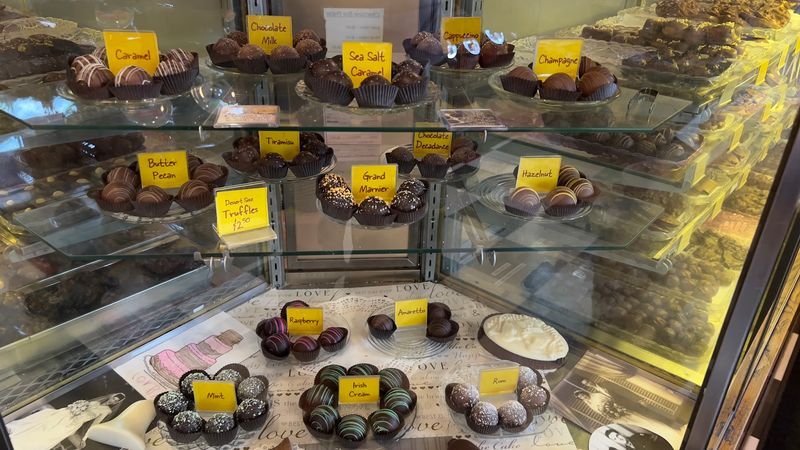
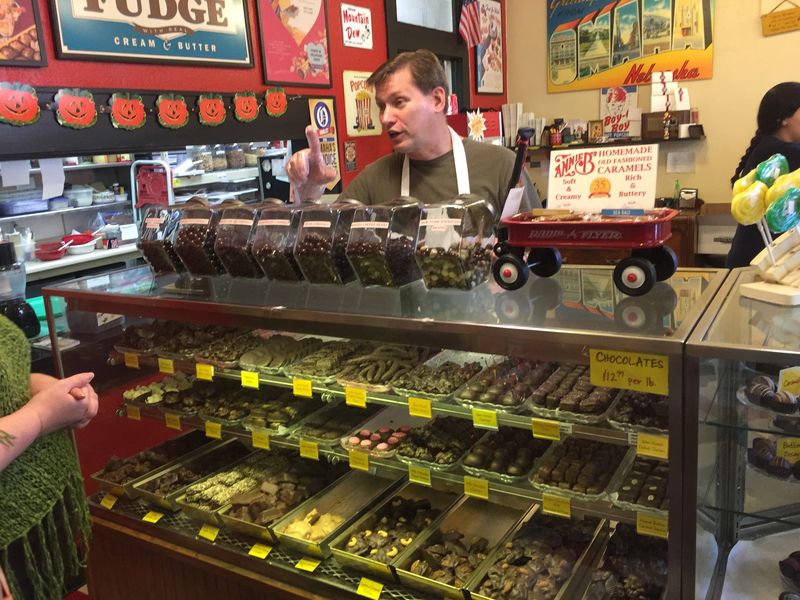
Rows of dark, milk, and white chocolate sit in tidy lines behind curved glass, each piece marked with a swirl, a nut, or a dusting that tells you what is inside.
The main display case is the centerpiece of the whole operation. Creams, truffles, clusters, dipped fruits, and molded pieces fill it from end to end, and the arrangement shifts depending on what came out of the kitchen that day.
Cherry and raspberry creams show up often. So do caramel cashew clusters, chocolate covered pretzels in all three chocolate varieties, and a peanut butter fluffy stick that plays like a softer, creamier take on a peanut butter cup.
Chocolate dipped orange peel makes an appearance too, which is the sort of item that surprises people who came in expecting only the standards. Nothing in the case is mass-produced filler.
Picking takes a while. That is part of the appeal, and nobody behind the counter rushes the process.
Buying Chocolate the Old Way, by Weight
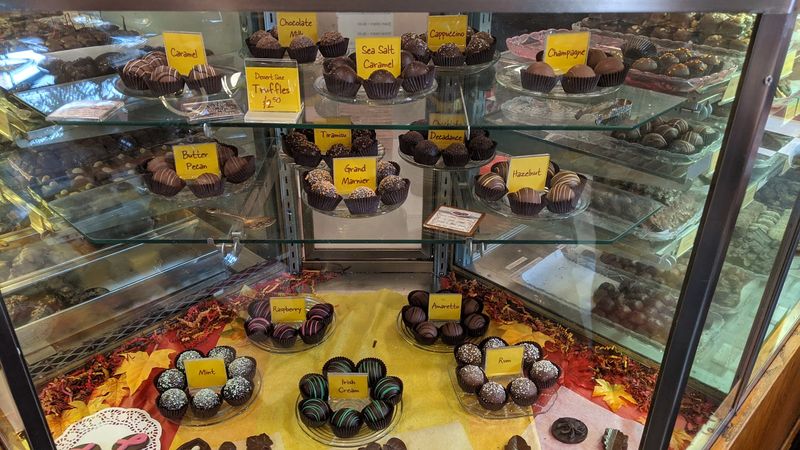
Forget the pre-sealed gift box with its fixed assortment and its one piece you never wanted. Here the chocolates are priced by the pound, and you build the box yourself.
Pick a piece. Pick another.
Keep going until the box looks right, and the scale decides the rest. That structure removes the guesswork and lets a person buy exactly four truffles if that is all they came for.
It also makes the shop workable at any budget. A small handful costs a few dollars, a serious assortment costs more, and nobody is forced into a size they did not want.
Pricing is posted plainly, so there are no surprises at the register.
The mix-and-match approach turns a purchase into a small decision-making exercise. Couples argue amiably over whether to double up on caramel.
Kids point at whatever has sprinkles.
Selling candy by weight used to be standard everywhere. It has quietly become rare, which is exactly why it feels good here.
Mudballs and Their Devoted Following
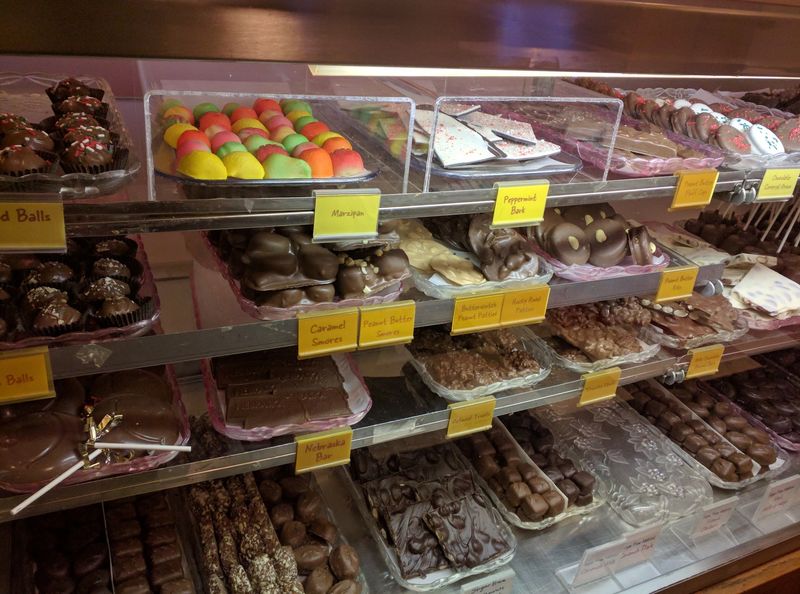
Ask anyone who has been in more than twice what to order, and one answer comes back more than any other: mudballs.
A mudball is a cookies-and-cream cheese truffle wrapped in chocolate, roughly the size of something you can eat in two bites and rarely do. The texture lands between fudge and cheesecake, with cookie crumbs giving it a slight grit that keeps it from turning cloying.
They have their own following. Some households have been driving down to the Old Market for these specific candies since the early 2010s, treating them as the after-dinner course rather than dessert at the restaurant.
The mudball is not the only house original in the case, but it is the one that gets requested by name at the counter. If the shop ever ran out on a Saturday night, there would be quiet heartbreak on Howard Street.
Order two. The second one is for the drive home, and it will not survive the parking garage.
Fudge Cut Fresh From the Slab
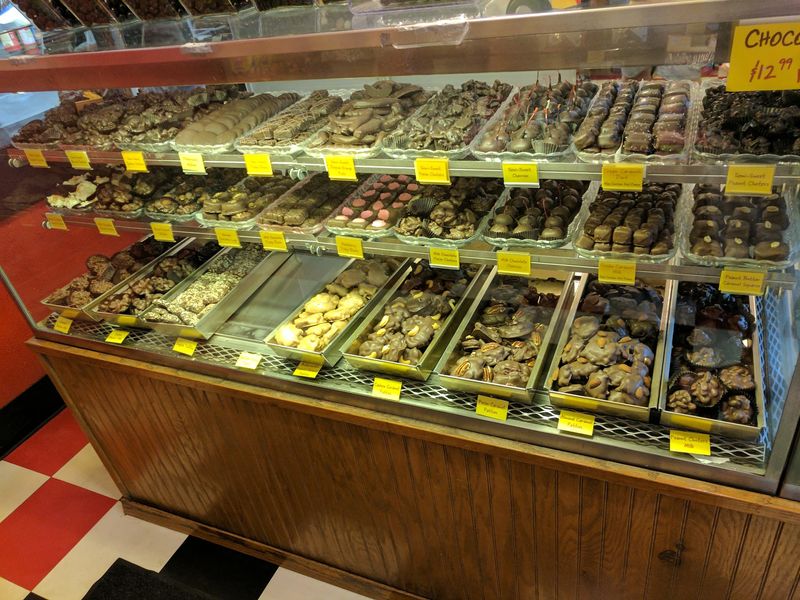
Fresh cream and butter go into the fudge here, which is the difference between fudge that crumbles into sand and fudge that gives slightly under a fingertip.
Multiple flavors sit in trays at once, and the variety is broad enough that choosing one becomes its own small ordeal. Chocolate anchors the lineup, but the rotating options are where the fun lives.
Fudge is the single most talked-about item in the shop, edging out even the truffles. It gets cut to order, wrapped, and weighed like everything else, so a quarter-pound sampler of three flavors is perfectly reasonable.
Nebraska has plenty of places selling fudge from a warming tray. Made-in-house fudge from an actual kitchen behind the counter is a narrower category.
One practical note: it travels well for a day or two in cool weather, less so in a hot car in July. Buy accordingly, or eat it before you hit the interstate.
A Window Into the Kitchen
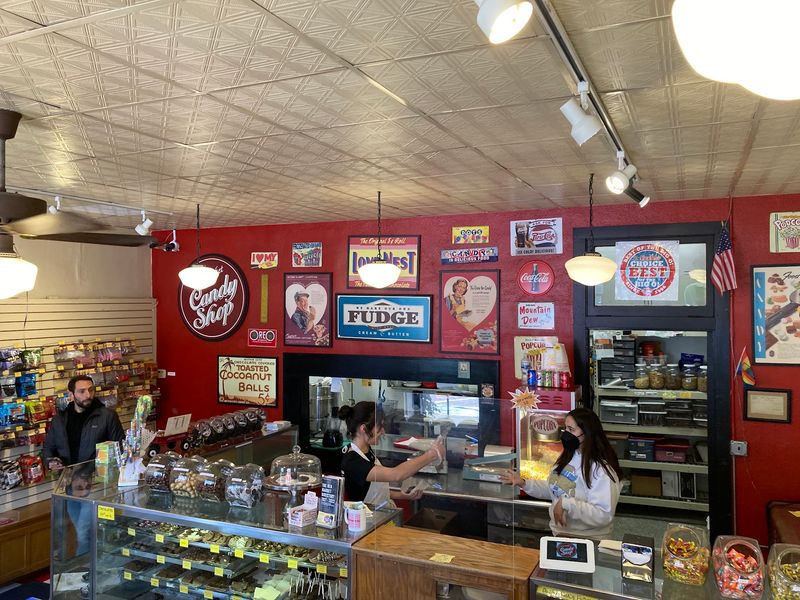
Time your visit right and you can watch the next batch being made through a window that opens onto the kitchen area.
Staff work at the trays and molds while customers browse a few feet away. There is no theatrical production about it, no scripted demonstration.
Somebody is just making candy, and you happen to be able to see it.
That transparency does something for the whole shopping experience. The pieces in the case stop being anonymous product and start being the output of a specific person on a specific morning.
Custom molded candies come out of that same kitchen, made for birthdays, weddings, showers, and themed parties. A last-minute request for chocolate frogs got filled the same day because the molds were on hand.
Chocolate covered strawberries have been turned around for birthdays on short notice.
Very few retail food businesses still let you see the making. Fewer still do it in a room the size of a large living room.
Taffy, Jelly Beans, and the Nostalgia Shelf
Not everything here is poured by hand, and the shop is upfront about that.
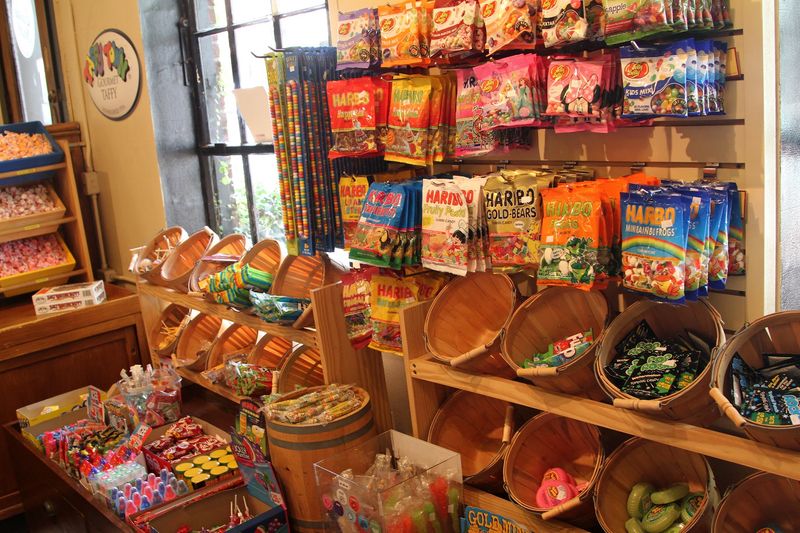
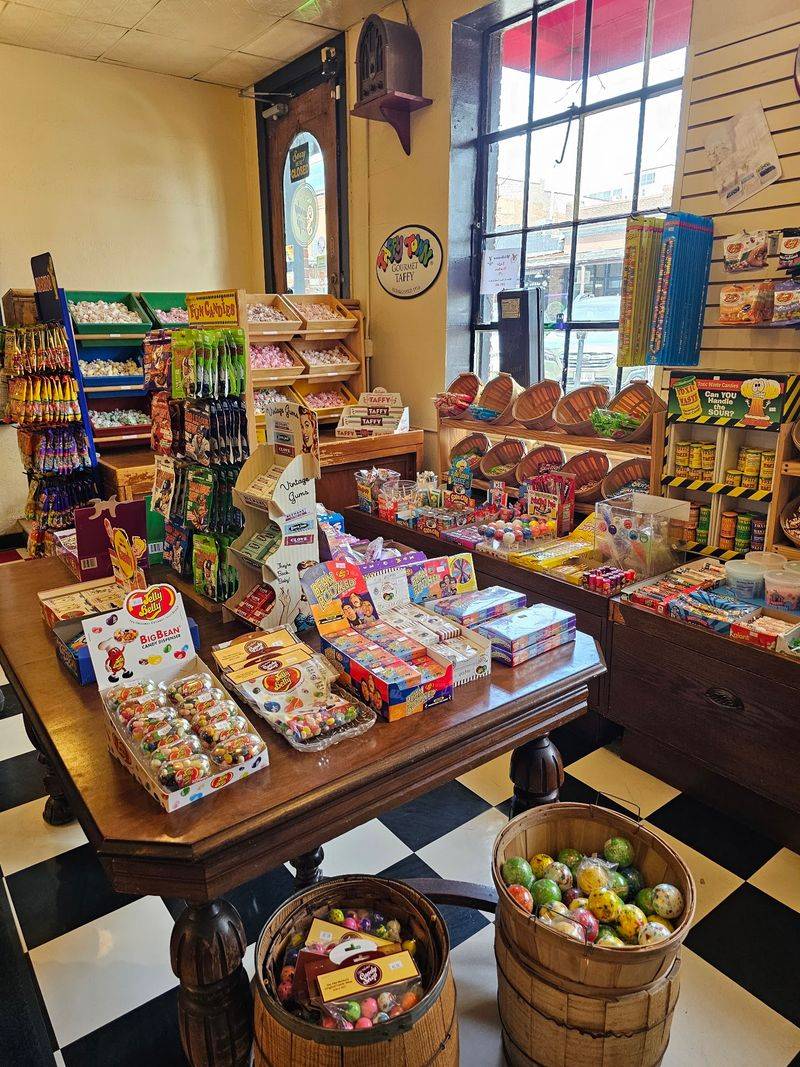
Alongside the house chocolates sit bins of classic jelly beans in a long list of flavors, homemade taffy, popcorn, and a wall of packaged candy that covers the sour-candy crowd and the brand-loyal kid who wants exactly one specific thing.
The retro selection is where older shoppers get ambushed by their own childhoods. Candy cigarettes are on the shelf.
So are various sweets that vanished from grocery aisles decades ago and turn up here like old classmates.
Sugar-free options are stocked too, which matters for anyone shopping with a dietary restriction rather than browsing on a whim.
The blend works because the house-made side is clearly the star and the packaged side is the supporting cast. A family can walk in with wildly different tastes and everybody leaves holding something.
Bring quarters worth of patience for the jelly bean bins. The flavor count runs high.
Mike Behind the Counter
Customer service in a candy shop could be a transaction. Here it runs closer to a conversation.
Mike, the owner, works the counter and hands out samples freely, often before anyone asks. He fields questions about ingredients and dietary restrictions with real answers instead of shrugs, and he keeps track of the rest of the room while he is doing it.
Small gestures pile up. A free ice pack tucked in with a box of chocolates for a group heading out on a long drive.
A tray of molded candies poured on three hours’ notice for a kid’s party. A recommendation when somebody is standing in front of the case, paralyzed.
Responding to one customer online, he signed off simply as Mike P., which tells you roughly how formal the operation is.
Friendly staff comes up more than any other subject when people talk about this shop, mentioned dozens of times over. That reputation was earned one sample at a time.
Ice Cream and the Sweet-Tooth Add-On
A candy shop connected to an ice cream counter is a dangerous piece of architecture, and that is exactly the setup here.
Soft serve is the format, straightforward and inexpensive, with flavor swirls available for anyone who wants to complicate things. It is not artisan gelato and does not pretend to be.
The price makes it an easy add to a chocolate purchase.
Desserts turn up too, including cannoli, which is not what most people expect to find next to a tray of caramel cashew clusters.
The pairing makes the shop a natural after-dinner stop for anyone who just ate in the Old Market. Walk over, grab a cone, buy a quarter pound of truffles for later, and keep strolling the brick streets.
One more thing next door: Tennenbaum’s Christmas Shop shares the same ownership. Completely different theme, same neighborhood block, and an easy second stop while you are finishing the cone.
The Old Market Setting Around It
Cobbled brick underfoot, iron canopies overhead, and old warehouse facades on both sides give the Old Market a texture no other Nebraska shopping district has.
The candy shop sits inside that, which means a visit is rarely a standalone errand. People arrive as part of a longer walk that includes galleries, bookstores, restaurants, and the passageway shops threaded between buildings.
Downtown Omaha wraps around it. The Gene Leahy Mall and the riverfront are within an easy walk, and the district connects north toward the ballpark and east toward the Missouri River trails.
Seasons change the character of the block. Summer evenings bring crowds and open patios.
Winter turns the brick streets quiet and the lit shop windows do a lot of heavy lifting, which is when a warm bag of fudge earns its keep.
For a family driving in from Lincoln, Fremont, or Council Bluffs, the shop works as an anchor for a half-day downtown outing rather than the entire reason for the trip.
Who the Shop Fits Best
Kids do well here. There is candy at eye level, samples come out regularly, and nothing about the space demands quiet or good posture.
Grandparents do even better, because the retro shelf is stocked with things they have not seen since grade school and the by-the-pound counter works the way candy counters used to work.
Couples looking for a low-cost stop after dinner get a good deal on a shared box. Out-of-town guests get something distinctly Omaha to carry home.
Anyone assembling a gift, a party favor, or a themed treat gets a shop that will actually take the request.
The room is small, so a busy weekend evening means shuffling politely around other shoppers. Weekday afternoons are calmer if browsing at length is the goal.
The sign on the door makes clear that all are welcome, and the counter staff back that up. It is an easy place to bring anybody, which is not something every specialty shop can say.
Planning a Nebraska Visit to Howard Street
The address is 1005 Howard Street in Omaha, right in the middle of the Old Market grid and walkable from most of downtown.
Parking is the main logistical hurdle. Street spots exist but fill fast on weekends, and the surrounding garages are the safer bet if you plan to stay a few hours.
Coming in from I-80 or I-480, downtown exits put you within a few blocks.
Hours run late compared to most candy shops, with evening closing times that make it a legitimate after-dinner destination, and a later start on Sundays. Check before you drive out, since holidays and seasonal stretches can shift things.
Budget is flexible. Buying by weight means you set the total, so a couple of dollars gets a taste and a larger box handles a gift.
Bring a cooler in summer if you have a long drive ahead. Chocolate and a hot Nebraska car do not negotiate well.
Why the Small Shop Still Wins
Half a century in, the formula has not changed much: make the chocolate on site, sell it by the pound, hand out samples, and remember people’s names.
Plenty of Old Market storefronts have turned over since 1977. This one kept doing the same thing, and the consistency is now the selling point.
What you get is a small room with a big glass case, a kitchen you can see into, fudge cut while you wait, and mudballs that have kept some families driving downtown for over a decade. The ice cream counter next to it is a convenient excuse to stay longer.
It will not fill a whole day. It was never meant to.
Pair it with a walk through the district, a stop at the Christmas shop next door, and dinner somewhere on the brick streets, and the afternoon assembles itself.
For a few dollars and twenty minutes, it is one of the more satisfying stops in downtown Omaha.