This Connecticut Horse Rescue Is Giving Gentle Giants The Fresh Start They Deserve
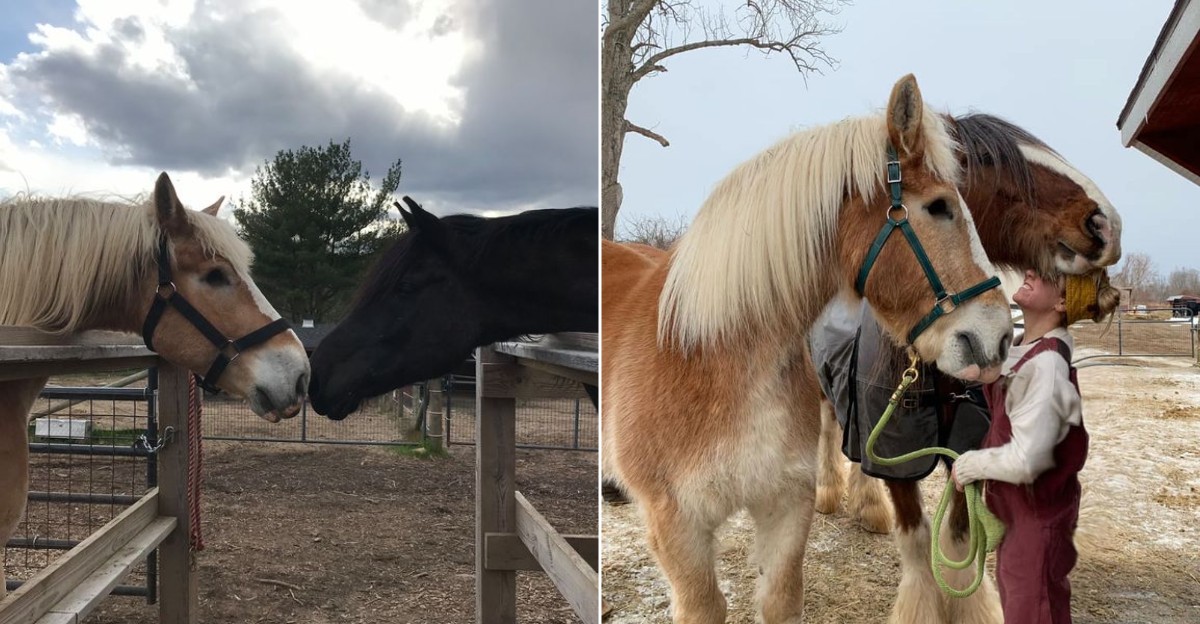
Big horses can look almost indestructible until you learn how much care, patience, and trust can matter after a rough start.
That contrast makes this rescue especially moving.
The animals here are given room to settle into a safer routine, with people willing to meet them where they are instead of expecting instant progress.
For rescued draft horses in Connecticut, that fresh start can mean something as simple as comfort becoming normal again.
You notice the little victories first. A calmer posture. A curious step closer.
The quiet confidence that starts returning when an animal realizes nobody is asking too much from it.
Those moments carry more weight when the horses themselves are so enormous.
Their size may be what catches your attention, but their second chances are what stay with you.
This is hopeful work built slowly, one ordinary day at a time, until a difficult past begins to feel much farther away.
1. Gentle Giants Get A Fresh Start
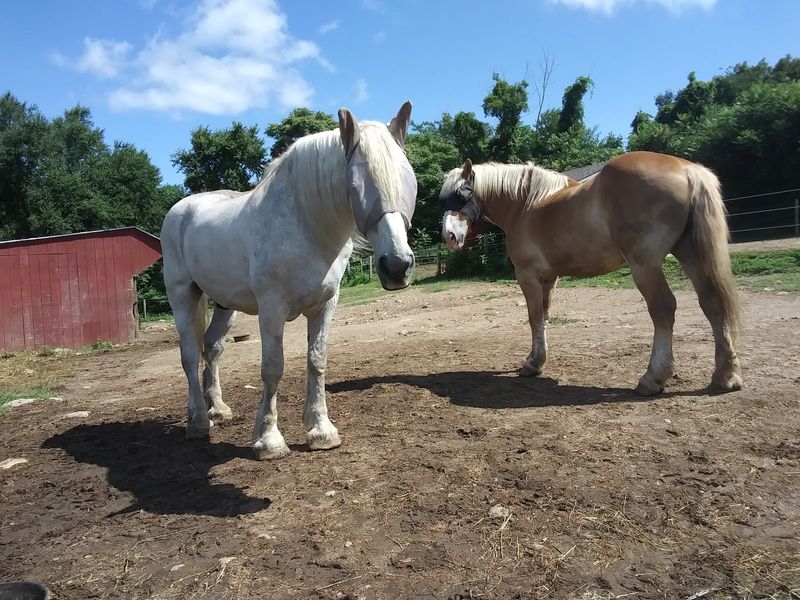
Some horses arrive unsure of everything around them. Give them time, though, and their story can change completely.
That fresh start is the focus at this draft horse rescue, where large horses in need are given the care and patience required to feel secure again. Some have been surrendered by owners who could no longer care for them, while others have come through auctions.
Their backgrounds vary, but each horse is treated as an individual once it arrives.
Recovery is never rushed. Proper nutrition and veterinary attention help horses regain their physical strength, while consistent handling gives them time to become comfortable around people again.
The organization also retrains horses when appropriate, with the goal of eventually finding suitable adoptive homes.
Trust can take much longer to rebuild than strength. Quiet routines matter, especially for animals that arrive uncertain about human contact.
Progress may come slowly, but even a calmer response or a new willingness to interact can mark an important change.
More than 160 draft horses have received a second chance through the organization since it began. Its work continues with volunteers and supporters helping provide the daily care these enormous animals need while preparing many of them for their next home.
2. Chestnut Hill Road Is Home Base
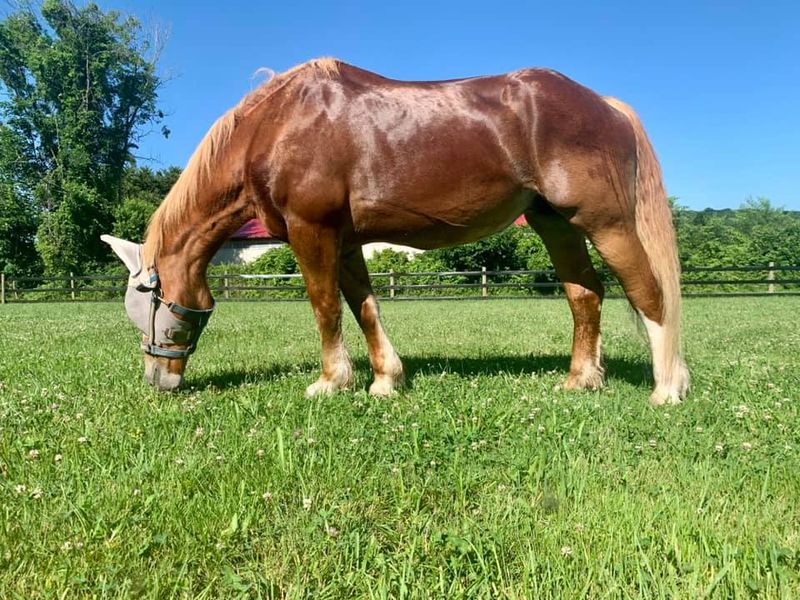
Twenty acres can feel much bigger when the land opens toward the Connecticut River Valley. Add horses quietly grazing nearby, and Autumn Ridge Farm starts to feel wonderfully removed from everyday noise.
The rescue found its permanent home here in 2018, naming the property Autumn Ridge. What visitors see today took considerable work.
The organization says the land began as a largely undeveloped hay field, and years of volunteer effort helped transform it into a functioning home for rescued draft horses.
Visitors are welcome on Saturdays and Sundays from 10 a.m. until noon, and appointments can also be arranged for other times. Guests stay with a guide throughout their visit, which makes it easier to learn about the horses while keeping everyone safe.
Closed-toe footwear is required, and visitors must remain outside the paddocks and fences.
The setting itself is a big part of the experience. Horses rest in the paddocks while visitors get a closer look at the daily work involved in caring for such large animals.
Autumn Ridge Farm is at 113 Chestnut Hill Road in East Hampton. There is no admission charge, although the rescue welcomes donations that help support the horses in its care.
3. Care Comes Before Finding New Homes
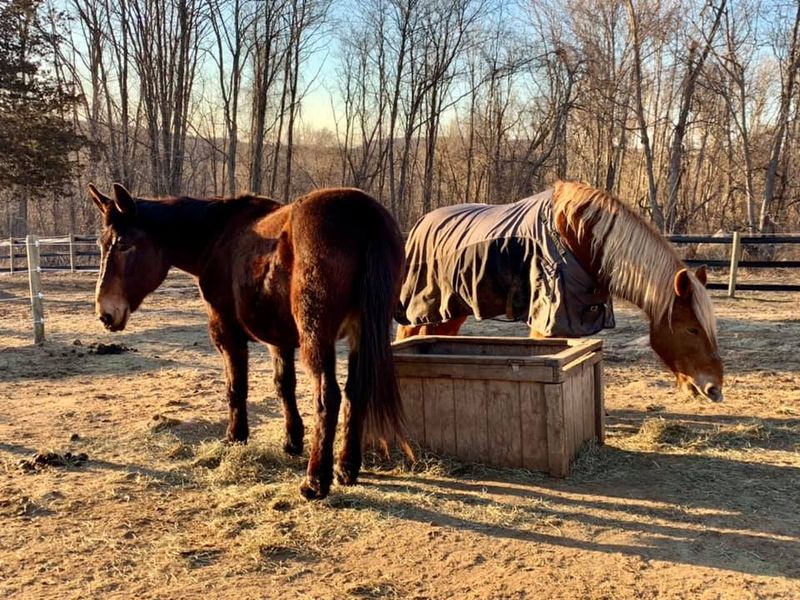
Feeding this herd costs roughly $160 a day. Multiply that out and you land near $57,600 a year, and that figure covers feed alone.
Health comes before adoption talk, always. New arrivals go through quarantine and a full veterinary workup, which protects both the incoming horse and the horses already on the farm.
The intake checklist is thorough: vaccinations including EWT, West Nile, and rabies, a dental exam with any needed work, and deworming. Plenty of horses show up with problems that have been building for months or years, so nothing is assumed to be fine just because a horse looks calm.
Nutrition gets equal attention. Quality grain, steady access to hay, and proper shelter form the backbone of recovery, and horses coming back from malnourishment often need specialized diets that change as they gain strength.
Rebuilding a starved draft horse is slow by necessity. Feed them too much too fast and you create new problems, so weight comes back gradually under watchful eyes.
All of that explains why the rescue never hurries a horse toward the adoption list. A healthy horse has options.
A struggling one needs time first.
4. Training Helps Build Trust Again
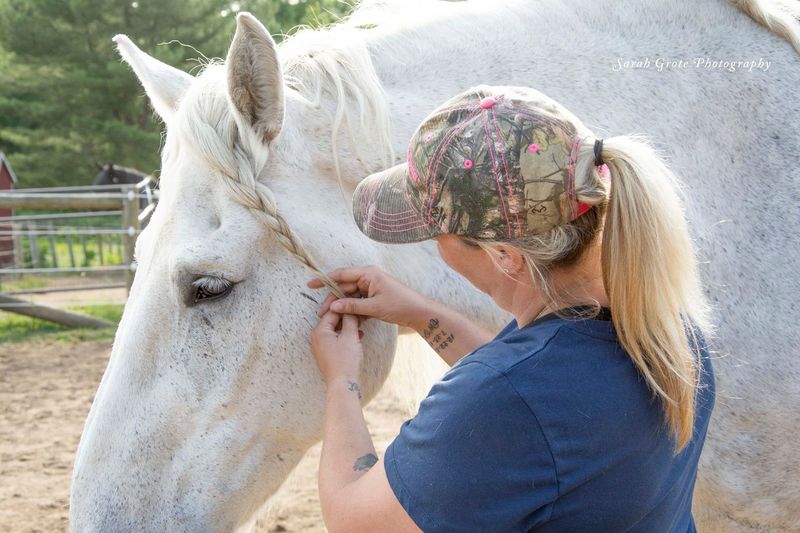
Progress starts slowly. That is exactly the point.
Once a horse is healthy enough to begin training, the rescue’s trainer looks at what the animal already knows and where more work is needed. Basic handling comes first, followed by an evaluation of ground manners.
Riding is considered separately because not every horse will be suited for work under saddle.
Much of the early training focuses on helping each horse become comfortable with ordinary routines. Calm responses around people matter greatly with animals of this size.
The goal is not to push through lessons quickly, but to build skills that make daily care easier for both horse and handler.
Practical training plays a major role. Horses learn to cooperate during farrier visits and veterinary care.
Bathing and fly spray also become familiar parts of life, while being caught in a pasture should eventually feel routine rather than confusing.
Each horse moves forward at its own pace. Some become riding horses, while others are better suited to life as companions.
That patient preparation matters when adoption becomes possible. The rescue aims to match horses with suitable homes, giving each one the strongest foundation possible for its next chapter.
5. Some Horses Become Permanent Residents
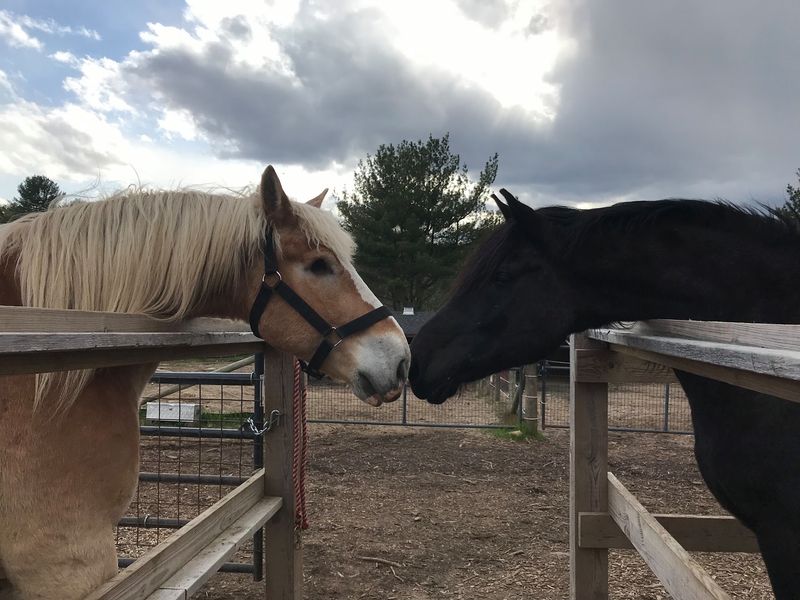
Not every rescue story ends with a moving van and a new barn, and that is by design. Certain horses stay at Autumn Ridge Farm for good.
Advanced age, chronic illness, or lasting injury can make adoption unrealistic. Rather than push those horses toward homes that cannot meet their needs, the rescue commits to caring for them through the rest of their natural lives.
Then there is a second group with a job description. Ambassador horses represent the organization to the public, greeting visitors, appearing in parades, helping newer volunteers learn handling skills, and showing up at special events.
These residents tend to become the personalities everyone remembers. A bonded pair named Pete and Sam, for instance, arrived at the farm after their owner passed on, and they settled into the herd as permanent members.
Sponsorship keeps this part of the mission running. Supporters can contribute directly toward a specific horse’s ongoing hay, grain, and veterinary care, which makes lifelong commitments financially possible.
Visitors often say the permanent residents are the ones who win them over. There is something quietly moving about an old giant who has finally stopped worrying about what comes next.
6. Volunteers Keep The Herd Going
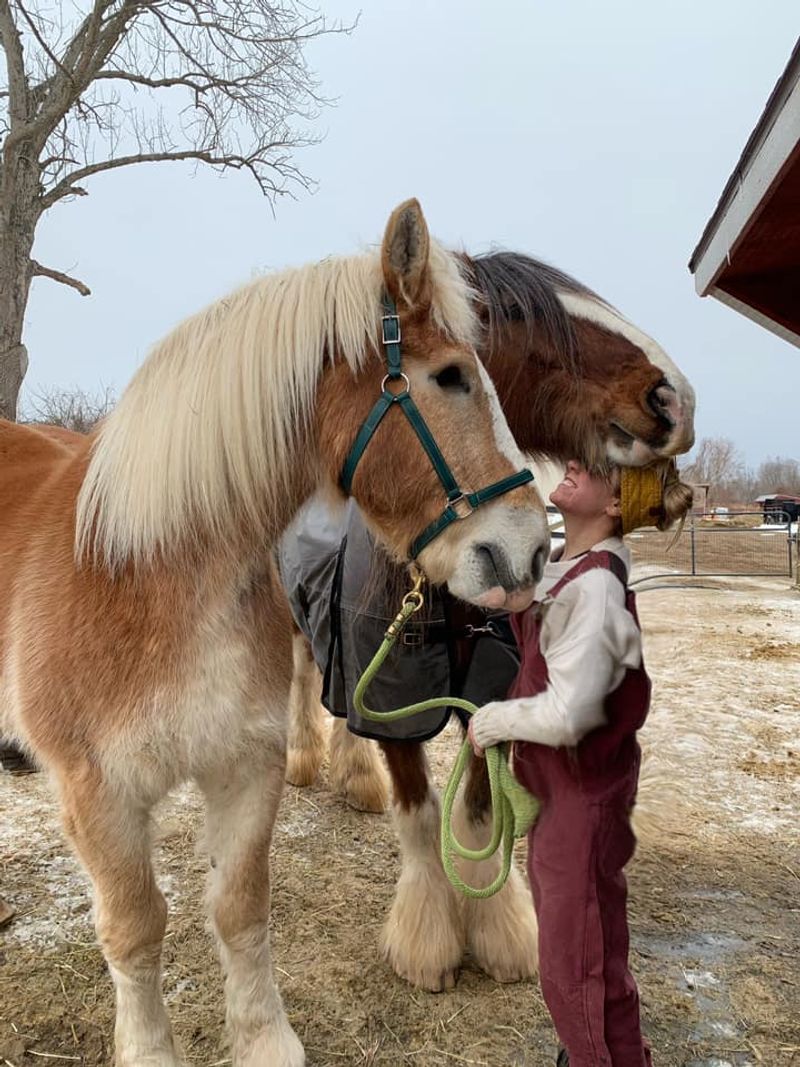
Every single thing that happens on this farm happens because someone volunteered to do it. The organization is 100 percent volunteer run, from mucking stalls to organizing fundraisers.
Daily horse care fills most of the schedule. Volunteers haul buckets of soaked feed, stuff hay nets, scrub and refill water troughs, handle horses, and clean stalls and run-ins.
Farm maintenance takes up the rest. Fence building, hay hauling, and general repairs never really end on twenty acres, and there is always an event or fundraising project in the works.
You do not need horse experience to help. Complete beginners learn from the ground up, while lifelong equestrians bring skills that speed everything along.
Honesty about the work matters: it is physical. Lifting 50 pounds, working outdoors in heat and cold, and staying on your feet for a full shift come with the territory.
The ask is one three-hour shift per week, minimum. Volunteers must be at least 15 years old, and anyone under 18 needs an adult family member on site.
Talk to people who have visited and the volunteers come up constantly. Their enthusiasm is apparently just as memorable as the horses themselves.
7. Lifetime Free-Leases Protect Every Adoption
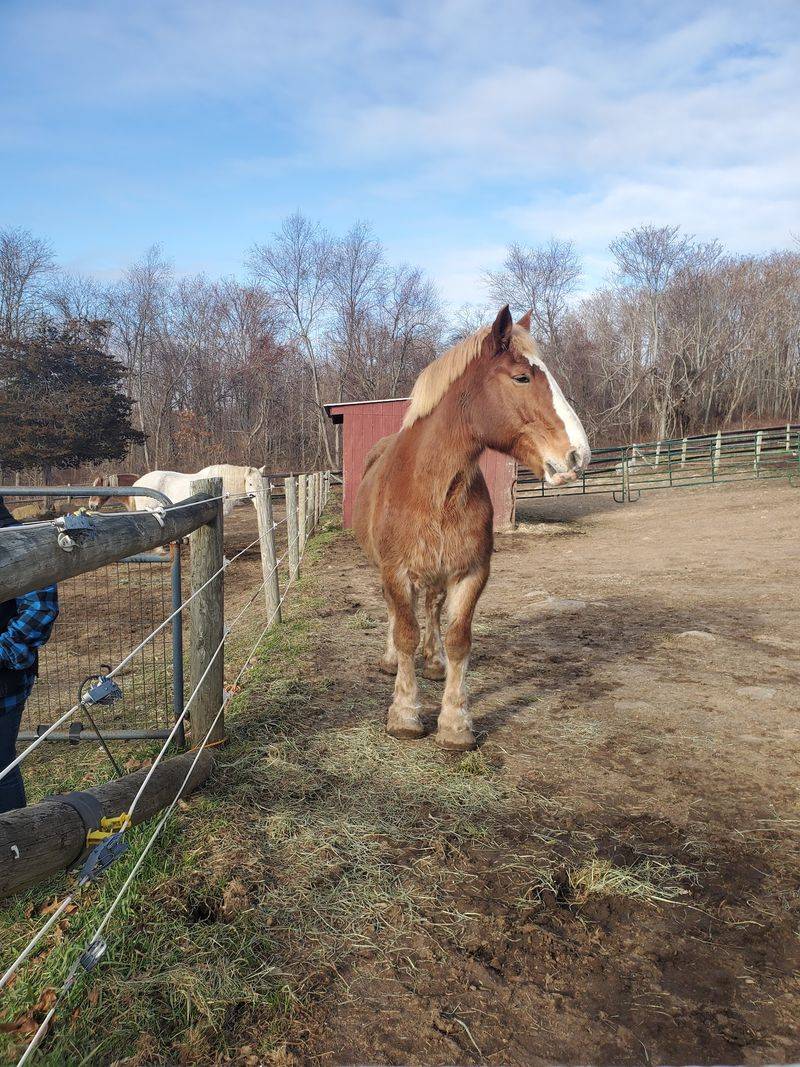
Adopting a horse from this rescue comes with an unusual promise. While the animal may live with an adopter for the rest of its life, the rescue technically remains the legal owner through a lifetime, free-lease agreement.
For the adopter, day-to-day life feels much like traditional ownership. The horse lives at their home, becomes part of the household, and they take on the costs, care, training, and responsibilities that come with keeping an animal.
The arrangement also gives the rescue a safety net. If a serious welfare issue ever arises, the organization has the legal authority to reclaim the horse.
That can apply in cases involving neglect, starvation, abuse, abandonment, auction placement, or major concerns surrounding the animal’s health and welfare.
Reclaiming horses, however, is not the purpose of the system. The goal is to create permanent placements where horses can settle into stable, caring homes.
Keeping legal ownership simply gives the rescue a way to protect an animal if circumstances take a dangerous turn.
Ultimately, the agreement creates a safeguard that lasts for the horse’s entire life. Whether problems arise after two years or fifteen, the rescue still has a legal connection to the animal and a responsibility to help protect its future.
8. Every Horse Leaves With A Safety Net
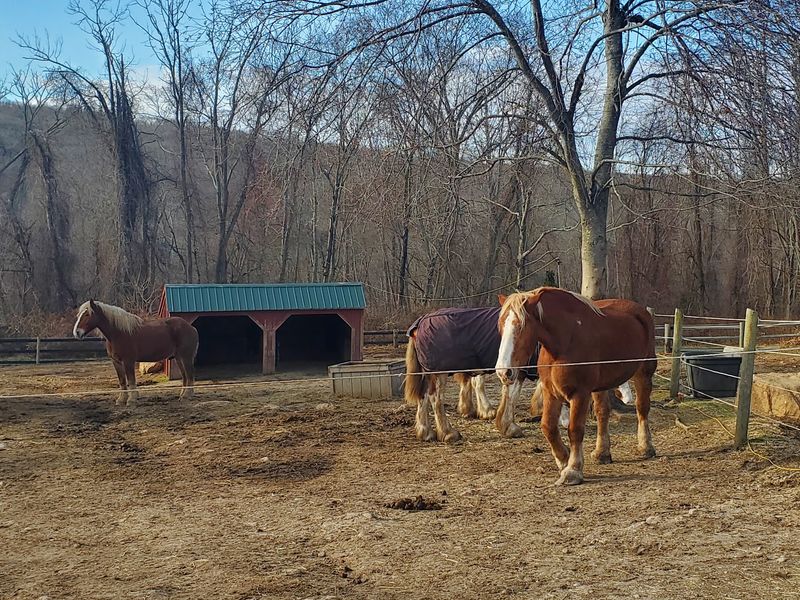
Adoption day is a beginning, not a finish line. The rescue keeps a lifelong connection with every horse it places, checking in year after year.
Adopters submit annual documentation showing basic veterinary care has happened. That includes vaccinations such as EWT, West Nile, and rabies, dental exams, farrier work, and parasite control following their own vet’s recommendations.
Current photographs are required each year too, which is a simple way to confirm a horse is holding condition and doing well. The rescue also reserves the right to visit adopted horses at their farms.
Getting approved in the first place is a real process. Applicants must be at least 21 and live within a four-hour drive of East Hampton.
Screening includes interviews, background and criminal checks, and veterinary, farrier, and personal references. Farm inspections confirm adequate shelter, safe footing, clean water, and secure, well-maintained fencing.
Matching matters as much as qualifications. Prospective adopters visit and spend real time with a horse before anything is finalized, because personality fit affects both of them.
Support does not stop at the driveway either. Adopters can come back with questions for years, which is exactly what a genuine safety net looks like.