The Sprawling Indiana State Park That Far Too Many Travelers Still Overlook
I told myself I’d walk for twenty minutes, snap a few photos, then head to lunch. That plan fell apart fast.
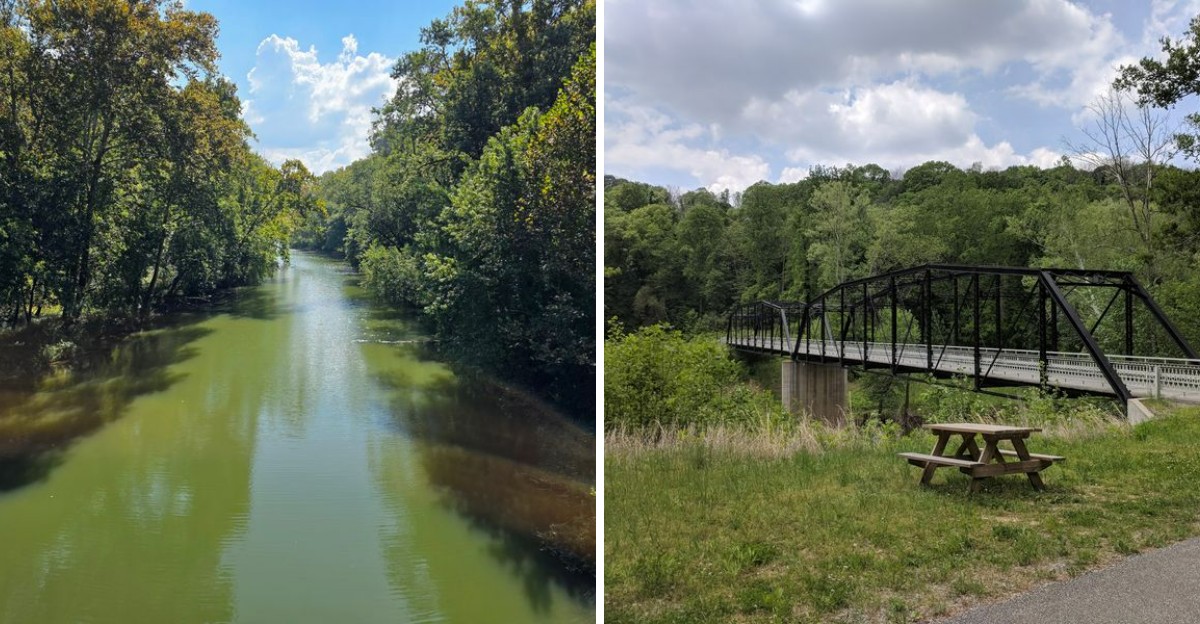
The trail dropped into a ravine so deep I forgot I was still in Indiana at all. Rock walls rose on both sides, a river cut through below, and somewhere past the trees sat the remains of an old amusement park nobody talks about anymore.
Rusted rails, quiet foundations, nature slowly taking everything back. Most travelers speed past this stretch of Indiana without a second glance.
I nearly did too. Three hours later I was still climbing ridges and chasing river views, completely off schedule and not caring one bit.
A Terrain That Breaks Every Flatland Rumor
Southern Indiana gets unfairly labeled as flat farmland. The hills here argue back loudly, and they win the argument fast.
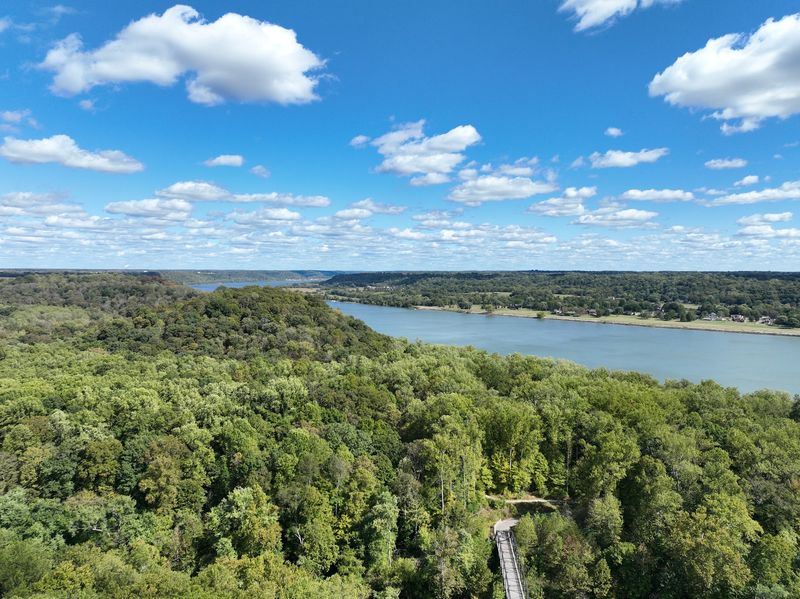
Elevation shifts of more than 200 feet run through the property. Ravines cut deep, and the ground drops away faster than most visitors expect.
From the higher points, you look out over the Fourteenmile Creek valley. On clear days the Ohio River stretches wide below, calm and slow.
Those changes in height do more than create views. They also shape the weather you feel while hiking, cooler down low and breezier up top.
My legs figured this out about ten minutes into the first descent. Going down felt easy, and the return trip felt like honest work.
Bring shoes with real grip, because loose gravel and packed dirt mix on many slopes. Trekking poles help more than you would guess.
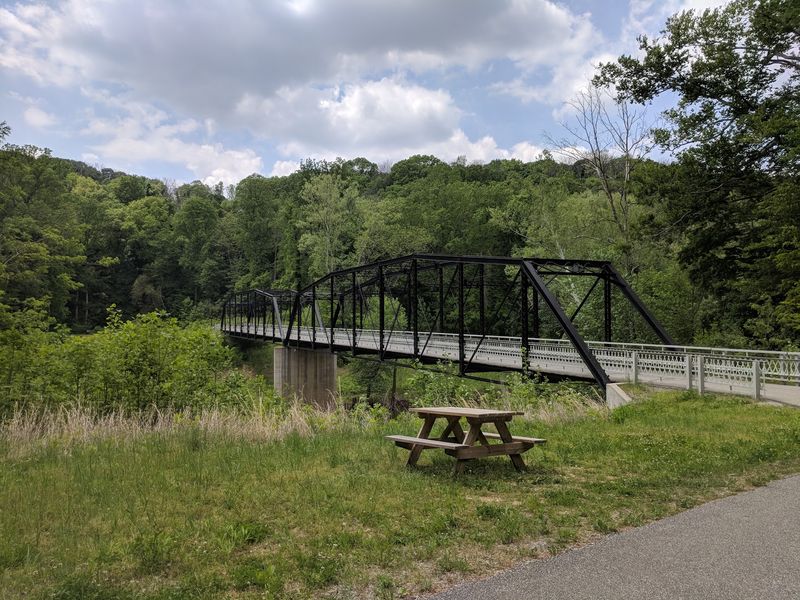
Families with young kids can still enjoy the upper areas without steep climbs. Paved paths and picnic spots sit near the parking areas.
You can find all this at 3000 State Park Drive, and the place is Charlestown State Park.
Fifteen Miles Of Trails With Real Variety
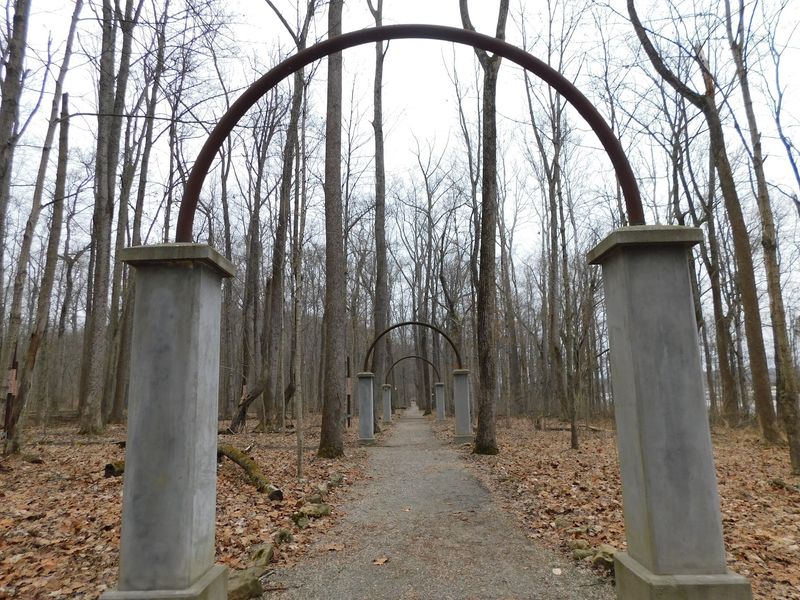
Trail menus can feel repetitive at many parks. Not here, where roughly fifteen miles of paths split into very different personalities.
There are gentle paved stretches for strollers and easy strolls. There are also rugged routes that drop hard into the creek valley.
Trail 3 gets plenty of love for its rocky footing and open overlooks. Trail 3 includes the steep descent toward Rose Island, while Trail 7 is an easy loop through the historic site.
Signs are clearly marked, which makes route planning simple. You can stitch together a two mile loop or push past nine miles.
I hiked Trail 2 after rain and learned a quick lesson. Mud on slopes turns into a slip and slide, so wear real boots.
Benches appear at smart intervals on the tougher climbs. About halfway up the big hill, one bench feels like a small gift.
Water matters here more than people plan for. Fill your bottles at the trailheads before heading down into the valley.
Waterfalls show up seasonally, and spring flow is the most impressive. Sitting at the base of one is worth the extra mile.
The River Took Rose Island Back
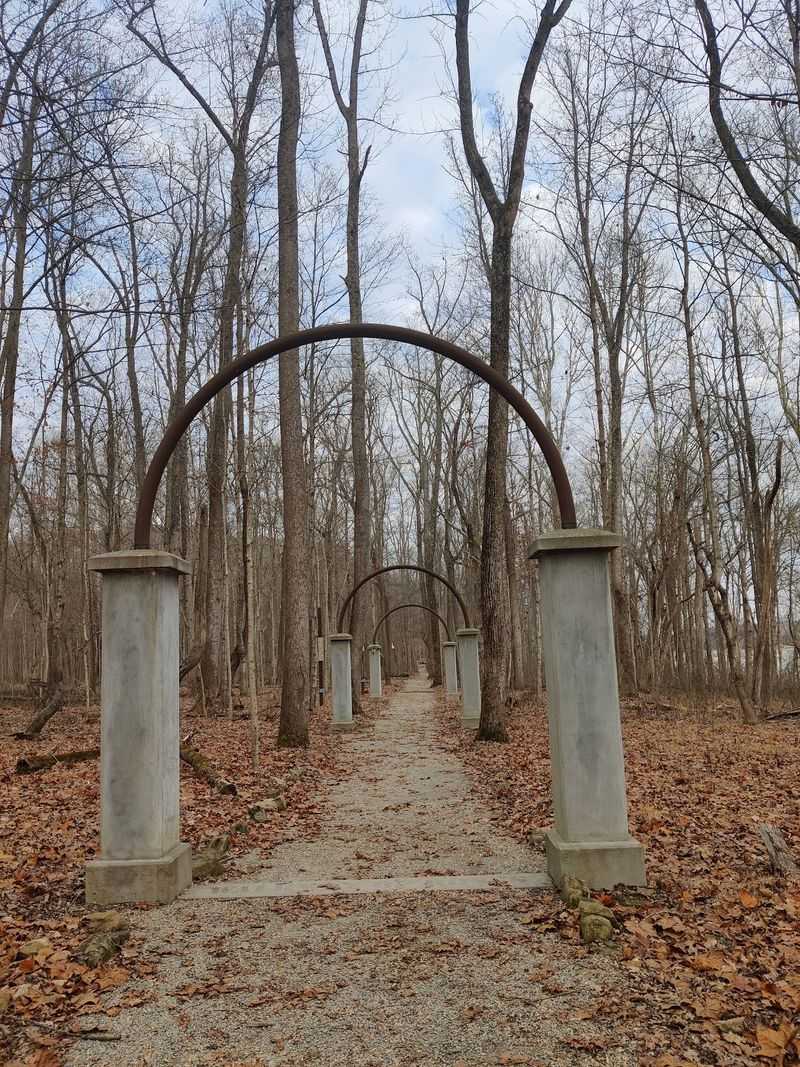
Concrete steps in the forest stopped me cold. They once led crowds into a busy 1920s resort called Rose Island.
Pony rides, a merry-go-round, and a swimming pool drew visitors by boat. It was a full day of fun long before highways made travel easy.
The flood of 1937 pushed water far above the grounds. The damage ended the resort for good, and the woods slowly moved in.
Today the Rose Island Loop Trail carries you past the remains. Foundations, pathways, and old structures peek through the brush.
Informational signs explain what stood where, which makes the walk feel like a museum with no walls. Marker posts show how high the floodwater reached.
Seeing those flood markers overhead is genuinely startling. It reframes the whole valley in about five seconds.
Naturalist led tours cover the history in greater depth. Check the park schedule ahead of your visit, since these fill up.
The hike down is short but steep. Give yourself extra time and energy for the climb back out.
Fossils And Sinkholes Hiding In Plain Sight
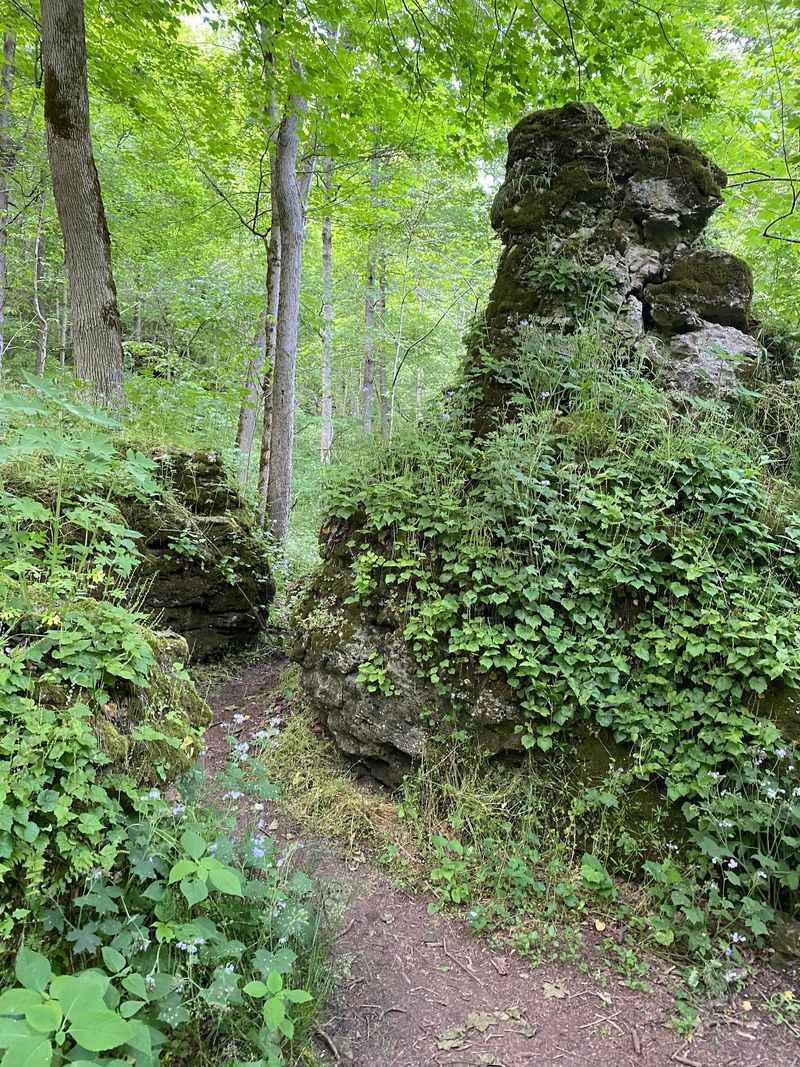
Look down once in a while. The rock underfoot here is older than almost anything else you will see today.
Exposed Devonian fossil outcrops appear along parts of the landscape. They formed when a shallow ocean covered this region.
Coral shapes and shell patterns sit locked in stone. Kids tend to find this far cooler than any overlook.
Karst sinkhole topography also shows up across the park. Water slowly dissolves limestone underground, and the surface dips inward.
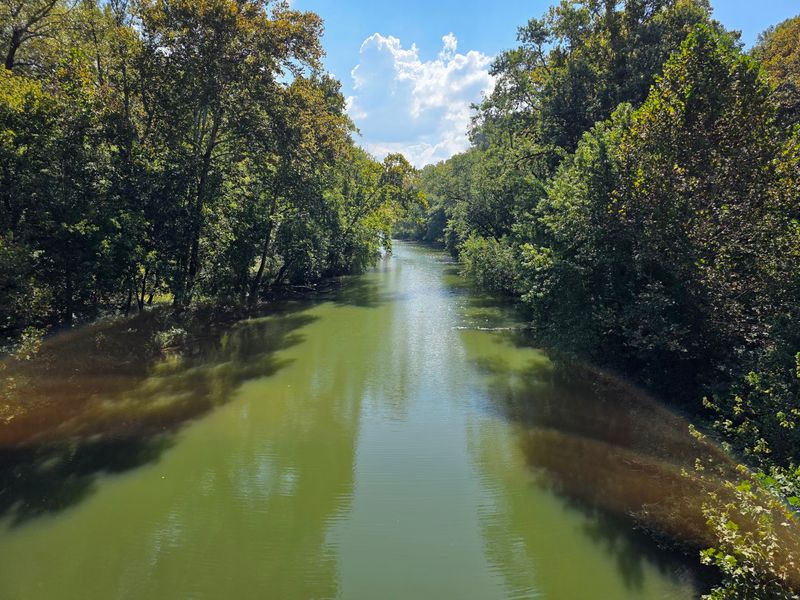
Fourteenmile Creek winds through rugged terrain shaped by the region’s distinctive geology.
That history explains the dramatic ravines better than any sign could. The land simply had more time to carve itself.
Please leave fossils where you find them. Collecting is not allowed, and the next visitor deserves the same discovery.
Bring a small hand lens if you have one. Details in the rock jump out when magnified, and photos turn out much better.
Home To Warblers And The Rare Bald Eagle
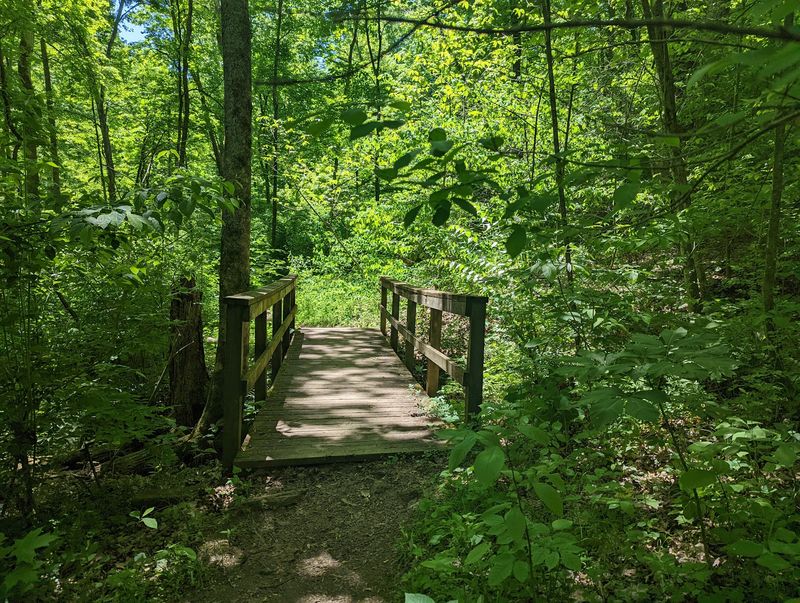
Morning here sounds like a nature recording. Over 70 bird species have been recorded across the property.
Warblers flit through the canopy during spring migration. Their songs are tiny, quick, and surprisingly easy to hear on quiet trails.
Bald eagles patrol the river corridor. Spotting one riding a thermal above the bluffs is a genuine highlight.
The park is a designated stop on the Indiana Birding Trail. That status alone tells you how good the habitat is here.
Early morning delivers the most activity by a wide margin. Arrive close to the seven o’clock opening for the best chance.
Binoculars are worth carrying even if you are not a serious birder. The forest edges near the picnic areas are productive spots.
Campers often mention waking to birdsong instead of traffic. That alone sells the overnight stay for many people.
Spring also brings a wave of wildflowers across the forest floor. Color underfoot and song overhead make for a memorable combination.
Forest Light That Changes With Every Season
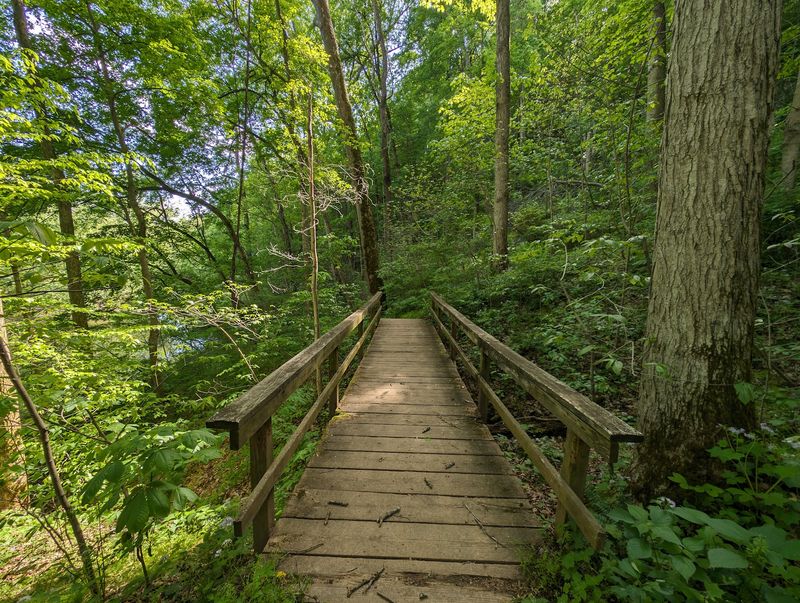
Summer turns the woods into a green lantern. Sunlight filters through thick hardwood canopy and softens everything below.
The forest feels dense in the best way. Sound drops, temperatures cool, and the trail ahead disappears into leaves.
Autumn flips the palette completely. Reds, oranges, and golds stack up along the ravines and river bluffs.
Late October is a smart target for color. The elevation changes mean you see the canopy from above and below.
Winter opens the views wide. Bare branches reveal river bends and rock faces hidden the rest of the year.
Spring belongs to the wildflowers. Hikers have described whole stretches of trail carrying a sweet, perfume like scent.
Each season changes the difficulty too. Wet leaves and ice make steep sections slower, so plan extra time.
Photographers should aim for the first two hours after opening. Low angled light through the trees does most of the work for you.
Camping That Actually Makes You Want to Stay
Good campgrounds are rare. This one earns steady praise for being clean, quiet, and well organized.
Sites come with paved pads and grassy areas for tables. Electric and full hookup options are available for RVs.
Most sites sit fairly level, which saves a lot of setup frustration. Spacing feels generous rather than cramped.
Shower houses are maintained well, though the water uses timed push valves. You press the button repeatedly, so plan on a quick rinse.
Campground loops are flat enough for casual bike riding. Kids circle them endlessly, and that keeps everyone happy.
Midweek stays are noticeably peaceful. Fewer neighbors, easier site selection, and more birdsong at sunrise.
Daily entrance costs $7 per vehicle for Indiana residents and $15 for out-of-state vehicles.
Louisville sits roughly twenty minutes away. That makes this a smart base camp for exploring the wider region while sleeping in the woods.
River Access And Room To Picnic
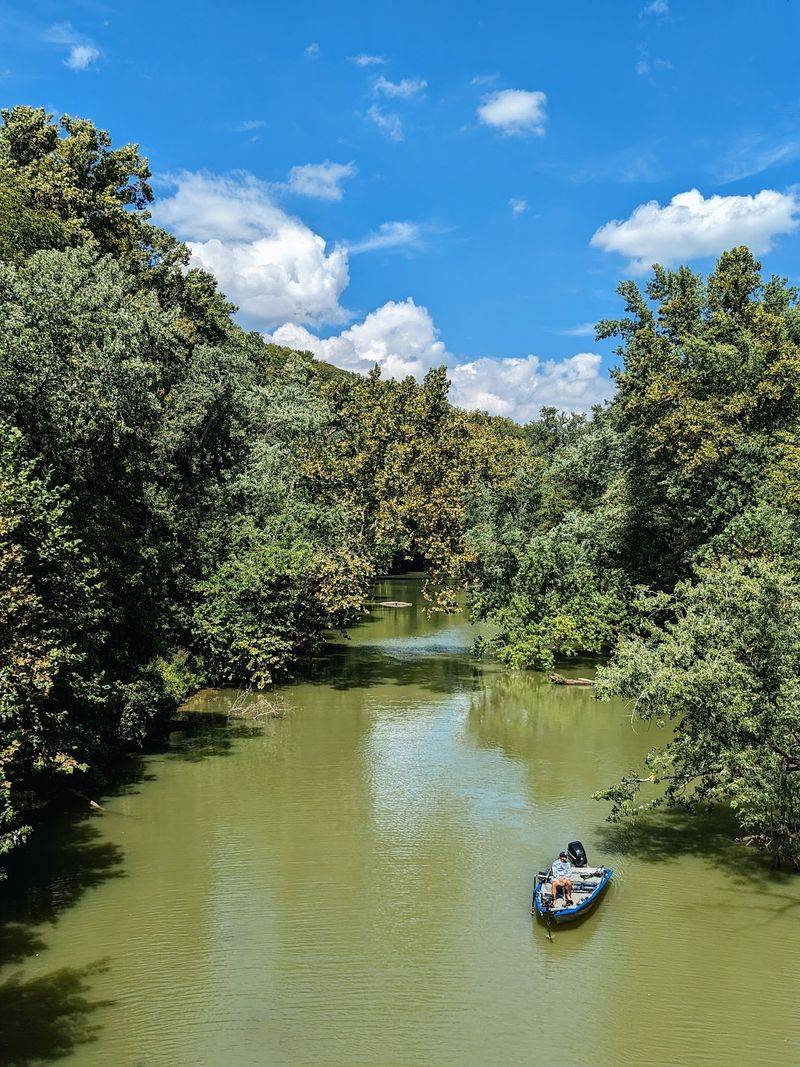
Water changes the mood of a park. A boat ramp here puts you directly onto the Ohio River.
Anglers use it regularly, and fishing is a popular reason to visit. The river is wide and slow at this stretch.
Observation spots along the bluffs give you river views without any boat. Benches sit at a few of the better angles.
Designated picnic areas are scattered across the grounds. Shelters and tables make lunch simple, even with a group.
My favorite move is a short morning hike followed by a long picnic. The food tastes better after a climb, every single time.
Accessibility has been considered, and a motorized wheelchair is available for trail use. Paved trail sections help too.
Gates open at seven in the morning and close at eleven at night. That long window leaves room for sunrise walks and evening quiet.
Why It Stays Quiet, And How To Plan Your Visit
Popularity and quality do not always match. Charlestown State Park offers a quieter alternative to some of the region’s better-known outdoor destinations.
Plan around two to four hours for a solid first visit. Add a full day if Rose Island and the longer loops are on your list.
Check the official schedule for ranger led programs before arriving. Guided history hikes add real depth to the experience.
Pack water, sturdy shoes, bug spray in summer, and a snack. Cell service can be spotty in the deeper ravines.
Download a trail map ahead of time. Paper copies are available near the entrance as backup.
Go once and you will understand the appeal. Go twice and you will start recommending it to friends, quietly and often.