Not Many People Know About This Incredible Kinetic Sculpture Park In Colorado
This is the kind of roadside surprise that would make me pull over without much convincing.
In Colorado, huge metal sculptures can shift and spin with the wind, turning a quiet outdoor setting into something far more engaging than a static display.
The fun is in not knowing exactly what the breeze will do next. I know that sounds dramatic for a sculpture stop, but moving art has a different kind of energy.
You can appreciate the engineering, the creativity, or simply the strange pleasure of watching steel come alive.
For me, that unpredictability is what makes the place feel worth seeking out.
The Man Behind The Metal
The artist grew up on an Ohio farm in a family of carpenters and blacksmiths, learning craftsmanship and engineering skills at an early age.
He attended the Cleveland Institute of Art and served in the United States Air Force during World War II.
In 1948, he purchased property in Cheyenne Canyon and designed a home and art studio there.
He began creating bronze sculpture in the 1950s before turning to monumental steel wind sculptures in the late 1970s. He taught himself the bronze work, setting up a metal foundry in his home studio rather than training under anyone else.
Some of the monumental wind sculptures took as long as three years to construct.
His sculptures combined detailed metalworking with engineering needed to create large forms capable of interacting with wind.
He designed and fabricated the monumental sculptures through years of work in his Colorado Springs studio.
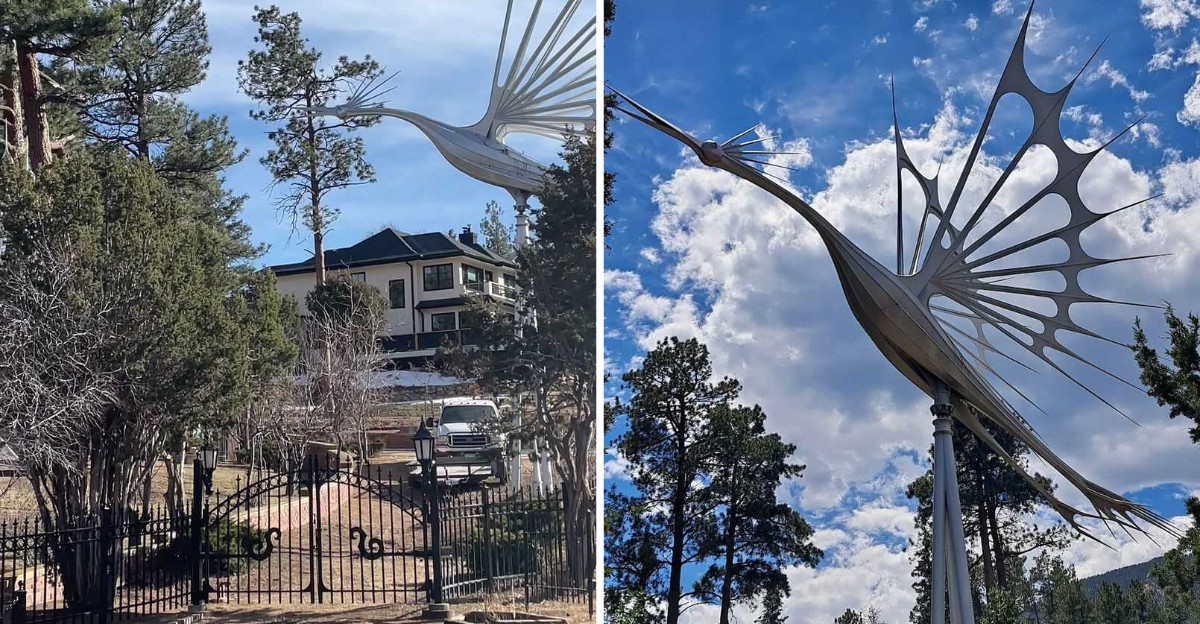
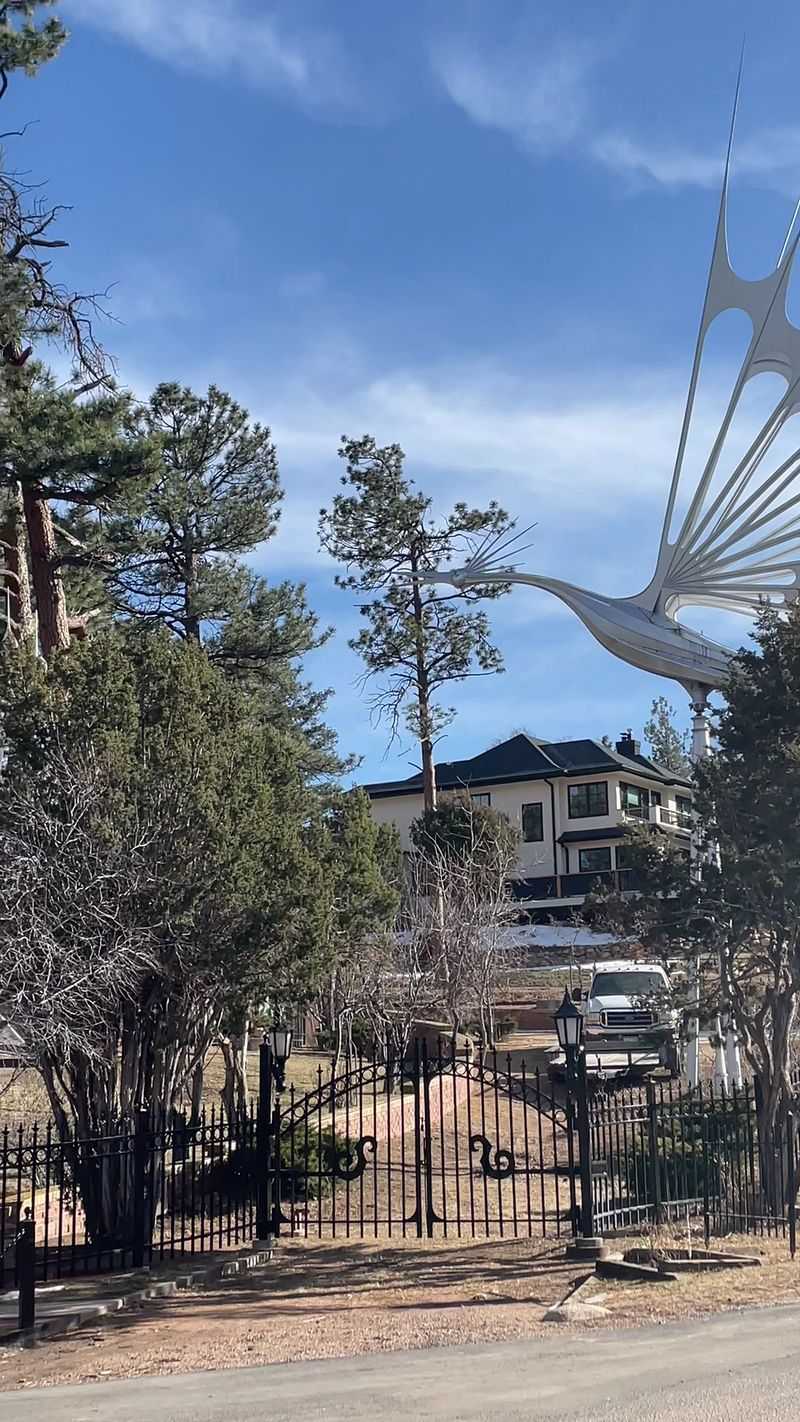
The remaining original sculptures can be viewed from the public street outside 2057 Pine Grove Ave. The property itself is private.
Wind Turns Steel Into Dance
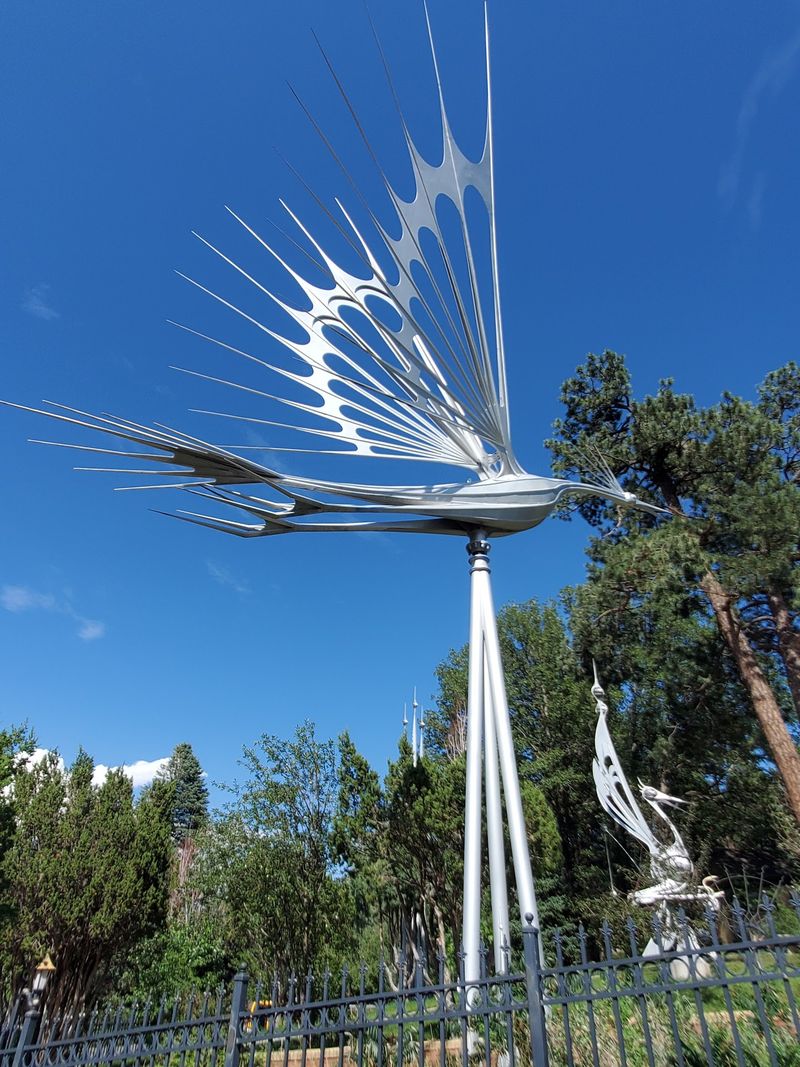
Wind activates the moving components, causing arms and other elements to rotate or sway when conditions allow.
The monumental works are primarily associated with steel, with some descriptions also identifying aluminum components.
Their moving parts were engineered to respond to wind and interact with the surrounding landscape.
Movement depends on wind conditions, so the sculptures may remain still during calm weather. As wind direction and speed change, the kinetic elements can rotate, sway, or pivot differently.
Moving metal surfaces can also reflect changing daylight as the sculptures turn. The changing motion can create a slow, repetitive rhythm when the wind is steady.
Calm conditions can leave the kinetic elements motionless, so visitors hoping to see movement should expect conditions to vary.
Because the movement is wind-dependent rather than scheduled, a breezy afternoon will show far more of what the sculptures were built to do than a still morning.
Even at rest the sculptures hold their shape and detail, so a calm visit still shows the metalwork clearly, just without the motion.
No reliable published wind-speed threshold guarantees that the sculptures will move.
Giants That Look Ready To Fly
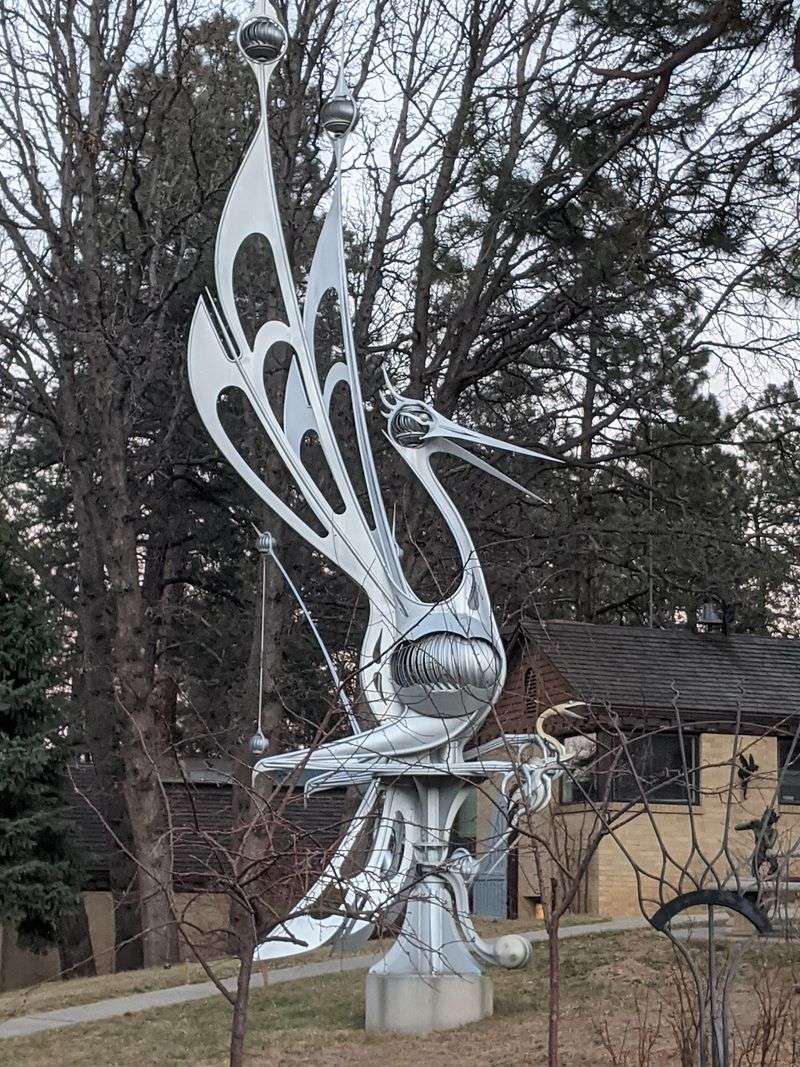
Neck strain is a real risk at this stop. Kempf’s monumental works commonly reach about 30 to 50 feet, while some historic pieces rose above 60 feet.
Birds and weather-vane-like forms recur throughout the artist’s monumental work. It looks poised for takeoff, wings angled as if catching an updraft.
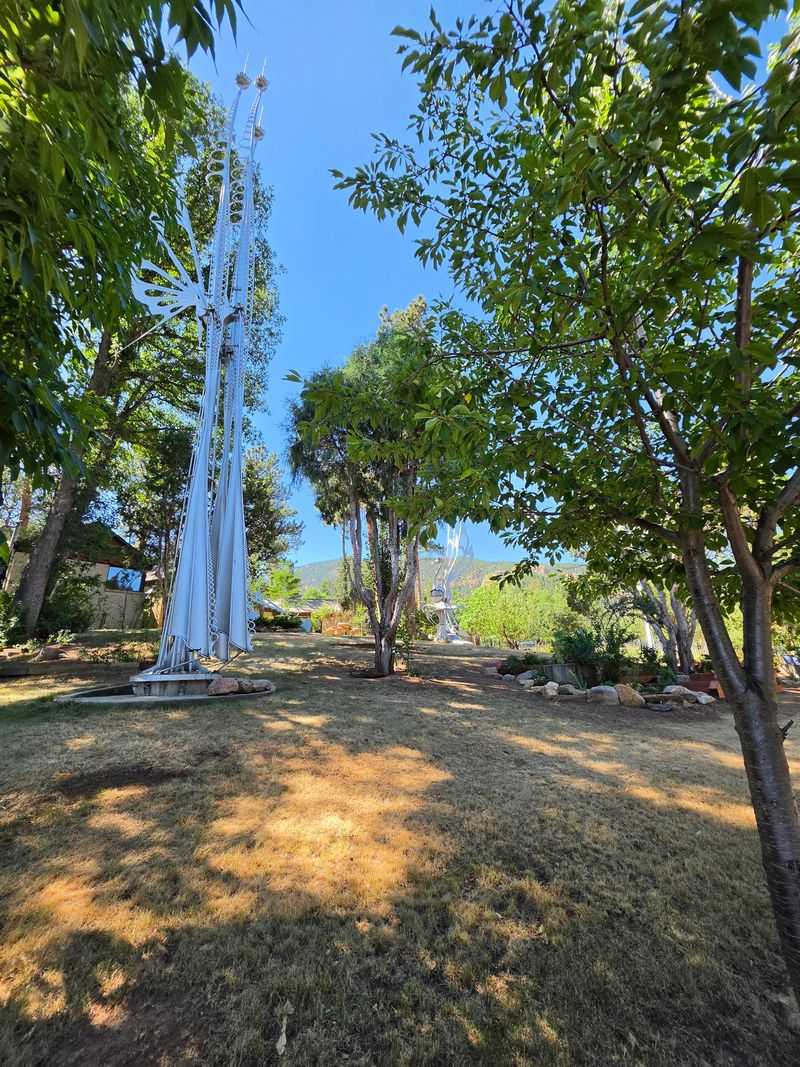
Other works lean abstract and futuristic. Long curved arms, geometric fins, and spire shapes suggest weather vanes reimagined by someone with a wild imagination.
His monumental sculptures relied on carefully engineered moving components and extensive knowledge of metalworking and bearing surfaces.
Their scale and moving mechanisms required substantial knowledge of engineering, metalworking, and structural balance.
The pieces are welded from steel and aluminum, and the balance is precise enough that forms this large still pivot and turn in a light breeze.
Four of the roughly dozen monumental sculptures that once stood at the Pine Grove property remained there in 2024.
Fine metalwork and detailed edges become easier to study with magnification from the public viewing area.
A Gallery Without Walls
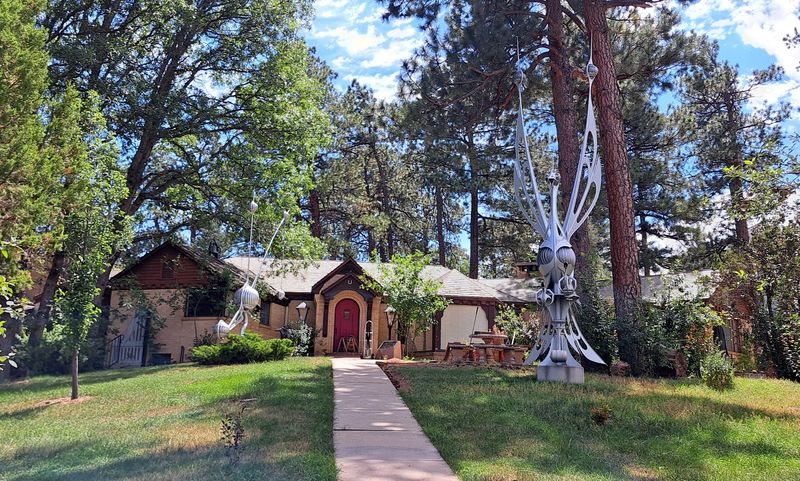
The remaining sculptures stand on private residential property and should be viewed only from the public street.
The artist did not sell his monumental sculptures during his lifetime, and many originally remained around his Colorado Springs home.
The sculptures were historically visible from the street, but the property is not a public museum or sculpture park today.
The unusual display turned a residential property into a well-known part of the town‘s art history. Visitors can view the remaining sculptures from the public street without entering the private property.
The property does not operate as a public museum, and visitors should not enter the grounds or expect formal tours.
Knowing that the sculptures are viewed from the street helps set the right expectations before visiting.
Pine Grove Avenue is a quiet residential block, and neighbor complaints about the crowds the sculptures drew were part of what led to the legal disputes in the first place.
Respecting the boundary matters enormously. Residents live here, and the art survives because people behave politely.
Inside An Inventor’s Imagination
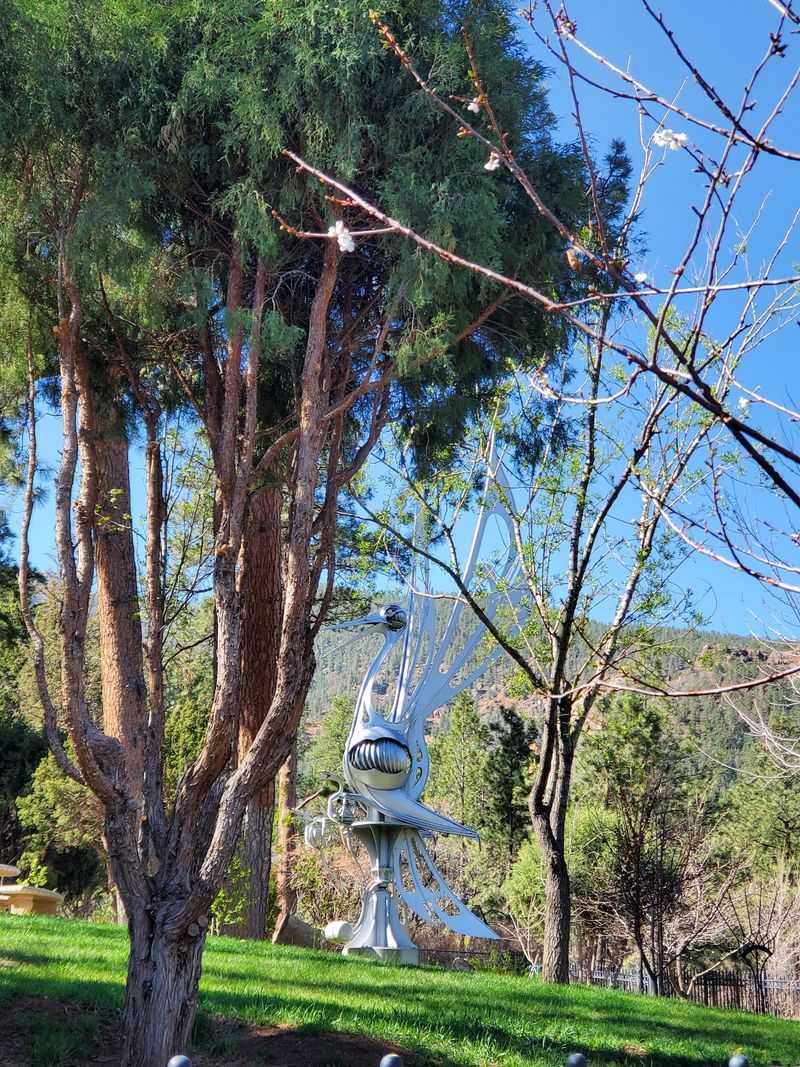
Bird forms, weather-vane shapes, and wind-driven engineering became recurring elements in his monumental sculptures.
His early family background in carpentry and blacksmithing helped develop craftsmanship and engineering skills before his formal art education.
His military service preceded decades of experimentation with bronze, steel, metalworking, and kinetic mechanisms.
His kinetic sculptures were designed to interact visibly with wind and the surrounding landscape.
His body of work included both recognizable birdlike forms and more abstract wind-driven structures.
That philosophy explains the abstract shapes mixed among the birds. Ambiguity was intentional, not accidental.
From the street, moving parts can change how a sculpture appears as its orientation shifts with the wind.
Some monumental sculptures took as long as three years to complete. Most of the monumental works stand somewhere between thirty and fifty feet tall, which is why they register from well down the block.
He fabricated them himself in a home garage he had converted into a foundry and workshop, welding the steel and aluminum in his own yard.
The sculptures can be observed from different angles from the public street without entering the property.
How To Visit Without Hassle
The Pine Grove Avenue site is private residential property, not a ticketed attraction. There is no public admission or formal tour access.
Use only legal public parking in the area and avoid blocking residential driveways or traffic.
Because the sculptures stand in a residential neighborhood, park legally and keep the visit brief enough to avoid disrupting nearby homes.
No official public viewing hours are published because the Pine Grove Avenue property is a private residence.
Treat the Pine Grove stop as a brief roadside viewing opportunity rather than a conventional attraction with grounds to explore.
Pair it with nearby attractions for a fuller morning. Cheyenne Mountain Zoo and Garden of the Gods sit within easy reach in Colorado Springs.
Wind is necessary for the kinetic elements to move, while direct sunlight can make the metal surfaces more reflective.
Stay on the public street, respect the private-property boundary, and avoid creating unnecessary noise or traffic.
Expect a roadside view of monumental sculptures on private property rather than a walk-through sculpture park.
Where Else His Work Lives
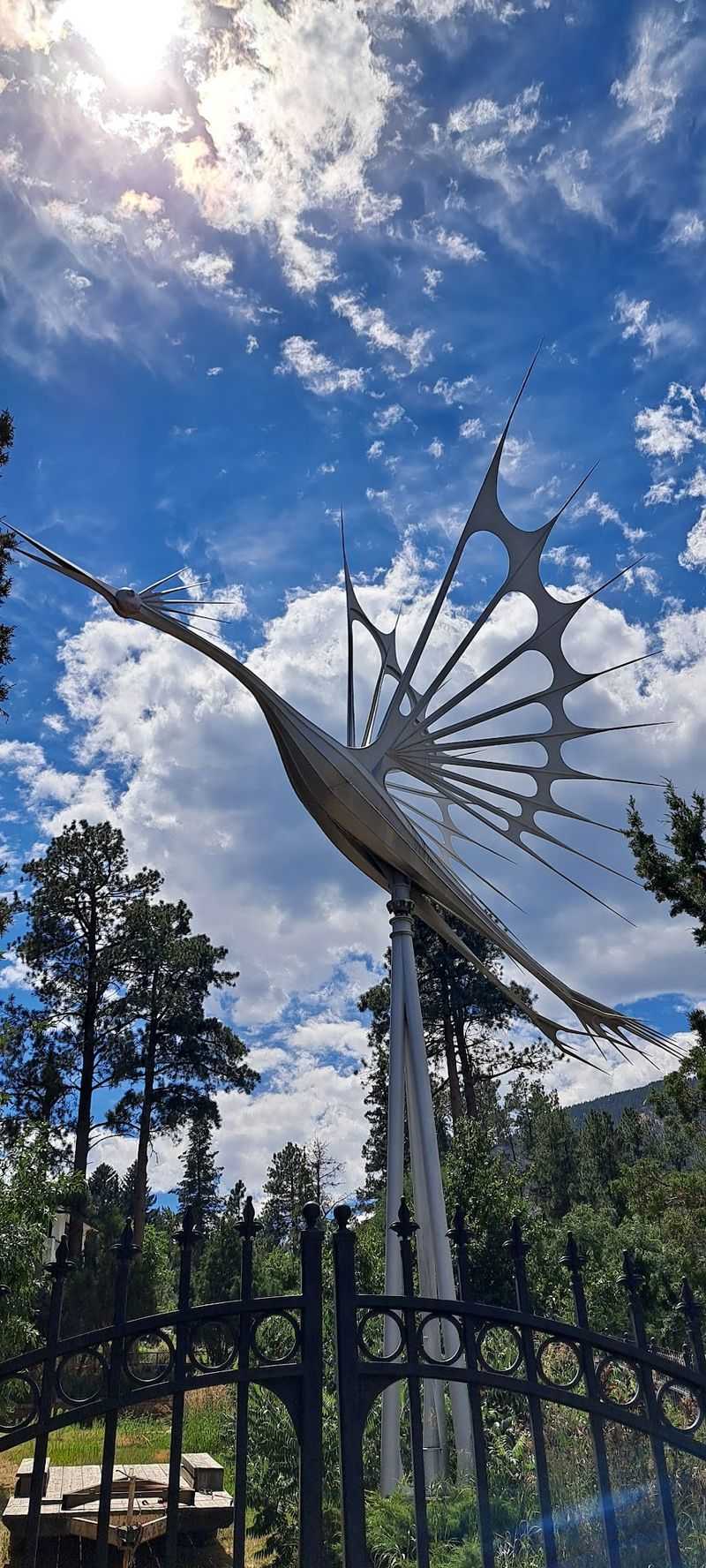
Legal and zoning disputes after the artist’s death eventually led to several sculptures being removed from the Pine Grove property.
Several relocated sculptures can now be seen in public settings around this town.
Sunrise Serenade, Metronome, and Space Needle are displayed outside the Ent Center for the Arts at UCCS.
Sunrise Serenade, Metronome, and Space Needle are on an extended outdoor loan at the Ent Center through 2034.
Additional kinetic sculptures are displayed along the Creekwalk development and Cheyenne Creek path in the Ivywild area. A pendulum-based Kempf sculpture was also installed at Plaza of the Rockies in downtown part, which adds a third public stop to the route.
A citywide route can combine the original Pine Grove property with the public installations at UCCS and Creekwalk.
Building a half-day loop is simple. Start at the Pine Grove Avenue property, then head toward the campus and Ivywild.
The UCCS and Creekwalk installations provide public settings where the relocated works can be viewed without the private-property restrictions of Pine Grove Avenue.
Why The Legacy Still Turns
Some art hangs still forever. These pieces refuse, changing shape with every shift in the air.
Time becomes part of the artwork here. Arrive twice and you witness two different performances, which is rare for outdoor sculpture.
The sculptures remain visible across several Colorado Springs locations, including the original Pine Grove property, UCCS, Creekwalk, and another downtown installation.
The sculptures have attracted attention beyond their original residential setting and are now displayed at several locations around Colorado Springs.
The outdoor setting means wind, trees, changing weather, and moving steel can all affect what is visible during a visit.
The monumental sculptures remained visible from the street for decades before several were relocated to public sites around the city.
Starr Kempf’s Kinetic Sculptures challenge what a gallery is supposed to be. The sky serves as the ceiling and the wind handles the lighting.
On a breezy day, the remaining works offer a clear example of large-scale kinetic sculpture responding directly to wind.