This Free Nebraska Refuge Has A Wildlife Drive Where Bison Roam Past Your Car
Somewhere in northern Nebraska, a gravel road bends around a hill and a thousand-pound animal steps out in front of the hood like it owns the place. It does, more or less.
The land here looks like plain grass country until you slow down and start counting the animals in it, and then the whole drive changes character. Most people pass through this corner of the state on their way somewhere else, which is exactly why the ones who stop end up talking about it for years.
Where Cherry County Grass Meets A Bison Herd
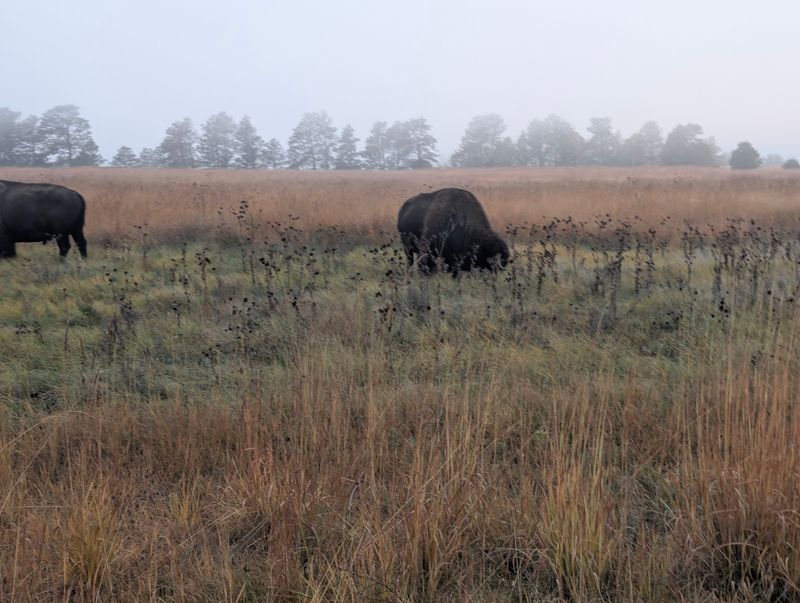
Gravel crunches, the grass runs to the horizon in every direction, and somewhere out in it about 350 bison are going about their day. Fort Niobrara National Wildlife Refuge sits five miles east of Valentine in Cherry County, right where the Sandhills start doing their strange rolling thing.
It is a federal wildlife refuge covering more than 19,000 acres of prairie, river bluff, and scattered woodland. The centerpiece for most people who come is a 3.5-mile self-guided wildlife drive that loops through bison range, close enough that animals regularly cross the road in front of vehicles.
Entry costs nothing. That is unusual for a place where you can watch a bull bison walk past your side mirror, and it is a big part of why the refuge draws people driving Highway 20 who had only planned on a quick stretch of the legs.
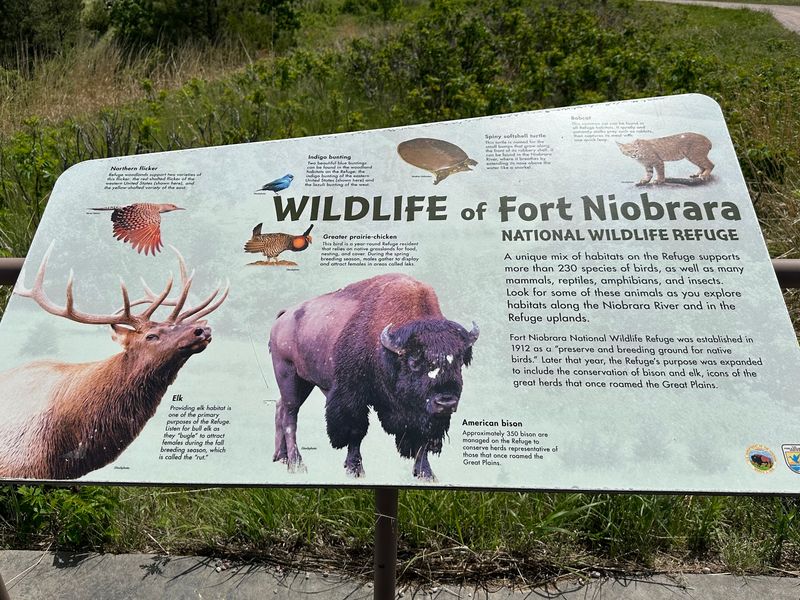
Prairie dogs, elk, deer, and grassland birds fill in the gaps between bison sightings. The Niobrara River cuts through the southern edge, adding water, shade, and a waterfall to what looks from the highway like ordinary rangeland.
A Frontier Army Post That Became Animal Country
Soldiers were stationed on this ground long before bison were welcome on it. The site operated as a frontier military post from 1879 to 1906, watching over the region during a period when the Great Plains were being carved up fast.
When the army moved on, the land sat without a clear purpose for a few years. President Theodore Roosevelt signed an Executive Order in 1912 turning the old post into a national reservation for wildlife, and later that same year the mission grew to include preserving bison and elk herds that once covered the plains by the millions.
The original idea was actually about birds. Native grassland and water birds were the first concern, and the big grazing animals came into the plan afterward, which explains why the refuge still feels like a birding place as much as a bison place.
Repurposed ground carries a certain weight. A parade ground turned pasture, a post road turned auto tour, and a herd standing where cavalry once did.
The 3.5-Mile Wildlife Drive
Half an hour is about right for the loop, though nobody finishes it in half an hour when the herd is near the road. The drive is self-guided, unpaved in stretches, and built for slow rolling with windows down and engine noise kept low.
Bison move where they want. Some days the herd grazes far out in the hills and binoculars earn their keep.
Other days a car ends up stopped in the middle of the road with animals passing on both sides, close enough to hear them breathing.
Staying inside the vehicle is the rule and the whole point. A car works as a rolling blind, and animals that would scatter from a person on foot barely glance at a quiet sedan.
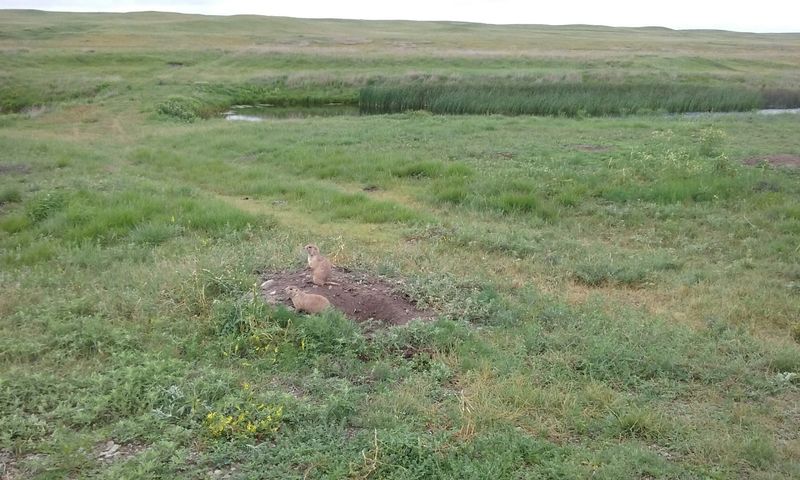
Prairie dog towns line parts of the route and deliver reliably even when the big animals are hiding. The little ones pop up right beside the road, chirp, and drop out of sight, which keeps kids entertained through the slow stretches.
Bison Up Close, Elk in the Distance
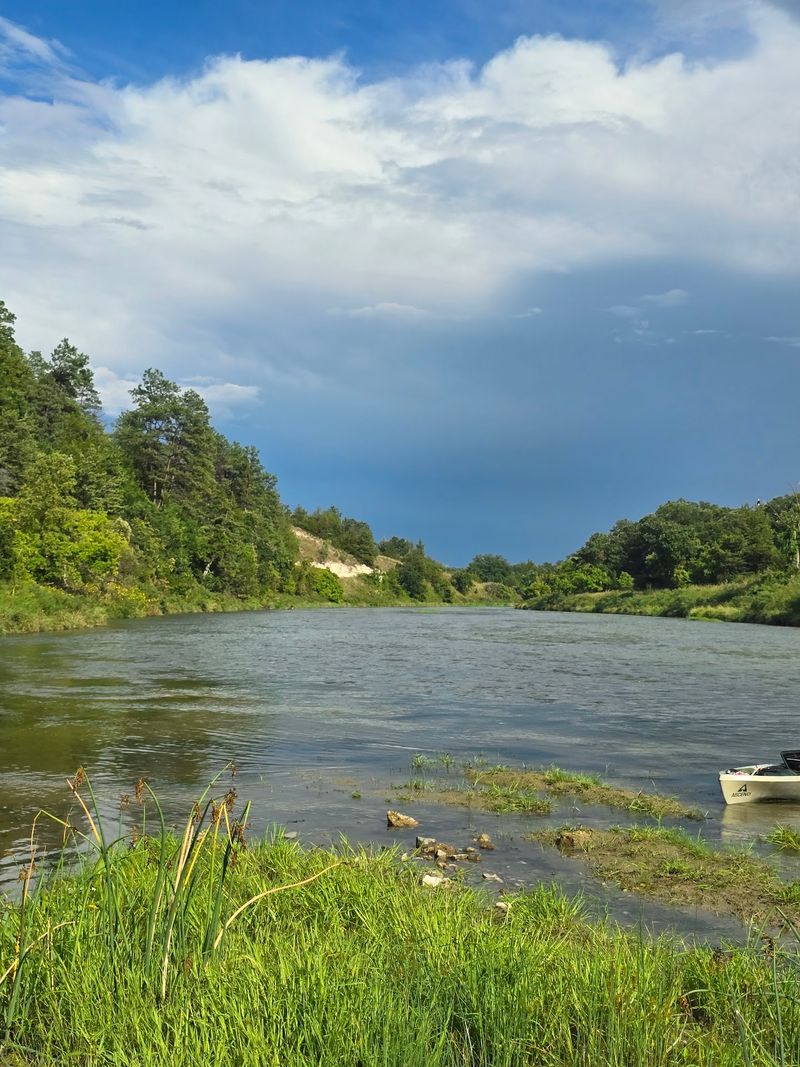
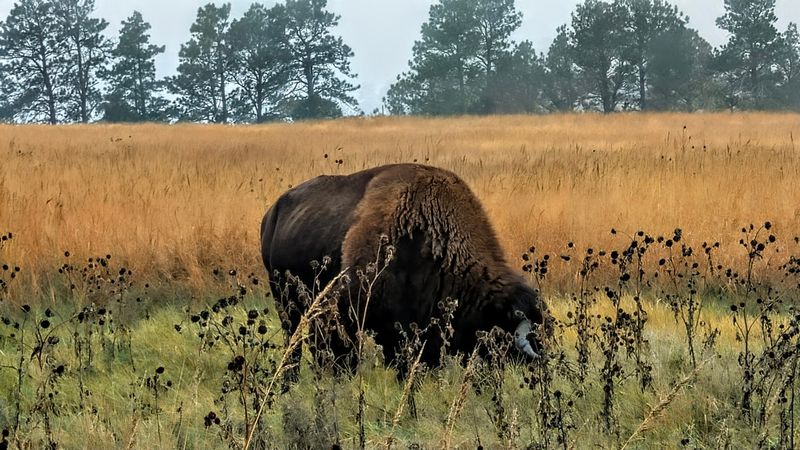
A grown bull can top a ton and still cross a road without hurrying for anybody. The refuge herd runs around 350 animals, descended from stock brought in to rebuild what had nearly vanished from the Great Plains.
Spring is the soft season. Calves show up rust-orange and wobbly, and the cows often keep them in the grassy areas near the visitor center before the whole group shifts to summer grazing ground later in May.
Elk share the refuge too, though they play harder to get. Dawn and dusk improve the odds, and a spotting scope or decent binoculars turn a distant brown smudge into a bull with a rack.
Nothing is guaranteed. Some drives produce a traffic jam of bison and some produce grass, wind, and a few meadowlarks, which is simply how wild animals operate on wild ground.
Keep a respectful distance, stay in the car within the bison range, and let the herd set the pace. They will move when they feel like it.
Fort Falls and the Walk Down to the River
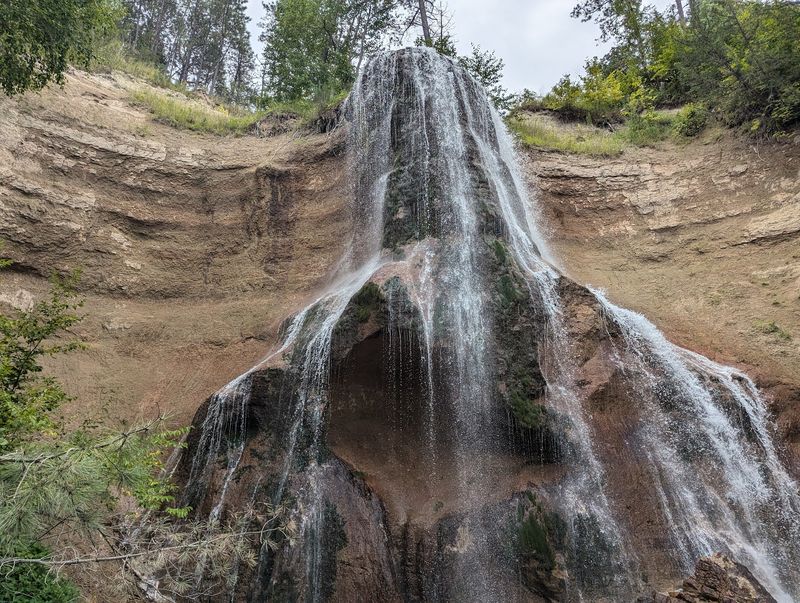
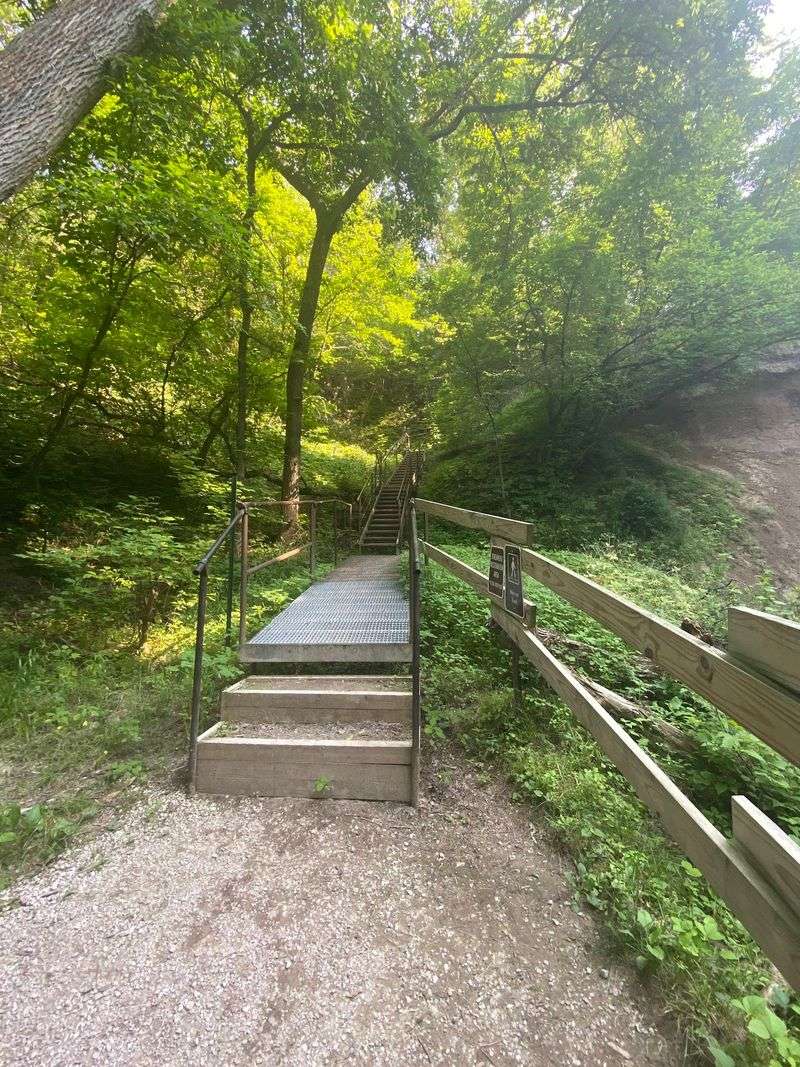
Waterfalls are not what most people expect from Nebraska, which is exactly why Fort Falls stops people cold. A three-quarter-mile trail drops from the bluff top down into a shaded canyon where spring water spills over a rock ledge into the ravine.
Wooden steps and boardwalk sections handle the steepest parts. The temperature drops noticeably as you descend, and on a blazing August afternoon that canyon air feels like walking into a different state.
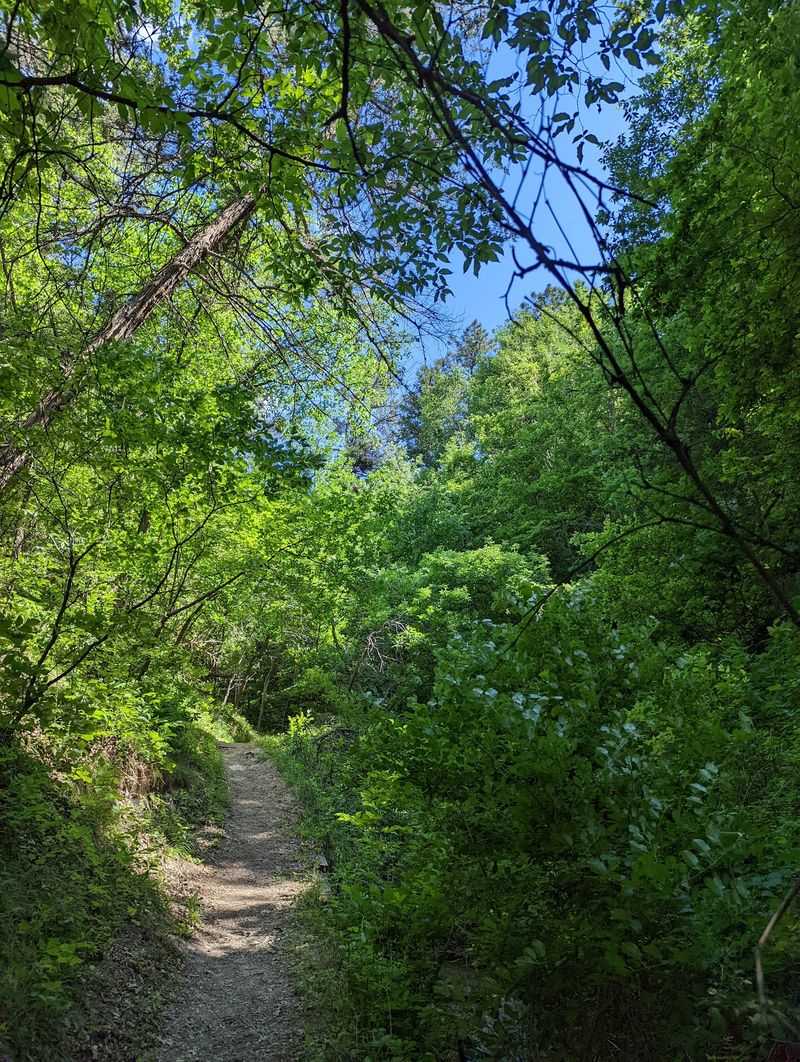
Ferns, cool-loving plants, and a mix of coniferous and deciduous trees grow in the ravine, remnants of a much older climate hanging on in the shade. Botanists get excited about this place for reasons that have nothing to do with bison.
The path continues toward the Niobrara River at the bottom, where the water runs shallow and clear. Cell coverage disappears down in the valley, so anyone splitting up should agree on a meeting spot before they start walking.
Climbing back out is the workout. Take water.
Nine Miles of the Niobrara National Scenic River
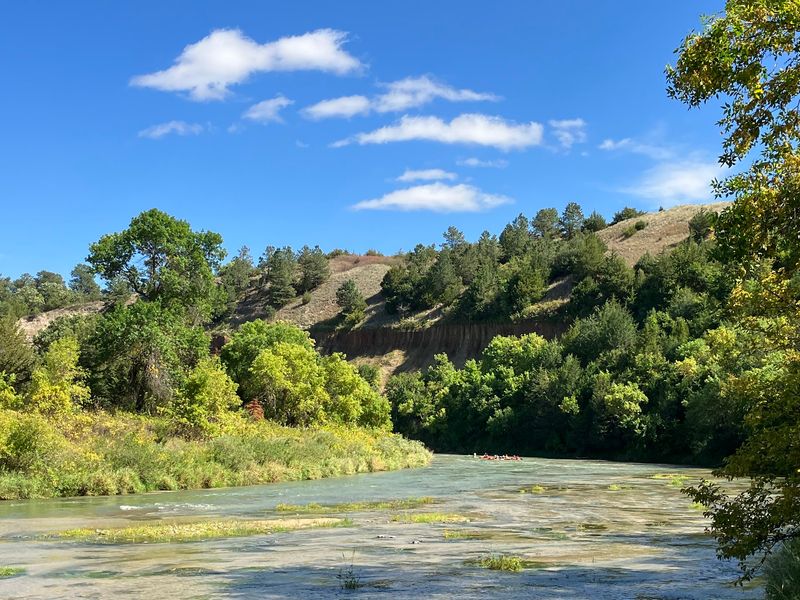
Nine miles of the Niobrara National Scenic River run straight through refuge land, and in summer that stretch fills with tubes, kayaks, and canoes drifting past sandbars. The current does most of the work.
Fort Niobrara serves as one of the access points where paddlers and tubers can put in, with common takeouts downstream at Smith Falls and Brewer Bridge. A small per-person fee applies for river access at the refuge, separate from the free entry to the wildlife drive.
Water levels stay generally shallow and friendly, with spots calm enough for small children to splash near the bank while adults keep a hand nearby.
Outfitters in and around Valentine handle rentals and shuttles for anyone who did not haul their own gear across the state. Rules and access details shift by season, so check with refuge staff before loading up the vehicle.
Floating past bluffs where spring-fed waterfalls leak out of the rock is a strange thing to do in the middle of cattle country. It happens here all summer.
Trails, Boardwalks, and Overlooks
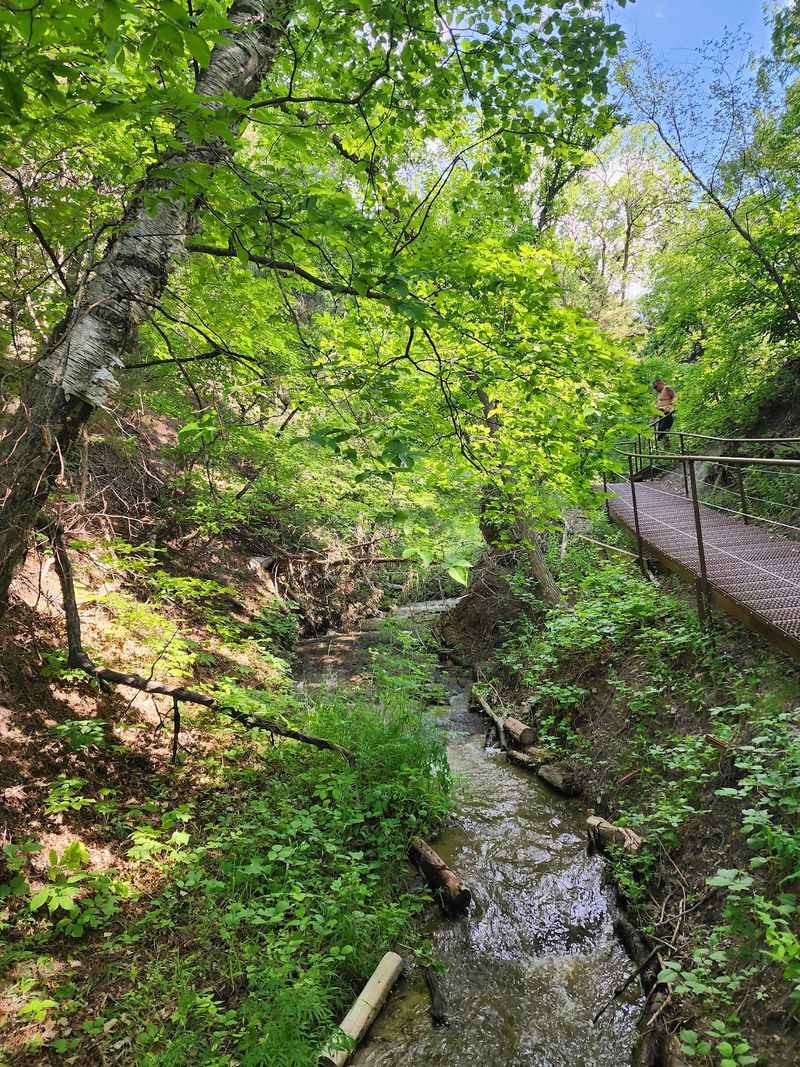
Beyond the auto tour, several footpaths branch across the refuge, ranging from short overlook strolls to longer routes along the river bluffs. Boardwalks carry hikers over the fragile spots and observation decks frame the valley.
Terrain changes fast here. Sandhills prairie on top, ponderosa pine on the north-facing slopes, hardwood forest in the ravines, and marsh near the water, all inside a few hundred vertical feet.
That collision of habitats is why the area supports such an unusual mix of plants and animals for this latitude. Eastern and western species overlap in a narrow band along the river, and the refuge sits right in the middle of it.
The loop near the falls and the river gets the most foot traffic, and it earns that. Views open up over the canyon from several points along the way.
Sturdy shoes beat sandals on the steps, and ticks are part of prairie life in warm months, so a quick check afterward is smart practice.
Inside the Visitor Center
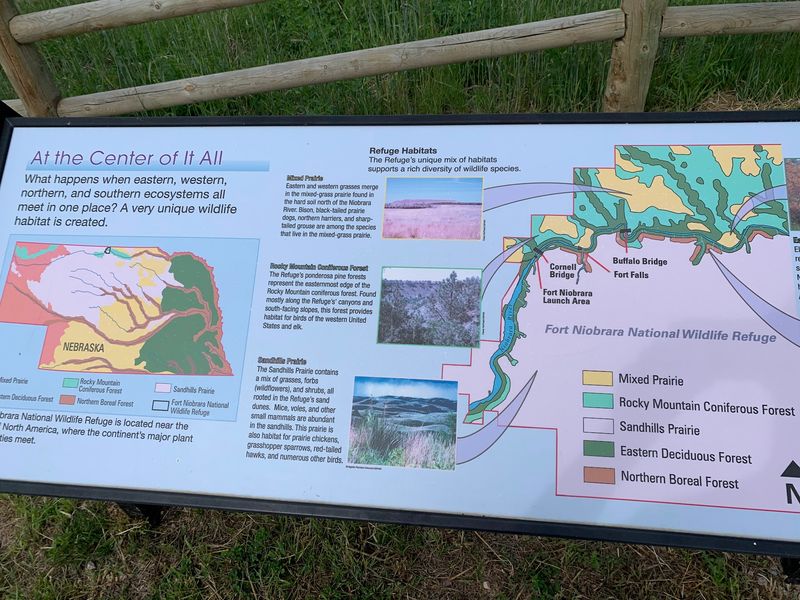
Twenty minutes is roughly what it takes to work through the exhibits, and those twenty minutes make the rest of the day better. Displays cover the refuge’s history as a military post, the rebuilding of the bison herd, and the odd ecology of the Niobrara valley.
A small gift shop sits inside, along with staff who will tell you where the herd was seen that morning. That single piece of information can change how you drive the loop.
Rangers here are approachable and generous with directions, trail conditions, and which overlook is catching good light. Ask about river access rules too, since those come with their own details.
Restrooms and maps are available at the center, which matters because services thin out quickly once you leave Valentine.
The building keeps weekday hours and closes on weekends, and it shuts down in the late afternoon. Plan a morning or midday arrival, and confirm before driving out, because federal schedules shift with the season.
Picking Your Season on the Sandhills Calendar
Late spring brings calves, green grass, and prairie wildflowers spreading color across ground that spends half the year in shades of tan. Bison often stay near the visitor center area before moving to summer range in the second half of May.
Summer is river season. Mid-August tends to deliver warm water, workable weather, and lighter traffic than the July peak.
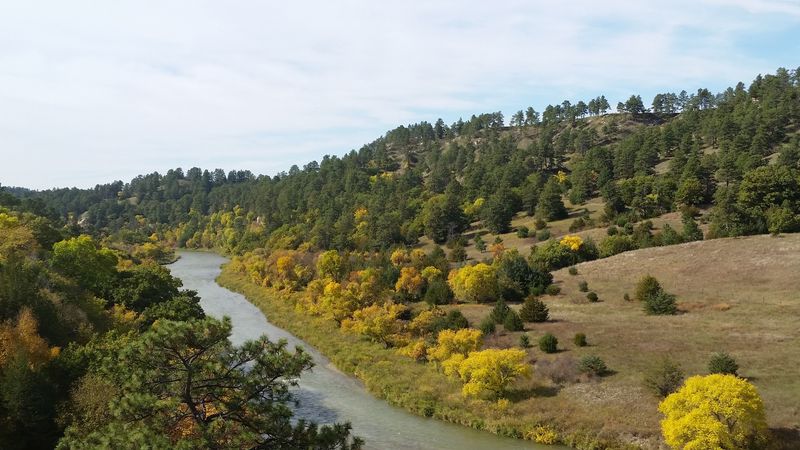
Autumn turns the ravine hardwoods and cools the hiking down to something pleasant, with elk more active as the season progresses. The low golden light across the hills makes the drive photograph beautifully.
Winter strips everything back. Bison are easier to spot against snow and bare grass, though the wind out here does not negotiate and services shrink considerably.
Weekdays run quieter than weekends anytime, and early mornings put you on the loop when animals are still moving before the heat settles in.
Whatever month you pick, pack binoculars. The difference between a memorable drive and a disappointing one is often just magnification.
Getting There and What to Bring
The refuge entrance sits at 39983 Refuge Rd, Valentine, NE 69201, about five miles east of town off Highway 12. Valentine itself is a long haul from anywhere, which is part of the appeal and part of the planning problem.
Fill the tank before heading out. Cell service drops off in the river valley, so download maps ahead of time rather than trusting a signal that may not be there.
Entry to the refuge and the wildlife drive costs nothing. River access carries a small per-person charge, and there is no camping on refuge grounds, so overnight stays mean Valentine or nearby state recreation areas.
Pack binoculars, water, sun protection, and shoes that handle wooden steps and loose dirt. A cooler helps, since there is no food service out here.
Set aside two to three hours for the loop, the visitor center, and the walk to Fort Falls. Give it a full half day if the river is on the agenda.
Why This Stop Sticks With People
Free admission, a waterfall, a bison herd, and a scenic river inside one property is a lot to fit into an afternoon in a county most people only cross on their way to the Black Hills.
There is no theatrical element to it. No fences designed for photographs, no feeding stations, no guaranteed sighting.
The animals are out there living on 19,000 acres and they will show themselves or they will not.
That uncertainty is what makes the good days land so hard. Being the only car on the loop with the herd moving around you is not something a zoo can manufacture.
Families with young kids get the prairie dogs, hikers get the canyon, and anyone who just wants to sit in a car and look at grass and sky gets plenty of that too.
For Nebraskans within a few hours of Cherry County, it is one of the strongest arguments the state has for spending a Saturday in the car. Check hours, bring the binoculars, and go slow.