This Nebraska Flower Farm Lets You Pick A Whole Cup Of Flowers For $17
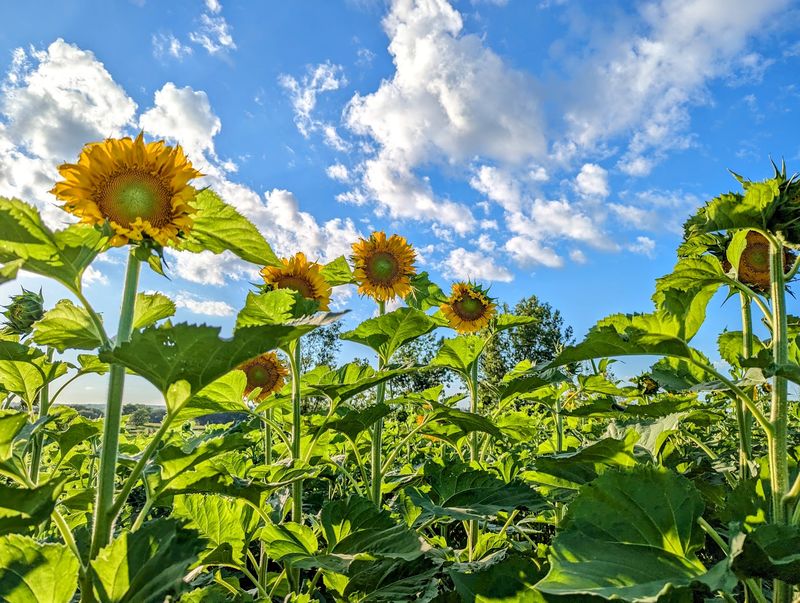
There’s a gravel road in eastern Nebraska where the corn suddenly stops and the color starts. One minute it’s soybeans and sky, the next it’s rows of sunflowers, cosmos, and snapdragons tall enough to brush your elbows.
No ticket booth, no inflatable slide, no line of cars idling in a field. Just a cup, a pair of snips, and permission to cut whatever makes you happy.
A Cutting Field on Davey Road
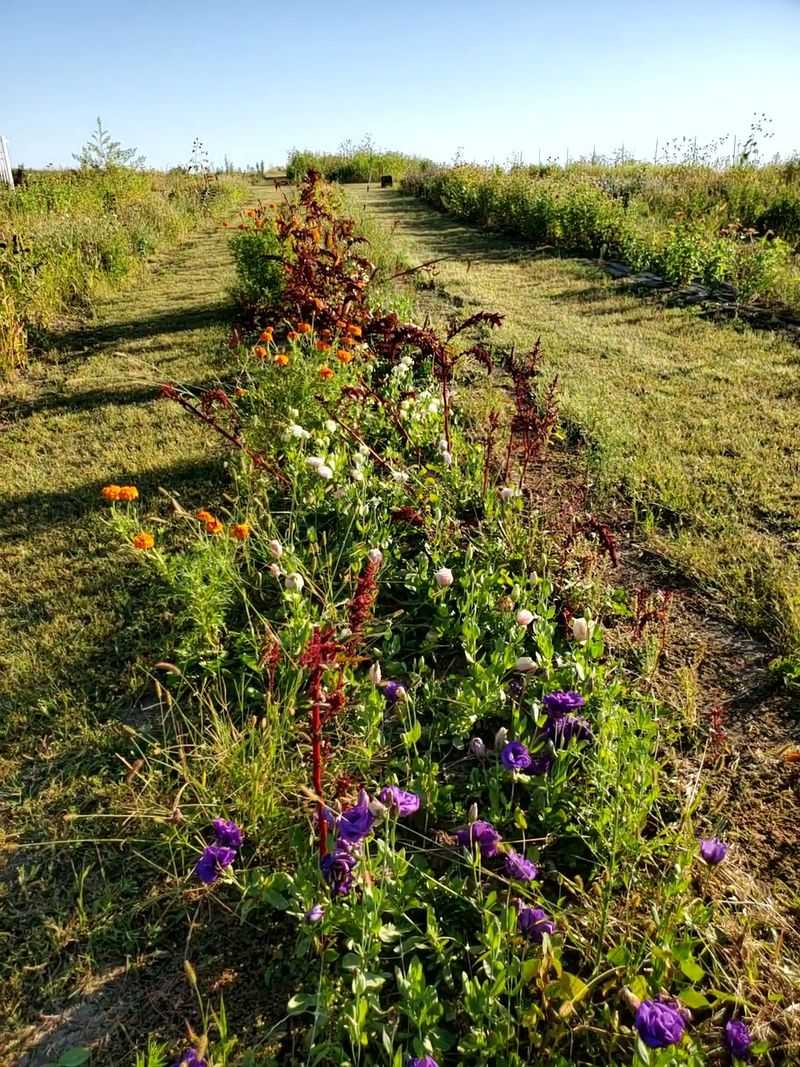
Rows of blossoms sit in tidy lines on a working family farm north of Lincoln, in the stretch of Saunders County where Davey Road runs between crop fields and grain bins. SR Pumpkin & Flower Farm grows flowers for cutting rather than for looking at from a distance, which means the rows are spaced wide enough to walk and the plants are tall enough to disappear into.
Google Maps files it simply as a garden, which undersells it. In practice it’s part farm stand, part flower field, part pumpkin patch, depending entirely on which month you show up.
The operation started small. One longtime pattern shows up in the farm’s own history: a folding table, a lawn chair, and a cash box were once the whole retail setup, and the flowers did the rest of the selling.
What draws people back is the arrangement itself. You pay for flowers, not for entry, and the field does not charge you extra for wandering.
That structure shapes the entire visit, and it’s why the place has a reputation that stretches well past the county line.
From a Card Table to a Cup-Filling Tradition
Growth here happened quietly, one season at a time. Regulars who have been coming for years remember the early version of the farm, when the checkout was a small table with a lawn chair beside it and the owner handled every transaction herself.
Sara, who runs the place with her family, still does much of the greeting, the explaining, and the pointing toward whichever rows are peaking. Comment after comment circles back to her kindness and her knowledge of what’s blooming.
The shift from card table to established destination didn’t come with a rebrand or a maze of attractions. Instead the farm added seasons: tulips in spring, cutting flowers through summer, pumpkins and gourds and mums in fall.
That layering is what turned a single stop into a repeat habit for families who now come twice a year, once for stems and once for squash.
Farms in this part of Nebraska change hands or fold into larger operations all the time. Watching one grow the opposite direction, slowly and on its own terms, is part of the appeal.
The Cup System, Explained
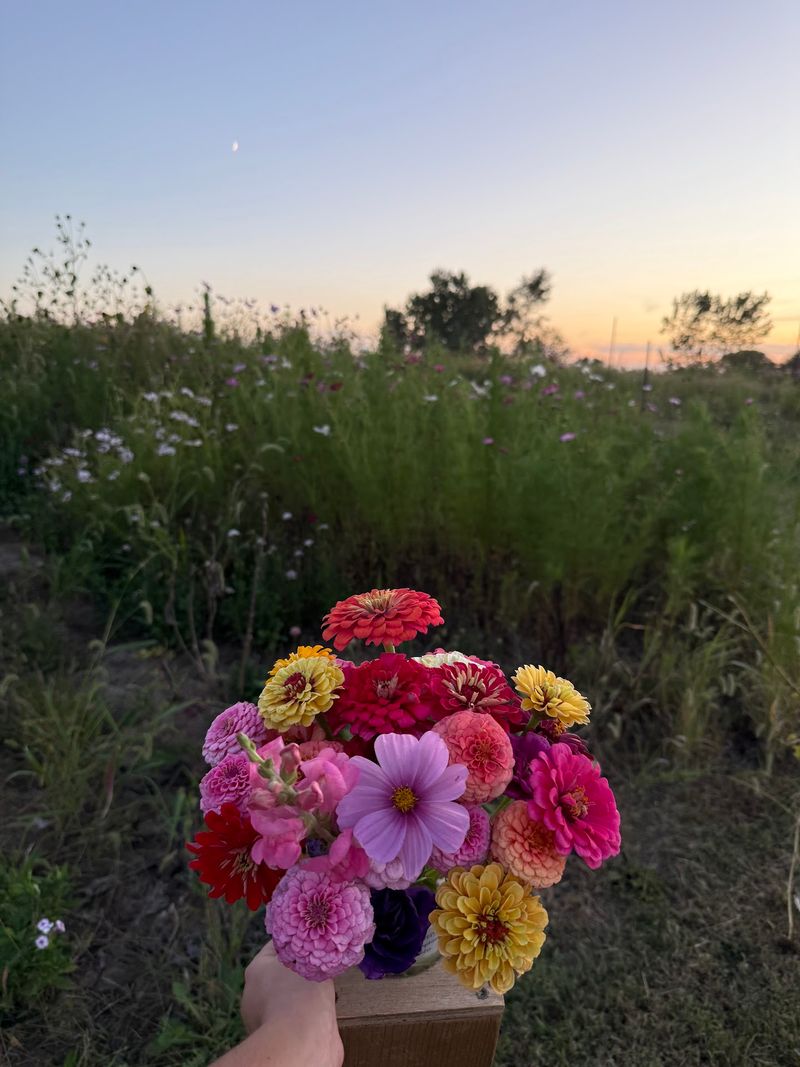
Seventeen dollars gets you a cup. That’s the whole pricing concept, and it’s refreshingly hard to overthink.
Before you head into the rows, someone walks you through how it works: where to cut, how long to leave the stems, which sections are open for picking that day. Then the field is yours, and you fill the cup until it will not hold another stem.
A smaller child’s cup runs twelve dollars, so a parent and kid can each carry their own and negotiate over the good sunflowers separately. Snips and everything else you need are supplied on site, so there’s nothing to pack.
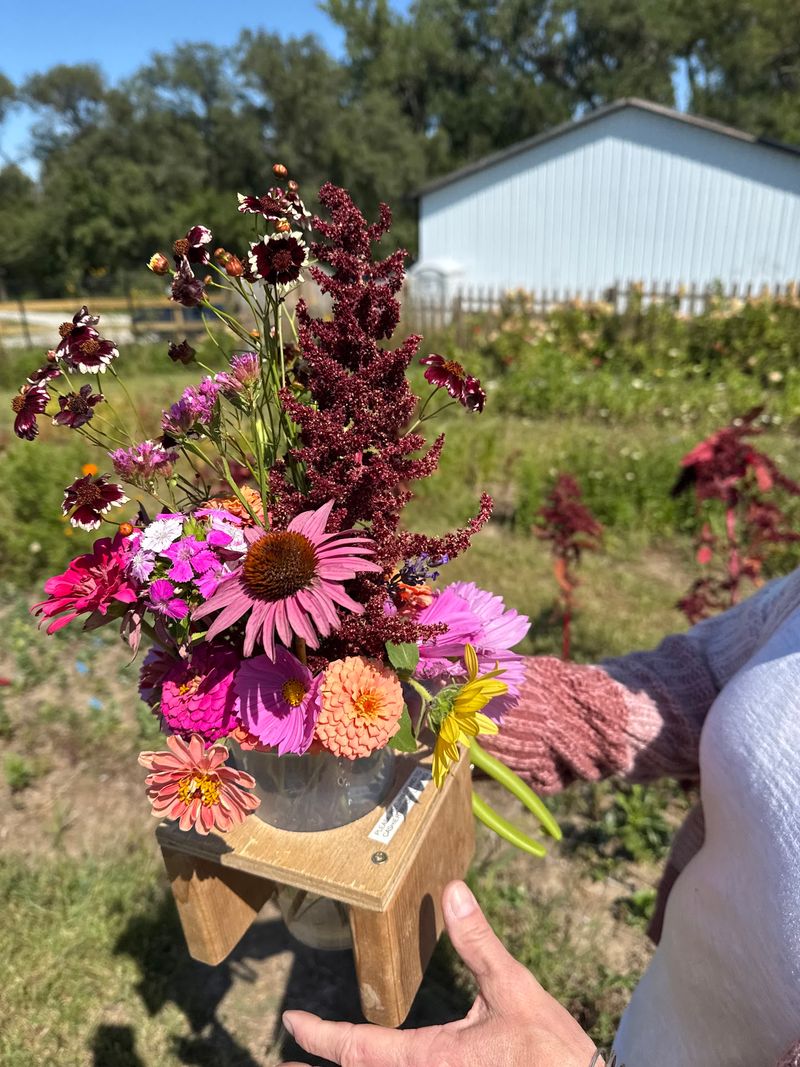
Because there’s no admission charge, the only money involved is money spent on flowers. A packed cup yields a bouquet considerably larger than what the same amount buys at a grocery store cooler, which explains why affordability comes up constantly in conversation about the place.
Prices and cup sizes can shift between seasons, so a quick check before driving out is smart. The system itself, though, has stayed satisfyingly simple.
Sunflowers, Cosmos, Daisies, and Snapdragons
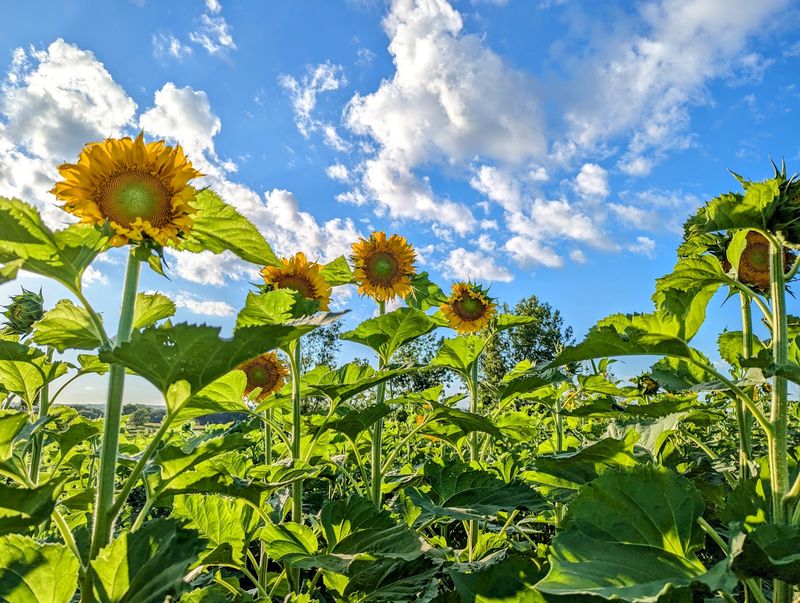
Sunflowers do the heavy lifting visually, standing head-high and turning the rows into corridors. Behind and between them, cosmos wave on thin stems, daisies hold their shape, and snapdragons add vertical color that makes a homemade bouquet look intentional.
Variety is the real draw. The planting mix changes as the season moves, so a cup cut in July looks nothing like one cut in September, and neither resembles a spring tulip haul.
Pollinators are part of the scenery. Bees work the blossoms steadily and butterflies drift through, which is what happens when a field is grown for cutting rather than sprayed into sterility.
Choosing is half the fun. Some people build a tight single-color cup, others go maximalist and cram in one of everything, and a few spend twenty minutes debating stem length like it matters enormously.
Fruit occasionally enters the picture too. Fresh apples and pears have turned up alongside the flowers, which makes for an odd and pleasant combination to carry back to the car.
Tulip Season Before the Sunflowers Arrive
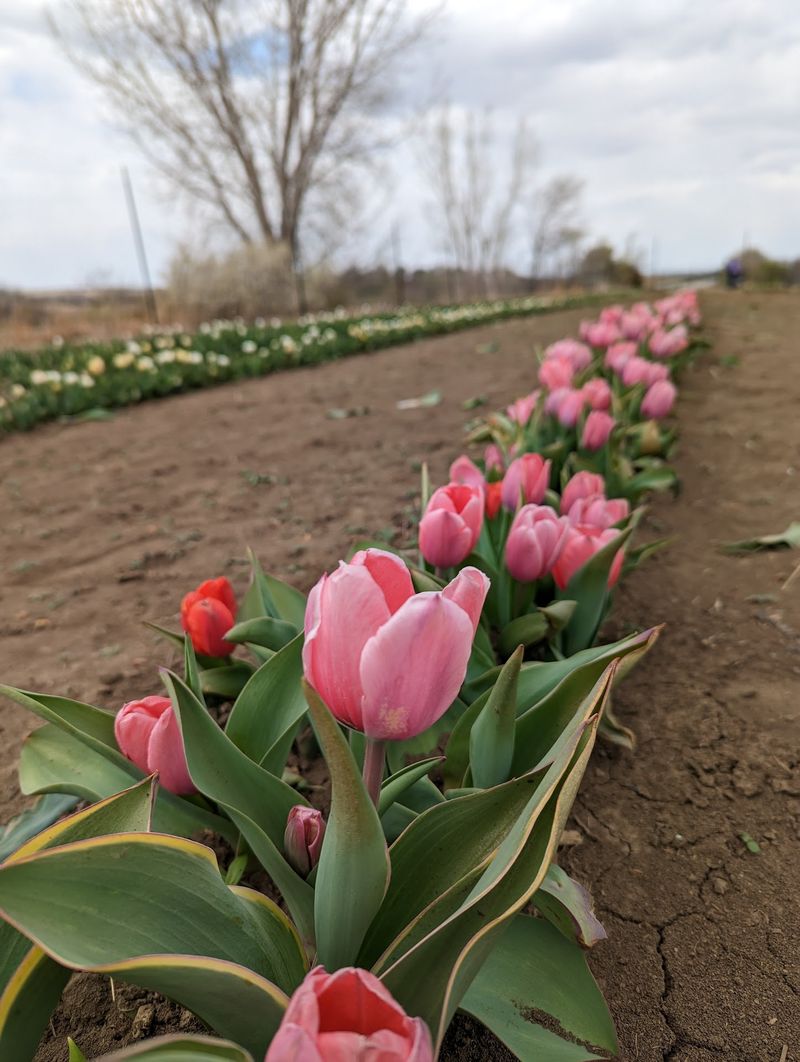
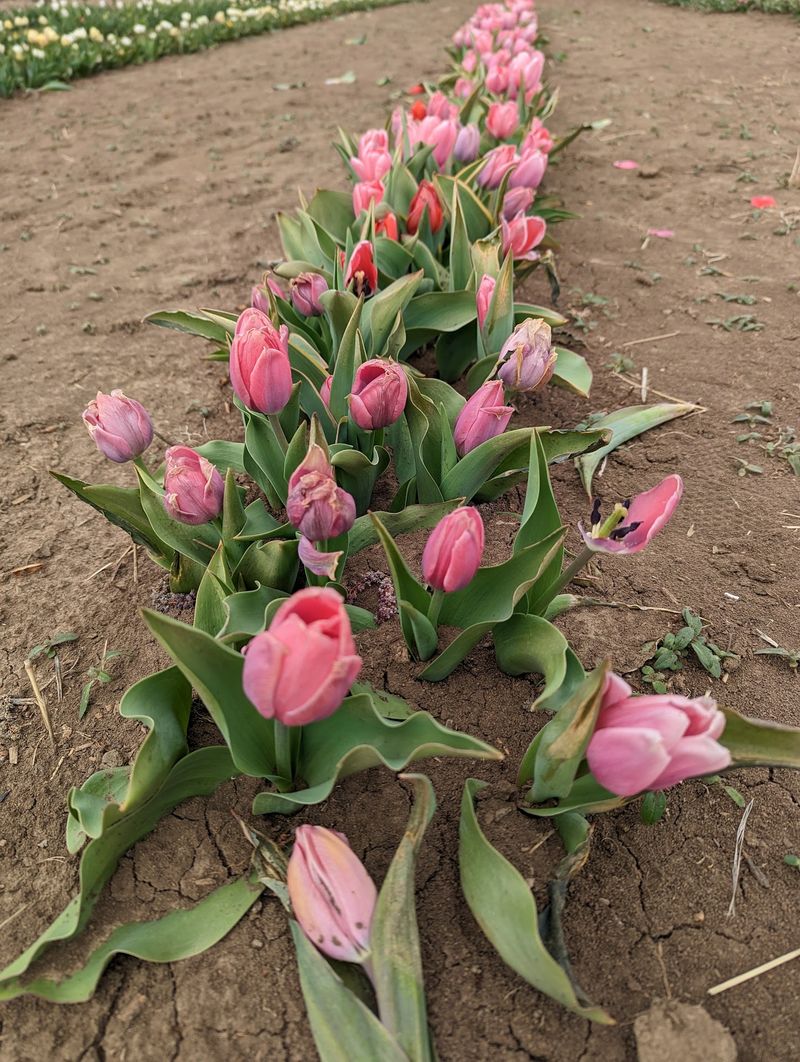
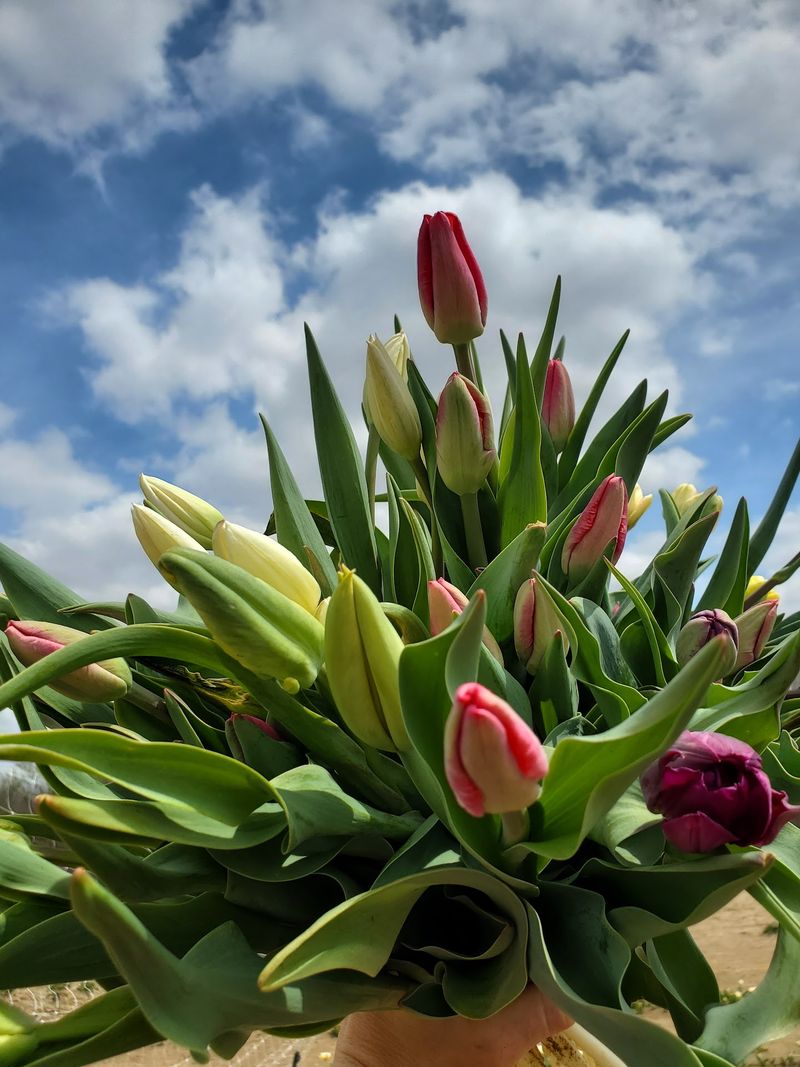
Spring flips the whole place into a different farm. Before a single sunflower shows up, tulips push through in bands of red, yellow, and pink, and picking them has become its own event on the calendar.
Tulip picking draws people who otherwise think of the property as a pumpkin destination. The rows are lower, the light is softer, and the whole field reads more like a Dutch postcard than a Nebraska crop field.
Timing matters more in spring than at any other point in the year. Tulips bloom on a short fuse, and a warm stretch can compress the window dramatically, so checking availability before driving out is the difference between a full cup and a locked gate.
Valentine’s-season flower orders have also been part of the operation, handled with flexibility when someone ordered late.
For anyone who has only visited in October with a wheelbarrow, the spring version is a legitimate surprise. Same gravel, same farm, completely different color palette and a much quieter crowd.
Wheelbarrows, Gourds, and the Fall Half of the Farm
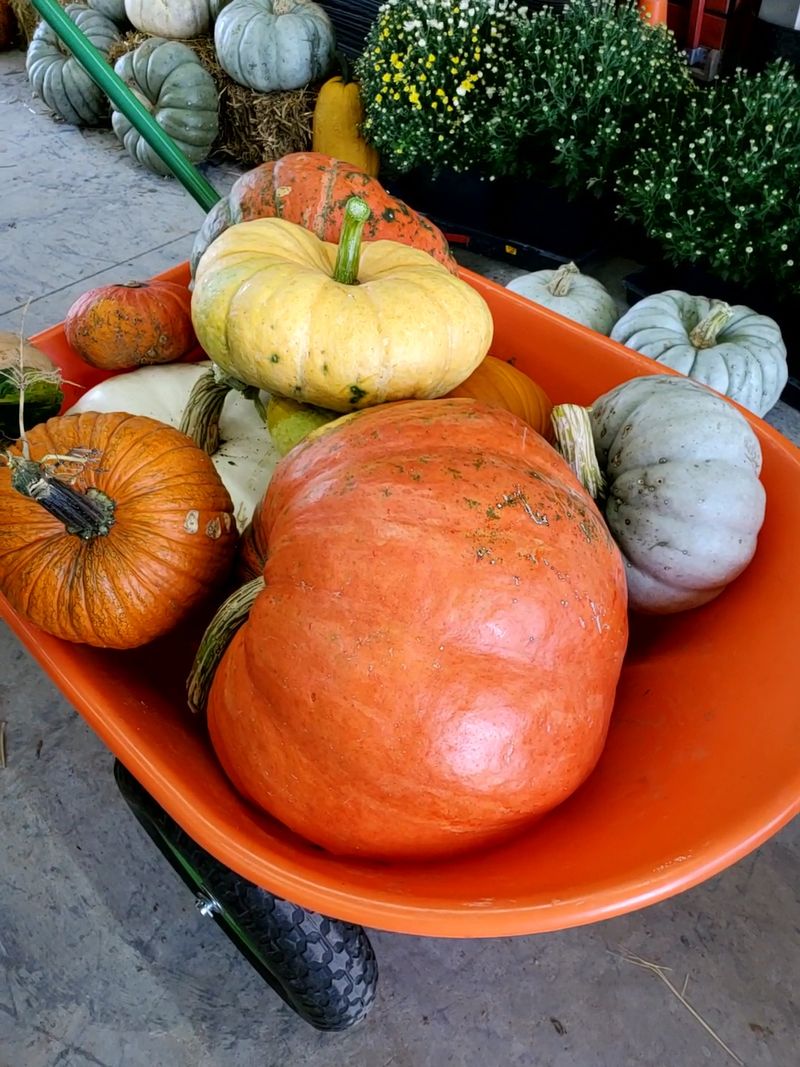
Grab a wheelbarrow and the entire visit changes character. In fall, the flower rows share the property with pumpkin fields, and finding your own squash out in the dirt turns into something close to a scavenger hunt for kids.
The range is wide: warty gourds, pale ghost-white pumpkins, deep orange classics, squat decorative varieties, and sizes running from palm-sized to two-arm-carry. Mums sit ready nearby.
If trekking through a field isn’t appealing, a shed holds pumpkins already cut and sorted, so you can load up without leaving the gravel.
Totals stay modest. A cart better than half full of pumpkins plus a couple of good-sized mums has landed under twenty-five dollars, which is a different universe from admission-gate pumpkin operations.
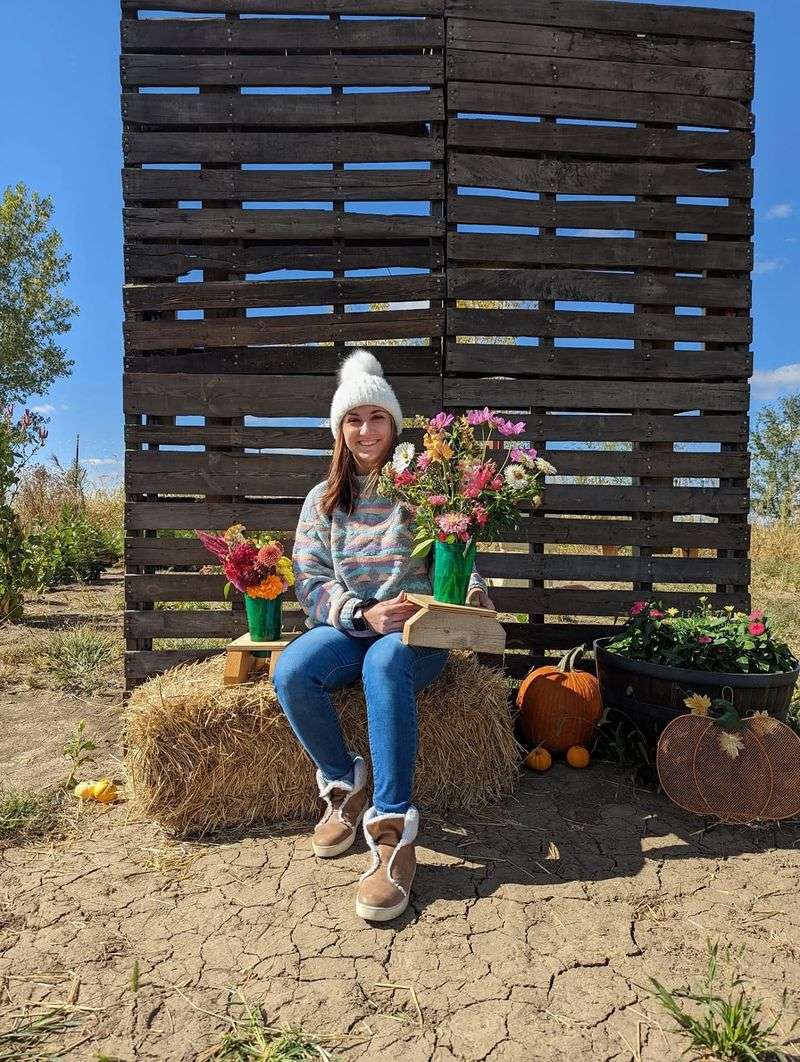
There are no carnival rides, no food midway, and no crowd funnel. Small photo setups are scattered around for anyone who wants a picture, and that’s about the extent of the extras.
Autumn is the busiest stretch, so a weekend morning beats a weekend afternoon if quiet is the goal.
Everything Supplied, Souvenir Cup Included
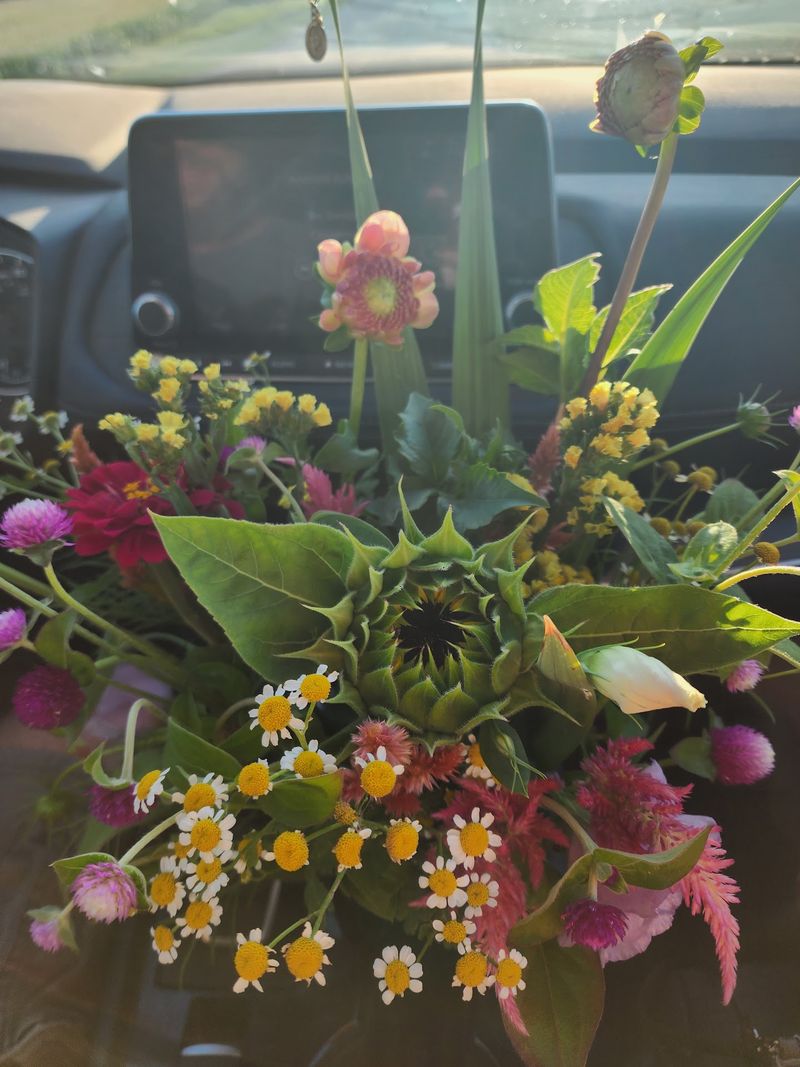
Nothing to bring, nothing to buy in advance. Snips, cups, and the instructions you need are all handed to you at the start, which removes the usual u-pick anxiety about showing up unprepared.
The cup itself goes home with you. It doubles as a vase for the ride back and as a keepsake afterward, which is a small touch that has quietly turned into a collecting habit for people who visit yearly.
Guidance up front makes a real difference. A quick explanation of where to cut and which rows are open means first-timers aren’t standing at the edge of a field guessing.
Practical notes worth planning around: the ground is farm ground, so closed shoes beat sandals, and the rows hold heat on bright afternoons. Water in the car is a good call.
For the drive home, a cup of stems sitting in a cup holder travels far better than a wrapped bouquet rolling around the back seat. Small logistics, but they’re the kind that make the outing feel effortless rather than fussy.
The Owner Who Remembers Your Last Visit
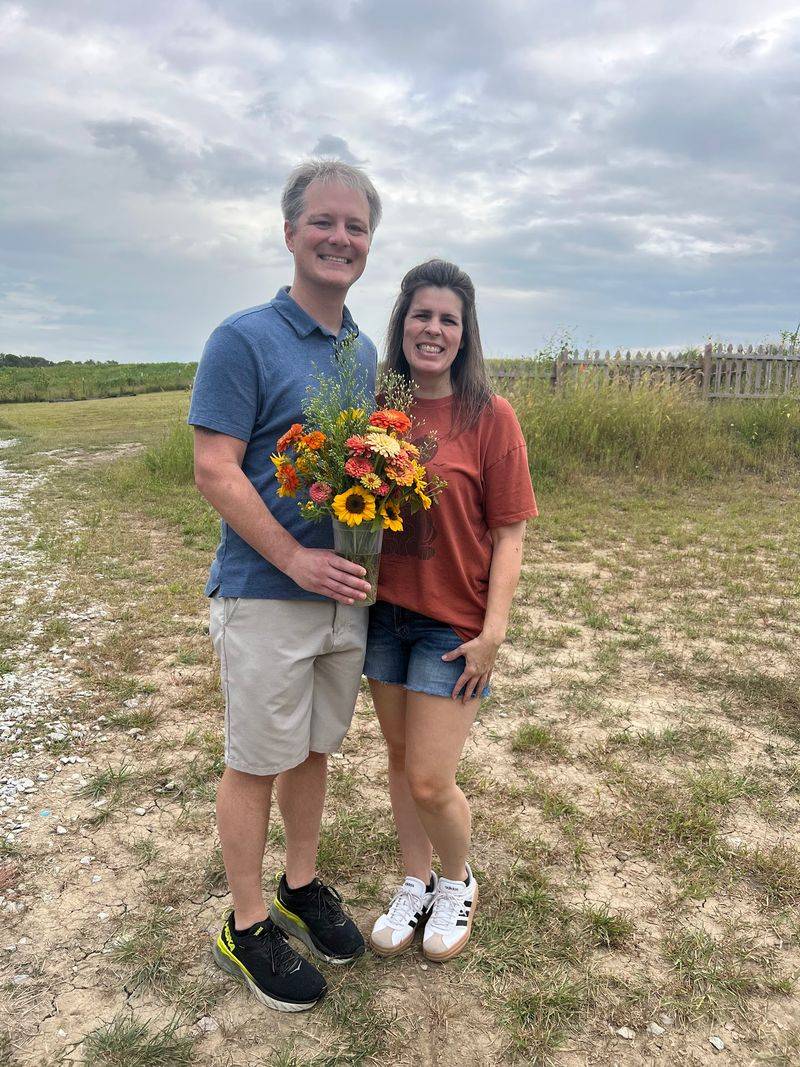
Kindness is the single most mentioned thing about this farm, and it traces back to one person. Sara runs the operation with her family, explains how the picking works, and answers plant questions with the depth of someone who planted every row herself.
She has extended herself well past the transaction. A late Valentine’s order got filled because she had extras.
Wedding plans have been mapped out on the farm with her help, ceremony setup included.
Conversation is part of the visit. Families end up chatting at the checkout table instead of hurrying through it, and that slower pace sets the tone for the whole property.
Nebraska has plenty of agritourism operations built around volume, where staff rotate and nobody knows the crop. Here the person taking your money is the person who grew what’s in your cup.
That continuity is why so many people describe repeat trips as a tradition rather than an errand. You’re not just buying flowers, you’re checking in on a field you’ve watched change.
Quiet Rows and Who They Suit Best
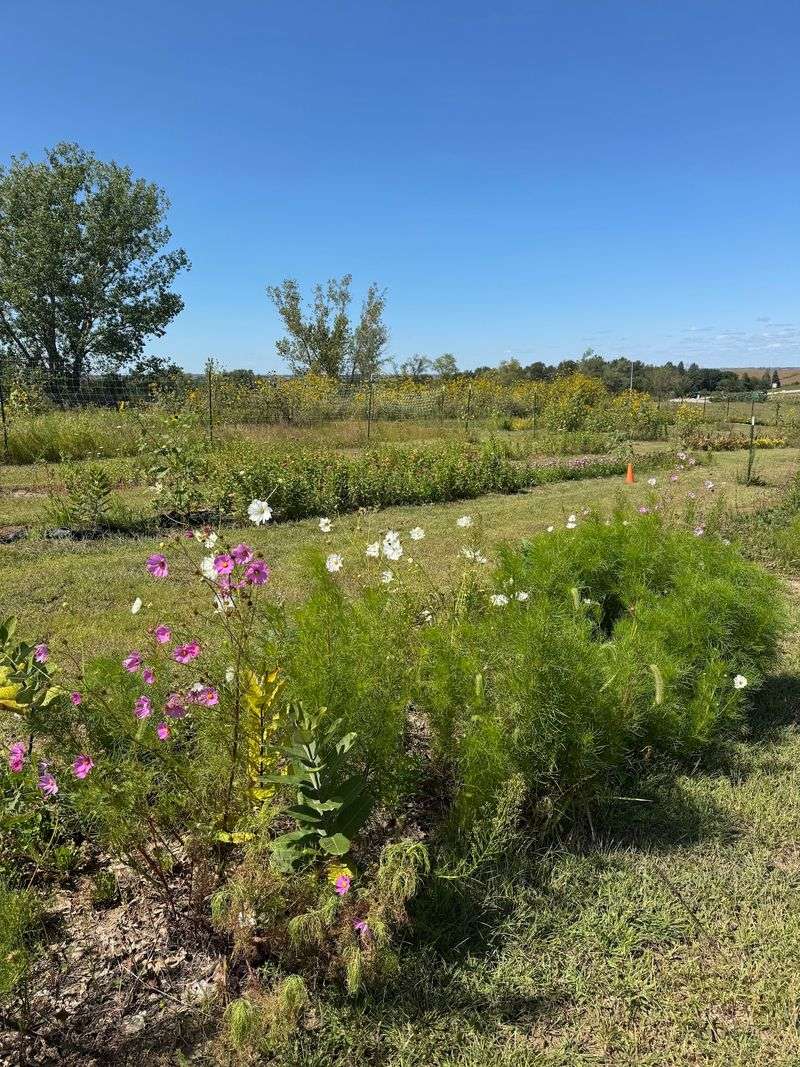
Stand in the middle of a sunflower row and the loudest sound is usually wind moving leaves. No music over speakers, no barker selling ride tickets, no announcements.
The quiet is the amenity.
That makes the field flexible. It works for a solo afternoon with no agenda, for a parent and child each filling a cup, for two people walking the rows slowly, and for a friend pair who have made it an annual outing.
Photographs happen naturally out here. Tall flowers, open sky, and small staged photo spots in fall mean nobody has to pose particularly hard to get a good picture.
Retirees and families land in the same sweet spot, since the appeal costs little and demands almost nothing physically beyond walking level farm ground.
Anyone expecting a full agritourism complex with corn mazes and concessions should recalibrate. The trade is straightforward: fewer attractions, far more room, and a bouquet in your hands at the end instead of a wristband on your wrist.
Timing Your Nebraska Flower Run
Seasons, not dates, govern this place. Tulips come first and vanish quickly, summer brings the long stretch of cutting flowers, and autumn shifts the focus to pumpkins, gourds, and mums before the field closes down for winter.
Weekends are when the farm is open, with the gate shut through most of the week, so this is a Friday-to-Sunday trip rather than a spontaneous Tuesday detour. Hours differ by day and by season.
Weather rules everything. A hard rain turns rows into mud, a hot streak accelerates blooms, and an early frost ends the flower half of the year abruptly.
Checking the farm’s current updates before loading the car is the single best habit here, since what’s open for picking changes week to week.
For flowers at their fullest, aim for the heart of summer. For the wheelbarrow experience, October.
If you want both in one year, that’s exactly what a lot of families already do, treating the two visits as separate rituals with separate payoffs.
Getting There From Lincoln or Omaha
Interstate 80 and Highway 77 put this farm within easy reach of both of Nebraska’s biggest cities. From Lincoln it’s a short run north, and from Omaha it’s a manageable westward drive, making it a half-day outing rather than a road trip.
The address is 5811 Davey Rd, Ceresco, NE 68017, sitting in Saunders County just off the corridor between Lincoln and Wahoo.
Gravel is part of the approach, so take the last stretch slowly, especially after rain. Parking happens on the property, informally, the way it does at most working farms.
Mapping apps handle the address fine, but cell service out here can be patchy enough that pulling directions before you leave town saves a headache.
Ceresco itself is small, and the drive out passes the kind of scenery that makes the trip part of the point: crop rows, windbreaks, grain bins, and an enormous sky. Anyone who has driven Highway 77 north out of Lincoln has been within a few minutes of this field without knowing it.
Why the Cup Keeps People Coming Back
Seventeen dollars and an hour of wandering produce an armload of flowers and a cup you’ll keep. Hard to argue with that math.
What makes the farm stick, though, isn’t only the price. It’s the combination of a family that greets you personally, a field grown for cutting, a spring tulip window, a fall pumpkin hunt, and no admission gate standing between you and any of it.
Two visits a year has become the pattern for plenty of households in Lancaster and Saunders counties, and the reason is simple: the farm offers two genuinely different experiences on the same gravel road.
Expect farm conditions, limited open days, and a season that ends when Nebraska weather says so. Plan accordingly and check ahead.
Bring closed shoes, bring water, bring somebody to argue with about sunflower selection. Leave with more color than your kitchen table can reasonably hold.
Some outings are impressive once. A flower field you can cut from yourself, for the cost of a sandwich and a soda, tends to become a habit instead.