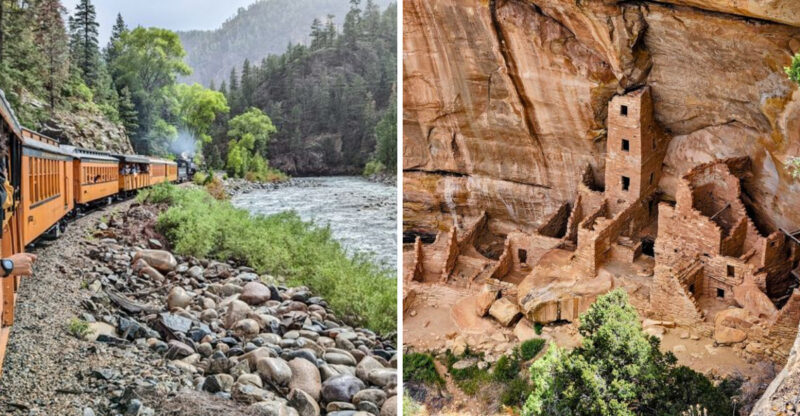
12 Memorable Colorado Day Trips To Take Month By Month
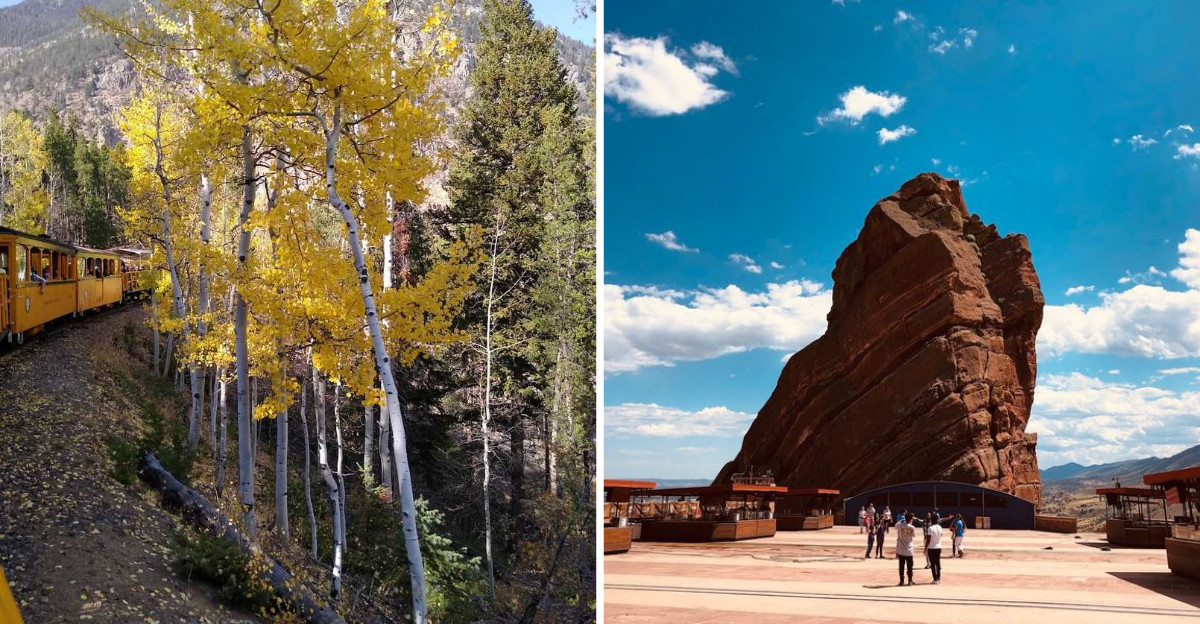
A good travel calendar should make you want to leave home before you even pick a date.
This Colorado list does exactly that by matching day trips with different months, weather patterns, and seasonal strengths.
A place that feels ordinary in one season may become far more interesting in another, and that timing can make a big difference.
Can you believe one calendar can hold this many completely different moods?
I would rather plan around what makes each month special than force every destination into summer.
That makes the year feel more manageable, and honestly, it gives you good excuses to keep exploring.
1. Mount Princeton Hot Springs Resort, Nathrop
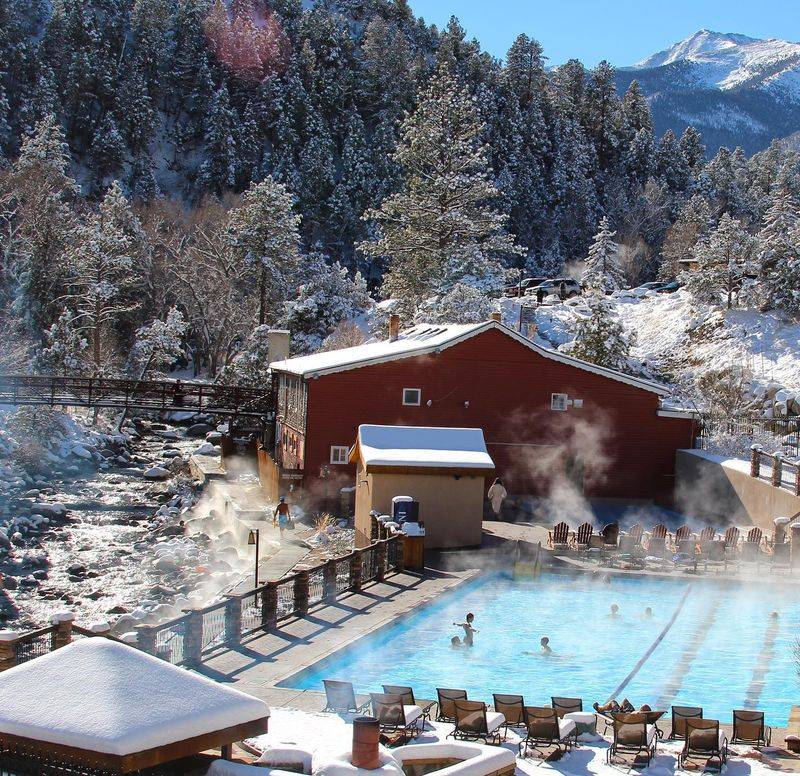
Picture yourself sinking into warm mineral water while snow drifts down around your shoulders. January was made for exactly that feeling.
Mount Princeton Hot Springs Resort sits on 70 acres in Nathrop at 8,250 feet. Chalk Creek runs right through the property. The Collegiate Peaks and pale Chalk Cliffs frame every view.
The resort offers numerous geothermal soaking options, including the Historic Bath House pools, Creekside Hot Springs, Upper Pools, and the seasonal Infinity Pool.
At Creekside Hot Springs, guests can adjust the temperature by moving a few rocks to let cooler creek water mix with the hot spring water.
Come summer, a 400-foot waterslide opens up for families. The restored Historic Bath House dates to the early 1900s and remains part of the resort today.
Ute people knew these springs long before settlers arrived in the 1860s. History runs deep in this valley.
The resort remains open year-round, including throughout the winter months, when snow can surround the pools and surrounding peaks. September and October pair crisp air with golden aspens. Summer gives you long daylight and slide time.
The resort is currently open daily from 9 a.m. to 9 p.m. You can find it at 15870 County Road 162, Nathrop, CO 81236. Few winter days end better than this one.
2. Iron Mountain Hot Springs, Glenwood Springs
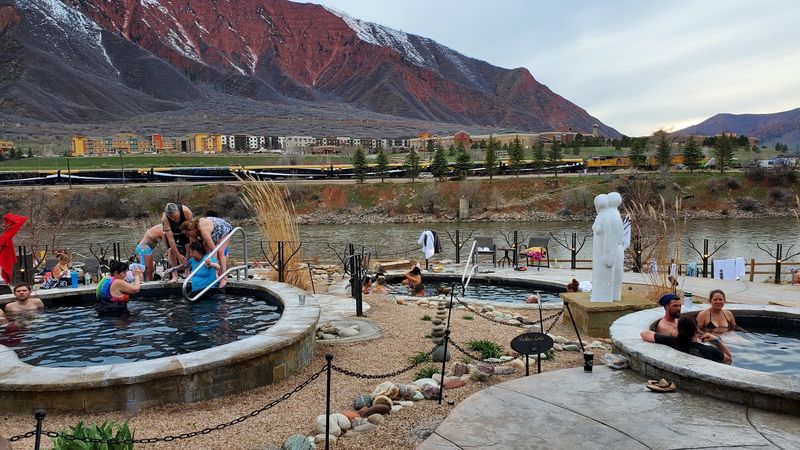
Iron Mountain Hot Springs in Glenwood Springs lines the bank of the Colorado River.
Mountains rise close on every side. Each pool holds a slightly different temperature, so you can wander until one fits.
Sauna Summit adds five globally inspired saunas within the adults-only WorldSprings area, along with three plunge pools with different temperatures and mineral profiles.
Mineral content here is rich and naturally occurring. People have traveled for these waters for generations.
The settlement began as Defiance in 1883, became Glenwood Springs in 1885, and developed further after railroad service reached the area in 1887. Word about the healing water spread fast. The town still leans into that reputation today.
Snowy winter soaking, spring weather, autumn color, and summer conditions each give the pools a different seasonal setting.
Doors stay open daily from 9:00 AM until 10:00 PM. Evening soaks under stars are worth the later start.
Look for it at 281 Centennial St, Glenwood Springs, CO 81601. Your muscles will thank you on the drive home.
3. Garden Of The Gods Visitor & Nature Center, Colorado Springs
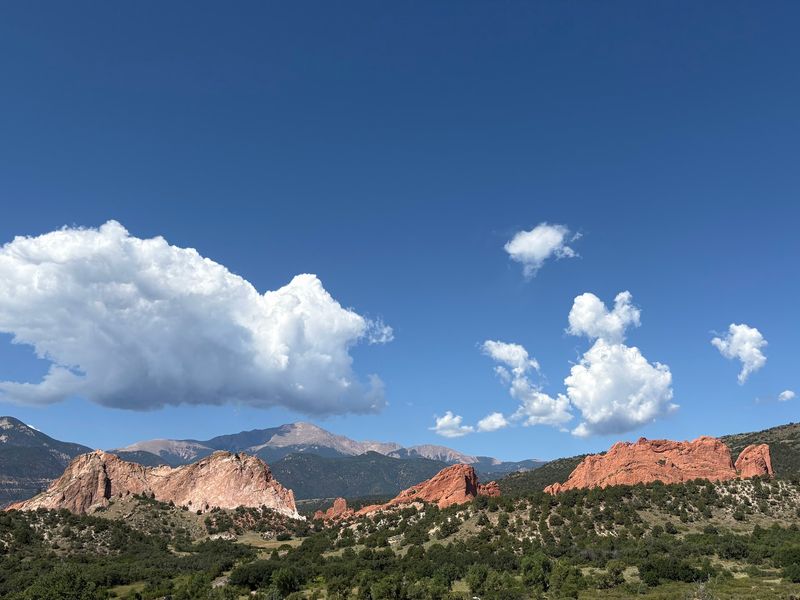
Just imagine for a second red sandstone fins standing 300 feet tall. Now add a snowy peak behind them.
Garden of the Gods in Colorado Springs is a National Natural Landmark, and entry costs nothing. March is a smart month here since trails dry out early. The Visitor & Nature Center makes a strong first stop.
Inside, more than 30 interactive exhibits explain the landscape, while a 14-minute film explores how the formations developed.
Twenty-one miles of trails wind through the park. Hiking, road biking, mountain biking, and horseback riding all have room.
Rock climbing is permitted with the required registration and equipment, although seasonal closures can affect some formations. Guided Jeep tours, a 1909 trolley, Segways, and eBikes cover more ground fast.
Those rocks tilted upward during a massive geological upheaval millions of years ago. Archaeological evidence points to people here as early as 1330 BC. Ute and other tribes describe a lasting spiritual bond with this land.
The Siamese Twins formation provides a natural rock frame for views toward Pikes Peak. Sturdy shoes help, and shade stays scarce midday.
The center sits at 1805 N 30th St, Colorado Springs, CO 80904. Spring afternoons out here spoil you for other parks.
4. Colorado National Monument, Fruita
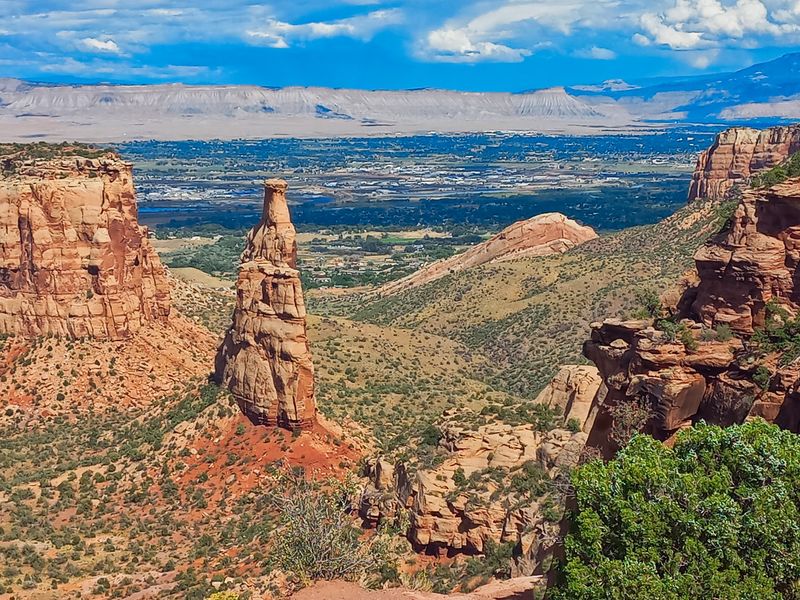
Colorado National Monument protects a huge plateau and canyon panorama near Fruita.
April is typically milder than Colorado’s high country, with average daytime temperatures around the low 60s, but spring conditions can still include cold weather, precipitation, or snow.
Rim Rock Drive stretches 23 miles through the monument and includes 19 signed viewpoints. Desert bighorn sheep live in the monument and may appear near Rim Rock Drive, so drivers should stay alert for wildlife.
Hikers have plenty of choices. Otto’s Trail is short and rewarding, Devil’s Kitchen Trail suits families, and Monument Canyon Trail tests your legs.
Bicycles are permitted on Rim Rock Drive, where riders share the roadway with motor vehicles.
Independence Monument and the Coke Ovens rank among the most photographed formations. Both took millions of years to carve.
The Civilian Conservation Corps built roads and trails here during the 1930s. Their stonework still holds up.
Ranger programs on geology, wildlife, and astronomy run from Memorial Day through Labor Day. Night skies out here stay impressively dark.
Start at the Saddlehorn Visitor Center, 1750 Rim Rock Dr, Fruita, CO 81521.
5. Great Sand Dunes National Park Visitor Center, Mosca
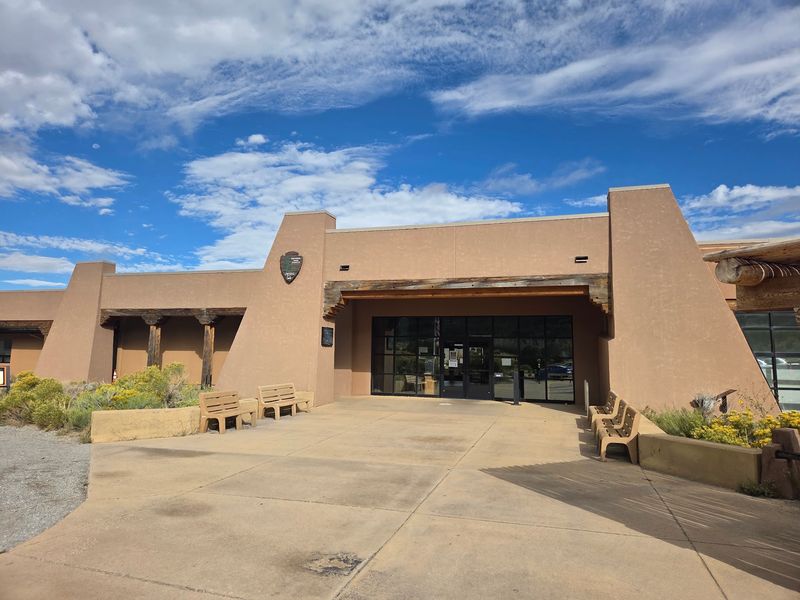
In an average year, Medano Creek often approaches peak flow around late May. 2026 conditions are unusual because near-record-low snowpack greatly reduced the expected runoff.
When runoff is strong enough, Medano Creek can develop surge flow, but visitors in 2026 should check current NPS conditions before planning a trip around the creek.
Sandboarding and sand sledding draw big crowds too. Special equipment rents just outside the park boundary.
Hikers climb wherever they like, though High Dune and Star Dune are the classics. Backpacking requires a permit.
Ecosystems here shift dramatically, from grasslands and wetlands to forests, alpine lakes, and tundra. Coyotes, bobcats, elk, and birds of prey all live nearby.
Ute, Navajo, and Apache peoples have known this land for thousands of years. Lt. Zebulon Pike documented the dunes in 1807.
National Monument status came in 1932, national park status in 2004. Summer sand surfaces can hit 150 degrees, so go early or late. Winter can drop to 20 below.
The center sits at 11999 State Hwy 150, Mosca, CO 81146. Shake your shoes out before driving home.
6. Royal Gorge Bridge & Park, Cañon City
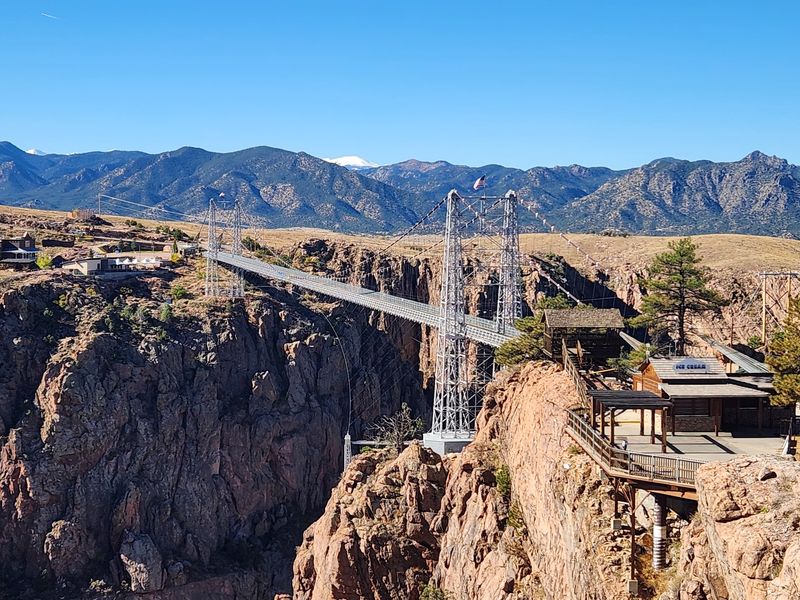
The Royal Gorge Bridge stretches 1,260 feet across the gorge, with its deck about 956 feet above the Arkansas River. The Arkansas looks like a ribbon from up there.
Royal Gorge Bridge & Park near Cañon City stretches 1,260 feet across the gorge.
The surrounding park covers 360 acres of rugged terrain. June sunshine makes every overlook sparkle.
Crossing on foot is the main event, and the planks let you peek straight down. An Aerial Gondola glides across for a smoother ride.
Thrill seekers head for the Cloudscraper Zip Line. The Royal Rush Skycoaster swings riders out over open air.
Inside the Plaza Theater, a continuous video covers the gorge’s history and geology. It is a welcome break from the sun.
Tommy Knocker Playland includes multi-level climbing structures, ropes, nets, tunnels, slides, and other children’s features.
The 2013 wildfire destroyed most of the surrounding park infrastructure, and the rebuilt attraction reopened about 14 months later in 2014.
Long before that, Ute and Plains tribes used the canyon for shelter. Gold prospectors flooded the area in the 1800s.
Attraction operations, including the gondola and thrill rides, can change with weather conditions. Find it at 4218 County Road 3A, Cañon City, CO 81212. Your camera roll will fill up before lunch.
7. Durango & Silverton Narrow Gauge Railroad, Durango
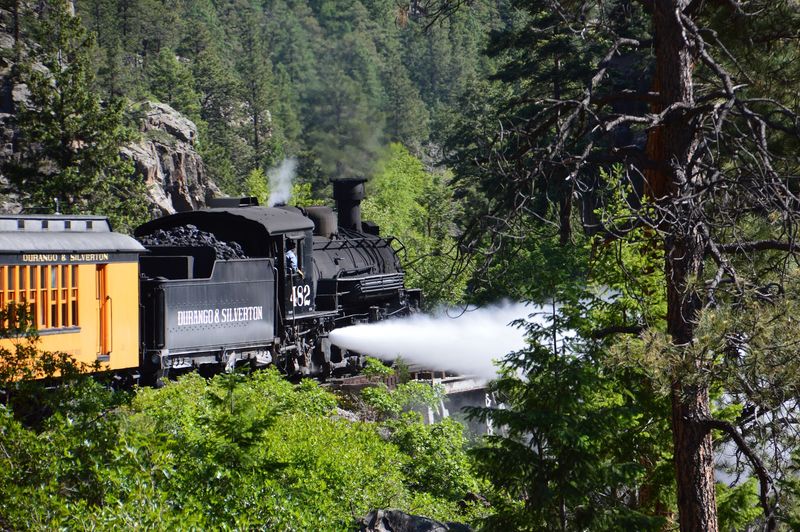
The Durango & Silverton Narrow Gauge Railroad rolls out of Durango into the San Juan National Forest. July is prime time, with wildflowers and full service running.
Tracks follow the Animas River through remote backcountry. Highlights include Horseshoe Curve, the High Bridge, and the dizzying High Line above the Animas River Gorge.
Wildlife may sometimes be seen from the train along the remote sections of the route.
Cascade Canyon service operates seasonally during the colder part of the year, while 2026 Silverton service runs from early May into early November.
Themed rides fill the calendar, including music excursions and holiday journeys like THE POLAR EXPRESS.
The free D&S Roundhouse Museum sits in the railyard. Inside you’ll find steam locomotives, vintage coaches, antique trucks, covered wagons, and model trains.
The railway reached Silverton in 1882 and was designated a National Historic Landmark in 1961.
Open-air cars provide unobstructed views and greater exposure to mountain weather, so eye protection and layers can be useful.
Board at 479 Main Ave, Durango, CO 81301. Few rides deliver this much mountain in one day.
8. Mesa Verde Visitor And Research Center, Mancos
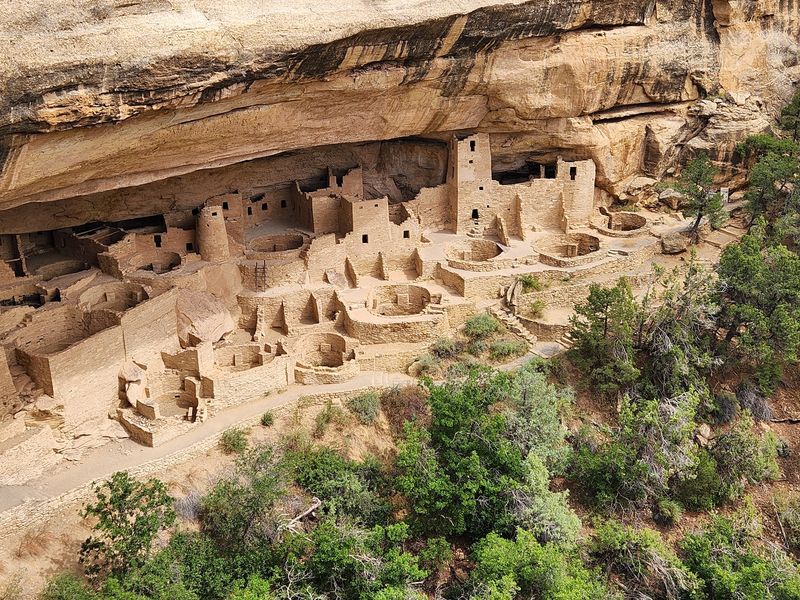
Let’s be real for a second, few sights in America match a stone village tucked inside a cliff. Ladders, towers, and rooms built more than 700 years ago.
Mesa Verde National Park protects that heritage near Mancos. Nearly 5,000 archaeological sites lie within its boundaries, including about 600 cliff dwellings.
Ancestral Pueblo people lived on these mesas from 600 to 1300 CE. The famous alcove dwellings went up around 1200 CE. Local ranchers documented Cliff Palace and Spruce Tree House in 1888 while searching for cattle.
It was the first national park created to protect the works of people rather than scenery alone.
In 2026, ranger-guided cliff-dwelling tours operate from May 4 through October 21, with tickets required for the designated tour sites.
Spruce Tree House has been closed to direct public access since 2015 because of rockfall concerns, although visitors can still view it from overlooks near the Mesa Verde Museum.
The museum and a 25-minute film explain daily Pueblo life clearly. Hiking trails, birding, and evening programs round out a full day.
Dark Sky status makes the stargazing here remarkable. Stay after sunset if you can. Begin at 34840 Hwy 160, Mancos, CO. Bring water, a hat, and patience for the winding drive up.
9. Rocky Mountain National Park, Estes Park
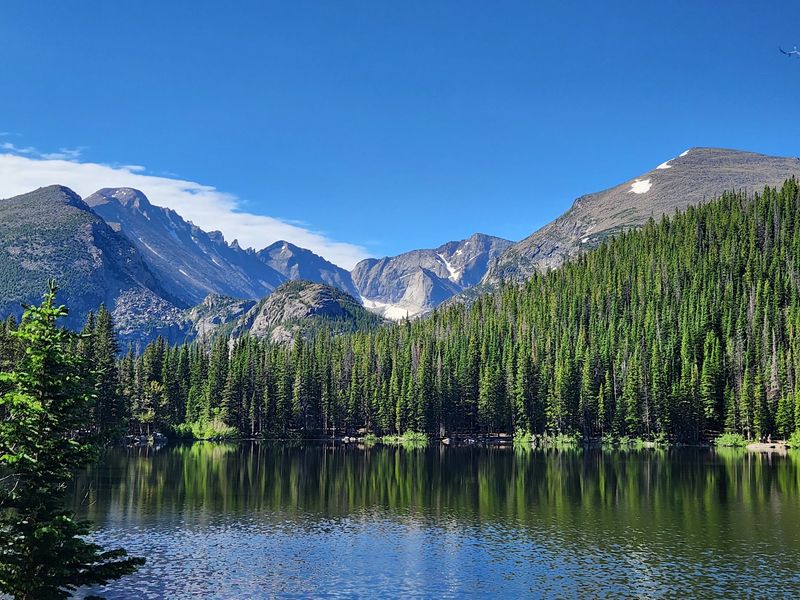
Rocky Mountain National Park covers 415 square miles of peaks, alpine lakes, and meadows. The Beaver Meadows Visitor Center near Estes Park opens year-round and makes a solid launch point.
Trail Ridge Road reaches 12,183 feet and is the highest continuous paved road in the United States.
It passes through forest, then tundra, where trees simply stop growing. Old Fall River Road, finished in 1920, offers a slower gravel alternative.
Over 350 miles of trails suit every ability level. Short lake loops work for families, while longer routes climb toward the divide. Climbing, fishing, bicycling, and horseback riding all have a following here.
Elk are especially active during the autumn rut, while bighorn sheep and moose also inhabit the park. Sightings are never guaranteed.
Ranger-led programs include night sky and astronomy events. Early to mid-May brings baby animals and early blooms. Winter turns the valleys into quiet snowshoe country.
For 2026, timed-entry reservations are required for most of the park from May 22 through October 12 between 9 a.m. and 2 p.m..
The Bear Lake Road Corridor has a separate reservation requirement through October 18 between 5 a.m. and 6 p.m.
Head to 1000 US Hwy 36, Estes Park, CO 80517. Layers matter, since weather here changes its mind hourly.
10. Black Canyon Of The Gunnison National Park, Montrose
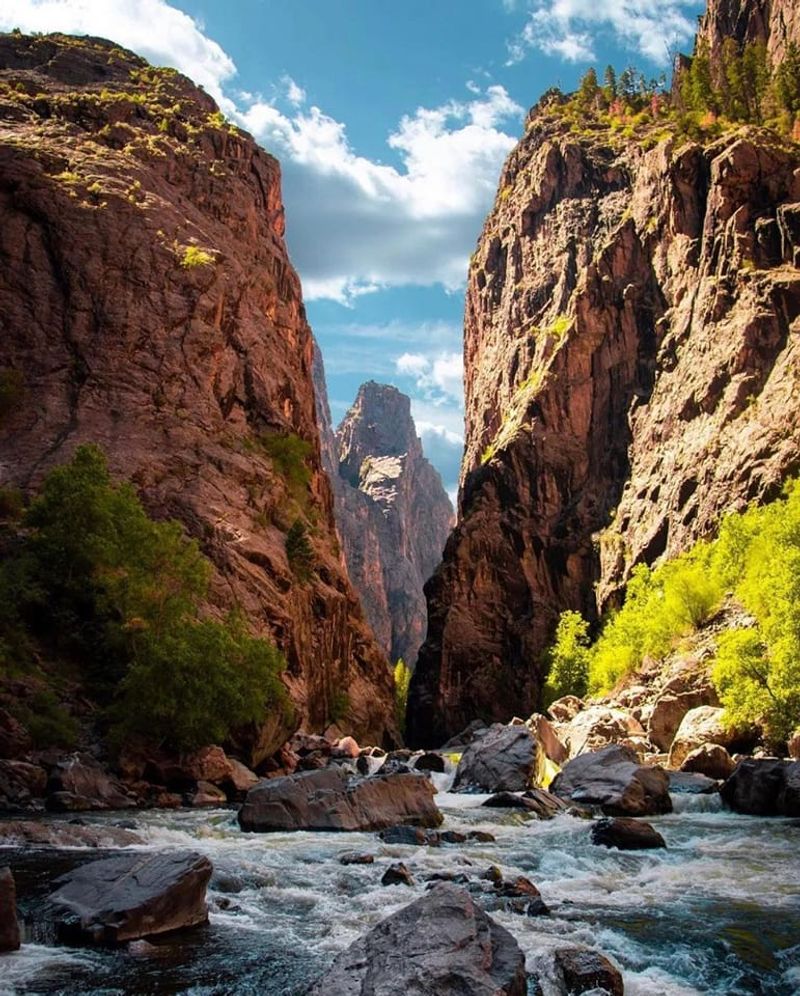
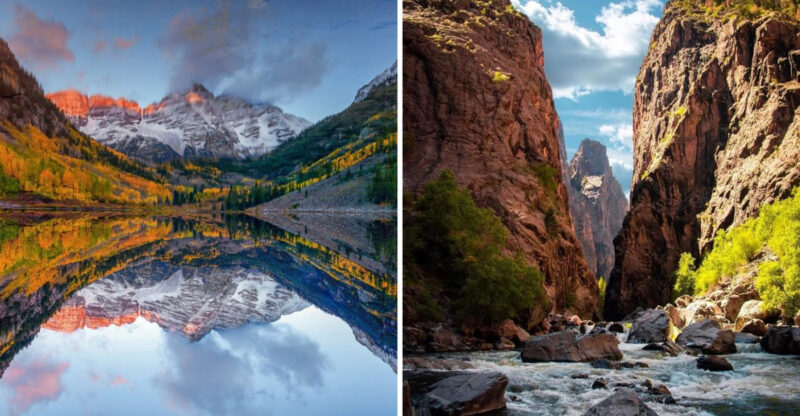
Far be it from me to judge, but this canyon might be the most underrated sight in the state. Walls so steep and dark that sunlight barely reaches the bottom.
Black Canyon of the Gunnison National Park protects a vertical wilderness of rock, water, and sky near Montrose.
Black Canyon exposes rock approaching two billion years old and combines exceptional depth, narrowness, and steep canyon walls.
October usually falls within the South Rim Road vehicle season, although snow and changing weather can affect access later in autumn.
A paved South Rim drive connects a string of overlooks. Each one leans out over the gorge with a different angle.
Rim trails stay manageable for most walkers. Inner canyon routes are steep, unmarked, and demand serious preparation.
Birdwatchers scan for swifts and raptors riding the updrafts. Climbers tackle the big walls, while kayakers and anglers work the Gunnison River below.
The park hosts seasonal ranger programs and special astronomy events, while guided snowshoe programs are generally winter activities rather than October offerings.
The Gunnison River carved this gorge over roughly two million years. Civilian Conservation Corps crews helped develop the park’s early infrastructure.
Start at the South Rim Visitor Center, 9800 Hwy 347, Montrose, CO 81401. Autumn light down those walls is unforgettable.
11. Red Rocks Park & Amphitheatre, Morrison
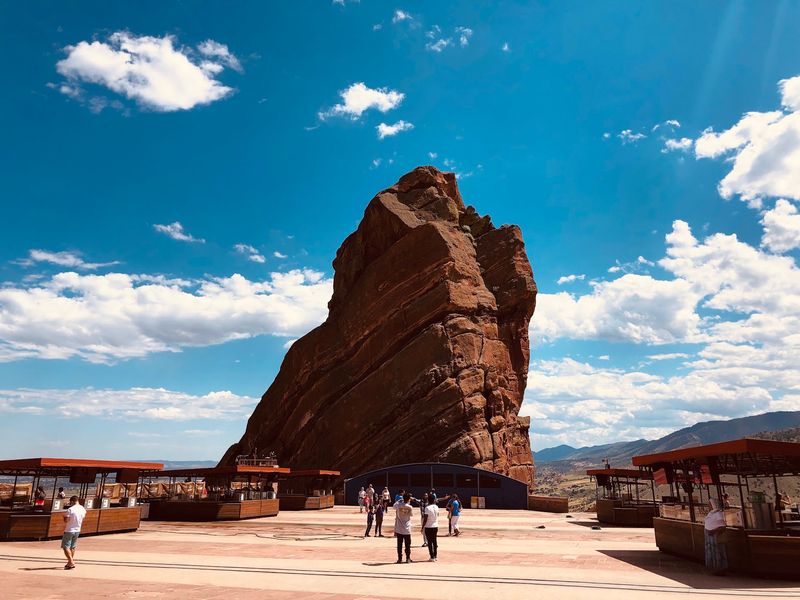
I’m still trying to wrap my head around a concert venue shaped by geology, not architects. Two giant sandstone walls, one stage between them.
Red Rocks Park & Amphitheatre sits near Morrison at 6,450 feet, right where the plains meet the mountains.
Red Rocks Park covers about 738 acres of meadows, trails, and rock formations. November offers a cooler-season visit, but temperatures, snow, events, and visitor levels can vary considerably.
Trading Post Trail forms a 1.4-mile loop, while Red Rocks Trail extends through the eastern part of the park and connects with surrounding trail systems.
Nearby Dinosaur Ridge preserves dinosaur tracks and fossils, while Red Rocks itself showcases hundreds of millions of years of exposed geology.
The monoliths called Ship Rock and Creation Rock stand taller than Niagara Falls. Standing at the base makes that fact sink in.
Fitness events and yoga sessions use the steps regularly. Summer brings Film on the Rocks, where movies play under open sky.
Ute people likely gathered on these grounds long ago. Civilian Conservation Corps crews built much of the structure during the 1930s, and the amphitheater opened in 1941.
You’ll find it at 18300 W Alameda Pkwy, Morrison, CO 80465. Sunrise here is pure magic.
12. Georgetown Loop Railroad, Georgetown
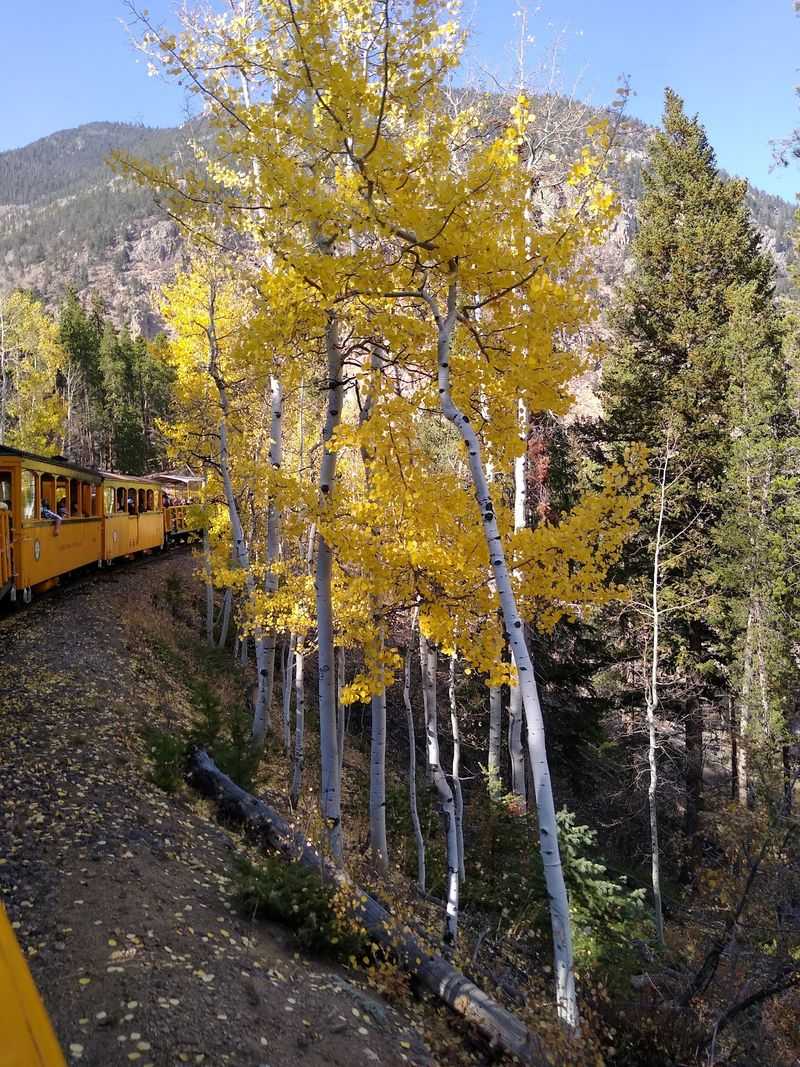
A December ride may use historic steam or diesel equipment, depending on the scheduled train.
The Georgetown Loop Railroad winds through Clear Creek Canyon between Georgetown and Silver Plume.
Georgetown and Silver Plume differ by nearly 600 feet in elevation, which required the railroad to use curves, loops, and bridges to gain elevation over a short distance.
Completed in 1884, the design was considered an engineering marvel of its era.
Round-trip rides cross historic trestles and curve above the creek. Devil’s Gate High Bridge is the showstopper, suspended far above the canyon floor.
Guided Lebanon Mine tours operate from April through about mid-September and are not part of a typical December visit.
Seasonal events keep things fresh all year. Holiday train events run during the winter season, and advance reservations are recommended for popular dates.
Scenery shifts with the calendar, from summer wildflowers to blazing aspens to snow-blanketed slopes.
Dress warmer than you think you need, since canyon air bites and open cars catch every gust.
Georgetown itself is worth wandering afterward, with Victorian storefronts lining the streets. Board at 646 Loop Dr, Georgetown, CO 80444.