You Can Ride A Wagon Past Zebras And Camels On This Kentucky Amish Farm
You probably think you know what a Kentucky farm looks like. There are cattle in the field and a barn that needs paint.
Maybe a horse stands near the fence.
Now add a zebra.
There is a farm ninety minutes south of Louisville where the pasture does not follow the usual rules. You climb onto a wagon with a bucket of feed in your lap.
The ride starts and the animals come straight to you.
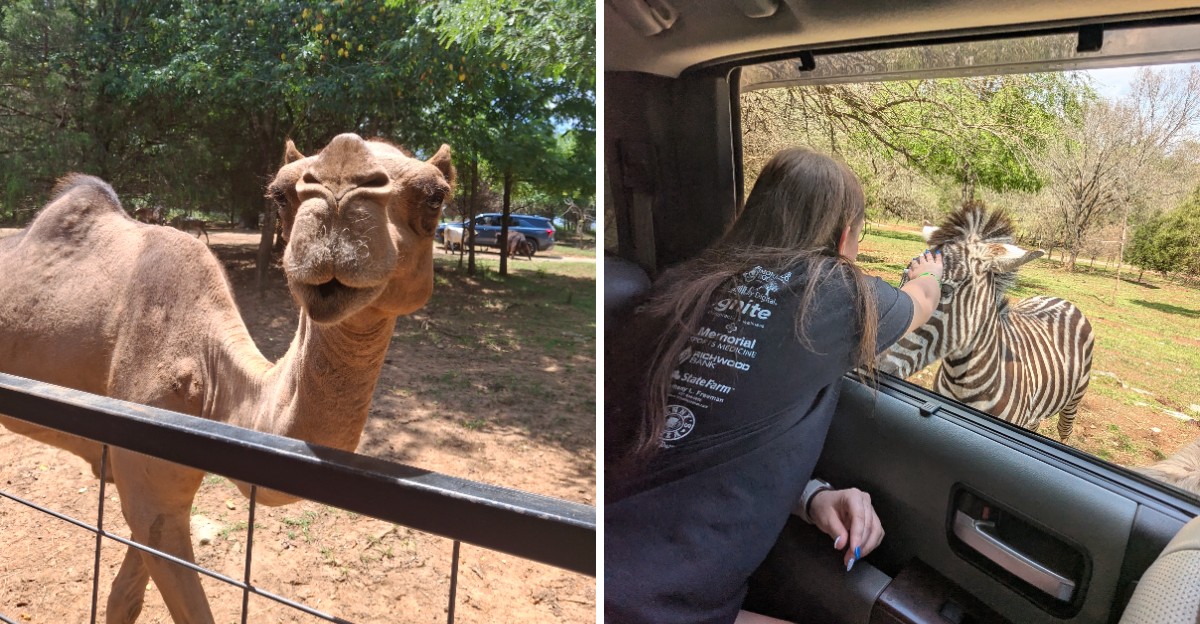
A camel will lean over the rail and help itself. It has no sense of personal space whatsoever.
Your children will shriek with delight. You will probably shriek too.
The family running the place is Amish, and they greet you like a neighbor rather than a customer.
Plan on two hours at least.
Bring cash for the feed cups. Bring more than you think you need.
The animals can tell when you have run out.
An Amish Farm That Went Full Safari
Dutch Country Safari Park sits on a working Amish farm where the livestock roster took a sharp left turn. Instead of only cows and chickens, you get zebras, camels, and water buffalo sharing the same Kentucky pasture.
Michael and Katie Troyer own and run the place. Their family is on site, greeting guests and handling the animals with easy confidence.
The setting stays farm-simple. Gravel parking, open fields, barns, and the kind of quiet you only find off a country road.
Nothing here feels overproduced. There are no costumed characters or blaring speakers, just animals, feed pans, and room to wander.
That plain-spoken charm is exactly why visitors rave about it. The park holds a 4.8-star rating, and guests often mention how welcoming the family is.
You will find it at 2125 L and N Turnpike Road, Horse Cave, Kentucky, a short hop from Interstate 65 at exit 58.
Signs along the highway point the way. Follow them and you will land in the lot without any wrong turns.
Come with curiosity and a camera. The combination of Amish farmland and African plains animals is not something you see twice.
The Three-Quarter-Mile Wagon Ride Steals The Show
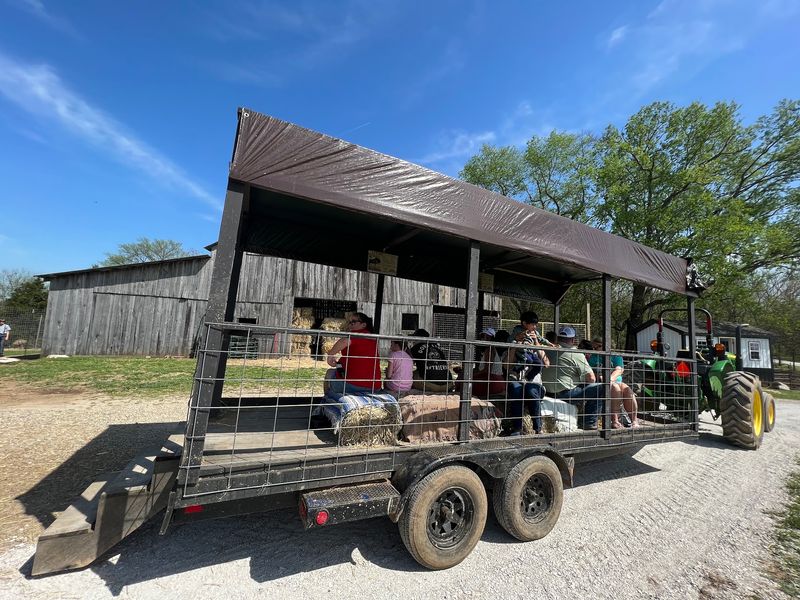
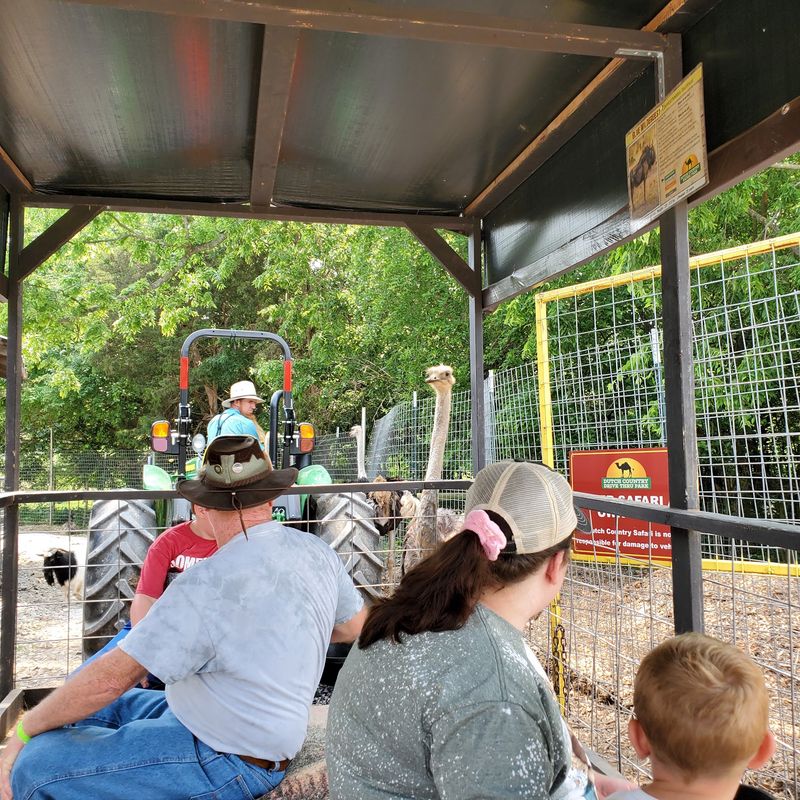
A tractor pulls a covered wagon along a three-quarter-mile loop, and that loop is the heart of the whole visit. The trip runs about thirty minutes at a slow, animal-friendly pace.
Seating mixes bench spots with hay bales. Guests say the ride is smoother than expected, even across open field.
Big pans of feed come with admission. No extra charge, no scramble for tokens at the gate.
Animals learn the sound of that tractor fast. They fall in behind the wagon like a parade with hooves.
You ride together in the trailer, which actually gets you closer to everything.
Ride times are assigned, so check in at the front first. That small step keeps your afternoon running smoothly.
Being out of a vehicle changes the whole feel. Wind, hay smell, and a camel’s whiskers land within arm’s reach.
Families with strollers and grandparents manage fine. Staff have been known to help older guests climb aboard and park closer to the entrance.
Bring a hat in summer. Much of the property is shaded, but the open field is not.
Zebras And Camels With Zero Shyness
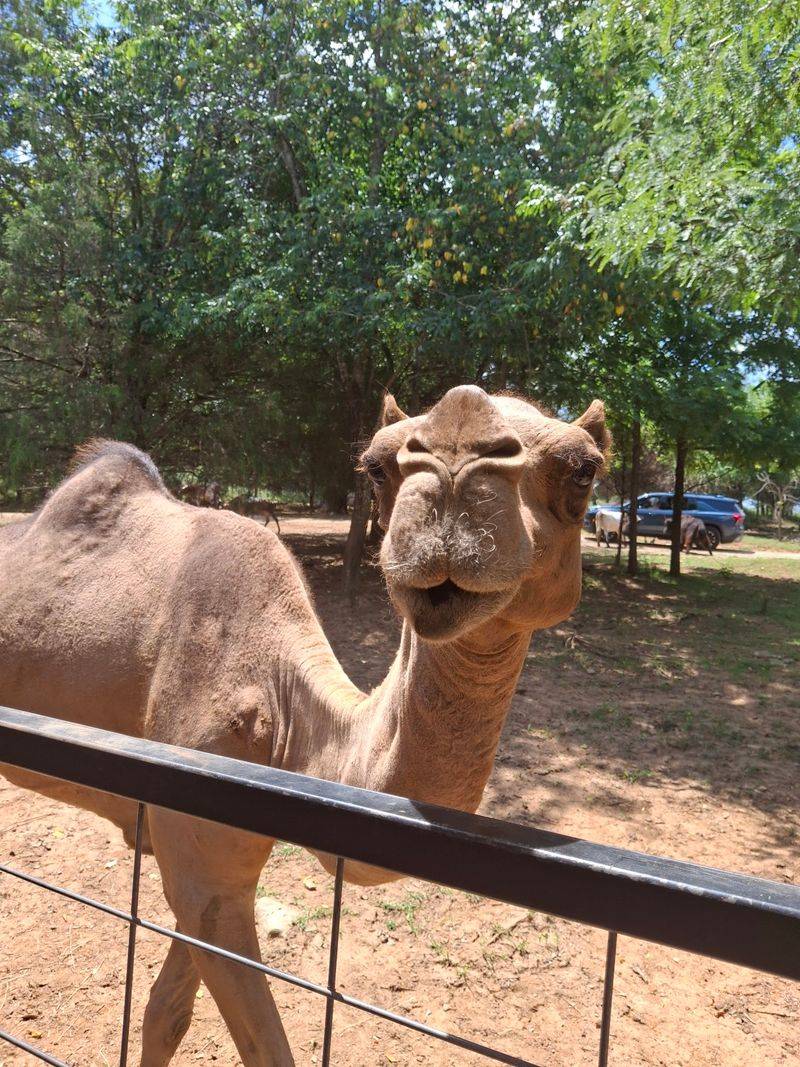
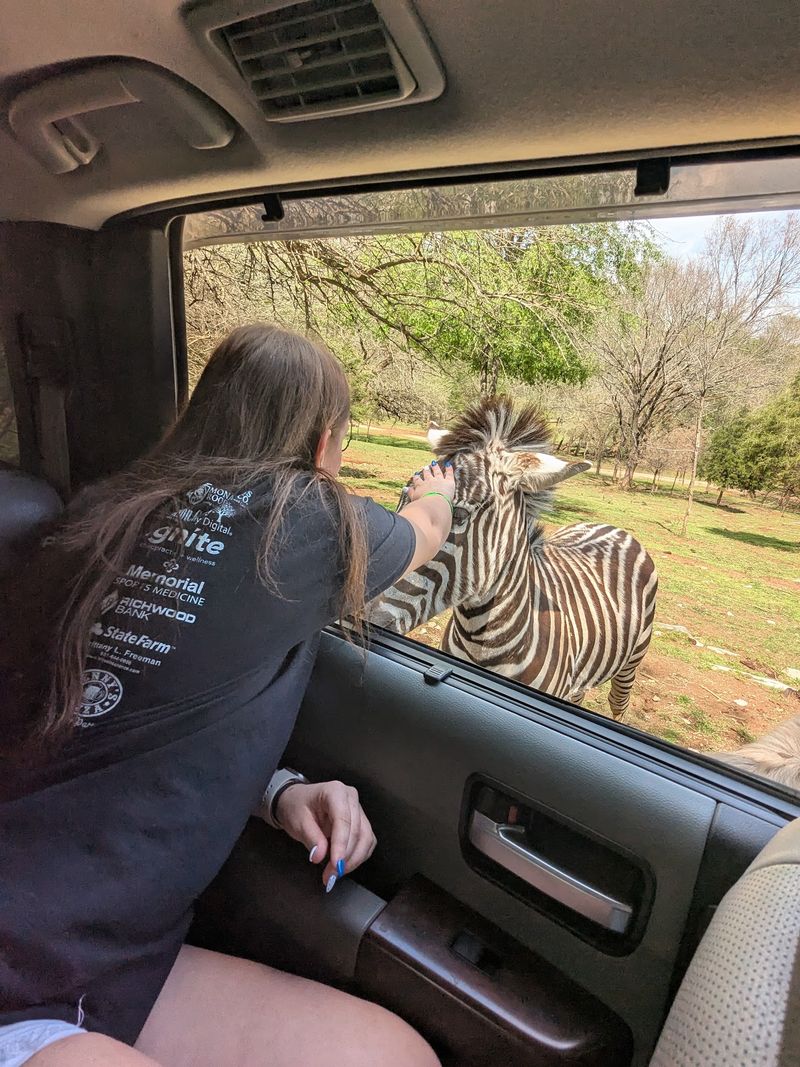
Stripes and humps show up quickly once the wagon rolls. Zebras are named in reviews more than twenty times, and camels are a close favorite.
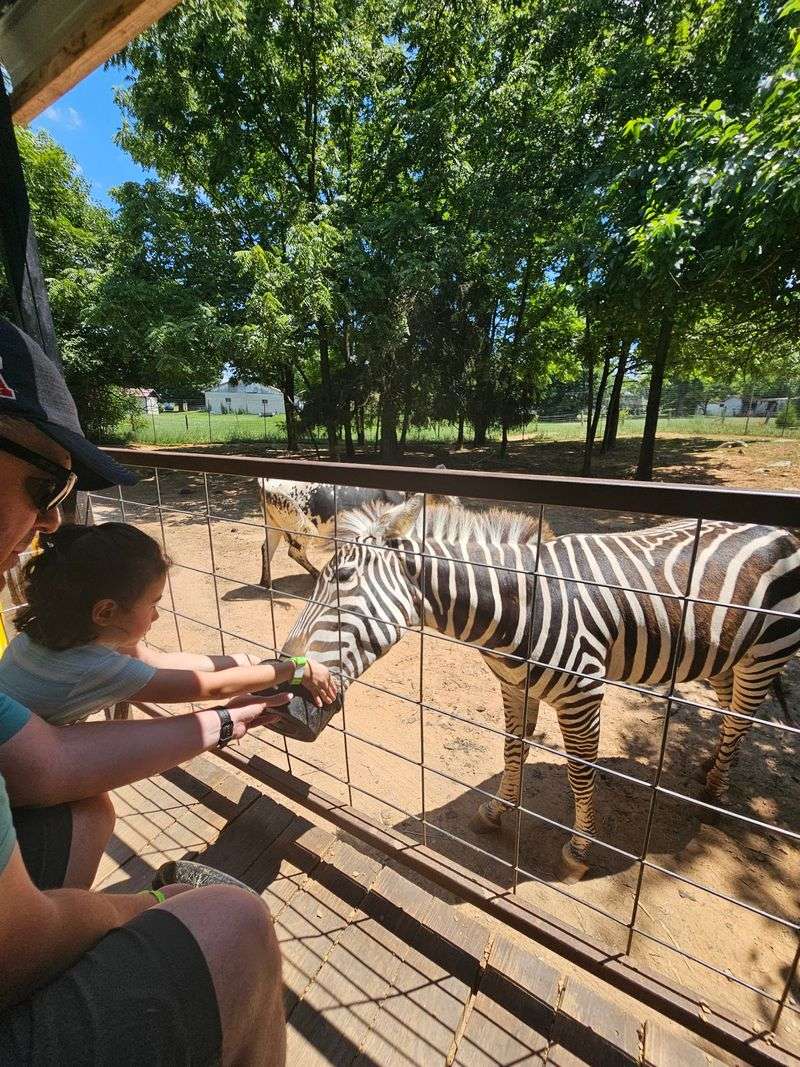
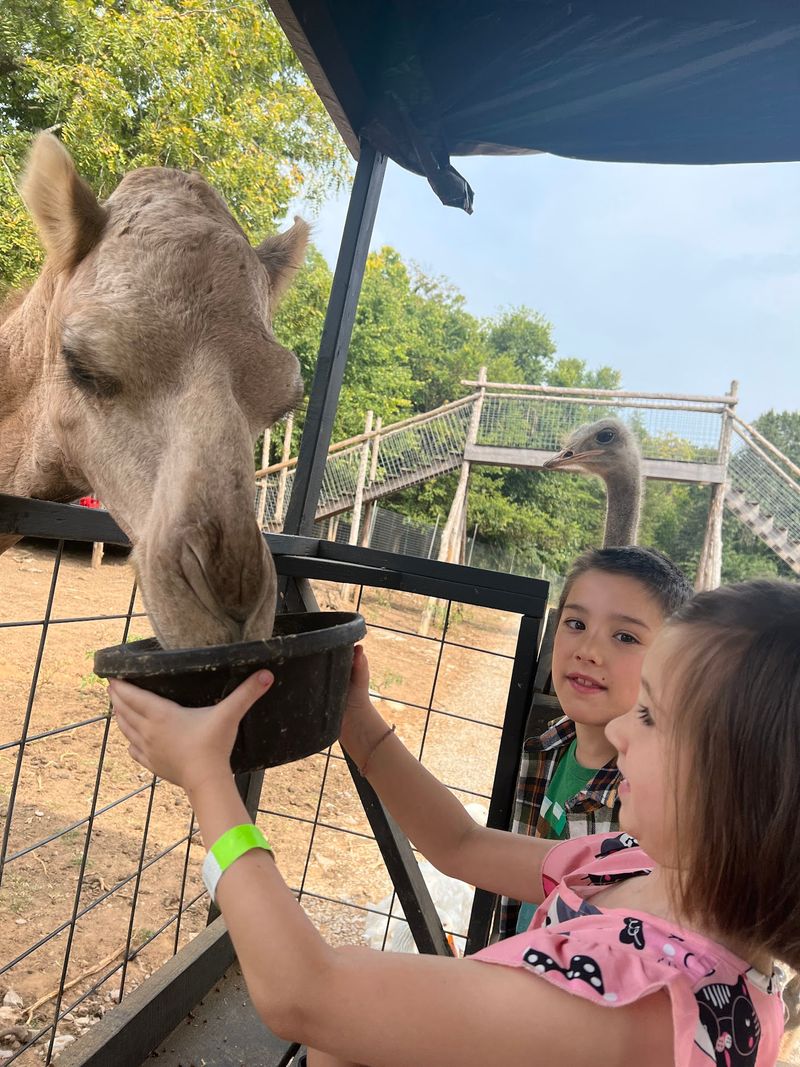
Feeding them by hand is the point. The animals nose right up to the rail without hesitation.
Camels have long, flexible lips that work like fingers. They can clear a pan faster than you can hand it over.
Zebras are pickier and a bit more dramatic. Watching them jostle for position is half the entertainment.
Ostriches deserve a warning of their own. Their necks stretch far, and their pecks are quick and precise.
Keep fingers flat and hold the pan steady. Kids usually catch on within two feedings.
Other residents along the route include bison, wildebeests, yaks, Watusi cattle, and African antelopes. Longhorn steers and emus round things out.
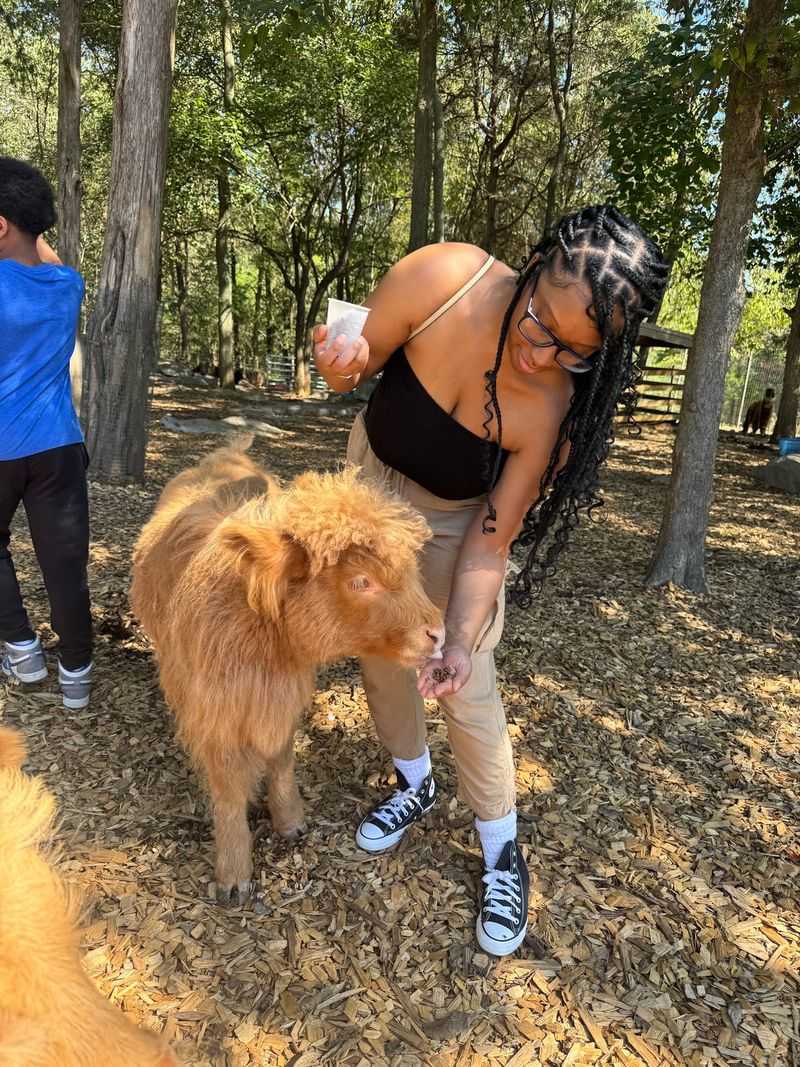
Cattle lovers get a bonus. Highland cattle with shaggy bangs stand near water buffalo and rare longhorns.
The mix feels unlikely in central Kentucky, and that is the fun. You came for a farm and got a continent-hopping lineup instead.
Photos turn out great because the animals come to you. No zoom lens required.
Petting Zoo Time With Goats, Alpacas And Calves
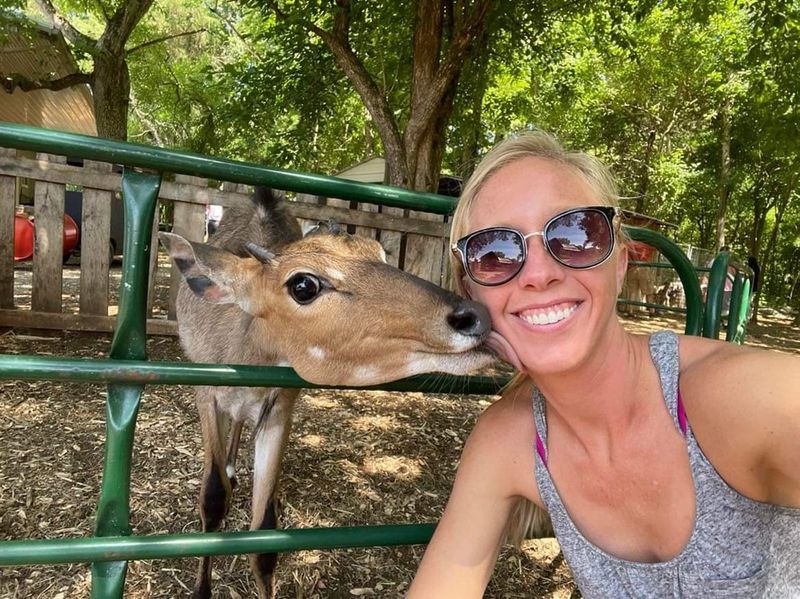
After the wagon returns, the petting zoo takes over. It is self-guided, so you set your own pace and linger where you want.
Goats lead the welcoming committee. They are curious about shoelaces, hems, and anything that dangles.
Alpacas hang back a little, then decide you are acceptable. Their fluffy faces make them a crowd favorite with younger kids.
Calves share the space too, including shaggy Highland youngsters. Sheep and mini-donkeys wander nearby.
Feed cups run about a dollar, with bowls around three. Bring cash, since the feed purchase is cash only.
Small bills go a long way here. Two or three cups usually keep a child busy for a solid stretch.
Ponies and black swans add to the scenery. Coatimundis and a Capuchin monkey named Tino live on the property as well.
Kangaroos surprise almost everyone. So do the giant porcupines, which are far bigger than most people picture.
The family running things is famously relaxed about kids being kids. Staff have handed toddlers a rabbit or guinea pig to hold.
Plan on plenty of time. Many families stretch the whole visit to two or three hours easily.
Hedgehogs, Reptiles And A Barn Full Of Surprises
Indoor barns hold the small stuff, and they are easy to walk past if you are not paying attention. Keep your eyes open and explore the buildings.
Hedgehogs curl up in their enclosures like prickly tennis balls. Guinea pigs squeak whenever someone rustles a bag.
Bunnies and fluffy chicks live nearby. Ducks paddle and waddle within earshot.
Reptiles get their own space. Snakes and lizards sit behind glass for the kids who want a closer look.
Birds fill out the rest of the barn. Peacocks, albino rheas, and other unusual species have all been spotted on the property.
The indoor areas also give you shade on hot days. On rainy ones, they offer a dry place to regroup.
Nothing feels rushed or crowded in here. You can stand at one pen for ten minutes without anyone hurrying you along.
Little kids often love these barns more than the safari. Small animals are easier to see at their eye level.
Ask questions if a family member is nearby. Guests consistently describe the owner as knowledgeable and glad to talk about the animals.
Save some energy for this part. Skipping the barns means missing half the fun.
Camel Milk Ice Cream Is A Real Thing Here
The snack shop sells camel milk ice cream, and yes, it comes from the animals you just fed. That detail alone makes it worth ordering.
Visitors describe it as creamy and smooth. One common comparison is whipped topping, light rather than heavy.
It is not a gimmick with a bad payoff. People who try it tend to talk about it afterward.
Hot dogs and nachos are also on offer. Nothing fancy, just food that works after two hours outdoors.
Picnic tables give you a place to sit and cool off. Grandparents often claim a shaded spot while the kids keep exploring.
The gift shop sits nearby with homemade items. It is a good stop for something small to take home.
Prices across the park lean reasonable, which regular visitors mention often.
A yearly membership exists for families who come back more than once. Repeat guests swear by it.
Cash is useful here, especially for animal feed. Tuck a few bills in your pocket before you leave the car.
Treat the snack stand as part of the experience. Camel ice cream is not on many road trip menus.
A Playground Built For Burning Off Energy
Kids rarely want to leave after the wagon ride, and the playground is the reason. It sits right on the property, free to use while you are there.
A zip line draws the biggest line of eager climbers. Swings and a hay bale climbing area handle the overflow.
A barrel train ride circles nearby. Younger riders love it, and it takes almost no convincing.
Parents get a break here. Benches and picnic tables let you sit while the kids run laps.
The play yard is large, so crowding is not much of an issue. Even on busy mornings, there is room.
Improvements keep showing up season after season. Returning families notice new additions nearly every year.
Walking distances around the park stay short. That helps with small legs and with anyone who tires easily.
Parking can be a little tight on busy days. Arriving earlier gives you better odds of a close spot.
The overall vibe stays homey rather than commercial. Kids wander, grown-ups relax, and nobody is herding you along.
Budget extra time for this section. Plenty of families report the playground doubling the length of their visit.
Planning Your Trip Off Exit 58
Timing matters more than anything else here. The park runs seasonally, roughly mid to late March through the end of October.
Weekday mornings tend to be quieter. Guests who visit midday on a Tuesday often have the place nearly to themselves.
Getting there is simple from Interstate 65. Take exit 58 and follow the signs toward Horse Cave.
The address is 2125 L and N Turnpike Road. Your map app will get you there without trouble.
Wear shoes you do not mind getting dusty. Fields and barns come with dirt, hay, and the occasional goat nibble.
Bring cash for feed cups and a hat for sun. Both make the day noticeably better.
Wheelchair access is mixed across the property. Some areas work well, while gravel and barn paths can be harder to navigate.
Staff have a reputation for accommodating guests who need extra help. Asking at the front is always worth it.
Kentucky Down Under sits nearby if you want a second stop. Many families pair the two in one day.
Give yourself at least two hours. Most visitors wish they had planned for three.