This Old-School California Italian Restaurant Still Pulls In Massive Crowds
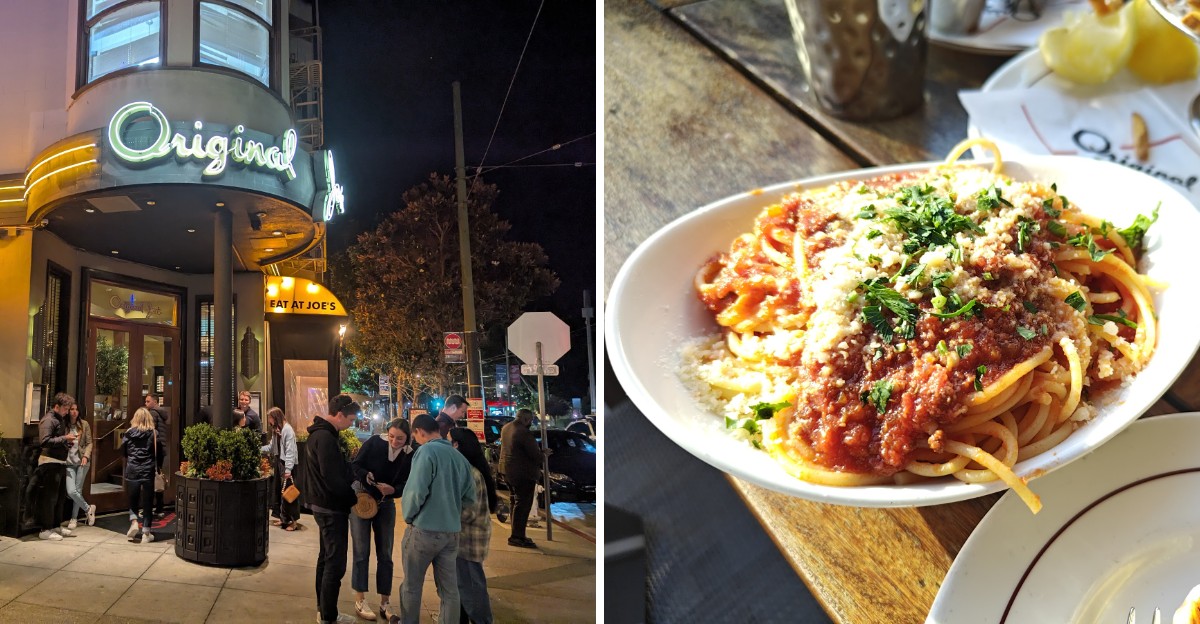
Some restaurants chase every new food trend that comes along.
Others seem perfectly happy doing what they have always done, especially when customers are still lining up for it.
One old-school Italian spot belongs firmly in the second camp. The atmosphere carries a sense of another era, the kind that makes dinner feel like an occasion without trying too hard.
In California, some dinner traditions refuse to fade, especially when the pasta is hot and the dining room stays packed.
That staying power is hard not to admire. Restaurants come and go constantly, yet certain places become part of people’s routines, family stories, and celebrations.
Someone visits as a kid, returns years later, and discovers that the experience still feels reassuringly familiar.
It All Started With Just 14 Stools
Fourteen stools is not too big of a restaurant by today’s standards, but that was the entire operation when the doors first opened in 1937.
The original address was 144 Taylor Street in the Tenderloin neighborhood, a tight little counter space where the floor was covered in sawdust.
Sawdust floors were common in working-class eateries of that era, and they served a practical purpose by soaking up spills and making cleanup faster at the end of a long shift.
Guests sat shoulder to shoulder, ordered quickly, and ate within arm’s reach of the cooking.
There was no grand dining room and no reservation book.
What mattered was speed, generous plates, and food that filled people up for the price they paid.
Understanding those humble beginnings helps explain why the modern restaurant still feels unpretentious despite the tablecloths and the jacketed staff.
The counter concept never disappeared either.
Counter seating remains part of the current North Beach dining room, and it can be one of the easier spots to grab when the main floor is full.
Sitting there gives a clear view of the cooks working, which is a direct link back to those original fourteen seats.
A Croatian Immigrant Started The Whole Thing
Behind the Italian-American menu sits a founder who was not Italian at all.
Tony Rodin, also known as Ante Rodin, was a Croatian immigrant who opened the original counter and built it into something far larger than expected.
His approach leaned on hard work, honest dealing, and a warm sense of hospitality that regulars came to count on.
Croatian immigrants had a long presence in San Francisco’s food and fishing industries, so the story fits the wider history of the city.
What makes it interesting is how thoroughly the food became associated with Italian-American cooking rather than his own background.
Red sauce, ravioli, and grilled steaks were what customers wanted, and the kitchen delivered them well enough that the name stuck.
Founders leave fingerprints on restaurants in ways that outlast menus.
The emphasis on treating every guest the same, whether they arrived in work clothes or a suit, still shows up in how the dining room operates.
Nobody gets a lecture about what to order or how to eat it.
Visitors who enjoy restaurant history can look at the walls, where framed photographs document decades of family and guests.
The Open Kitchen Has Always Been Part Of The Show
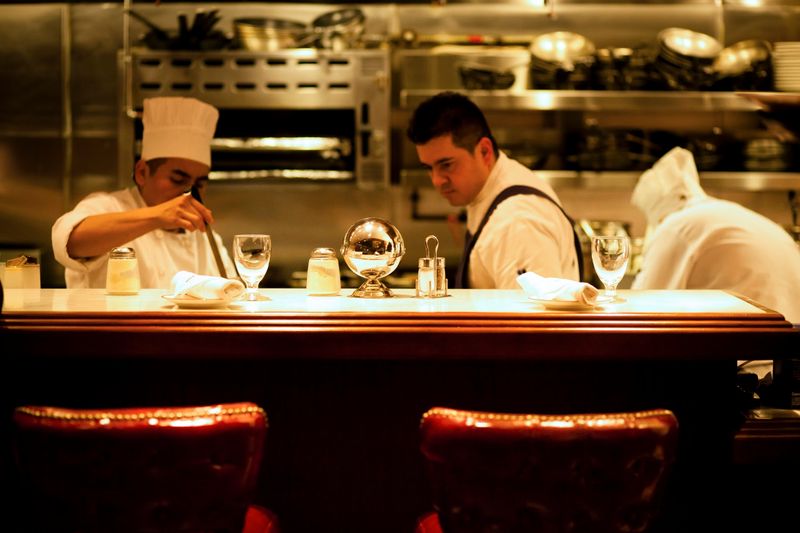
Watching food get cooked used to be unusual in restaurants, and the exhibition kitchen here helped change that.
Cooks work in full view of the counter, flipping steaks and plating pasta while guests sit a few feet away.
The arrangement became known as part of the Joe’s concept, and it eventually picked up recognition well beyond San Francisco.
Heat, noise, and motion all become part of the meal when the kitchen is not hidden behind a wall.
Plates move fast, orders are called out, and the rhythm of service is impossible to miss.
Some guests find that energizing while others prefer a quieter corner, so seating choice matters here more than at many restaurants.
Anyone dining solo or as a pair may want to request the counter. Waits for those seats are often shorter than for booths, and the view of the grill makes the time pass quickly.
Open kitchens also create a kind of accountability, since nothing happens out of sight.
A Devastating Fire Nearly Ended The Story
Seventy years of service came to an abrupt stop in 2007.
A fire broke out in the hotel above the Taylor Street restaurant, and the damage left the ground floor dining room unusable.
The long-running location closed, and for a while it looked like the story might simply end there.
Losing a neighborhood restaurant hits differently than losing a chain location.
Regulars who had eaten in the same booth for decades suddenly had nowhere to go, and the Tenderloin lost a fixture that had outlasted countless other businesses.
News of the closure traveled quickly through the city.
Restaurants rarely come back from that kind of interruption.
The fact that this one eventually returned makes the current dining room more meaningful for people who remember the original.
Visitors sometimes ask about the old location when they sit down.
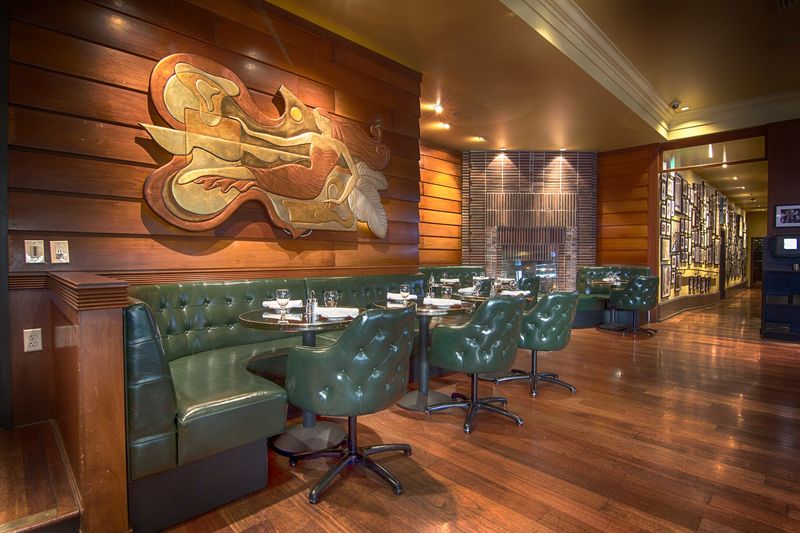
Elements from the Taylor Street space were saved during the transition, including counter seats, wood paneling, and bricks that were worked into the newer restaurant.
It Took Five Years To Bring Joe’s Back
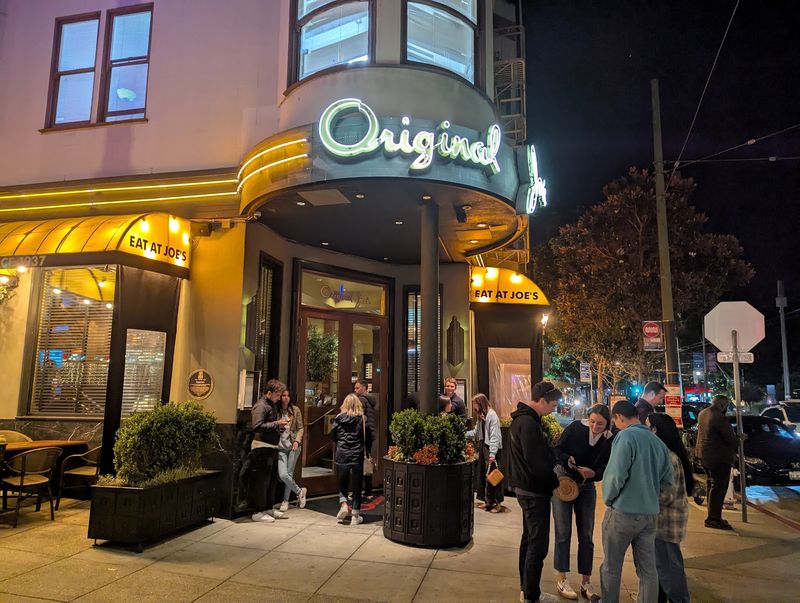
Five years passed between the fire and the reopening, which is a long time to keep a restaurant name alive without a dining room.
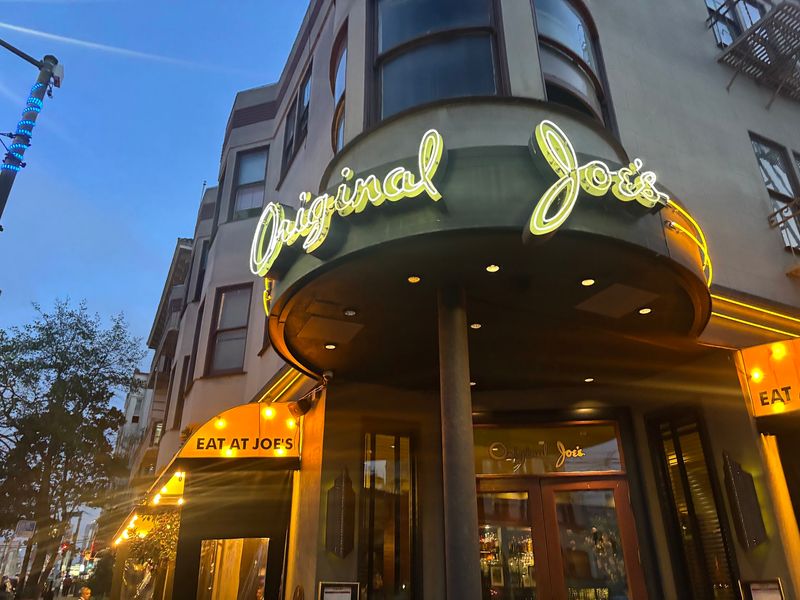
The Duggan family led the revival, and in 2012 the restaurant reopened in North Beach overlooking Washington Square Park.
Choosing that neighborhood connected the business to one of the most walkable and food-heavy corners of San Francisco.
Rebuilding was not a matter of copying the old space.
Salvaged counter seats, wood paneling, and bricks from Taylor Street were incorporated into the new design so the room would carry something physical from the original.
The result reads as familiar rather than brand new. North Beach turned out to be a natural fit.
Washington Square Park sits directly across the street, which gives guests somewhere pleasant to wait or walk before and after a meal.
The area is flat enough for easy strolling, which is not always true in this city.
Anyone planning a visit can use the park as a meeting point.
The New Dining Room Still Feels Proudly Old-School
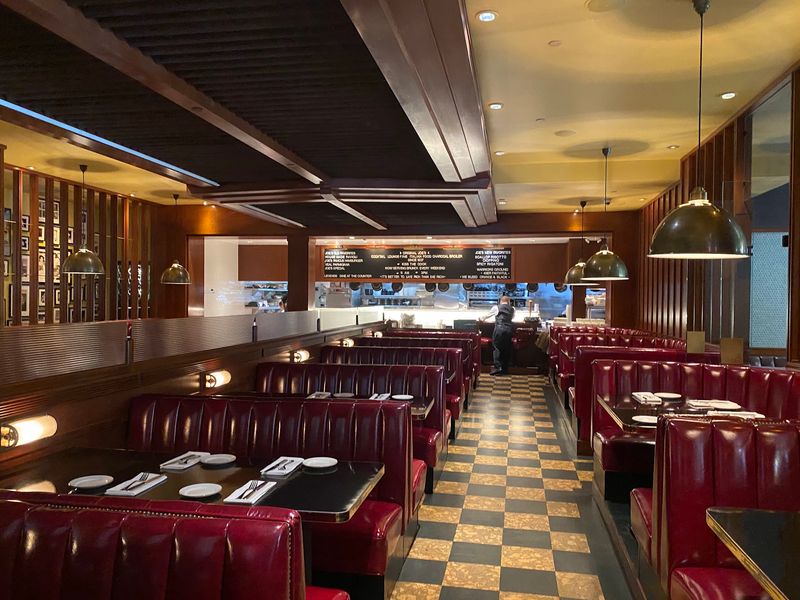
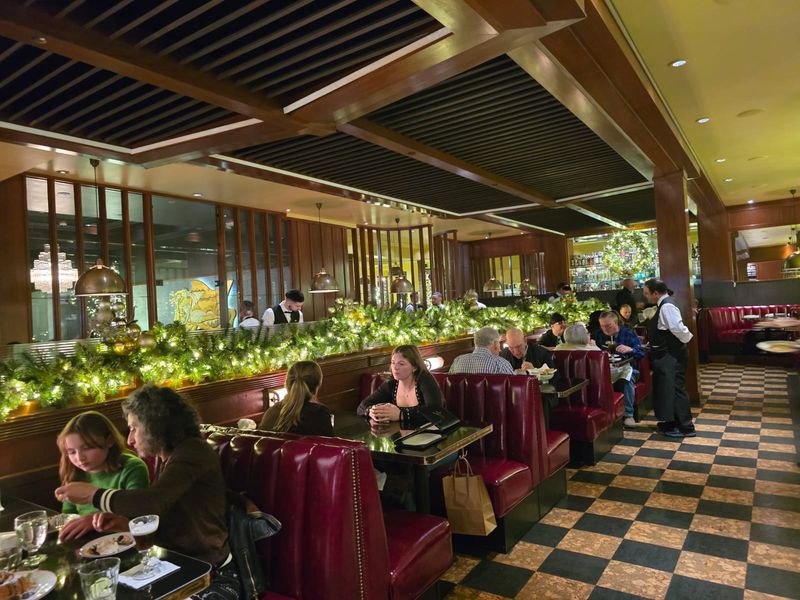
Red leather booths and white tablecloths set the tone the moment anyone steps inside.
Waiters wear jackets, plates are large, and the whole room leans into a style of dining that most new restaurants abandoned years ago.
Lighting stays warm and low without being dim enough to make reading a menu difficult.
Guests who prefer a quieter meal sometimes find the back rooms calmer, though availability depends on how busy the night is.
Booth seating tends to be comfortable for longer meals.
Tables in the main room sit fairly close together, so conversations carry, and groups should expect a social rather than private atmosphere.
Outdoor tables are available and can be pleasant on clear days, with overhead heating for cooler stretches.
Ordering etiquette here is refreshingly simple, since the menu is long and nobody expects guests to know it by heart.
Asking a server for guidance is normal and usually produces a straight answer about portion sizes.
The Ravioli Still Deserves Its Own Section
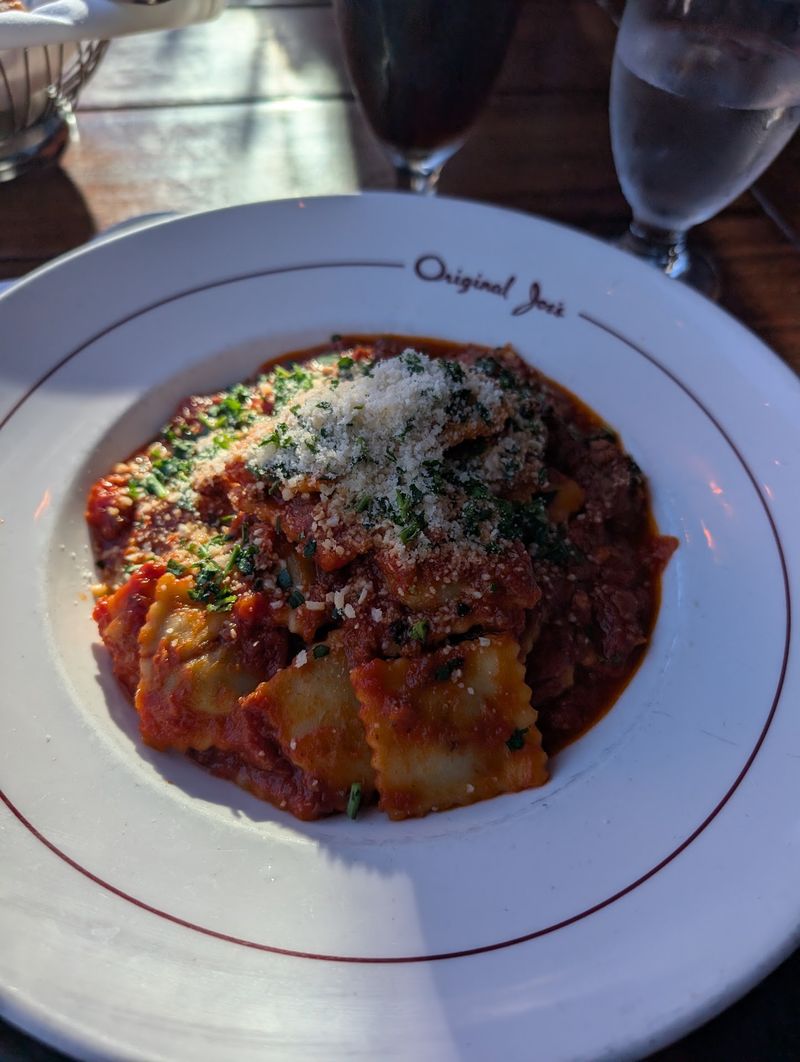
House-made ravioli has been on this menu for a very long time, and it has earned the loyalty it gets.
The pasta is filled with beef and spinach, then served with a classic meat sauce and grated Parmesan.
Nothing about the preparation is complicated, which is exactly why it works.
Filled pasta is one of those dishes where shortcuts show immediately.
Made in house, the texture of the pasta holds up against the sauce instead of collapsing into it.
The beef and spinach combination keeps the filling from feeling too heavy despite the meat sauce on top. Ravioli also works as a side here.
Guests ordering a steak or a sandwich sometimes add a small portion of ravioli alongside, which is a common move in Italian-American steakhouses and a good way to sample it without committing to a full plate.
Portions run generous across the menu, so ordering an appetizer plus a full pasta plate may be more food than expected.
Sharing is practical and completely normal in this dining room.
Leftovers going home in a box is a familiar sight at the end of the night.
Spaghetti And Meatballs Keep Things Classic
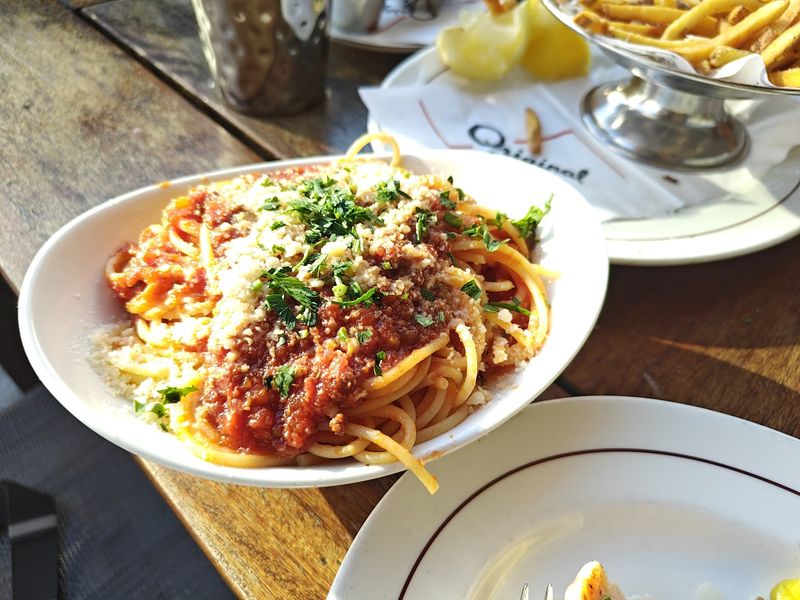
Trends come and go in San Francisco dining, and spaghetti with meatballs has quietly outlasted most of them.
The dish appears on the menu with the house meat sauce and Parmesan, prepared the way it has been for generations.
No deconstruction, no foam, no reinvention.
Rather than chasing whatever is popular in a given season, the kitchen focuses on recognizable Italian-American plates that guests order without needing an explanation.
That consistency is a big part of why people keep coming back across decades.
Comfort food sets expectations that are easy to meet and easy to miss.
Families often gravitate toward this plate.
Portions are large enough that children or lighter eaters may be better served by splitting one order, and the kitchen handles that without fuss.
Joe’s Special Is One Of The Signature Orders
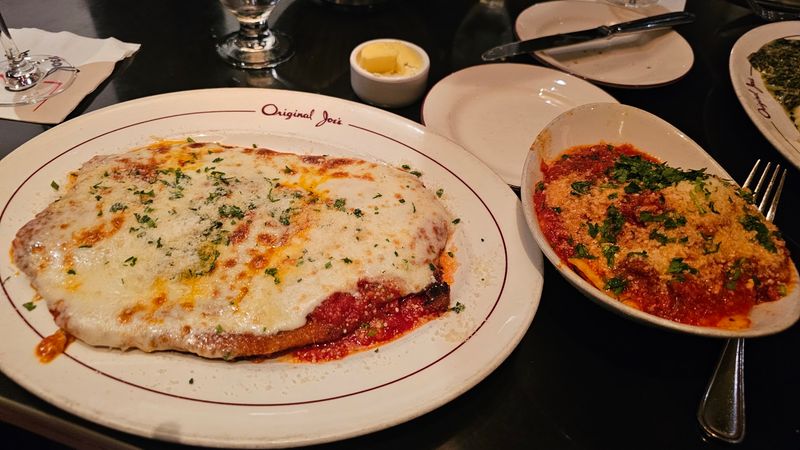
A scramble might not sound like a signature dish, but Joe’s Special has carried the restaurant’s name for decades.
The combination is ground beef, spinach, onions, and eggs, cooked together into something hearty and savory.
It remains on the current menu and shows up at both brunch and other service times.
Dishes like this belong to a specific moment in San Francisco food history.
Simple ingredients, fast cooking, and enough protein to carry someone through a working day describe exactly what the original counter was built to serve.
Versions of it appear at other restaurants around the city, which says something about how far the idea traveled.
Ordering it is a reasonable choice for anyone curious about the restaurant’s roots.
The flavors lean savory rather than rich, and the spinach keeps it from feeling overly heavy for a midday meal. Pairing it with coffee at brunch is a common approach.
Guests who want something lighter than a steak or a full pasta plate often land here.
Steaks Are Just As Important As The Pasta
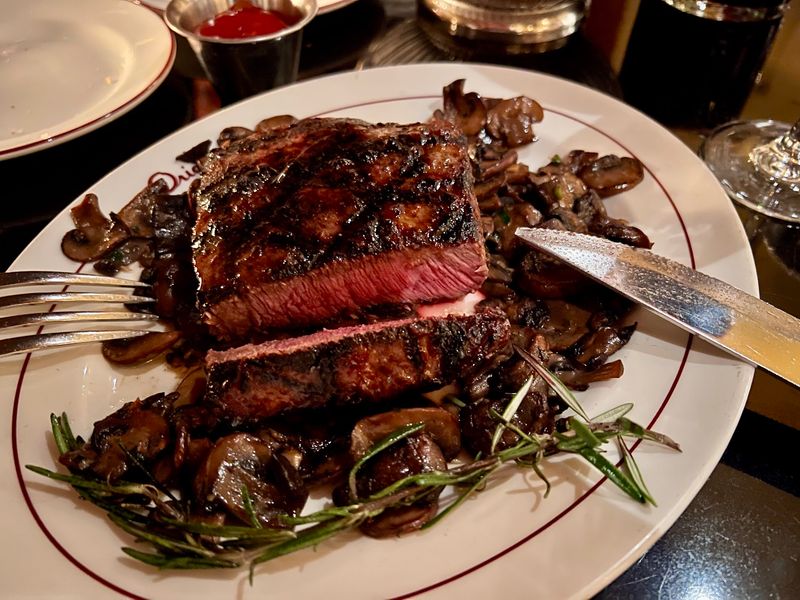
Calling this place only an Italian restaurant sells half the menu short.
New York steak, bone-in ribeye, and filet mignon all appear alongside the pasta, giving the kitchen a genuine steakhouse side.
The mix of grilled meats and red sauce classics defines the Italian-American steakhouse category that this restaurant helped popularize in the region.
Steaks here are cut large. The bone-in ribeye in particular is substantial enough that two people can reasonably share it, especially with an appetizer or a side of pasta on the table.
Servers are used to splitting requests and can advise on sizing.
Watching steaks cook is part of the appeal at the counter.
The grill sits in view of those seats, and the sound and smell of meat hitting heat becomes part of the atmosphere rather than something hidden in a back kitchen.
Doneness preferences should be stated clearly when ordering.
Thick cuts vary more than thin ones, so being specific helps the kitchen get it right the first time.