10 Magical South Carolina Towns Filled With Southern Heritage And Old-World Charm
Some weekends call for a town where wandering feels more important than checking off attractions.
South Carolina has small communities where old streets, marsh views, local history, porches, gardens, and distinctive traditions can make slowing down feel like part of the experience.
I like places that give you permission to be nosy in the nicest possible sense.
One block may pull you toward architecture, another toward food, and another toward a story you had never heard.
The charm is not identical everywhere, which is exactly the point.
Each stop can offer its own version of heritage without turning the trip into one long history lesson.
1. Beaufort
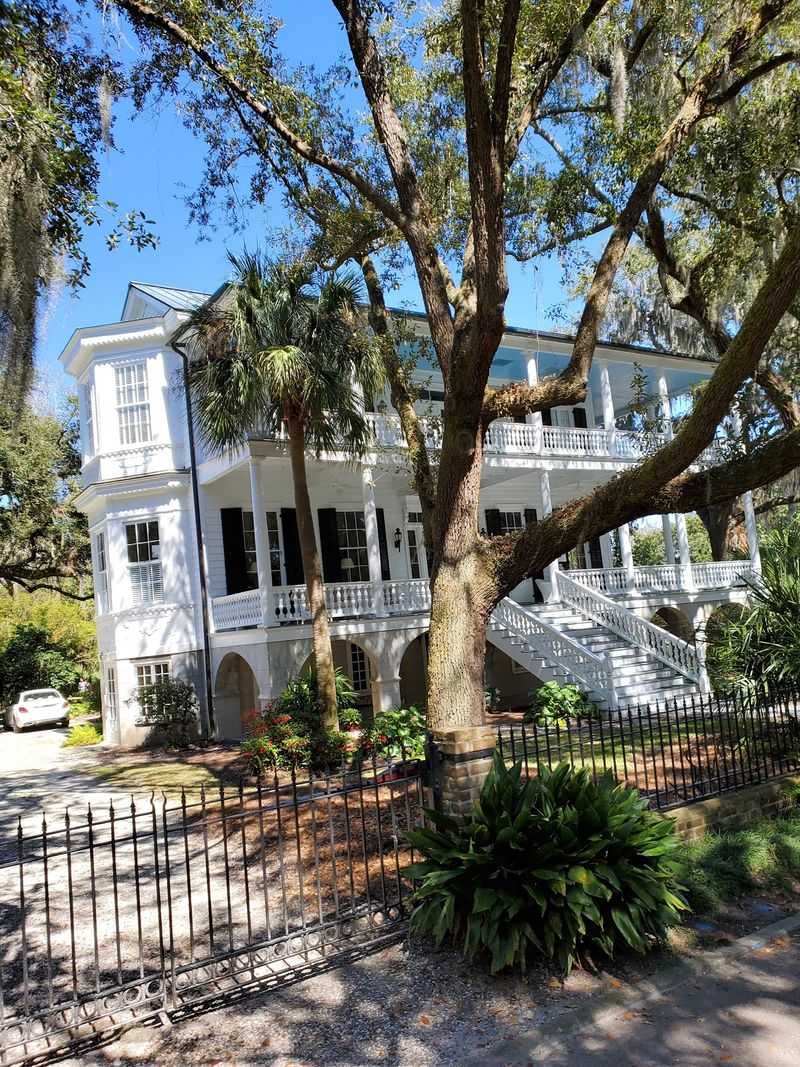
Union forces occupied Beaufort in November 1861, and many historic homes, churches, and commercial buildings were repurposed as offices, hospitals, and military quarters rather than destroyed.
Beaufort was founded in 1711 on a peninsula ringed by salt marshes and sea islands. Much of downtown lies within the Beaufort National Historic Landmark District, designated in 1973.
More than 50 architecturally significant buildings stand within easy walking range.
Stately antebellum homes hide beneath ancient oaks here. Many now welcome overnight guests as bed and breakfasts. Wraparound porches and courtyard gardens come standard.
The Verdier House, built in 1804 by a French Huguenot, is now a museum. It once served as Union army headquarters. The Cuthbert House, a Federal-style home from around 1810, operates as an inn.
Sidewalk cafes, bistros, boutiques, and art galleries fill the streets. A waterfront park delivers wide views over the Beaufort River.
Begin at the Beaufort Arsenal on Craven Street, which dates to 1798 and was substantially rebuilt in brick in 1852. Inside you will find the Visitor Center and Beaufort History Museum, plus a self-guided map with 39 points of interest.
The Old Point neighborhood holds the largest homes, including one known as The Castle. Nearby, the ruins of Old Sheldon Church, built between 1745 and 1753, sit quietly under the trees.
Climb Hunting Island Lighthouse for the only tower ascent in the state. Your camera will thank you later.
2. Georgetown
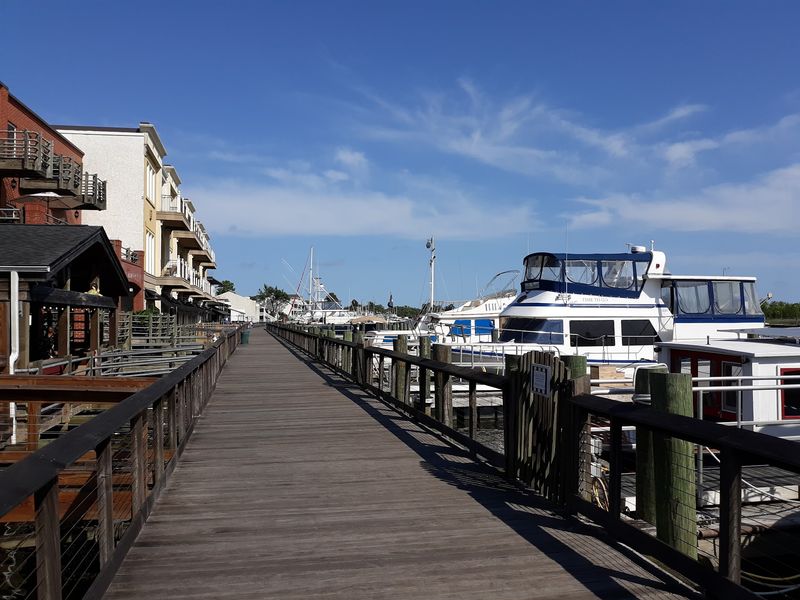
Four rivers meet at Winyah Bay, and history piles up along the shore.
Georgetown ranks as South Carolina’s third-oldest city. Centuries of trade shaped its streets and warehouses.
Indigo and especially rice generated enormous wealth for Georgetown planters, but that economy depended heavily on the forced labor and agricultural knowledge of enslaved Africans.
By 1840, the Georgetown District produced nearly half of the nation’s rice crop, and that plantation wealth influenced much of the architecture that survives today.
The Georgetown Historic District contains 49 contributing buildings in its central business district, and the district itself was listed on the National Register of Historic Places in 1971.
Tree-lined streets make wandering easy and shady. The Harborwalk adds water views, dining, and shopping in one stretch.
Every October, crowds arrive for the Georgetown Wooden Boat Show. Handcrafted boats go on display, and a boat-building competition keeps things fun.
History fans should see Hopsewee Plantation, built in 1740. Thomas Lynch, Jr., a signer of the Declaration of Independence, was born there.
The South Carolina Maritime Museum covers nautical stories with interactive exhibits and artifacts. The Rice Museum sits inside the Old Market Building from 1842.
Overlooking the Sampit River, the Kaminski House Museum dates to the mid-1700s. Lafayette Park and Herb Garden marks the Marquis de Lafayette’s arrival.
Bring an appetite for fresh shrimp and a slow afternoon.
3. Abbeville
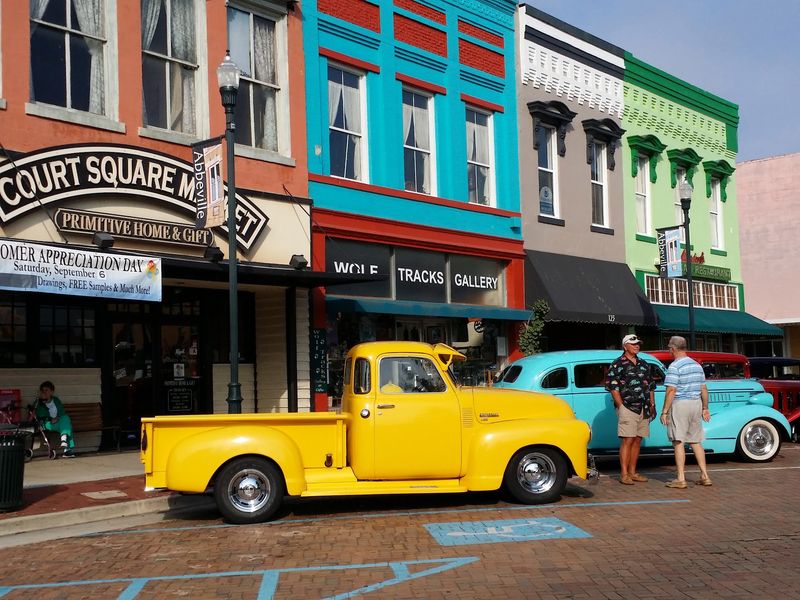
I had to do a double-take at a town holding two opposite titles in American history. One square, two turning points, and a whole lot of charm.
The 2020 Census counted 4,874 residents in Abbeville. French Huguenot settlers established Abbeville in 1758, helping shape the community’s early development.
Abbeville is often described locally as the Birthplace and Deathbed of the Confederacy, a label tied to a major secession meeting held on Secession Hill in November 1860 and the collapse of the Confederate government five years later.
In May 1865, Jefferson Davis met with his cabinet at the Burt-Stark Mansion, where Confederate leaders concluded that their government could no longer continue.
The downtown square anchors everything. Restored 19th-century homes, commercial buildings, and historic churches surround it.
Built in 1908, the Abbeville Opera House has been carefully brought back to life. Plays and concerts still fill its seats.
The Abbeville County Museum occupies a fascinating 1853 jail. On the grounds sits the 1839 Creswell Cabin, moved here to show backcountry life.
Quaint shops and local eateries keep the square busy. Community events run through the year, including the Abbeville Spring Festival.
The Hogs and Hens BBQ Festival draws hungry crowds too. Smoke, music, and friendly competition make a great combination.
Tucked into the Old 96 District in western South Carolina, this town wears its rural beauty well. Leave room for one more lap around the square.
4. Pendleton
Call me crazy, but one small upcountry town decided to become a living history book.
Pendleton’s historic core still preserves the Village Green and dozens of buildings dating to the 18th and 19th centuries.
Pendleton is listed in full on the National Register of Historic Places. Surveyors laid it out in 1790, and it now claims one of the nation’s largest historic districts.
Over 50 buildings from the 18th and 19th centuries stand in town and just beyond. St. Paul’s Episcopal Church, built in 1822, is a standout.
Inside, a historic Jardine pipe organ has been making music for more than 170 years. The church cemetery holds Thomas Greene Clemson and Anna Calhoun Clemson.
Wealthy Lowcountry planters were drawn to Pendleton’s more agreeable climate during the 1800s.
Historic plantation-era residences survive, including Ashtabula and Woodburn; Woodburn was built as a summer residence around 1830, and its site includes a slave and tenant dwelling used in interpreting the property’s history.
The Village Green forms the heart of town. Antique shops, boutiques, and restaurants circle it.
Construction of Farmers Hall began in 1826 and was completed in 1828, and the building has long served the Pendleton Farmers Society.
Hunter’s Store, built around 1850, now houses a bookstore and the Pendleton District Commission, while historical and genealogical archives remain available there by appointment.
The Pendleton Historic Foundation works from the Guard House. Tanglewood Mansion connects to the Clemson family story.
5. Camden
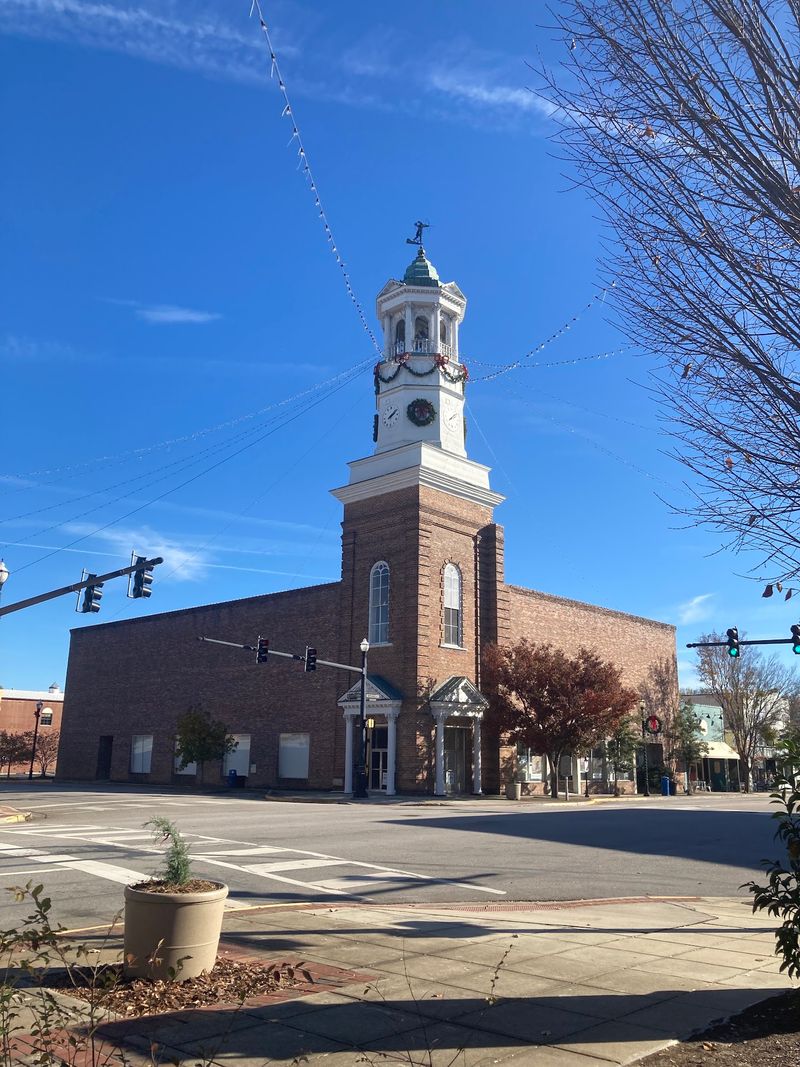
My jaw dropped at how much Revolutionary War history sits in one small town. Redcoats, racehorses, and antique shops all share the same streets.
Camden is South Carolina’s oldest inland city, but its history is more complicated than a 1732 founding date.
A township was surveyed nearby in 1733, while Joseph Kershaw established Pine Tree Hill in 1758 and the settlement became Camden in 1768.
The City of Camden currently describes Historic Camden’s Revolutionary War Park as a 110-acre site. Reconstructed colonial buildings show what 18th-century life looked like.
Guided and self-guided tours, historic buildings, educational programs, and demonstrations help interpret the colonial and Revolutionary-era site. The Joseph Kershaw Mansion, rebuilt on site, served as British headquarters in 1780.
At the Revolutionary War Visitor Center, you will find the nation’s first permanent exhibit on the Southern Campaign. It fills in gaps most history classes skip.
Horses matter here too. Locals proudly call this the Steeplechase Capital of the World.
Springdale Race Course hosts the Carolina Cup steeplechase each spring. Racing fans arrive from across the region.
Downtown brings antique stores, art galleries, and cozy cafes inside century-old buildings. The National Register-listed Camden Historic District encompasses more than 50 contributing places, sites, and objects.
Architect Robert Mills left his mark by designing the former Kershaw County Courthouse, Bethesda Presbyterian Church, and other buildings in Camden.
6. Cheraw
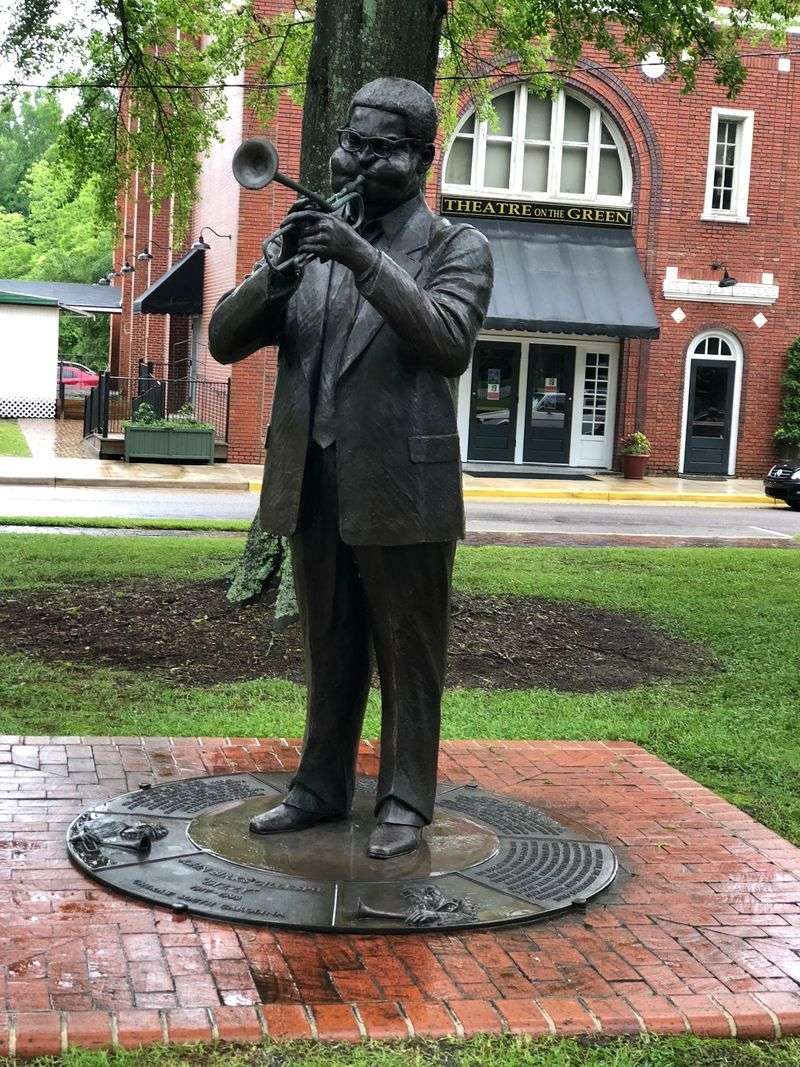
Are you seeing what I am seeing? Wide streets, a lush green, and jazz trumpet notes hanging in the air.
Cheraw counts among the state’s oldest inland towns. Cheraw began as a small trading post at the head of navigation on the Great Pee Dee River in the early 1700s and was named for the Cheraw Indians.
Joseph and Eli Kershaw laid out the broad streets and town green in 1768. That plan still shapes daily life.
The area anchors the 213-acre National Register Cheraw Historic District. Gardens, parks, and two centuries of architecture fill it.
Sitting at the head of navigation on the Great Pee Dee River, the town boomed as a 19th-century river port. It once held the largest bank in South Carolina outside Charleston.
Before the Civil War, Cheraw was home to the largest cotton market between Georgetown and Wilmington, and wealth from a cotton economy tied to enslaved labor helped shape the prosperous town that developed around it.
Sherman’s march largely spared the town. Many Civil War sites remain intact for exploring.
Old St. David’s Church, completed in the 1770s, was used as a hospital during both the Revolutionary War and the Civil War.
Around the Town Green stand the Lyceum Museum from 1825, Market Hall from 1837, and Town Hall from 1858. A life-sized statue of jazz legend Dizzy Gillespie, born here, watches over the grass.
Every October brings the South Carolina Jazz Festival. The Cheraw African American Heritage History Tour digs deeper into local stories.
7. Edgefield
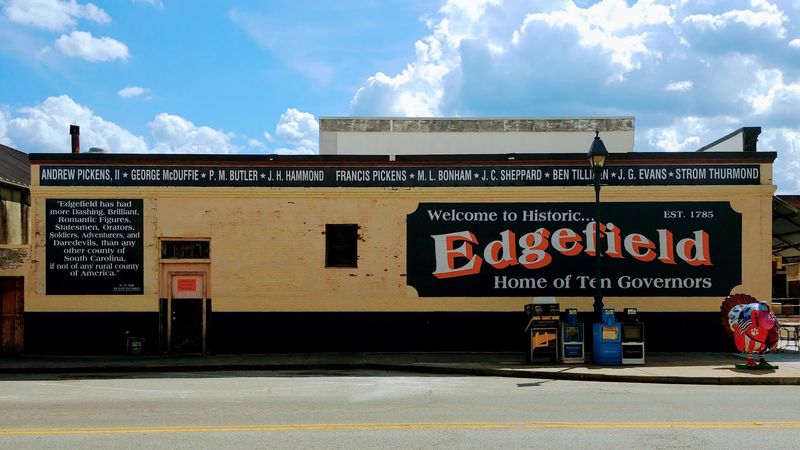
One quiet country town produced an astonishing number of state leaders. The nickname says it all.
Edgefield is known as the Home of 10 Governors. Around 4,750 residents share its charming town square.
The downtown district appears on the National Register of Historic Places. Antique stores, boutiques, and friendly eateries line the sidewalks.
A thriving artisan community works nearby. Courthouse Square looks much as it did over 230 years ago.
The Edgefield County Courthouse, built in 1839, saw notable moments in state history. Monuments dot the square, including an obelisk to Confederate soldiers.
One stone lists the ten governors and five lieutenant governors from this county. A statue honors Edgefield native Strom Thurmond, who served more than 47 years in the U.S. Senate and was once its longest-serving member.
Pottery is the real local treasure. A 200-year-old stoneware tradition continues with local clay and alkaline glaze.
You can view and buy pieces at the Phoenix Factory’s Old Edgefield Pottery. Watching a potter shape that clay is oddly hypnotic.
Traditional blacksmithing happens at the village blacksmith shop. Sparks, hammers, and old-fashioned skill make a memorable stop.
Historic homes and churches fill the streets, including Horn Creek Baptist Church from 1790. That ranks among the oldest Baptist churches in the backcountry.
The Discovery Center holds exhibits on the county’s varied past. Roadside markets sell peaches so juicy you will need napkins.
8. McClellanville
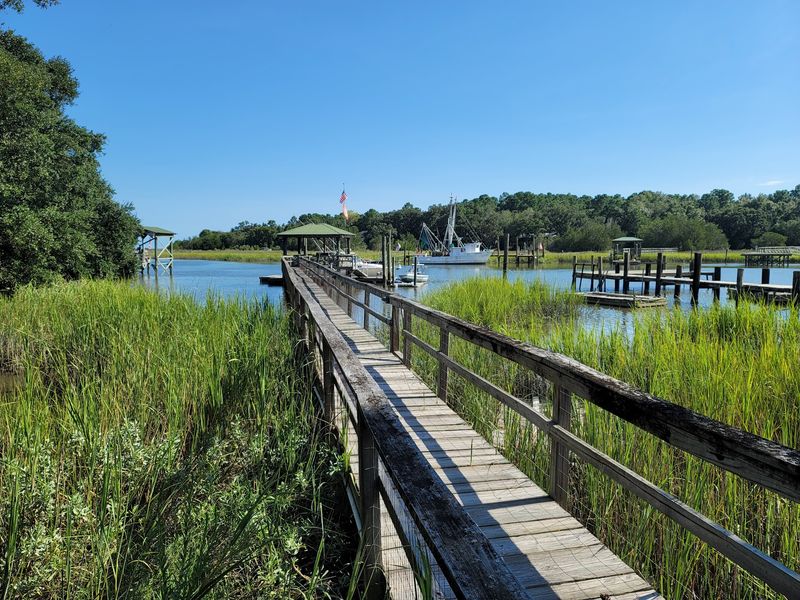
It makes you wonder how a tiny fishing village holds so much history. Shrimp boats, moss, and oaks older than the country.
McClellanville sits between the Francis Marion National Forest and coastal waters.
McClellanville developed in the mid-1800s as South Santee rice planters established summer homes there, with timber and seafood later becoming important parts of the local economy.
Shrimping remains the heartbeat of this close-knit community. Boats still head out before sunrise.
Each May, the Lowcountry Shrimp Festival and Blessing of the Fleet fills the waterfront. The tradition dates back to 1977.
McClellanville has retained many historic homes, churches, live oaks, and village streets even as the community has changed over time.
St. James Santee Episcopal Church, built in 1890, shows off local craftsmanship. Black cypress shingles cover a frame of cypress and longleaf pine.
A stroll down Pinckney Street, once a main thoroughfare, passes historic homes and live oaks draped in Spanish moss.
The Village Museum traces local history through exhibits on Native American communities, French Huguenot settlement, rice culture, timber, seafood, and village life.
Then there is the Deer Head Oak, which Charleston County estimates to be more than 600 years old and preserves as the centerpiece of a public park in McClellanville’s historic district.
Its branches spread up to 120 feet wide. The Brick Church at Wambaw, built in 1768, sits along the old King’s Highway, while Cape Romain National Wildlife Refuge protects nearby coastal marshes and islands.
9. York
Far be it from me to play favorites, but one town packs an unreal mix of architecture into a few blocks. Gothic Revival sits next to grand Victorian.
York carries the nickname White Rose City and serves as the York County seat.
Its current city plan describes the National Register historic district as about 170 acres with approximately 180 contributing properties, and city preservation documents identify it as one of the state’s larger historic districts.
That makes it one of the largest such districts in the state. Over 180 historic buildings line walkable streets.
The York County Courthouse, the Sylvia Theater, and First Presbyterian Church show the range. Each one rewards a slow look upward.
Here is a quirky bit of trivia. The Barnett Brothers Circus kept its winter quarters here from 1929 through 1945.
The McCelvey Center stands on a site associated with the former Yorkville Female College, founded in 1852, while the present building later served generations of local students as a school.
Inside, the 500-seat Lowry Family Theater is praised for its acoustics. Concerts and plays fill the calendar.
Just over in McConnells, the 778-acre Historic Brattonsville runs Revolutionary War living history programs. Costumed demonstrations make the 1700s feel close.
Downtown remains one of the most intact historic districts around. Yorkville Marketplace brings together dozens of vendors selling goods ranging from plants and furniture to handmade crafts.
10. Walterboro
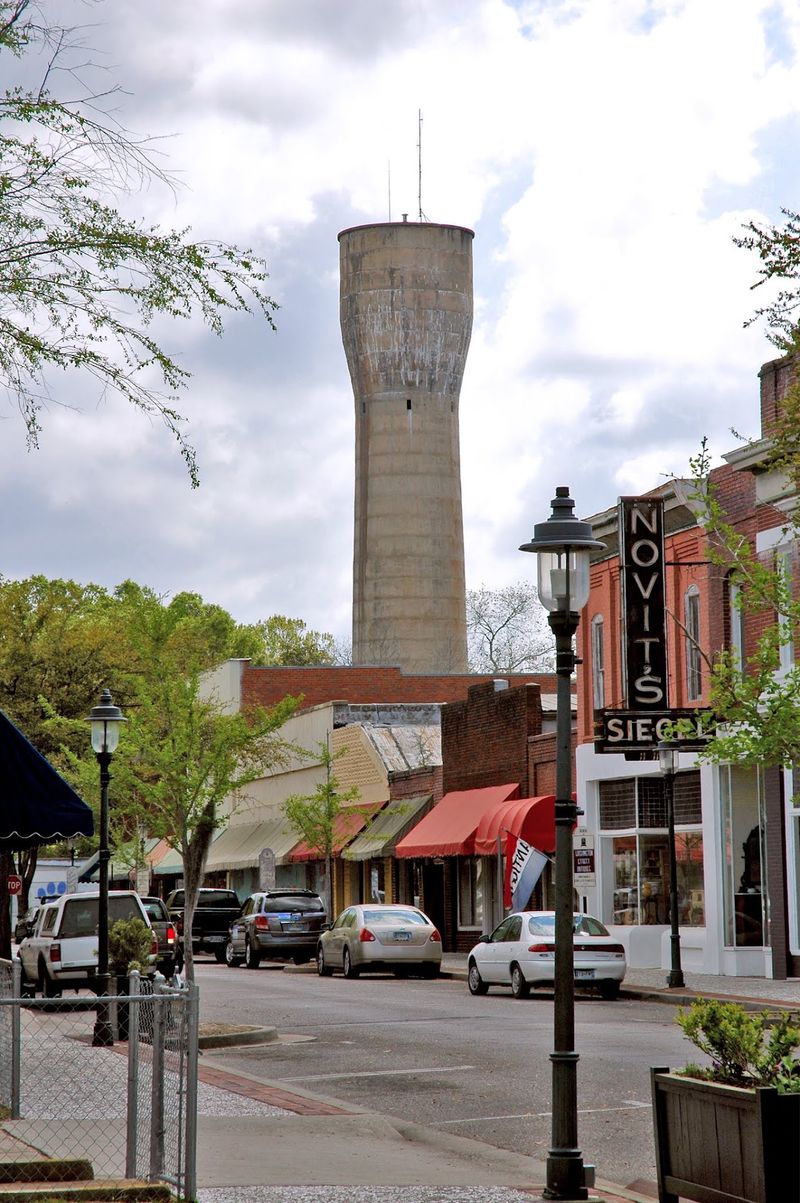
An entire town began as a summer escape from swamp fevers. That healthier high ground became a charmer.
Walterboro calls itself the Front Porch of the Lowcountry. It sits between Charleston and Beaufort, mixing natural beauty with Southern hospitality.
Paul and Jacob Walter helped establish the community as a summer refuge from the malaria-prone swamps of the Lowcountry after the American Revolution.
The community took its name from Paul and Jacob Walter, became the county seat in 1817, and was officially incorporated in 1826.
Grand 1820s houses still line the historic downtown. The Bedon-Lucas House Museum keeps its original heart of pine flooring.
Elegant Victorian homes from the turn of the century join them. Together they make a rewarding walk.
Antiquing and art thrive here. The South Carolina Artisans Center sells work by juried state artists and runs craft demonstrations and classes.
The Tuskegee Airmen Memorial honors more than 500 members who trained locally between 1944 and 1945. You will find it at the Lowcountry Regional Airport.
Two districts appear on the National Register of Historic Places. Historic Hickory Valley is mostly residential, while the Walterboro Historic District covers businesses.
Oak-lined streets stay shaded by moss-draped branches, while the Walterboro Wildlife Center and Walterboro Wildlife Sanctuary offer exhibits, boardwalks, trails, and opportunities to see Lowcountry wildlife.
Nearby sit the ruins of Pon Pon Chapel, which became known as the Burnt Church after its brick chapel burned in 1801.