Nebraska Kept Its Old College World Series Infield So Fans Still Run The Bases
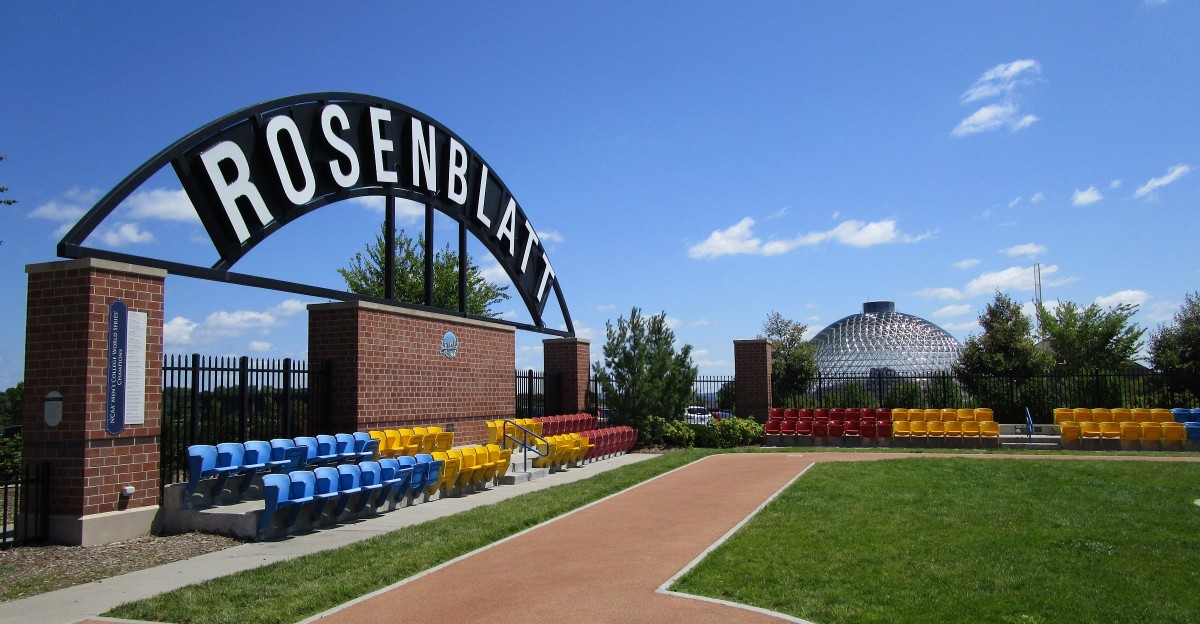
I pulled into a Nebraska parking lot expecting nothing but painted lines and a long walk to the gate. Instead there were foul poles standing in the open air, concrete base bags on brick columns, and a home plate set flush into the ground.
Kids were sprinting the basepaths while grown adults stood around reading plaques and pointing at where the outfield used to be. It turns out a chunk of one of the most famous baseball fields in the country is still here, and anybody can walk right onto it.
A Baseball Diamond Hiding in a Parking Lot
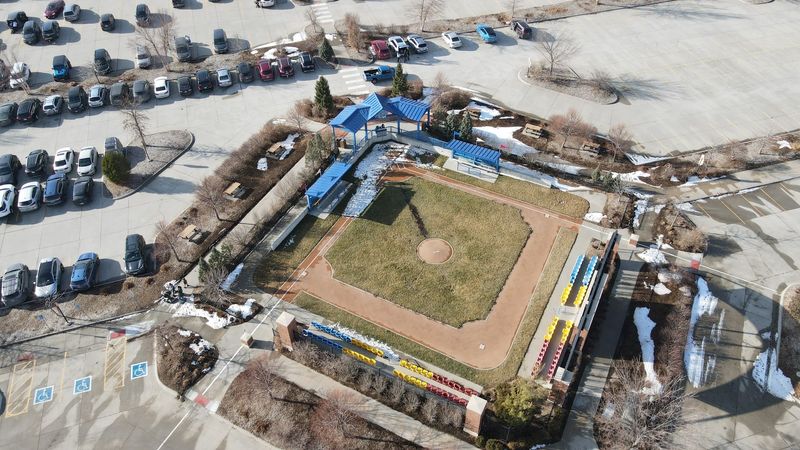
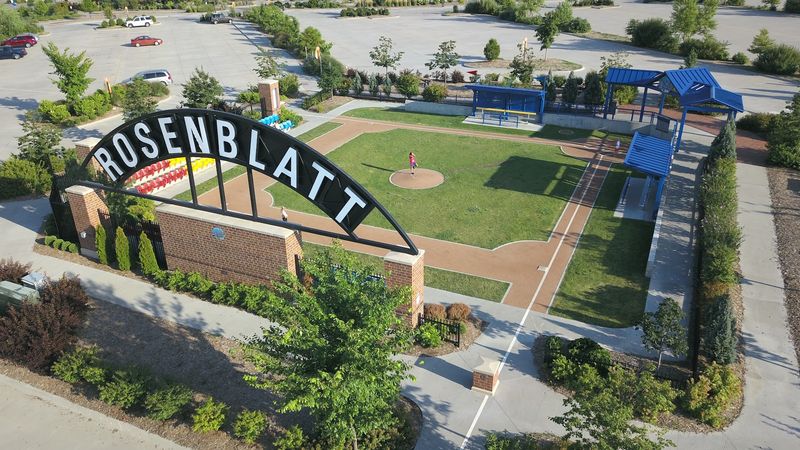
Concrete base bags sit atop short brick columns, spaced exactly where first, second and third once were. Two original foul poles rise from the pavement at their old coordinates.
A home plate is embedded in the ground, level with the surface, marking the spot where six decades of College World Series at-bats began.
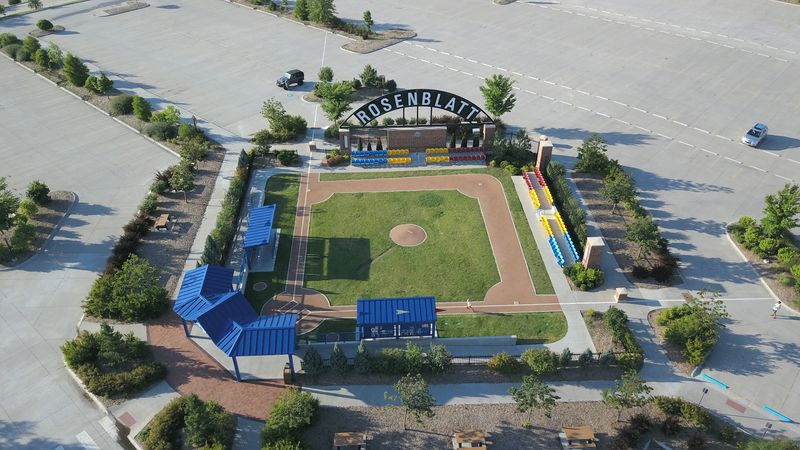
The site carries the name Johnny Rosenblatt’s Infield at the Zoo, and it occupies the south Omaha hilltop where Johnny Rosenblatt Stadium stood from 1948 until demolition in 2012. Henry Doorly Zoo and Aquarium took over the land after the ballpark came down, and much of the footprint did become parking.
The infield did not.
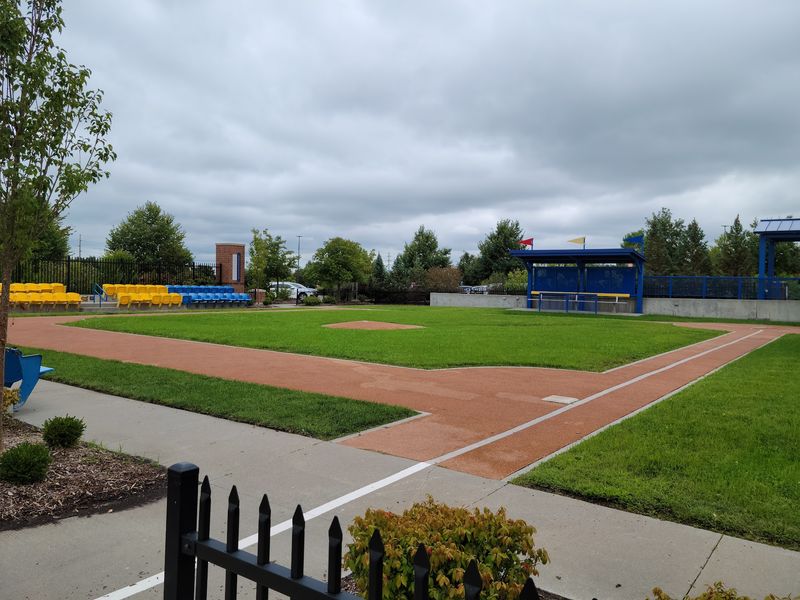
What survives is scaled down and built for wiffle ball rather than nine innings, which is part of why it works. Nobody has to buy a ticket to the diamond itself or wait for a game to start.
The gates open in the morning and the memorial stays accessible through the day, sitting quietly between rows of cars until a family notices the foul poles and wanders over to look.
Sixty Years of the College World Series on One Hill
From 1950 through 2010, the NCAA Men’s College World Series called this hill home. Sixty tournaments.
Teams arrived from every corner of the country, played their way through a bracket in the June heat, and left Omaha either champions or one game short.
Drivers on Interstate 80 could spot the light standards from the highway, which made the ballpark a landmark long before it became a shrine. Tailgating filled the surrounding streets.
Fans from Texas, California and the Carolinas mingled with Nebraskans who had been coming since childhood, and the whole neighborhood shifted rhythm for two weeks every summer.
Then came 2011 and the move to a new downtown venue. The final College World Series pitch at the old park was thrown in 2010, and the wrecking crews arrived two years later.
Something in Omaha’s baseball identity went with it, which explains why so many people still detour to a parking lot to stand on a square of rubber. The tournament stayed in Nebraska.
The building did not.
Why the Zoo Chose Preservation Over Pavement
Land next to a growing zoo is valuable, and the easy answer would have been asphalt from fence line to fence line. That is not what happened here.
City officials and zoo leadership worked out a plan that carved a memorial out of the middle of the new lot, keeping the diamond’s exact geometry intact.
Precision matters in a place like this. The foul poles were not simply planted where they looked good.
Neither were the bases. Getting the measurements right is what separates a tribute from a decoration, and it is the difference a longtime fan notices within about four seconds of walking up.
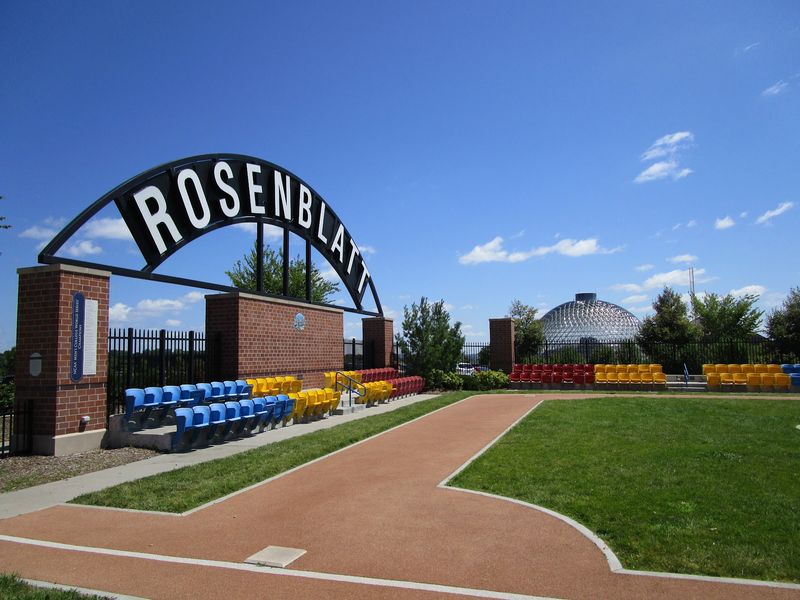
The arched Rosenblatt sign came along too, salvaged and remounted lower on a brick wall where anyone can walk up and touch the letters. Plaques and displays around the perimeter fill in the tournament history for people too young to remember it.
Omaha could have kept the memories in a museum case somewhere downtown. Instead the city left them outdoors, on the original ground, free to anyone who shows up.
Home Plate, Foul Poles, and the Real Coordinates
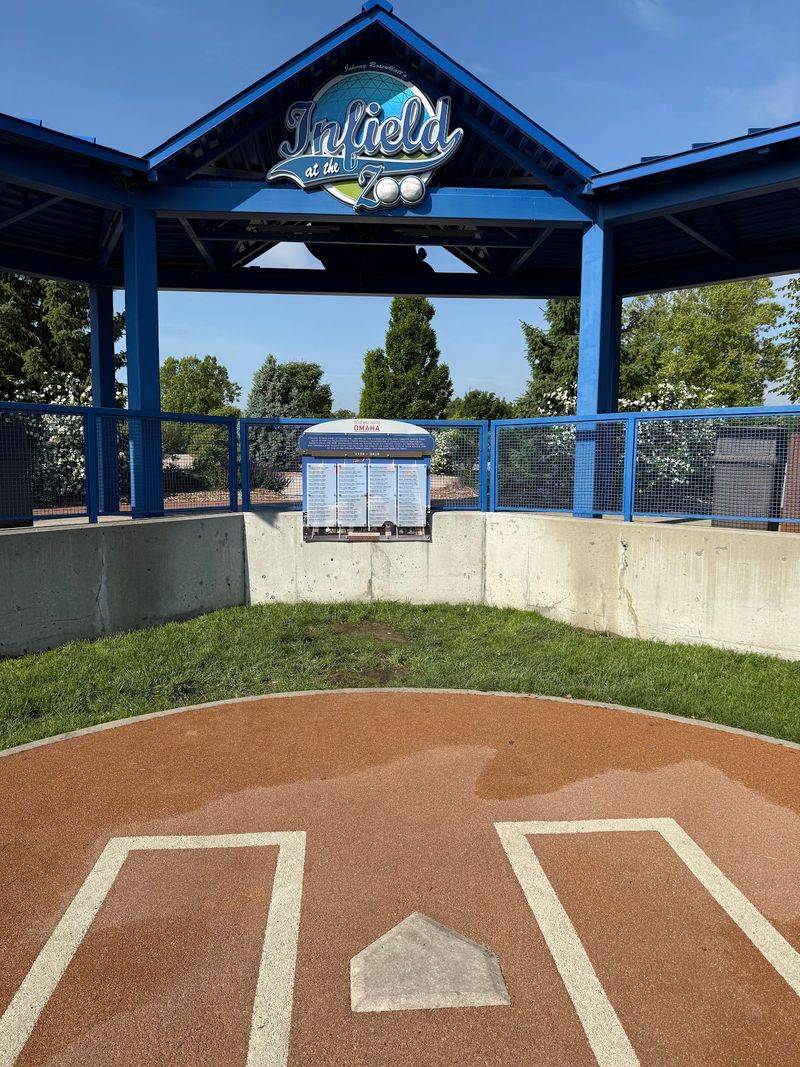
Kneel down at home plate and you are touching a replica, not the original. The genuine article went to the Baseball Hall of Fame in Cooperstown, which is a fair place for it to end up.
The stand-in sits at the same spot, so the geometry of every famous swing taken here still holds.
Walk the ninety feet to first and the distance registers differently on foot than it ever did from a seat. The brick columns holding the base markers come up about waist high on an adult, which makes them ideal for a small child to slap on the way past.
That seems to be exactly the point.
Look up and the foul poles do the heavy lifting. They give the flat pavement a vertical frame, letting the brain sketch in grandstands that are no longer there.
Between the poles, the plate and the bases, enough of the original skeleton remains that the outfield feels implied rather than missing. It is a ballpark reduced to its coordinates, and it works.
Original Seats Salvaged for a Miniature Grandstand
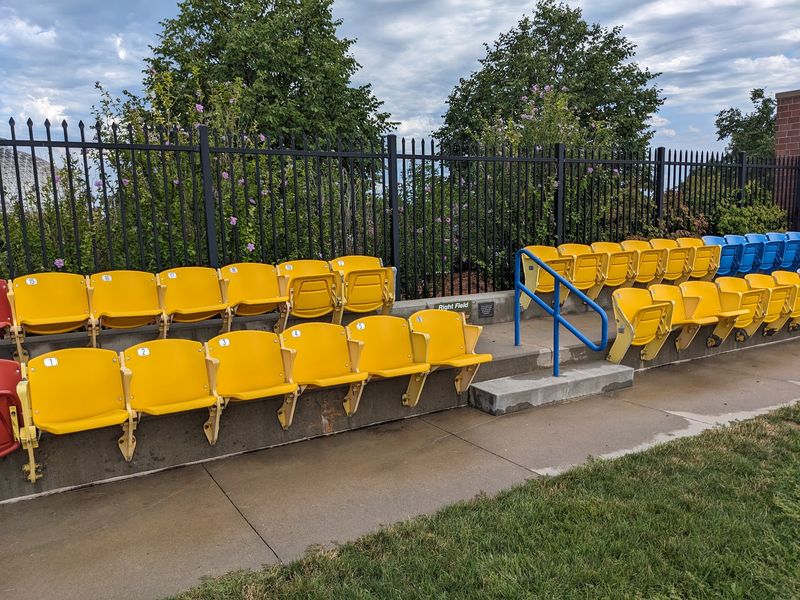
Two short rows of stadium seats face the diamond, pulled straight out of the old grandstand before it came down. Same metal frames, same molded backs, same slightly narrow proportions that tell you they were installed in an era when people packed in tighter.
Bleacher sections sit alongside them, arranged as a pocket-sized grandstand rather than scattered as sculpture. The arrangement gives the memorial a purpose beyond looking at things.
You can sit. Watch your kids round the bases.
Eat a sandwich out of a cooler before heading into the zoo.
Anyone who attended a game here will recognize the seats immediately, and that recognition is most of the emotional payload. A photograph of a demolished ballpark keeps you at arm’s length.
Sitting in one of its actual chairs, on its actual hilltop, does something else entirely.
Shade is limited, so a July visit runs warm. Early morning or late afternoon is kinder, especially with young kids in tow, and the pavement holds heat well into the evening.
Wiffle Ball Games Where Legends Once Batted
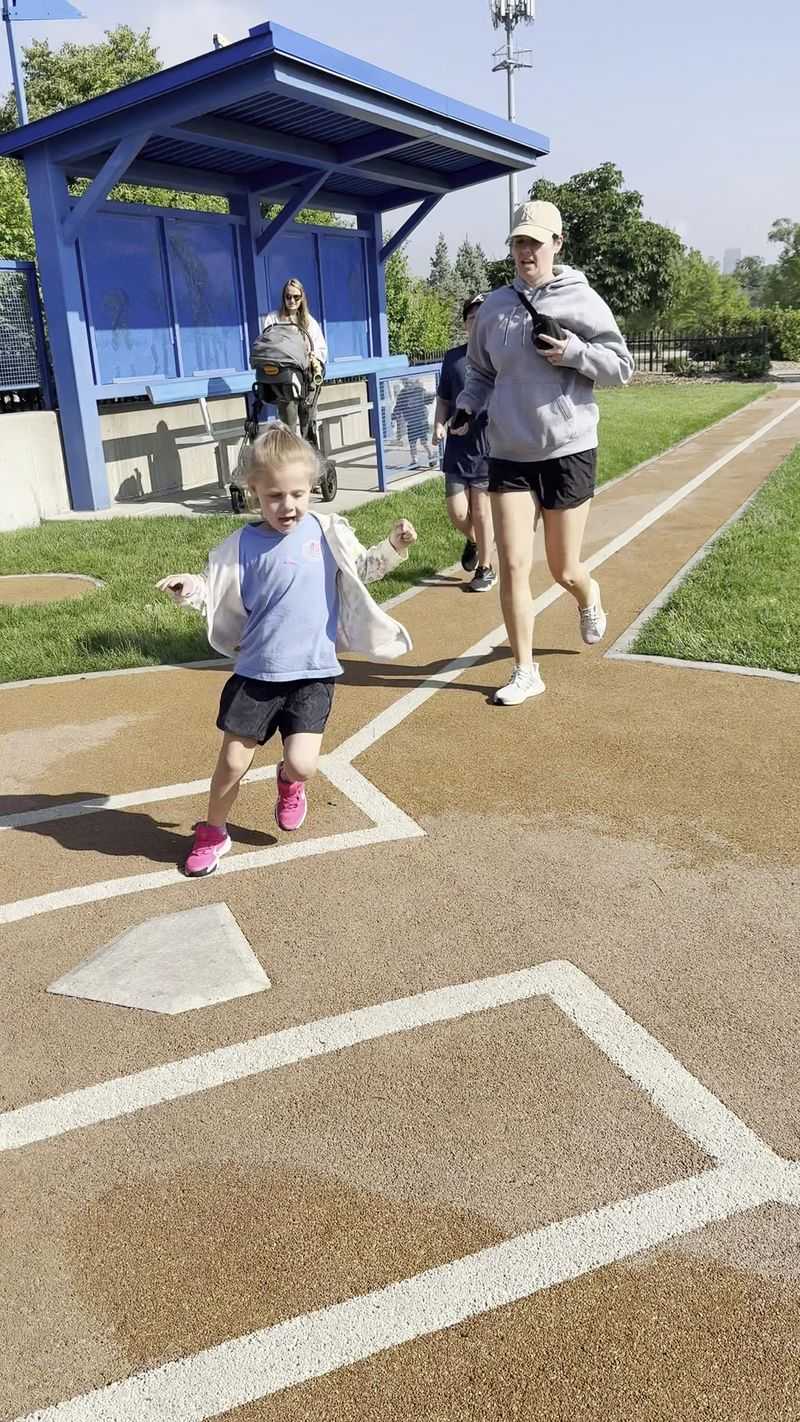
Bring a wiffle ball bat and the memorial turns into a working field. Scale it down, hand a plastic bat to a seven-year-old, and suddenly the place stops being a monument and starts being a ballgame.
Nobody keeps score. Everybody runs hard.
Children tear around the bases before the zoo gates even come into view, which tends to be the first thing that happens on arrival. Parents who watched tournaments here in the eighties or nineties get to explain what stood where, pointing at empty air above the pavement.
That handoff between generations is the whole idea.
Adults are not excluded either. Plenty of grown fans take a slow lap of the basepaths, touch the plate, and stand for a second at the spot where a national title was decided more than once.
The surface is paved, and the layout is wheelchair accessible, so the lap is open to more people than a real infield would be. Bring water.
There is not much cover once the sun clears the buildings.
What the Blatt Meant to South Omaha
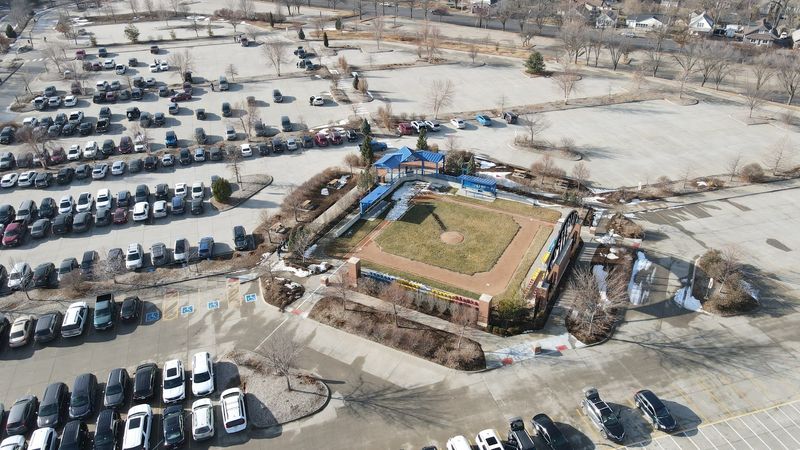
Ask anyone who grew up near 13th Street and they will tell you June meant traffic, grills on front lawns, and strangers in team colors walking uphill. The ballpark sat in the middle of a working neighborhood rather than a stadium district, and the tournament spilled directly into it.
Affection for the old park runs deep enough that people still argue the decision. The proposal to build parking garages and keep the original standing had supporters.
The new downtown venue drew a different verdict, described more often as efficient than beloved, and that comparison has not faded in the years since.
None of which changes where the memorial sits. It remains on the same hill, in the same Douglas County neighborhood, a couple of miles south of downtown and directly beside one of Nebraska’s biggest attractions.
The zoo’s expansion reshaped the hilltop considerably, adding lots, entrances and new exhibits. Keeping the infield inside all that construction was a deliberate choice, and it left south Omaha with something physical instead of just stories.
Finding the Site and Planning the Stop
The address is 3625 S 10th St, Omaha, NE 68107, on the grounds of Henry Doorly Zoo and Aquarium just south of the Interstate 80 and 13th Street interchange. Coming from Lincoln or Council Bluffs, it is a straightforward run down I-80 and a short drop south.
Gates open in the morning and the grounds stay accessible through the day, though times shift with the season, so a quick check before driving out saves frustration. The infield itself is out in the open near the parking areas, which means you do not have to commit to a full zoo day just to see it.
Expect the memorial to take fifteen or twenty minutes on its own. Bring a picnic and it stretches into an hour comfortably, since there is seating and open space.
Zoo parking fees and admission apply for the animals, so budget accordingly if the whole family is going in. Pair the stop with the aquarium, the Desert Dome, or a drive through the Old Market afterward.
A Short Stop That Lands Harder Than Expected
Small sites rarely stick with people. This one does, mostly because it asks so little and delivers something you can physically stand on.
There is no building to tour and no gift shop attached to the diamond, just the original coordinates of a field that mattered to a lot of Americans for sixty summers.
Expectations should stay calibrated, though. It is a memorial rather than a park, compact and surrounded by pavement, and anyone arriving hoping for a preserved grandstand will be looking at foul poles instead.
For the right visitor, the tradeoff is an easy one. Baseball families, anyone who sat in those seats before 2010, and grandparents with a story to tell all get more out of fifteen minutes here than a plaque downtown could ever offer.
Pack a wiffle ball, let the kids run a lap, and point out where left field used to stretch. Omaha could have paved the whole hill and nobody outside Nebraska would have argued.
That the city did not is the reason to stop.