Florida’S Old Seven Mile Bridge Now Carries Walkers Two Miles Out Over Open Water
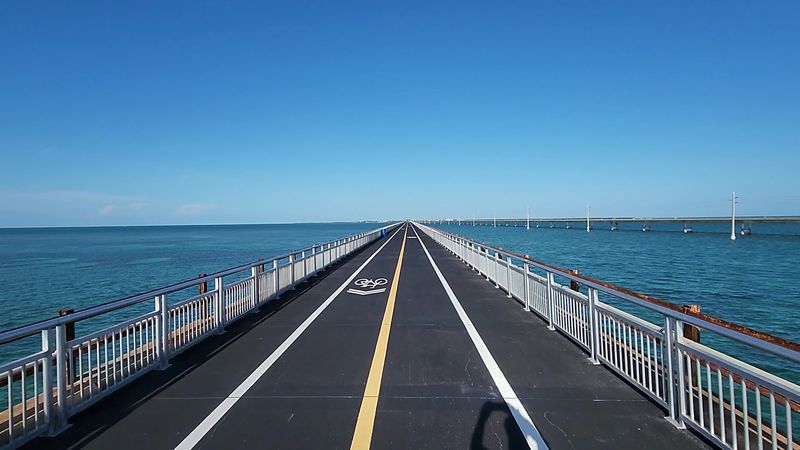
I pulled over expecting a photo stop and ended up walking for an hour with water on both sides of me. Florida has an old railroad bridge, later a highway, that now belongs entirely to people on foot and on bikes.
It runs straight out into the open sea, far enough that the shoreline shrinks behind you and the only sounds are wind and gulls. Bring water, wear a hat, and give yourself more time than you think you need.
An Old Highway That Belongs to Walkers Now
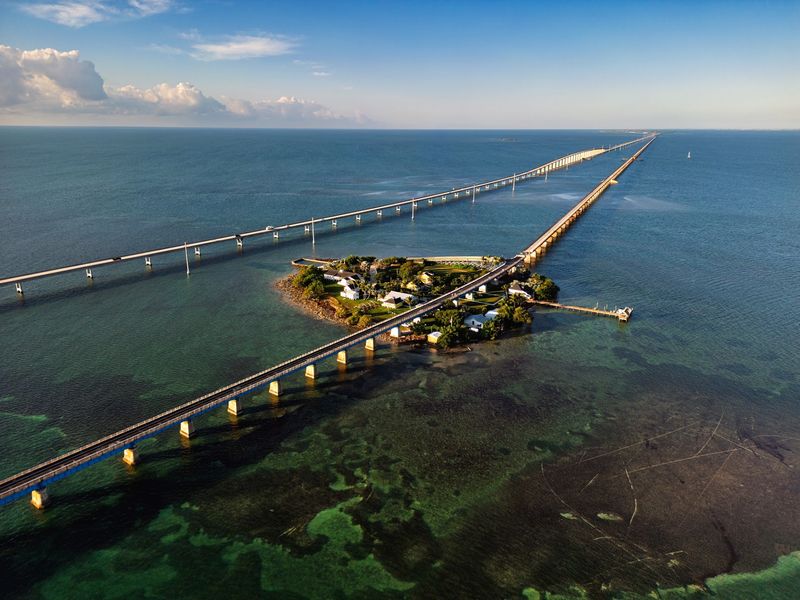
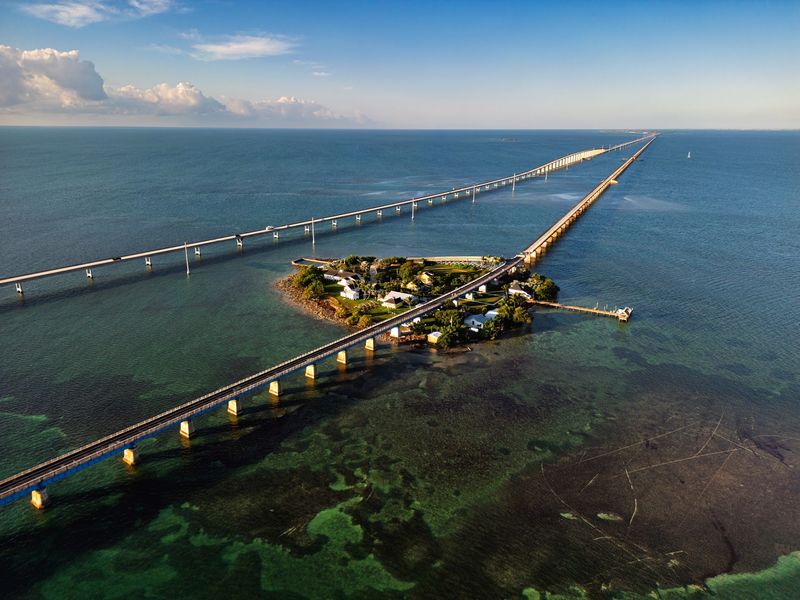
Two bridges run side by side across the water at the western edge of Marathon in the Florida Keys. One carries cars on US 1 at highway speed.
The other, the older and lower of the pair, carries nobody faster than a bicycle.
Old Seven, as it goes by around here, is a restored 2.2-mile stretch of a span that once stretched the full seven miles across Moser Channel. The rehabilitated section now ends at Pigeon Key, a small historic island sitting under the arch of the newer bridge.
Round trip on foot works out to roughly 4.4 miles, which makes the walk closer to a serious outing than a quick stretch of the legs. Cyclists cover it comfortably in under an hour with stops for photos.
You’ll find the entrance and its parking lot just off US 1 near mile marker 47, bayside. Address for the trailhead is the Florida Keys Overseas Heritage Trail, Marathon, FL 33050.
No cars, no motorcycles, no scooters get past the gate. Everything out there moves at human pace.
Flagler’s Railroad and the Bridge That Outlived It
Back in 1912, a train could take you from New York all the way to Key West. Henry Flagler’s Florida East Coast Railway completed its Key West Extension that year, threading track across dozens of islands and open channels.
People called the whole undertaking the Eighth Wonder of the World, and the seven-mile crossing was its centerpiece.
Pigeon Key, the little island at the end of today’s walking route, housed the work camp for the crews who built it. Hundreds of laborers lived out there on a few flat acres with the sea on every side.
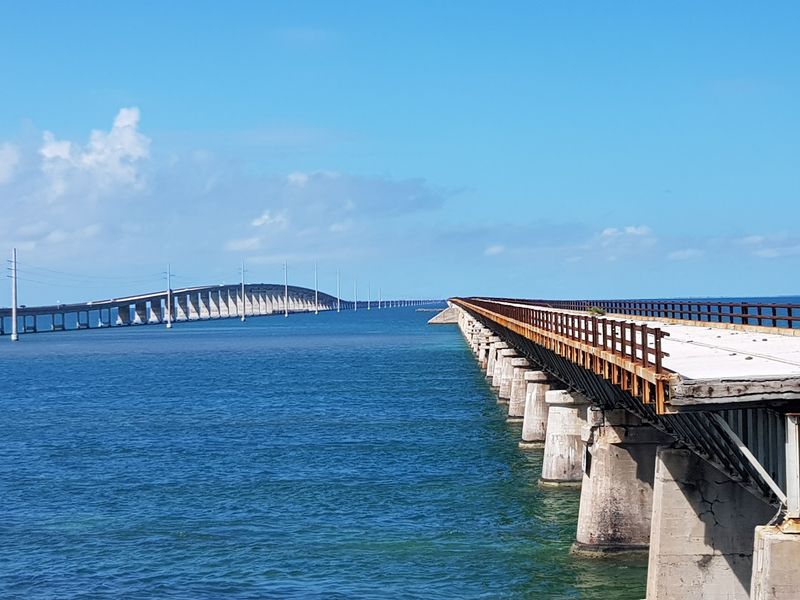
The Labor Day Hurricane of 1935 wrecked large stretches of the line, and the railway was eventually sold to the state of Florida. Engineers converted the bridge for automobiles in 1938, repurposing the original rails as guardrails, a detail you can still trace with your fingers in places.
Cars crossed it for decades as the Overseas Highway. In 1982 the modern span opened alongside, and Old Seven shifted to serving local traffic bound for Pigeon Key before closing altogether.
How a Crumbling Span Came Back in 2022
Salt air is patient and merciless. After years without maintenance, the steel and concrete on Old Seven had deteriorated to the point where the bridge was fenced off and left to the pelicans for about a decade.
Bringing it back took a rehabilitation project in the range of 41 to 44 million dollars, funded and coordinated across state and local agencies. Crews replaced failing components, repaired the deck, and rebuilt railings so the structure could safely hold foot and bicycle traffic again.
January 2022 is when the gates opened. What reopened is not a museum piece behind glass but a working recreational route, paved smooth enough for road bikes and strollers alike.
The engineering deserves a moment of appreciation while you’re out there. Rehabilitating a century-old marine structure is harder than building a new one, because every repair has to respect what came before.
The repurposed railroad rails stayed. The original piers stayed.
The result reads as old and sturdy rather than shiny and new, which suits the Keys perfectly.
Two Oceans, One Sightline
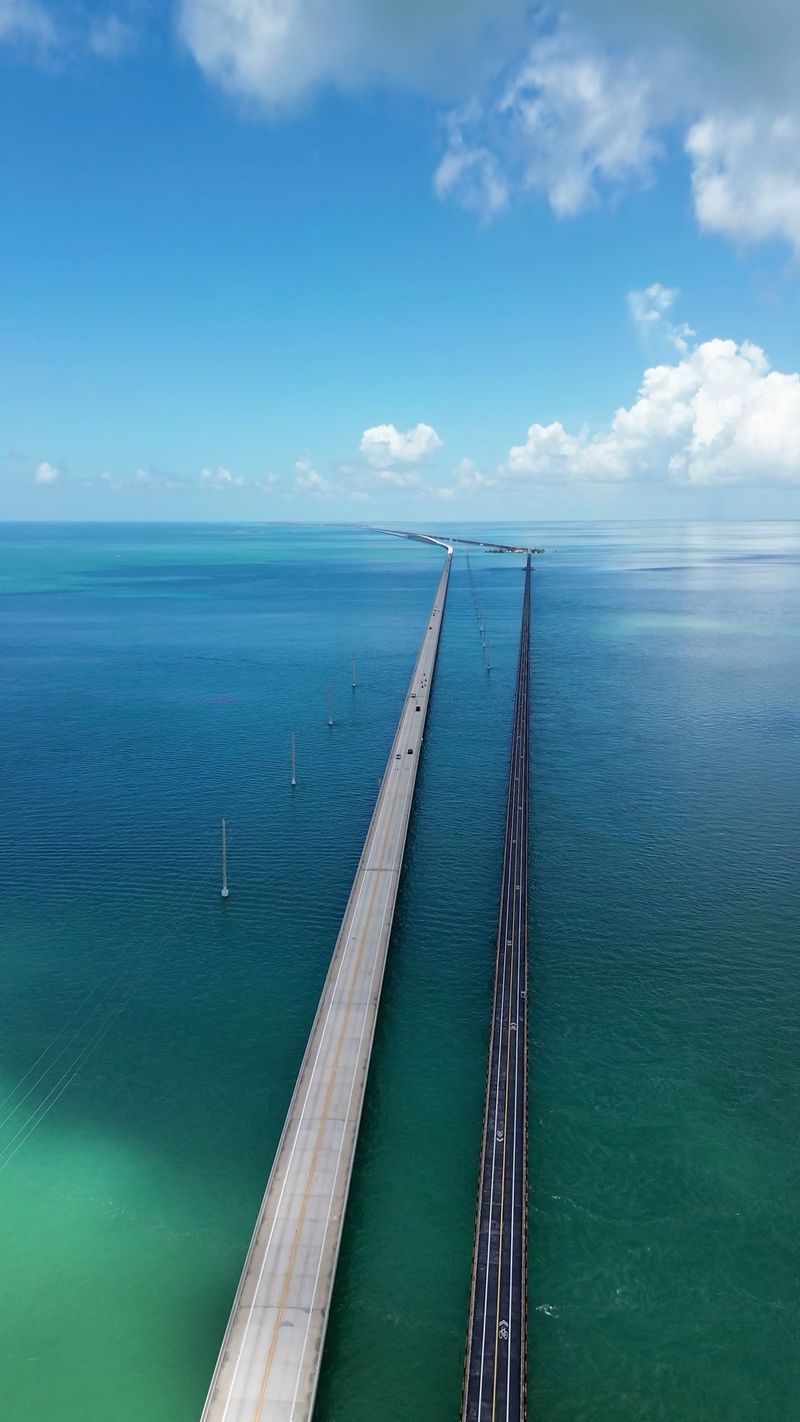
Stand at the middle of the walkable section and turn your head slowly. To the right sits the Gulf of Mexico, shallow and pale green, dotted with flats boats poling for tarpon.
To the left, the Atlantic runs deeper and bluer, with a darker band where the bottom drops away.
Having both in a single sightline is the whole appeal. The colors change hour by hour depending on cloud cover and how hard the wind has been blowing, and after a calm spell the water goes so clear that the bottom looks a few feet down instead of twenty.
There is almost no visual clutter out here. No buildings, no billboards, no traffic lights.
Just the deck under your shoes, the newer bridge arcing nearby, and horizon in every direction.
Polarized sunglasses make an enormous difference, cutting the glare so the water turns transparent rather than silver. Bring them even if you normally skip sunglasses, because the reflection off a flat sea at midday is genuinely intense.
Watching the Water for Turtles, Rays and Sharks
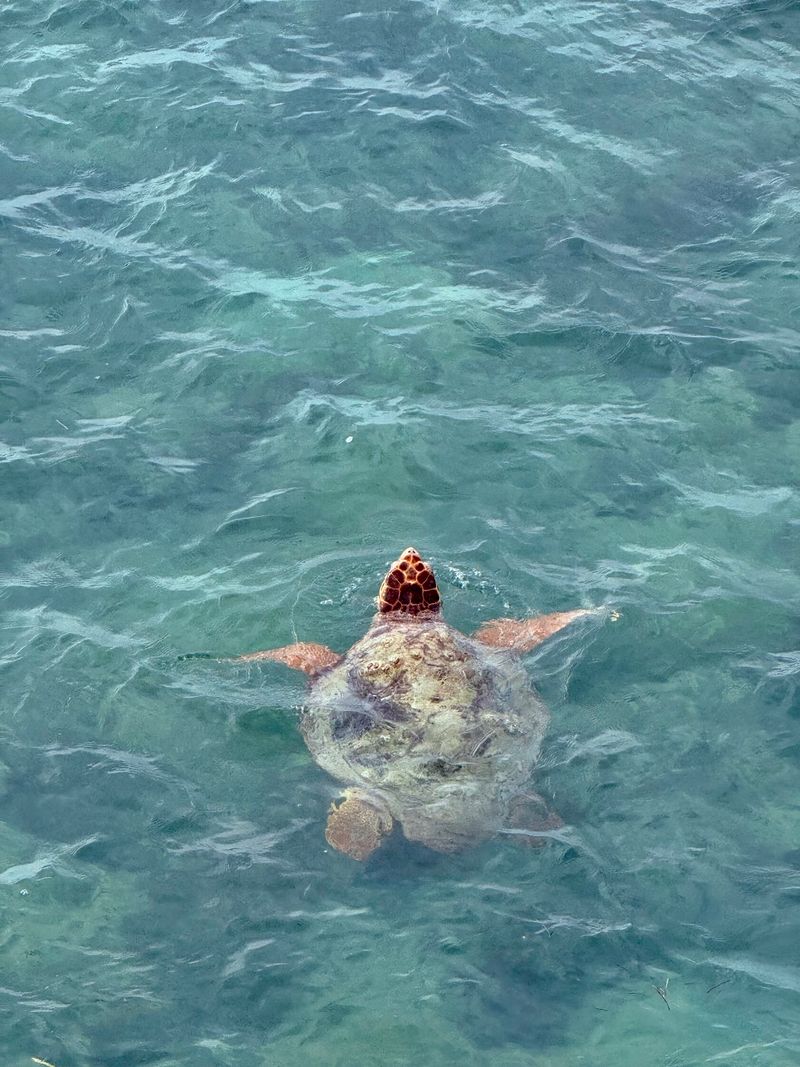
Lean on the railing for five quiet minutes and the water starts revealing things. Sea turtles surface for a breath and slide back under.
Spotted eagle rays glide in loose formation, wingtips breaking the surface. Nurse sharks lie along the bottom near the pilings, looking like discarded logs until they move.
Tarpon roll in the current, barracuda hover in the shade of the structure, and schools of smaller fish scatter when something bigger passes through. Mangrove snapper and grouper hold close to the concrete supports.
Overhead there is a second show entirely. Pelicans cruise the bridge line in single file, frigate birds ride thermals without appearing to flap at all, and ospreys, gulls and cormorants work the channel.
Wildlife spotting improves dramatically when the wind has been down for a day or two, because stirred-up water goes cloudy fast. Morning light also helps, since the low angle reduces surface glare.
Fishing is not permitted from the old bridge, so the animals below go about their business undisturbed.
Pigeon Key Waiting at the Far End
Five acres of coral rock, a scatter of wooden buildings painted in faded colors, palm trees, and the shadow of two bridges overhead. Pigeon Key marks the turnaround point of the walk, and it earns the destination status.
The island served as living quarters for the railroad construction crews more than a century ago, and several of those original structures survive. Today it operates as a historic site with a small museum telling the story of the Overseas Railroad and the people who built it.
Walking onto the bridge costs nothing, but stepping onto the island for tours and the museum requires an admission fee. Plenty of people reach the island, take their photos from the bridge ramp, and turn around, which is a perfectly reasonable plan when time is short.
If you’d rather not walk both directions, the Pigeon Key Express tram runs passengers out from the Marathon side. It’s a practical option for anyone traveling with small children, anyone managing mobility limits, or anyone who underestimated the July sun.
Why Cyclists Claim the Bridge Before Breakfast
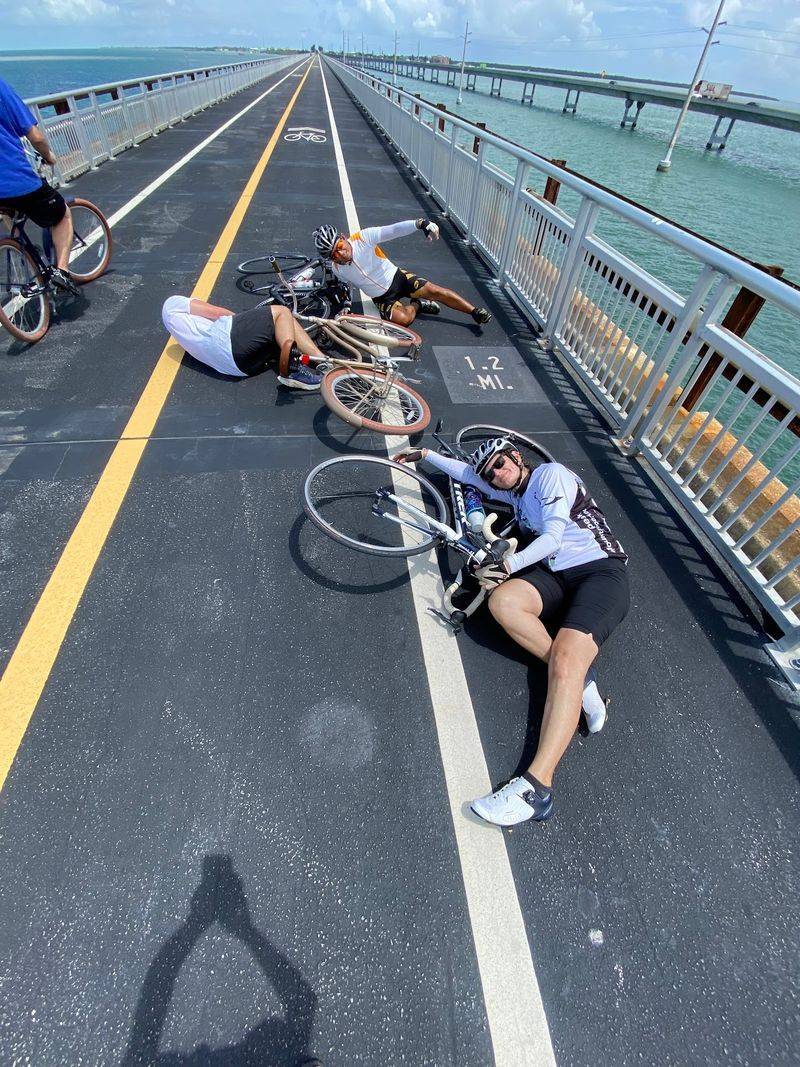
Bicycles arguably suit Old Seven better than shoes do. Four and a half miles round trip on a flat, freshly paved surface with a sea breeze is close to ideal riding, and the mileage disappears without effort.
Beach cruisers, road bikes and e-bikes all work fine. Several rental shops operate in Marathon, and it pays to check brakes, seat posts and tires before pedaling off, since rental fleets in a salt-air town age quickly.
Runners treat the span as a natural out-and-back course, roughly a 5K plus change, with the bonus of zero intersections and zero cars. Some people ride it daily as their morning routine, starting from the Vista Point area and turning at Pigeon Key.
Courtesy matters on a narrow deck shared by walkers, joggers, strollers and cyclists. Keep right, call out when passing, and expect sudden stops whenever somebody spots a turtle.
The surface is smooth and well maintained throughout, with trash cans placed at regular intervals along the route.
Sunrise, Sunset, and the Light in Between
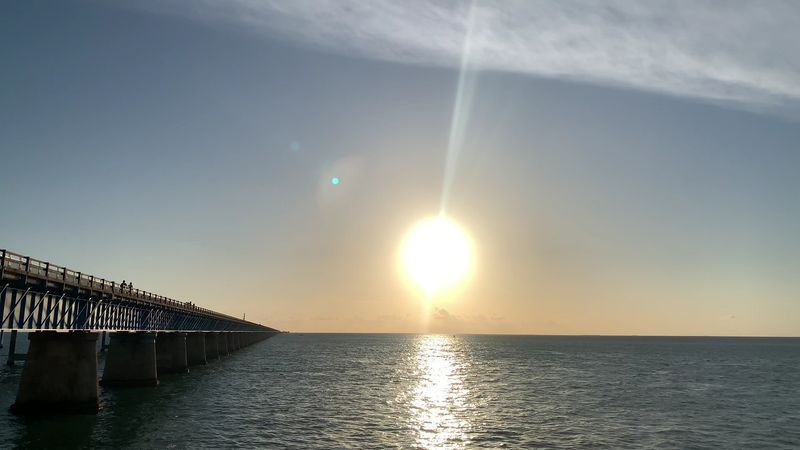
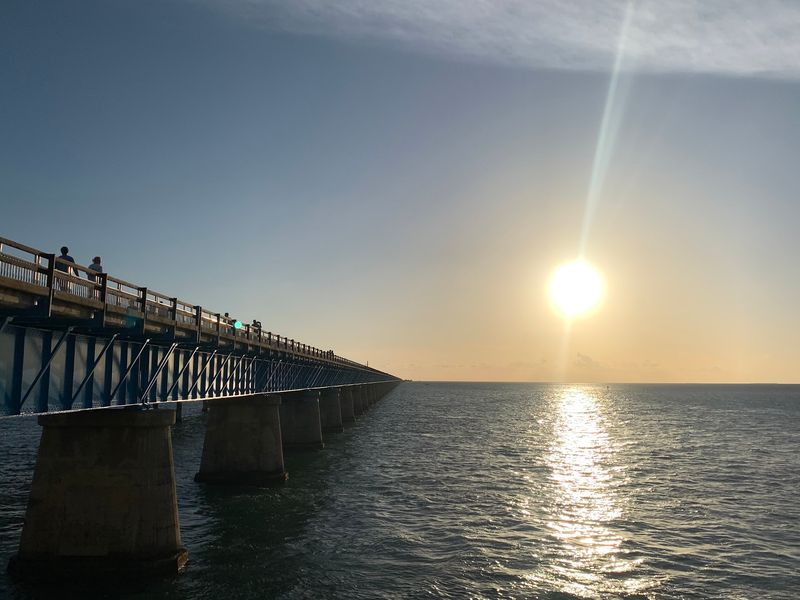
Photographers have a standing appointment here twice a day. Because the bridge runs roughly east to west across open water, both ends of the day deliver, and at certain times of year the sun drops directly into the gap between the old bridge and the new one.
Sunrise tends to be the quieter of the two, with cooler air, softer light and far fewer people on the deck. Sunset brings more company and a warmer palette, plus the practical benefit of finishing your walk in fading heat instead of building heat.
Midday is the harshest window. There is no shade anywhere along the span, and the concrete radiates warmth back at you.
Small logistical note for the golden-hour crowd: mosquitoes and no-see-ums get active around dawn and dusk in the Keys, so bug spray belongs in the same bag as your camera. Bring a light layer too, because the wind over open water feels noticeably cooler than the parking lot did.
Fred the Tree and Other Bridge Characters
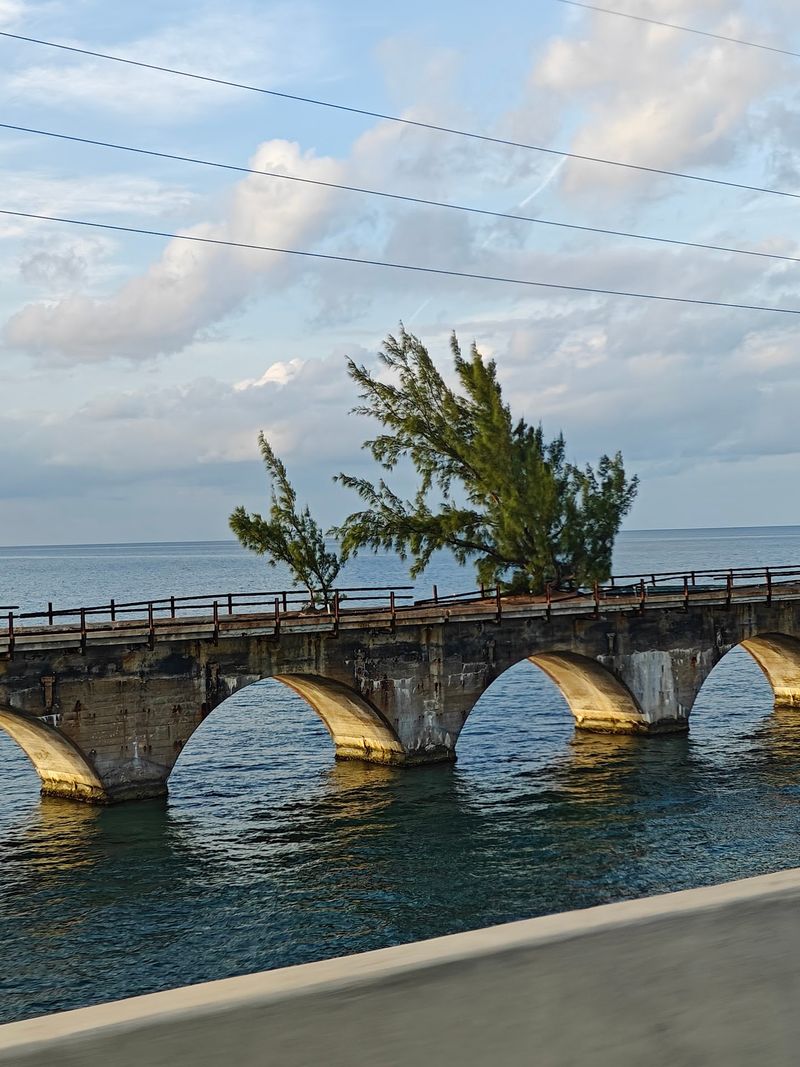
Halfway out, growing from a crack in old concrete with no soil and no fresh water, there is a tree. Locals call him Fred.
He is small, scrappy, and completely improbable, and people decorate him for holidays.
Fred has become the unofficial mascot of the crossing and a reliable photo stop for anyone who knows to look. Finding him is half the fun, since he hides in plain sight against a lot of open sky.
Other small details reward attention on the way out. The repurposed railroad rails serving as guardrails.
The seams where 1938 roadwork meets 1912 railway engineering. The occasional shaded hut at ground level near the Marathon entrance, reachable by stairs or a ramp, which makes a decent spot to sit before or after.
Boats pass constantly beneath and beside the span, from flats skiffs to sportfishing boats headed for the channel. Watching the marine traffic is its own low-key entertainment while you catch your breath.
Who Gets the Most out of a Walk Out Here
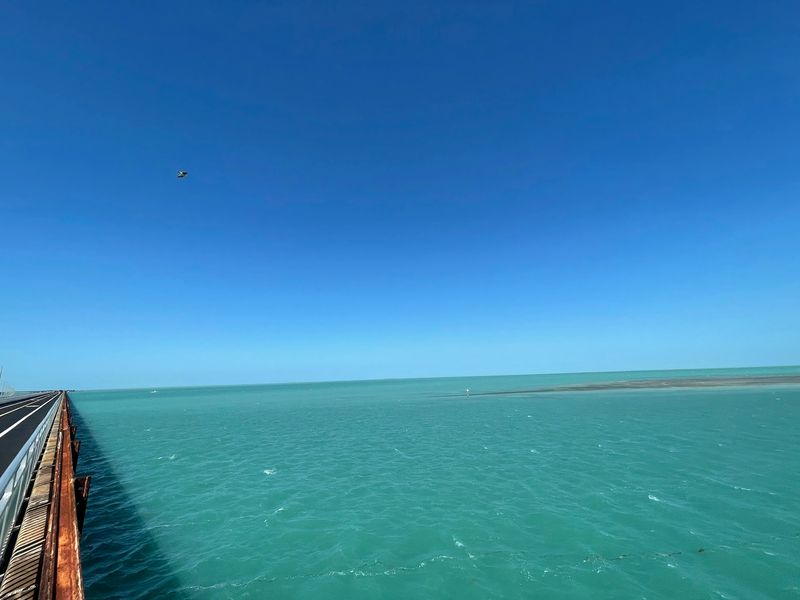
Flat pavement, wide lanes, no traffic and no elevation gain add up to an approachable outing for a broad range of fitness levels. Older walkers manage it comfortably by turning around whenever they feel like it, since there’s no requirement to reach the island.
Families with kids do well here too, provided everyone understands that four-plus miles in Keys sunshine is real work. The tram exists for exactly this scenario.
Anyone training for a race gets a scenic, uninterrupted course. Birders get pelicans, frigate birds and ospreys without leaving the pavement.
Photographers get two oceans and a historic structure in the same frame.
Where the bridge asks more of you is preparation. Shade does not exist out there, water fountains do not exist out there, and restrooms are not yet on site, though plans are moving forward to add them near the entrance.
Pack water, sunscreen, a hat and comfortable shoes, then treat the distance with a little respect. Do that and the walk feels effortless rather than punishing.
Parking, Hours and Getting There from the Mainland
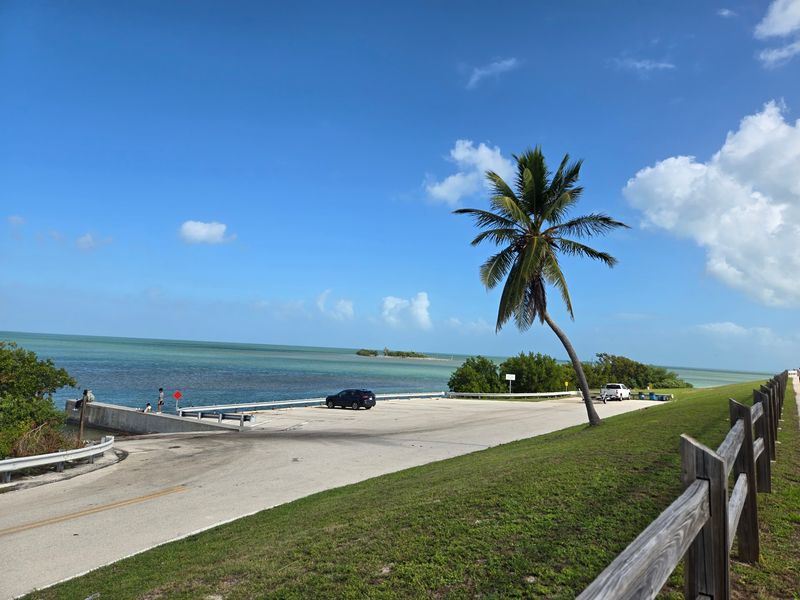
Good news on the budget front: the pedestrian bridge is open daily around the clock, and parking is free. The lot sits right off US 1 at the western end of Marathon near mile marker 47, bayside, just before the modern bridge begins.
Capacity is the catch. The lot holds roughly a couple dozen vehicles, and it fills during peak season, holidays and the hour before sunset.
Overflow parking exists across the highway, though crossing US 1 on foot calls for genuine caution.
Weekday afternoons tend to be calmest, with spaces open and the deck quiet. Early mornings are similarly relaxed.
Driving time runs about two and a half hours from downtown Miami and roughly two hours from Homestead, all of it along the Overseas Highway, which is scenic enough that the drive counts as part of the experience.
No motorized vehicles are allowed on the old span, and fishing from it is prohibited. Trash cans appear every fifth of a mile or so, so pack out what you carry in.
The Case for Stopping Instead of Driving Past
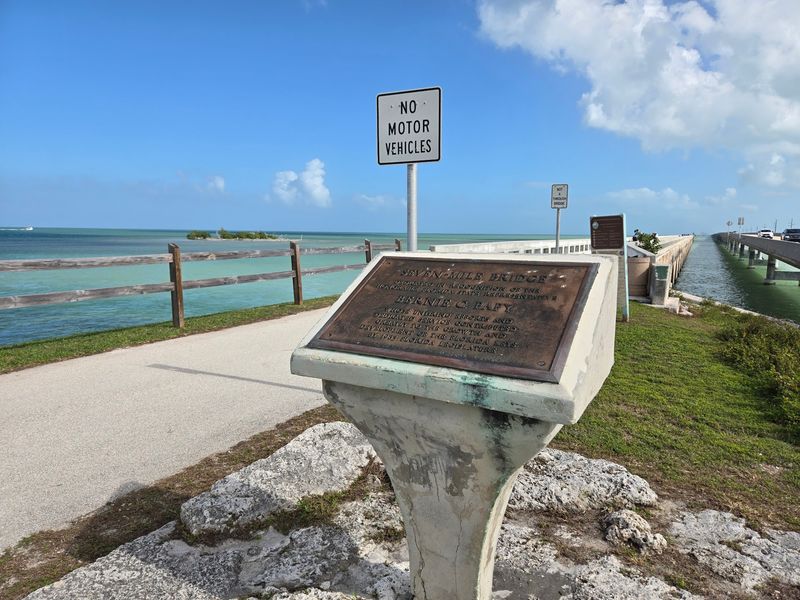
Thousands of cars roll across the modern span every day, windows up, air conditioning on, aimed at Key West. The old bridge slides past in the corner of the eye and most people never think about it again.
Slowing down changes the whole trip. Walking or riding out over that water gives you something the highway cannot: time in the middle of the sea with nothing between you and it but century-old concrete and a railing made of railroad track.
Half a mile out, the noise of US 1 fades. A mile out, you’re surrounded by water on all sides and it stops feeling like a sidewalk and starts feeling like a passage.
Bring water, wear sunscreen, and go early or late. Add lunch in Marathon on either end, or the museum on Pigeon Key if you have the time and the admission in hand.
Florida has plenty of postcard views you can see through a windshield. Very few of them require you to walk two miles out to sea to earn them.