This Massachusetts Church Is The Only Building Left From A Town That Disappeared Under Water
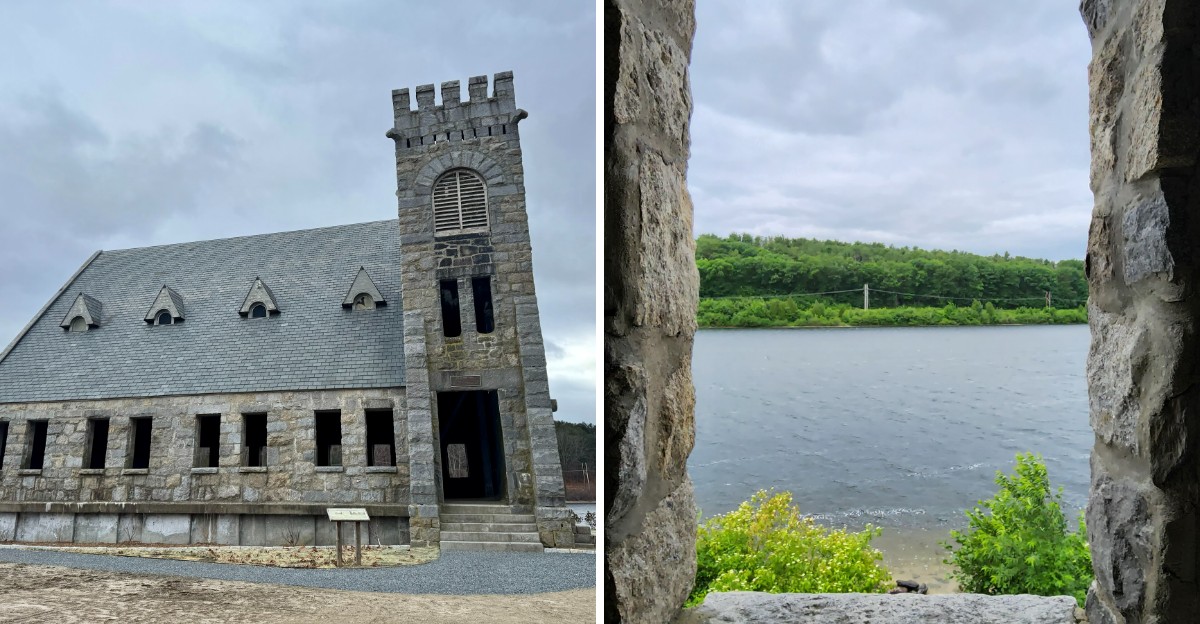
I didn’t expect a five minute stop to leave me speechless. That’s what happened anyway.
I parked near the water, walked a short trail, and stopped cold at a stone structure rising straight out of a reservoir. No houses around it, no town, nothing but water stretching in every direction.
It took a second to understand what I was actually looking at. Massachusetts flooded an entire town decades ago to build this reservoir, and this church is the only piece that survived the decision.
Everything else, homes, roads, cemeteries, disappeared underwater. Massachusetts rarely advertises stories this haunting, yet here it sits in plain sight for anyone willing to make the drive.
Standing there, I felt the weight of an entire community that used to exist just below the surface. Some places carry a story you can’t shake.
This is definitely one of them.
A Stone Shell With A Very Long Memory
Most buildings get to keep their neighborhood. This one lost every single neighbor and still stands.
The stone walls went up in 1891, replacing a Baptist church that burned the year before. Fire returned in 1892 and damaged the new interior, which pushed back the dedication.
What survives today is essentially a shell. The floor is packed dirt, the ceiling shows off high beams, and birds sometimes swoop straight through the open space.
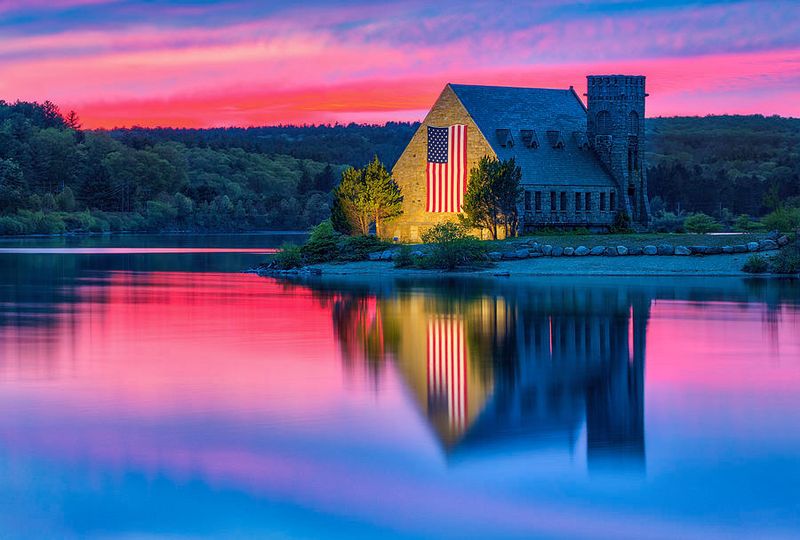
Nothing about the setting feels ordinary either. Water sits close on multiple sides, so the building looks almost like it is floating during still mornings.
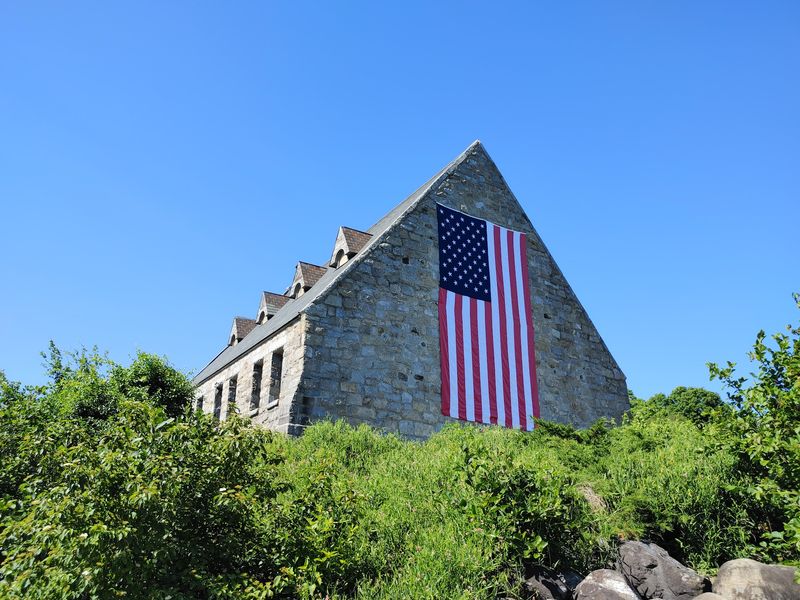
A huge American flag is sometimes hung on the front wall. When the water is calm, the reflection doubles the whole scene.
People come for a quick look and end up circling the structure twice. The arches and stonework reward slow attention, especially in low light.
Bring a camera and low expectations about comfort. There are no pews, no heat, and no gift shop.
That bareness is honestly the point. You are standing inside the last building of a vanished community at the Old Stone Church, 130 Beaman St, West Boylston.
The Reservoir That Rewrote The Map
Boston needed water, and central Massachusetts paid the price. That trade shaped everything you see here.
Work on the Wachusett Reservoir started in 1896 and wrapped up in 1905. The goal was a reliable water supply for a fast-growing metropolitan area.
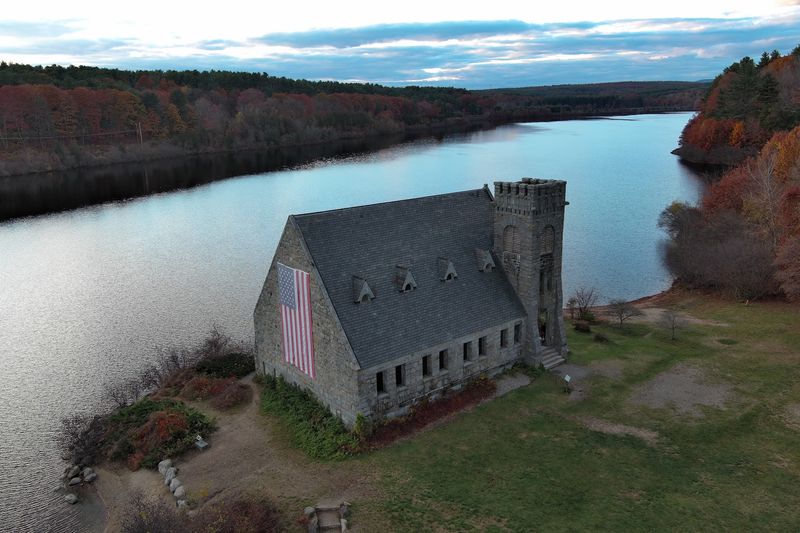
When the valley filled, roughly 4,380 acres went under. Parts of Boylston, Clinton, and Sterling were affected, and West Boylston took the hardest hit.
Its central village sat right in the path. Mills, farms, and homes were all marked for the water.
Standing on the shoreline, the scale finally clicks. You are not looking at a lake that always existed, but at a decision made on paper over a century ago.
The water is drinking water, so swimming is not allowed. Rangers occasionally check the area, and walking on winter ice is discouraged.
Fishing, however, draws steady visitors. Anglers cast from the open bank while photographers wander behind them.
It is a strange mix of recreation and history in one frame. Few spots let you see engineering, loss, and scenery stacked together this clearly.
Seventeen Hundred People, One Moving Day
Imagine your whole town receiving the same notice. Over 1,700 residents did exactly that.
Homes and livelihoods disappeared together. A thriving industrial and farming community became open water.
Before the flooding, crews cleared the valley with real thoroughness. Roughly four churches, eight schools, and six mills were relocated or taken down.
Every wooden building in the affected areas was removed. Nothing flammable or floatable could be left behind in a future drinking supply.
The population numbers for the town dropped sharply afterward. That shift changed the character of the place for generations.
Knowing all of that turns a pretty view into something heavier. The quiet water suddenly feels like a cover over a street grid.
I find myself scanning the shoreline for clues every visit. Stone walls and old road traces still poke out in places.
There is no museum exhibit on site explaining it all. The building itself does the explaining just by being alone.
Read a little history before you go. Context makes this stop far more interesting than a roadside photo op.
Saved By A Very Convenient Hill
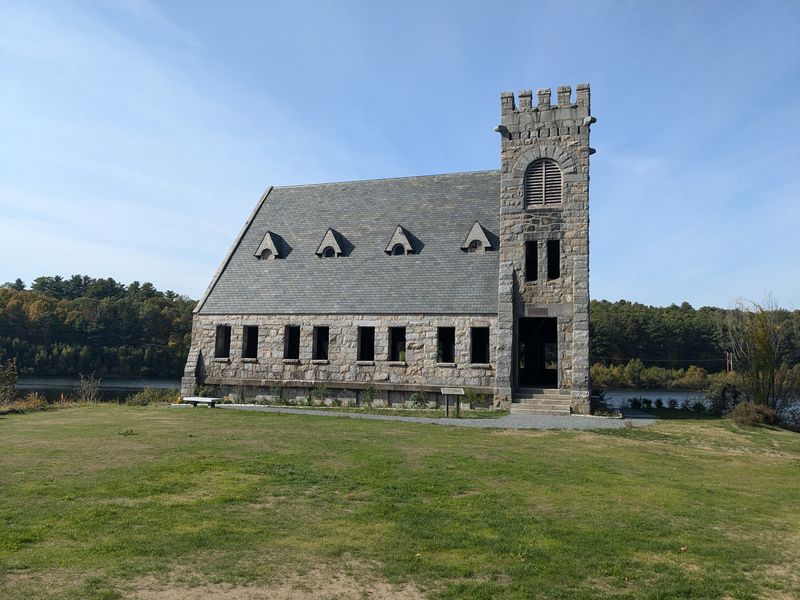
Geography can be a lifesaver. A small hill is the entire reason this structure still exists.
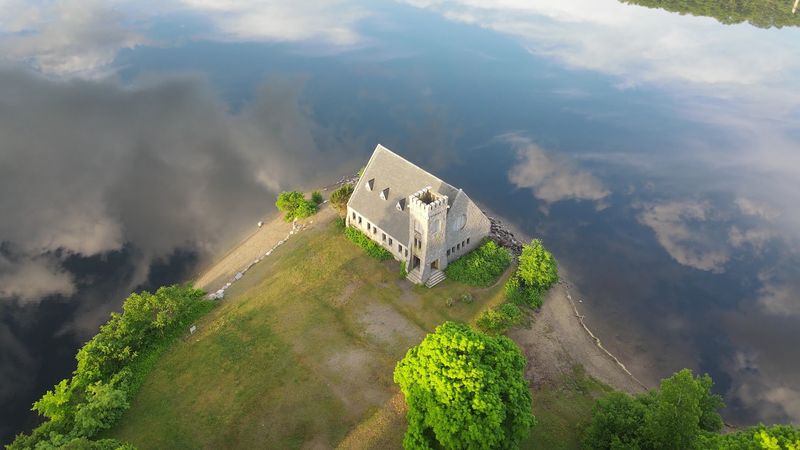
The church was built on slightly higher ground than the village around it. When the valley filled, the rising water stopped just short.
Everything nearby went under. The stone walls stayed dry and upright.
Its final service happened in April 1902, before the reservoir was fully operational. After that, the congregation moved on and the building went quiet.
Local residents and historical societies pushed hard to keep it. They argued the stone construction was sturdy and the setting would be genuinely scenic.
The Commonwealth of Massachusetts agreed and spared it. That decision gave the region one of its most photographed landmarks.
Walk the edge of the grounds and the luck becomes obvious. A few feet lower and there would be nothing to visit.
Preservation here was not automatic. Someone spoke up at the right moment.
That detail always sticks with me. Landmarks survive because people decide they matter.
Where The Windows And Furnishings Went
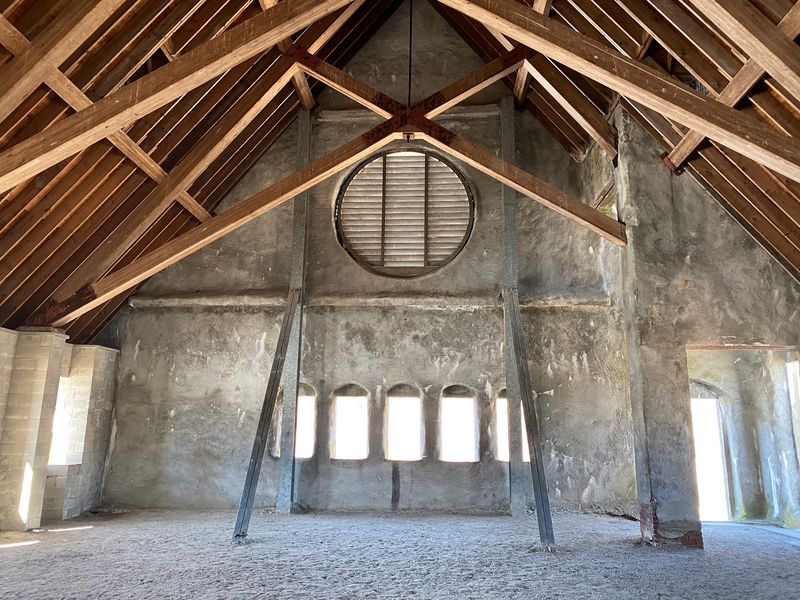
The inside surprises people who expect a finished sanctuary. It was stripped bare during the reservoir project.
Furnishings and stained-glass windows were not thrown away. Some pieces were salvaged and moved to the new Baptist Church.
That building later became a Masonic Lodge. So fragments of the original interior still exist elsewhere in town.
Inside the shell today, there is dirt underfoot and sky through the openings. High beams cross overhead, and sound echoes in an odd, hollow way.
Visitors can usually step inside, though weddings and photo shoots occasionally occupy the space. Patience pays off on busy weekends.
Honestly, the emptiness works in its favor. Nothing distracts from the stonework and the light.
I have watched people go silent the moment they walk through the doorway. The scale reads differently in person than in any photo.
Look up before you leave. The roof framing is the most underrated detail here.
Then step back outside for the water view. The contrast between bare interior and bright shoreline is half the experience.
Rebuilt After A Rough Stretch
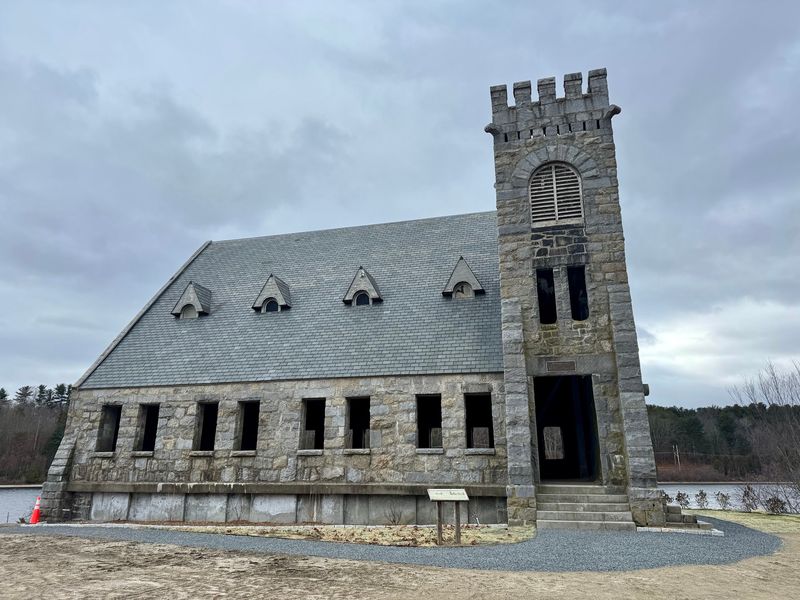
Survival was not the end of the story. The structure went through a serious rebuild.
National recognition came first. The church was listed on the National Register of Historic Places in 1973.
State funds arrived in 1974 for reinforcement work on the roof and walls. The timing turned out to be unfortunate.
Shortly afterward, the roof and three walls collapsed. What had stood for decades suddenly needed major reconstruction.
Extensive rebuilding followed and finished in the spring of 1977. Masons put the shell back together stone by stone.
A formal rededication happened on September 25, 1983. The date lined up with the town’s 175th anniversary.
So what you photograph today is partly restored work. That does not make it less real, just more cared for.
I appreciate knowing the walls represent effort, not only age. Someone rebuilt this on purpose.
The Massachusetts Department of Conservation and Recreation manages the site now. Ongoing upkeep keeps the landmark accessible to everyone.
A Photographer’s Favorite Shoreline
Cameras outnumber casual visitors here on good light days. The reason becomes clear within minutes.
Still water creates reflections that double the building. Sunrise and sunset both deliver, depending on your angle.
The best wide shot comes from up the road near the bridge. A zoom lens helps frame the church against the shoreline.
Closer in, the water’s edge offers a low angle with reeds and stone together. Both spots produce completely different photos.
Fall foliage season is the busiest stretch by far. Winter, with frozen water and bare trees, might actually be more dramatic.
Weekday mornings tend to be quietest. Go early and you may have the grounds to yourself.
Graduation portraits, engagement sessions, and wedding photos happen regularly. Give those groups space and they will return the courtesy.
Around the holidays, a wreath sometimes hangs on the front. Small seasonal touches keep repeat visits fresh.
Bring a lens cloth for lakeside mist. Small preparation, better pictures.
Short Trails And A Tiny Beach
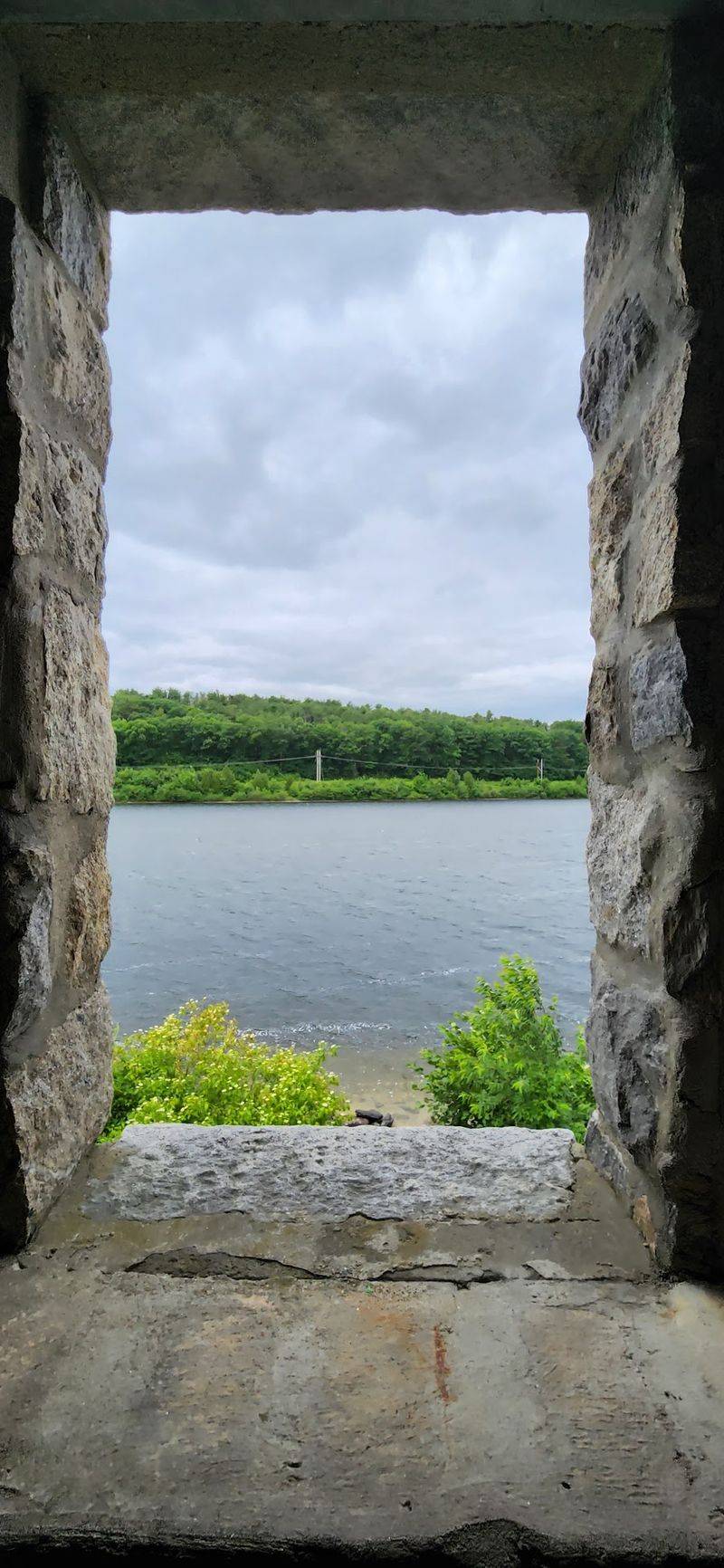
Plenty of people miss the best part completely. There is more here than the building.
Small trails run behind the structure along the water. They are short, easy, and worth twenty extra minutes.
One path leads toward views back across the reservoir. Another drops to a small patch of shoreline that acts like a mini beach.
Sunset from that spot is genuinely lovely. Bring a book, a blanket, and something to snack on.
Picnics work well on the grassy grounds too. Just plan to carry everything back out with you.
Fishing is popular along the open bank. Some days the fish cooperate, other days you simply enjoy the view.
Birds are constant company near the water. Herons, songbirds, and the occasional hawk pass through.
Wear shoes you do not mind getting dusty. The ground is natural and uneven in places.
Every season changes the mood here. That is why repeat visits never feel repetitive.
Practical Tips Before You Go
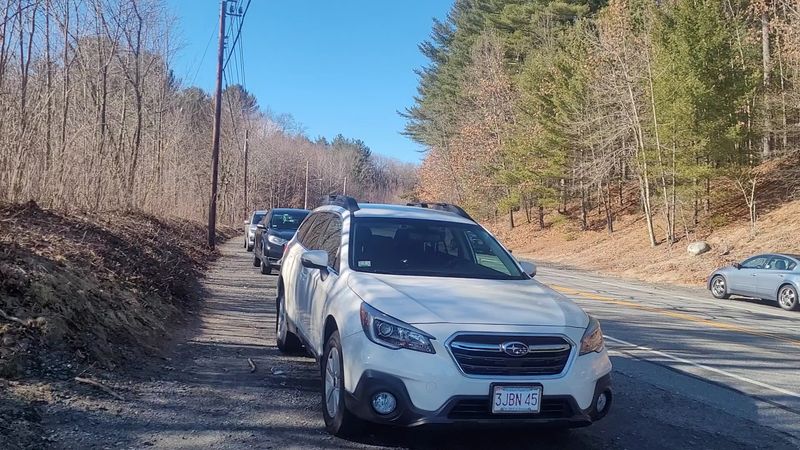
A little planning prevents a frustrating trip. The entrance is easy to drive right past.
Parking is mostly along the street, and the lot situation is tight. Occasional road work can push you a bit farther down the road.
The walk in is short and flat. You pass through an opening in the fence onto the grounds.
Dogs are not allowed, which surprises many first-time visitors. Reservoir protection rules are strict and enforced.
No swimming either, since this is drinking water. Respecting the rules keeps the site open for everyone.
Portable restrooms are sometimes available on site. Do not count on much else in the way of facilities.
Weekends in autumn get crowded fast. Early arrival solves almost every problem.
Give yourself an hour minimum. Rushing this place wastes the whole point of coming.