The Little-Known Florida Museum Home To One Of The World’S Largest Shell Collections
Rain ruined the beach plan? Good. That may be exactly how you discover one of Florida’s strangest little museums.
Behind an unassuming entrance sits a collection big enough to make a casual shell picker feel wildly underqualified.
Some exhibits are beautiful. Others are wonderfully weird. A few may send you back to the shoreline looking at every tiny spiral differently.
The surprise factor carries the visit. You expect rows of shells and get something far more absorbing.
Science sneaks in without turning the experience into homework.
By the end, even the plainest shell starts looking like a tiny architectural miracle.
How A Collector’s Dream Began
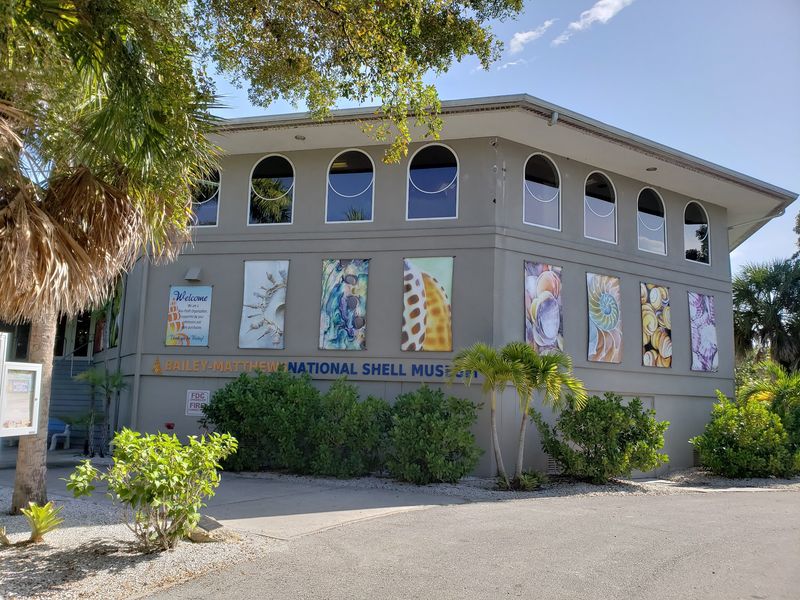
Back in 1984, a local shell collector left a bequest that quietly set everything in motion.
That gift funded the idea of an educational shell museum on Sanibel Island, and a group of collectors, scientists, and neighbors took it from there.
By 1986 they had formed a non-profit foundation with one clear goal. A world-renowned malacologist joined as an advisor in 1987 and even recruited a famous actor friend, a serious shell enthusiast himself, to help raise money and attention.
Construction started in 1994, and the doors opened in 1995. The name honors Frank P. Bailey and Annie Mead Matthews, remembered through an eight-acre land donation from their sons.
In 2019, work began on a major expansion that added the Living Gallery of Aquariums and Marine Life, which opened in 2020.
Hurricane Ian caused catastrophic damage in 2022. The Living Gallery reopened in March 2024, while the rebuilt Great Hall of Shells returned in two phases during May and October 2025.
You will find it at 3075 Sanibel Captiva Rd, Sanibel, tucked among trees on this stretch of southwest Florida coastline.
Inside The Great Hall
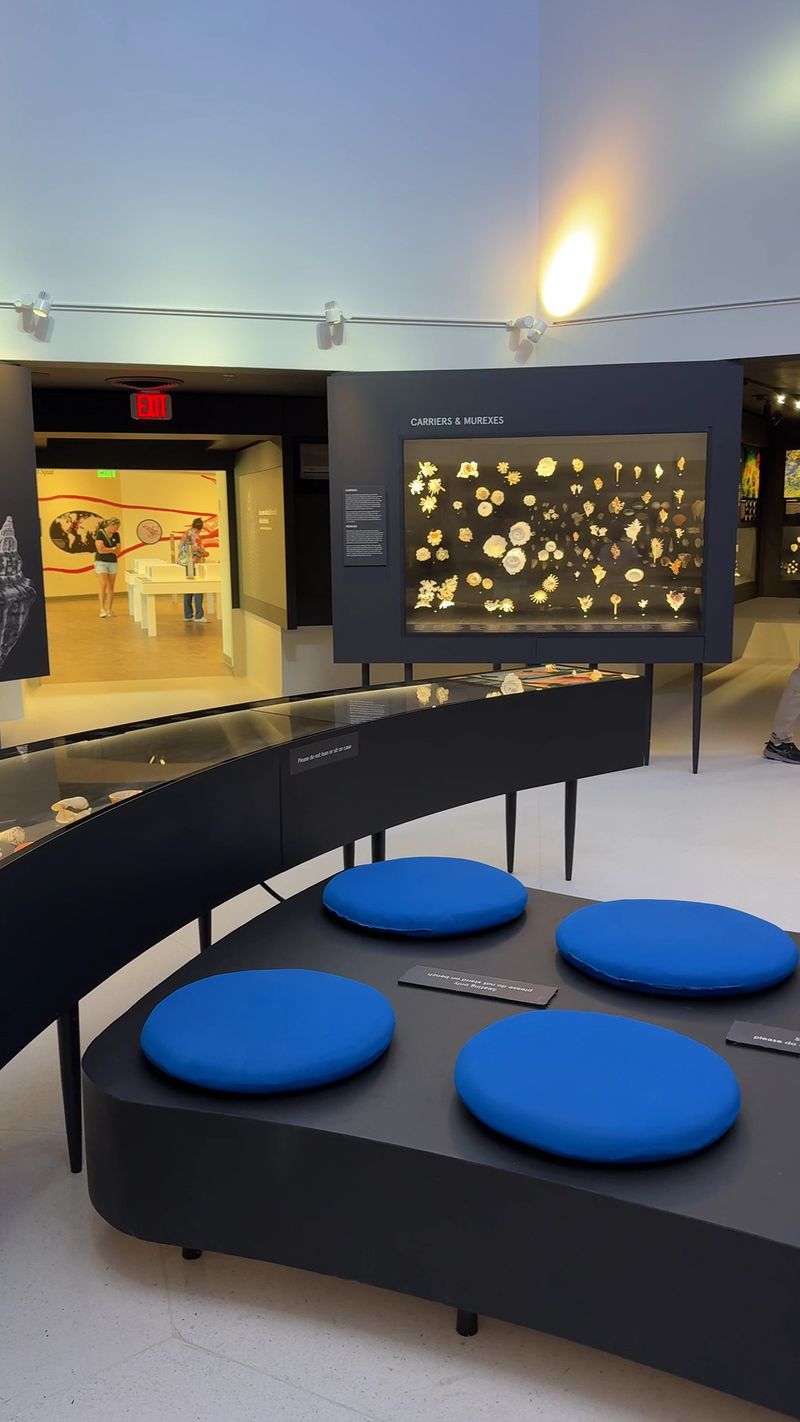
Climb to the second floor and the ceiling suddenly soars thirty feet above you.
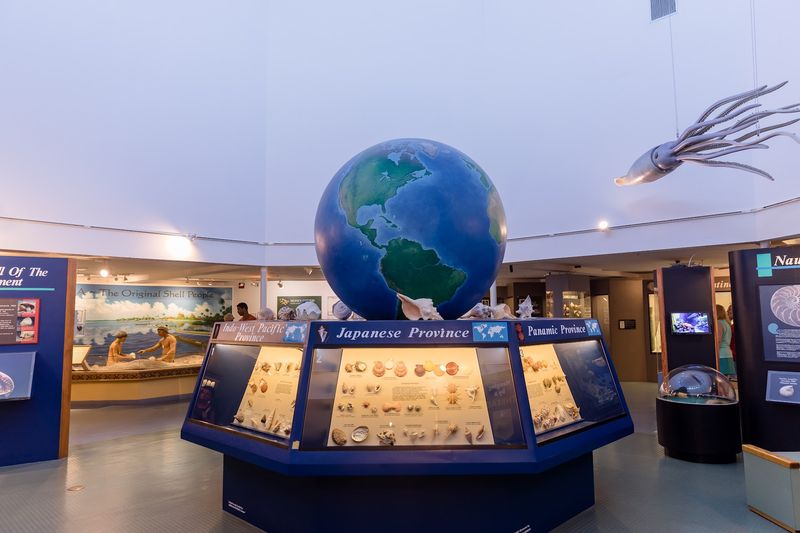
The octagonal Great Hall of Shells is the historic heart of the building, displaying thousands of highlights selected from a scientific collection of more than 600,000 shells and other specimens.
Displays are arranged by theme rather than dry taxonomy. One area explores global biodiversity, another celebrates wild shapes and colors, and a third traces time and evolution through shell forms.
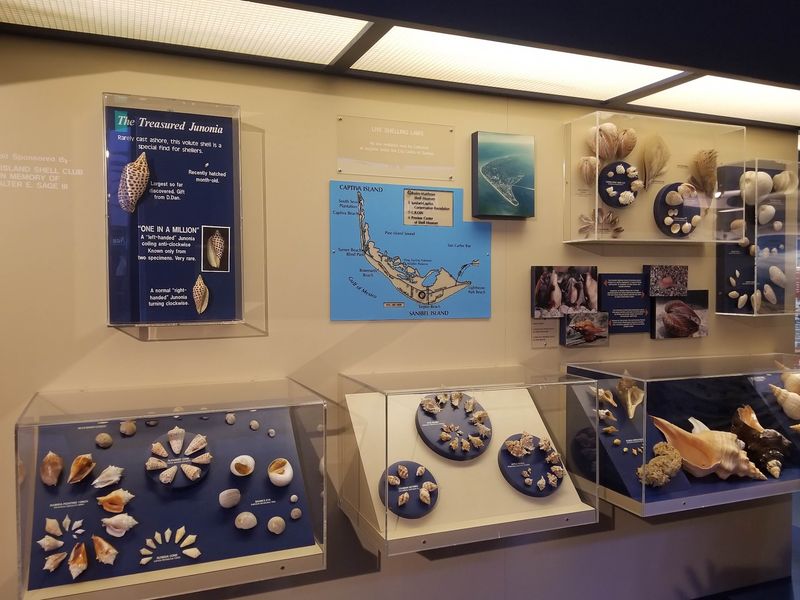
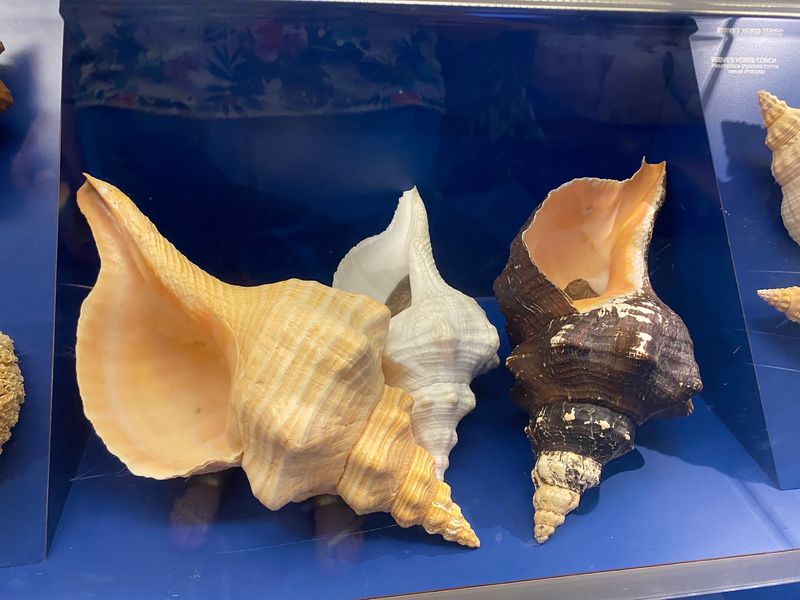
Focus zones spotlight particular groups, including cones, cowries, volutes, murexes, scallops, and carrier shells.
Cones show intricate patterns, cowries gleam like polished stone, volutes curl into sculpture, murexes bristle with spikes, scallops fan out neatly, and carrier shells glue other shells onto themselves.
The second half of the Great Hall opened in October 2025 with exhibits including Florida Fossil Shells, Southwest Florida Mollusks, Deep-Sea Mollusks, Florida Land Snails, and Conservation of Mollusks.
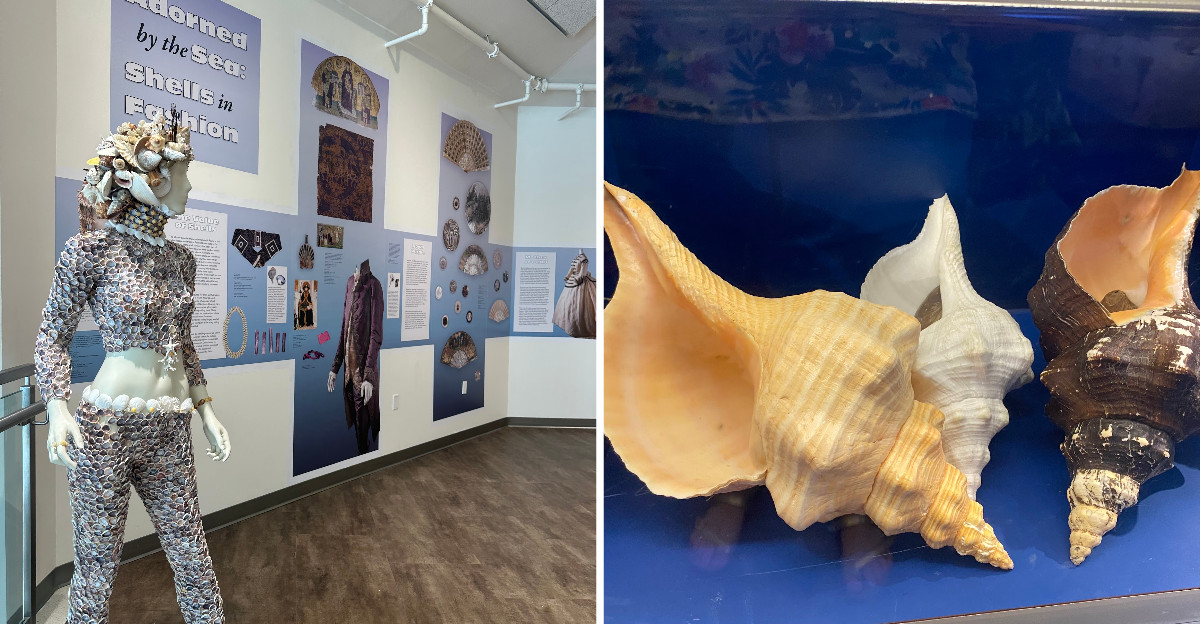
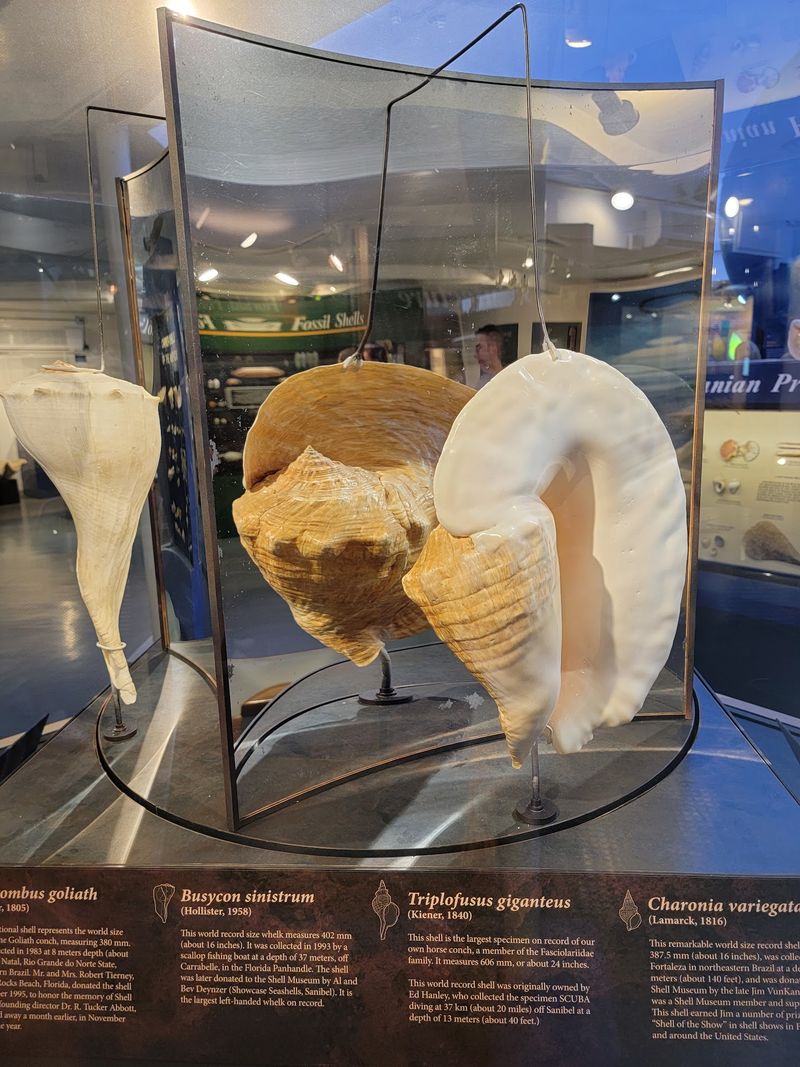
World-record-size shells remain among the specimens visitors can see in the museum.
Custom mounts and carefully designed lighting make many of the shells appear to float against dark exhibit backgrounds.
Meet The Living Mollusks
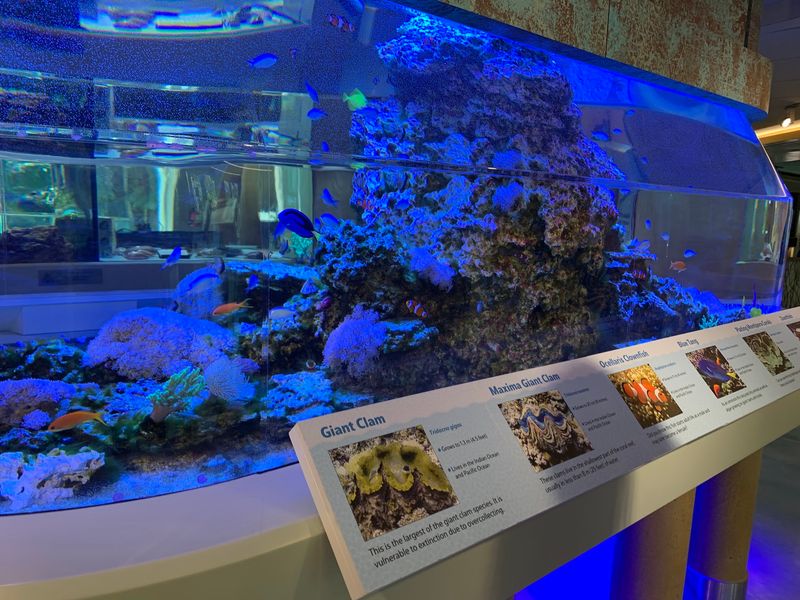
Shells are beautiful, but the animals that build them steal the show.
The original Living Gallery opened in 2020, and a rebuilt version reopened in March 2024 after Hurricane Ian destroyed the aquarium exhibits.
Hundreds of marine animals representing more than 60 species currently fill the Living Gallery. A giant Pacific octopus watches visitors right back, a two-spot octopus plays hide and seek, and a giant clam sits like a rippled doorstop.
Queen conchs shuffle along using a surprisingly muscular foot. Flamingo tongues graze on coral, and the giant triton looks every bit the predator it is.
Signage explains mollusk biology in plain language: how they grow, eat, move, and reproduce. Cold-water species from the Pacific Northwest share the gallery with tropical fish and corals.
Habitats range from Pacific coral reefs to red mangrove roots typical of Southwest Florida. Two touch pools let you feel live specimens with staff nearby.
Daily Keeper Chats take place at 11 AM and 2 PM, with a Touch Pool Talk at 3:30 PM led by museum staff. Seahorses currently share an exhibit with Queen Conchs and cowries.
Learning Programs For Every Age
Teachers, take notes. K-12 field trips here combine aquarium exploration, touch pool time, and hands-on activities inside the Great Hall of Shells.
The Mollusks on the Move outreach program flips the script by sending marine biologists straight into classrooms.
Activities vary by grade and can include touching live mollusks, studying anatomy and life cycles, identifying shells, exploring food webs, and playing interactive science games.
Programs align with Florida’s Next Generation Sunshine State Standards, while Mollusks Online provides a separate virtual option for schools and other groups.
Access matters to this team. A donor-funded Adopt-A-Class program offers free programming for Title 1 schools and can even help cover transportation.
During the 2025-2026 school year, more than 15,000 students from over 50 schools across Lee and Collier counties took part.
Adult education is also offered on selected dates through classes, field programs, lectures, and other specialized experiences.
The Shell Ambassador Certification course trains volunteers to teach beachgoers about local shells and ecosystems. Marine Biology and Field Lab sessions head outdoors to Sanibel’s Gulfside City Park for real fieldwork.
Rotating Exhibits Worth Timing
Repeat visitors have a secret weapon: the special exhibitions. Temporary galleries here rotate, so the museum never feels finished in a bad way.
Each show digs into a narrow topic with real depth. For the 2026 season, A Wondrous Phenomenon: Truth and Legend of the Giant Squid explores the animal’s biology alongside the legends it inspired.
Paradise Found: Seashells of the Caribbean is also part of the 2026 exhibition lineup, focusing on the region’s shell diversity.
Earlier exhibitions included Brilliant Colors of the Sea: Nudibranchs and Their Relatives and All That Glitters Is Not Gold: Amazing Abalone Shells, both part of the museum’s post-hurricane exhibition program.
More recently, All That Glitters Is Not Gold: Amazing Abalone Shells examined that famous inner shimmer and the cultural value people placed on it.
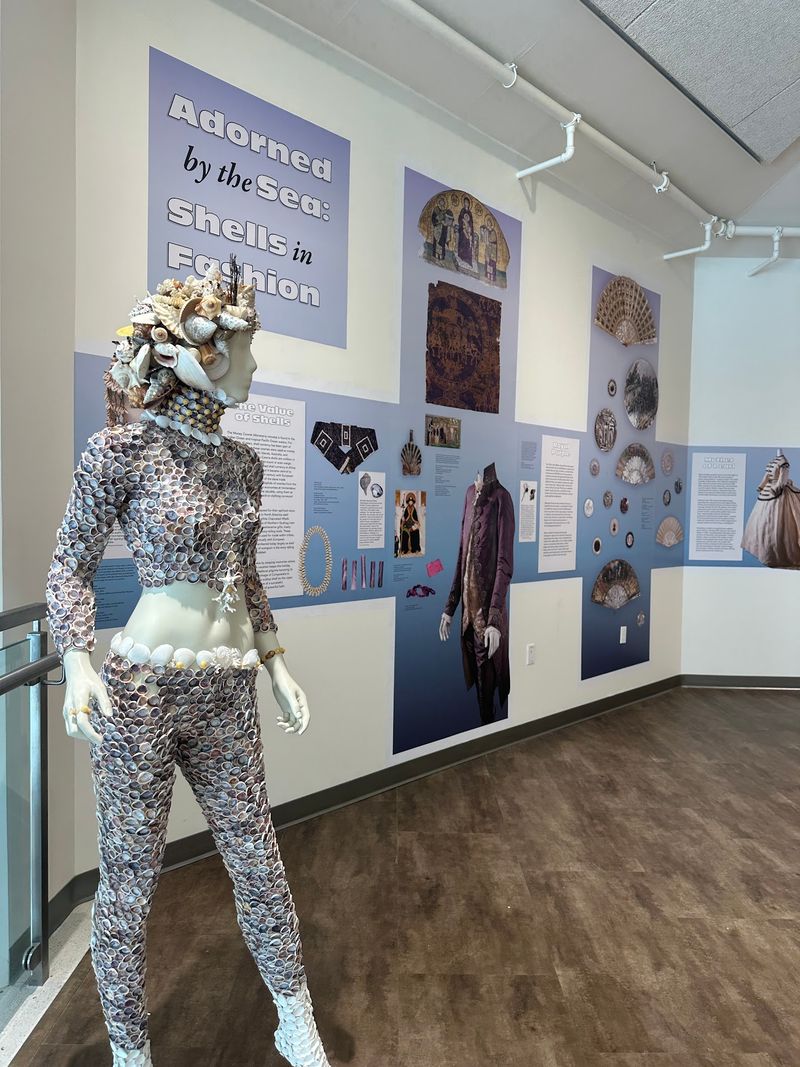
Adorned by the Sea: Shells in Fashion showed how societies worldwide wore shells as jewelry and decoration.
These shows expand what the museum can teach beyond its permanent cases. They also give the curators room to explore malacology, conservation, and human culture side by side.
Protecting Mollusks And Habitats
Conservation runs quietly through everything on display. Mollusks face real trouble, and the exhibits do not sugarcoat it.
Habitat loss, water pollution, climate change, ocean acidification, and invasive species all pressure mollusk populations worldwide. Understanding those threats is part of the museum’s stated mission alongside collections and science.
The Great Hall also highlights conservation successes, including Queen Conch restoration work; the museum has separately hosted Dr. Megan Davis to discuss conservation aquaculture for the species.
Closer to home, the Sanibel-Captiva Conservation Foundation has worked on oyster-reef restoration since at least 2007, using recycled and fossilized oyster shell in projects around Southwest Florida.
Global conservation examples include the long-running Partula snail breeding program, which has returned thousands of threatened and formerly extinct-in-the-wild snails to islands in French Polynesia.
Research here supports scientists, students, and collectors around the world, with special strength in mollusks of the Gulf of Mexico and Florida. Marine, land, and freshwater species all fall within that scope.
Empty shells can continue to serve ecological roles after the original mollusk is gone, another reason to view them as more than souvenirs.
Why Sanibel Collects So Many Shells
Geography did this island an enormous favor. Sanibel is famous as one of the planet’s top shelling spots, and the reason is pure physics rather than luck.
An unusually broad continental shelf sits off Southwest Florida, funneling shells toward shore. Local currents push them along, and the island’s east-west orientation catches material that other beaches simply miss.
Pile those factors together and you get shells by the thousands. People have traveled here for over a century specifically to hunt for them.
The Bailey-Matthews National Shell Museum & Aquarium folds that heritage right into the visit.
Sanibel is widely promoted as a world-class shelling destination, a reputation supported by its broad offshore shelf, local currents, and unusual east-west orientation.
Museum resources can help visitors identify finds such as lightning whelks and other common Southwest Florida shells before heading back to the beach.
The Shell Ambassador Certification program trains volunteers to pass that knowledge along, covering identification, mollusk biology, and Sanibel beach collecting laws. Those rules matter, since taking live shells is not permitted.
Planning A Smooth Visit
A little planning goes a long way here. The museum is currently open daily from 10 AM to 5 PM.
Free parking is available in the museum’s on-site lot. Arriving near opening saved me a lap around the lot and gave me quieter galleries for photos.
Visit length depends on how deeply you explore, while guided group tours typically run 60 to 90 minutes before additional self-guided time.
Daily Keeper Chats and Touch Pool Talks anchor the schedule, so plan around whichever session interests you.
Families can explore the Great Hall’s newer family activity space, while scavenger hunts and hands-on aquarium experiences add more interactive options.
Scavenger hunts remain part of the visitor experience, with Great Hall docents available to help guests engage with the exhibits.
The museum provides elevator access between floors, and replacement wheelchairs were provided after Hurricane Ian.
The Museum Store sits beside the lobby and carries books, toys, jewelry, home décor, shell guides, museum merchandise, and other gifts.