11 Connecticut Towns Where You Can Park Once And Explore Shops, Cafes And Local Sights On Foot
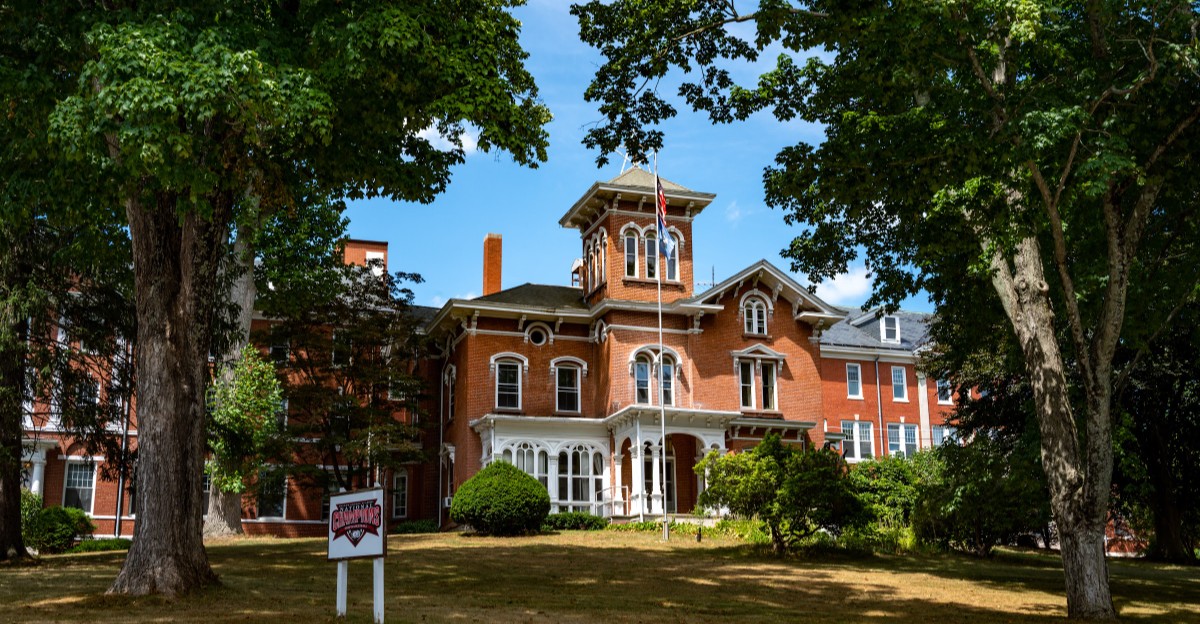
A good day trip becomes considerably more relaxing when the car keys can stay in your pocket. Park once, start wandering and see what catches your attention.
That simple freedom is underrated. Instead of driving between every stop, you can slow down and actually notice what is around you.
Maybe an interesting storefront pulls you in before lunch. A few blocks later, something completely unexpected becomes the highlight of the afternoon.
Several towns across Connecticut make that easy, with compact areas where exploring on foot feels natural rather than like extra work.
There is no complicated itinerary required. The fun comes from being able to change plans whenever a shop window or local sight looks more interesting than whatever you had in mind.
And isn’t that how the best little day trips usually happen?
When everything worth seeing feels comfortably close together, leaving the car behind becomes part of the pleasure.
1. Mystic
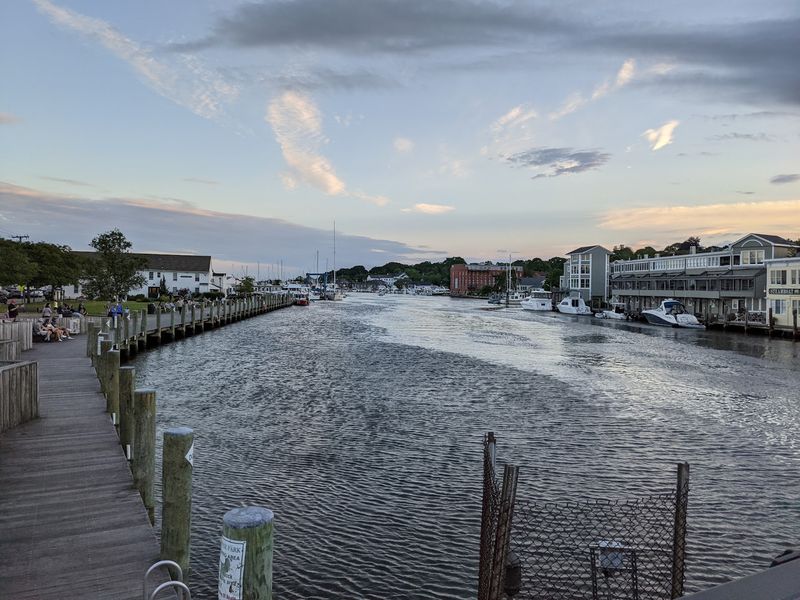
Park once, then forget about the car for a while. Downtown Mystic packs shopping, sweet treats, historic sights, and river views into an easy-to-explore center.
More than 80 independently owned shops and galleries fill the downtown district, giving browsers plenty of reasons to wander beyond the first storefront that catches their eye.
Among the stops worth knowing is The Company of Craftsmen, where work from American artisans fills the shop at 43 West Main Street.
Nearby, Danforth Pewter sells handcrafted pieces at 29 West Main Street, while The Spice & Tea Exchange brings loose-leaf teas, seasonings, and spices to 6 West Main Street.
Main Street Soap Emporium adds another browsing stop at 22 East Main Street.
Need a break? Mystic Depot Roasters serves coffee and food from the historic train station at 2 Roosevelt Avenue, while Lighthouse Bakery waits at 21 East Main Street.
Mystic Drawbridge Ice Cream is especially convenient at 2 West Main Street, practically beside one of downtown’s biggest attractions.
The Mystic River Bascule Bridge adds some mechanical drama whenever it rises for passing boats.
From downtown, the exploring can continue toward Mystic Seaport Museum, where historic vessels, a recreated seaport village, and a preservation shipyard turn the waterfront into a much bigger history lesson.
2. Chester
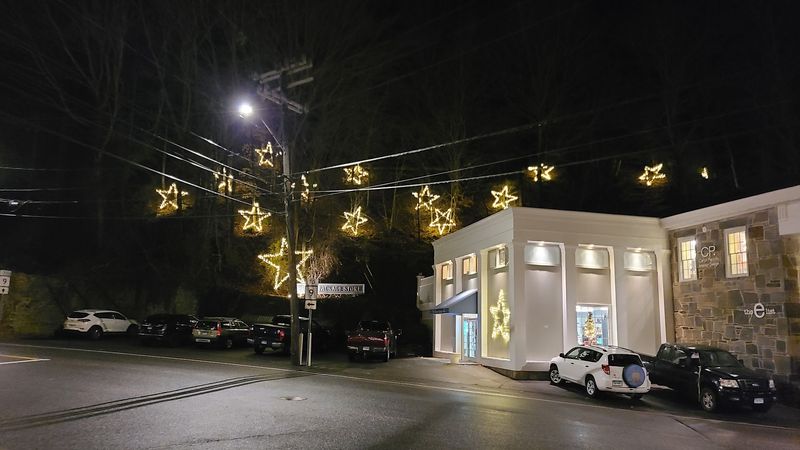
Small does not mean sleepy. Chester’s village center covers only a few short blocks in the Connecticut River valley, yet it manages to fit galleries, studios, a historic theater building, and a handful of well-regarded kitchens into that tiny footprint.
Artists have shaped the town’s character for decades. Independent shops sell pottery, jewelry, textiles, and books, and because the storefronts are close together, you can wander in and out without ever crossing a busy road.
The Goodspeed Opera House’s second stage, the Terris Theatre, stands at 33 North Main Street and hosts new musical works during its season. Pattaconk Brook runs alongside part of the village, adding a soft background sound to the walk.
Food options punch above the town’s size. Restaurants here lean toward seasonal menus and small dining rooms where tables are close and service moves at a relaxed pace, which suits an unhurried afternoon.
If you visit in warmer months, check whether the Chester Sunday Market is running, since it fills a central lot with growers and makers from the surrounding towns.
Parking sits in small public lots just off Main Street, and from there almost everything is within a two-minute stroll.
3. Essex
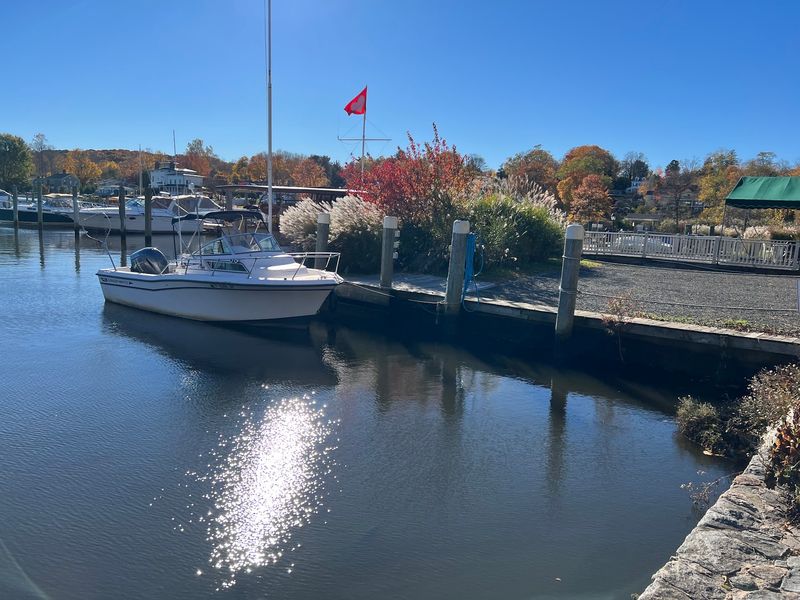
Main Street in Essex ends at the water, which tells you most of what you need to know about this village. White clapboard houses, brick sidewalks, and a working marina give the walk a shipbuilding-town feel that goes back centuries.
Start at the top of the street and drift downhill. Boutiques, a long-running bookshop, home goods stores, and small galleries occupy buildings that once served river trade, and the whole stretch takes maybe ten minutes to walk end to end without stopping.
At the foot of Main Street, the Connecticut River Museum occupies a restored 1878 steamboat warehouse at 67 Main Street. Exhibits cover river history, local shipbuilding, and a full-size reproduction of the Turtle, the Revolutionary War submarine built in the state.
The Griswold Inn, 36 Main Street, has operated since 1776 and remains one of the oldest continuously running inns in the country. Its dining rooms are dark-paneled and lined with marine art, and the atmosphere stays warm even on gray days.
Families often pair the walk with the Essex Steam Train, which departs from 1 Railroad Avenue and runs seasonal excursions along the river valley behind a vintage steam locomotive.
4. Guilford
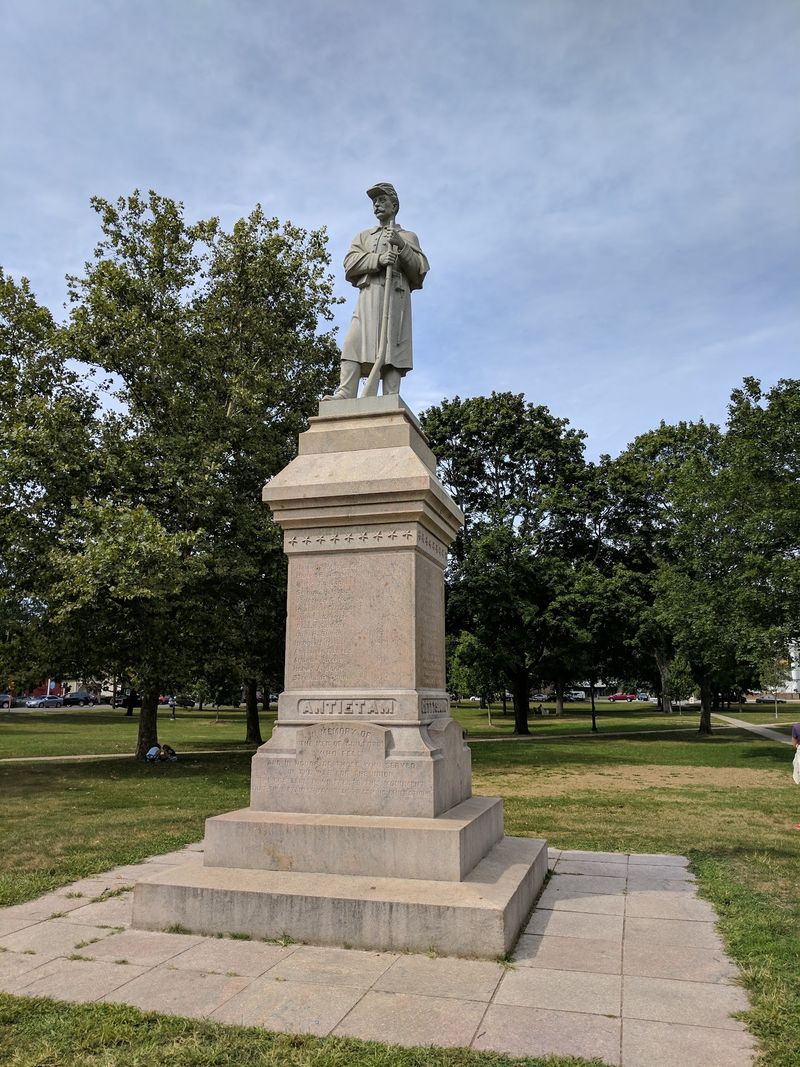
Park the car. Take your time. This is the kind of downtown that makes wandering around feel like the whole plan.
At its center is the Guilford Green, a broad lawn surrounded by historic architecture, local shops, cafes, and inviting sidewalks. The compact layout makes it easy to browse boutiques, stop for something sweet, and return to the grass whenever your feet demand a break.
History adds another reason to keep exploring. About half a mile south of the green, the Henry Whitfield State Museum at 248 Old Whitfield Street preserves a house dating to 1639, recognized as the state’s oldest house and New England’s oldest stone house.
The Whitfield House itself is currently undergoing restoration, although the Visitor Center, archaeology exhibit, and grounds remain accessible.
Another historic stop sits at 84 Boston Street. The Hyland House, built around 1713, opens seasonally and offers a closer look at centuries of local life.
The Thomas Griswold House at 171 Boston Street adds even more history to a longer stroll.
With shops clustered around the green and historic attractions within walking distance, it is easy to turn a quick downtown stop into a leisurely afternoon without constantly returning to the car.
5. Kent
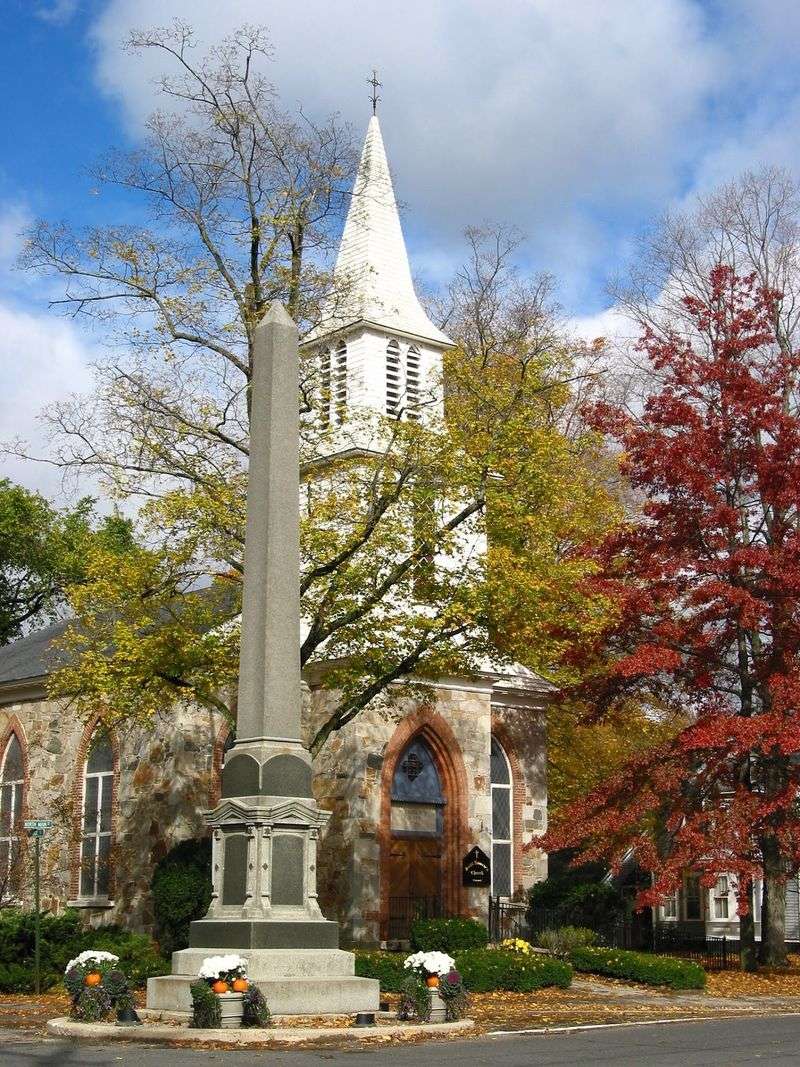
Hikers and art lovers share the sidewalk in Kent, and that mix gives the town its particular energy. The Appalachian Trail passes right through the area, so it is normal to see someone with a loaded pack browsing the same gallery as a weekend visitor.
Main Street holds a tight row of galleries, clothing shops, a bookstore, and food stops, most within a couple of blocks. Autumn is the busiest stretch by far, when foliage traffic fills the Litchfield Hills, so arriving early makes parking far simpler.
The Kent Historical Society and several art spaces keep rotating exhibits through the warmer months. Kent Art Association, 21 South Main Street, has shown regional work since the 1920s and runs member and juried shows.
For a short drive or an ambitious walk, Kent Falls State Park sits north of the village on Route 7, where a set of cascades drops along a wooded hillside and a stair-lined trail climbs beside it.
Back in town, sidewalk benches and small courtyards give you places to sit between shops, and the flat grid means you rarely need to double back.
6. Putnam
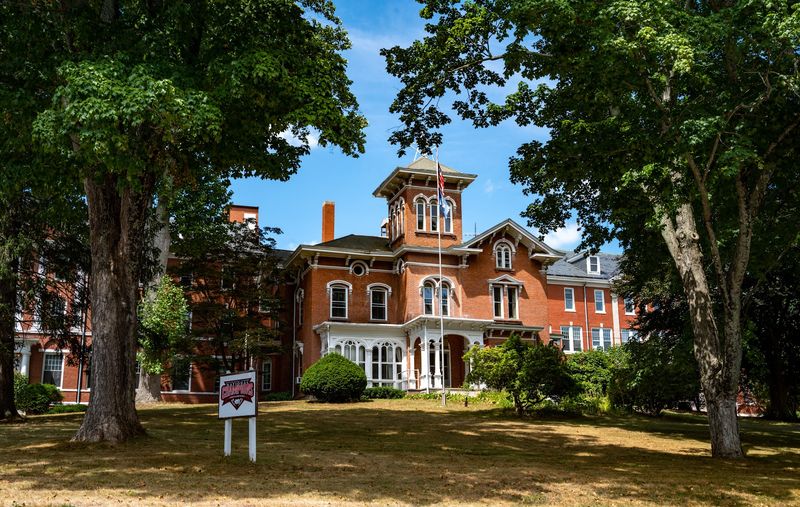
Antique hunters put Putnam on the map decades ago, and the town still rewards anyone who likes digging through multi-dealer shops. Old mill and commercial buildings downtown were converted into browsing space, some holding dozens of vendors across several floors.
The Quinebaug River runs along the edge of downtown, and a riverwalk trail follows part of it, giving you a quiet stretch of pavement when you want a break from storefronts. A dam and small falls sit within view of the main bridge.
Eating options have grown well beyond the antique-shop era. Cafes, bakeries, and casual restaurants cluster along Main Street, and several have outdoor tables in warm weather.
The dining rooms tend to be relaxed and unfussy, which fits a day spent on your feet.
Rotary Park and the surrounding green space host seasonal events, and the downtown regularly closes streets for summer festivals and cruise nights.
Parking is genuinely easy compared with shore towns, with lots and street spaces throughout the small grid. Because northeastern parts of the state, often called the Quiet Corner, sees lighter tourist traffic, Putnam can feel unhurried even on a Saturday afternoon.
7. Litchfield
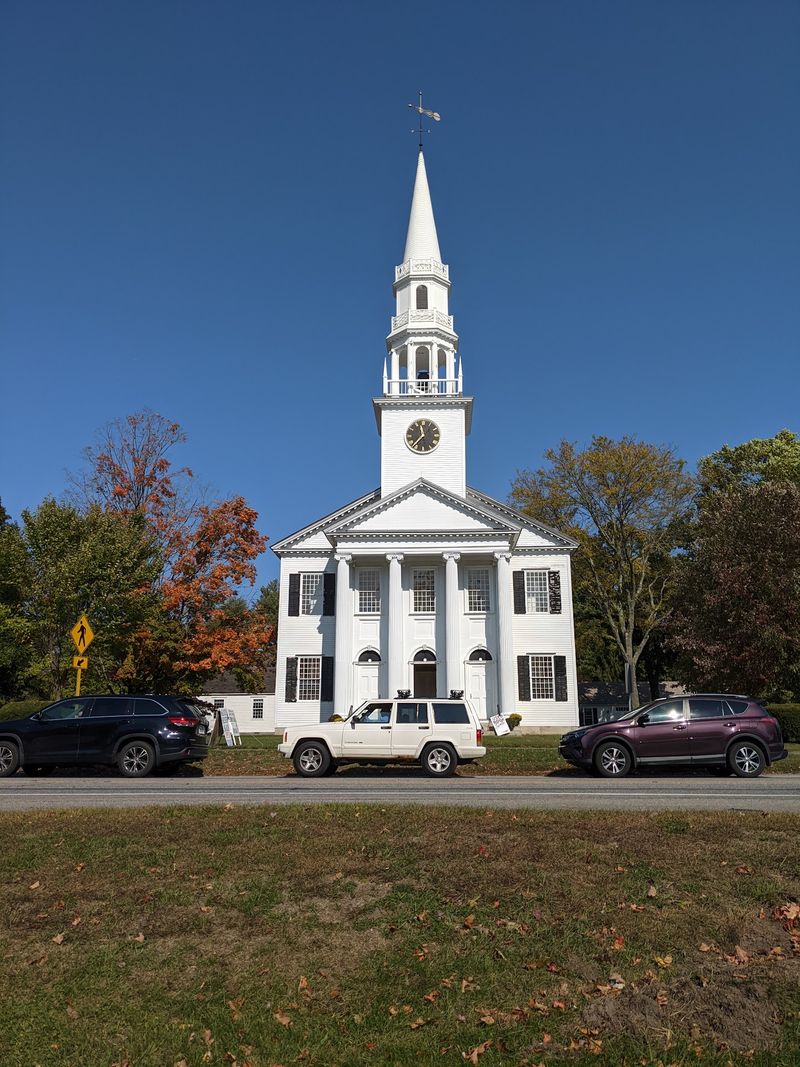
Park the car. Take your time. This is the kind of downtown that makes wandering around feel like the whole plan.
At its center is the Guilford Green, a broad lawn surrounded by historic architecture, local shops, cafes, and inviting sidewalks. The compact layout makes it easy to browse boutiques, stop for something sweet, and return to the grass whenever your feet demand a break.
History adds another reason to keep exploring. About half a mile south of the green, the Henry Whitfield State Museum at 248 Old Whitfield Street preserves a house dating to 1639, recognized as the state’s oldest house and New England’s oldest stone house.
The Whitfield House itself is currently undergoing restoration, although the Visitor Center, archaeology exhibit, and grounds remain accessible.
Another historic stop sits at 84 Boston Street. The Hyland House, built around 1713, opens seasonally and offers a closer look at centuries of local life.
The Thomas Griswold House at 171 Boston Street adds even more history to a longer stroll.
With shops clustered around the green and historic attractions within walking distance, it is easy to turn a quick downtown stop into a leisurely afternoon without constantly returning to the car.
8. Ridgefield
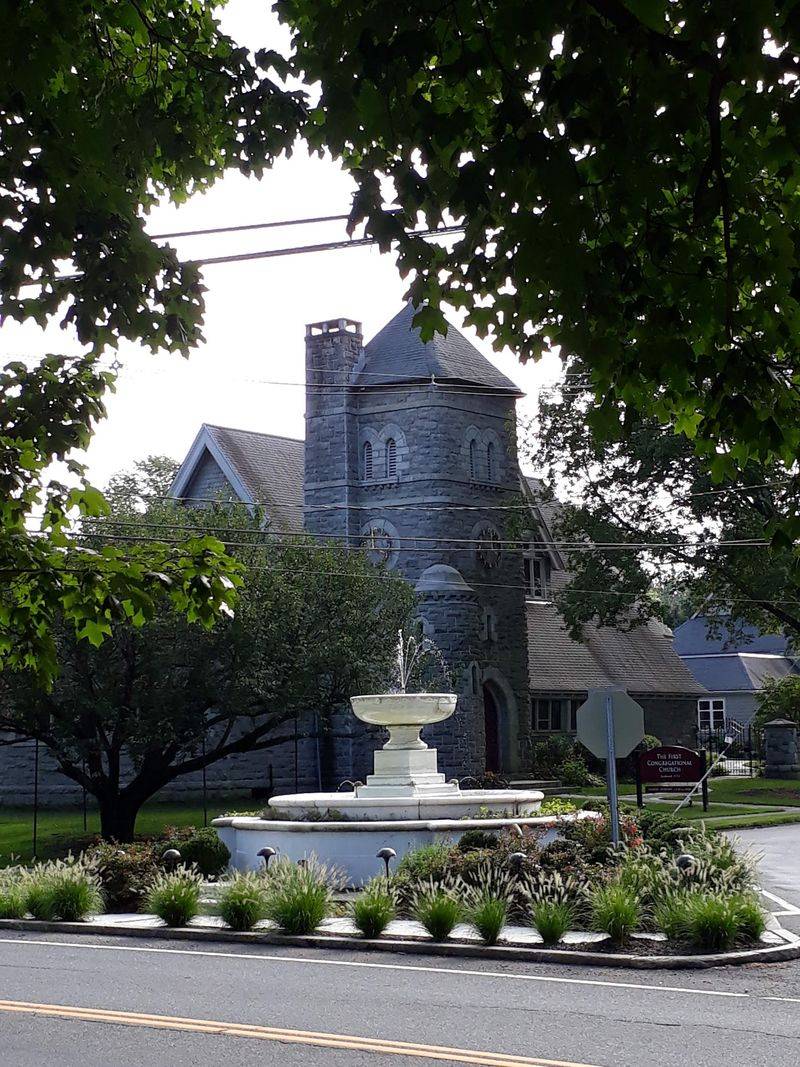
Broad sidewalks, mature trees, and a genuinely long Main Street make Ridgefield feel more like a small city center than a village. Fairfield County’s hilly northern corner gives the town its setting, and the walking route stretches comfortably for several blocks.
Contemporary art is a real draw. The Aldrich Contemporary Art Museum, 258 Main Street, mounts rotating exhibitions of new work and maintains a sculpture garden behind the building that visitors can wander at no charge during open hours.
Retail leans toward independent boutiques, home goods, bookshops, and specialty food stores, with cafes spaced out often enough that you never walk far for a coffee. Sidewalk seating appears once the weather turns mild.
The Ridgefield Playhouse at 80 East Ridge Road, a restored 1930s auditorium, schedules concerts, comedy, and film throughout the year, making it worth checking the calendar before you plan a trip.
History shows up too. Keeler Tavern Museum and History Center at 132 Main Street still has a British cannonball lodged in a wall from the 1777 Battle of Ridgefield, a detail that tends to stick with visiting kids.
Municipal lots behind Main Street keep parking straightforward.
9. Old Wethersfield
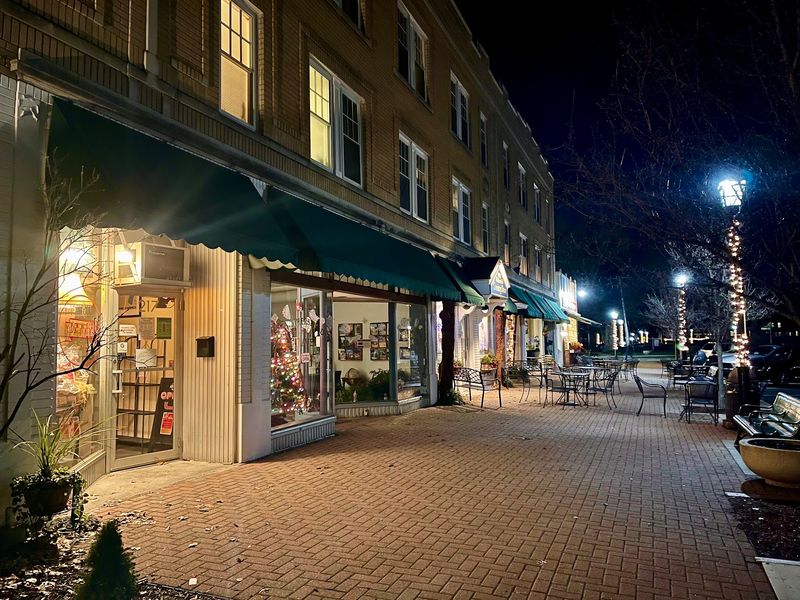
History is doing some serious showing off here. More than 150 structures built before 1850 survive in Old Wethersfield, giving a simple walk down Main Street the feel of an open-air architecture tour.
Start wandering and shops, cafes, museums, and centuries-old homes all appear within a comfortably compact area. One useful stop is the Wethersfield Museum inside the Keeney Memorial Cultural Center at 200 Main Street, where exhibits introduce the community’s long history before you explore farther.
Just down the street, the Webb-Deane-Stevens Museum at 211 Main Street brings visitors into three historic houses.
The Joseph Webb House carries an especially important story: George Washington and French commander Rochambeau met there in 1781 while coordinating the campaign that culminated at Yorktown.
Keep heading north and the scenery eventually opens onto Wethersfield Cove, adding a peaceful waterfront detour to the historic streets. The old Cove Warehouse recalls the area’s once-busy maritime trade, although the building is closed for renovations for the remainder of the 2026 season.
With Hartford only minutes away, this makes an easy half-day outing where the pleasure comes from slowing down and seeing just how much history can fit into one walkable district.
10. Niantic

A boardwalk changes everything about a beach town, and Niantic’s makes the case perfectly. The Niantic Bay Boardwalk runs roughly 1.1 miles along Long Island Sound, connecting Hole in the Wall Beach to McCook Point Park with water on one side the entire way.
Main Street sits just inland, close enough that you can shop, eat, and then walk straight out to the shoreline without moving your car. Bookstores, gift shops, and casual restaurants fill the village stretch in East Lyme’s Niantic section.
The boardwalk is flat and paved, with benches, railings, and viewing spots where trains pass on the adjacent rail line. Walkers, runners, and cyclists all use it, and sunrise over the Sound is a local favorite.
McCook Point Park offers grass, shade, and a swimming beach at the eastern end, while the western end drops you near the Niantic River drawbridge.
Ice cream shops and seafood counters handle the food side simply and quickly, which suits a day built around being outside.
Summer parking fills fast, so mornings or shoulder-season visits give you the most relaxed experience along the waterfront.
11. New Milford
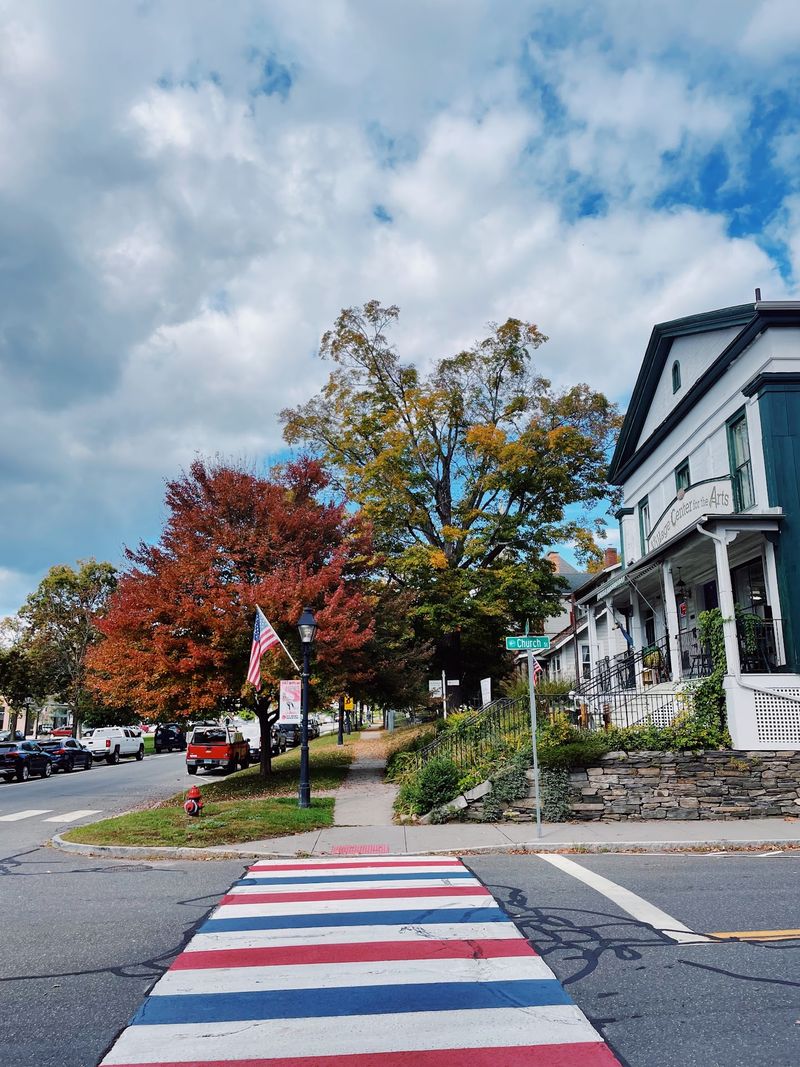
How long can a town green really be? Keep walking. This one seems determined to make you wonder.
Stretching through downtown New Milford, the long ribbon of lawn creates a natural route between shops, restaurants, historic buildings, and gathering spaces. Benches and mature trees make it equally tempting to stop and watch downtown life for a while.
Much of the shopping action shifts onto Bank Street, where independent businesses and places to eat occupy a compact stretch just off the green. Entertainment has a wonderfully old-fashioned home here, too.
Bank Street Theater at 46 Bank Street has been part of downtown since 1920 and continues showing movies today.
For a deeper dive into local history, head toward the New Milford Historical Society & Museum at 6 Aspetuck Avenue. Its collection covers centuries of community life, with exhibits spread across several historic buildings near the southern end of the green.
The bandstand adds another focal point and becomes especially lively when concerts and community events arrive.
Beyond downtown, the surrounding Litchfield County landscape gives you plenty of reasons to extend the outing. The Housatonic River flows nearby, making it easy to pair the walkable center with a little outdoor exploring before heading home.