Connecticut Has A Restaurant Inside A 1737 Mill Where You Can Fill Your Plate With Steaks And Homemade Pasta
Dinner gets more interesting when the building has been around longer than the country itself. In Connecticut, an old mill gives date night a wonderfully unexpected backdrop, with history practically built into the walls.
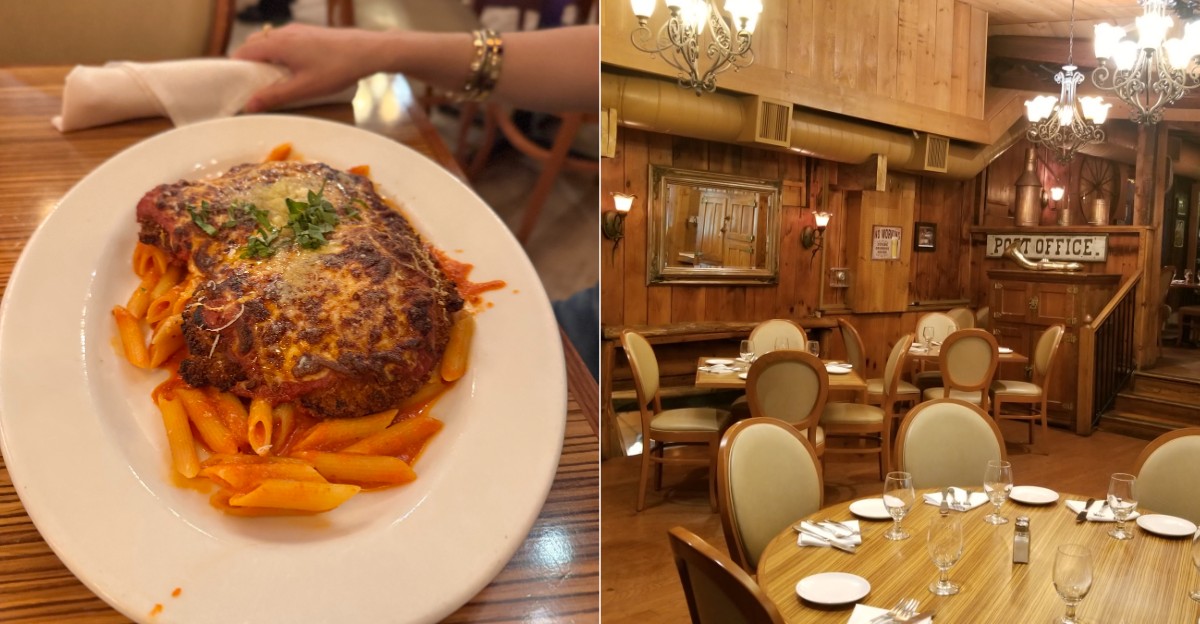
The setting could easily steal all the attention, but then the food arrives. Hearty steaks share the spotlight with homemade pasta, so the meal feels every bit as comforting as the surroundings suggest.
And honestly, how often does your dinner reservation come with a building from the early 1700s?
That contrast is what makes the experience stick with you. Old stone and weathered character set the mood, while plates coming from the kitchen keep things firmly in the present.
You may arrive hungry and expecting a good meal. Realizing just how much history surrounds the table adds another layer to dinner, turning an ordinary evening out into a story that feels centuries in the making.
1. Centuries Of History Surround Every Meal
Dinner comes with nearly three centuries of history here. And you can feel it.
Long before plates reached the tables, water and industry shaped everything happening on this patch of land.
The surrounding area was known to the Quinnipiac people as Kittenmaug, commonly translated as “place of many fishes.” Later, a mill built here in 1737 began a remarkably long working life.
Through different eras, the property was associated with grist milling and other industrial uses before eventually leaving its manufacturing days behind.
That history gives the dining experience a character no decorating budget could easily recreate. Old architectural details remain part of the surroundings, while views toward the water provide another reminder of why this site mattered in the first place.
Eventually, the former mill found an entirely different purpose as a restaurant. It operated for years as The Old Mill before becoming home to New Mill Restaurant, carrying the historic building into another chapter.
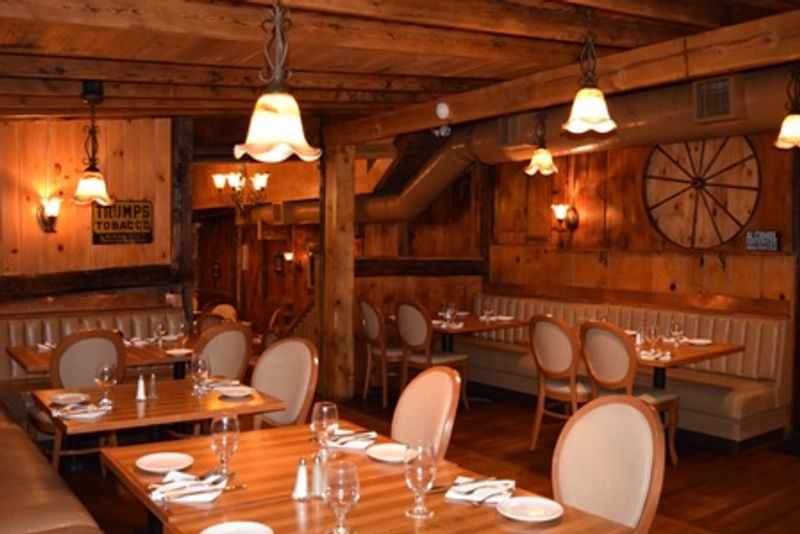
The atmosphere invites diners to look around between bites. Heavy timbers, aged surfaces, and the building’s distinctive structure make the past feel close without turning dinner into a history lesson.
That may be the real charm here.
You are eating inside a building that has watched generations come and go, while the water outside continues doing what it has done all along.
2. The Old Mill Dates All The Way Back To 1737
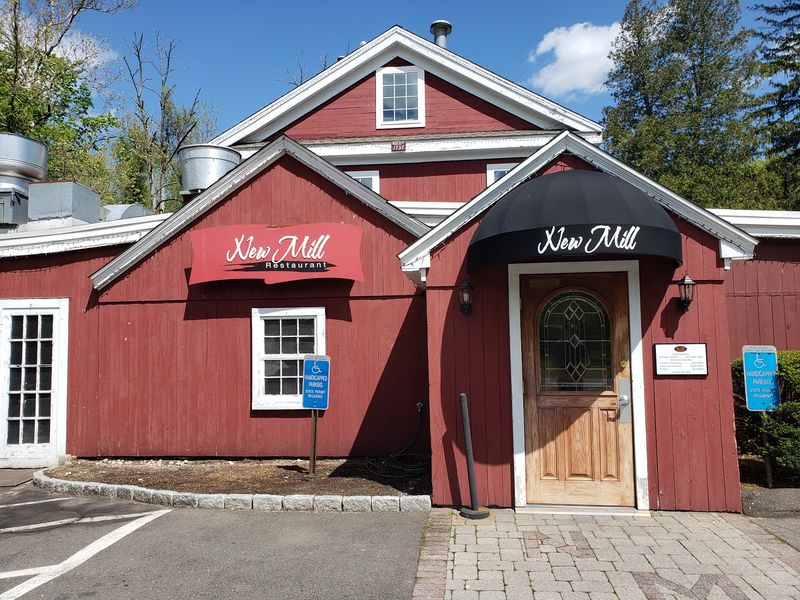
1737 is an almost hard number to picture. The United States did not exist yet. Connecticut was still a colony, and this mill was already turning.
What makes the building worth a trip is that it was never gutted and started over. A major renovation in 2007 focused on keeping the original integrity of the structure rather than replacing it, so the beams, walls, and doors held onto their authentic character.
Restoration work like that takes patience and a fair amount of stubbornness, because older materials rarely cooperate with modern construction. The reward is a dining room that still feels purposeful and lived in instead of polished flat.
Look closely and you will notice wood that does not match perfectly, surfaces worn smooth by generations of use, and joinery done by hand. Those imperfections are the interesting part.
Many visitors walk in expecting a nice dinner and leave talking about the building itself. If you enjoy old New England architecture, give yourself an extra few minutes before or after your meal to actually look around.
There is a lot to take in between the entrance and your table.
3. Canal Street Leads To This Historic Riverside Setting
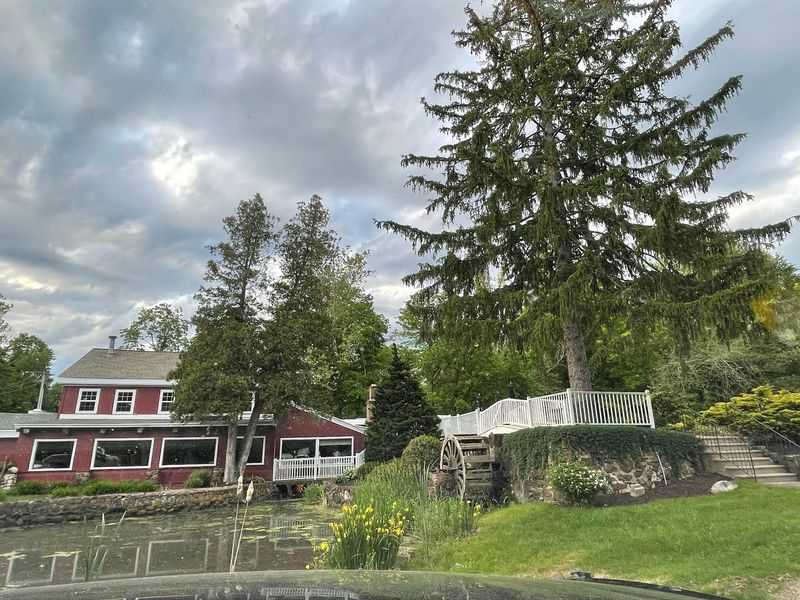
Water runs right beneath your dinner table. Yes, you can actually see it.
Part of the fun at New Mill Restaurant is discovering how much of the old mill still shapes the experience.
Large windows bring the surrounding pond and historic water features into view, giving dinner a setting that feels surprisingly removed from the surrounding suburban area. Inside, the building gets even more interesting.
A glassed section of flooring lets guests peer down at the stream flowing underneath, while another dining area offers a view of the water wheel.
Even the lower-level private dining space gets in on the action, with its own window facing the running water. It is the sort of unusual detail that can distract both kids and adults from the menu for a minute.
Dinner is the main event here, with service beginning later in the day rather than around lunchtime. Weekend evenings can be particularly popular, so reservations are worth considering when planning a Friday or Saturday visit.
Getting there is pleasantly straightforward, and parking is available once you arrive.
The restaurant welcomes diners at 493 South End Road in Plantsville.
Between the pond, water wheel, and stream beneath the building, the setting gives you plenty to explore before dessert even enters the conversation.
4. Original Stonework Keeps The Past Close
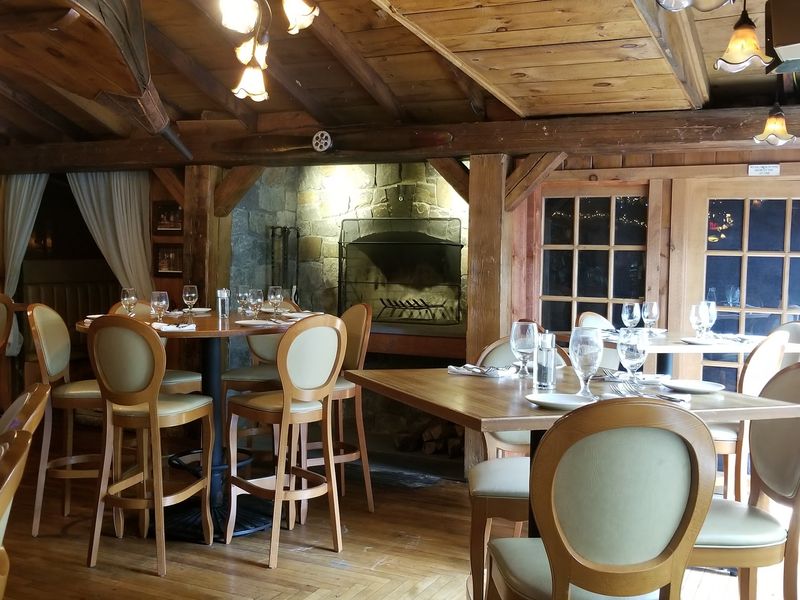
Raw wooden beams stretch across the ceilings here, and they set the tone for everything below them. The texture is rough, honest, and completely unlike the smooth surfaces of a modern dining room.
During the 2007 renovation, crews uncovered artifacts, photographs, and old mill tools that had been part of the building’s working life. Rather than boxing them up, those pieces were put on display throughout the dining areas.
Wandering past them feels a bit like browsing a small museum that happens to serve dinner. Each item is a reminder that people once earned a living inside these walls.
Preserving the original beams, walls, and doors was a deliberate choice, and it gives the space a grounded quality that new construction simply cannot fake. Lighting stays low and warm, which lets the wood tones and stone read richer.
If you enjoy details, ask for a moment to look around on your way in. The combination of old tools, worn timber, and historic photographs gives you something to talk about before the food arrives.
It also makes the wait between courses feel shorter, since there is always something on the wall worth studying.
5. Steaks And Homemade Pasta Anchor The Menu
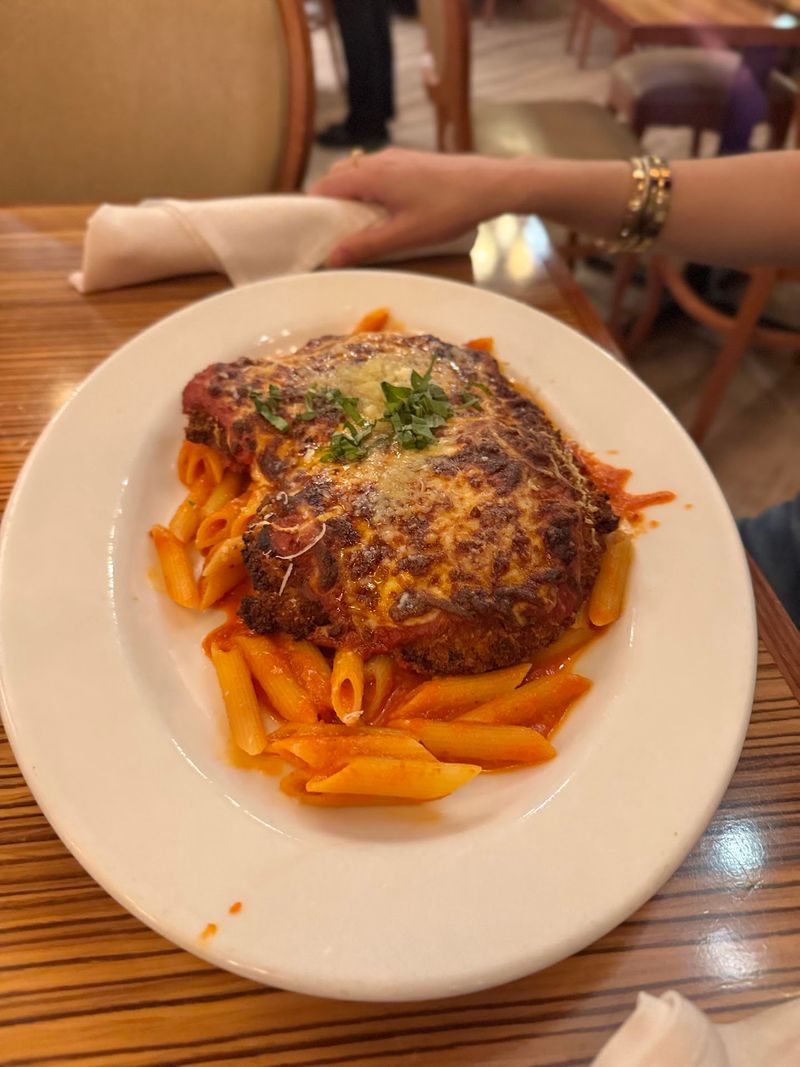
Two things carry this kitchen: chop house Angus steaks and pasta made by hand. The beef is sourced locally and graded USDA high choice or prime, with sauces prepared fresh in house.
Steak choices include filet mignon and ribeye, with substantial entrées giving diners plenty to consider.
Homemade pasta remains one of the restaurant’s specialties, although individual preparations can change as the menu evolves.
Seafood arrives six days a week and is sustainably sourced, with raw bar selections available too. Crab stuffed cod and crab cakes come up often in conversation among regulars.
The menu offers choices beyond steaks and seafood, while desserts provide another reason to save a little room before the plates are cleared.
6. Fireside Dining Adds Warmth On Cooler Nights
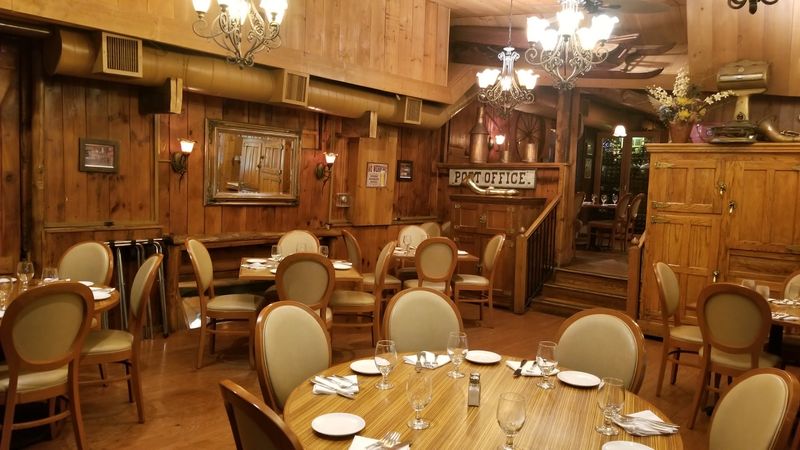
Cold outside? Good.
That makes the fireplace even better. Once the wood-burning hearth gets going, a table nearby becomes an especially inviting place to spend an evening at New Mill Restaurant.
The fire sits toward the back of the dining area, casting a warm glow across the old timber and stone around it. Real flames give the historic room a completely different personality, especially after dark when the surrounding light softens.
Winter makes the experience particularly appealing. Coming indoors after crossing a chilly parking lot and settling near the hearth adds a little instant comfort before dinner has even arrived.
Autumn evenings work beautifully, too, especially once temperatures begin dropping.
Tables closest to the fireplace naturally attract plenty of interest. Guests hoping to sit nearby can mention the preference when making a reservation, although a particular table may not always be available during busy periods.
The relaxed pace of dinner suits the setting. Service moves steadily, leaving enough time between courses to talk, look around, and enjoy the atmosphere rather than feeling hurried through the meal.
That is really the charm of fireside dining here.
Pick good company, settle into your chair, and forget about checking the clock for a while.
Some evenings deserve to stretch a little longer, especially when a real fire is crackling a few feet away.
7. Water Views Bring Another Layer Of Charm
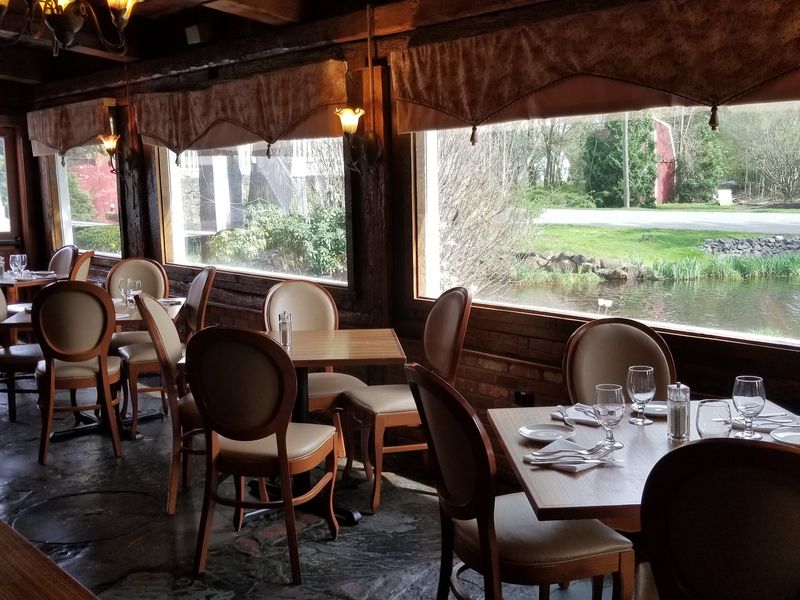
Water is the reason this building exists, and the restaurant never lets you forget it. Large windows look out over a small pond and the historic mill structure, giving the dining rooms a calm, open feeling.
The working water wheel is the showstopper. From certain spots you can watch it turn, steady and unhurried, while dinner is served just a few feet away.
Then there is the glass panel set into the floor. Look down and the stream is right there, sliding beneath the building exactly as it has for centuries.
Warmer months bring the waterside patio into play, and outdoor tables near the water have their own quiet appeal. Guests often mention how peaceful that area feels before heading inside for the main meal.
Arriving a bit early is worth considering if the weather cooperates. A few minutes by the pond makes for a nice reset before dinner.
Indoors, the noise level can rise on a busy night, which is fairly normal for a popular restaurant. Requesting a table farther from the bar area usually keeps conversation comfortable.
8. Historic Details Make Every Room Feel Different
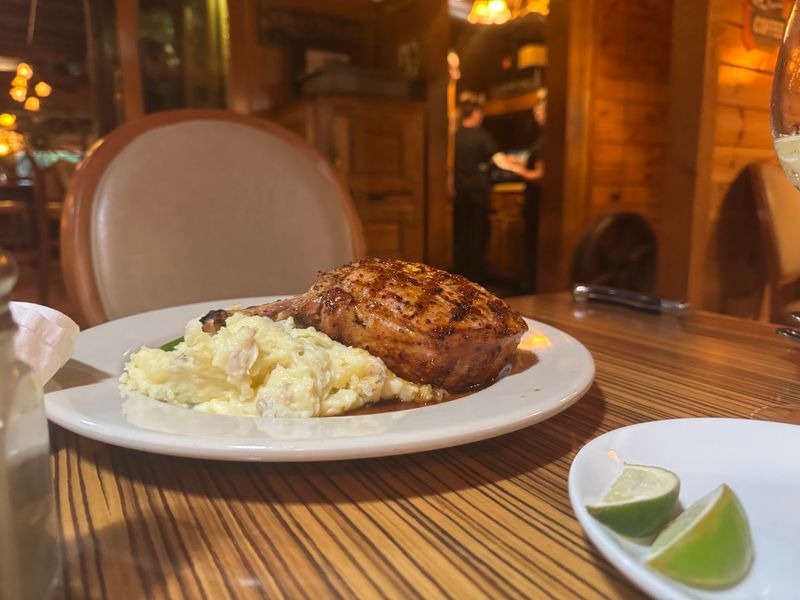
One building, several personalities. Your table can completely change the mood.
Different dining areas bring their own proportions, lighting, and historic details, so the restaurant never feels like one enormous room filled with identical tables.
Raw wooden beams provide the visual connection between the spaces. Around them, ceiling heights shift, windows catch the light differently, and stone and wood surfaces give individual sections their own character.
The lower level adds another dimension. Designed to accommodate private dining and events, it retains architectural details in the walls, railings, and ceilings rather than feeling like a generic function room.
One particularly memorable feature is a window offering a view toward the stream running beneath the historic building.
That separation can be especially useful for birthday dinners, family celebrations, and larger gatherings. Groups get their own space while still enjoying the atmosphere that makes New Mill Restaurant distinctive.
Across the building, the overall feeling leans toward a traditional New England tavern, helped considerably by the aged materials and mill history.
Even repeat visits can feel slightly different depending on where dinner happens.
One evening might center on water views, while another puts old beams or stonework in the spotlight.
Changing tables here can almost feel like discovering another corner of the restaurant.