10 Gorgeous Indiana Day Trips You Can Enjoy For Under 65 Dollars Per Person
Sixty-five dollars can disappear before lunch if a day trip is planned badly. Spend it well, though, and the day can feel surprisingly full.
Indiana offers plenty of chances to stretch a modest budget without settling for a boring outing.
That is the challenge here: not simply going somewhere cheap, but finding experiences that still feel worth the drive.
Value matters more than price alone. A low-cost stop should give you a story, a view, or a reason to talk about the day afterward.
A good escape does not need a painful receipt attached to it.
1. Clifty Falls State Park, Madison
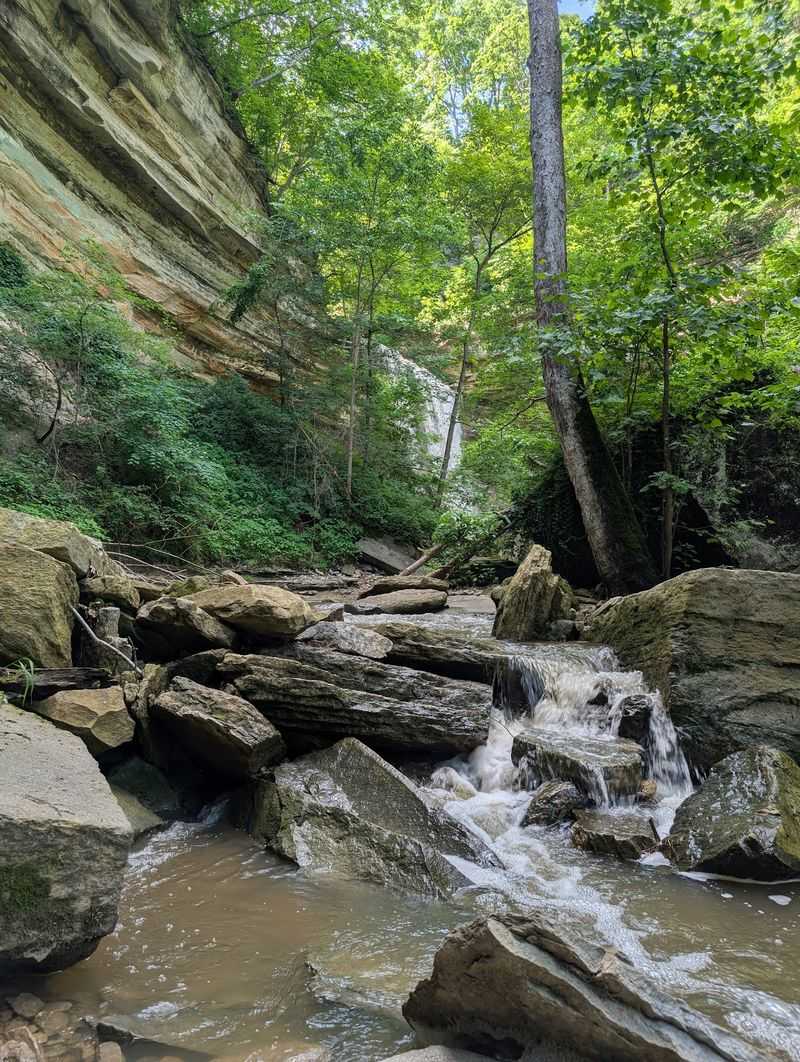
Are you seeing what I am seeing in that canyon? Sunlight only reaches the bottom around midday.
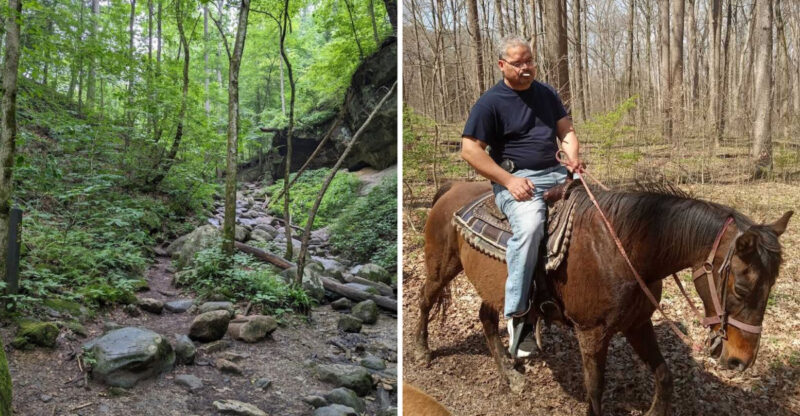
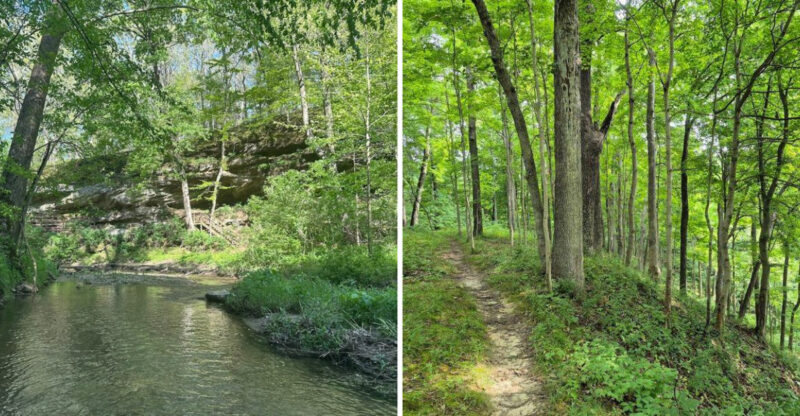
Clifty Falls State Park near Madison hides four named waterfalls in a rugged limestone gorge. Clifty Falls, Little Clifty Falls, Tunnel Falls, and Hoffman Falls all roar loudest after spring rains.
Ten hiking trails fan out across the park. Some are paved and easy, complete with a StoryWalk for young readers. Others demand careful footing and strong legs.
The rock here is roughly 425 million years old. Shale and limestone layers hold marine fossils from a vanished sea. Look closely, but leave them where they rest, since collecting is not allowed.
An abandoned railroad grade now carries hikers past a 600-foot tunnel that is currently closed because of rockfall concerns. Stonework built by the Civilian Conservation Corps in the 1930s still supports hikers today.
Deer, wild turkeys, songbirds, hawks, and vultures are among the species found around the park. Bring binoculars and a little patience.
Timing changes everything here. Spring delivers thundering water and wildflowers beneath the cliffs. Autumn cools the air and paints the canyon gold and crimson. Winter turns the cascades into frozen sculpture.
Scenic overlooks reward you with wide views of the Ohio River valley. Pack a lunch and claim a bench.
The park’s mapping address is 2221 Clifty Dr in Madison. Wear real shoes, and give yourself the whole day.
2. Conner Prairie, Fishers
Just imagine for a second that your calendar flipped back nearly two centuries. Someone in a bonnet asks about your travels.
Conner Prairie in Fishers spreads across more than 1,000 acres along the White River. Costumed interpreters live out daily routines in 1836 Prairietown.
You can chat with blacksmiths, farmers, schoolteachers, and shopkeepers. Hands-on activities vary by date, with pottery demonstrations and occasional make-and-take programs appearing on the calendar.
The Lenape Camp explores life, culture, trade, and adaptation in Indiana Territory before statehood. Visitors can try activities such as trading, basket making, pottery, hide tanning, and supervised tomahawk throwing.
Nearby, the 1863 Civil War Journey uses reenactments and interactive storytelling. The state’s role in that period becomes surprisingly personal.
Animal Encounters lets guests feed and pet the livestock that powered early farms. Kids usually refuse to leave this area.
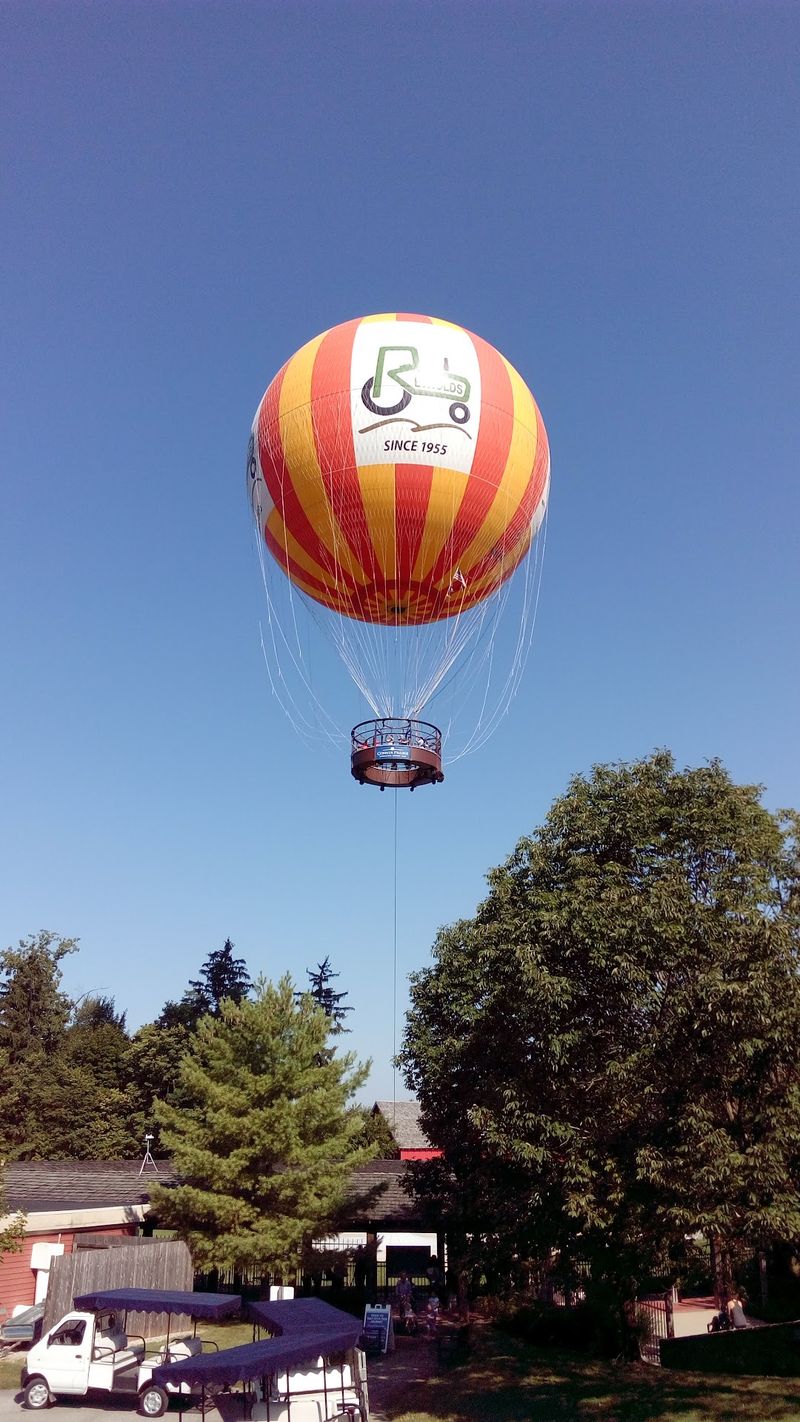
Want a wider view? The 1859 Balloon Voyage offers a tethered helium-balloon ride for an additional fee when weather allows.
Indoors, the Museum Experience Center holds six immersive galleries. One, called Promised Land as Proving Ground, explores African American history in this state.
Treetop Outpost invites climbing and creative play among the trees. Seasonal events include Jupiter Flights, Headless Horseman, and A Merry Prairie Holiday.
The address is 13400 Allisonville Rd in Fishers, and general admission covers the main daytime grounds and exhibits.
3. WonderLab Museum, Bloomington
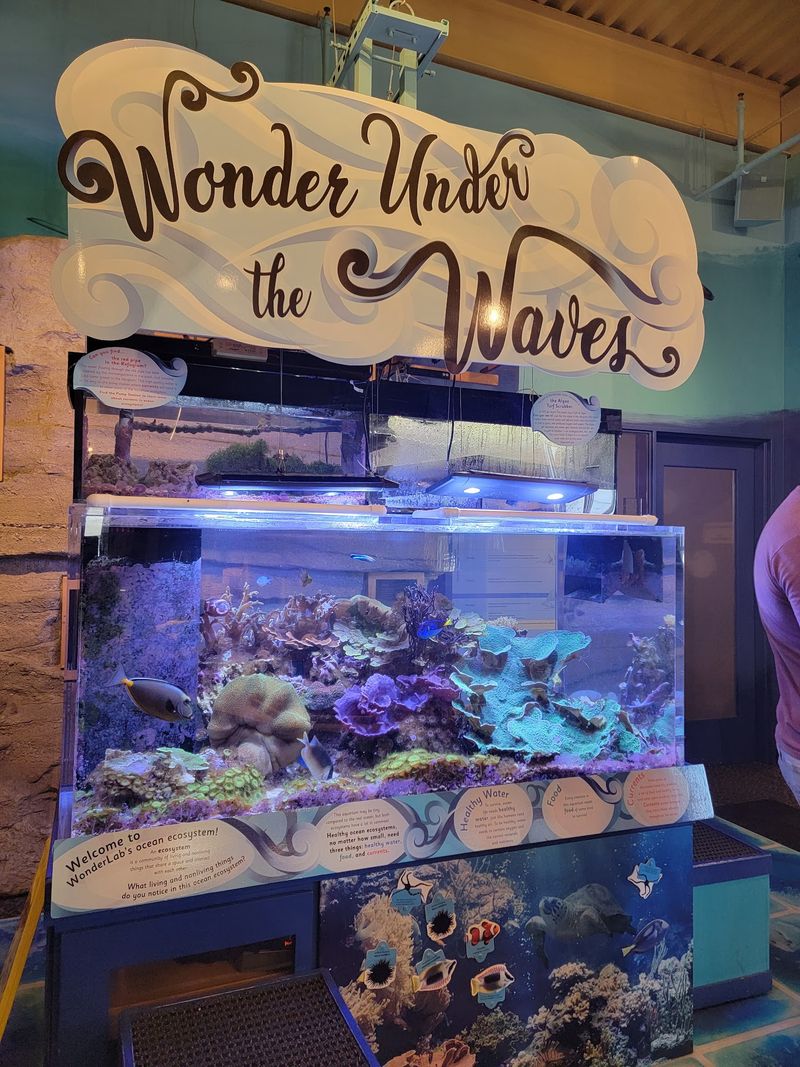
Hands-on exhibits are the point here, with visitors encouraged to experiment directly rather than simply look.
WonderLab Museum sits in the middle of Bloomington’s cultural district. Hands-on science dominates the museum, with exhibits designed for active exploration.
Two standout features grab attention immediately. The two-story Grapevine Climber begs to be scaled, and the Bubble-Airium turns soap film into physics you can see.
A huge water table keeps experimenters busy for ages. Dams get built, then cheerfully destroyed.
One gallery houses live insects, amphibians, and reptiles in habitats built to match their wild homes. Close observation teaches more than any poster could.
An augmented-reality sandbox lets you shape hills and valleys with your hands. Climates and biomes shift as the sand moves.
Head outside to the WonderGarden for lessons in solar power and the science of sound. Indoor curiosity connects straight to the natural world.
Rotating exhibits keep repeat trips interesting. Past favorites include Your Amazing Brain and Take Apart: Robot Rodeo.
The museum is designed for visitors of all ages, so the exhibits are not limited to children. Plan on a couple of hours, more if your crew loves tinkering. Comfortable clothes beat fancy ones.
You will find it at 308 W 4th St, Bloomington. Curiosity is the only required ticket item.
4. Indiana Caverns, Corydon
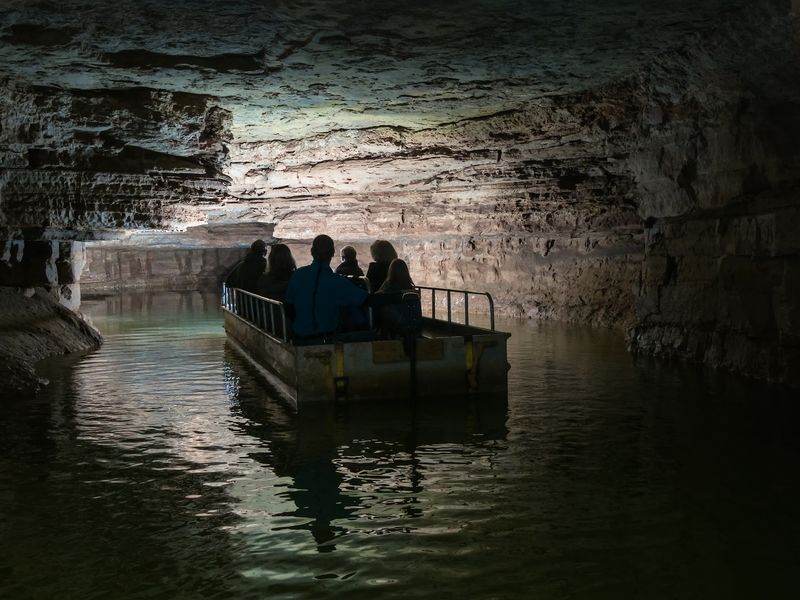
My jaw dropped about ninety feet below the cornfields. Then I heard water moving in the dark.
The walking tour descends deep beneath the surface through the Binkley Cave System before reaching its underground river. Massive chambers, dramatic formations, and a 40-foot underground waterfall await down there.
The signature moment is a boat ride on a subterranean river. Very few caves anywhere let you float like this.
Ice Age fossils appear along the route. Guides explain which animals once wandered above these passages.
Tours generally run 75 to 90 minutes. That gives you time to actually look up and absorb the scale.
Temperatures hold steady near 56 degrees all year. Summer trips feel refreshing, and winter trips feel surprisingly mild.
Geology fans will appreciate the context. These passages belong to the Binkley Cave System, Indiana’s longest known cave system and one of the ten longest in the United States.
Above ground, the fun continues. Cavern of the Sabertooth is a crawl-through tunnel adventure built for younger explorers.
The Bat Chaser combines a suspended single-rail coaster with a zip-line-style ride through the treetops. The Plunge delivers a quick 50-foot drop for anyone craving a jolt.
Gemstone mining is available separately, with bags sold at the welcome center. Sifting through gravel for something shiny never gets old.
Bring a light jacket and shoes with grip, since cave paths stay damp. The address is 1267 Green Acres Dr SW, Corydon.
A cave tour alone stays comfortably under the article’s $65 per-person limit, while larger activity bundles still remain below it.
5. Marengo Cave
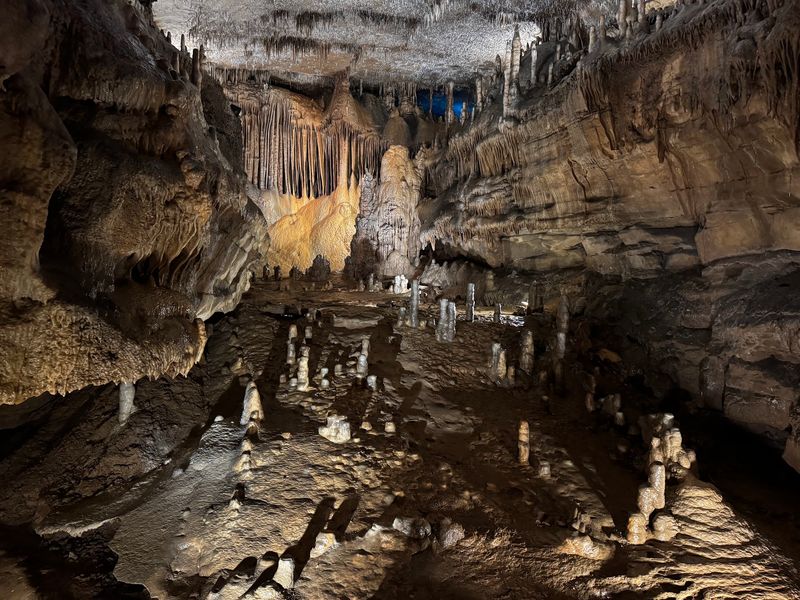
Two curious children made a discovery in 1883 that still draws crowds. Their find sits under rolling southern hills.
Marengo Cave, in the town of Marengo, carries U.S. National Natural Landmark status. Dripstone, flowstone, and rimstone deposits decorate its passages in remarkable density.
Formation began somewhere between 700,000 and 1.2 million years ago. Every ripple of stone took patience beyond imagining.
Two guided tours suit different energy levels. Crystal Palace is an easy 40-minute guided tour through formation-filled rooms and large flowstone deposits.
Dripstone Trail runs about 60 minutes and focuses on soda straws, stalagmites, and other delicate formations. More walking means more intricate scenery.
Adventurous types can sign up for wild cave trips. Crawling, squeezing, and getting thoroughly muddy are all part of the deal.
The cave’s history took some odd turns. Band concerts and theatrical performances once echoed through these chambers, and it later served as a bomb shelter.
Landowners opened it to the public soon after its discovery. That makes it one of the state’s longest-running attractions.
Surface attractions add more options beyond the guided cave tours, with availability varying by season.
Wear closed shoes and expect cool air underground. Sandstone cliffs and wooded hills surround the property above.
Head to 400 E State Rd 64, Marengo. Both standard walking tours can be purchased together on one combo ticket.
6. Wolf Park, Battle Ground

Howling with a wolf pack under an open sky rearranges your evening plans. The sound carries across the grass.
Wolf Park operates as a nonprofit wildlife education facility in Battle Ground. Ambassador wolves, foxes, bison, and turtles all live here.
Purdue professor Dr. Erich Klinghammer founded the facility in 1972. Behavioral research and environmental education remain its backbone.
Guided tours introduce each resident animal. Staff explain behaviors, social structures, and the roles these species play in wild ecosystems.
Howl Nights combine an educational wolf-behavior program with an interactive howling session alongside the ambassador wolves.
Specialty programs dig deeper. Specialty programs can include closer educational encounters with resident animals, depending on the current schedule.
Instincts in Action is a feeding demonstration showing natural hunting strategies. Watching the pack work together teaches more than any lecture.
Photography-focused programs may appear on the schedule, so check current offerings before planning around one. Golden hour on the prairie does wonderful things.
Youth camps and educational sessions cover animal adaptations and predator-prey relationships. Kids leave with real knowledge, not just souvenirs.
The larger mission centers on coexistence with wildlife. Understanding these animals makes protecting them far easier.
Dress for weather, since much of the experience happens outdoors. Evening programs can turn chilly quickly.
Look for 4004 E 800 N, Battle Ground. Howl Night currently costs $18 for adults and $15 for children, keeping the experience well below the article’s budget cap.
7. Historic New Harmony, New Harmony
Two separate groups tried to build a perfect society on this riverbank. Their ideas still shape the streets.
Historic New Harmony rests on the banks of the Wabash River in New Harmony. Much of New Harmony is protected within a nationally recognized historic district.
German religious separatists called Harmonists settled here in 1814. They pursued Christian perfection in work, worship, and daily habits.
Robert Owen purchased the community in 1825. His experiment leaned toward education and social equality instead.
The community became an important early center for education, science, and social experimentation in the United States.
Architecture tells the layered story. Harmonist structures stand alongside Georgian, Gothic, Romanesque Revival, and Neoclassical additions.
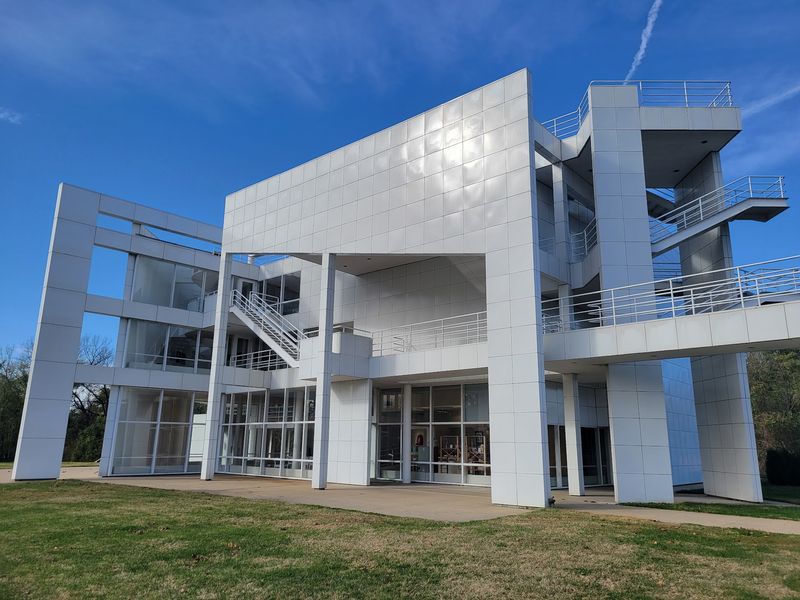
Modern design joined the mix too. Richard Meier created the striking Atheneum Visitor Center, and Philip Johnson designed the Roofless Church with its open oculus.
Guided options include a free Atheneum Tour, a 45-minute Tram Tour, and a deeper History Tour.
Gardens and art installations fill the spaces between buildings. Benches invite slow thinking, which suits the town’s character.
Historic brick buildings and modern architecture sit within the same compact townscape.
Comfortable shoes help, since the best exploring happens on foot. Small shops and quiet lanes reward wandering.
The address is 401 N Arthur St, New Harmony. Curiosity built this town, and curiosity is still the right way to see it.
8. Columbus Visitors Center Architectural Tour, Columbus
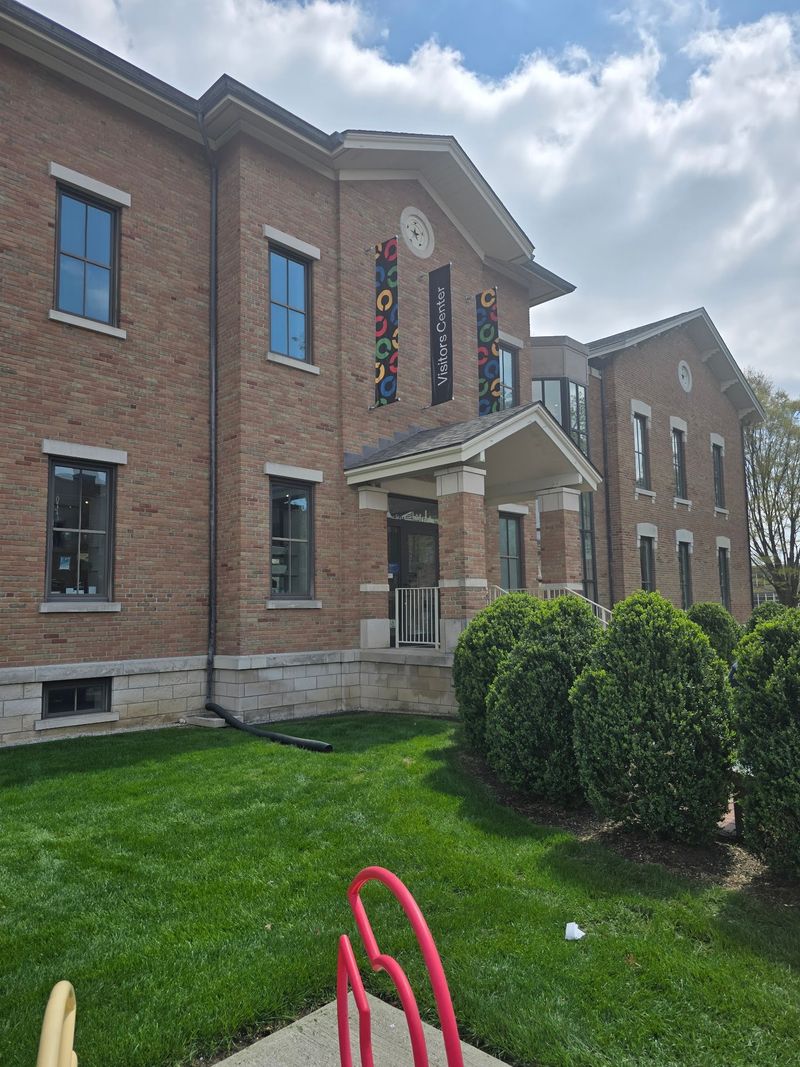
Call me crazy, but a small Indiana city out-designs some major metros. The buildings prove it block by block.
Guided and self-guided architecture routes now cover dozens of significant buildings and public-art sites across the city.
Everything traces back to 1957. Industrialist J. Irwin Miller created a foundation to cover architects’ fees for public buildings.
That single decision turned the city into an open-air museum. Schools, churches, and civic spaces became showcases.
The Architectural Highlights shuttle tour runs about two hours, with select interior access depending on availability.
Prefer your own pace? Printed guides, audio tours, and free bike-route maps let you explore independently.
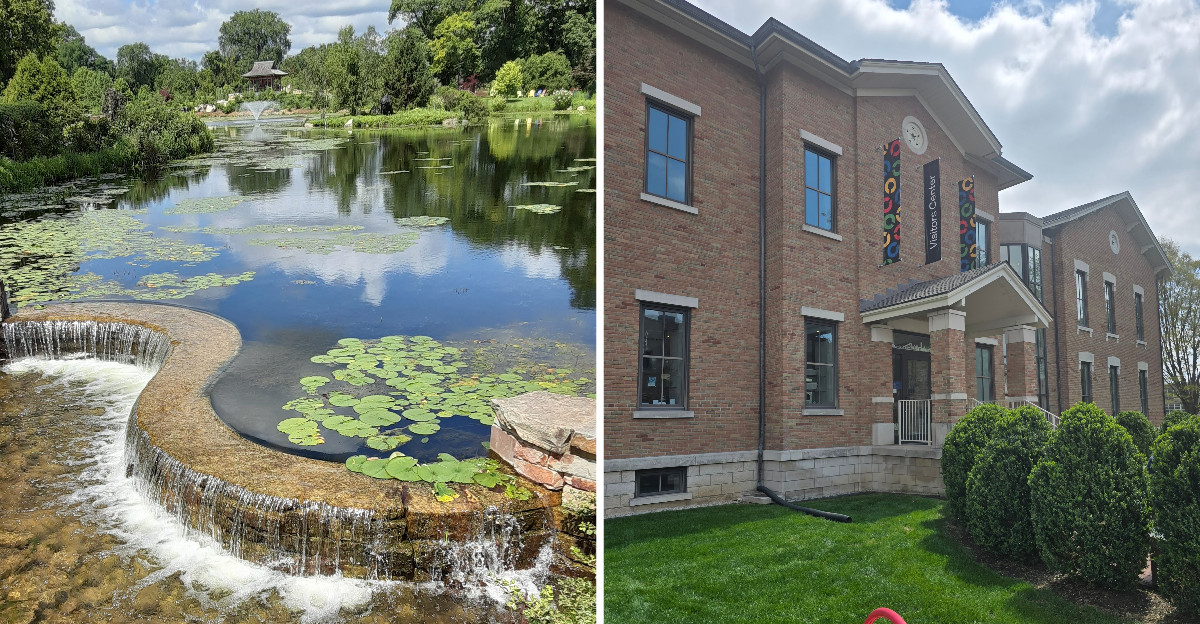
The Visitors Center serves as the downtown starting point for the city’s architecture tours and design exhibits.
Famous names fill the roster. Eliel and Eero Saarinen, I.M. Pei, Richard Meier, Robert Venturi, and Gunnar Birkerts all contributed work.
Highlights include Eliel Saarinen’s First Christian Church and Eero Saarinen’s Irwin Conference Center. I.M. Pei’s Cleo Rogers Memorial Library stands beside Henry Moore’s Large Arch sculpture.
Eero Saarinen’s North Christian Church and Birkerts’ St. Peter’s Lutheran Church round out the essentials. Each rewards a slow look.
Fifth Street carries the nickname Avenue of the Architects. Masterpieces cluster together along that stretch. Start at 506 5th St, Columbus. Bring a camera with plenty of storage space.
9. Indiana Dunes Visitor Center, Porter
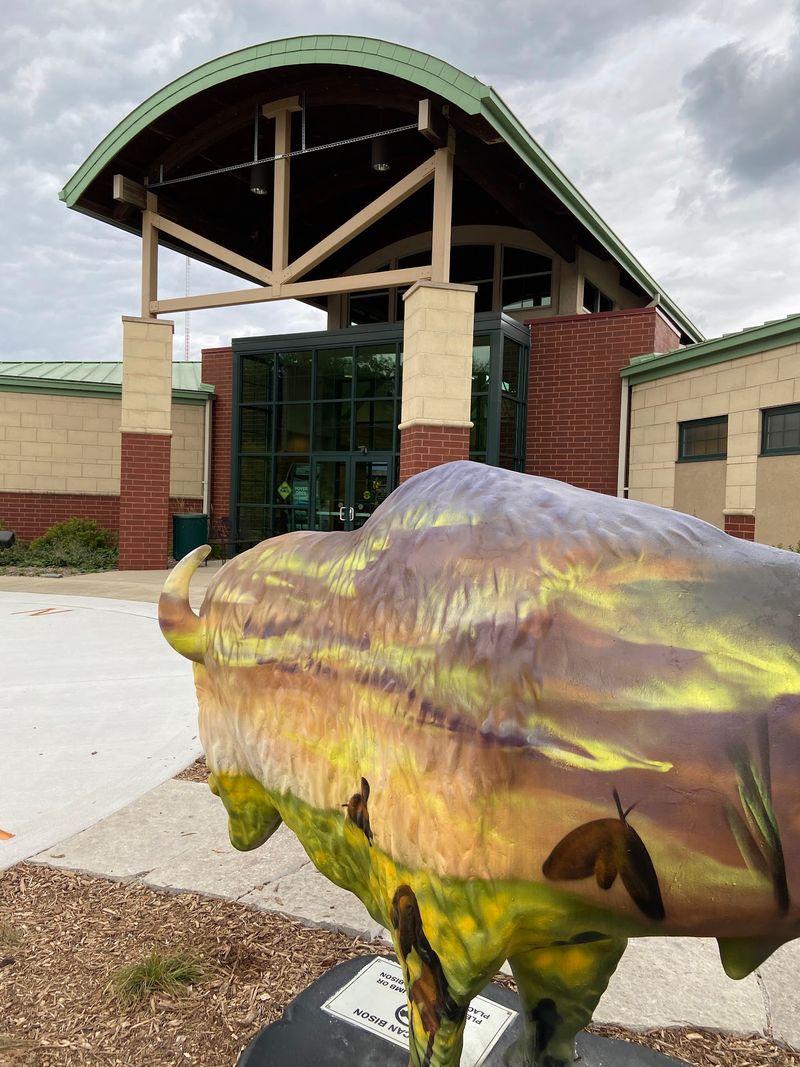
Cacti and pitcher plants growing near a Great Lake shoreline sounds impossible. Both thrive within a short drive of this building.
The Indiana Dunes Visitor Center in Porter serves as the front door to Indiana Dunes National Park. Rangers here help shape your whole day.
The park packs remarkable variety into a compact area. Towering sand dunes, forests, wetlands, and sweeping Lake Michigan views all coexist.
Birders arrive with good reason. More than 350 bird species have been recorded across these habitats.
A 24-minute park film introduces the dunes, wildlife, geology, and seasonal landscapes. Footage covers seasons most travelers never see.
Seasonal ranger-led Indigenous Cultural Trail programs explore Miami and Potawatomi history near the visitor center.
Maps and trail guides are available at the desk. Hiking and biking routes range from short loops to serious treks.
Beaches, hiking, fishing, paddling, and other outdoor activities spread across the national park beyond the visitor center. Winter brings snowshoeing and quiet frozen shorelines.
National Park Rangers answer questions and suggest routes based on weather. That advice saves time and sore feet.
The visitor center is open daily except Thanksgiving Day, Christmas Day, and New Year’s Day. Planning around sunrise or sunset pays off beautifully.
Bring water, sunscreen, and sand-friendly footwear. Dune climbs work muscles you forgot about. Stop by 1215 N State Rd 49 in Porter before heading into the national park.
10. Wellfield Botanic Gardens, Elkhart
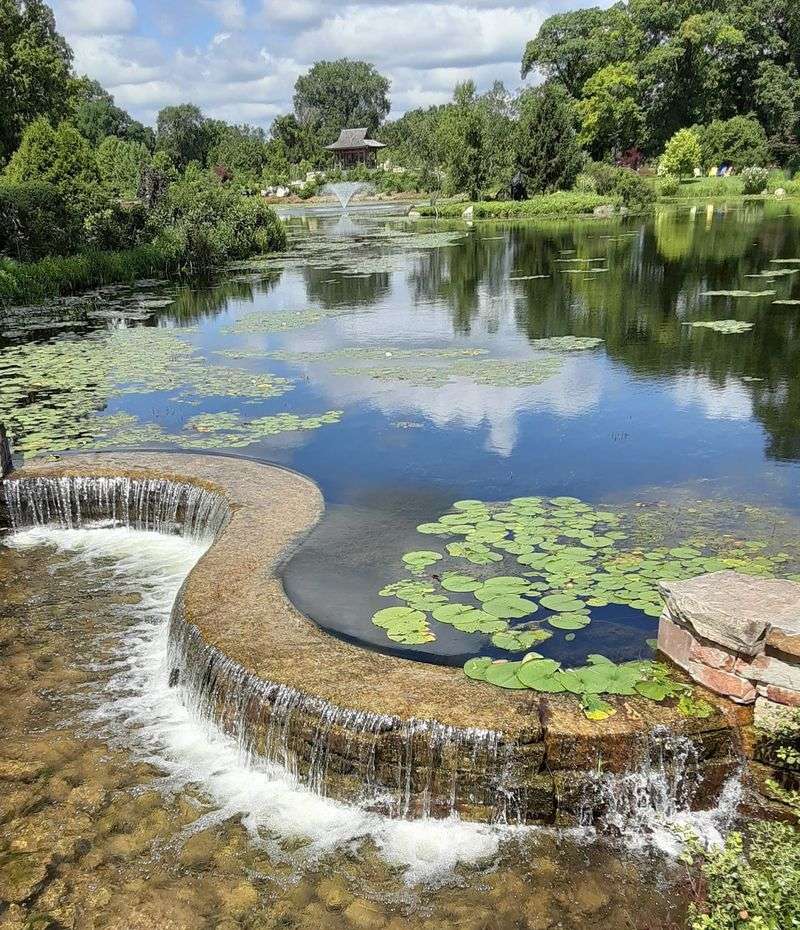
Nearly half of this property is water. Streams, lakes, and waterfalls do most of the talking.
Wellfield Botanic Gardens covers 36 acres in Elkhart. More than 24 themed garden and event spaces now fill the 36-acre property.
Paved and landscaped paths connect the major garden spaces throughout the property.
An English-style garden delivers tidy elegance and generous blooms. The Children’s Garden goes the opposite direction with playful discovery.
The Japanese-style Island Garden uses carefully placed boulders and traditional design. Quiet contemplation comes naturally there.
Water features and waterfalls add movement and sound throughout several garden spaces.
One favorite changes yearly. The Quilt Garden arranges flowerbeds into intricate patterns that mirror a quilt square, honoring local heritage.
Architecture and plantings work together throughout. Bridges, sculptures, and pathways feel deliberately composed rather than decorative.
The property still occupies the historic North Main Street Well Field, which has supplied water to Elkhart since the mid-1800s.
A 2026 private national study ranked it first among 407 public gardens using online review scores and sentiment analysis. Not bad for northern Indiana.
Events run throughout the year, including a summer concert series and Winter Wonderland Holiday Lights.
The garden allows personal photography during regular admission hours, subject to its photography policy. Wander over to 1011 N Main St, Elkhart. Every season rewrites the view here.