This Idaho Spring Has Been Pouring Free Naturally Sparkling Water For More Than 160 Years
Some places charge five dollars for fancy sparkling water.
Idaho has one that has been making its own for more than a century.
The bubbles come straight out of the ground, which feels suspiciously like nature showing off.
Even stranger, travelers have been stopping here for a taste since wagon days. That gives every sip a little time-travel energy.
No machine is hiding behind the stone spring house, and nobody is sneaking in carbonation after dark.
The fizz is completely natural.
It is one of those wonderfully odd roadside stops that sounds made up until you are standing there with a cup.
Just do not blame the spring if regular water suddenly starts feeling boring.
This Naturally Sparkling Water Has Been Drawing Curious Travelers For More Than 160 Years
Long before wagon wheels cut ruts across southeastern Idaho, Native American tribes, fur traders, and trappers knew about the fizzing water bubbling up from the valley floor.
Those springs had been effervescing for thousands of years before anyone thought to write about them.
By the mid-1800s, word had spread widely along the Oregon Trail, and the area earned the nickname Oregon Trail Oasis because of its plentiful water.
Travelers through the Soda Springs area encountered several unusual carbonated springs, including the cold water now sampled at Hooper Springs Park.
Sarah White Smith, who passed through in 1838, called the water a curiosity and compared its taste to artificially prepared soda water.
She also noted it made wonderful bread, rising light without any yeast at all.
Once rail service reached the region in 1882, the springs gained national attention.
W.H. Hooper, a Salt Lake City banker who kept a summer residence nearby, helped promote the town and its soda water industry, and the spring still carries his name. More than 160 years later, visitors can still sample the naturally carbonated water at the city park.
Bring A Cup Because The Famous Soda Water Is Still Free To Taste
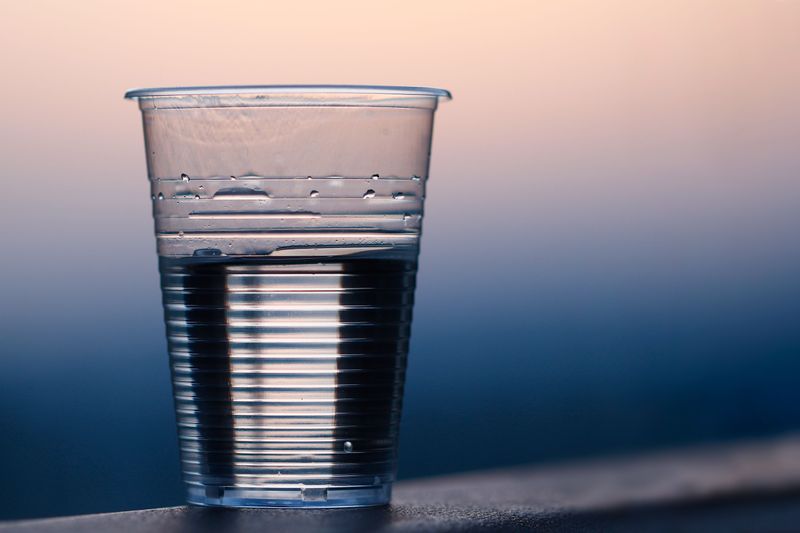
No ticket booth, no admission gate, no fee of any kind.
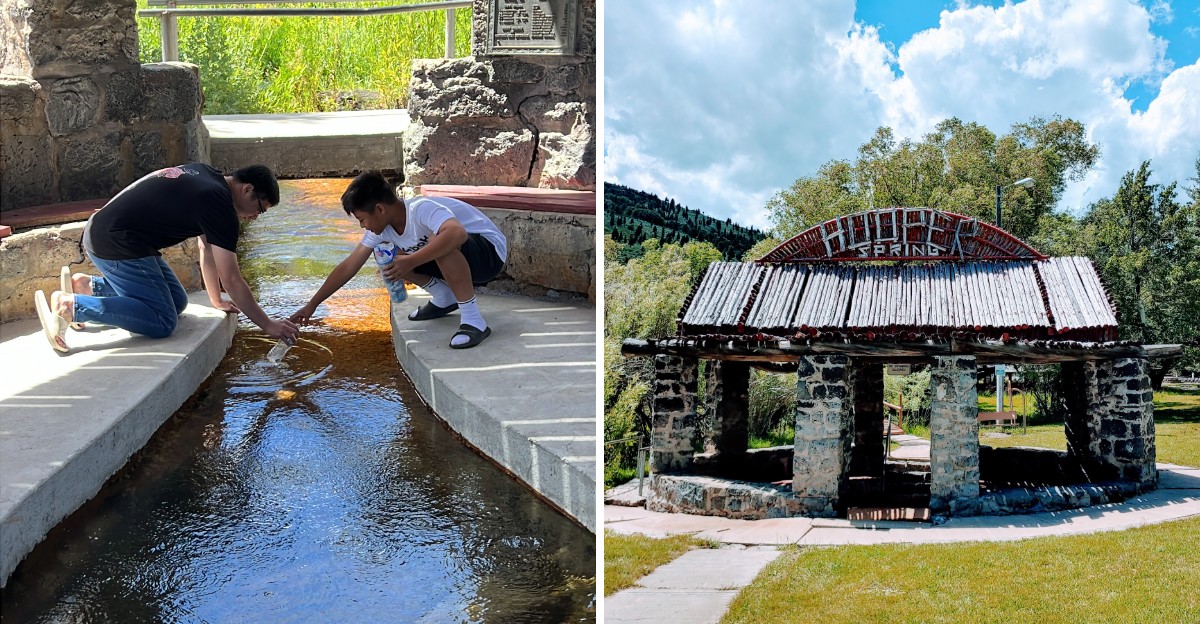
The sparkling water pouring from the spring costs exactly nothing, which feels almost unbelievable in a world where bottled fizzy water carries a price tag. Bring your own cup or a refillable bottle, because there is nothing to buy on site.
Hooper Springs Park sits roughly two miles north of downtown, managed by the City of Soda Springs, and you will find it at 1805 Government Dam Rd, Soda Springs, ID 83276.
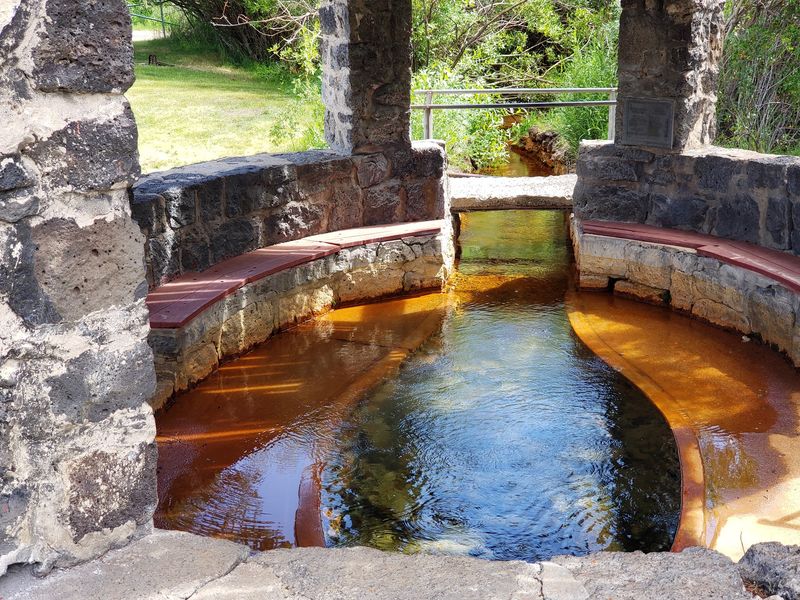
The water runs cold and crystal clear, with bubbles rising visibly to the surface.
The mineral-rich water has a distinctive natural flavor, and city information notes that some visitors mix it with powdered punch, fruit juice, or sweeteners. Amenities make lingering easy.
Picnic areas, grills, restrooms, and a playground surround the spring, so a quick taste often turns into a full afternoon.
The park stays open around the clock, meaning early risers and sunset wanderers both get their turn at the tap.
Fill a bottle, take a sip, and share the moment.
Oregon Trail Travelers Once Considered This Bubbling Spring A Natural Wonder
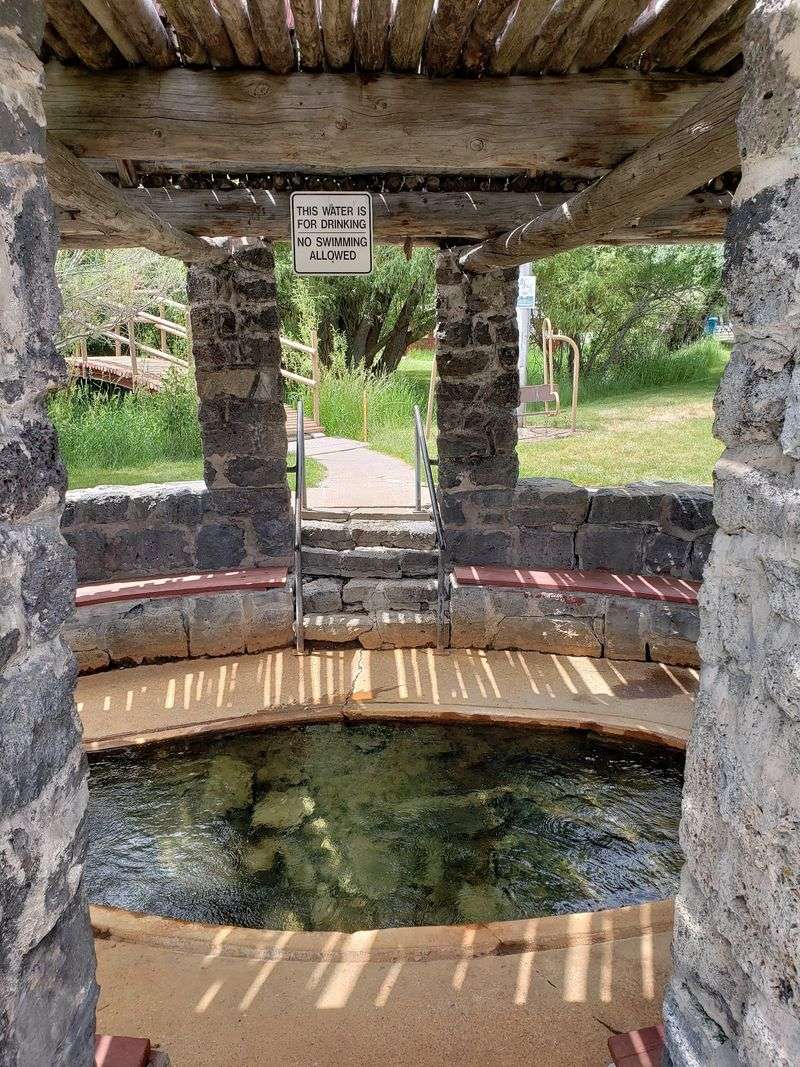
After weeks of overland travel, the bubbling springs around Soda Springs stood out as one of the route’s unusual natural landmarks.
Then imagine kneeling beside a spring that fizzes like a fountain drink. Emigrants described the sensation as startling, and many listed the springs among the true marvels of the entire trail.
Before wagon-train emigration intensified, trappers and explorers already knew the area for its unusual effervescent springs.
Resourceful pioneers turned the discovery into something playful.
They carried small amounts of flavoring and stirred it into the naturally carbonated water, creating homemade soda-fountain drinks in the middle of nowhere. Practical uses mattered too.
Sarah White Smith recorded in 1838 that bread baked with the spring water rose beautifully without yeast, a small miracle for anyone cooking over a campfire.
The stop also promised something every traveling party desperately needed, which was a reliable and plentiful water supply before the long push west.
Standing at the same spring today, you drink what they drank, and the connection across the centuries feels surprisingly close.
The Water Gets Its Fizz Naturally Before It Ever Reaches Your Cup
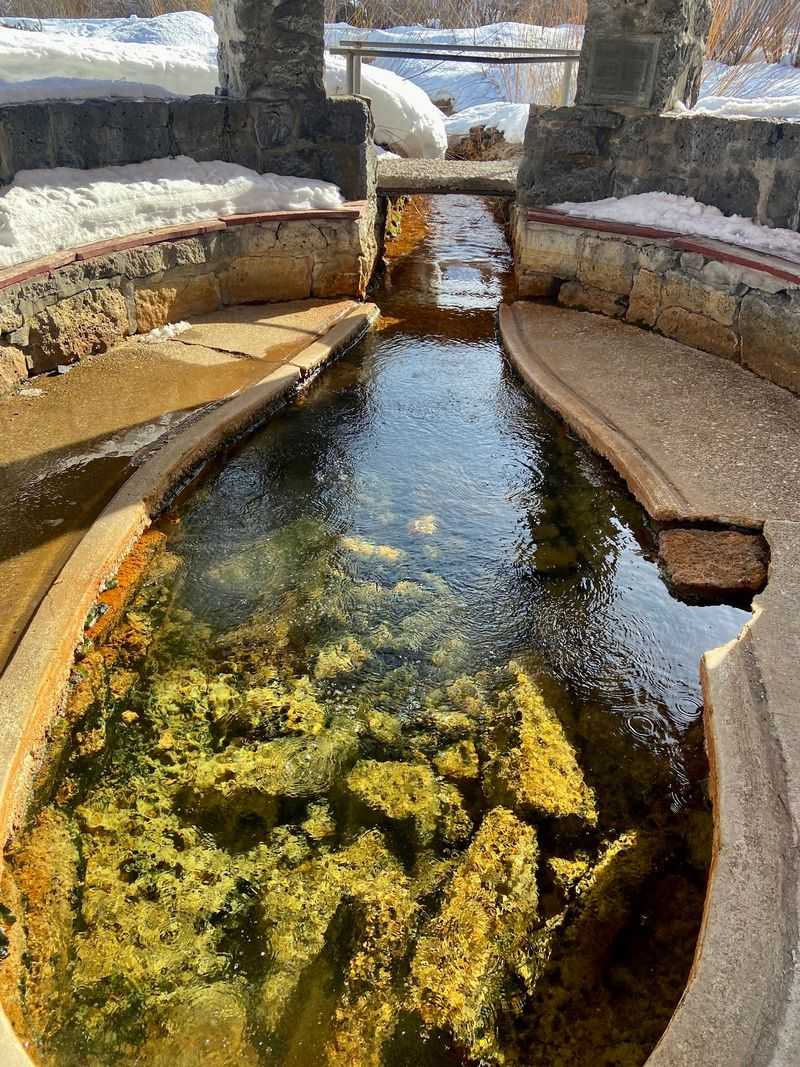
Geology does all the work here, and no machine is involved anywhere in the process.
Deep underground, groundwater picks up carbon dioxide from several geologic sources, including deeply derived carbon and dissolved carbonate minerals. That trapped carbon dioxide is the secret behind every bubble.
When the water finally surfaces at the spring, the pressure drops and the gas escapes, creating the same lively fizz you would expect from a bottle of sparkling water.
Carbon dioxide is the primary player, but it travels with company.
Dissolved minerals pick up along the underground journey and give the water its distinctive taste, which some people describe as faintly metallic, others as mildly salty, and a few as slightly sweet.
Watch the surface closely and you can actually see bubbles racing upward in steady little chains.
It is one of those small natural performances that never quite gets old.
Temperature adds to the surprise, since the water arrives genuinely cold rather than warm like a hot spring.
Cold, bubbly, mineral-rich, and entirely made by the planet itself.
Why Soda Springs Could Not Have A More Perfect Name
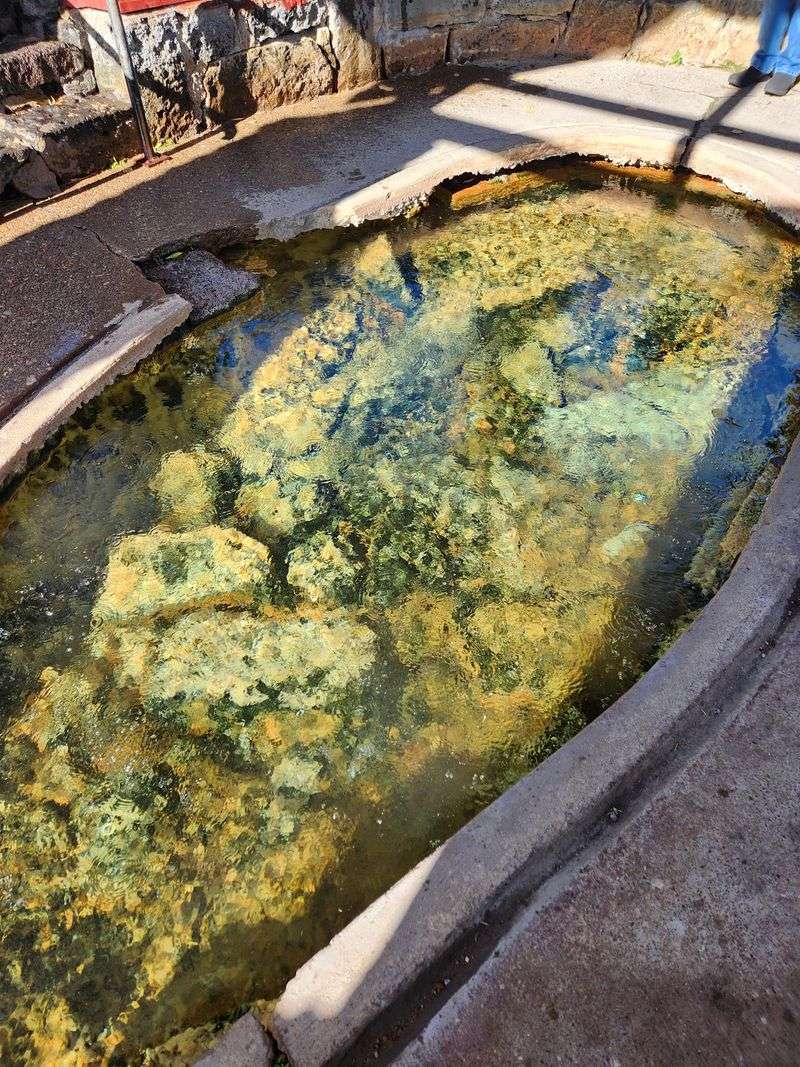
Some town names are borrowed from faraway places or long-gone founders. Not this one.
The name Soda Springs was already in use by the 1830s, when travelers recorded the area’s numerous naturally carbonated springs in their journals.
Thousands of carbonated natural springs dot the surrounding area, making the label less of a nickname and more of a plain description.
Geology wrote the town’s identity before any surveyor drew a map. That identity still shapes daily life.
The community’s history, tourism, and sense of pride all trace back to what bubbles underneath, and Hooper Springs remains the best known of the bunch.
Soda water from the area was commercially bottled and marketed nationally during the region’s early resort era.
What they find instead is a quiet valley where the ground itself does the carbonating, free of charge, hour after hour.
Downtown sits about two miles south of the park, an easy detour for anyone wanting to stretch the visit. Few towns in Idaho can claim a name so literally earned, and fewer still can let you taste the reason for it.
A Covered Spring House Protects The Strangest Attraction In The Park
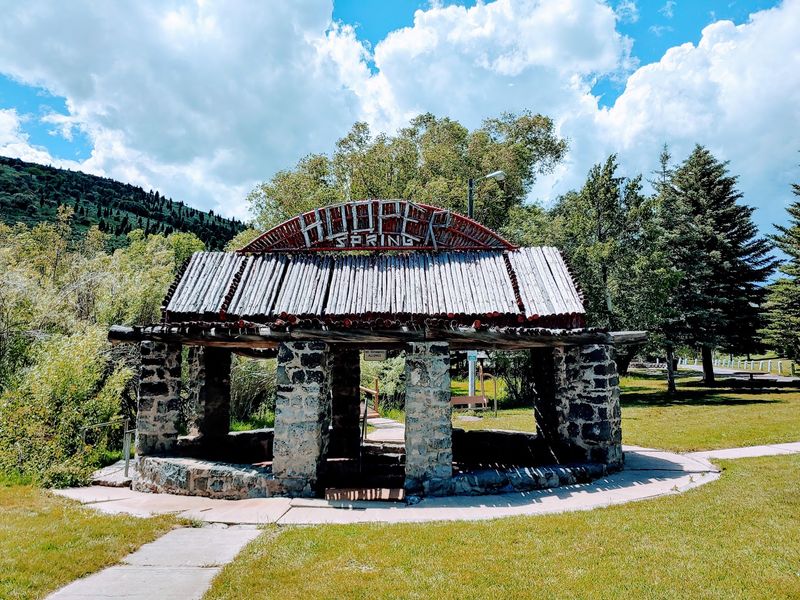
A modest roofed structure marks the heart of the park, sheltering the spot where the water breaks through the surface. Benches line the inside, inviting people to sit, sip, and watch the bubbles keep rising.
Shade matters on a hot afternoon, and the spring house provides it while keeping leaves and weather out of the flowing water.
The design is simple, practical, and quietly charming.
Among all the soda springs scattered across the region, Hooper Springs is the most celebrated.
Its combination of natural carbonation and deep historical roots gives it a character no other stop matches. Strange is a fair word for it.
Water that fizzes without any help, tastes like nothing else, and has been doing so since long before the town existed qualifies as genuinely unusual.
Soda Creek and the city’s hydro canals run alongside the pathway connecting the park with downtown Soda Springs.
Spend a few minutes inside the shelter and the spring stops feeling like a roadside curiosity.
It starts feeling like a landmark worth traveling for.
Follow The Walking Trail And This Historic Stop Turns Into A Bigger Adventure
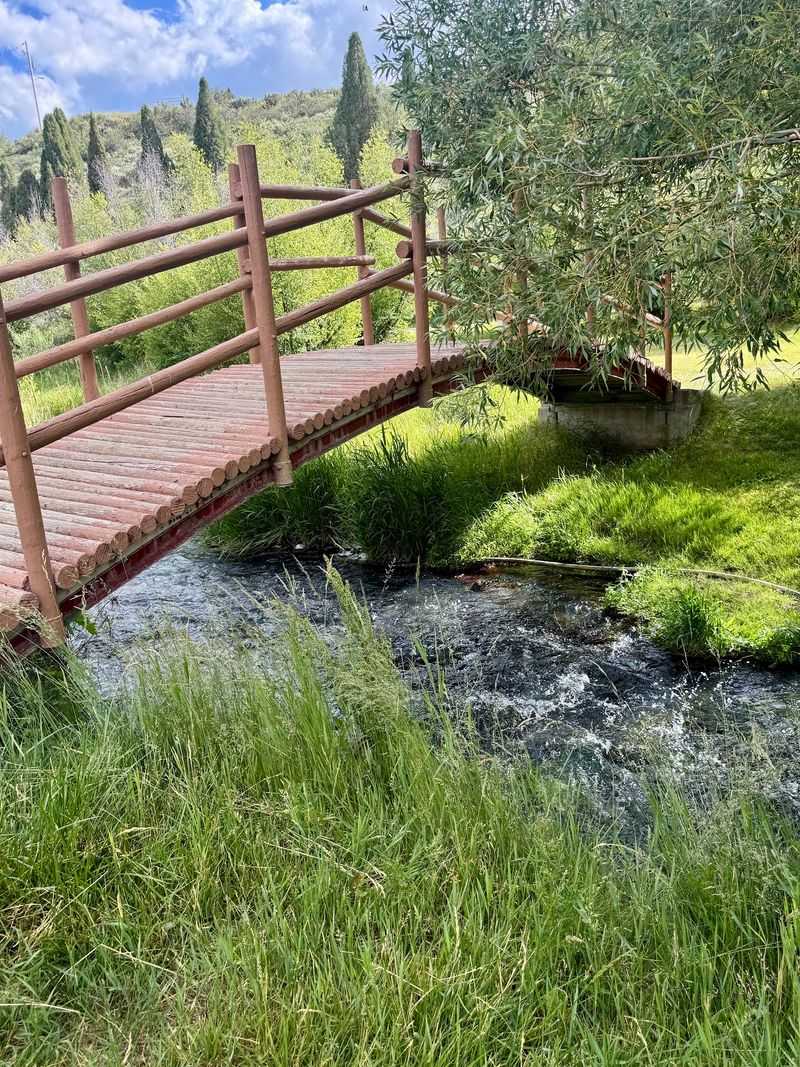
Stretch your legs beyond the spring house and the visit expands considerably.
The Hooper Springs Pathway runs 1.7 miles between Geyser Park and Hooper Springs, following Soda Creek and the city’s hydro canals.
Spring and summer bring wildflowers along the path, while deer, squirrels, and a good variety of birds keep watchful eyes on passing hikers. Pace is gentle, making it manageable for most families.
Back at the park, visitors will find a playground alongside the basketball court, picnic facilities, and covered pavilion.
A basketball court and picnic tables round out the offerings.
Hungry visitors can fire up a grill, and a reservable picnic shelter with electricity and running water handles larger gatherings.
Soda Springs itself holds more to explore.
The Soda Springs Geyser, recognized as the world’s only captive geyser, erupts hourly downtown, and Oregon Trail Park and Marina offers water views a short drive away.
Historic downtown streets and additional Oregon Trail landmarks fill out an easy day of wandering across this corner of Idaho.
Few Idaho Road Trips Let You Drink Straight From A Landmark This Old
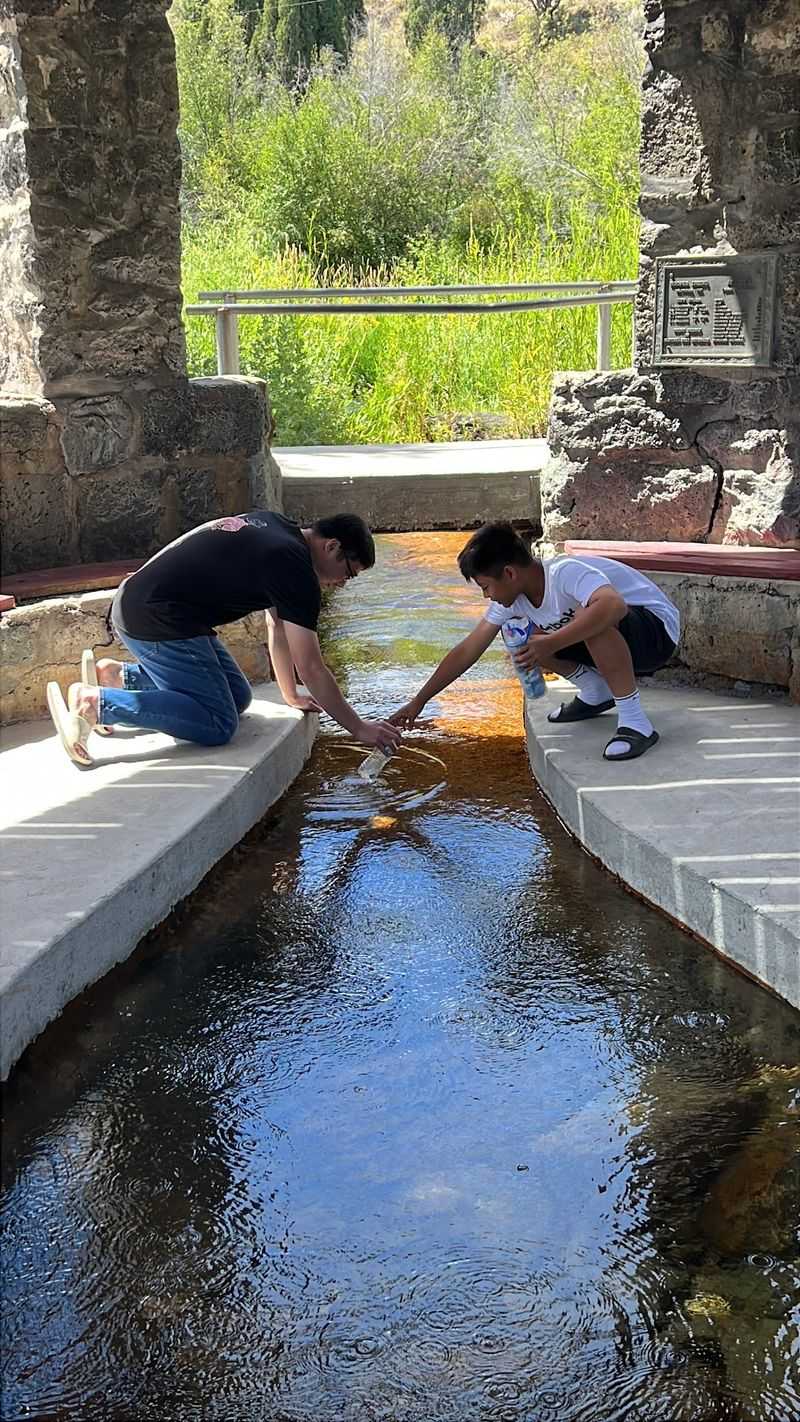
Most historic sites ask you to look, read a plaque, and move along. Here, you participate. Cupping your hands or tipping a bottle under the flow puts you directly into a tradition thousands of years deep.
Native peoples valued these waters long before written records existed.
Wagon trains depended on them through the mid-1800s.
Rail passengers sought them out after 1882.
Very few visitable landmarks along the entire Oregon Trail let travelers share such a direct, physical experience with the people who came before.
That is what makes a stop here linger in memory.
The City of Soda Springs maintains the park, while restrooms operate seasonally and the naturally carbonated spring remains its central attraction. The spring’s cold, naturally carbonated water remains the feature that defines the park throughout the year.
Pack a cup, a flavor packet if you want, and an appetite for picnic food.
Then raise a fizzy toast to more than 160 years of free sparkling water in one small, remarkable corner of the map.