This Historic Art Deco Theater In Indiana Looks Like It Belongs Inside The Great Gatsby
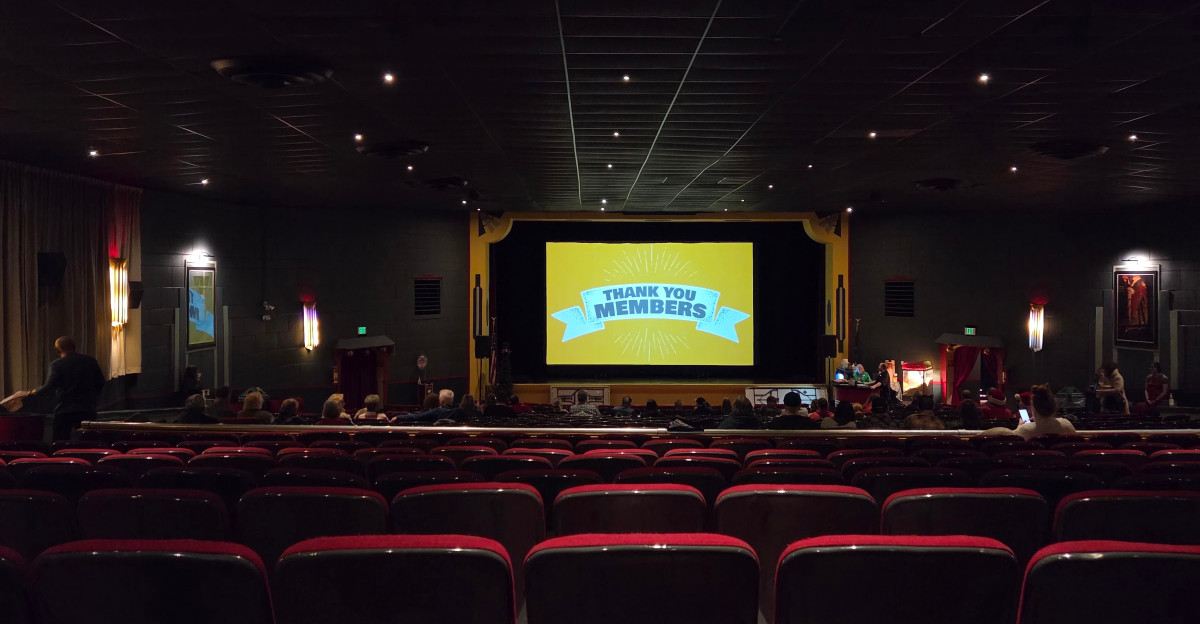
The lights outside do most of the convincing before you even buy a ticket. Then the doors open, and the modern world starts slipping away.
Hidden in Indiana, this theater turns moviegoing into something much closer to an event. The room matters. The glow matters.
Even waiting for the film feels different here.
Some buildings refuse to stay in the background, and this is one of them.
Nothing about the experience feels disposable. You notice the details, slow down, and remember that going to the movies once had a little ceremony attached.
This is not just a screen with seats around it.
Silent Films And Vaudeville Roots
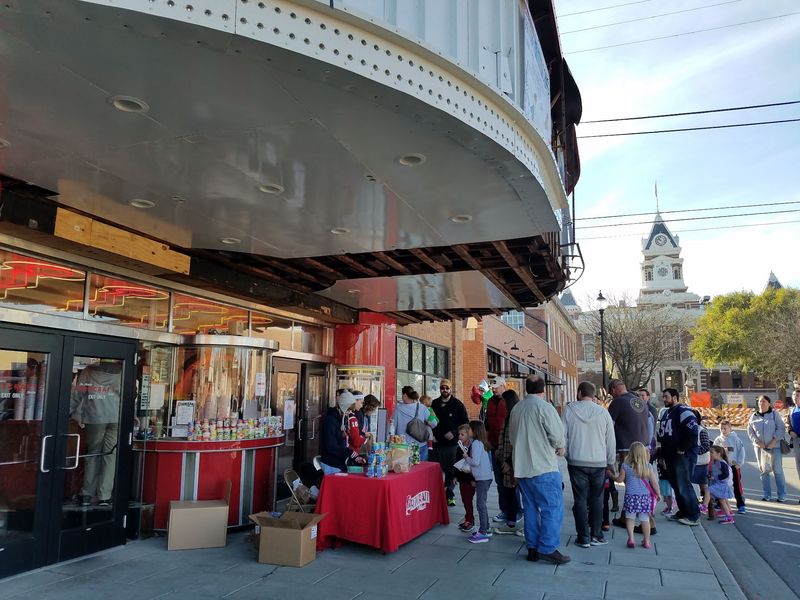
Long before neon touched this building, it opened as a silent movie house on November 1, 1922. Back then the design was neoclassical, all straight lines and clean edges.
There was no glowing marquee out front, just a dignified brick facade on a small-town street. The Historic Artcraft Theatre also worked as a vaudeville venue, with a full stage and an orchestra pit for live acts.
Traveling vaudeville acts used the stage during the theater’s early decades before the later remodel shifted the building toward movie-only use.
The auditorium also served as a broader community gathering space beyond its regular entertainment schedule.
That wider civic role became another layer of the building’s long local history.
Knowing the early history changes how the room feels when the lights dim. You are sitting where vaudeville singers once waited for their cue.
You can visit the theater today at 57 N Main St, Franklin, IN 46131, right in the middle of downtown.
The 1948 Streamlined Makeover
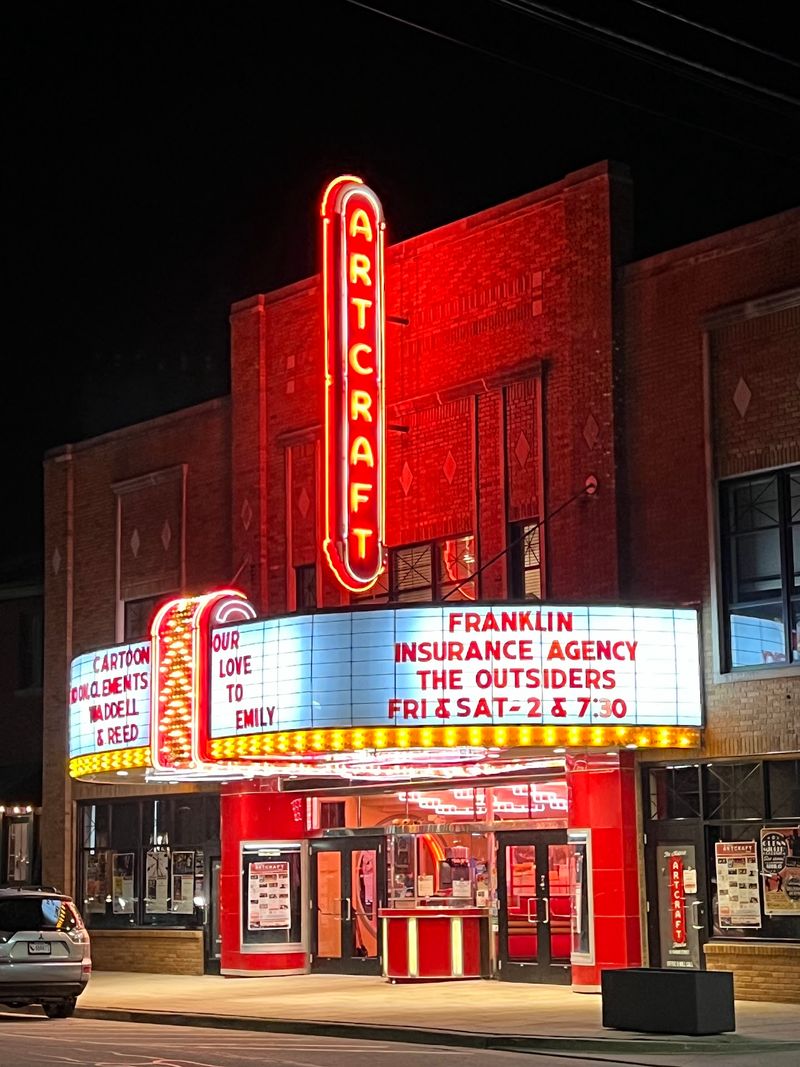
Here is the year that changed everything visually: 1948. That renovation swapped the theater’s clean neoclassical look for full Art Deco streamlining and radiant neon.
Workers built a semicircular marquee around what had been a triangular, unlit structure. Rounded corners and streamlined details became defining parts of the 1948 redesign.
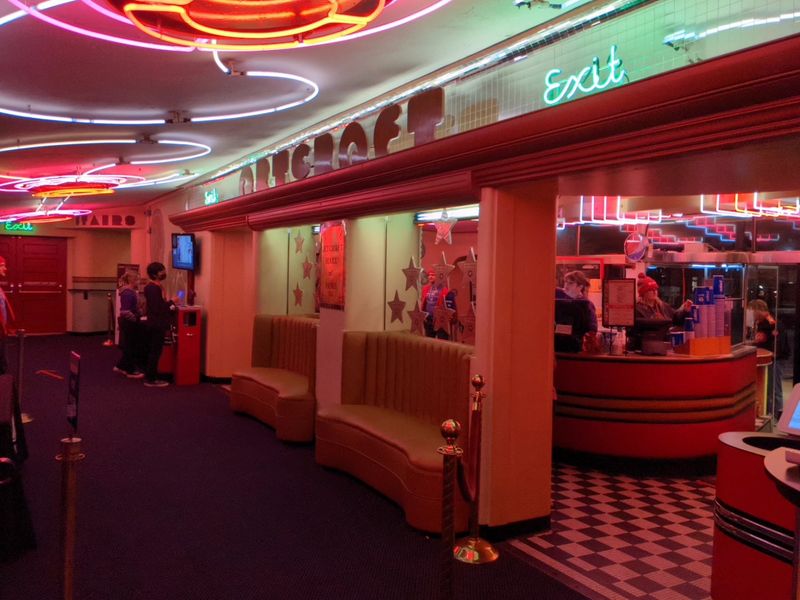
Mirrored glass tiles went up across the lobby, the front entrance, and the marquee itself. Light bounces off those tiles in a way that feels wonderfully theatrical.
Reconstructed Art Deco wall murals and restored neon finish the interior. The result is one of central Indiana’s most intact Art Deco movie houses.
It also earned a spot on the Indiana State Register of Historic Places. The designation recognizes the property’s historic and architectural significance.
Small architectural details continue beyond the marquee through the lobby and auditorium.
Doors generally open about an hour before showtime, leaving time to look around before the program begins.
The restoration keeps the theater’s late-1940s character clearly visible today.
More Than A Century Of Moviegoing History
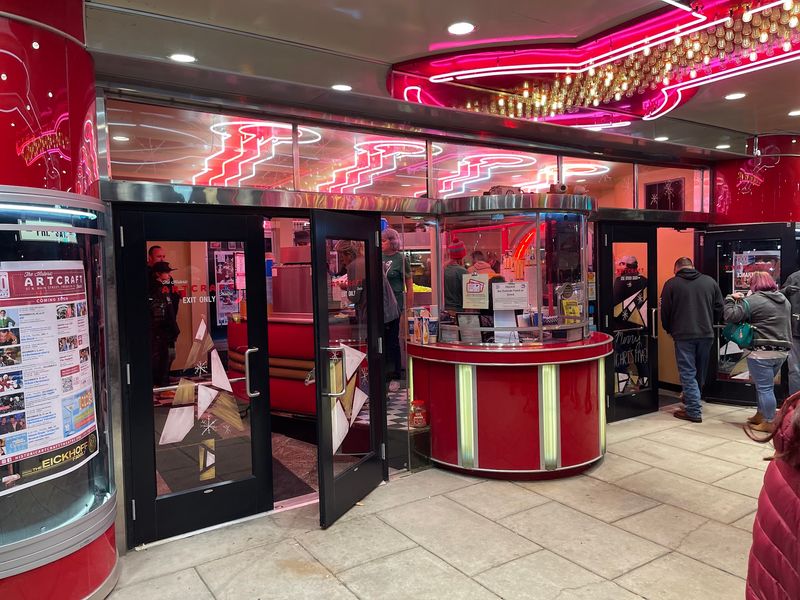
Over a hundred years of showtimes is a rare thing for any small-town venue. Since 1922, this has been Franklin’s longest-running movie house.
Silent pictures came first, then sound arrived in the late 1920s as technology advanced. For decades it showed first-run features to the surrounding towns.
Then came a rough stretch. The rough stretch arrived in May 2000, when the theater closed; a ceiling collapse the following year led the city to condemn the building.
A local nonprofit focused on historic preservation stepped in and bought it. Restoration focused on preserving the Art Deco character associated with the theater’s late-1940s transformation.
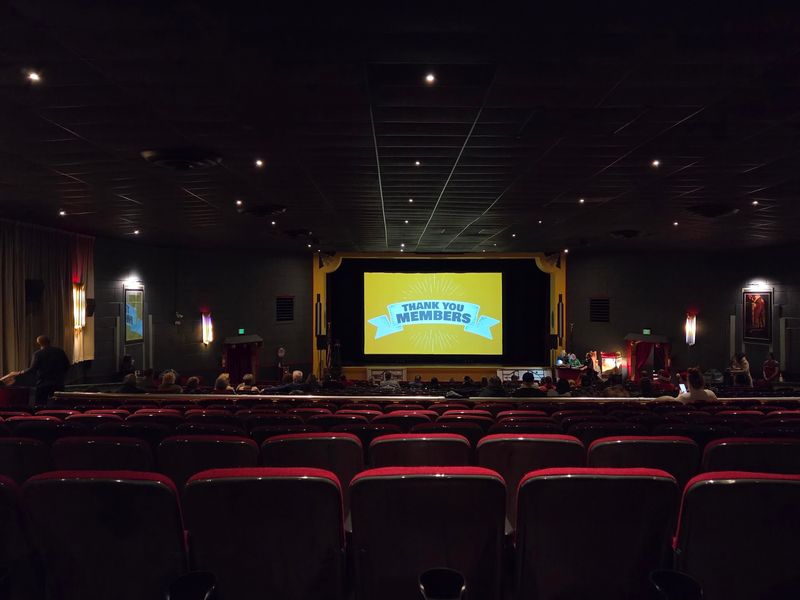
New mirrors and tile went in, murals were rebuilt, and the neon was restored. The auditorium seats 625 people around a full stage and screen.
Its long history has made the auditorium a recurring part of community life across multiple generations.
Historic preservation allowed the auditorium to keep serving audiences rather than disappearing after its period of closure.
The restored seats are now part of a much larger preservation effort that has continued since the building changed hands in 2004.
Classics On Real 35mm Film
Real film still runs through this building, and you can hear the difference. Two vintage reel-to-reel projectors from the 1940s still handle 35mm screenings whenever suitable prints are available.
A 35mm screening can show grain, color shifts, and other characteristics that vary with the condition and age of the print.
Programming leans toward beloved classics, cult favorites, and family titles rather than new releases. Holiday staples and Hollywood golden-age pictures fill much of the calendar.
Digital projection also allows the theater to show titles and material that are not available on 35mm film. Still, the 35mm commitment is what sets this place apart in Indiana.
Evening screenings come with extras. At 7:30 evening shows, a live skit, prize drawing, and stage banter come before a classic cartoon and the feature.
Staff introduce themselves, ask who traveled the farthest, and the audience actually answers. Before the feature, the national anthem reel remains part of the theater’s regular presentation.
That attention to presentation gives the theater an identity beyond the film title on the marquee.
Check the schedule first, because the 35mm nights are the ones worth planning around.
Popcorn Grown Five Miles Away
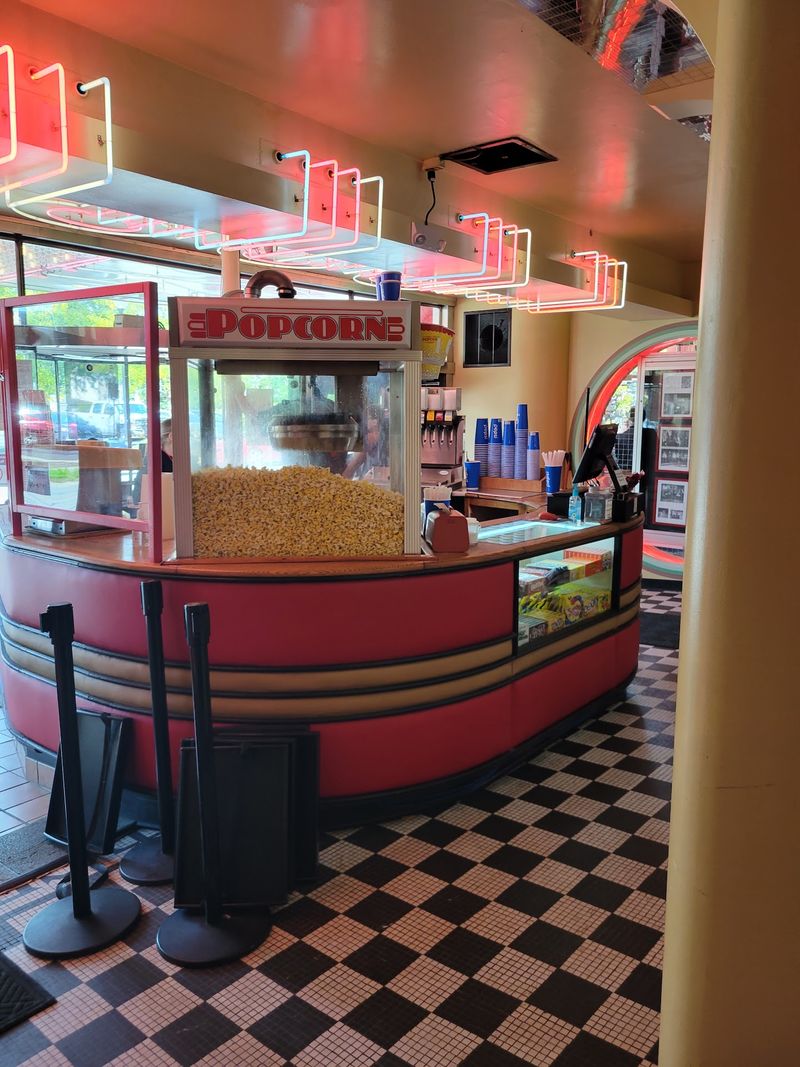
The concession stand has its own unusually strong local connection. It is grown at a farm roughly five miles from the theater and popped fresh in coconut oil.
Fresh popcorn is prepared at the concession stand throughout movie and event nights. That short trip from a nearby farm to the concession counter makes the popcorn feel like part of the theater itself.
Buckets come with refills, and the concession counter keeps things simple and generous. Candy, soft drinks, water, and other drinks round out the concession selection.
Nothing feels overly complicated here, which suits the relaxed rhythm of a classic movie night.
Volunteers help staff concessions, ticketing, ushering, and other front-of-house roles during screenings.
A historic prize wheel returns during evening preshows to select giveaway winners. Do not stare too long, because it is genuinely hypnotic.
The concession tradition fits naturally with the theater’s deliberately old-fashioned presentation.
Theater tickets can be purchased with cash or major credit cards, while special events may have their own payment rules.
Bingo Nights And Live Music
Movies are only half the calendar here. The stage stays busy with events that pull in crowds of every age.
Bingo is scheduled on Tuesday nights each month through November 2026, with participation limited to ages 18 and older. Live music ranges from big bands to classic rock sets.
Author events bring writers onstage for conversations about their books. Lectures, plays, and concerts also appear throughout the year.
Family programming also appears on the calendar through children’s theater, special screenings, and other one-off events.
Having a full stage and orchestra pit makes all of this possible. Original dressing rooms remain below the stage, while the attached 1921 cottage now provides additional greenroom space.
That flexibility is why the venue works as more than a cinema. One weekend it is a concert hall, the next it is a bingo parlor.
The varied calendar makes it possible to visit for far more than a repertory film screening.
Check the calendar before booking, since the variety here rewards a little planning.
Downtown Franklin Wraps Around It
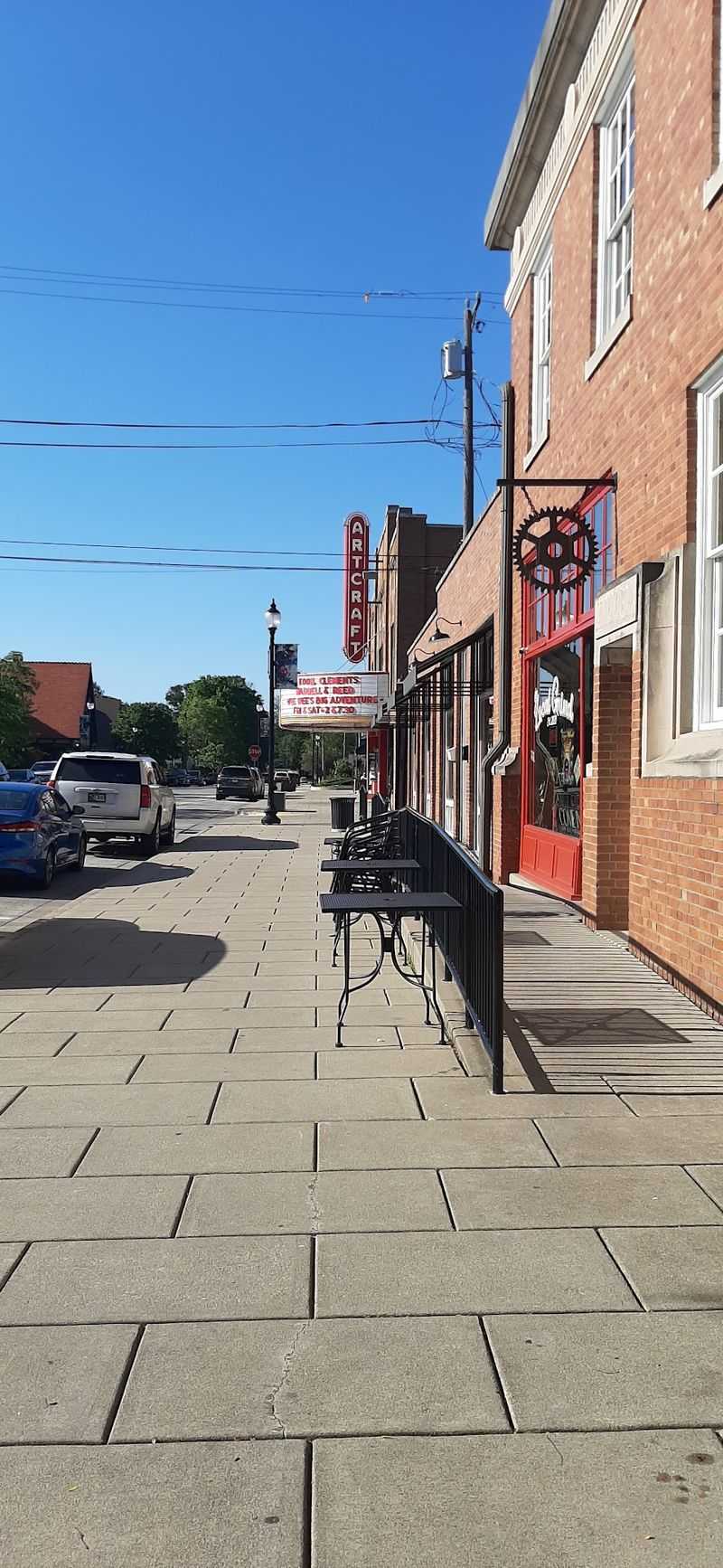
Walk one block in any direction and the town does the rest. The theater anchors downtown Franklin, surrounded by locally owned shops and small restaurants.
Bakeries, coffeehouses, antique stores, and boutiques line the nearby streets. Brick sidewalks make the whole area pleasant to wander before showtime.
Visitors from the Indianapolis area can easily pair a screening with time elsewhere in downtown Franklin.
The Greenway Trail offers a walk if you want fresh air first. Pairing a trail stroll with an evening film is a solid plan.
Volunteers handle roles ranging from ticketing and concessions to ushering and restoration support.
Programming ranges from family screenings to classic films and live events, giving different age groups reasons to visit.
The theater is part of a downtown that the city actively promotes as an arts, entertainment, shopping, and dining district. The theater and the downtown hold each other up.
Give yourself an extra hour here, because the surrounding blocks deserve attention too.
Smart Tips Before You Go
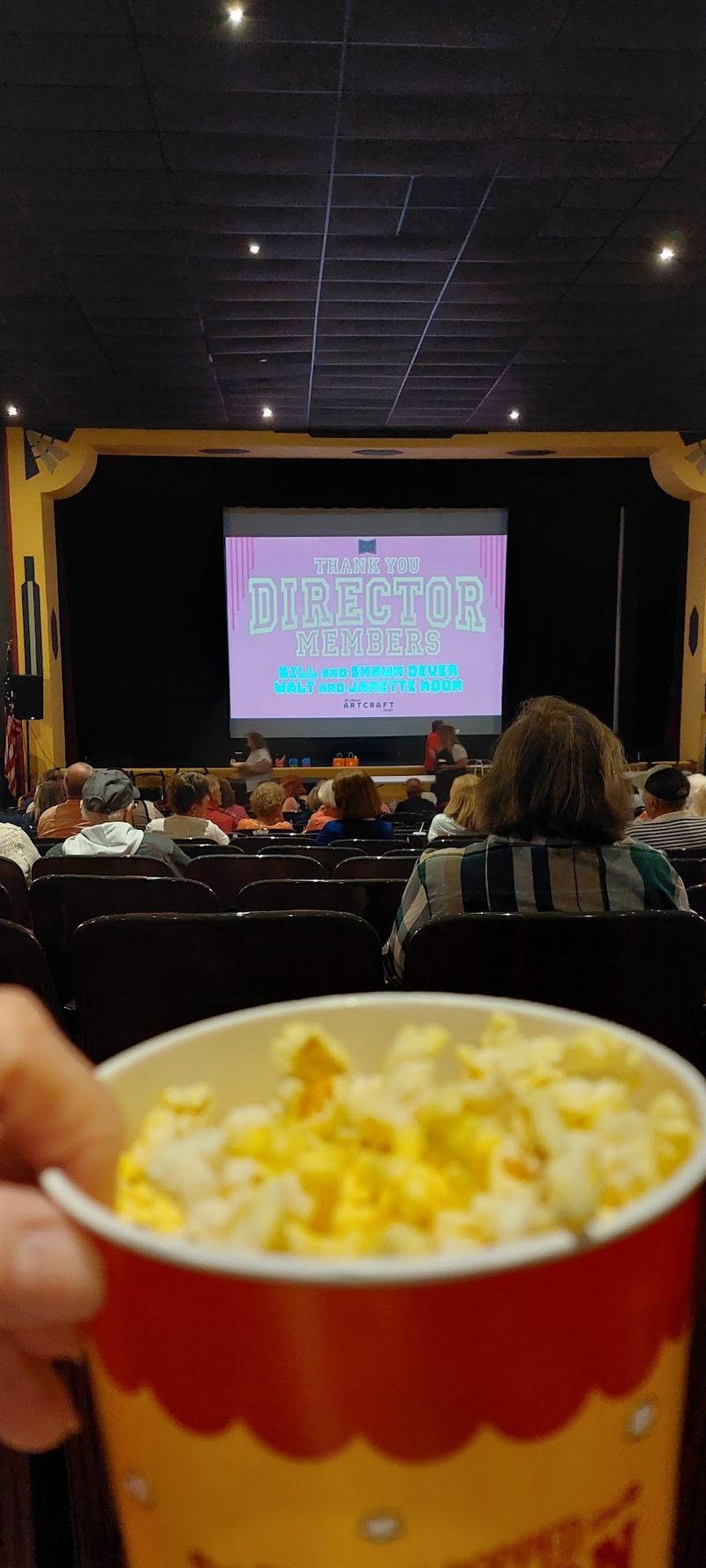
Trust me when I tell you that a little planning turns a good night into a great one. Start by checking the official schedule, since programming changes and some shows do sell out.
Arriving thirty minutes early is smart. That leaves time to study the mirrored tile, the murals, and the restored neon before seats fill.
Parking sits in a county-owned lot across the street, and free street parking is usually available nearby. On busy nights the lot fills first, so the street is your backup.
Seating is general admission, with designated accessible seats and additional front-row accommodations available when needed.
At 7:30 evening screenings, the preshow includes live stage material and giveaways before the cartoon and feature.
Backstage areas are used for organized visits, rentals, and theater operations rather than being part of every standard movie visit.
The marquee alone, with nearly 1,000 bulbs, is worth photographing after dark. Indiana has few brighter street corners.
My honest advice: come for a classic, stay for the atmosphere, and plan your return before you leave.