Yes, There Are Wild Bison In Florida And You Can See Them Roaming This Prairie Preserve
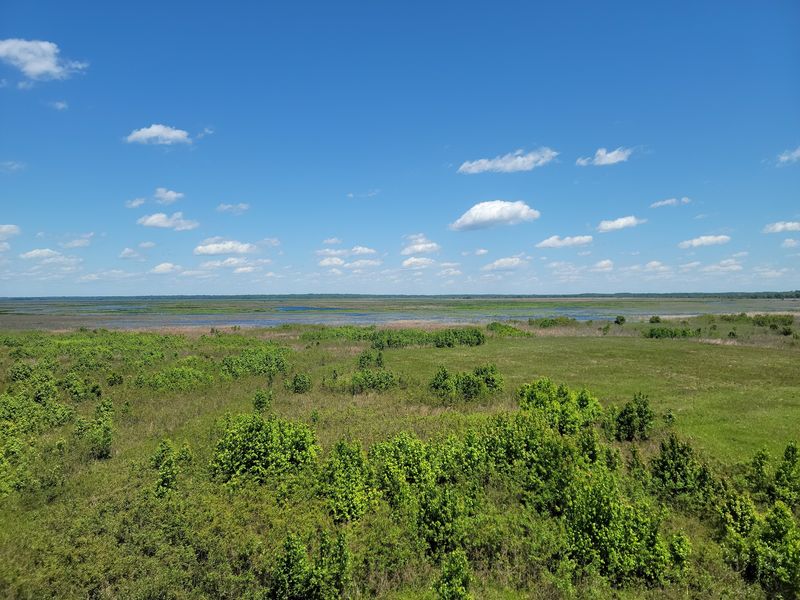
I pulled off the highway expecting a quick leg stretch and maybe a few birds. What I got instead was a grassy basin the size of a small county, with shaggy brown shapes moving across it that had no business being in Florida.
Bison. Actual bison, grazing under cabbage palms beside wild horses and a marsh full of alligators.
Florida keeps a landscape like this hiding in plain sight, and once you see it, the whole idea of what this state looks like shifts.
A Prairie Basin Where the Highway Ends
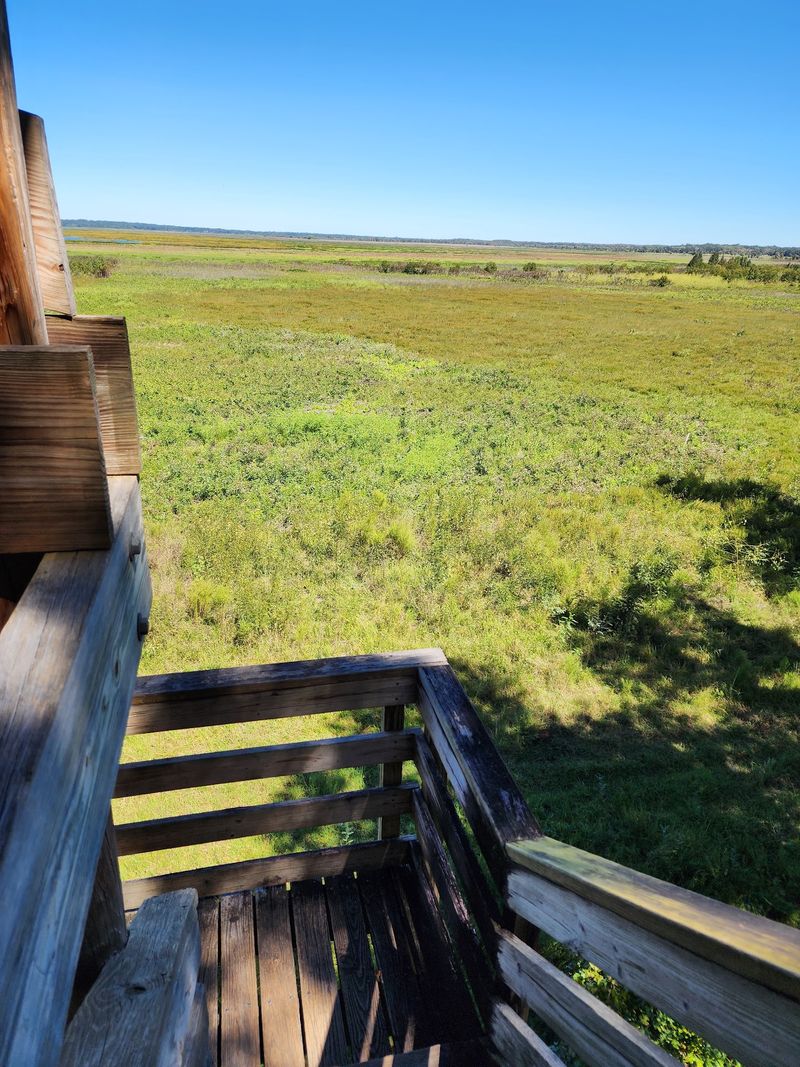
Drive south from Gainesville on US 441 and the land simply drops away. Trees thin out, the horizon widens, and suddenly you are crossing a grassy bowl that stretches farther than seems possible in a state built on beaches and subdivisions.
That bowl is Paynes Prairie Preserve State Park, with its main entrance at 100 Savannah Blvd in Micanopy. Covering somewhere between 21,000 and 23,000 acres, it was Florida’s first state preserve and carries National Natural Landmark status.
Inside those boundaries sit more than twenty distinct biological communities. Wet savanna gives way to freshwater marsh, bald cypress swamp, hammock, and longleaf pine sandhill, sometimes within a single afternoon’s walking.
The park’s own description is modest: a nature preserve with habitats and trails for hiking, horseback riding, and bicycling. What that undersells is the scale of the open ground and what walks across it.
Free-roaming bison live here. So do wild horses descended from Spanish colonial stock, alligators by the dozen, and cranes that arrive by the flock.
The interstate hums somewhere in the distance, and the prairie ignores it completely.
How Bison Came Back to the Sunshine State
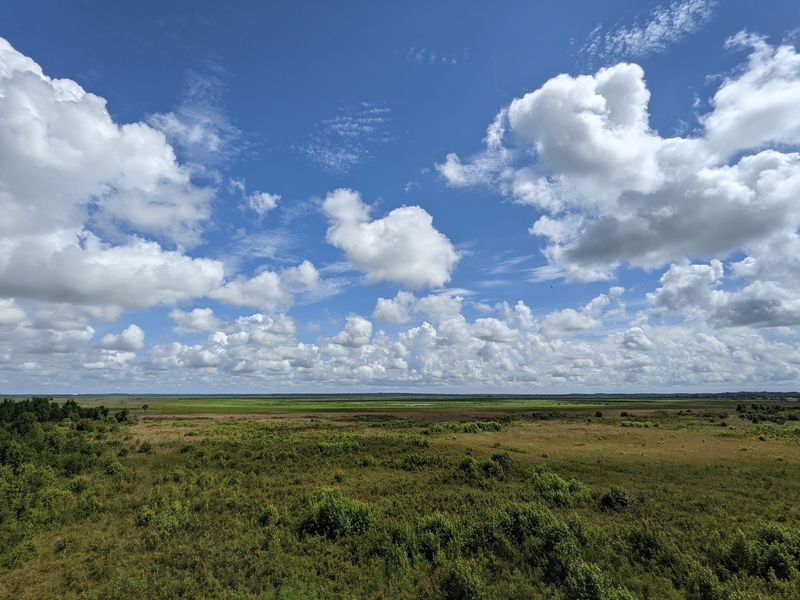
Long before highways, bison grazed across a range that reached into northern and central Florida. Spanish explorers in the 17th century wrote down what they saw, and what they saw included these enormous animals moving through the savanna.
Hunting pressure and lost habitat eventually erased them. By sometime in the late 1700s or 1800s, bison had vanished from the state entirely, leaving only written accounts and bones behind.
Then came 1975. State officials brought ten plains bison from the Wichita Mountains Wildlife Refuge in Oklahoma and released them onto the prairie, part of a larger effort to push the landscape back toward how it looked before European settlement.
Restoration here was never only about one species. Managers wanted the grazing, the trampling, the whole set of natural pressures that shaped the basin for thousands of years.
The animals took to it. Grass grew tall, calves arrived, and a herd rebuilt itself in a place most people associate with citrus groves and theme parks.
Standing at the fence line now, it is hard to shake the sense that something old was quietly put back where it belonged.
The Only Free-Roaming Herd East of the Mississippi
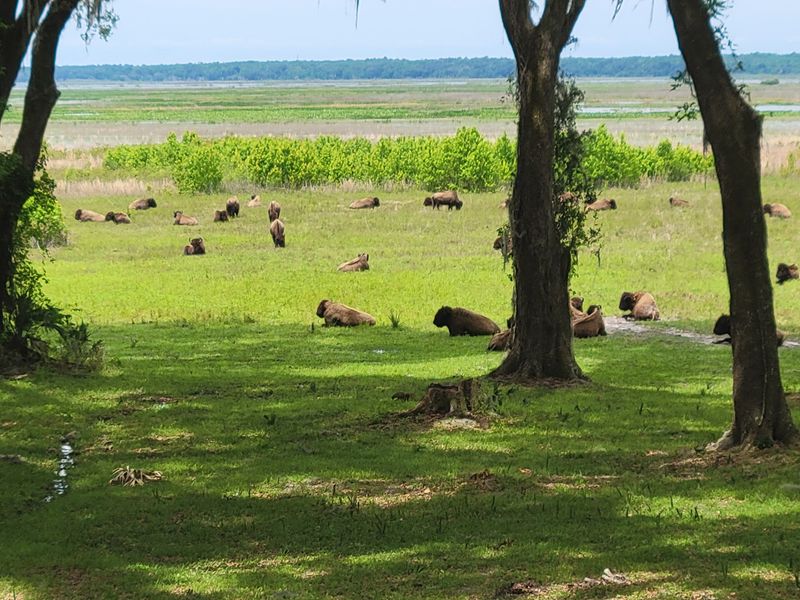
Thirty to seventy animals. That is the working range for the herd that moves across this basin, and no other place east of the Mississippi River has free-roaming bison like it.
The population has not climbed in a straight line. A disease outbreak forced a reduction in the mid-1980s, and inbreeding concerns prompted another in the late 1990s, yet the herd recovered and peaked at seventy animals in 2011.
Since males were removed in 2012, the group has been made up mostly of females. Park staff manage numbers deliberately, balancing the size of the herd against the grazing the prairie can support.
Weight matters here too. A mature bison can approach a ton, which is a startling figure until one lifts its head a few hundred yards out and you understand the proportions immediately.
They are wild animals with plenty of room, not livestock in a paddock, and they use every acre of it. Some days they sit near a trail.
Other days they are a brown smudge against a far treeline.
Binoculars turn that smudge into something unforgettable.
Where to Actually Spot a Bison
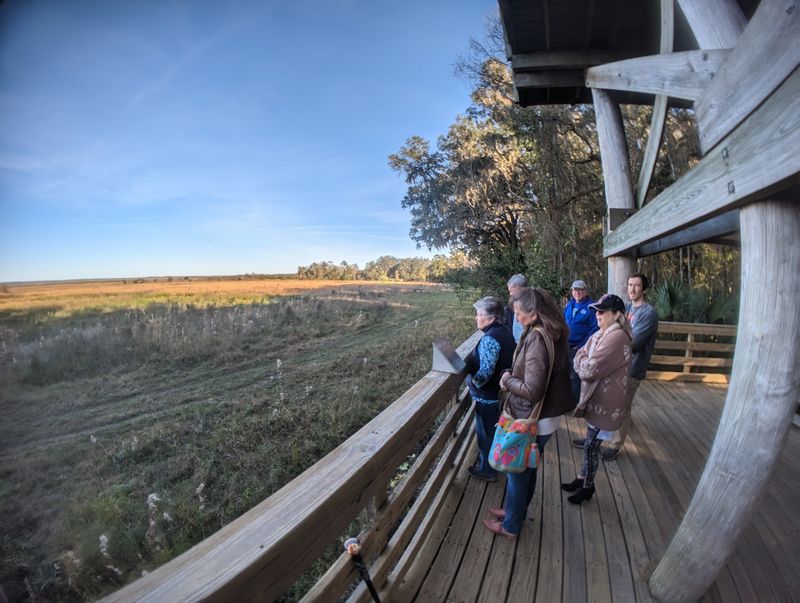
Patience buys more sightings than luck does. Two trails come up again and again for bison encounters: Cone’s Dike, which runs out along a levee into the open prairie, and Bolen Bluff, which starts in woods before opening onto grassland.
The Ecopassage Observation Boardwalk off US 441 is another reliable vantage point, and it requires almost no walking to reach. Pull in, climb up, and scan.
Distance is the usual catch. The herd often grazes far enough out that phone cameras produce nothing but a beige blur, so a decent pair of binoculars changes the experience completely.
Morning works best. Heat builds fast on trails that sit fully exposed to the sun, and wildlife movement slows with it, so early hours reward anyone willing to set an alarm.
Plenty of people visit repeatedly without seeing a single bison, then spot a dozen on a random Tuesday. Wild horses fill in the gap more often, moving in loose groups near the road and drinking at shallow pools.
Treat any sighting as a bonus rather than a guarantee, and the prairie rarely disappoints.
Climbing the Fifty-Foot Observation Tower
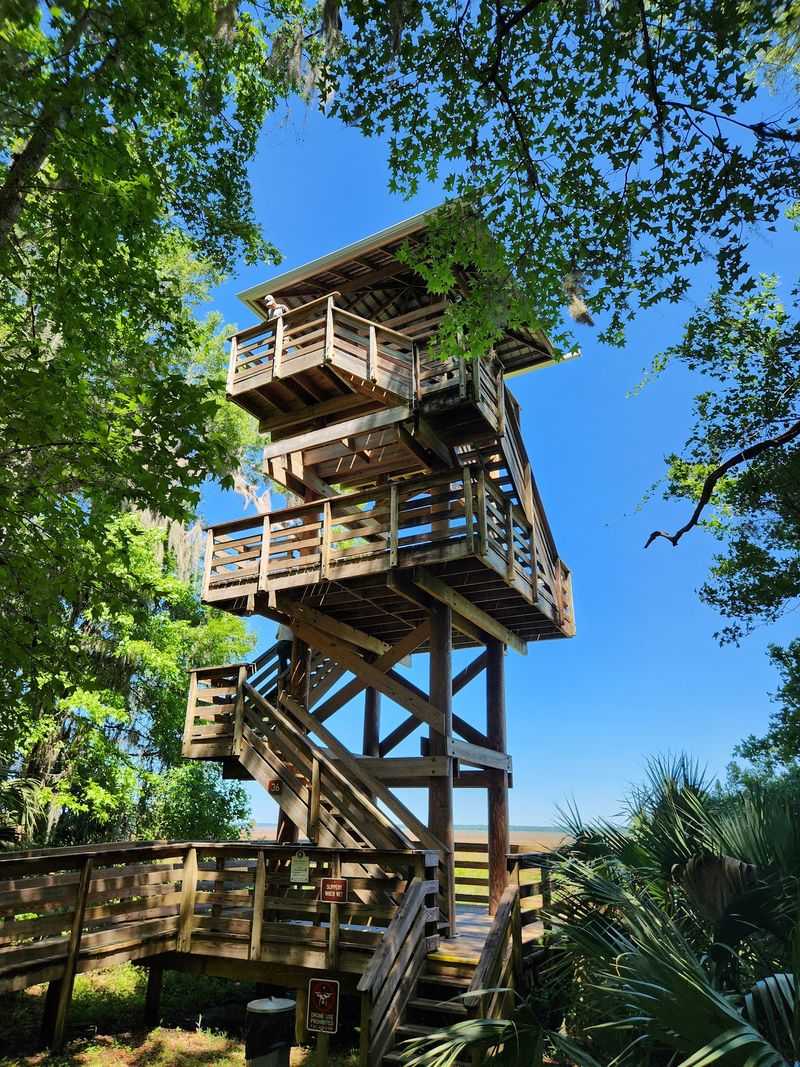
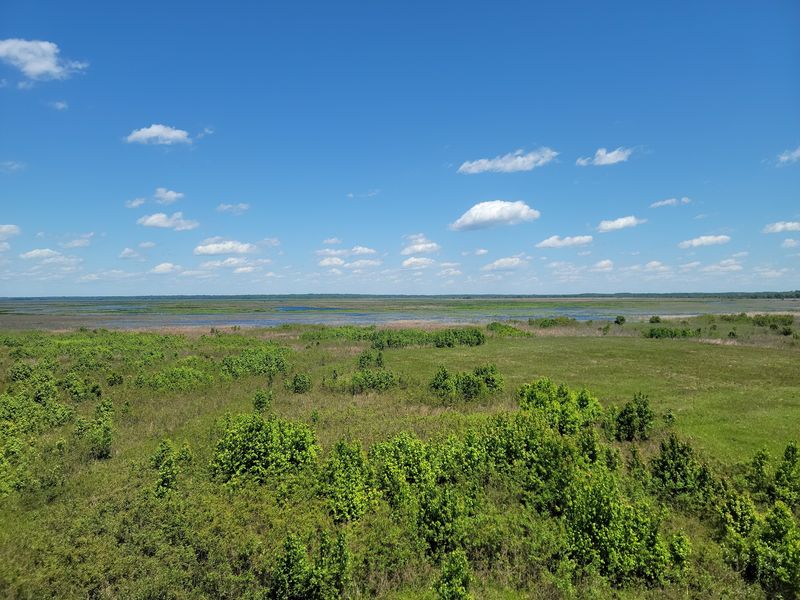
Fifty feet does not sound like much until you are standing on top of it with nothing between you and the horizon. The observation tower near the visitor center delivers the single best overview of the whole basin.
Wooden, sturdy, and built with viewing in mind, it turns a flat landscape into something you can read. Horses appear as pale dots.
Bison show up darker and heavier. Bird flocks trace lines across the marsh below.
Getting there is half the pleasure. The park road leading toward the tower runs beneath tree branches that arch across from both sides, forming a green tunnel before the land opens up.
A short loop connects the visitor center to the tower and back, easy enough for most walkers and well signed. The visitor center itself holds nature displays and an observation deck, plus staff who know where animals were seen that morning.
Go up twice if you can, once when you arrive and once before you leave. The prairie shifts through the day, and the second climb almost always shows you something the first one missed.
Spanish Ponies and Cracker Cattle on the Savanna
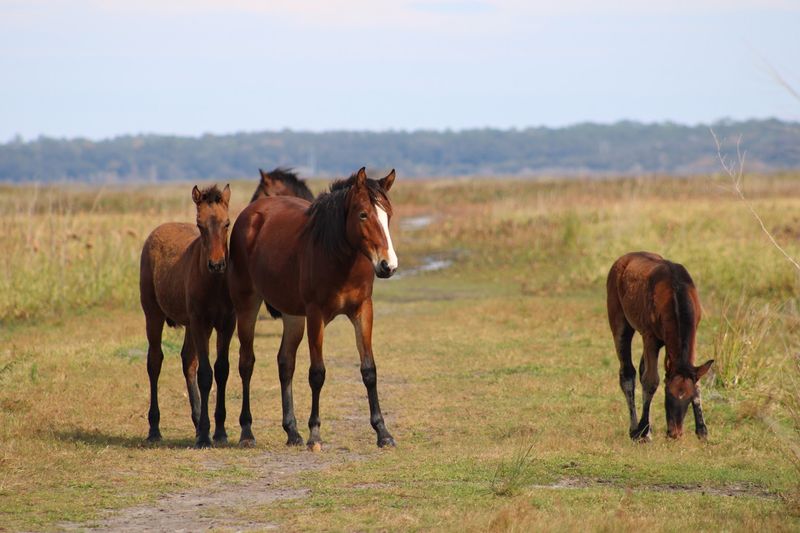
Bison get the headlines, but the horses steal the day more often. Small bands of Florida Cracker Horses roam the savanna, sometimes close enough to the road that you can watch them drink without leaving the parking area.
Their bloodline runs back to Spanish Colonial Period stock, the same broad lineage as the Florida Cracker Cattle that also graze parts of the preserve. Both are living pieces of the state’s agricultural history, kept here as part of the restoration picture.
Foals show up in the herd, which is the moment most people forget about photography and just watch. Groups of a dozen or more are common along the Bolen Bluff side.
Wild pigs also work the ground, and their rooting leaves torn-up patches along some trail edges. It is messy evidence of a management challenge the park deals with continually.
Give every animal distance. These are not petting-zoo residents, and a mare with a foal will make her boundaries clear long before you get close.
Watch from where you are, let them move, and the prairie feels less like a park and more like a working ecosystem.
Alligators by the Dozen on the Boardwalk
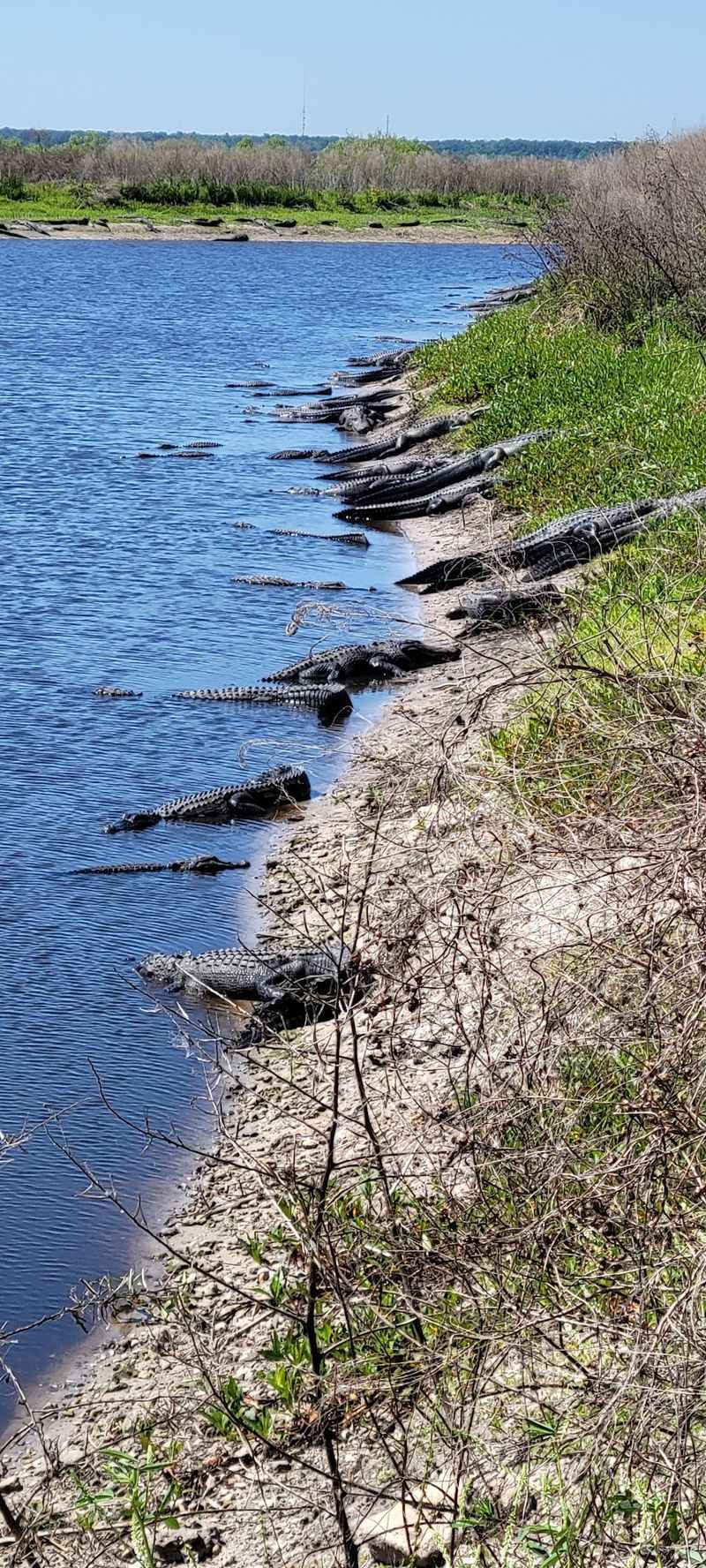
Fifty alligators in one water hole is not an exaggeration here. When water levels drop, gators concentrate into whatever wet ground remains, and the elevated boardwalk puts you directly above the gathering.
La Chua Trail is the classic route for this. The raised walkway keeps everyone at a sensible height while giving a clear line of sight to sunning animals stacked along the banks below.
Photographers do well past the end of the boardwalk, where wading birds work the shallows and the light comes in low across the marsh. Herons, egrets, and plenty of smaller species pass through.
Alligator sightings hold up even when the bison do not cooperate, which makes this section a dependable stop on any visit.
Stay on the deck, keep pets leashed and close, and do not lean out for a better angle. The animals are wild, unfenced, and entirely uninterested in posing.
Given that the University of Florida sits just up the road with a Gator mascot, watching fifty of the real thing sprawl in the mud feels like the most appropriate field trip in the region.
Cranes, Eagles, and a Sky Full of Wings
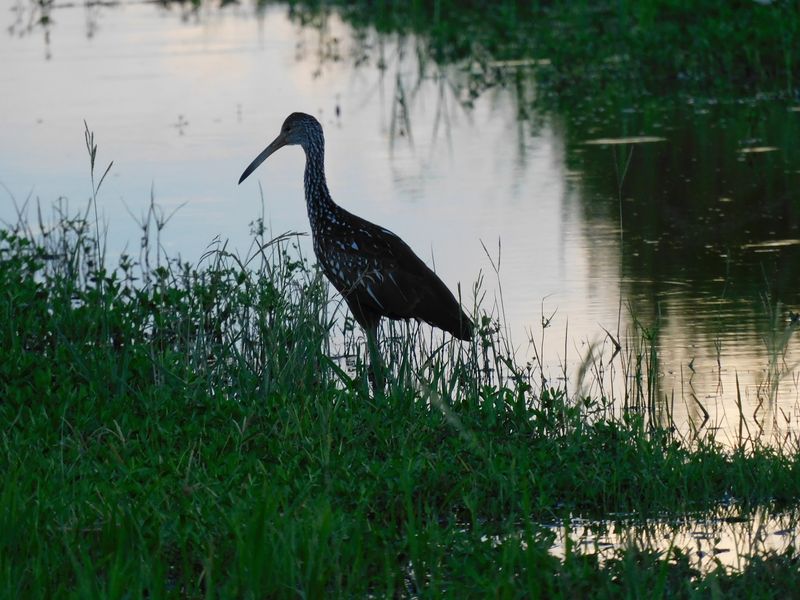
Sound arrives before the birds do. Sandhill cranes announce themselves with a rolling call that carries across open ground, and in winter the prairie fills with them.
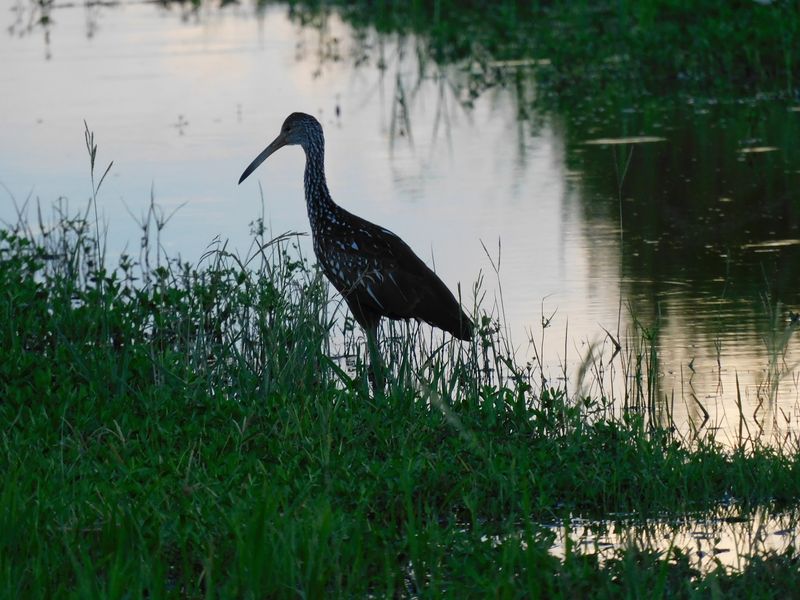
Hundreds of bird species use this basin, and the migratory flocks include whooping cranes alongside the sandhills. Watching a group drop into the marsh at dusk is the kind of thing that turns casual walkers into birders.
A large eagle’s nest sits along the route toward the visitor center, easy to miss if nobody points it out and impossible to ignore once you spot it.
Wet savanna, freshwater marsh, cypress swamp, and pine sandhill all sit within the preserve, and each attracts a different cast. Wading birds work the shallows while hawks hunt the grass edges and songbirds stay in the hammock shade.
Bring binoculars you already trust. The same pair that finds a distant bison will pick out a crane’s red crown at three hundred yards.
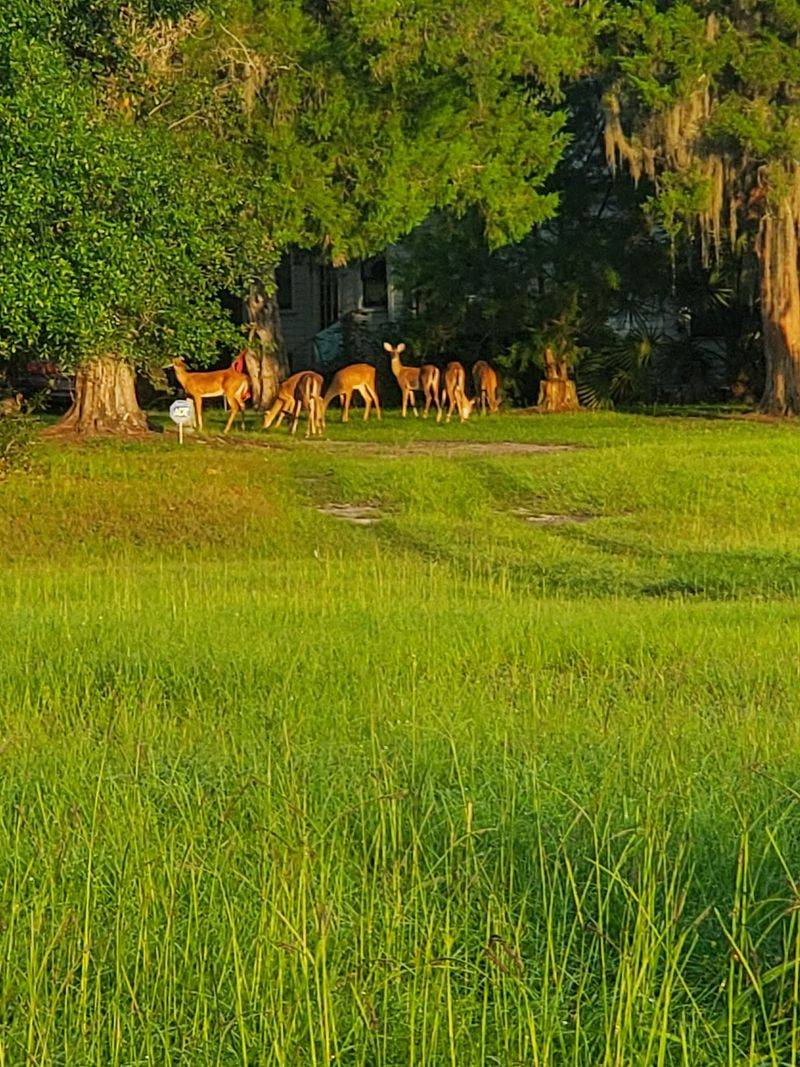
Deer, turkey, armadillos, and the occasional snake round out the list, and armadillos in particular rustle through the campground after dark loudly enough to startle anyone unprepared.
Trails That Range From Short Loops to Long Hauls
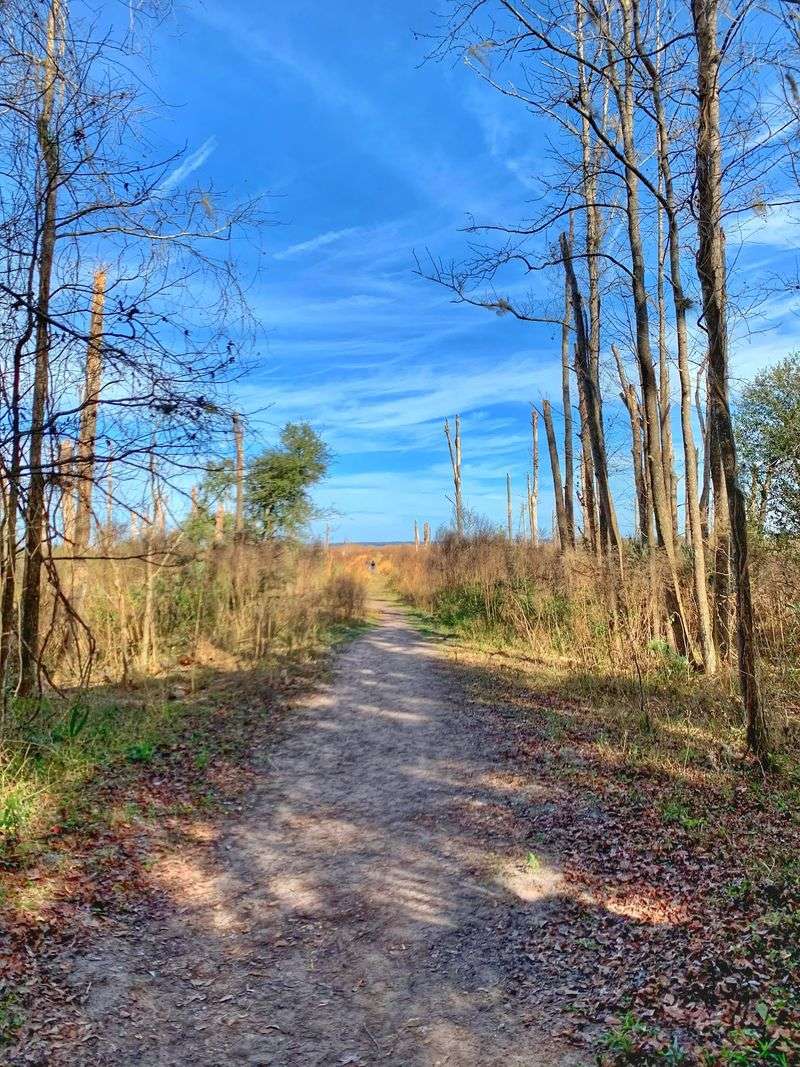
Numbered trails spread across multiple entrances, and picking the wrong one can mean an unexpected eighty-minute round trip. Trail 1 links the visitor center to the observation tower and suits almost everyone.
Longer routes push deep into the prairie. One popular option starts in woods, runs roughly forty minutes each way, then breaks out into clearing with a viewing platform at the far end.
Shade disappears once you leave the hammock. Most of the open trails sit in full sun, which makes cool, breezy days ideal and midsummer afternoons brutal.
Horseback riding and cycling are both permitted on designated routes, and the flat terrain makes for relaxed riding. Tree roots and animal droppings are common enough on the woodland stretches that you watch your feet.
Water is not optional. Pack more than you expect to drink, add sunscreen in warm months, and wear real shoes rather than flip-flops.
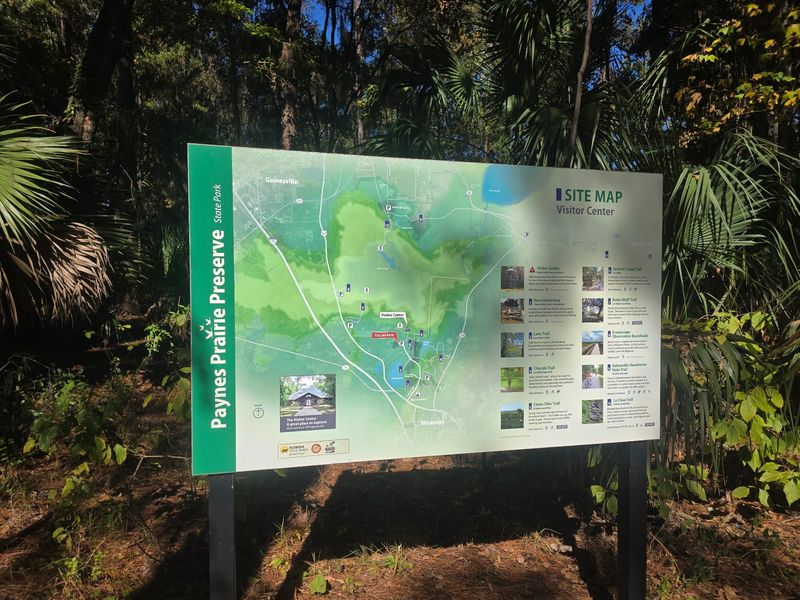
Different entrances reveal completely different scenery, so treating the preserve as one stop underestimates it. Two or three visits barely cover the ground, and the map handed out at the ranger station is the best planning tool available.
Camping Under Florida Stars
Three days on the prairie produces a wildlife list worth keeping. Deer beyond counting, turkeys, armadillos, a snake, and roughly a dozen wild horses is a realistic tally for a long weekend at the campground.
Sites are clean and well run, shaded by oaks, and pet-friendly, which matters for anyone traveling with a dog. Restrooms are kept tidy.
Staying overnight changes the rhythm of a visit. You can be on the trail at first light when animals are moving and temperatures are still bearable, then retreat during the hot middle hours.
Evenings bring their own soundtrack. Insects, frogs, distant cranes, and heavy rustling in the undergrowth that almost always turns out to be an armadillo rather than anything dramatic.
The campground sits close enough to trail access that morning walks start without a drive. Bolen Bluff is a short hop outside the gate.
Beyond the tent sites, the park includes a playground, an amphitheater, and picnic space, so families can build a full day around a cookout and still fit in a hike before sunset.
Best Seasons and Times of Day
October through May is the sweet spot. Drier months bring better conditions for wildlife watching, firmer trails, and temperatures that make exposed hiking pleasant instead of punishing.
Low water concentrates alligators into smaller pools, which sounds like a downside and turns out to be a gift for anyone standing on the boardwalk. Dry stretches can quiet other sightings, though, so nothing is guaranteed.
Windy, chilly days suit the long trails perfectly. A cold snap in North Central Florida is a hiker’s ally, and the prairie feels enormous under a clear winter sky.
Early morning beats late afternoon for animal activity. Heat pushes wildlife into cover, and by midday the open grassland can feel like a griddle.
Rainy season flips the picture. Water returns, the basin fills, and the whole system comes alive in a different way, though trail conditions get soggier.
Plan around light as much as weather. Golden hour over the prairie makes even an empty horizon look remarkable, and that is when the cranes tend to come in.
Hours, Entry Fees, and Finding Your Way In
Six dollars per carload gets you in at the main entrance. Pay once at the ranger station and the other entry points generally do not charge again, which makes park-hopping across sections straightforward.
Gates open at 8 AM every day and close at 8:45 PM, seven days a week. That is a long window, and it covers both early-morning wildlife activity and evening light on the prairie.
The main address is 100 Savannah Blvd in Micanopy, sitting between Micanopy and Gainesville with easy access from I-75. Road-trippers heading north or south find it a convenient break.
Grab the park map at the station. Sections are scattered, each entrance offers different terrain, and driving between them is part of the experience rather than a chore.
Staff at the visitor center know the preserve thoroughly and will tell you where animals were reported that day. The building also has displays, an observation deck, and a gift counter with stickers.
Certain holidays waive the admission charge entirely, so it is always worth checking before you go.
Why This Patch of Wild Florida Sticks With You
Something odd happens after an afternoon here. The mental image of Florida you carried in gets rearranged, and the version that replaces it includes a grassland with bison in it.
Nothing about the preserve is polished for spectacle. Trails are dirt, the tower is wood, and the animals owe you nothing, which is exactly why a sighting lands so hard.
Bring binoculars, water, and low expectations about the herd. Plenty of people leave without seeing a single bison and still talk about the light across the marsh or the horses at the waterhole.
Rated 4.7 stars across more than four thousand reviews, it holds up as one of the strongest state parks in Florida, and the fee is modest enough that a short stop costs almost nothing.
Pair it with a meal in nearby Micanopy or Gainesville and you have a full day without much planning.
Come back in a different season, at a different entrance, and it reads like another park entirely. That is the real draw: 22,000 acres that never quite show you the same thing twice.