The World’S Largest Indoor Desert Sits Under A Nebraska Dome You Walk Straight Through
You can spot it from the highway in Nebraska long before you know what it is: a pale ribbed bubble rising over the treeline like something dropped out of a science fiction paperback. I assumed it was a sports facility the first time I drove past.
It is actually sand, cliffs, cactus, and roughly 75 animal species living under glass, and below all of it sits a dark cave system full of creatures that only come alive after sundown. Walking in on a January morning and hitting warm, dry air is the kind of jolt that sticks with you.
A Glass Bubble on the Omaha Skyline
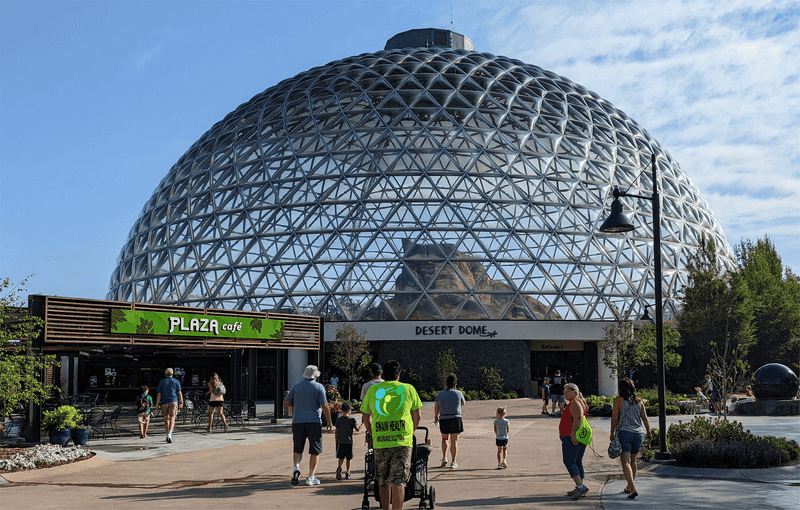
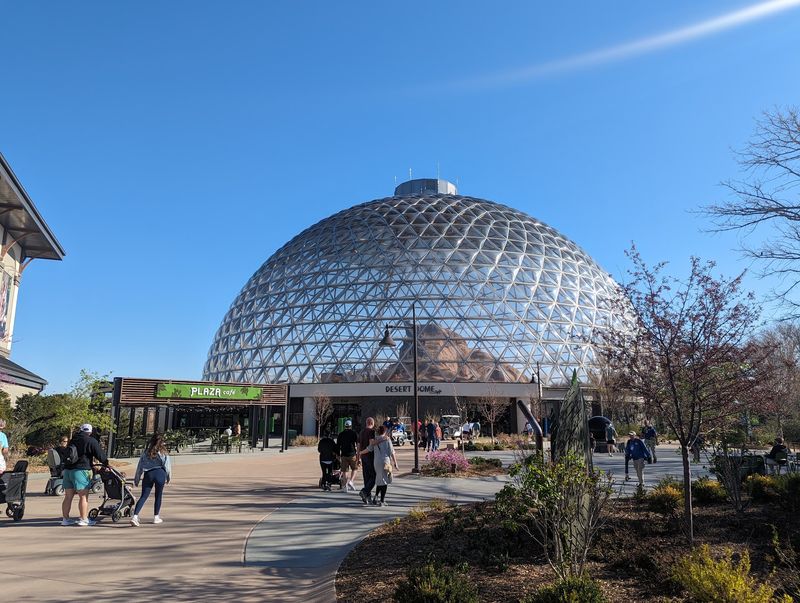
Tan panels, thousands of them, curve up into a shape that has no business sitting in eastern Nebraska. The Desert Dome anchors the south end of Omaha’s Henry Doorly Zoo and Aquarium, off South 10th Street, and it is visible from a distance before any other structure on the grounds registers.
Inside, the ground rolls and climbs. The dome covers 84,000 square feet split across two levels, 42,000 square feet each, and you move through it on a path rather than looking at it through a window.
Numbers help explain the scale. It stands 137 feet tall with a 230-foot diameter, making it both the world’s largest indoor desert and the world’s largest glazed geodesic dome.
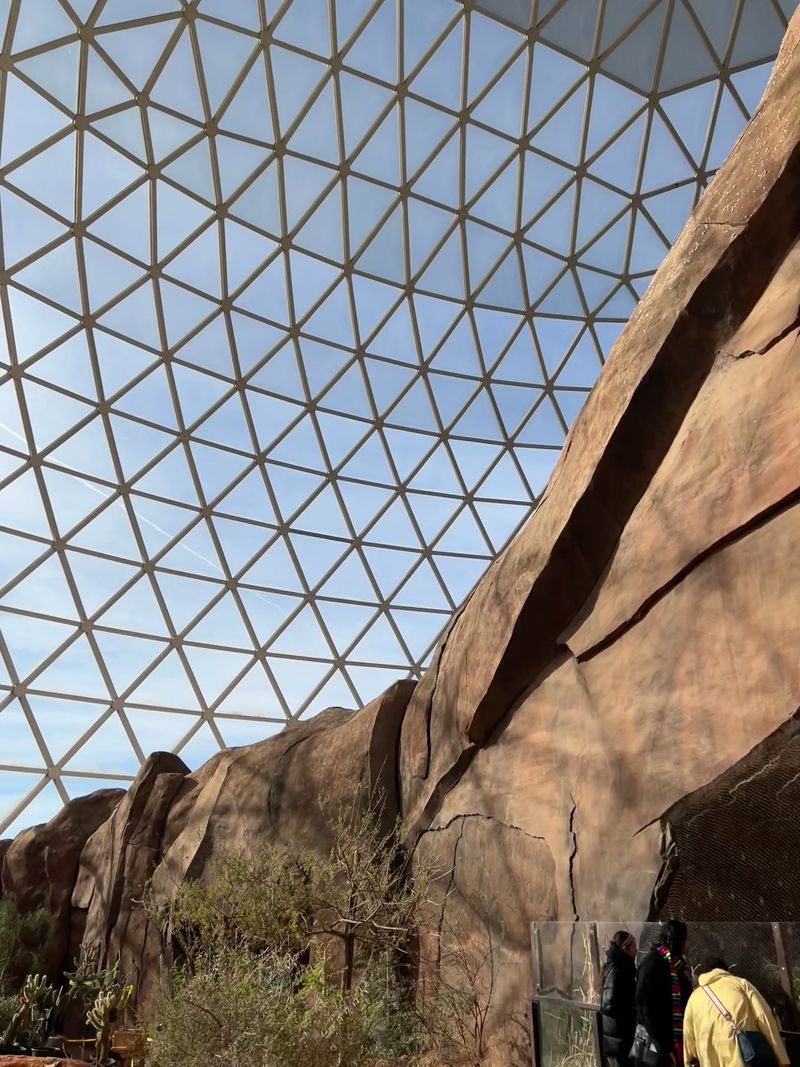
The exterior carries 1,760 acrylic windows, shaded in a pattern that controls how much sun reaches the sand below and keeps energy use in check across Nebraska’s wild seasonal swings. The result is a controlled climate that ignores what is happening outside, whether that is a July heat index or a February wind off the Missouri River.
How a Zoo Director’s Idea Became Concrete and Acrylic
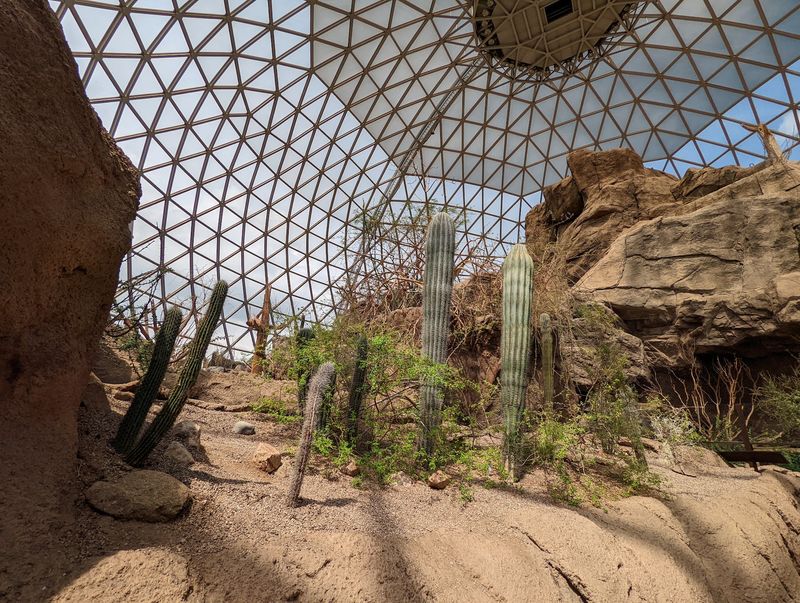
Lee Simmons, then the zoo’s director, wanted an exhibit that nothing else in the country could match. The idea he pushed for became a three-year construction project, and the dome opened in April 2002 at a cost of $31.5 million.
That figure covered more than the desert. It also paid for the exhibit built directly beneath the sand, which opened the following April and effectively doubled what the building holds.
Consider what the crews had to solve. Sand had to be brought in to match three separate deserts, a 55-foot artificial mountain had to be engineered to stand in the middle of the floor, and the whole envelope had to hold a stable desert climate through Nebraska winters.
Not every design choice lands with everyone. The central mountain eats a large share of the floor plan, and there is a fair argument that the footprint could have gone to more species instead.
Still, the mountain is what makes the space feel like terrain rather than a very large greenhouse with animals in it.
Three Deserts Divided by One Mountain
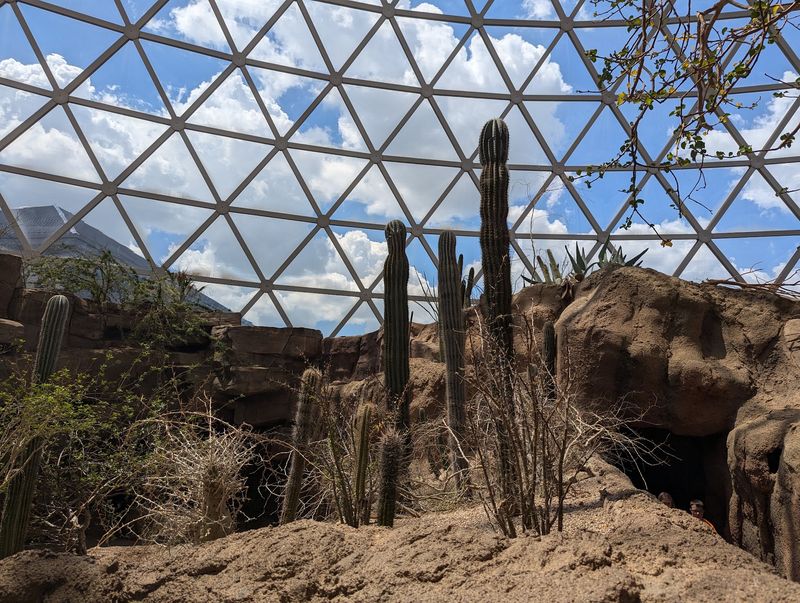
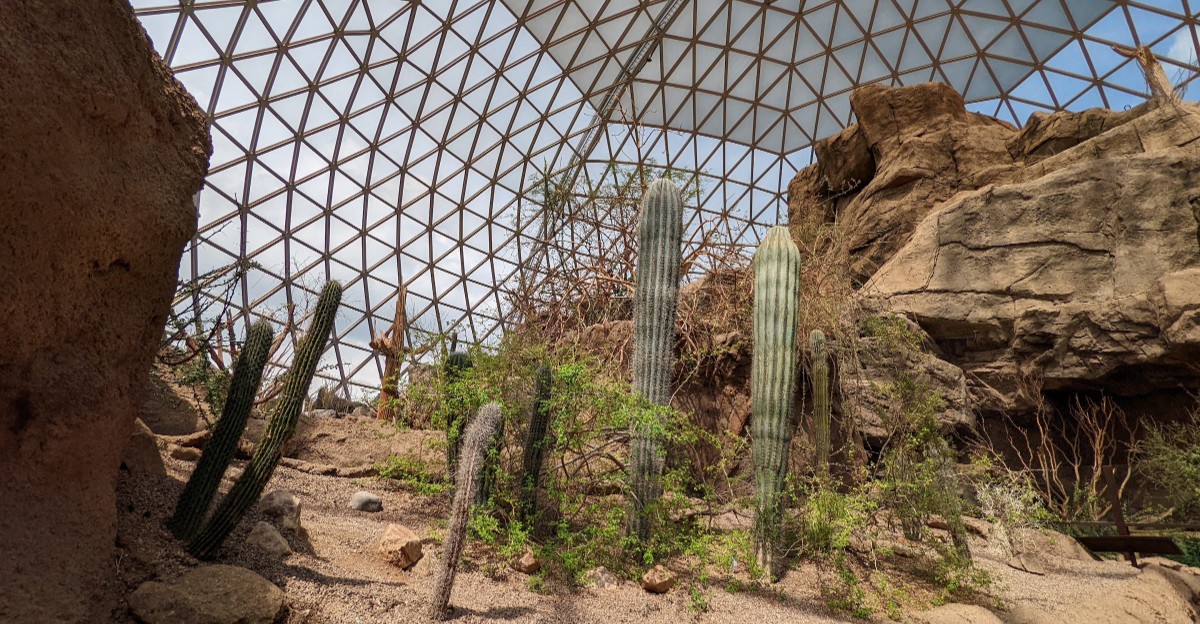
The path splits around a central peak, and each side drops you into a different part of the world. One stretch recreates the ancient Namib Desert of southern Africa, another the red sand country of central Australia, and the third the Sonoran Desert of the American Southwest.
Fifty-five feet of artificial mountain separates the biomes, which is why the transitions feel like actual travel instead of a label change on a placard.
A 30-foot sand dune rises along the route and reads as convincingly loose and windblown from the walkway. Nearby sits an oasis, and then the detail that catches most people off guard: a sandfall, where sand pours down a rock face the way water would.
The rockwork rewards a slow pace. Faux formations are textured and layered closely enough that the seams disappear, and the planting fills in the gaps that concrete cannot.
Walking the loop end to end takes real time. Rushing it turns a landscape into a hallway, and that would be a shame.
Plants Rescued, Rare, and Ridiculously Old
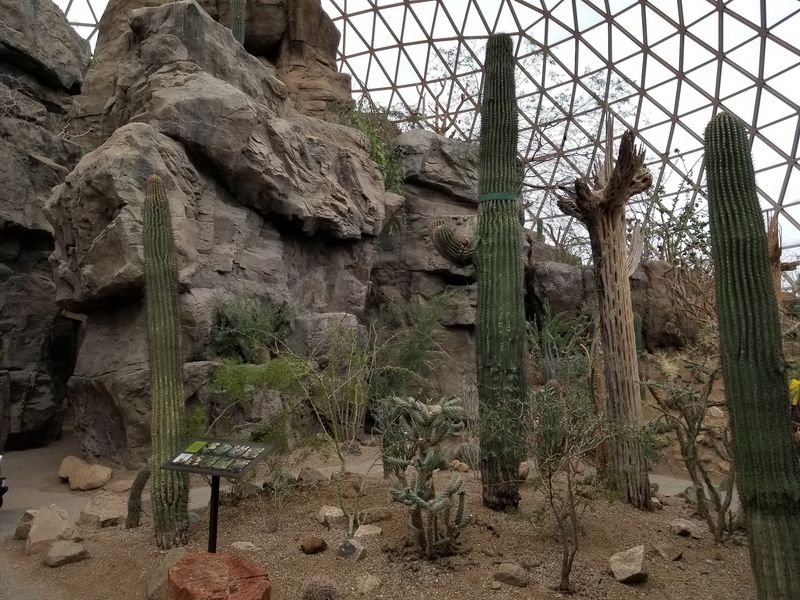
Many of the cacti standing in the Sonoran section did not start life in a nursery. They were dug up and relocated from development sites across the American Southwest, given a second address in Nebraska instead of being cleared away.
The plant list runs long: succulents, palms, mesquite trees, bunch grasses, and low desert shrubs, arranged to match whichever desert you happen to be standing in.
One specimen deserves a pause. Welwitschia, native to the Namib, is a rare and famously strange plant that looks like a pile of leathery straps splayed across the ground, and it turns up in the African section.
Botany is easy to walk past when there are foxes and snakes competing for attention, which is exactly why the planting is worth a deliberate look.
Roots are also what sell the illusion. Strip out the living material and the dome would read as a set piece.
With it, the air smells dry and green in a way that matches the scenery.
Roadrunners, Fennec Foxes, and Cliffside Surprises
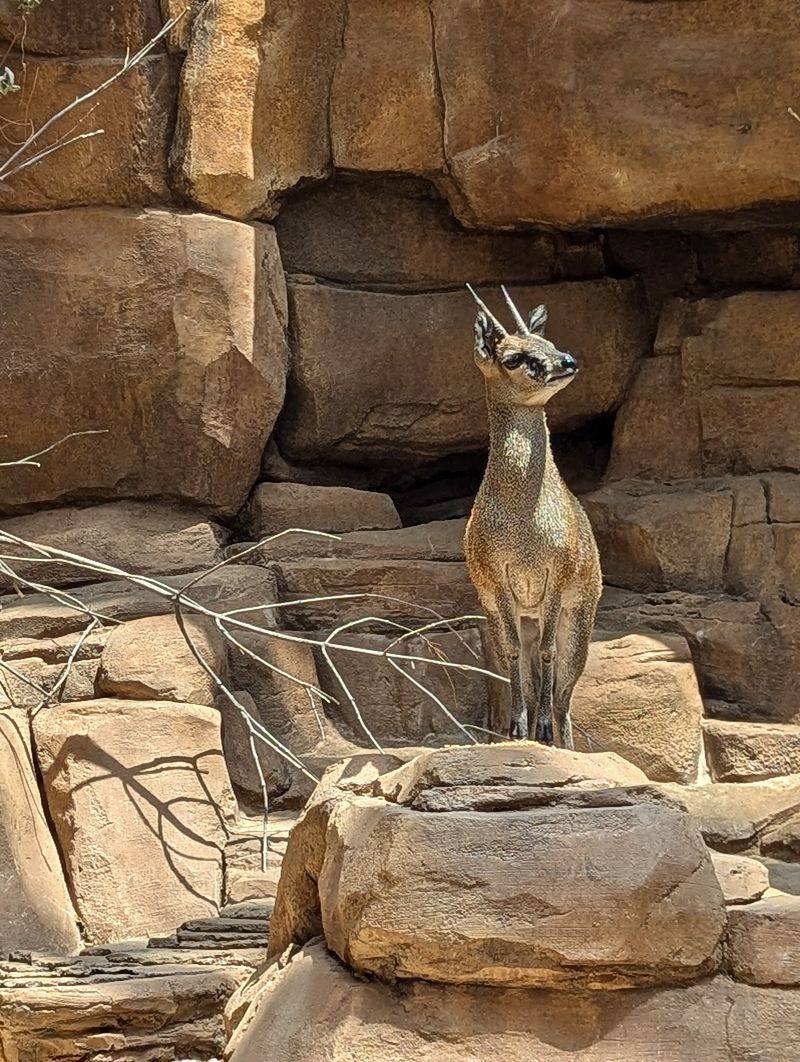
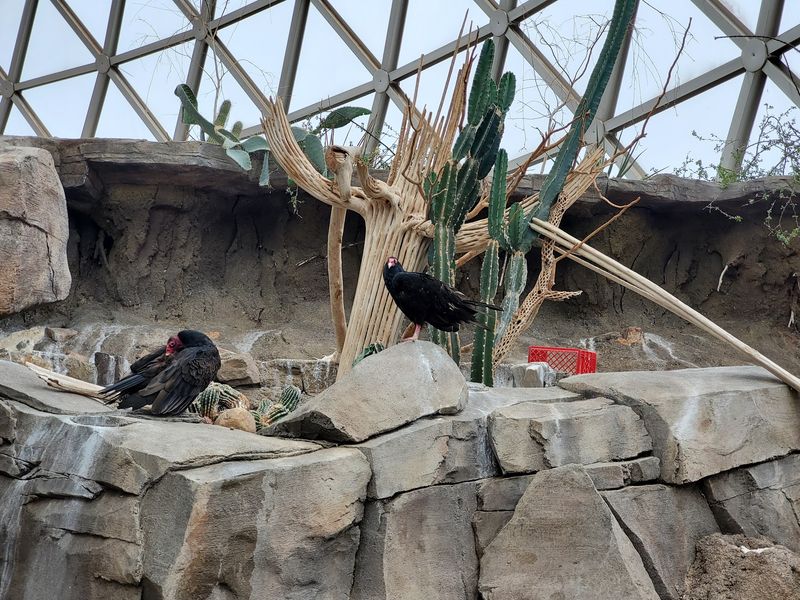
Look up before you look down. Animals in the Desert Dome are placed on ledges, in crevices, and along cliff faces well above the walking path, so a chunk of the roughly 75 species here sit at eye level only if your eyes are pointed the right way.
Roadrunners dart across open sand. Pumas hold still in the shade.
Herds of peccaries move through the scrub, and klipspringers make their short, springy leaps across rock.
Reptile displays cover black mambas and inland taipans, and the rattlesnake tends to draw a small crowd of its own.
Smaller mammals fill in the rest of the cast: African wild cats, fennec foxes with those oversized ears, and dwarf mongooses working the rocks in busy little groups.
Birds get free run of the space overhead, flying and nesting out in the open under the glass. Spotting a hummingbird inside a dome in Nebraska is a genuinely odd thrill, and it happens more often than you would guess.
Kingdoms of the Night Waits Downstairs
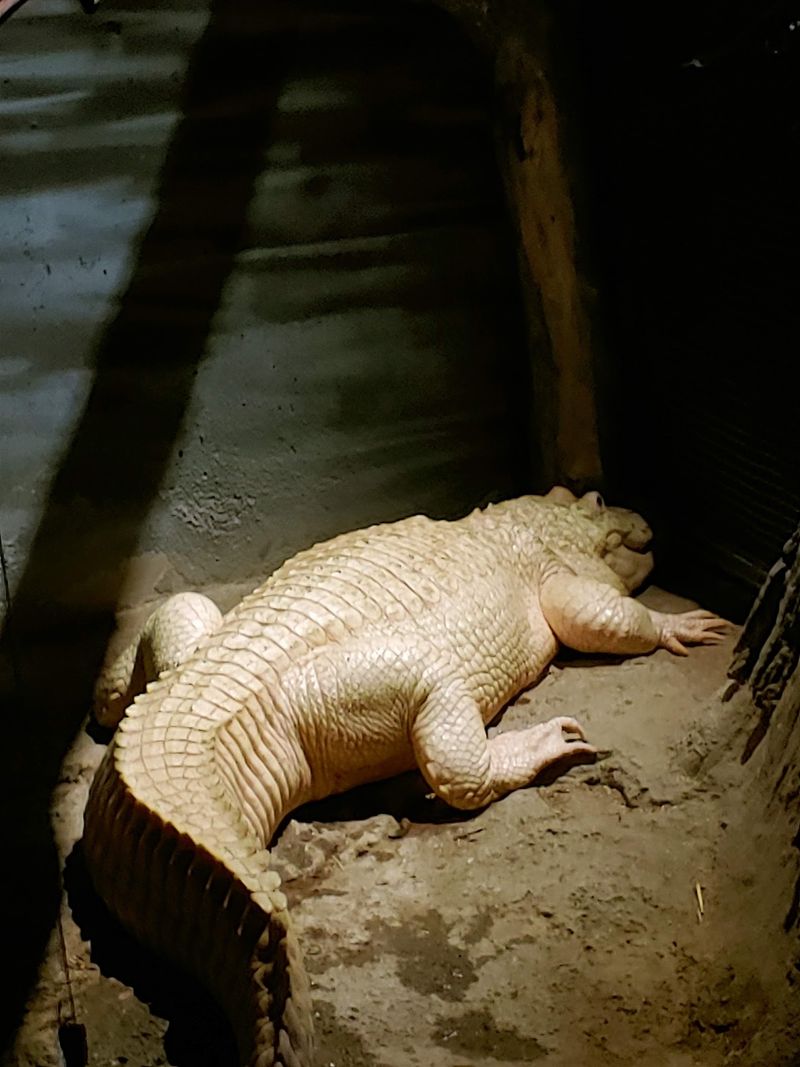
Most people finish the desert loop and assume they are done. There is a descent at the end of the route, and it leads into the Eugene T.
Mahoney Kingdoms of the Night, opened in April 2003 directly beneath the sand.
Down there it is the world’s largest nocturnal animal exhibit and the world’s largest indoor swamp, packed into the space under the dome floor.
Give your eyes a full minute at the entrance. The caves are deliberately dark, with open pools of water behind below-surface glass, and detail emerges only after your vision adjusts.
You enter the swamp portion through a small cabin, and the built environment from there on is dense with texture, murk, and sound.
Bats hang in view, including flying foxes, and alligators occupy the water, an albino gator among the standouts. Photography down here is close to hopeless, which is oddly freeing.
During the zoo’s Halloween Spooktacular the lights come up, giving the nocturnal residents a daytime cue and changing how the space looks entirely.
Seventy-Two Degrees While Nebraska Freezes
Air inside the dome holds between 72 and 75 degrees Fahrenheit, which makes it one of the more pleasant rooms in the state during a Nebraska cold snap. It is a dry heat, not the punishing kind, and far more tolerable than an actual midsummer desert.
The swing catches you at the door. Walking in from freezing air into warm, arid sunlight is a small physical shock, and heading downstairs adds a jump into cool, humid swamp air right after.
Winter is arguably the smartest time to come. Crowds thin out, the summer heat outside is not competing for your patience, and the dome delivers the same conditions in January that it does in July.
There is a note on smell. Enclosed animal habitats carry an odor, stronger in the lower levels, and some people notice it more than others.
Nothing about the climate changes with the season, so the dome works as a plan that does not depend on Nebraska weather cooperating.
Timing, Lines, and Strollers: What to Know Before You Go
Lines form. The Desert Dome is one of the most popular stops on the grounds, and on a busy summer day the queue can wrap a long way around the entrance, especially when heat pushes everyone indoors at once.
Arriving early helps, though plenty of other families have worked that out too. The exit routing can also send you back through the start, so build in a little extra time.
Strollers and wagons are allowed inside, and the zoo rents strollers and electric scooters at reasonable rates if you would rather travel light. The path is paved and walkable, with some grade changes around the mountain.
Hours run mid-morning to late afternoon daily, but admission covers the whole zoo rather than the dome alone, and ticket details shift seasonally. Check the zoo’s current schedule and pricing before you drive out.
Address for the mapping app: 3701 S 10th St, Omaha, NE 68108, just east of the interstate on the city’s south side.
Why This One Earns the Extra Hour
Plenty of zoo exhibits are a stop. The Desert Dome is closer to a place, which is why it consistently ranks at the top of what people remember from a day at Henry Doorly, and why the hour it demands does not feel spent.
Families with curious kids get the most out of it. The signage explains what the animals do and how they survive, the cliff placements turn viewing into a hunt, and the dark caves downstairs land as an adventure rather than a hallway.
Photographers should temper expectations below ground. Above the sand, though, the light through 1,760 panels does interesting things across the dune and rockwork.
For anyone within driving range of Omaha, from the Platte valley towns to the far side of Lincoln, it is an easy day trip with a real payoff at the end.
Skip it if you only have twenty minutes. Give it an hour and you walk out having crossed three deserts and a swamp without leaving Nebraska.