This 30-Minute Carriage Ride Might Be North Carolina’s Most Unexpected Trip Back In Time
Neigh kidding, this may be the easiest way to make downtown feel a century older.
One minute, North Carolina is rushing past at full speed.
Then hooves hit the pavement and the whole afternoon changes tempo. Clip. Clop. Suddenly, thirty minutes feels less like transportation and more like time travel with a mane.
That slower rhythm is exactly what makes the ride work.
The city keeps moving around you, but for a little while, you do not have to.
Call it horsepower in the most literal sense possible. Honestly, the horses may have the better commute.
Thirty Minutes Is Enough To See Historic Wilmington From A Completely Different Angle
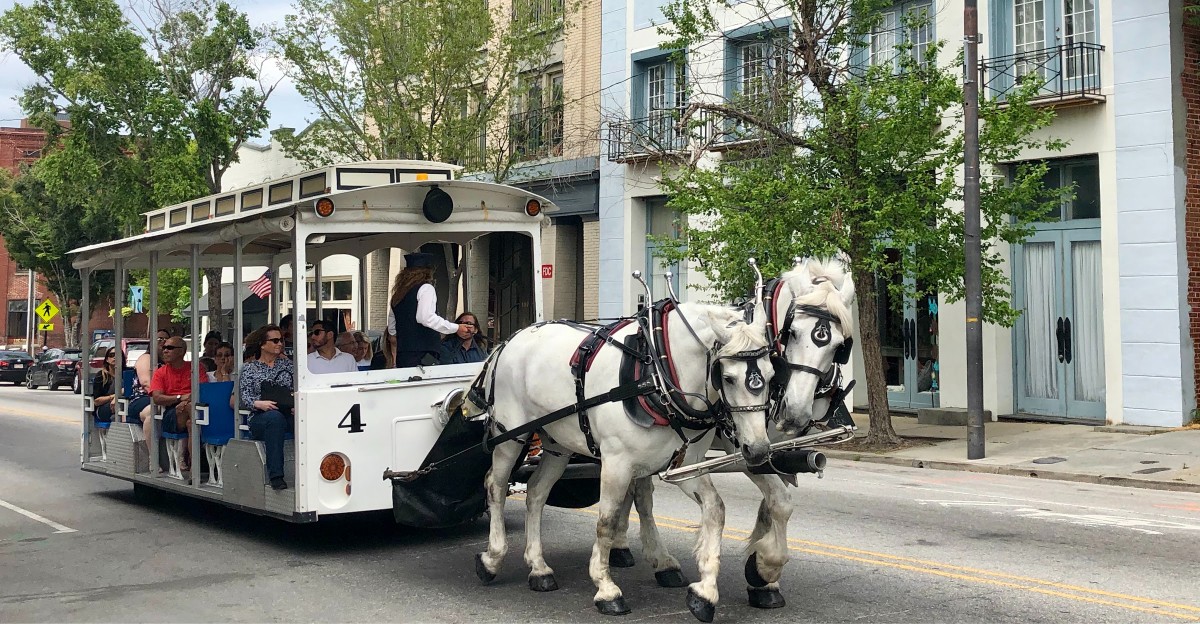
Half an hour sounds short until hooves start tapping the pavement and the whole downtown slows to a walking pace.
Oak shadows slide across your lap, church steeples appear between rooftops, and the harbor breeze carries the faint smell of river water.
Riders climb aboard at the base of Market Street between Water and Front Streets, just steps from the Cape Fear River.
The narrated loop passes stately mansions, iron fences, and porches trimmed with scrollwork that you would likely rush past on foot.
Sitting up on a carriage bench gives you height, and height changes everything.
You can look over garden walls, notice dormer windows, and follow rooflines that disappear from a sidewalk view. Details that vanish at eye level suddenly stand out.
Families with small children appreciate the short length, since thirty minutes fits neatly between lunch and an afternoon at the waterfront.
Because tours are weather dependent, check the current operating status before heading downtown.
Thirty minutes, it turns out, can hold a surprising amount of history.
Springbrook Farms lists its downtown carriage stand at 0 Market Street, Wilmington, North Carolina 28401.
Rescued Draft Horses Do The Traveling On This Old-Fashioned Downtown Tour
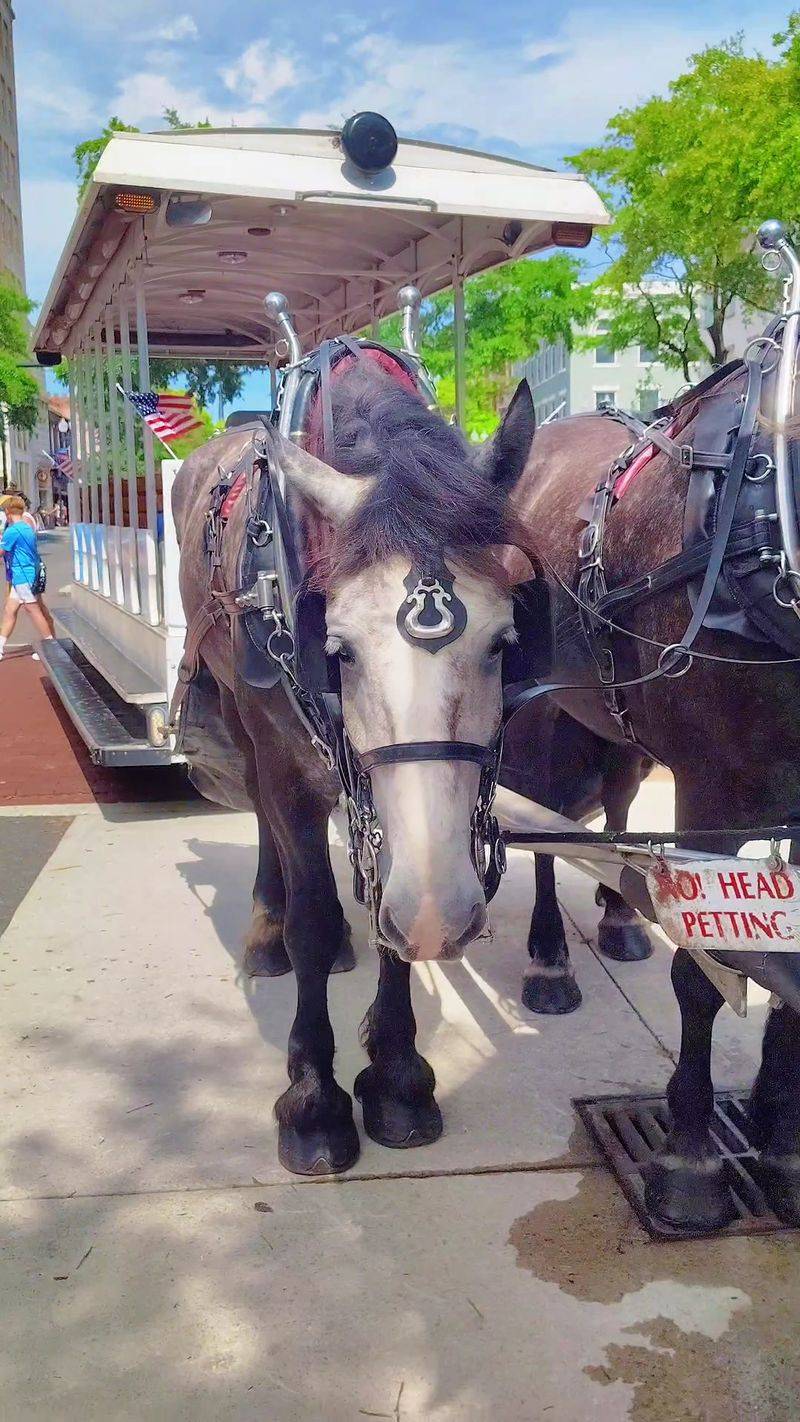
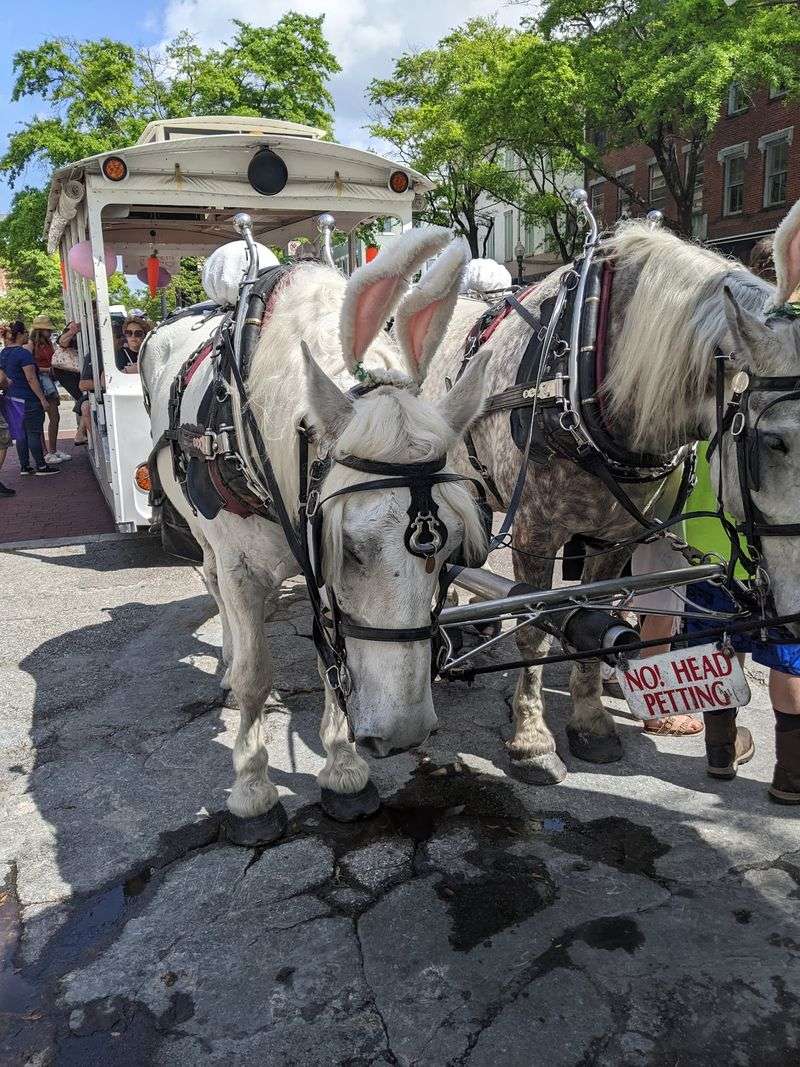
Percherons are the heavyweights of the horse world, broad-shouldered and calm, with feet the size of dinner plates.
Many of the ones pulling these carriages once worked long days on Amish farms before being sold when they could no longer keep up.
Springbrook Farms has been giving those horses a second chapter since 1987. Instead of retirement being the end of the story, downtown tours became their new, far lighter job.
Watch one get hitched and you notice how unbothered they look, ears flicking, head low, occasionally leaning in for a scratch.
Revenue from the tours helps Springbrook Farms care for its horses and continue its rescue work.
The horses and the farm’s rescue mission are part of the story behind the carriage operation. Ask a name and you might hear something wonderfully ordinary like Jake, Jeff, or Mike.
Their harnesses jingle softly as they shift their weight. Bring a camera.
Percherons are the large draft horses visitors see pulling the downtown carriages.
Your Driver Fills The Ride With Stories From Wilmington’s Past
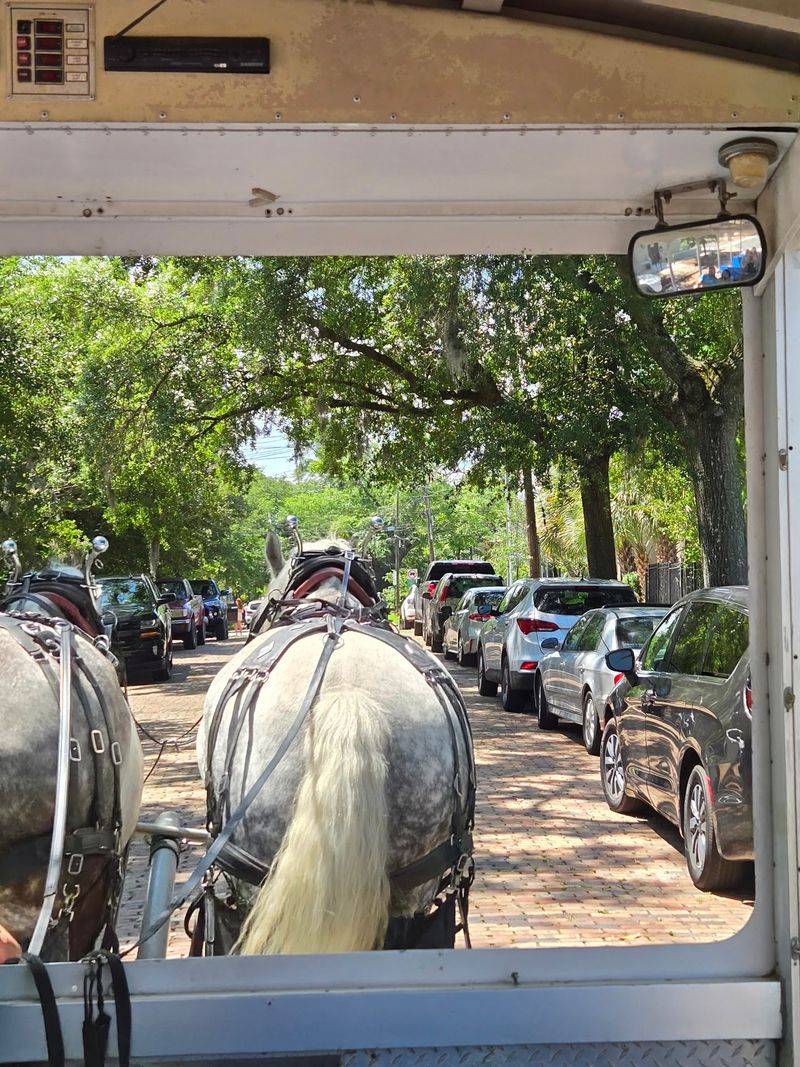
Good narration is the difference between a pleasant ride and a memorable one.
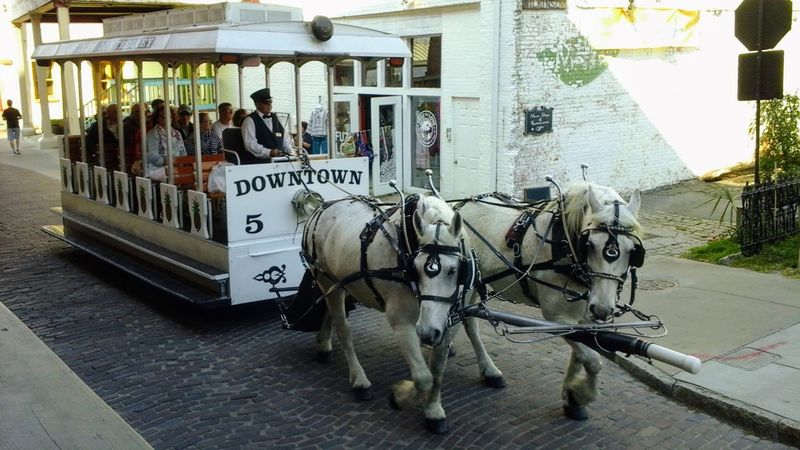
Costumed drivers lead the horses while narrating stories from Wilmington’s history.
Stories tend to stick to the buildings you are passing at that moment.
Current tour information says the narration covers downtown history, notable residents, and the historic buildings along the route. Landmarks arrive in a steady sequence, each with its own footnote.
Questions are welcome, and asking one often unlocks a longer tale. Curious about how the horses spend their days off?
Drivers answer that too, since they know the herd personally. Humor runs through most of the commentary, which keeps younger riders listening.
Longtime residents frequently discover a fact or two about their own streets they had never heard.
Details about old trades, gardens, and everyday life fill the quieter stretches between landmarks. Several different routes exist, so the script changes depending on which loop your carriage takes.
Mention it if you have ridden before and the crew can steer you toward a different tour with unfamiliar stories.
It is an easy way to double the history.
The Route Rolls Straight Through The City’s National Register Historic District
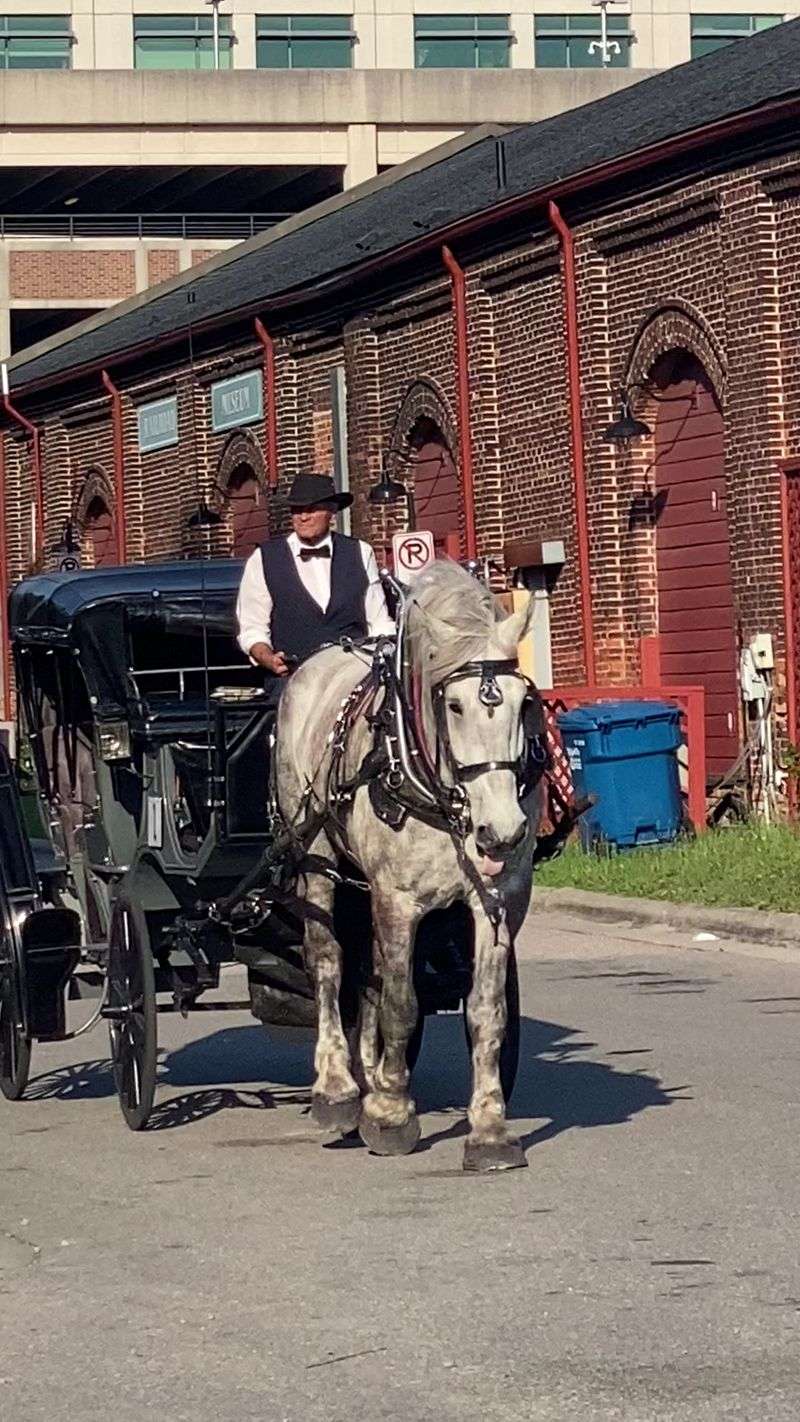
Wilmington’s National Register Historic District spans more than 230 blocks filled with historic residential and commercial architecture.
Victorian porches, Colonial doorways, and dignified brick facades take turns filling the view.
Some of what rolls past predates the country itself.
The Burgwin-Wright House, built in the 1700s, stands among the oldest landmarks on the loop, its tiered piazzas facing the street.
Shutters, hand-shaped bricks, and old ironwork reward a slow look.
Closer to the river, the scenery shifts. Wide views of the waterfront open up, masts and rooflines lining the horizon while the Cape Fear River glints below.
The breeze off the water arrives right about then, cool and faintly salty.
Live oaks arch overhead on the residential blocks, dropping dappled light on brick sidewalks buckled by roots.
Camellias, ferns, and wrought iron gates fill the small front gardens, and window boxes spill over in spring.
Few places in North Carolina pack this much preserved history into such a compact area, which is why the district works so well at a horse’s walking pace.
You see the grand houses and the modest ones, the mansions and the corner storefronts, all in one unbroken ribbon of streetscape.
Don’t Expect A Strict Departure Time Before Climbing Aboard
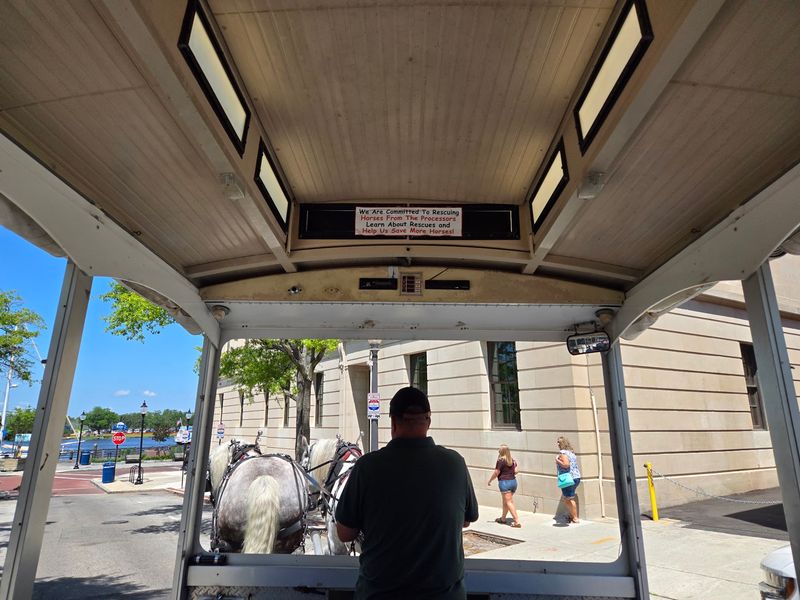
Schedules bend around the horses, not the clock.
Carriages roll out continuously through the day, heading off whenever a team is watered, rested, and ready for the next loop.
That flexibility surprises visitors used to timed tickets and boarding lines.
No reservation is needed for the standard downtown tour.
Walk up, find the boarding sign near the waiting carriage, and let a crew member know you want to ride. Boarding happens along Market Street near the Front Street corner downtown, with the office listed at 0 Market Street.
A short wait sometimes comes with the territory.
Rather than being a hiccup, it is part of how the operation protects the animals, and the pause gives you a few minutes to watch the harbor traffic or browse a nearby shop.
Current operating hours vary with the season and weather, so Springbrook Farms recommends checking its latest schedule before visiting.
Ice cream from a shop steps away has rescued more than one waiting family.
Consider it an unofficial part of the itinerary.
Cold, wind, rain, lightning, and excessive heat can all affect whether tours operate.
These Horses Get Rest Breaks Before Another Carriage Heads Out
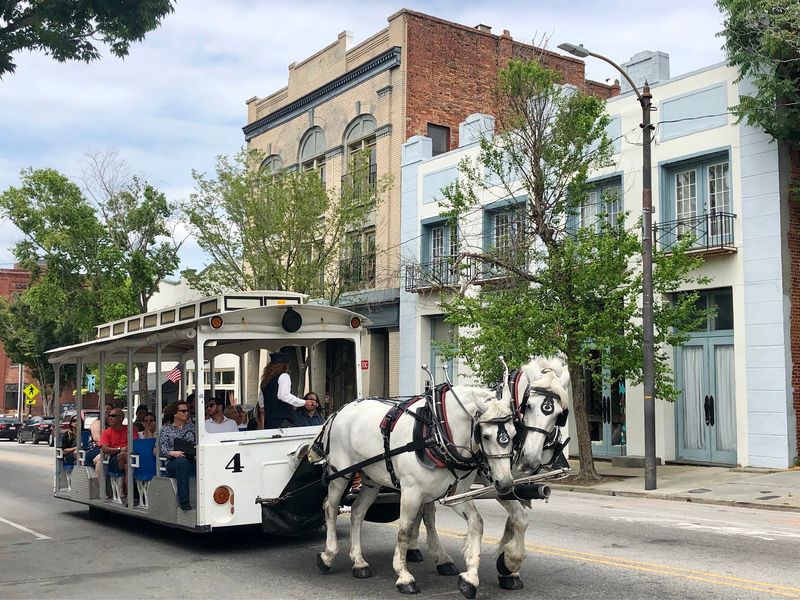
Buckets of fresh water appear between tours, and the horses drink deeply while riders climb down.
Rest comes often and by design, not as an afterthought.
Shade at the boarding corner helps on warm afternoons. The rotation goes deeper than a daily break.
The operator said in 2024 that horses generally spend no more than a week to a week and a half at the downtown stable before returning to more than 100 acres at the farm.
Springbrook representatives have described carriage work as easier than the farm work many of the horses performed previously.
The pace stays at a steady walk throughout. Retirement is permanent here.
When a horse ages out of tour work, it moves to a pasture for good and is never sold again, which is the promise the operation was built on.
If you are waiting for the next carriage, take the time to watch the changeover.
In 2024, the operator said working horses receive 15- to 20-minute breaks between tours and work no more than about six hours on a working day.
October Nights Give The Same Ride A Much Spookier Twist
Lanternlight, long shadows, and a driver with a low voice change the whole character of these streets.
Come October, the Halloween ghost ride replaces daytime history with tales of the haunted Cape Fear region. Ghost stories fit the setting a little too well.
Evening runs happen every Friday and Saturday from 6 p.m. until 9 p.m. during the season.
The hooves sound louder after dark, echoing off brick walls on blocks that empty out once the shops close.
Arriving a little early helps, since evening rides draw a crowd.
Wilmington has a reputation as one of the most actively haunted cities in North Carolina, and the old houses do their part.
Windows go dark, Spanish moss stirs, and river fog sometimes drifts up from the waterfront on cue. Stories lean eerie rather than frightening, so most school-age kids handle them just fine.
Bring a light jacket, since autumn evenings near the water turn cool quickly once the sun drops. Seats fill fast on the weekend closest to Halloween.
Other holidays get their own treatment as well.
Spring brings a cheerful Easter hop around town, proof that the same carriage can feel festive in April and delightfully creepy in October.
Why Walking Wilmington Isn’t The Only Way To Explore Its Oldest Streets
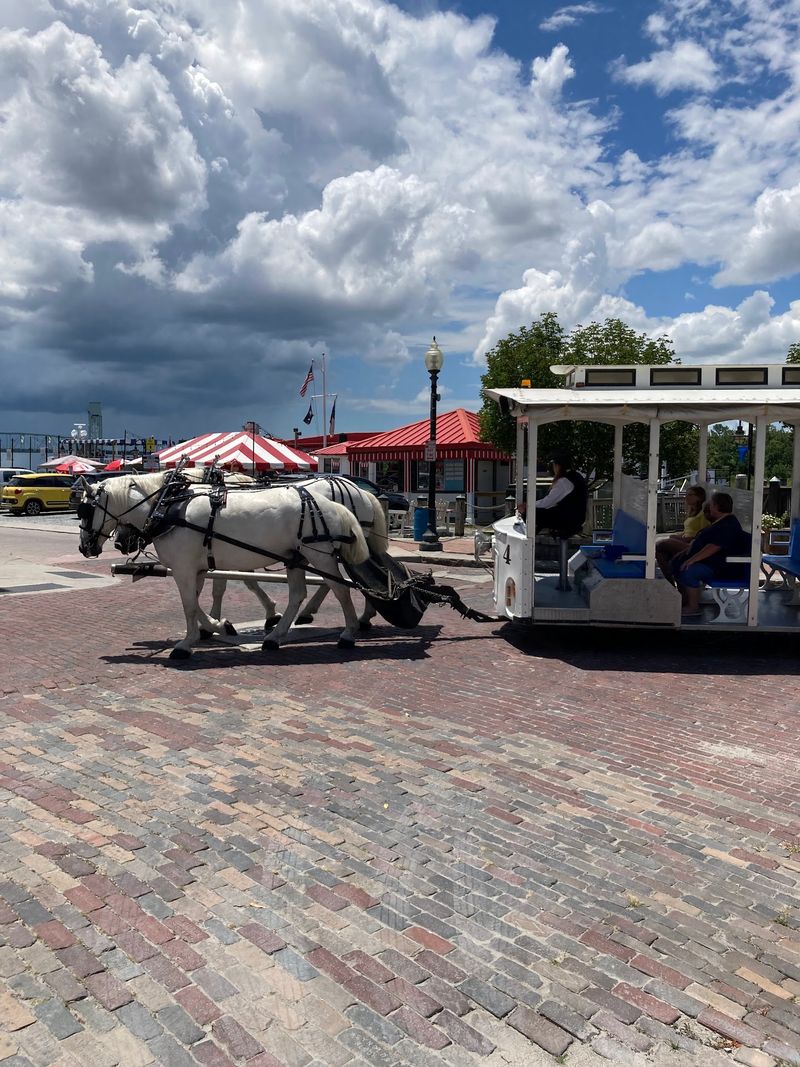
Walking tours cover ground beautifully, but feet get tired and brick sidewalks are uneven.
A carriage lets you lean back against the bench, stretch out, and let someone else do the navigating. The soundtrack alone makes the case.
Steel shoes on pavement, the creak of the carriage frame, the soft jingle of the harness, all of it tuned to a slow rhythm no walking tour can copy.
Riders with strollers, tired toddlers, or knees that complain on hills find the seated option far kinder.
Grandparents and first graders can share the same tour without anyone falling behind. Perspective matters too.
Riding above the sidewalk reveals rooflines, upper balconies, and garden courtyards that stay hidden from street level.
Sunlight on a copper gutter, a carved bracket under an eave, a cat asleep in an upstairs window.
For newcomers, thirty minutes builds a mental map of downtown that makes the rest of the visit easier to plan. You spot the restaurant you want to try, the museum worth an hour, the block of shops you missed.
Exact sights can vary because the current public tour is advertised as a general narrated trip through historic downtown.
Among the many ways to see this corner of North Carolina, few feel as unhurried, as easy, or as pleasantly old-fashioned.