Nebraska’S Last Water-Powered Flour Mill Still Stands Over The Millpond In Champion
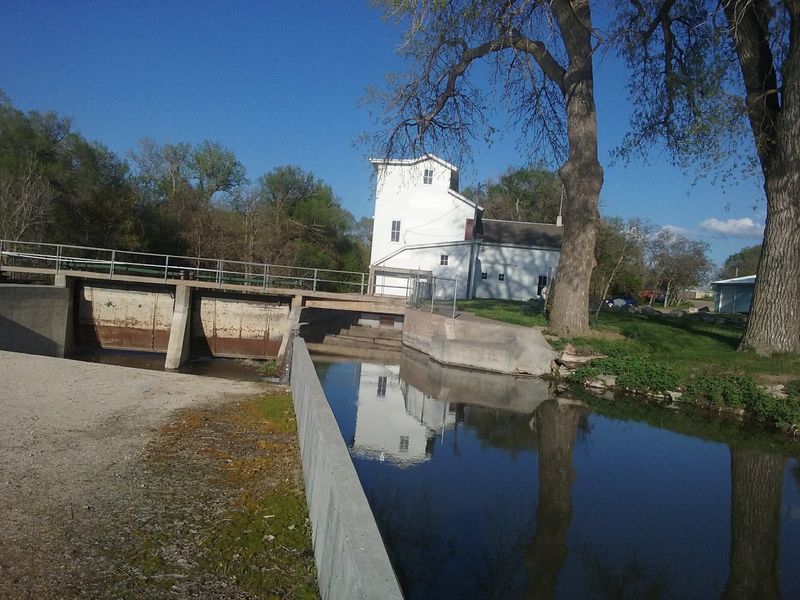
Southwestern Nebraska has a way of hiding big stories behind small buildings. I pulled off a gravel-shouldered road expecting maybe a picnic table and a historical marker, and instead found a three-story wooden mill sitting right at the edge of the water, floorboards worn smooth by more than a century of grain and boots.
Inside, the original machinery is still bolted in place, waiting. It’s the last water-powered flour mill left standing in the state, and almost nobody drives out of their way to see it.
A Three-Story Frame Mill on the Edge of the Water
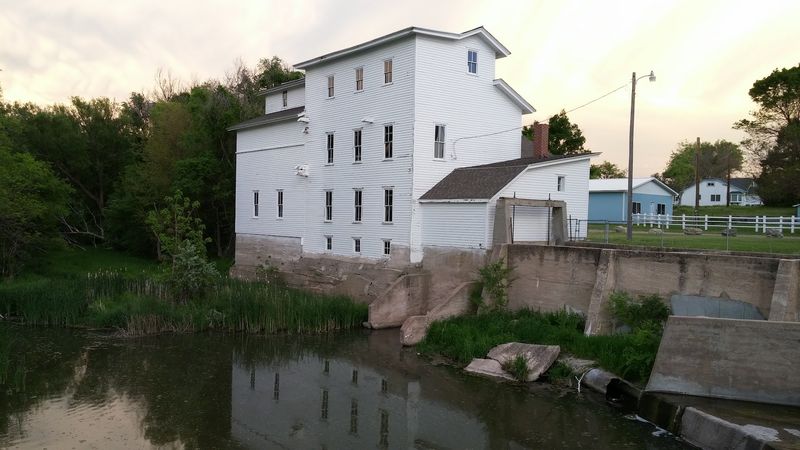
Weathered board siding, a steep roofline, and three full stories of timber frame rising straight up from the bank of Frenchman Creek. The Champion Mill doesn’t announce itself with signage or fanfare.
It simply stands where it has stood since the 1890s, in a Chase County community small enough that the mill is the tallest thing around.
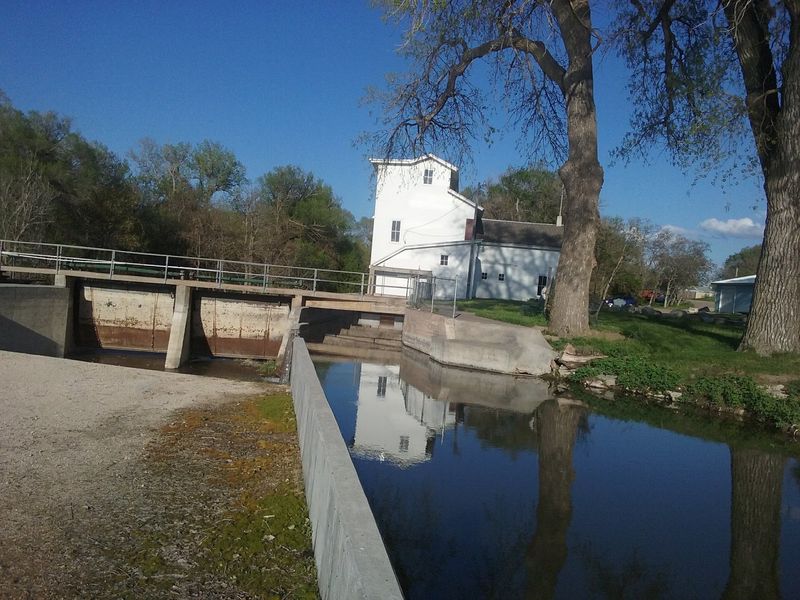
Walk the grounds and the geometry starts making sense. Water was channeled toward the building through a headrace, a dam held back the creek to form the millpond, and gravity did the rest.
Every piece of the site exists because of that one engineering idea.
What sets it apart in Nebraska is simple math: it’s the only water-powered flour mill left in the state. Others were built, ran their decades, and came down.
This one survived, complete with its interior equipment, and became a museum instead of scrap lumber.
The pond has gone dry in recent years, which changes the view considerably. The mill itself, though, remains fully picturable and entirely real.
The Rock Waterfall That Started Everything
A drop of roughly three feet in the creek bed doesn’t sound like much. To settlers scouting southwestern Nebraska in the 1880s, that natural rock waterfall on the Frenchman was as good as finding a power line already strung.
The town began life as Hamilton and took the name Champion in 1887. A year earlier, in 1886, Thomas Scott had secured the land and the water rights with a promise attached: he would build a mill.
Preliminary work started that fall.
By late 1888 the mill was turning. Farmers in the surrounding country finally had somewhere close to bring wheat, which in that era meant the difference between a cash crop and a wagon trip that ate a week.
Fire took the original building in December 1891. Rebuilding began almost immediately, and by 1892 the mill was back at work, which tells you plainly how much the area depended on it.
Nobody rebuilds a three-story structure that fast over something optional.
The same rock ledge is still down there in the creek bed today.
Eighty Years of Grinding, Then the Machines Went Quiet
Flour first, then feed. For most of its working life the mill ground wheat into flour for households and bakeries across the region, but the business shifted after 1945, when production turned over entirely to animal feed.
Commercial milling carried on until 1968. When the wheels stopped that year, Nebraska’s water-powered milling industry stopped with them, since nothing else of the kind was left running in the state.
Eight decades is a long run for any rural enterprise. Consider what passed through the doors during that stretch: horse-drawn wagons giving way to grain trucks, kerosene lamps to electric bulbs, homestead-era farming to mechanized agriculture.
The building absorbed all of it and kept working.
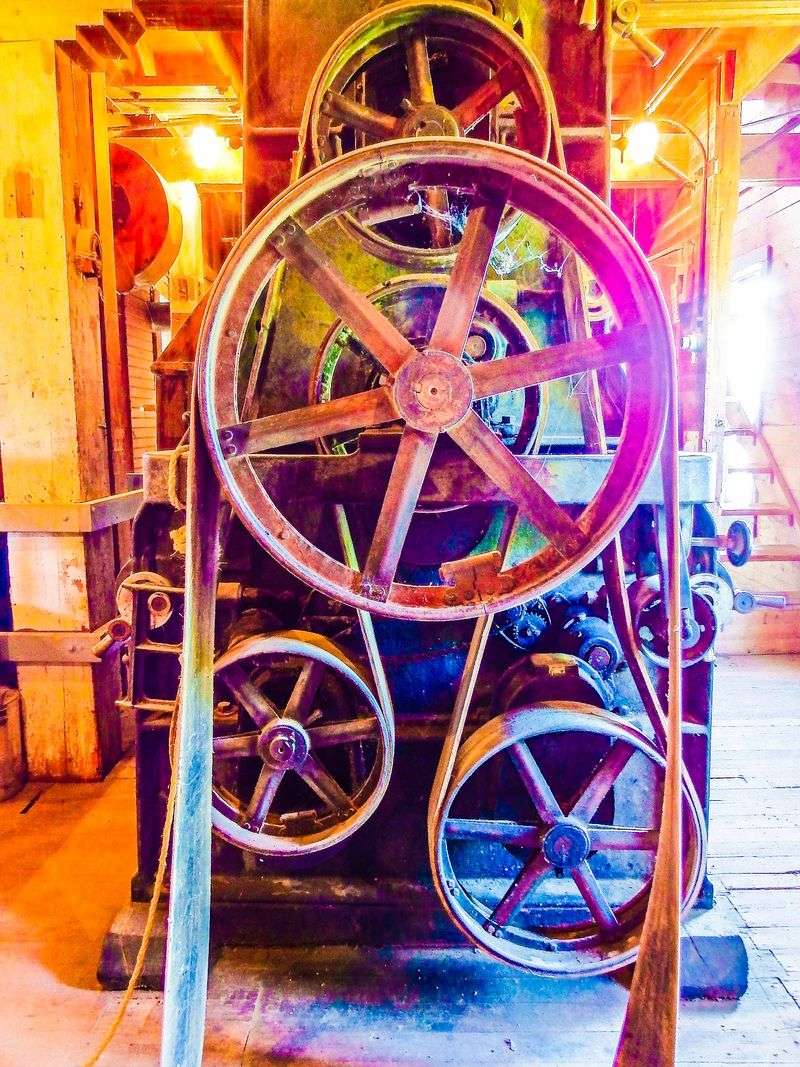
The equipment inside was never stripped out, which is the lucky part of the story. Belts, chutes, and grinding machinery stayed where the millers left them, so the interior reads less like a display case and more like a workplace that closed on a Friday and never reopened Monday.
That continuity is exactly why the site earned protection a year later.
How the State Stepped In, and Then Handed It Back
Old mills usually meet one of two fates: collapse or the bulldozer. Champion Mill got a third option.
The Nebraska Game and Parks Commission bought the complex in 1969, just a year after commercial grinding ended, and reopened it as Champion Mill State Historical Park and State Recreation Area.
Federal recognition followed in 1988, when the whole complex went onto the National Register of Historic Places as a historic district. That listing covers more than the building.
It includes the headrace channel and the dam that created the millpond, because the three pieces only make sense together.
Then came the handoff. In 2013 ownership moved from the state to Chase County, putting the mill under local control.
Day-to-day care now falls to the county with help from area volunteers who keep the doors open and the tours running.
A transfer like that could easily have been the beginning of the end. Instead it turned the place into something the county chose to keep, which is a different kind of preservation than a line item in a state budget.
Inside the Museum: Original Equipment, Still in Place
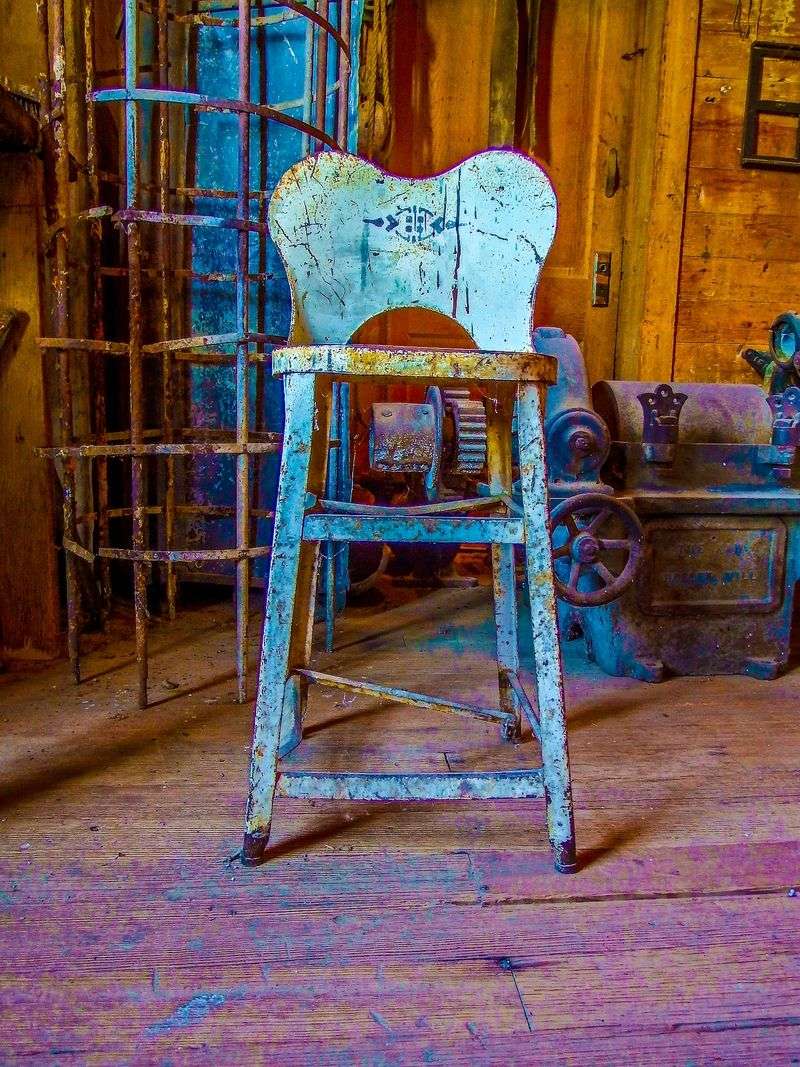
Step through the door and the first thing that registers is the smell of old wood and grain dust. The interior has been restored toward much of its original condition, and the milling machinery remains where it always sat.
Guided tours are where the building comes alive. Volunteers walk through how water diverted from the creek once drove the works, and demonstrations show how the current moved power up through the floors to the grinding equipment.
Following the path of a single wheat kernel through the building is oddly satisfying.
Three stories means plenty of stairs and plenty of angles on the same machine. The framing is exposed in places, so you can read the carpentry of an 1890s rebuild directly off the beams.
Elsewhere in the community there’s a salt mill and a small museum in the middle of town, both worth checking on the same trip if they happen to be open.
Call ahead through the county if a tour matters to you. A volunteer-run building keeps volunteer-shaped hours.
The Millpond, Full and Empty
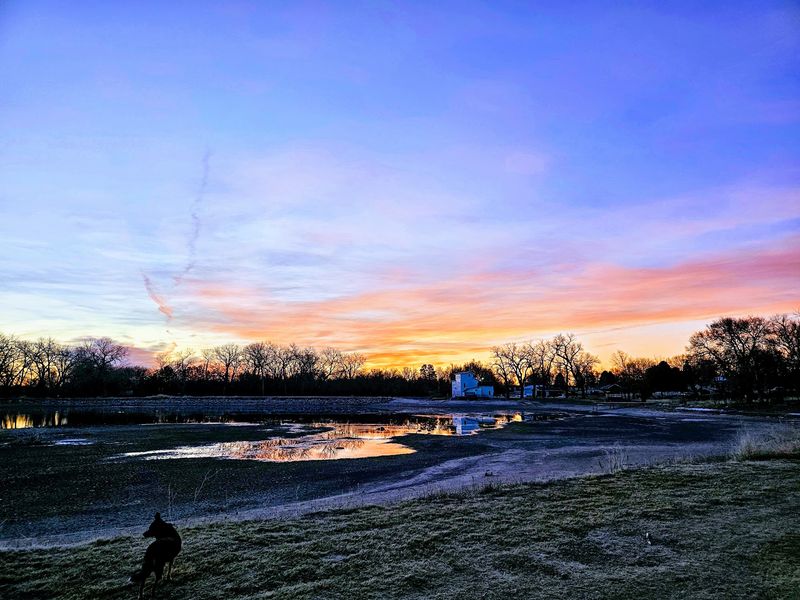
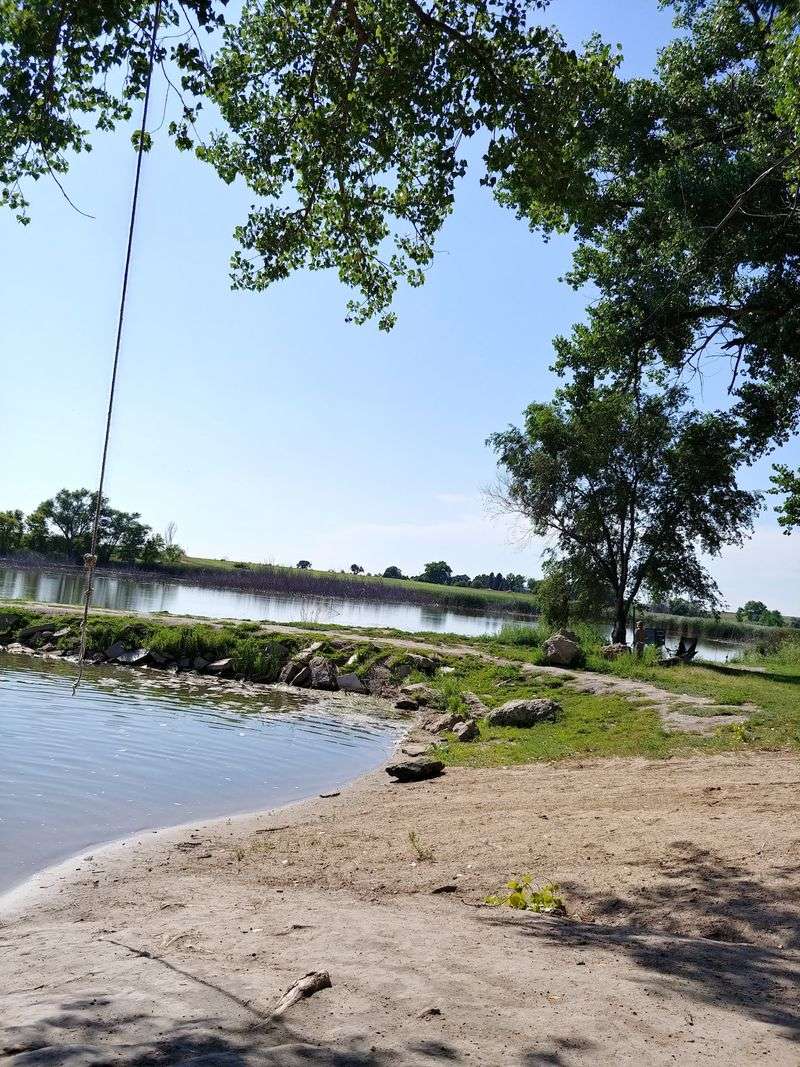
Geese used to crowd the water. The millpond, formed by impounding Frenchman Creek behind the dam, was the heart of the recreation area for generations of Chase County kids who spent whole summers swimming, fishing, and swinging off a rope into the water.
Conditions have shifted. The pond has been dry for a stretch of recent years, and the creek along with it, so the mirror-smooth reflection shots you’ll find in older photographs aren’t guaranteed on any given visit.
Worth knowing before you load the fishing poles. Water levels in this part of southwestern Nebraska respond to drought and irrigation demand, and neither is predictable from a distance.
Checking with the county before driving out saves disappointment.
Even dry, the basin tells the story clearly. You can trace the headrace, see where the dam sits, and understand how the whole system worked better than you could with the pond full and hiding everything underwater.
And the mill itself is unaffected. The building is the reason to come; the water is the bonus when it’s there.
Picnics, Camping, and Quiet Nebraska Sunsets
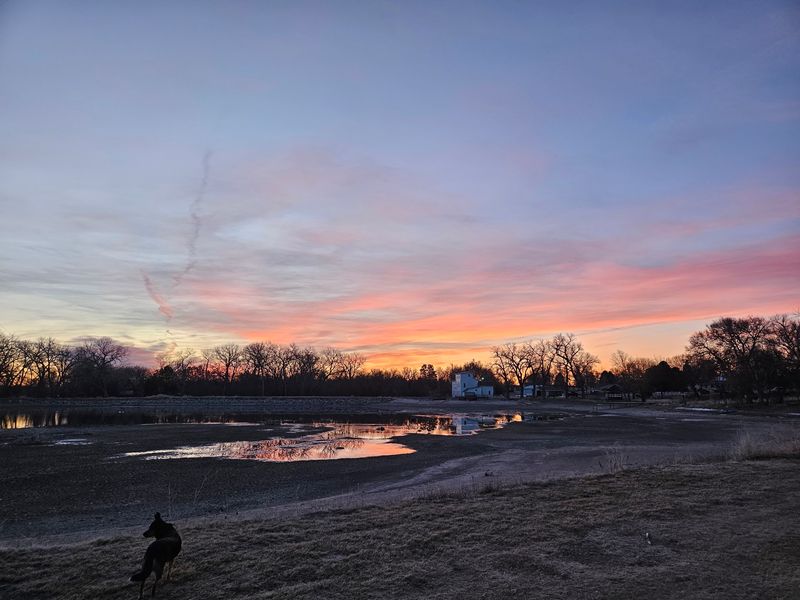
Cottonwoods, picnic tables, and almost no traffic noise. The recreation area surrounding the mill leans heavily toward the low-key end of outdoor recreation, and that’s the appeal.
Birdsong tends to be the loudest thing happening.
Overnight camping is available with electric hookups that work, and the fee for plugging in is modest, a matter of a few dollars paid in cash. Restroom facilities are basic, so anyone accustomed to full-service campgrounds should adjust expectations accordingly.
The site sits low enough to catch a break from the wind, which in this part of Nebraska counts as a real amenity. Sunsets over the surrounding farmland are the payoff for staying the night.
Walking trails, fishing when water allows, and open ground for a family picnic round out the offerings. No park permit is required, which removes one more bit of friction from a spontaneous afternoon.
Photographers have figured this place out too. The mill has served as a backdrop for senior portraits, and the combination of weathered wood and open sky does a lot of the work for you.
Finding Champion and Timing Your Drive
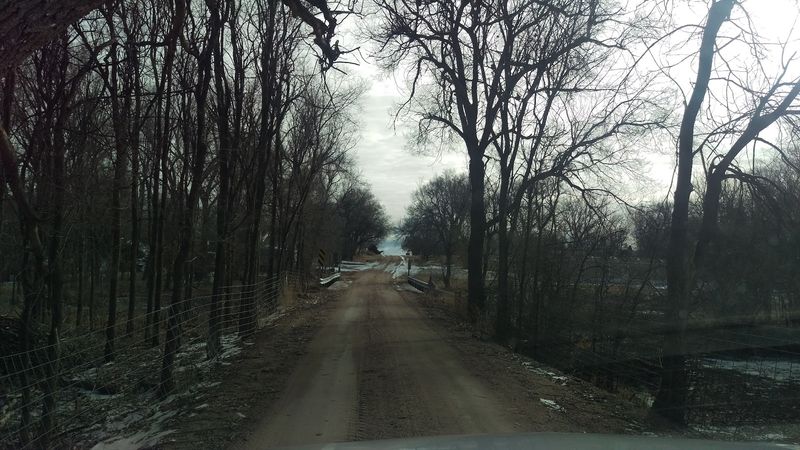
Address first: 180 Second St, Champion, NE 69023. Plug it in and you’ll end up in Chase County, in the southwestern corner of the state, a short hop southwest of Imperial and not far from the Colorado and Kansas lines.
Getting there involves county highways and open farmland rather than interstate. Figure on a long drive from Lincoln or Omaha, an easier one from North Platte, McCook, or Ogallala.
Fuel up before the last stretch; services thin out fast.
The park grounds stay open through the year, but the mill building itself runs on a seasonal schedule, generally the warm months between Memorial Day and Labor Day. Winter visits mean grounds only, with the building shut.
Because volunteers staff the tours, confirming availability ahead of time is the single smartest move you can make. A closed door after a two-hour drive stings.
Fall works beautifully for the drive itself, when the cottonwoods turn and the farmland is in harvest. Just verify the building is still open for the season before you commit.
Why This One Is Worth the Detour
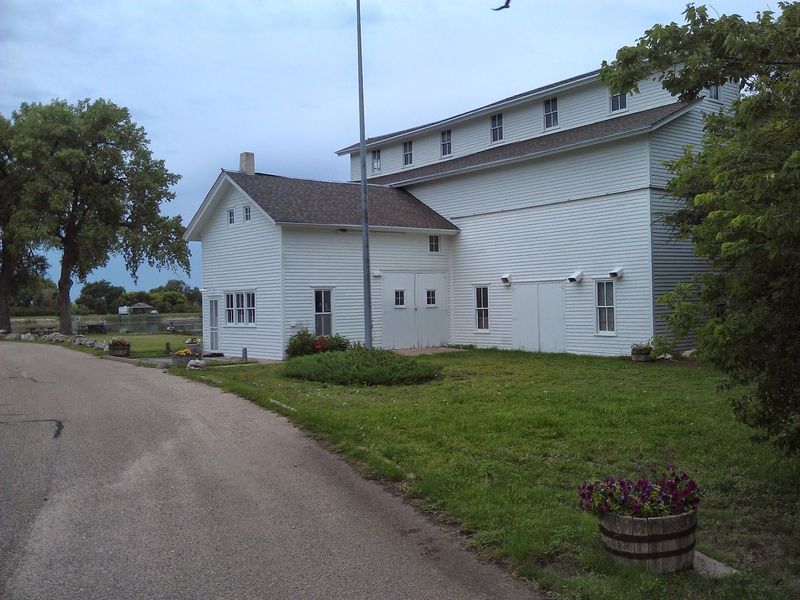
Some places reward you with spectacle. Champion Mill rewards you with something rarer: a working piece of nineteenth-century engineering that nobody got around to tearing down, still sitting exactly where the creek made it useful.
Set expectations right and the trip lands well. The mill no longer grinds commercially, the pond may be dry, and the facilities are simple.
What you get instead is an intact three-story timber building, original machinery, and a tour from people who care about it personally.
Families with kids who like stairs and gears will do fine here. So will anyone chasing photographs, anyone tracing Nebraska’s agricultural history, and anyone who grew up in Chase County and hasn’t been back in twenty years.
Pair it with the salt mill and the town museum, pack a lunch, and you have a genuinely pleasant half-day in a corner of the state most people only cross on the way somewhere else.
One mill, one creek, one county that decided to keep it. That’s the whole story, and it’s a good one.