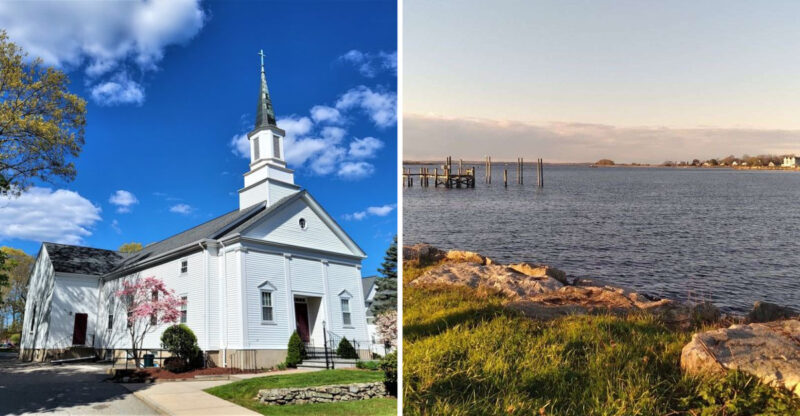
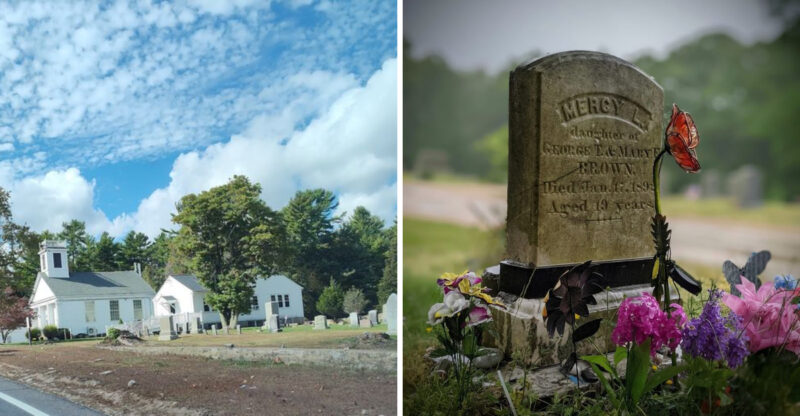
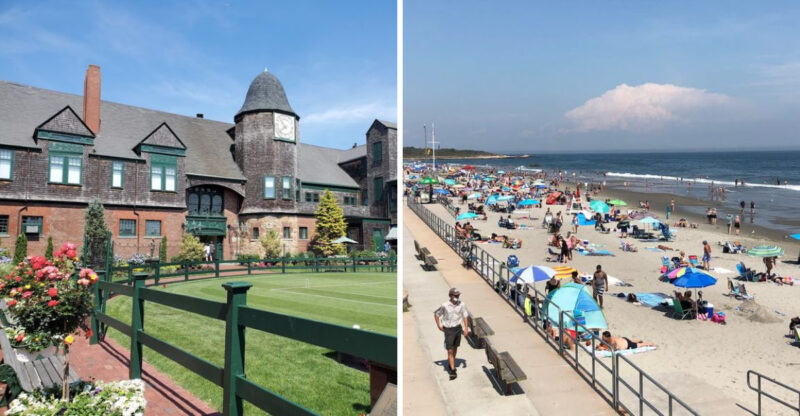
This Rhode Island Estate Offers A Peaceful Afternoon Of Gardens, History, And Bay Views
Nothing here demands urgency. That may be the greatest luxury of all.
One Rhode Island estate gives visitors permission to move slowly, sit often, and enjoy an afternoon without chasing attractions.
The grounds invite gentle wandering rather than determined sightseeing. History is present, but it does not overwhelm the experience. Neither does the scenery.
Everything seems built around taking your time. Seniors may find that especially appealing, though peace and quiet hardly belong to one age group.
A visit can be as active or as restful as you want. Some destinations impress by keeping you busy. This one succeeds by doing the opposite.
Where Bay Breezes Meet History
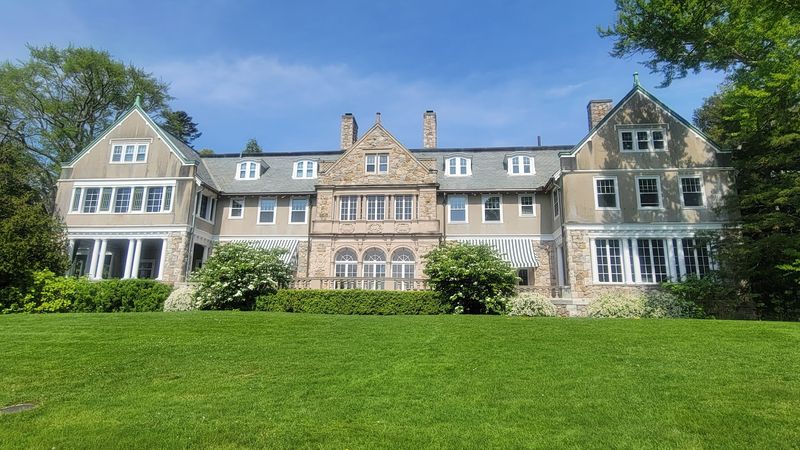
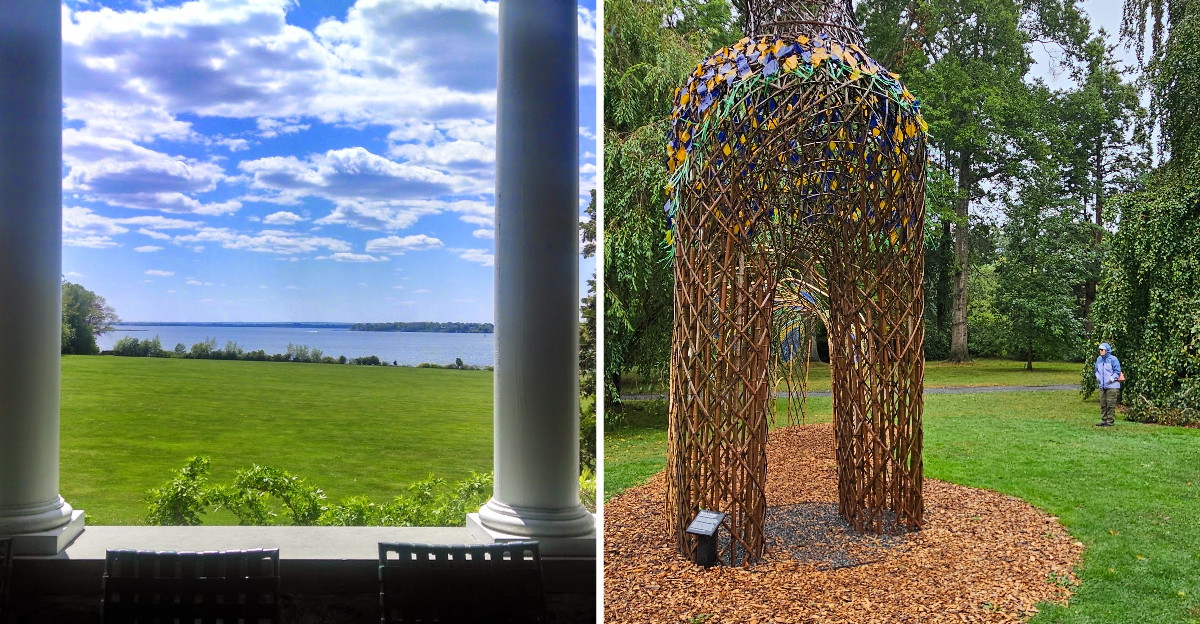
Narragansett Bay views, mature trees, lawns, and gravel garden paths establish the estate’s quiet waterfront setting.
The 33-acre estate slopes toward Narragansett Bay, with the 10-acre Great Lawn providing broad waterfront views. For anyone craving calm, the setting does most of the work.
Rhode Island packs a lot into a small space, and this property proves the point. A 45-room historic mansion, Level II accredited arboretum, restored greenhouses, gardens, and waterfront grounds all fit within one visit.
Benches are located throughout the grounds and are marked on the visitor map.
Onsite parking includes accessible spaces in the main lot plus closer accessible parking near the mansion for visitors who cannot comfortably cover the longer distance.
From May 3 through October 25, the grounds open at 10 a.m. Tuesday through Sunday, and the visitor map identifies benches, bathrooms, and path surfaces.
You will find Blithewold Manor, Gardens & Arboretum at 101 Ferry Rd in Bristol.
A Family Story Worth Hearing
Every great house has a plot twist, and this one has several. The story starts in 1894, when coal magnate Augustus Van Wickle bought the property as a summer retreat for his family.
Construction of the first Queen Anne mansion began in 1895, with the family spending its first summer there in 1896. Augustus passed on in 1898, leaving his wife Bessie and their daughters to carry the vision forward.
In 1906, the original mansion was lost to a fire, while its furniture and furnishings were successfully saved.
Bessie, later remarried to William McKee, refused to give up on the place. She hired the Boston firm Kilham & Hopkins, and a grander house rose by 1907.
Generations lived here afterward. The estate eventually passed to daughter Marjorie Van Wickle Lyon, whose bequest opened the doors to the public in 1978.
General admission is self-guided, with an optional audio tour, while prearranged guided experiences are also available for groups.
Knowing the history changes how the rooms feel. Suddenly the furniture is not decoration, it is evidence of a family who kept rebuilding after hard years.
English Charm On American Shores
The present mansion was deliberately designed in an English Country Manor style.
The 1907 mansion follows the English Country Manor style, complete with rough stone, stucco, and steep pitched roofs.
Medieval-style ornamentation decorates the exterior. The west face bears a strong resemblance to Cranborne Manor in Dorset, England, right down to the three-arched loggia entrance.
Look up while you stand near those arches. Gargoyles, coats of arms, and other medieval-inspired details decorate the exterior around the loggia.
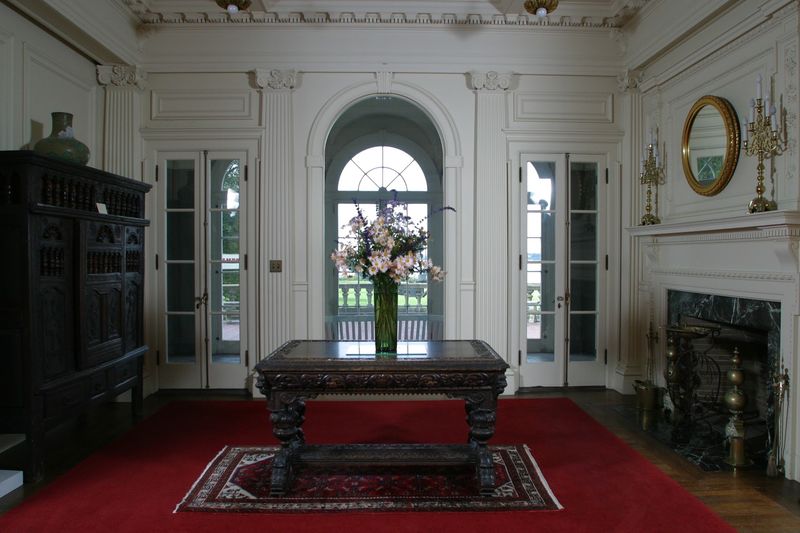
Inside, the 45 rooms hold original furnishings, family artwork, books, and letters. The entrance hall still carries a formal welcome, while the living room fills with sunlight.
Original rooms and family furnishings remain central to the mansion’s self-guided interior experience.
General admission includes a self-guided mansion visit, with an optional audio tour available for additional interpretation. History buffs will stretch that considerably, and nobody rushes you along.
From late March through October 25, the mansion opens at 11 a.m.; tea is offered only through separately scheduled seasonal programs. Plan your garden walk first, then head indoors when the doors swing open.
Giant Trees And Rare Specimens
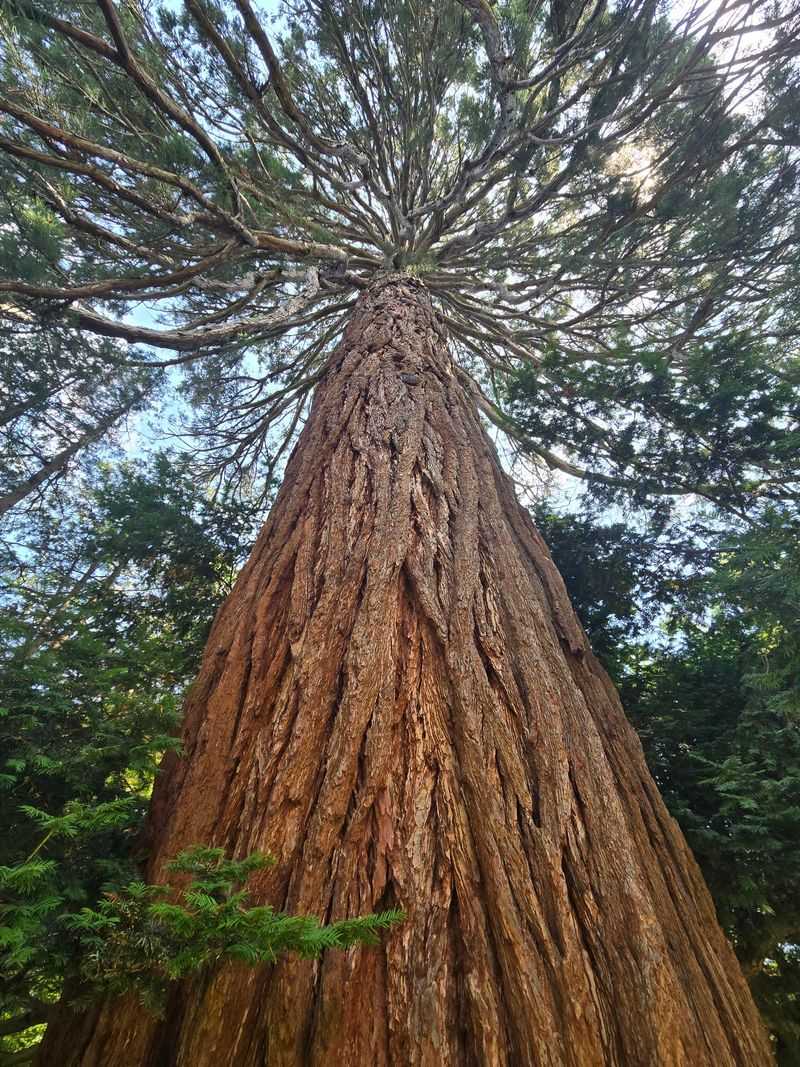
The original Giant Sequoia in the Enclosed Garden was planted in 1911 and is described by Blithewold as the tallest Giant Sequoia on the East Coast.
The arboretum spreads across the full 33 acres. Nearly 2,000 trees and shrubs grow here, representing roughly 500 different species.
Original owners collected specimens from Europe, the Far East, and North America. Small metal labels identify many of them, which turns a stroll into a free botany lesson.
A Chinese toon tree here bloomed in 1926, believed to be a first in the United States. Botanists from Harvard’s Arnold Arboretum traveled to see it.
Nine Rhode Island state champion trees stand on the property. That title goes to the largest known example of a species in the state.
Lindens, ginkgoes, dawn redwoods, and oaks fill out the collection. In autumn, the whole arboretum turns into a color show worth a second visit.
Benches are available throughout the grounds, but about 80 percent of the outdoor paths are semi-loose gravel, so mobility needs should be considered when planning a route.
Garden Rooms And Bamboo Secrets
Turn a corner and the scenery changes completely. The gardens function as separate outdoor rooms, each designed with its own mood and personality.
Landscape planning began in 1895 and continued through the early twentieth century, shaping many of the garden spaces still visible today.
His mix of formal and informal spaces still guides how you move through the property.
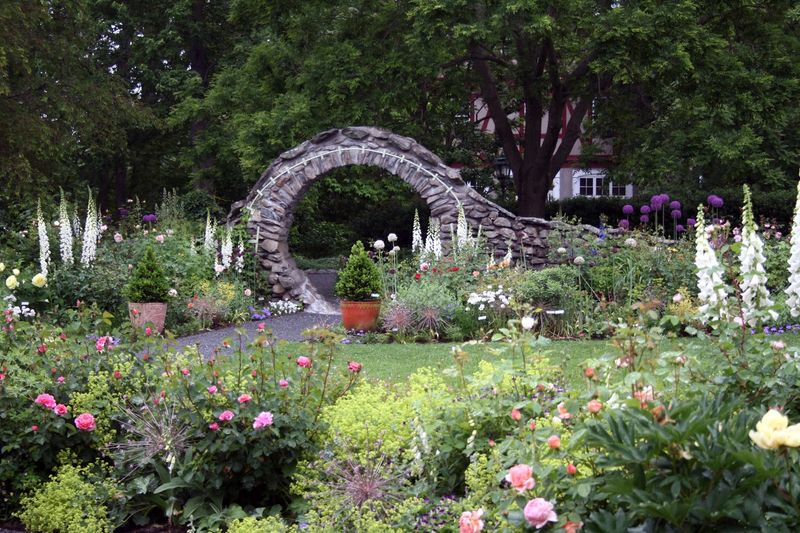
The Rose Garden’s Asian-inspired Moongate remains one of its defining architectural features.
The Water Garden adds ponds and a small stone bridge to the estate’s mix of formal and naturalistic garden spaces.
Oldest of them all is the Enclosed Garden, with winding paths, a rolling lawn, and a Summerhouse overlooking one of the estate’s original sequoias.
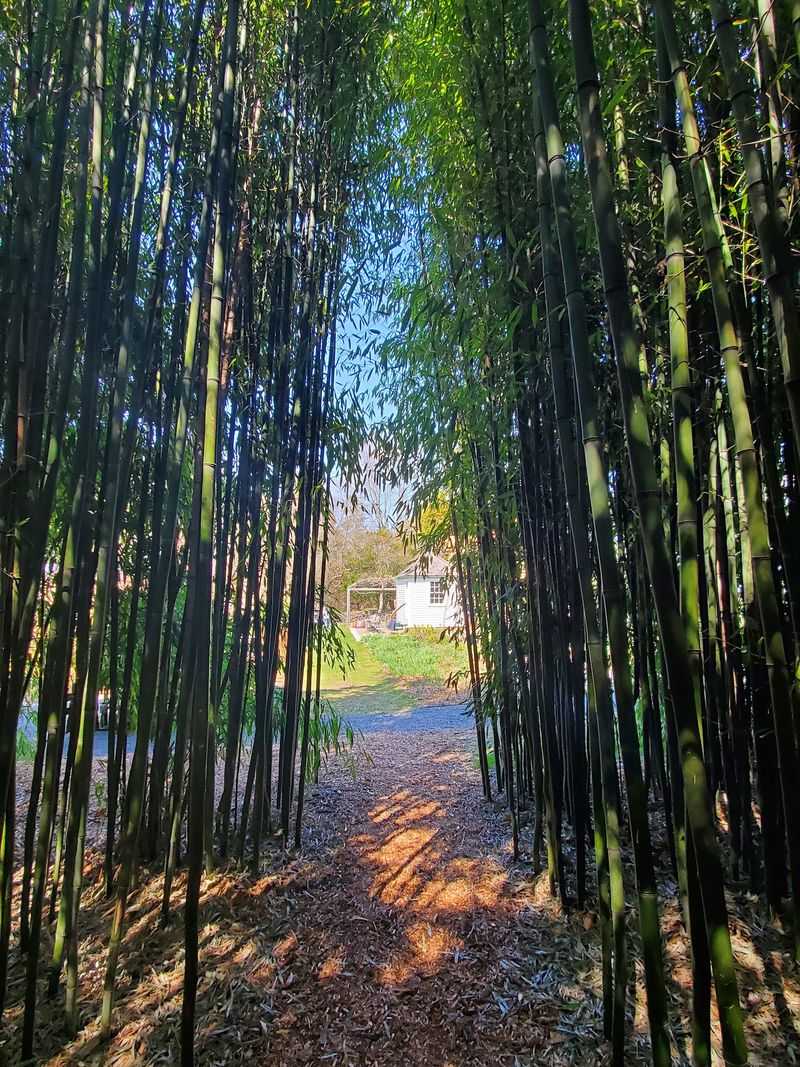
The Bamboo Grove was planted in the 1930s and remains one of the estate’s most unusual historic plantings.
The Bosquet, a woodland area with a tall leafy canopy, stays pleasant even in cooler months. Hidden benches and whimsical stonework reward anyone willing to wander off the main route.
Daffodils, Concerts, Autumn Color
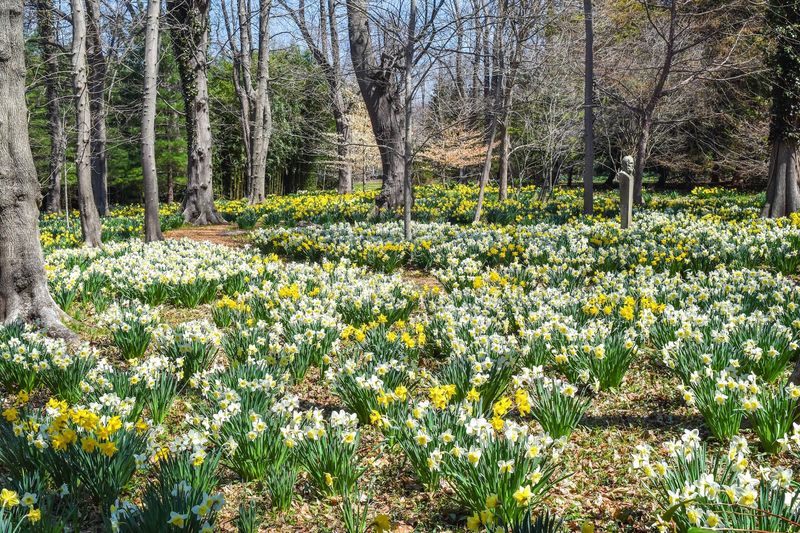
April is the headliner. Daffodil Days now features nearly 150,000 blooms representing all 13 daffodil divisions and more than 100 varieties.
Timing matters if daffodils are your goal. Daffodil Days runs from late March into early May, with peak bloom shifting each year according to weather and sunlight.
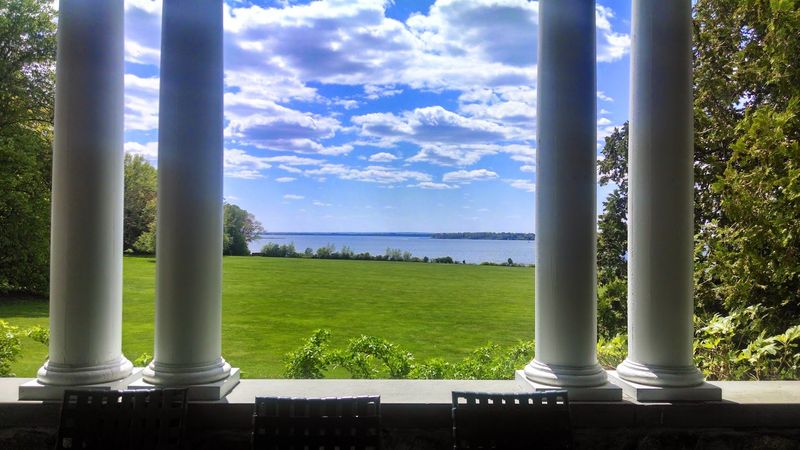
Summer shifts attention to the 10-acre Great Lawn. Bay breezes make it comfortable even on warm days, and the water views stretch wide open.
In 2026, Music at Sunset ran Wednesday evenings from June 3 through August 26 on the Great Lawn. Guests spread blankets, unpack picnics, and listen with Narragansett Bay glowing behind the stage.
Blithewold’s annual family clambake returned in 2026 with an August 27 event on the estate grounds.
Fall belongs to the arboretum. Those 500 species put on a layered display of copper, rust, and gold that photographs beautifully.
From May 3 through October 25, the grounds are open Tuesday through Saturday from 10 a.m. to 4 p.m. and Sunday from 10 a.m. to 3 p.m.; the mansion is open Tuesday through Sunday from 11 a.m. to 3 p.m.
Afternoon Tea On The Porch
Warm scones with clotted cream are part of this Rhode Island estate’s current seasonal tea programming.
Spring Afternoon Tea is served in the Dining Room and Breakfast Porch, while Tea and Scones on the Porch runs separately from May into September.
Spring Afternoon Tea includes savory bites, sandwiches, freshly baked scones with clotted cream, sweets, and the estate’s house tea blend.
Seasonal teas use two scheduled seatings and generally require prepaid advance reservations.
Tea is offered only during scheduled seasonal programs, while the gardens follow their separate public-hours calendar. A garden walk first, then tea, makes a comfortable rhythm.
Workshops round out the programming. Nature drawing sessions and horticultural talks let visitors get hands-on with the estate’s plant collections.
General admission is self-guided with an optional audio tour, while guided mansion-and-grounds tours can be arranged for groups. Guides share deeper details about the family and how the gardens evolved decade by decade.
A gift shop near the visitor center stocks plenty of small treasures. The visitor map identifies benches, bathrooms, and path materials, and an all-terrain GRIT Freedom Chair is available for outdoor use.
Quiet Corners For Slow Days
Seating is everywhere, and that single detail makes the property special for older visitors. Benches appear along the paths, in hidden garden nooks, and on the covered porches.
Covered porches and seating areas overlook both the Bosquet and Narragansett Bay. Birdsong, rustling leaves, and the distant water were the only interruptions.
Gravel paths connect the garden areas, while benches throughout the estate make it possible to break a visit into shorter stretches.
Picnics are welcome on the grounds. Bring a lunch, spread out on the lawn, and carry your trash back out with you.
Birdlife is plentiful thanks to the mature tree canopy. Butterflies work the flower beds, and small creatures rustle through the woodland edges.
Many of the roughly 500 plant species are labeled, and the arboretum regularly attracts home gardeners as well as horticultural groups.
Paths and lawn areas extend toward Narragansett Bay, but outdoor surfaces vary and much of the path network consists of semi-loose gravel.