More Than 80 Artists Have Turned This Old Nebraska Factory Into A Creative Hub
Some buildings in Nebraska give away nothing from the sidewalk. Brick, tall windows, a loading dock that hasn’t loaded anything in decades.
Then you pull the door open and there’s a furnace roaring at a temperature hotter than lava, a potter elbow-deep in clay, and three floors of studios stacked above you. What used to roll mattresses off an assembly line now turns out glass, bronze, oil paintings, and the occasional handmade violin.
A Brick Factory on Nicholas Street
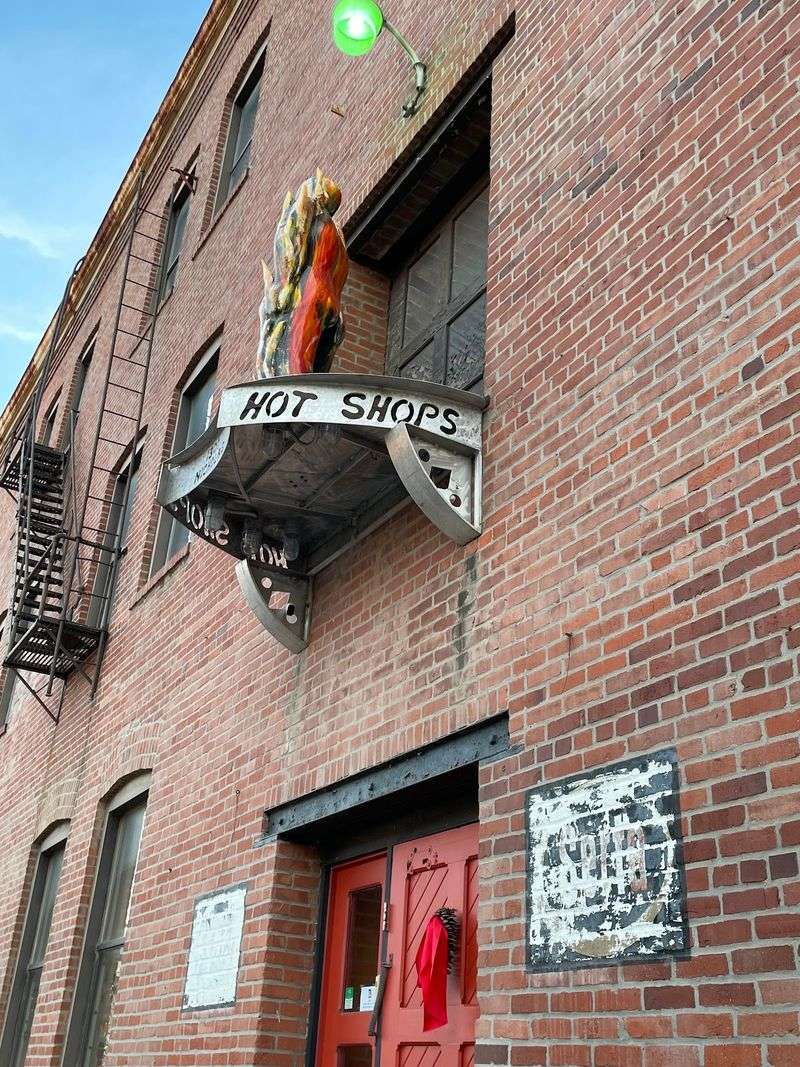
North of Omaha’s Old Market, past the rail lines and the newer downtown construction, a broad brick factory takes up most of a block. Three floors, big industrial windows, the kind of solid early-1900s construction that was built to hold heavy machinery and never quite stopped being useful.
Inside, the layout still reads like a factory floor. Wide corridors, concrete and timber, doorways opening into more than fifty studios where roughly ninety resident artists work.
Painters, photographers, jewelers, fiber artists, sculptors, potters, glassblowers, blacksmiths.
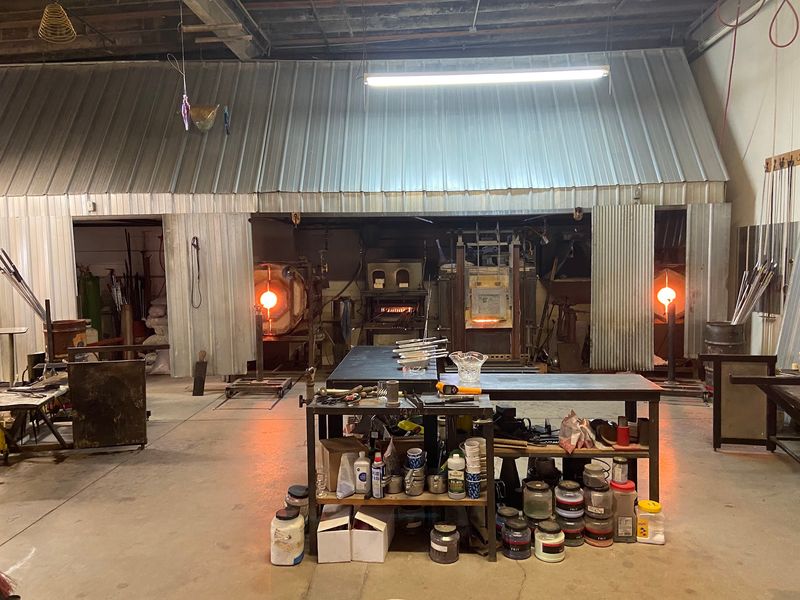
The name comes from heat. Certain studios here run furnaces and kilns hot enough to melt metal and liquefy sand, and those are the hot shops the whole center is named after.
What surprises most people walking in the first time is scale. It keeps going.
You think you’ve seen the place, then you find the stairs and there are two more levels of it above your head.
Plan on an hour minimum. Two is more realistic if you actually stop and look.
From Mattress Assembly to Bronze Casting
Back in 1908, the building went up as the L.G. Doup Company factory.
By the 1920s the operation had settled into mattress manufacturing, and it stayed in that business for decades, later running as a Serta plant all the way through the 1990s.
Then it emptied out. For a stretch the place sat vacant, which is the usual next chapter for big industrial buildings that outlive their industry.
In November of 1999, a group of artists and investors bought it. The Hot Shops Art Center opened between late 1999 and the spring of 2000, and in 2019 the operation became a non-profit educational art center.
You can find the address at 1301 Nicholas Street, and the conversion is the interesting part of the story. Nobody gutted the character out of it.
The bones stayed, the light stayed, the scale stayed, and the heat simply changed purpose.
Where beds were once stitched together, bronze now pours at 2,100 degrees. That’s a fair trade for an old Omaha factory.
Watching Glass Bend at 2,100 Degrees
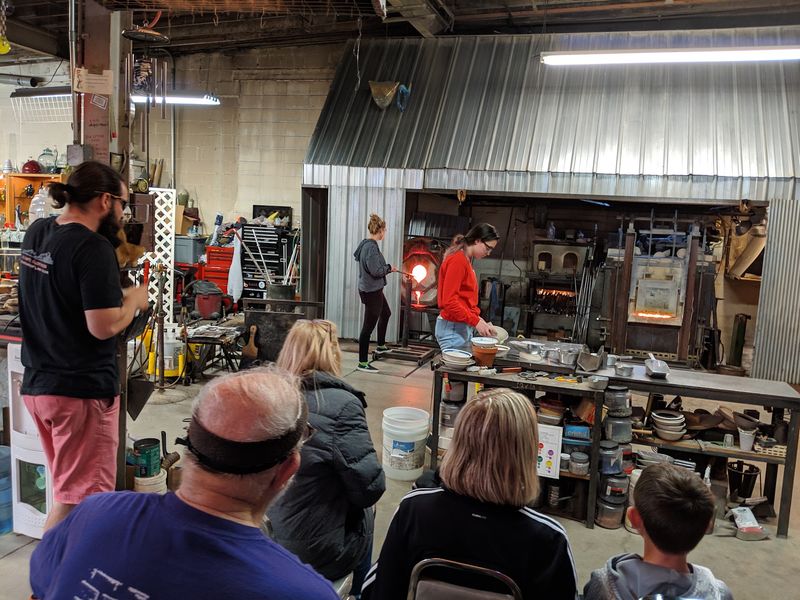
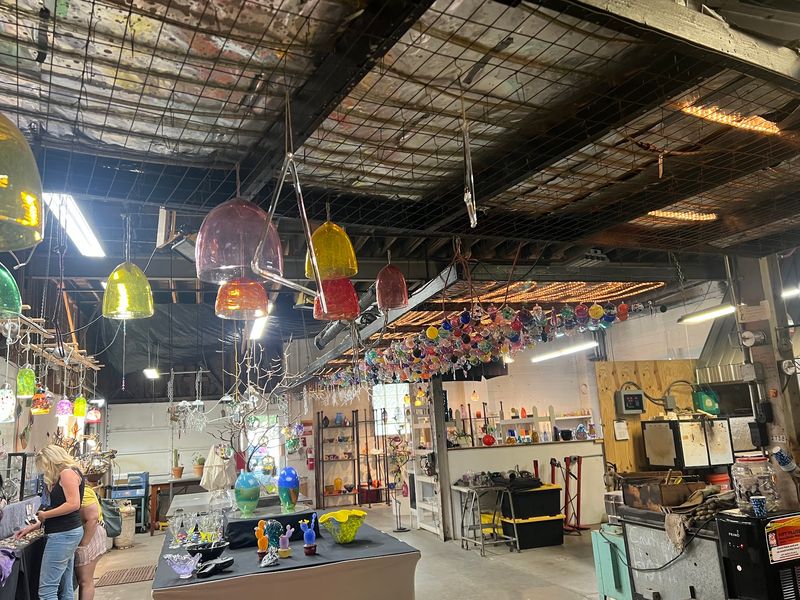
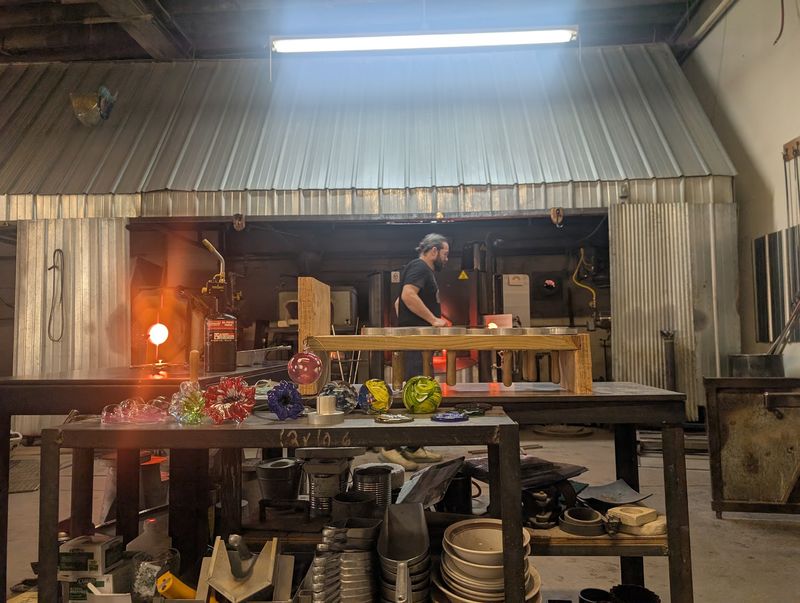
Nothing else in the building pulls a crowd like the glass shop. A glowing orange blob on the end of a steel pipe, constant rotation, a rush of heat you feel from several feet back, and then the shape arrives out of nowhere.
Glass works around 2,100 degrees here. Potters fire ceramics even hotter, up near 2,300, and the bronze casters run their pours at 2,100 as well.
Those numbers are the reason the center carries the name it does.
Hands-on classes run in the glass studio, including sessions built for two people, where you pick your colors and shapes from a list and do a real share of the work. Ornaments, paperweights, vases, wall plates, swung forms.
Instructors walk each step with you, and people who’ve never touched a blowpipe walk out carrying something they made.
Torch work happens too, a smaller-scale flame technique used for decorative pieces. Sign up in advance rather than hoping to catch an opening.
Fifty-Plus Studios, No Two Alike
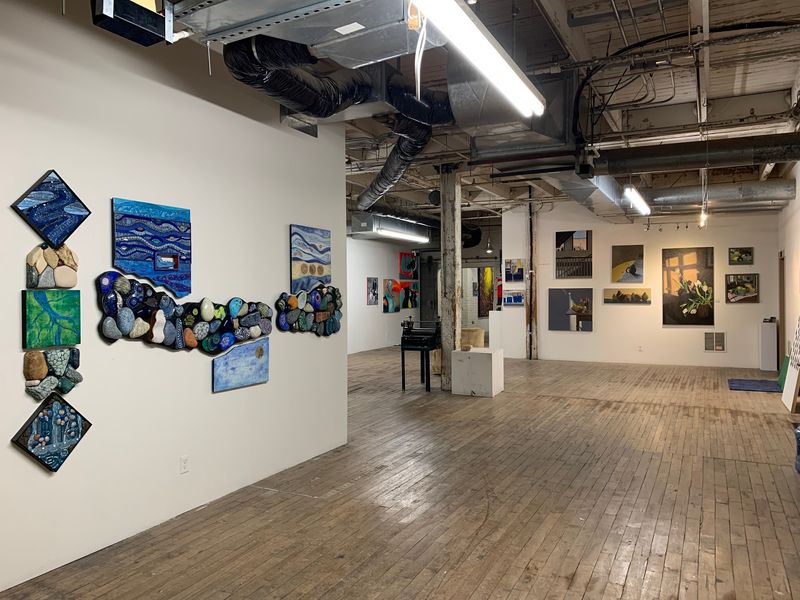
Open one door and there’s a wall of canvases the size of garage doors. Open the next and someone is setting tiny stones into silver.
Keep going and you’ll find clay, photographic prints, woven fiber, welded steel, and at least one workshop where violins get built by hand.
More than fifty studios fill the three floors, home to about ninety working artists. The variety is the point.
Nothing here got curated into a single look, because each space belongs to whoever rents it.
Almost everything on the walls and shelves is for sale. Big statement pieces for people with wall space, small items for people without, and plenty in between that works as a gift.
Not every studio door is open at every moment, since these are working artists with their own schedules. Events and open houses are when the building runs closest to full.
A museum-style gallery space also rotates exhibits, so the building rarely looks the same twice.
Talking Shop With the Makers
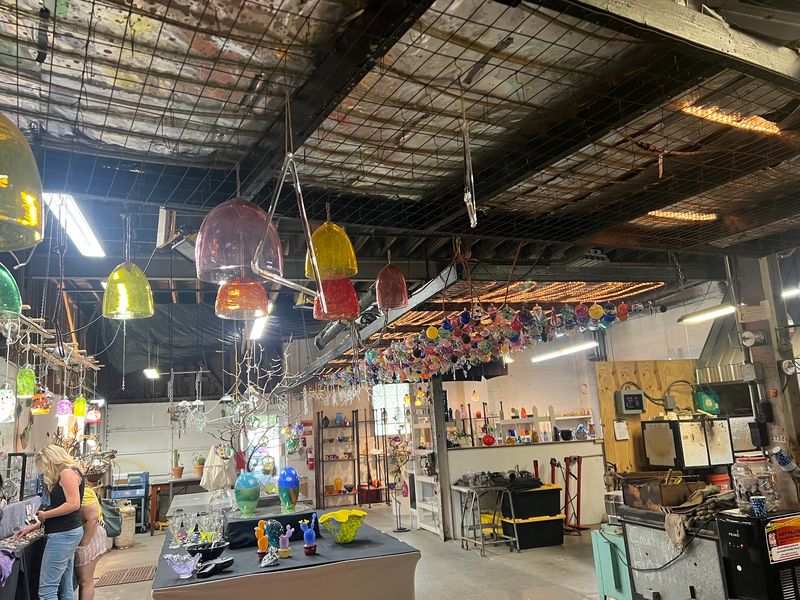
Ask a potter what the glaze is doing and you’ll usually get a five-minute answer. That’s the difference between this place and a gallery with a hushed front desk.
Artists here work while the public wanders through, and conversation comes with the territory. Someone will explain how a piece came together, why a color shifted in the kiln, or what went wrong on the first three attempts.
People have walked in curious about glass and had an artist stop to demonstrate the basics right there. Those exchanges are what turn a souvenir into something with a story attached.
Life drawing sessions meet in the building too, along with workshops, tours, and scheduled demonstrations, all part of the educational mission the center took on formally in 2019.
If you’re shy, nobody will chase you down a hallway. You can absolutely just look.
But asking one question tends to open a door, and the people who ask usually leave knowing something they didn’t walk in with.
Three Floors, Natural Light, and an Elevator
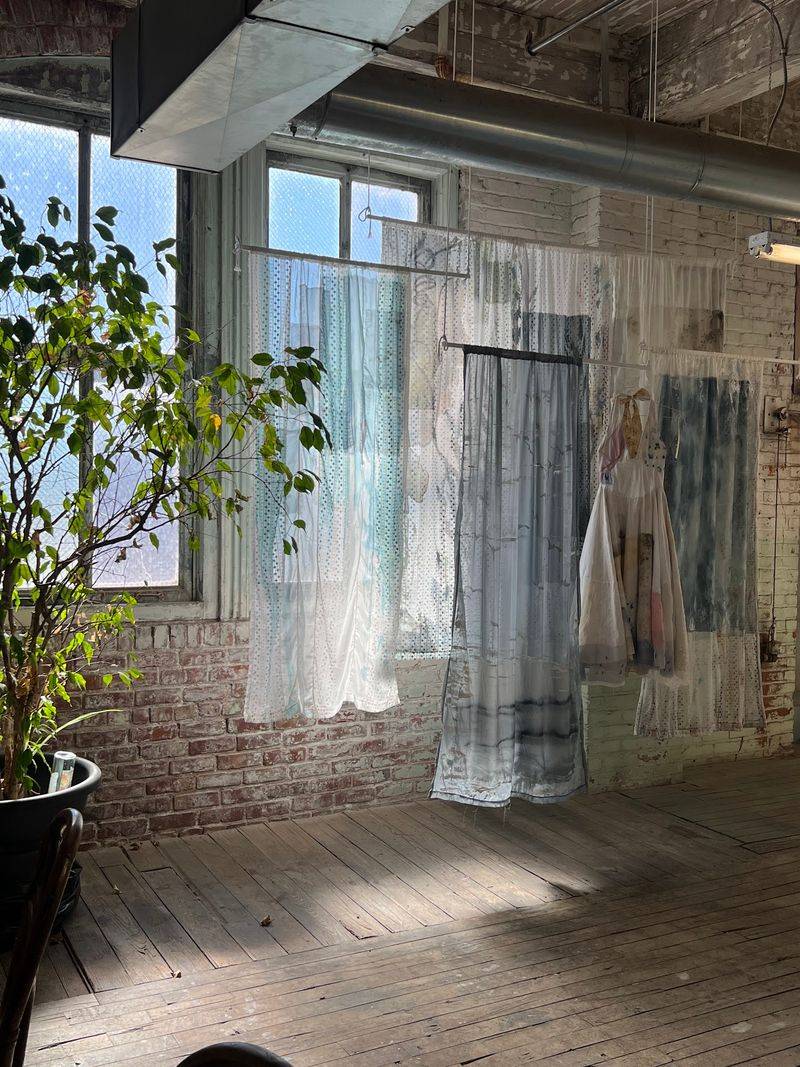
Daylight does a lot of work in this building. Those tall factory windows were designed for people running machines before good electric lighting existed, and they still flood the corridors and studios with natural light that flatters paintings and glass equally.
Getting around is straightforward. There are stairs between the three levels, and an elevator for anyone who’d rather skip them, plus clean, roomy restrooms.
Plenty of people only make it through the first floor and leave satisfied without realizing two more await upstairs. Do yourself a favor and go all the way up.
Comfortable shoes help. Concrete floors and a lot of wandering add up.
Parking near Nicholas Street can be the trickiest part of the whole outing, especially during events, so build in a few extra minutes to circle the block.
The interior itself is part of the appeal. Exposed brick, heavy timber, the industrial proportions of a place built to make something, now filled with people still making things.
Planning a Nebraska Visit That Actually Works
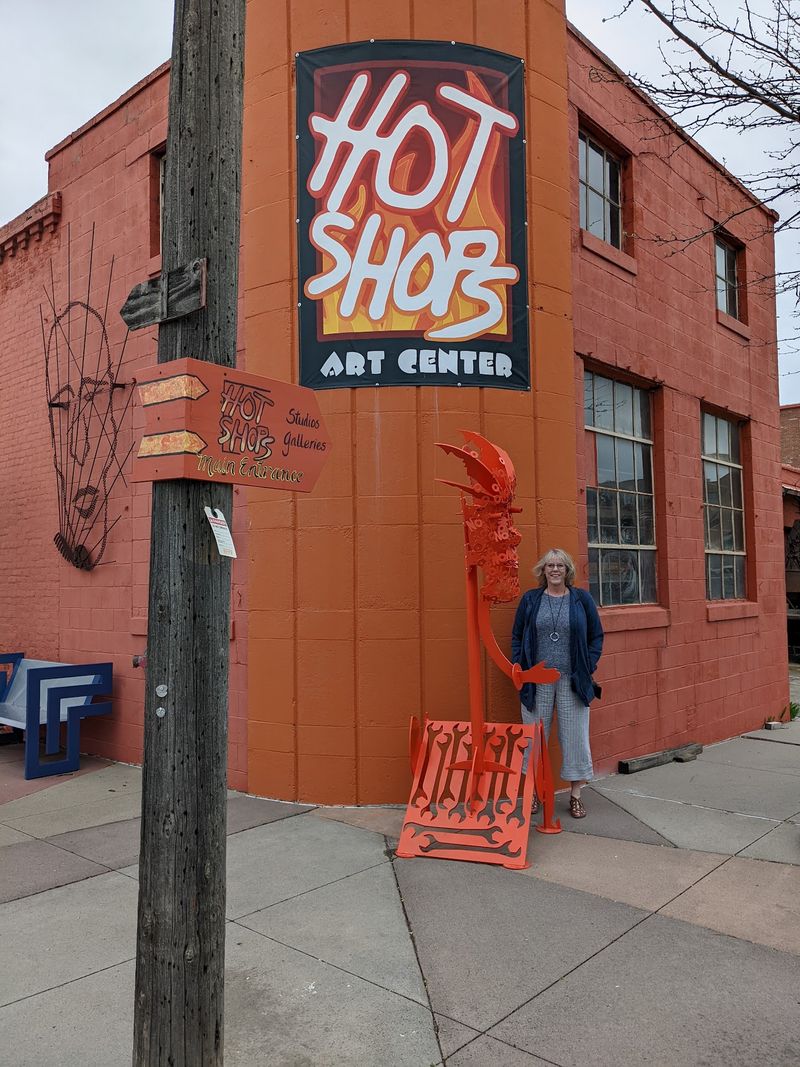
Doors open seven days a week, with a later start and earlier close on weekends than on weekdays, so check the current schedule before you drive out. General wandering costs nothing; classes and workshops are booked separately and fill up.
Timing matters more here than at a standard gallery. Show up during an event or open house and nearly every studio door stands open with artists on site.
Come at a quiet hour midweek and you might find a handful of spaces shut.
Give yourself one to two hours. The building is bigger than it looks from the street, and rushing it defeats the purpose.
The location sits just north of the Old Market in downtown Omaha, which makes it easy to pair with the rest of a day in the city.
It has appeared as a Nebraska Passport program stop, so travelers working through that list may already have it circled.
Bring a little cash or a card. You’ll probably buy something.
Why the Old Factory Still Earns the Drive
An afternoon here lands somewhere between a museum, a craft fair, and a factory tour, without fully being any of the three. The art changes constantly because the artists keep making more, which means a second visit rarely repeats the first.
Older kids with an interest in art will get plenty out of it. Restless younger ones may not, given the working equipment and the amount of quiet looking involved.
For anyone who likes watching skilled hands do difficult work, it’s hard to beat. Molten glass, a potter’s wheel, a blacksmith’s hammer, all under one roof in north downtown Omaha.
The larger story sits underneath all of it. A 1908 factory that spent most of a century making mattresses, sat empty, and came back as an anchor for a neighborhood that has grown substantially around it since 2000.
Nebraska has a lot of old brick buildings. Not many of them found a second life this loud, this hot, or this colorful.