This Florida Campground Lets You Arrive And Grab A Primitive Site Without Reserving Ahead
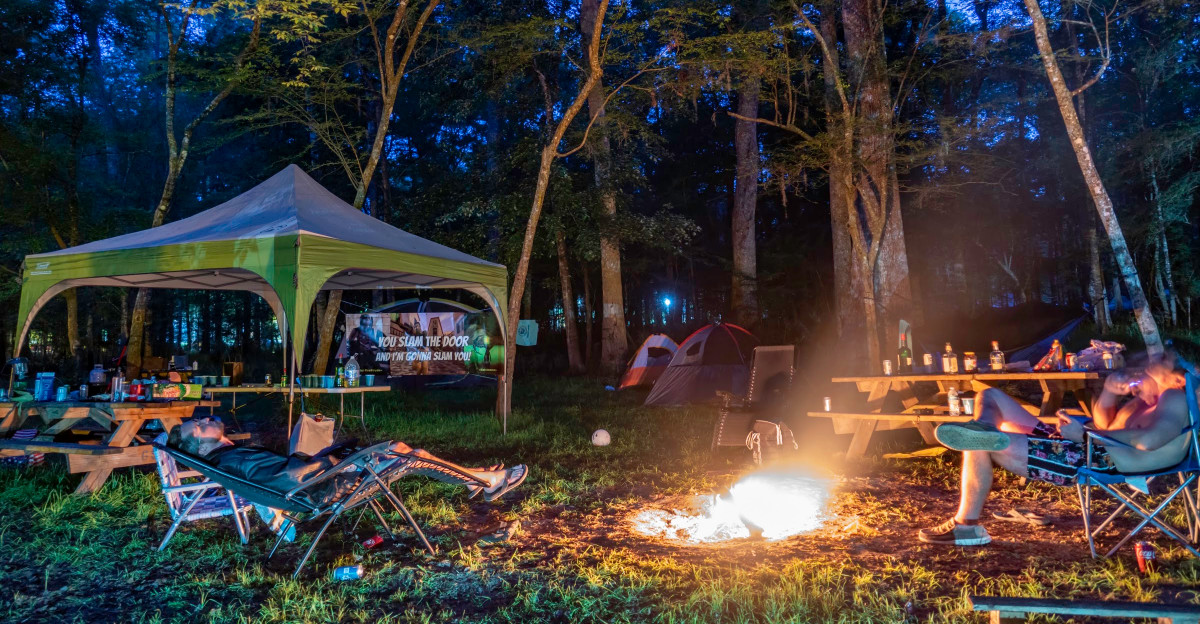
Spontaneous camping usually sounds better in theory than it works in practice.
One Florida campground changes that equation by letting primitive campers arrive without booking months ahead. That freedom is the real attraction.
You can watch the forecast, pack late, and make a last-minute attempt without committing to a campsite reservation. The setting adds clear water and plenty of reasons to stay outside.
Primitive sites keep things simple, so preparation matters more than luxury. Bring the basics, expect fewer conveniences, and enjoy the flexibility.
For travelers tired of scheduling every escape far in advance, this is a rare chance to let the trip happen almost on impulse.
Where Spontaneity Meets Spring Water
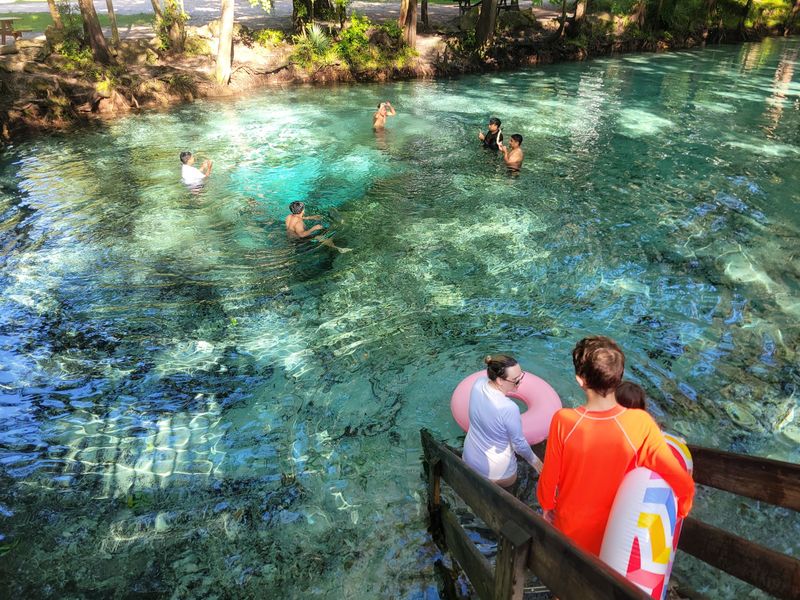
The camping policy is unusually flexible for travelers making plans at the last minute. Primitive tent sites do not require a reservation before arrival.
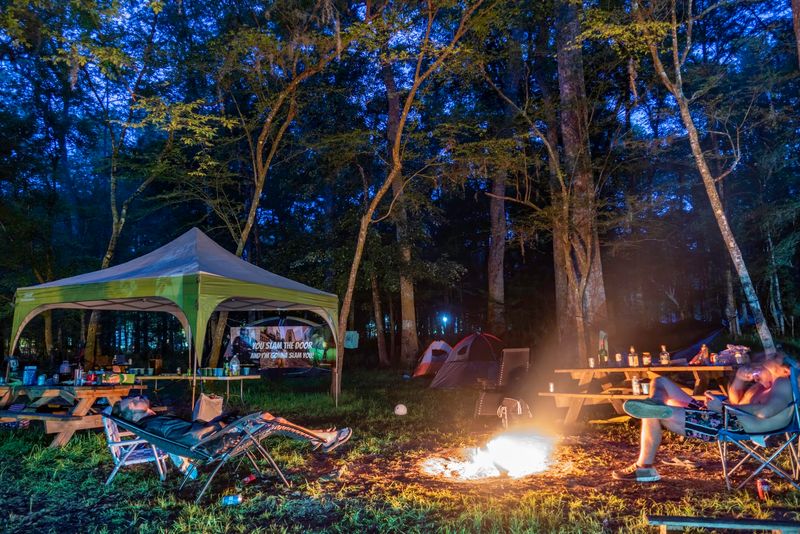
Primitive tent sites at Ginnie Springs Outdoors work on a first-come, first-served basis. You arrive, you look around, you pick the spot that feels right.
That policy removes the need to lock in an individual primitive campsite months beforehand. Campers can instead decide when to arrive and choose among the sites still available after check-in.
The property spreads across more than 200 wooded acres in north-central Florida. Seven freshwater springs sit across the property and feed into the Santa Fe River system.
Most primitive sites include a grill and picnic table. Running water is also available at some sites.
Campers park right at many sites, so hauling gear stays simple. Certain riverfront spots need a short walk, though the view repays every step.
One rule matters before you pack. All campers must be at least 18 unless a parent or legal guardian comes along, with proof of guardianship shown at check-in.
You will find the whole operation at 7300 NE Ginnie Spgs Rd, High Springs.
A Family Vision Since 1971
Behind every great swimming hole sits a story, and this one starts with a family decision. The Wray family has privately owned this land since 1971.
Gates opened to the public in 1976. What had been a quiet patch of Florida woods became a destination for campers and divers.
The name carries a charming origin. The springs were named for Virginia, a woman who once washed her laundry in those fresh, steady flows.
International attention arrived in 1974 when oceanographer Jacques Cousteau visited. He praised the astonishing visibility, and word spread fast across the diving world.
Safety improvements followed as popularity grew. Owner Bob Wray installed an iron grate over one challenging cave section and posted warning signs at the Devil’s Spring system entrances.
Those changes were intended to reduce diving risk as public use increased. The spring’s exceptional clarity comes primarily from the groundwater system feeding it rather than visitor management alone.
Environmental preservation has stayed central through the decades. Today the privately operated park combines developed recreation facilities with direct access to its springs, riverfront, and wooded camping areas.
Seven Springs, Endless Clarity
Seventy-two degrees. That number never changes here, no matter what the calendar says.
Seven crystal-clear freshwater springs are located across the property along the Santa Fe River.
Summer heat in Florida can flatten a person. That steady temperature makes the springs a consistently cool swimming option during Florida’s warmer months.
Cousteau reportedly called it visibility forever, and the phrase fits. Exceptional underwater visibility has helped make Ginnie Springs internationally known among freshwater divers.
Millions of gallons flow daily into the nearby Santa Fe River. That constant motion feeds a rich ecosystem full of fish and turtles.
Limestone formations create shapes and ledges below the surface. Snorkelers hover over them like they are reading a map of the aquifer.
The Santa Fe River system is designated an Outstanding Florida Water under state environmental rules. That designation means strict water quality protection.
Designated swimming areas come with sun decks and sturdy stairs for safe entry. Getting in and out never felt awkward, even with a tube in hand.
Floating The Santa Fe River
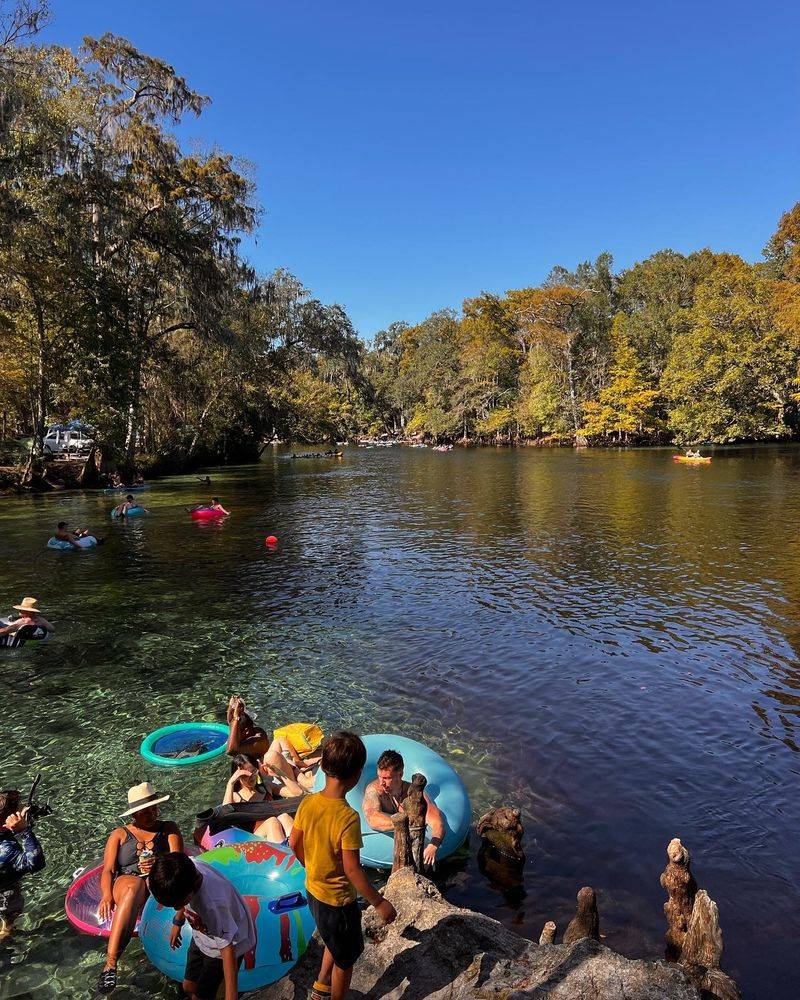
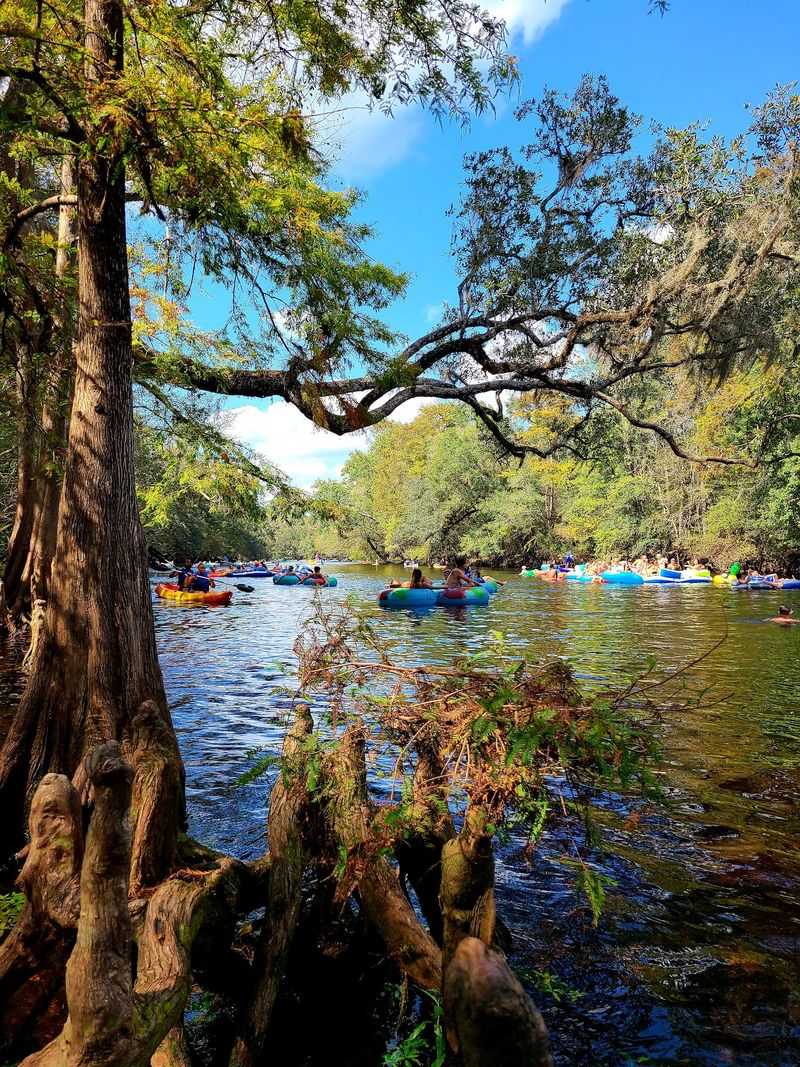
Tubing here is less a sport and more a slow-motion celebration. The Santa Fe River does most of the work while you do almost none.
A typical float takes about an hour, depending on river conditions and pace. That timing makes it easy to squeeze in two trips before dinner.
Many visitors launch at Beaver Landing and exit at Twin Spring. A clearly marked Tube Trail then leads back in roughly a 15-minute walk.
Pay attention to that signage. Following the designated Tube Trail keeps the return walk on the park’s established route.
Water shoes deserve a spot in your bag. Ginnie Springs specifically recommends them for the Tube Trail.
Beyond tubing, the springs welcome swimming, snorkeling, kayaking, canoeing, and stand-up paddleboarding. Scuba diving is restricted to designated areas, including Ginnie Spring, the Devil’s Spring System, and portions of the Santa Fe River.
Forgot your gear? Rentals cover masks, fins, snorkels, tubes, kayaks, canoes, and paddleboards.
Dry land offers its own fun with volleyball courts and a playground. Families spread out easily across the property. The tubing route follows the wooded Santa Fe River before ending at Twin Spring.
Caves Only Divers Reach
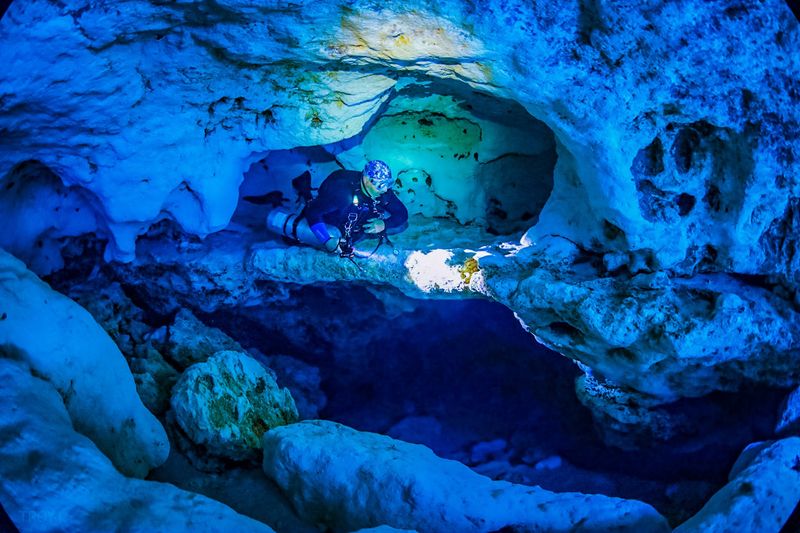
Below the swimmers lies a completely different destination. Cave and cavern divers travel from across the planet to descend here.
The main dive areas include Ginnie Spring and the Devil’s Spring System, which contains Devil’s Eye, Devil’s Ear, and Devil Spring, also called Little Devil.
Inside the main Ginnie Cavern sits the famous Ballroom. Reflective limestone walls surround an amphitheater-sized space that lights up under dive torches.
Certified full cave divers can explore more than 30,000 feet of mapped passageways within the Devil’s Spring System. That figure still amazes me every time I say it out loud.
Training matters enormously in this environment. The onsite dive center provides equipment services and air or Nitrox fills, while dive training is arranged through independent instructors.
Certified open-water divers may explore the Ginnie Ballroom cavern, where a permanent grate blocks access to the dangerous cave beyond.
At the Devil’s Spring System, open-water divers may not carry lights or enter an overhead environment.
Those limits exist for good reason. Respecting them is what separates a thrilling dive from a bad decision.
Snorkelers and certified divers use different parts of the spring system under separate activity rules.
The General Store Handles Everything
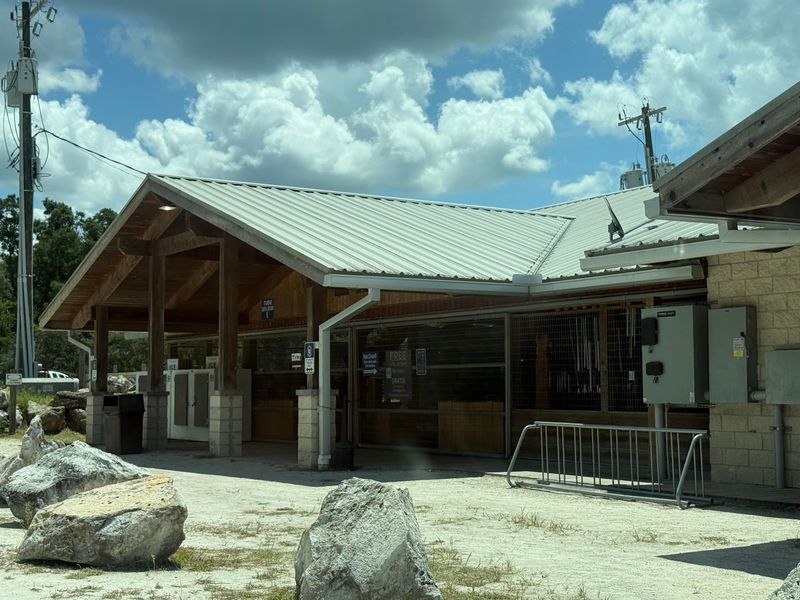
Every visit begins at Ginnie’s General Store, the practical heart of the property. Check-in happens here, along with admission payment.
Inside, the shop wears several hats at once. It works as a country store, a dive center, and a rental department under one roof.
Shelves hold camping supplies for the items you inevitably forgot. A complete complement of open water dive gear sits nearby, along with a first-rate air fill station.
Coolers stock beverages, snacks, and food items. A laundromat and RV dump station provide two additional conveniences elsewhere on the property.
Tubers get a genuine bonus here. A free air station lets you inflate floats quickly instead of wrestling with a hand pump.
Eight heated bathhouses serve the campground, each with tiled shower stalls and plenty of hot water. Those bathhouses give primitive campers access to showers without adding utilities to individual tent sites.
Picnic tables and grills dot the grassy areas near the springs and along the river. Covered pavilions offer shade for groups.
High-speed Wi-Fi is available on the camp store porch, with picnic tables and electrical outlets nearby.
Rules That Protect The Springs
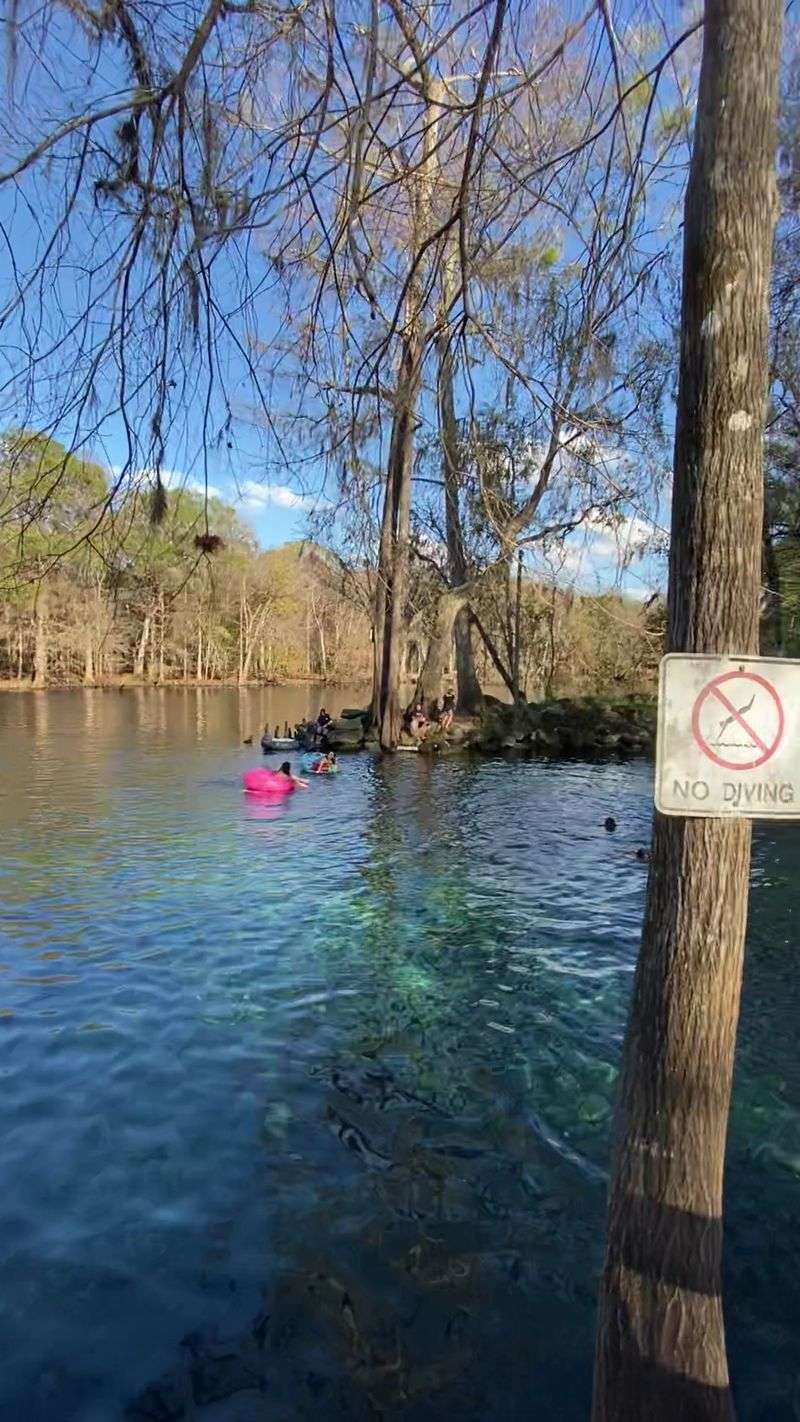
Park rules are intended to reduce safety problems and protect the property during heavy recreational use.
Pets are not allowed anywhere within the park. The restriction appears prominently in the current rules, so campers need to plan around it before arrival.
Quiet hours run from midnight until 8:00 AM. Excessive noise is prohibited at any time, which helps the campground stay restful.
Glass bottles of any kind are currently prohibited anywhere on the property. Broken glass and bare feet make a terrible combination.
Trees and vegetation get full protection. Cutting, burning, or nailing anything to them is not permitted.
Fishing is off-limits in the springs and spring runs, preserving the aquatic life you came to admire. Diving or jumping from decks, banks, and trees is also prohibited.
No lifeguards work the water, so every swim happens at your own risk. Children 15 and under need adult supervision at all times.
RV owners should note the layout carefully. Those vehicles belong in designated electric and water sites or approved Outback camping areas, not primitive tent sites unless specifically approved.
Smart Timing And Easy Access
The property is straightforward to reach from Interstate 75 and the High Springs area. The property sits roughly 6.5 miles northwest of the town of High Springs, Florida.
Interstate 75 runs about 15 minutes east, which keeps the drive simple. Gainesville airport is only around 40 minutes away.
Flying in from farther out works too. Orlando, Jacksonville, and Tallahassee airports all sit within a two-hour drive.
The park welcomes guests year-round. Daily and dive admissions start at 8:00 AM, and camping check-in stays open until 10:00 PM.
Buying day passes online ahead of time is encouraged, not required. Advance purchase can reduce the amount of check-in work left for arrival.
Completing waivers online before arrival speeds things up even more. Paperwork in a parking lot never improves a vacation.
Summer weekends can be busy enough that day visitors are directed to overflow parking. Major holidays may also bring special rates or activity restrictions.
Primitive-site availability depends on what remains after camping check-in begins at 8 a.m. Ginnie Springs specifically asks guests not to arrive before opening because early arrivals create lines and parking problems.