9 Dirt-Cheap Fall Day Trips In Connecticut You Will Want To Take This Year
Autumn does not need to empty your wallet to fill an afternoon. A tank with enough gas and a free stretch of daylight can already get things moving.
The season handles much of the entertainment itself. Connecticut turns colorful enough that simply heading somewhere different can feel like an occasion, even when the budget stays firmly under control.
That makes fall especially friendly to spontaneous day trips.
You can spend the afternoon enjoying a change of scenery without calculating the damage every time you stop. Cheap outings also remove some pressure to make every minute spectacular, which usually makes the day more enjoyable anyway.
A modest budget might even encourage a little creativity. Who says a memorable weekend needs tickets or an expensive reservation?
Save the splurge for another time. Crisp air and a good road can do a surprisingly convincing job all by themselves.
1. Mine Hill Preserve, Roxbury
The woods are hiding something big. Follow the trail, and an old industrial world slowly starts appearing between the trees.
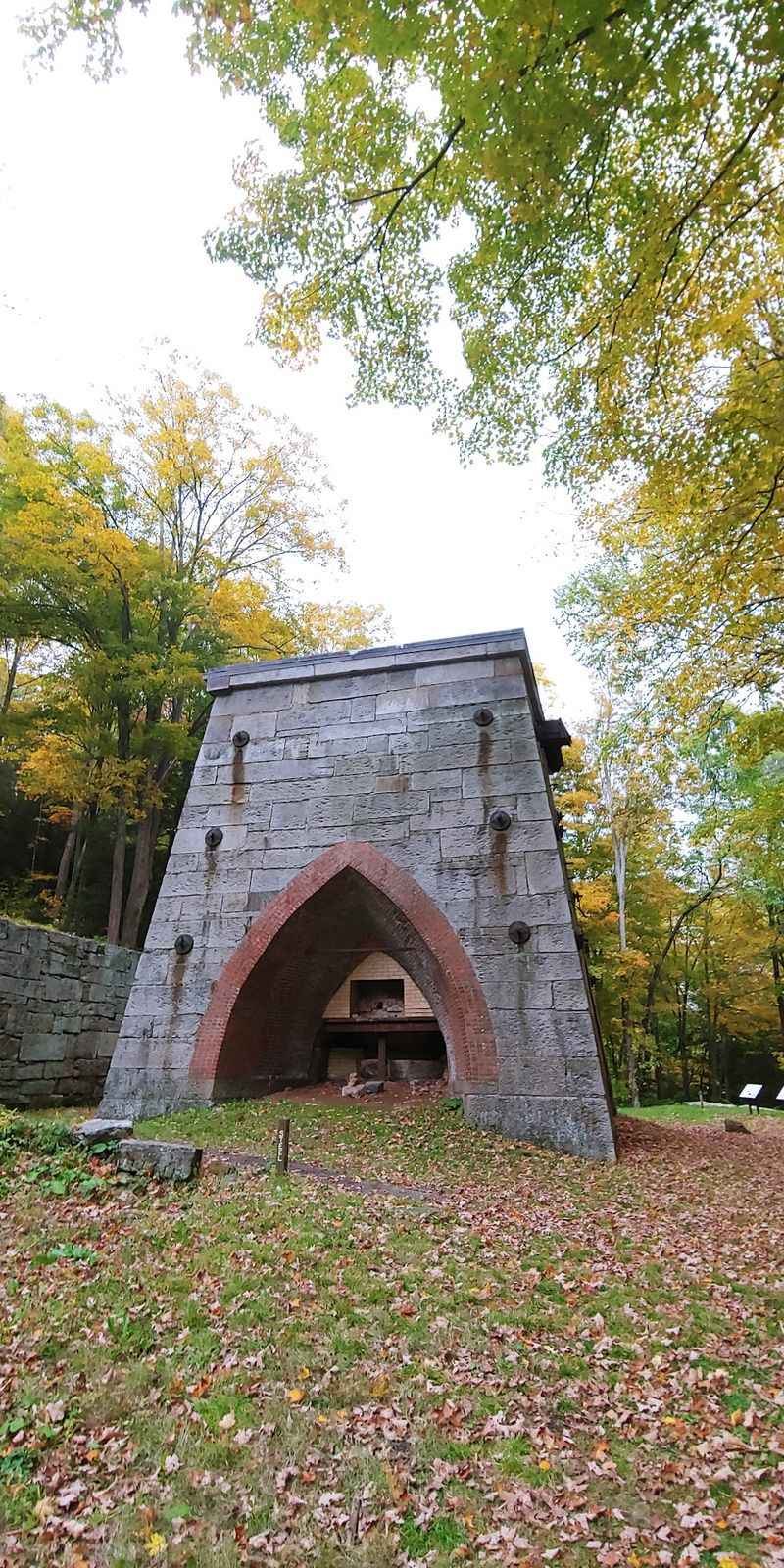
Mine Hill Preserve mixes hiking with remnants of a 19th-century iron operation, including roasting ovens, mine tunnels, and an impressive restored blast furnace.
Iron activity took off here in 1865, although the operation struggled and the steel works shut down within several years. Granite quarrying became another important chapter, producing light gray Roxbury stone used in projects as far away as New York City.
Today, the 360-acre preserve has about four miles of hiking trails. The main blue-blazed loop covers 3.5 miles and climbs the old Donkey Trail before passing mine tunnels, grated air shafts used by hibernating bats, granite cliffs, and abandoned quarry areas.
Interpretive signs near the industrial remains explain the history without requiring a guide.
Parking is available at 32 Mine Hill Road in Roxbury, where the trail system begins.
Expect some steep, rocky stretches on the main loop, so sturdy footwear is useful. A much easier 0.3-mile Reservoir Trail provides a shorter alternative.
Dogs are welcome on leash, and the preserve closes at dusk.
2. Weir Farm National Historical Park, Wilton
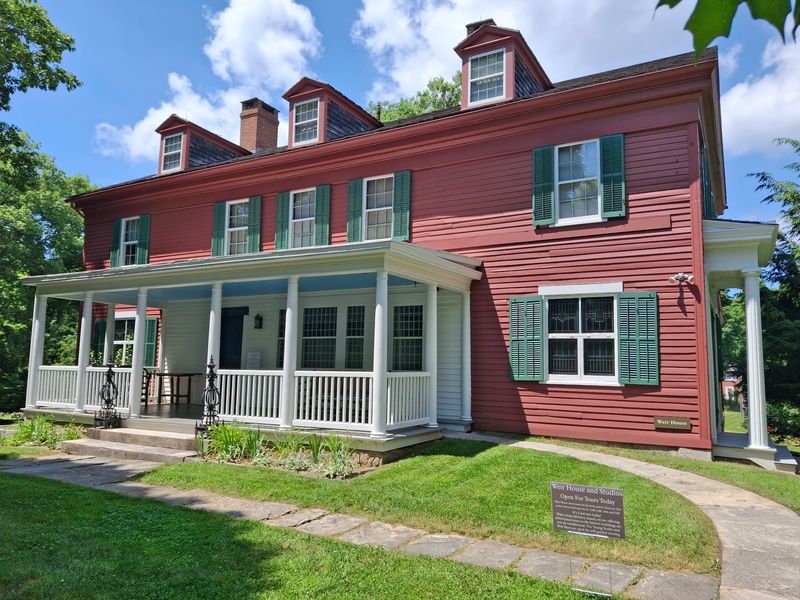
Only one site in the entire National Park System exists because of American painting, and it sits on 60-plus acres in Wilton. Julian Alden Weir bought the property in 1882 and used it as a summer retreat, where the fields and stone walls nudged his work toward Impressionism.
He hosted friends including Childe Hassam and John Twachtman, and together they helped form the Ten American Painters. Three generations of artists kept working here afterward.
Grounds and trails stay open sunrise to sunset all year, and admission costs nothing. Paths cross open meadows, quiet forest, and reach Weir Pond, mostly easy going, though rocky and rooted stretches show up on the pond loop and granite steps get slick after rain.
Historic buildings, including the Weir House and two studios, generally open from May through October with guided tours led by park staff.
Stop by the Burlingham House Visitor Center for exhibits, maps, and an orientation video, with accessible restrooms in the nearby barn. The Take Part in Art program lends out supplies so you can sketch the same views the painters did.
Parking at 735 Nod Hill Rd is limited, so carpooling helps. Leashed dogs are fine, and fall color here is genuinely worth the drive.
3. Bartlett Arboretum & Gardens, Stamford
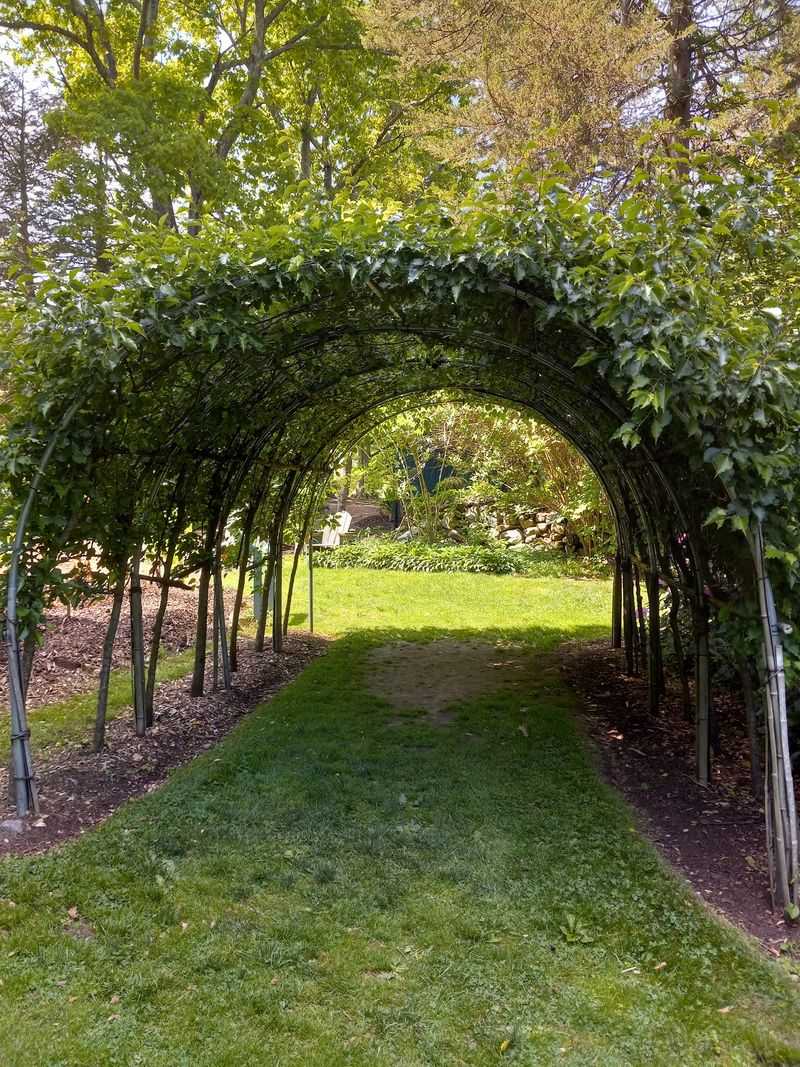
Ninety-three acres of gardens, meadows, and woodland sit inside the city limits of Stamford, and walking through costs nothing. A dendrologist established the property in 1913 as a research lab and home, and some plant collections here are more than a century old.
The city owns the land today while a nonprofit association runs it as a public garden and environmental education center.
Thirteen distinct gardens fill the grounds, including a Wildflower Garden, a vegetable and fruit garden, magnolia and nut tree collections, and an herb garden holding over 100 species.
The Sensory Garden was built to engage all five senses and offers wheelchair access, benches, braille signage, and nearby handicapped parking.
A 9/11 Memorial Archway grown from saplings propagated from the World Trade Center Survivor Tree provides a quiet place to pause.
Over 2.5 miles of woodland trails branch out from the cultivated areas. The Red Oak Trail starts uneven with rocks and roots, while the Brook Trail stays gentler and crosses several boardwalks over wet ground.
Open dawn to dusk every day of the year, the arboretum at 151 Brookdale Rd has a main parking lot and restrooms in the Silver Educational Building. Leashed dogs may join you.
4. Air Line State Park Trail, Pomfret
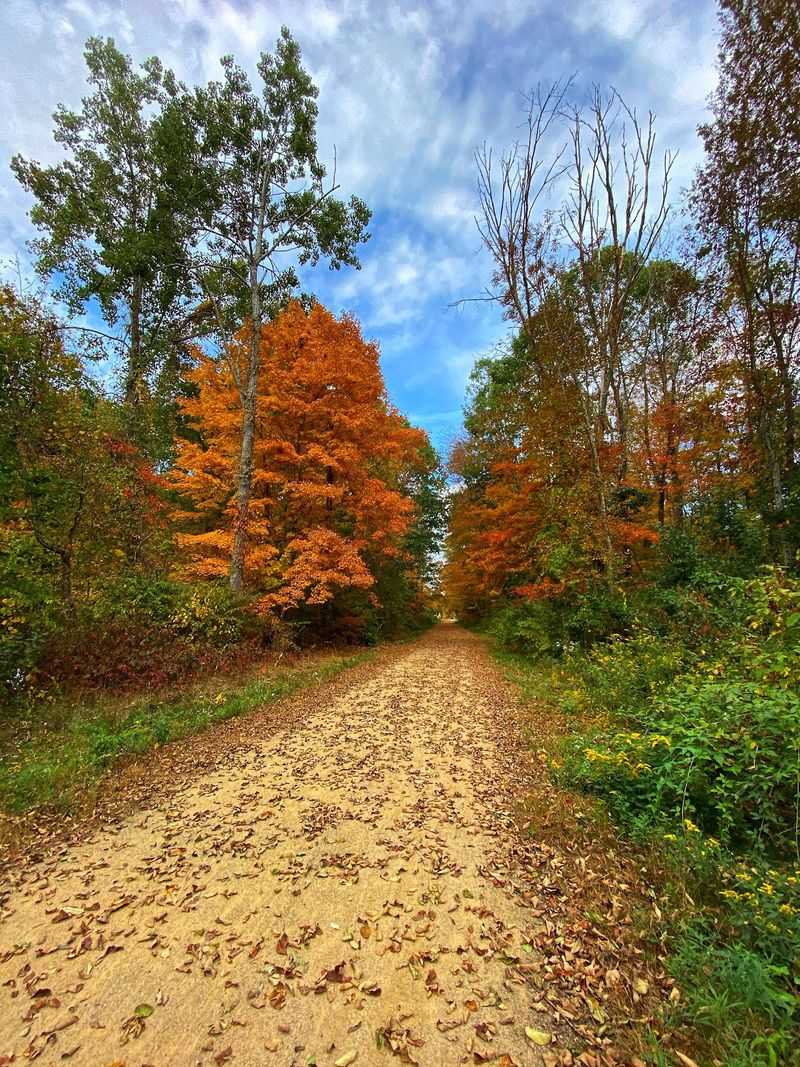
The trains are gone. The adventure stayed.
What once carried passengers between New York and Boston has become one seriously long playground for exploring eastern parts of the state.
The Air Line State Park Trail stretches about 50 miles, following a former railroad corridor built in the 1870s. Its unusual name came from the idea of creating the shortest practical route between the two cities, almost like drawing a straight line through the air.
Today, hikers, cyclists, runners, horseback riders, and winter adventurers share the route. Cross-country skiing and snowshoeing take over when enough snow arrives.
The scenery keeps changing, with forests, wetlands, quiet rural stretches, and impressive remnants of railroad engineering. The southern section includes the massive Lyman and Rapallo viaducts, while the northern route passes through areas including Goodwin State Forest.
Trail surfaces vary considerably, so cyclists should expect everything from smoother crushed stone to dirt, gravel, and rougher ballast. Wider tires are useful on the bumpier sections.
One convenient starting point is Pomfret Station at 13 Railroad Avenue, where an 18-car paved parking lot serves trail users.
Additional parking is available near the Pomfret Town Office and Community Center. Access is free, and leashed dogs are welcome.
Come autumn, those long wooded corridors make an especially colorful excuse to keep going.
5. Beckley Furnace Industrial Monument, East Canaan
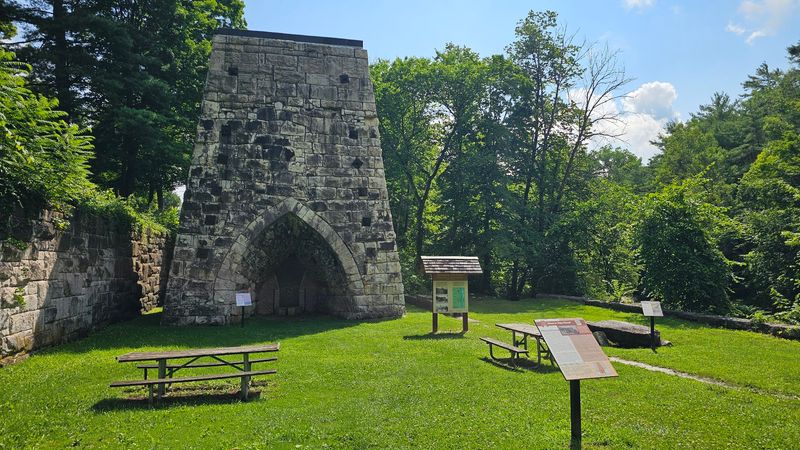
This place helped build things. Big things. Long before the surrounding woods became peaceful, heat and heavy industry dominated this stretch of the Blackberry River.
Beckley Furnace Industrial Monument preserves an important piece of the Salisbury Iron District. Iron production in the area reaches back to the 18th century, while the surviving blast furnace was built in 1847 and remained in operation until 1919.
Pig iron produced here was used for railroad car wheels and other manufactured goods.
The massive stone furnace stack originally stood 32 feet tall before being raised to 40 feet. Restoration of the structure was completed in 1999, helping preserve one of the most striking remnants of the region’s ironmaking era.
History is not confined to the furnace itself. Interpretive displays and surviving artifacts explain the production process, while walking trails follow the river and connect with other historic features.
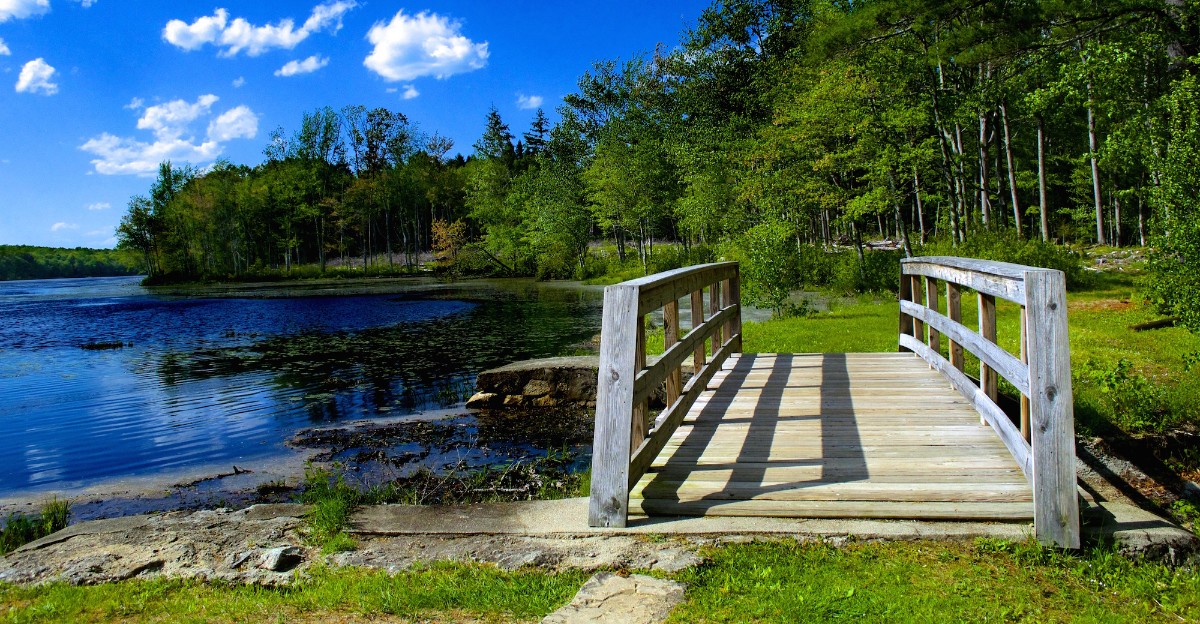
A wooden footbridge adds another scenic spot for photography and birdwatching.
The park covers about 12 acres at 140 Lower Road in East Canaan and has been part of the state park system since 1946. Admission and parking are free, making this an easy historical stop.
Picnic areas provide room to linger after exploring the furnace and riverside surroundings. The grounds are open from sunrise to sunset, while restroom facilities are limited.
6. Submarine Force Museum, Groton

Climbing down inside the world’s first nuclear-powered submarine does not cost a penny. The USS Nautilus is docked on the Thames River beside Naval Submarine Base New London, part of the official submarine museum of the U.S. Navy.
Commissioned in 1954, the Nautilus completed the first submerged transit of the North Pole in 1958, was named a National Historic Landmark in 1982, and opened to visitors in 1986.
A self-guided walk-through with audio takes roughly half an hour and passes the torpedo room, crew quarters, control room, and officers’ wardroom.
The museum building holds tens of thousands of artifacts tracing the Silent Service from its beginnings, including a replica of the 1775 Turtle and World War II midget submarines.
Working periscopes let you scan the river, and outdoor displays include a deck gun and the sail from the USS George Washington.
Hours run Wednesday through Monday, 9 a.m. to 5 p.m. from May through October and 9 a.m. to 4 p.m. the rest of the year. The museum closes two weeks each spring and fall for maintenance, so call ahead.
Admission and parking at 1 Crystal Lake Rd are free. Expect 60 to 90 minutes, and note the submarine has steep ladders.
7. Yale University Art Gallery, New Haven
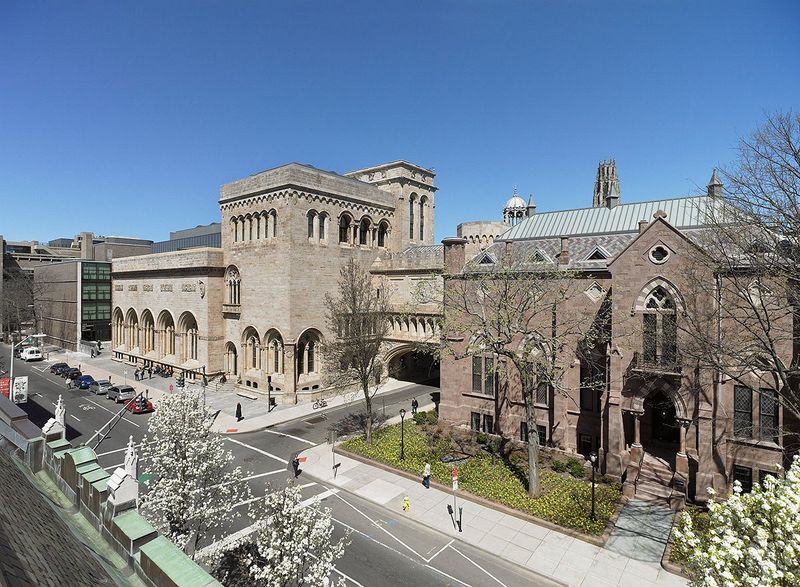
Rainy fall afternoons have an obvious answer in New Haven. The Yale University Art Gallery is the oldest university art museum in the Western Hemisphere, started in 1832 when patriot-artist John Trumbull donated more than 100 paintings of the American Revolution.
It has grown into an encyclopedic collection covering ancient times to the present across cultures worldwide.
Architecture fans get a bonus. The main hall, designed by Louis Kahn in 1947, is a Modernist landmark known for its tetrahedral concrete ceiling and cylindrical staircase, while earlier galleries occupy neo-Gothic Street Hall.
Inside, you can see works by Winslow Homer, Frederic Edwin Church, and Edward Hopper alongside European names such as van Gogh, Monet, Cézanne, and Picasso. Ancient holdings include material from Dura-Europos, plus collections from Egypt, Greece, and Rome.
Rotating special exhibitions keep return visits fresh.
Doors at 1111 Chapel St open Tuesday through Sunday, with 10 a.m. to 5 p.m. hours on Tuesday, Wednesday, and Friday, 11 a.m. to 5 p.m. weekends, and Thursday evenings until 8 p.m. from September to June.
Admission is always free, public areas are wheelchair accessible, and lockers handle larger bags. Chapel Street and Broadway offer plenty of nearby places to eat afterward.
8. Goodwin State Forest, Hampton
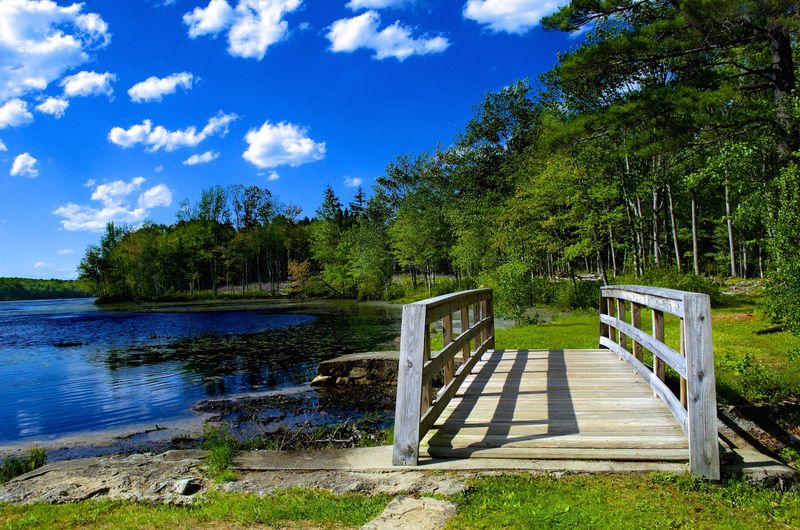
A forester spent 50 years shaping this land before handing it to the state in 1964, and the result is more than 2,000 acres of woodland, ponds, and wetlands in Hampton.
The Goodwin Conservation Center occupies a 100-year-old farmhouse and doubles as an interpretive museum with displays covering a century of forestry.
Next door, the 1.5-acre Richard D. Haley Native Plant Wildlife Gardens show which indigenous plants feed and shelter local wildlife, and those gardens accommodate visitors with limited mobility.
Three large ponds anchor the property. Pine Acres Lake covers 135 acres and turns spectacular when autumn foliage reflects off the surface, drawing anglers after bass, bluegill, and bullhead with a Connecticut license.
A wildlife viewing shed overlooks the water for birdwatching.
Somewhere between 14 and 17 miles of trails serve hikers, mountain bikers, and horseback riders, and part of the Air Line State Park Trail crosses Potter Road right near the center.
The blue-blazed Natchaug Trail starts at the Conservation Center, while the Forest Discovery Trail Loop stays easy with interpretive signs.
Entry at 23 Potter Rd is free, with parking and trail maps available. Grounds open a half hour before sunrise until a half hour after sunset. Wear blaze orange during hunting season.
9. Mine Hill Distillery Preserve, Roxbury
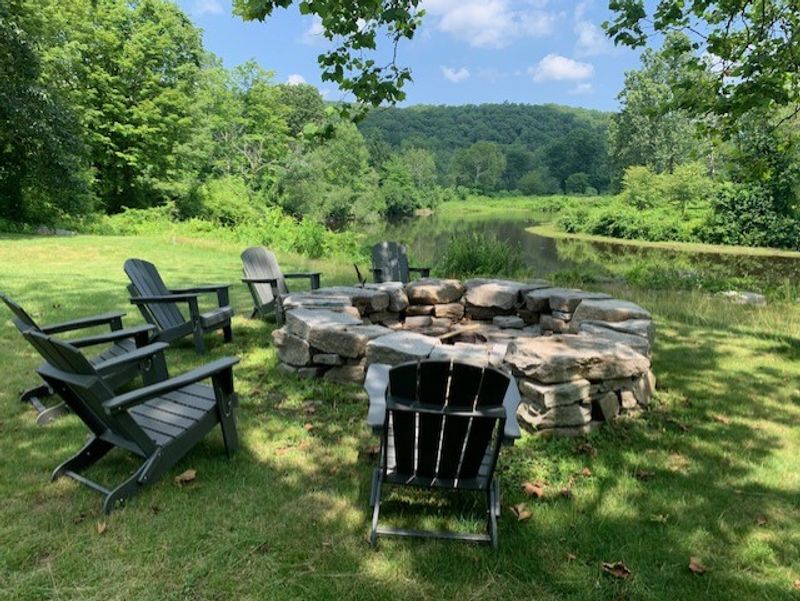
Old buildings got a seriously cool second act. Beside the Shepaug River, historic structures and a rushing waterfall create one of Roxbury’s more unusual stops.
Mine Hill Distillery occupies a restored 19th-century property that includes an 1872 train station. The grounds span 3.5 acres, with four buildings offering about 12,000 square feet of space.
The station now serves as an event venue, complete with a wraparound porch and six doors that create an easy indoor-outdoor flow.
The distillery operates at 5 Mine Hill Road, where the river and waterfall add plenty of scenery to the industrial setting. Its spirits are produced with locally grown grains and water from the property’s own well, keeping much of the process tied closely to the surrounding region.
Visitors can explore the historic setting and learn more about how the operation works. The waterfall also creates a distinctive microclimate used for aging whiskey nearby.
Current tasting-room hours are noon to 5 p.m. on weekdays and weekends, although production can affect weekday walk-in availability.
With Mine Hill Preserve nearby, it is easy to pair local history, riverside scenery, and a woodland hike in one outing.