This 1931 Nebraska Train Station Now Holds An Art Deco Museum Where You Board The Rail Cars
Some buildings in Nebraska hide their best parts underground. From the parking deck, this one looks like an old terminal with good bones and not much else, until you walk through the doors and find a waiting room with ceilings that soar six stories over your head.
Downstairs, there are real passenger trains you can climb into, a coin collection worth a slow look, and a soda fountain still pouring malts. It is the kind of stop that eats two hours before you notice the clock.
Union Station on South Tenth Street
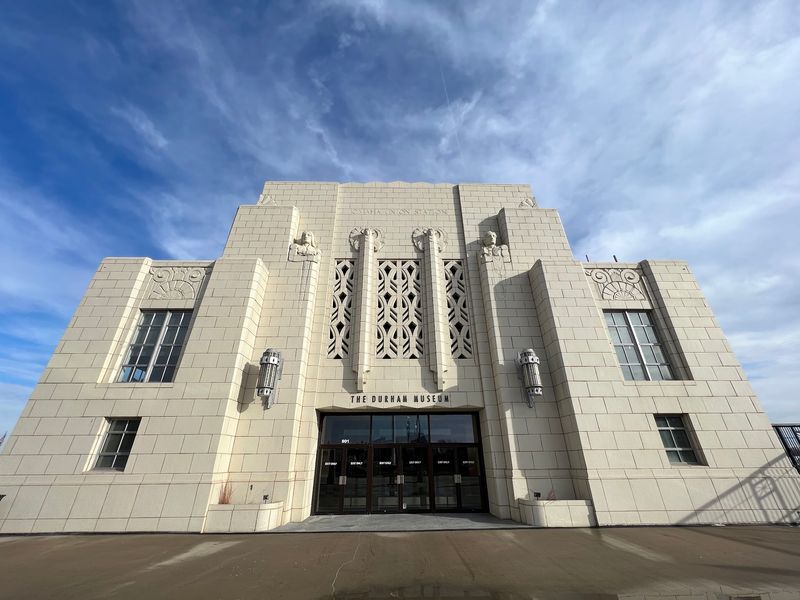
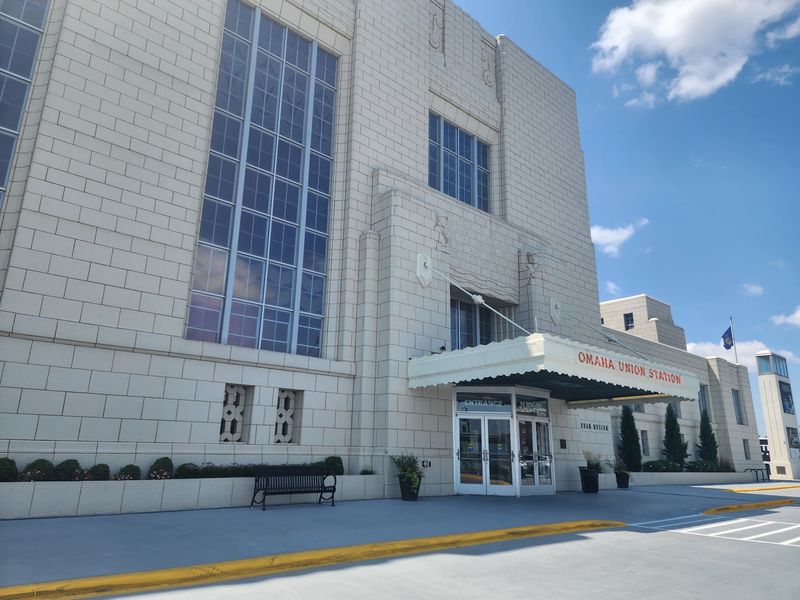
At 801 South 10th Street in Omaha sits a limestone building that spent forty years moving people and now spends its days holding onto their stories. The Durham Museum fills what used to be Omaha’s Union Station, finished in 1931 and designed by architect Gilbert Stanley Underwood.
Union Pacific built it as the company’s first Art Deco station, and it became the first Art Deco rail terminal anywhere in the country. That distinction earned it National Historic Landmark status in 2016.
Passenger service ended here in 1971. Two years later Union Pacific handed the building over to the City of Omaha, and the Western Heritage Museum opened inside almost immediately.
A major renovation in the mid-1990s reshaped the interior, the name shifted to the Durham Western Heritage Museum, and in 2008 it was trimmed to simply The Durham Museum.
What you get today is two experiences stacked on each other: a preserved terminal upstairs and a full regional history museum below. The address puts you minutes from downtown, with a parking deck attached that drops you at the upper level.
Sixty-Foot Ceilings in the Great Hall
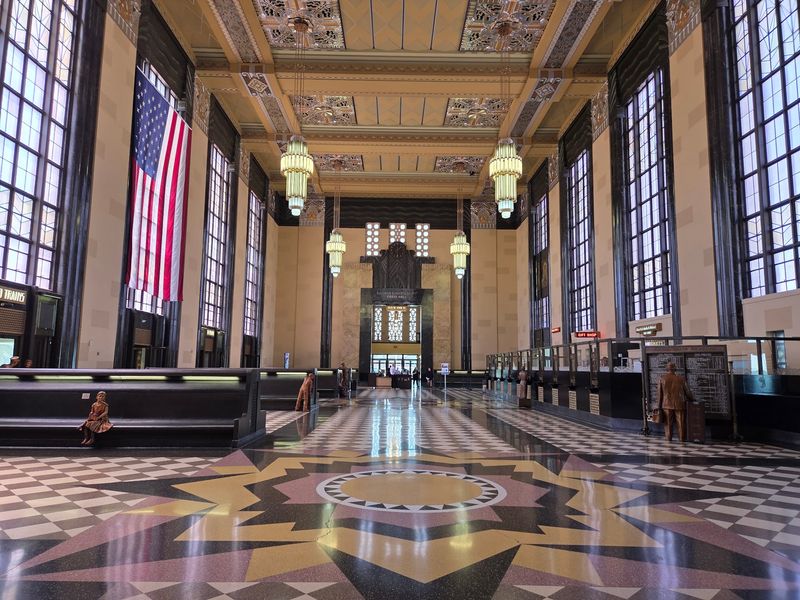
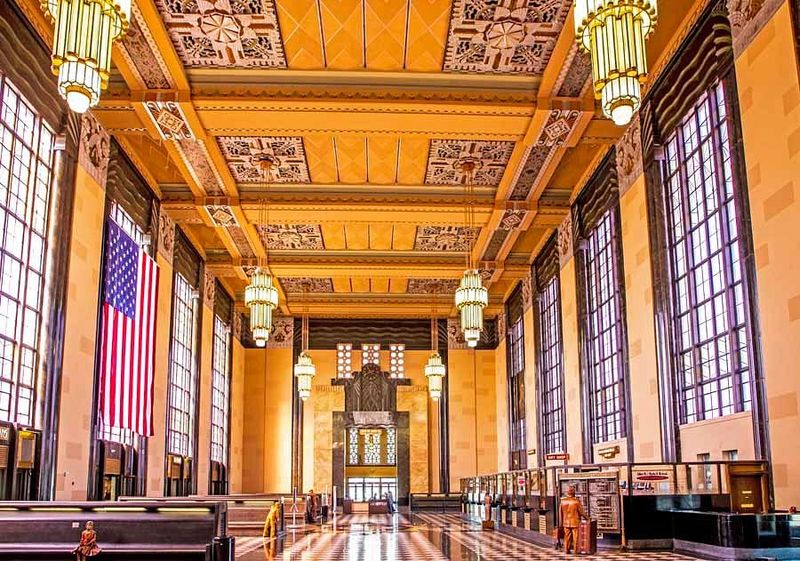
Walk in and your neck tilts back before your brain catches up. The Great Hall was the main waiting room of Union Station, and its ceiling climbs sixty feet above the terrazzo floor, framed by cathedral windows that throw colored light across the room on bright afternoons.
Sculptured plaster runs along the upper walls in geometric Art Deco patterns, the kind of ornamental work that was expensive in 1931 and would be nearly impossible to commission now. Ornate finishes catch the light at every level, from the light fixtures down to the detailing around the doorways.
Bronze figures sit on the benches, cast statues of travelers and soldiers frozen mid-wait, and they make the scale of the space land harder than any plaque could.
One detail that surprises people: you can stand in the Great Hall without buying a ticket. The paid museum lives downstairs.
So even a quick stop to see the architecture costs nothing but the time it takes to park and walk in.
Climbing Aboard the Rail Cars
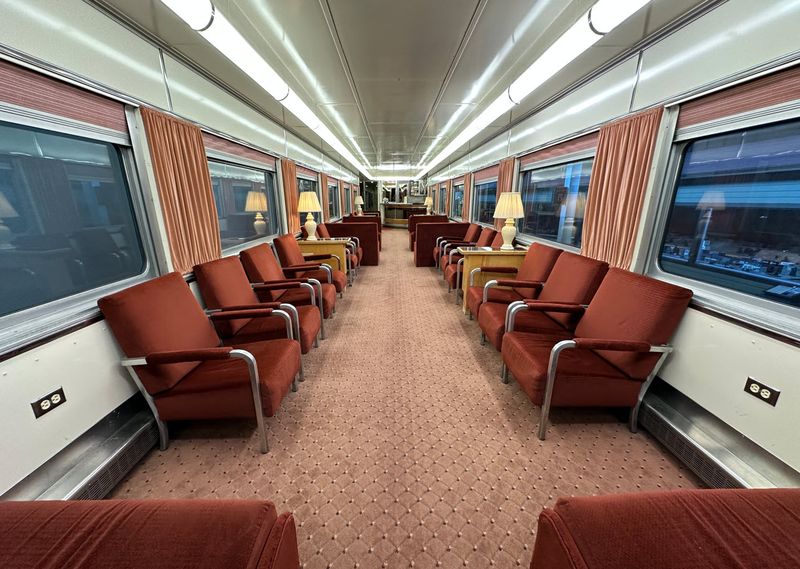
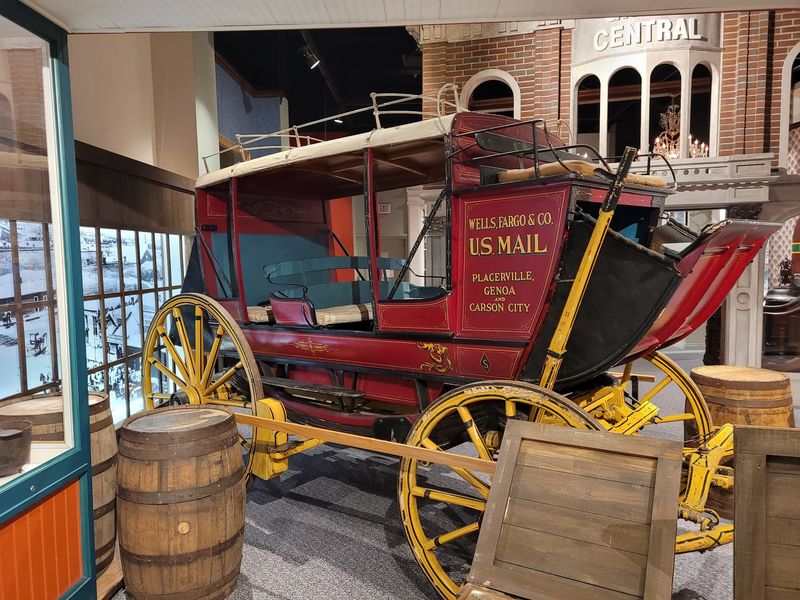
Trains pull the biggest crowd here, and it is not close. Parked on a lower-level platform sit restored passenger cars from the 1940s and 1950s, and you do not look at them through glass.
You step up, walk the corridors, and move car to car the way a passenger would have.
The lineup includes a Pullman sleeper, a lounge car, and a caboose, with a steam engine anchoring the end. Inside the Pullman, the compartments are dressed as they were during the golden stretch of American rail travel, right down to the fold-away berths.
The lounge car is the one that sells the era: polished wood, swivel seating, windows meant for watching prairie roll past.
An authentic streetcar rounds out the collection, and that one you are invited to sit inside. Kids tend to claim the seats and refuse to leave.
For anyone who grew up hearing that Omaha was built by the railroad, walking through these cars makes the claim physical instead of abstract.
Malts and Phosphates at the 1931 Soda Fountain
Chocolate malt before noon is a perfectly defensible decision inside this building. The soda fountain dates to 1931, original to the station, and it still operates as a working counter rather than a roped-off display piece.
Malts and milkshakes make up most of the order board, and portions run generous enough to flatten an appetite for dinner. Phosphates also show up on the menu, flavored seltzer water that was a fountain staple when the station opened and has mostly vanished everywhere else.
Flavor options stretch well past vanilla and chocolate, including a birthday-cake malt that gets ordered a lot.
What makes the counter work is the setting. You sit where people waited on a bench for a train to Chicago, sipping something mixed on equipment that has been in this room longer than any of us have been alive.
It is the cheapest piece of time travel in the building, and it happens to taste good. Budget a few extra minutes before you head back to the car.
The Byron Reed Collection and Omaha’s Origin Story
Downstairs is where the building stops being architecture and starts being a history museum. Permanent exhibits trace the region from its earliest peoples through the boom decades, covering Omaha’s companies, its architecture, and the people who built both.
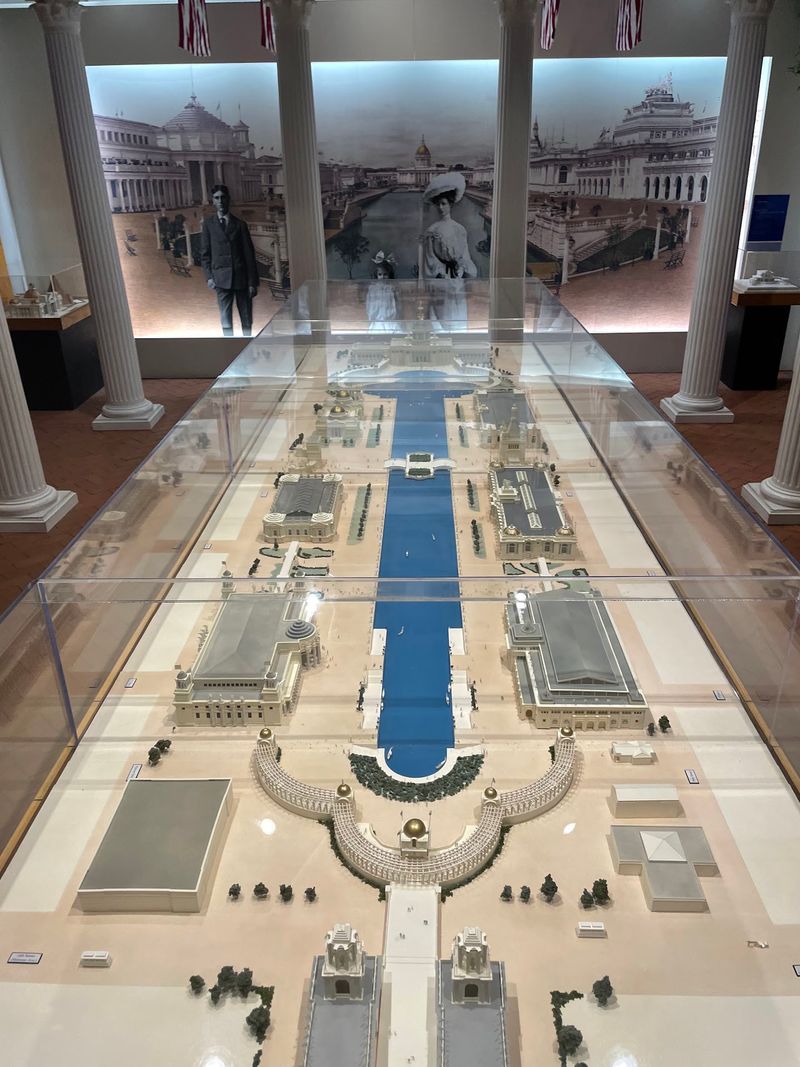
Nebraska’s first inhabitants get real space here, not a corner. Medical history, immigration, and the 1898 Trans-Mississippi and International Exposition all get their own treatment, and the Exposition section explains a chapter of city history that even longtime residents tend to know only by name.
Then there is the Byron Reed Collection, which is quietly one of the more remarkable holdings in the state. Reed assembled rare coins and historical documents over a lifetime, and the pieces on display range from ancient currency to paper documents that predate Nebraska statehood.
Glass cases do the work, but the labels are written for people who are curious rather than credentialed.
Plan on the lower level taking longer than you expect. The reconstructed streetscapes and period rooms slow everyone down, which is the point.
Traveling Exhibits With a Smithsonian Connection
Repeat trips make sense here because the lineup keeps changing. The Durham is a Smithsonian Affiliate, which opens the door to traveling exhibits that would otherwise skip a city this size.
Past shows have covered Disney hero and villain costumes, complete with garments from live-action films and a magnetic costume wall plus a fabric design station aimed at kids. Another exhibit explored the Negro Motorist Green Book and its role during the Jim Crow era, using interactives and photographs to turn dry listings into recognizable places.
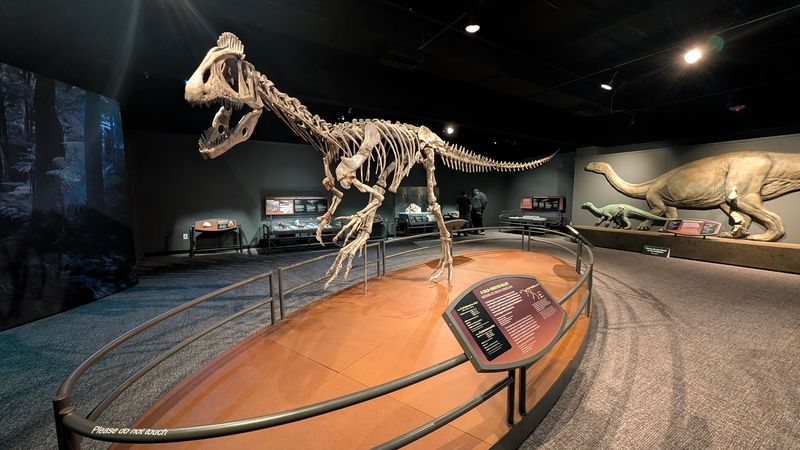
Nelson Mandela, Jim Henson, Julia Child, James Cameron, and dinosaurs have all had their turn in the temporary galleries.
Rotation means a visit in February looks nothing like a visit in September. Checking what is currently installed before you drive over is a smart move, especially if you are coming from out of town.
Guided tours are offered as well, and they add context to the permanent collection that self-guided wandering misses. The building also works as an event venue, which is how a lot of people first end up inside.
Hours, Tickets, and Getting There in Omaha
Monday is the day to skip. Doors open at 10 in the morning Tuesday through Saturday and close at 4, with Sunday running a shorter noon-to-4 window.
Admission runs affordable by museum standards, and families can get through the whole building without a painful bill at the counter. The Great Hall itself requires no ticket, so a quick architecture stop costs nothing.
Give yourself ninety minutes minimum. Two hours is more realistic if the trains hold your attention or a traveling exhibit is up, and rushing the lower level defeats the purpose of coming.
Parking sits attached to the building, and the top deck drops you at the upper level of the former station, which means your first view of the place is the good one.
The address puts you just south of downtown Omaha, an easy add-on to a day that also includes the riverfront or the Old Market. Staff at the ticket counter are generous with directions and will point you toward the lower level, which is the right place to start.
Why the Old Depot Still Earns an Afternoon
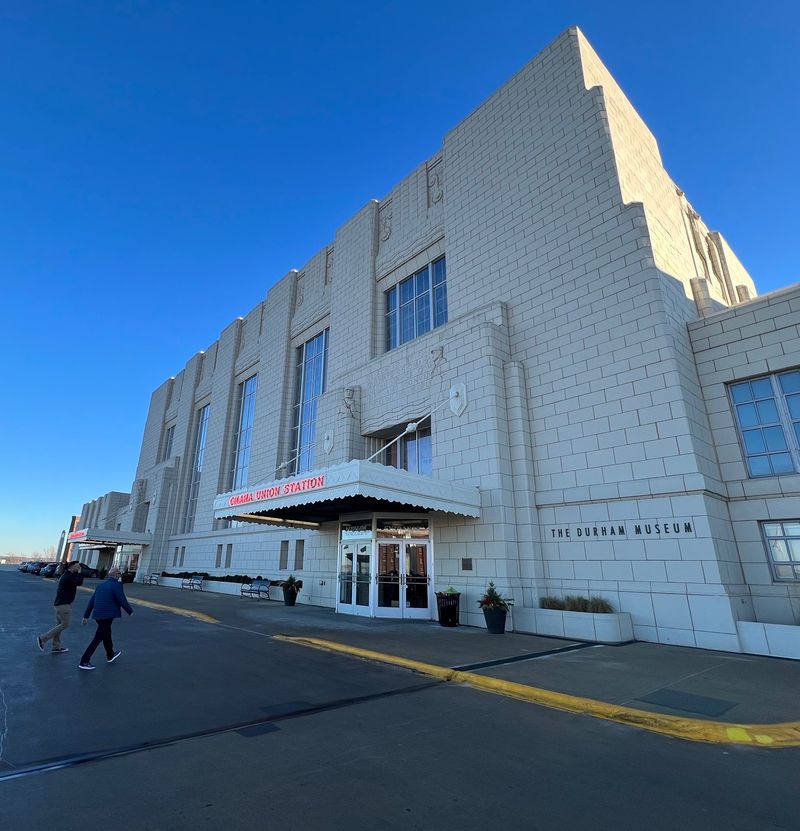
A building that once handled sixty-four passenger trains and around ten thousand people a day had to be impressive. What is surprising is that it still feels that way with the timetables gone.
Winter brings one of the better reasons to come. A towering Christmas tree goes up in the Great Hall, and the combination of holiday lights and sixty-foot ceilings turns an ordinary museum trip into a December outing families repeat year after year.
The mix works for a wide range of people. Train enthusiasts get restored cars to walk through, history readers get the Byron Reed Collection and the Exposition material, and kids get hands-on stations plus a malt at the end.
Nobody is going to call this a quick stop, and that is a compliment. Between the architecture upstairs, the galleries below, and whatever exhibit happens to be passing through, you can fill an afternoon and still leave something for next time.
For a state where the railroad wrote the map, there is no better place to see what that actually looked like.