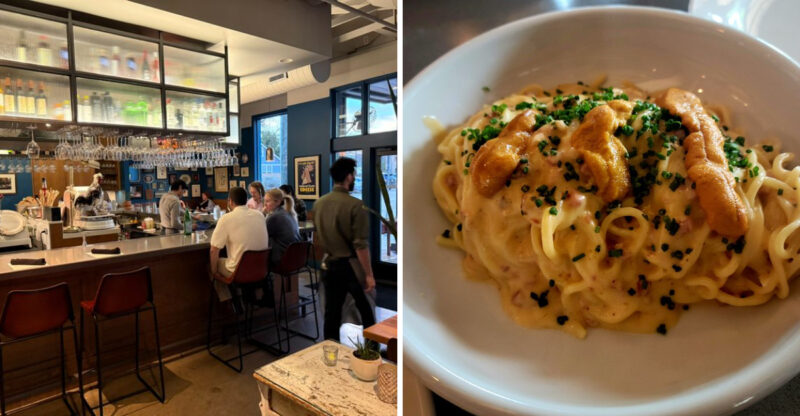
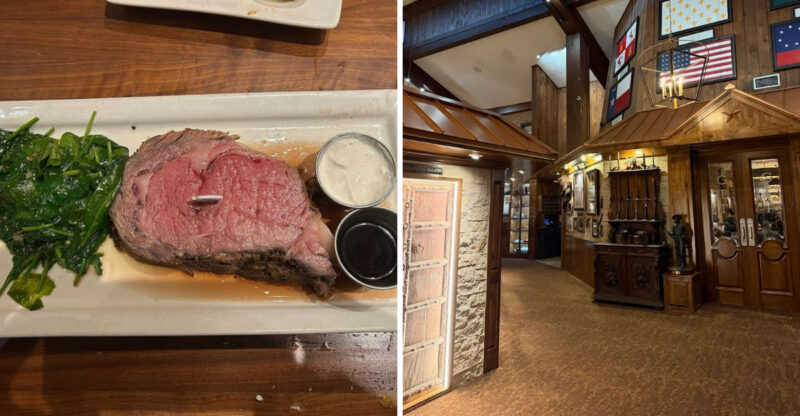
10 Legendary Texas Stops You Can Pack Into One Road Trip
Draw a line across Texas and it will probably cross something worth stopping for. That is the danger of planning a legendary road trip here.
Historic sites, roadside oddities, natural landmarks, and larger-than-life attractions compete for the same stretch of highway.
Distances can be huge, so the smartest plan leaves breathing room.
One famous stop may take twenty minutes. Another can swallow half the afternoon. Let that happen.
Road trips become better when the schedule bends around what you actually enjoy.
Pack snacks, keep the fuel tank healthy, and resist the urge to race. The stories between destinations are part of the route too.
1. Texas Capitol, Austin
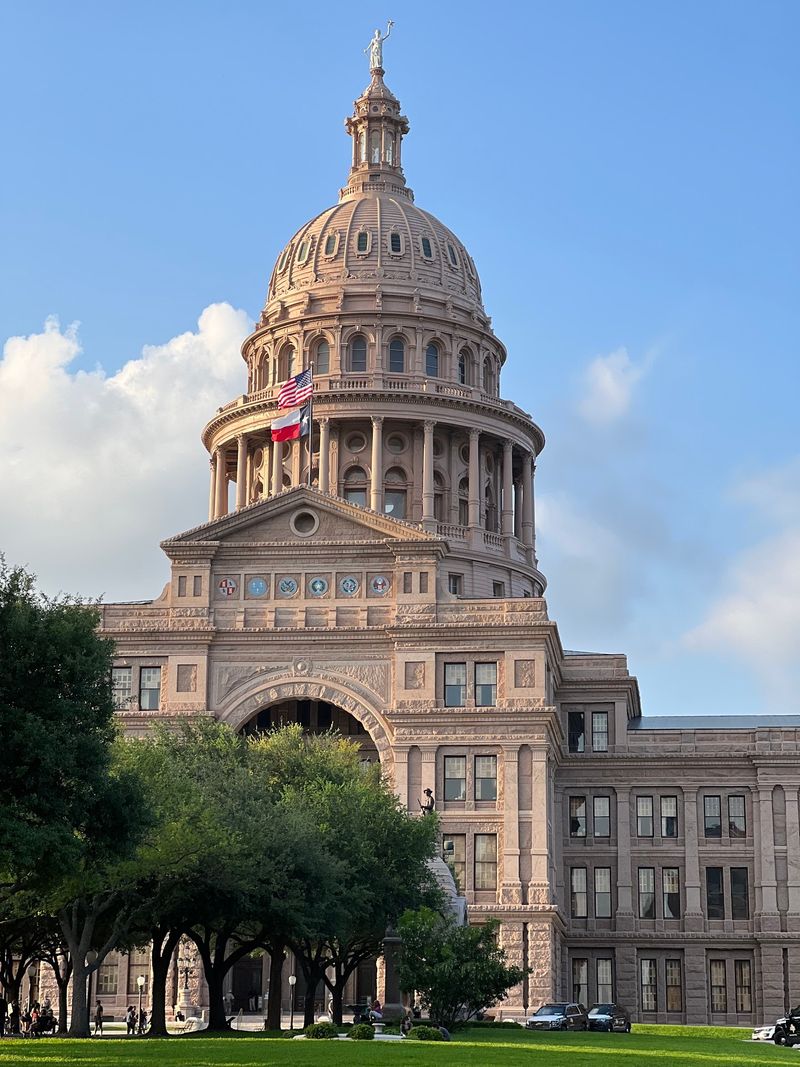
This building outranks its famous cousin in Washington by several feet. The Texas Capitol rises 302.64 feet above downtown Austin, making it taller than the U.S. Capitol.
Architect Elijah E. Myers designed it in Italian Renaissance Revival style. Construction ran from 1882 to 1888, with more than 1,000 people contributing to the project.
Dozens of granite cutters were recruited from Scotland during a labor dispute over the Capitol project. That stone is called Sunset Red granite, quarried from Granite Mountain and glowing warm at golden hour.
Inside, you get 360,000 square feet of floor space to wander. Nearly 400 rooms and over 900 windows fill the structure.
Here is a wild detail about how it was paid for. Texas financed construction by exchanging 3 million acres of Panhandle public land with the Capitol Syndicate, and that property became the XIT Ranch.
The current building is actually the fourth capitol in the city, following earlier ones dating back to 1839. It joined the National Register of Historic Places in 1970 and became a National Historic Landmark in 1986.
Free guided tours run most days, and the rotunda echo trick delights kids every time. Shady grounds make a good picnic break before you hit the road at 1100 Congress Ave, Austin.
2. Dr Pepper Museum, Waco
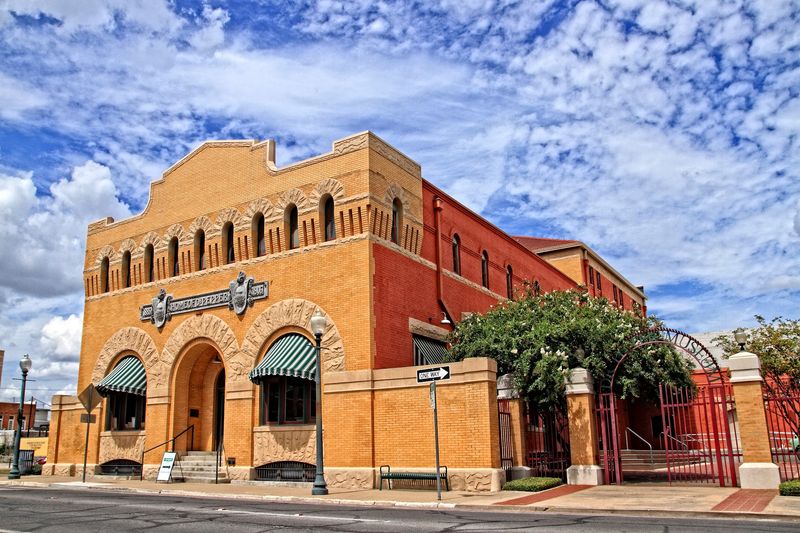
Soda fans, prepare to geek out in the best possible way. America’s oldest major soft drink was invented in 1885 by pharmacist Charles Alderton at The Old Corner Drug Store.
The Dr Pepper Museum in downtown Waco sits inside the original 1906 Artesian Manufacturing and Bottling Company plant. That brick beauty is listed on the National Register of Historic Places as the Home of Dr Pepper.
It stands as the country’s only nonprofit museum covering the entire soft drink industry. The collection holds more than 300,000 artifacts gathered across decades.
Exhibits walk you through soda fountains, vintage ads, and old bottling machinery. The Liquid Lab hosts soda-science demonstrations, while the separate Make-A-Soda experience lets visitors create a custom soft drink.
Do not skip the old-fashioned fountain counter for a classic float. The fountain sits inside the museum complex, while Dr Pepper itself was first created at Morrison’s Old Corner Drug Store in 1885.
Look along the Mary Street side for a visible scar from the F5 tornado of 1953. The building took the hit and kept going.
The historic Kellum-Rotan building from the 1880s is part of the complex too. The W.W. Clements Free Enterprise Institute teaches economics using soda as the lesson.
Plan about two hours here at 300 S 5th St, Waco.
3. Gruene Hall, New Braunfels
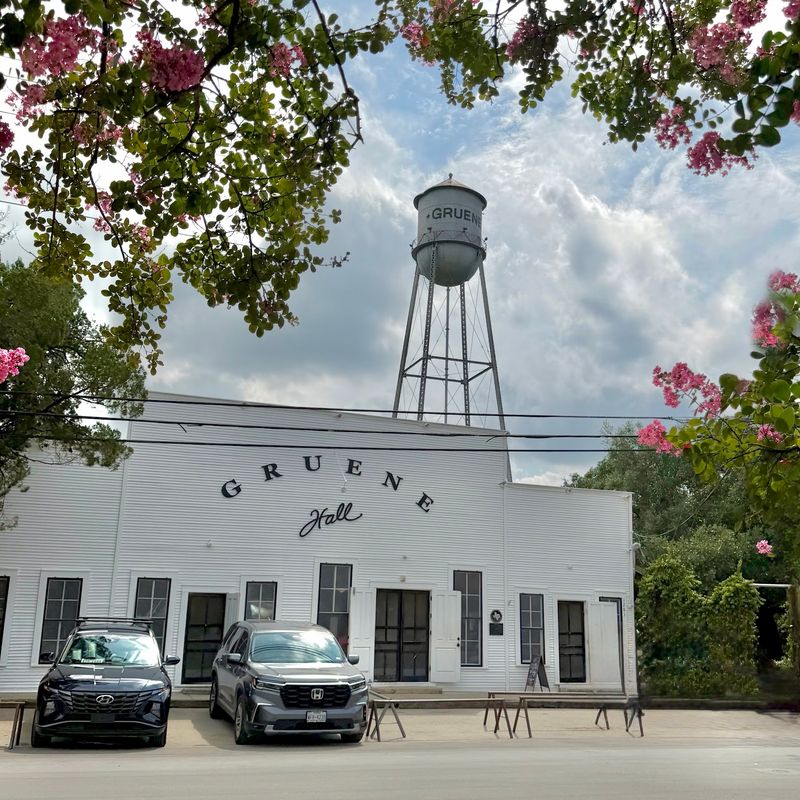
Boots start tapping before the first chord even lands. Texas has no older continually operating dance hall than this one.
Gruene Hall sits in the historic Gruene district, now part of New Braunfels. Christian Herry built the hall in 1878 under the direction of town developer Henry D. Gruene.
The layout has barely changed in all those years. A wood-frame structure, high-pitched tin roof, and screened open-air sides keep the breeze moving.
There is a front bar and a small stage that has seen serious talent. The historic dance hall covers roughly 6,000 square feet while retaining its original open-air layout.
Willie Nelson, George Strait, Lyle Lovett, Waylon Jennings, and Merle Haggard all played here. Performing on that stage became a rite of passage for the state’s musicians.
Hollywood noticed too, with appearances in the film Michael and a ZZ Top documentary. The worn wooden floor tells the rest of the story.
The Guadalupe River flows close by, adding scenery to the afternoon. The Gristmill restaurant, built inside an old cotton gin, serves food right by the water.
The Gruene Historic District entered the National Register in 1975, while Gruene Hall itself received Recorded Historic Landmark status in 1988. Two-step your way over to 1281 Gruene Rd, New Braunfels.
4. Fort Worth Stockyards, Fort Worth
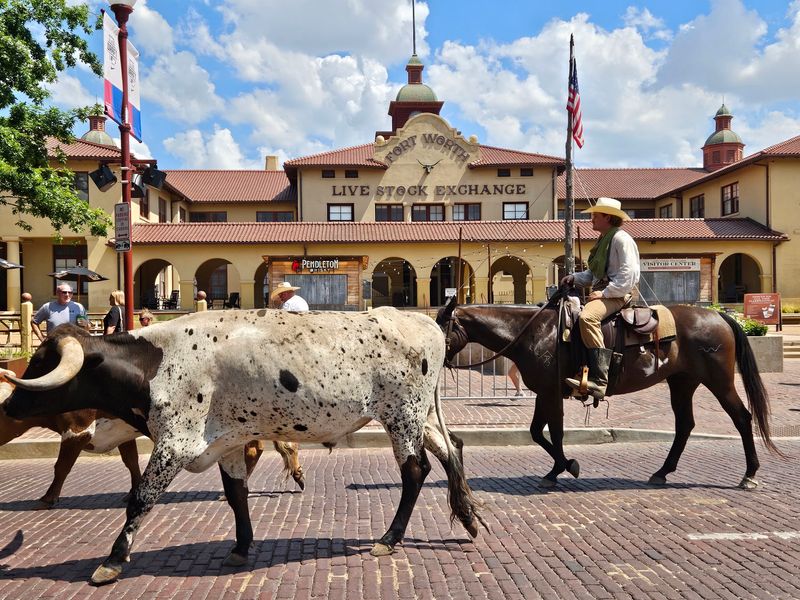
Twice a day, traffic stops for longhorns with horns wider than a car. Cowtown keeps that tradition alive on brick streets in Fort Worth.
The Fort Worth Stockyards National Historic District grew from the Chisholm Trail years between 1866 and 1890. Railroads arrived in 1876 and turned the town into a livestock shipping powerhouse.
Fort Worth established the Union Stockyards in 1887, and the operation became the Fort Worth Stockyards Company after an 1893 sale. The 1903 Livestock Exchange Building earned the nickname The Wall Street of the West.
Construction on Cowtown Coliseum began in 1907 and finished in 1908 after 88 working days. The venue hosted the world’s first indoor rodeo in 1918.
By 1944, more than 5 million head of livestock passed through yearly. Trucking later shrank the business, but 1980s revitalization saved the wooden corrals and brick roads.
Today the world’s only twice-daily cattle drive rolls down Exchange Avenue at 11:30 AM and 4 PM. Cowtown Coliseum hosts rodeo events year-round, including the Stockyards Championship Rodeo and regular PBR competitions.
Mule Alley, once century-old mule barns, now holds shops and eateries. Billy Bob’s Texas bills itself as the World’s Largest Honky Tonk.
History buffs can browse the Stockyards Museum or join a ghost tour. Wear comfortable shoes at 131 E Exchange Ave, Fort Worth.
5. Space Center Houston
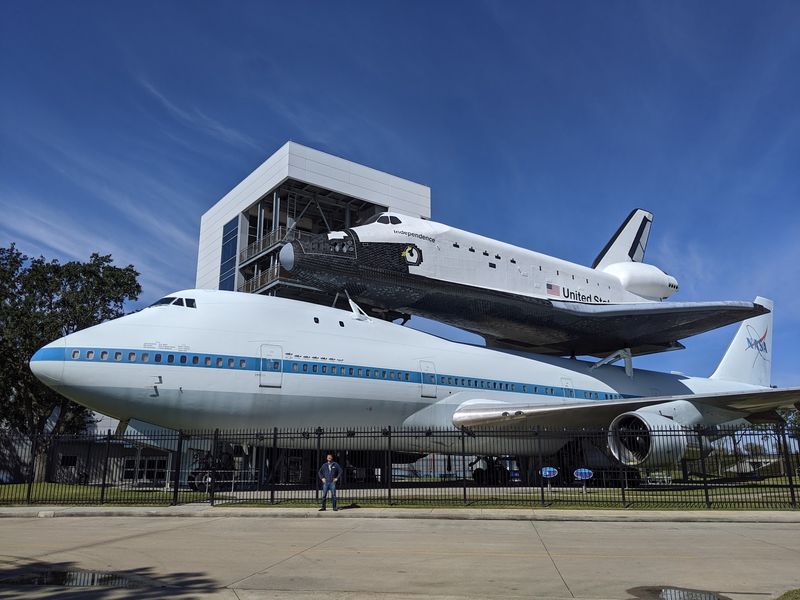
Moon rocks, real ones, sit behind glass just a short drive from downtown. Space Center Houston serves as the official visitor center for NASA Johnson Space Center.
It opened in 1992 and became a Smithsonian Affiliate museum in 2014. The nonprofit complex covers 250,000 square feet.
Over 400 space artifacts fill the halls, one of the biggest collections in the southwestern United States. Independence Plaza is the showstopper.
There you can climb inside the shuttle replica Independence, mounted atop the historic NASA 905 carrier aircraft. Nowhere else on Earth lets the public enter both vehicles.
The NASA Tram Tours head behind the scenes into Johnson Space Center. Stops include astronaut training facilities and Rocket Park, home to one of only three genuine Saturn V rockets.
Historic Mission Control guided Gemini and Apollo flights, including the first lunar landing. Sitting in that room hits differently.
Starship Gallery displays flown craft such as Mercury 9, Gemini 5, and the Apollo 17 command module America. The largest public display of moon rocks lives here too.
Mission Mars adds a simulated Orion capsule and a virtual Martian sunset. Astronaut experiences bring firsthand stories to the day at 1601 E NASA Pkwy, Houston.
6. Cadillac Ranch, Amarillo
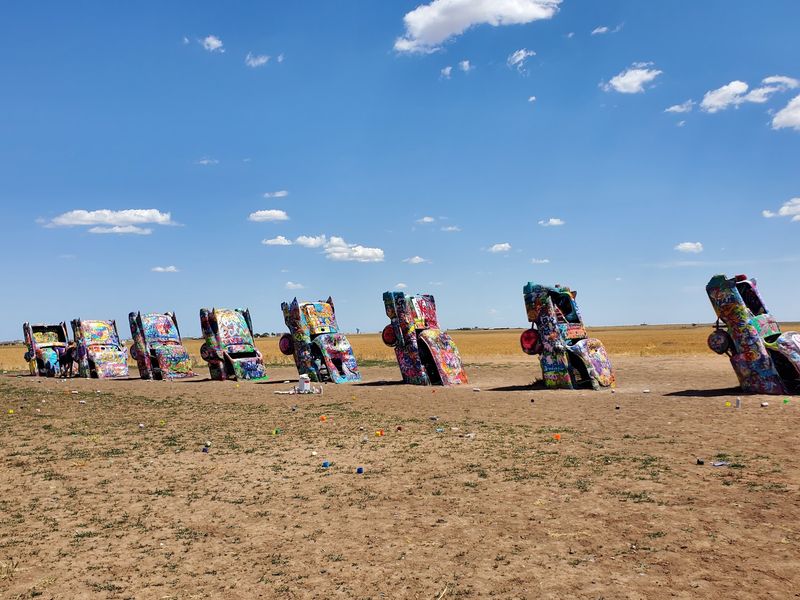
Bring a spray can, because painting is not just allowed, it is expected. Ten classic Cadillacs stand buried nose-first in a Panhandle field outside Amarillo.
Cadillac Ranch came to life in 1974, built by the Ant Farm art group of Chip Lord, Hudson Marquez, and Doug Michels. Eccentric millionaire Stanley Marsh 3 backed the project.
The cars span model years 1949 through 1963. Together they trace the rise and fall of the American tailfin.
Each one leans at a 45-degree angle facing west, an incline said to match the pyramids of Giza. The alignment is oddly satisfying in person.
Originally planted along Route 66, the whole installation moved about two miles west in 1997 as the city crept closer. Layers of paint now coat every surface.
That ever-evolving surface is part of the artwork, changing continually as travelers add new layers. The installation is widely interpreted through themes of American automobile culture, consumption, and constant stylistic change.
Cadillac Ranch remained a public art installation; the 2014 museum-site ruling involved Prada Marfa, not this work. The 50th anniversary in June 2024 brought a gray primer reset and an orchestral premiere.
Wear old sneakers, since mud loves this field at 13651 I-40 Frontage Rd, Amarillo.
7. The Alamo, San Antonio
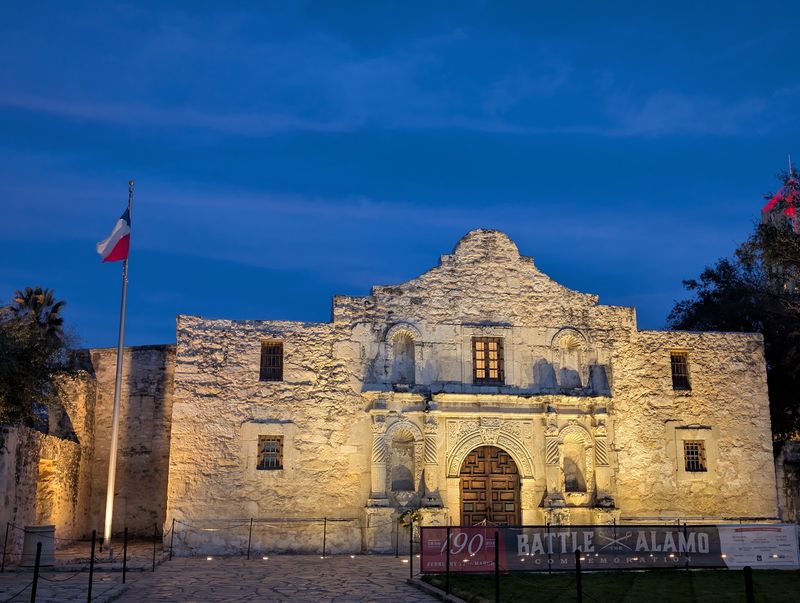
Mission San Antonio de Valero was founded in 1718 and moved to its present location in 1724.
The Alamo anchors downtown San Antonio with its famous curved limestone facade. History turned here in 1836 during the Texas Revolution.
A small group of Texan defenders held out for 13 days against a far larger Mexican army. Davy Crockett, Jim Bowie, and William B. Travis were among them.
Mexican forces removed the fort’s roughly 189 defenders when the 13-day siege ended on March 6, 1836.
Remember the Alamo became a rallying cry associated with the Texian victory at San Jacinto and the fight for independence.
Today it ranks among the most toured historic sites in the country. Along with the other San Antonio Missions, it earned UNESCO World Heritage status in 2015.
You can walk through the Alamo Church and the Long Barrack Museum. During the Spanish military occupation, the former convento that became the Long Barrack housed what the Alamo describes as the first hospital in this state.
Grounds admission is free, though a timed-entry ticket is needed for the church to protect the structure. Book ahead, then stroll the River Walk nearby from 300 Alamo Plaza, San Antonio.
8. Dealey Plaza, Dallas
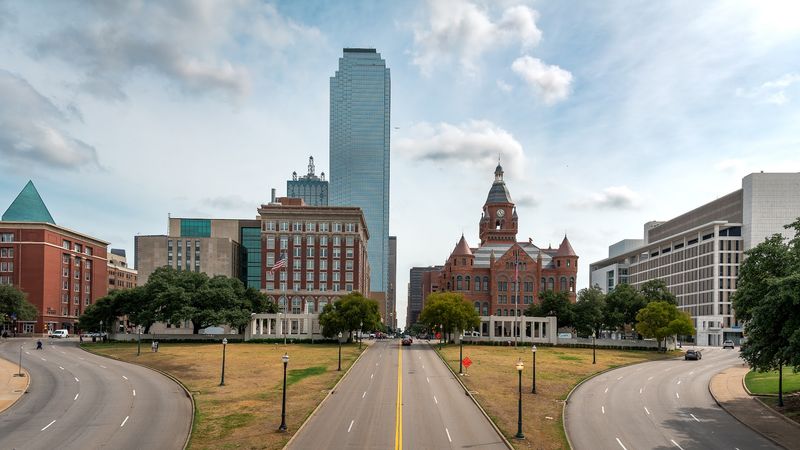
Some corners of a city hold more history than entire towns. Dealey Plaza sits in the West End Historic District of downtown Dallas.
Most know it as the location of President John F. Kennedy’s assassination on November 22, 1963. Its roots go back much further though.
Locals call the area the birthplace of Dallas. The city’s first home, courthouse, post office, store, and fraternal lodge all stood right here.
The park itself was finished in 1940 through the Works Progress Administration. Its name honors George Bannerman Dealey, a civic leader and early publisher of The Dallas Morning News.
The triple underpass gives the plaza its distinctive shape, where Main, Elm, and Commerce Streets come together. That layout is instantly recognizable in photographs.
In 1993, the 30th anniversary of the assassination, the Dealey Plaza Historic District became a National Historic Landmark. The former School Book Depository stands beside it.
That building now houses the Sixth Floor Museum, worth a ticket and a couple of hours. On the northwest side, a small incline is known as the grassy knoll.
A cenotaph memorial sits one block away. Reflect quietly, then continue your drive from 400 Main St, Dallas.
9. USS Lexington Museum, Corpus Christi
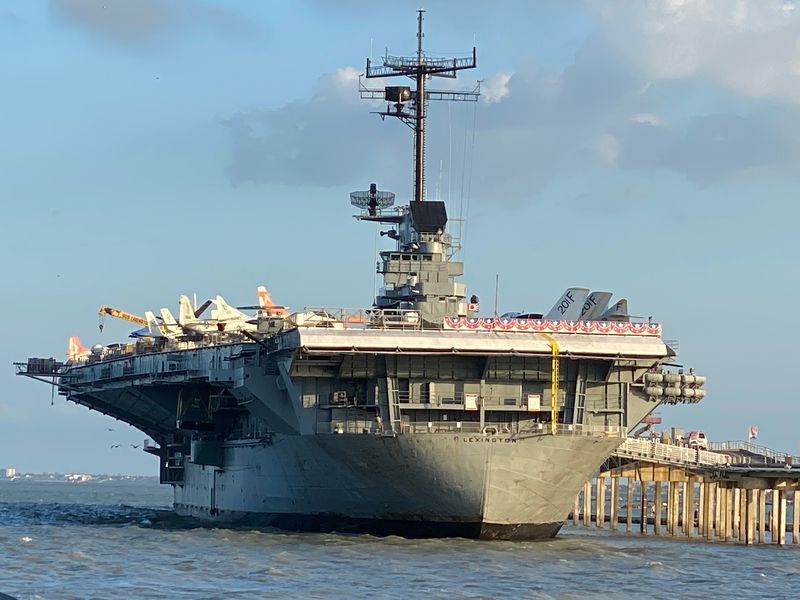
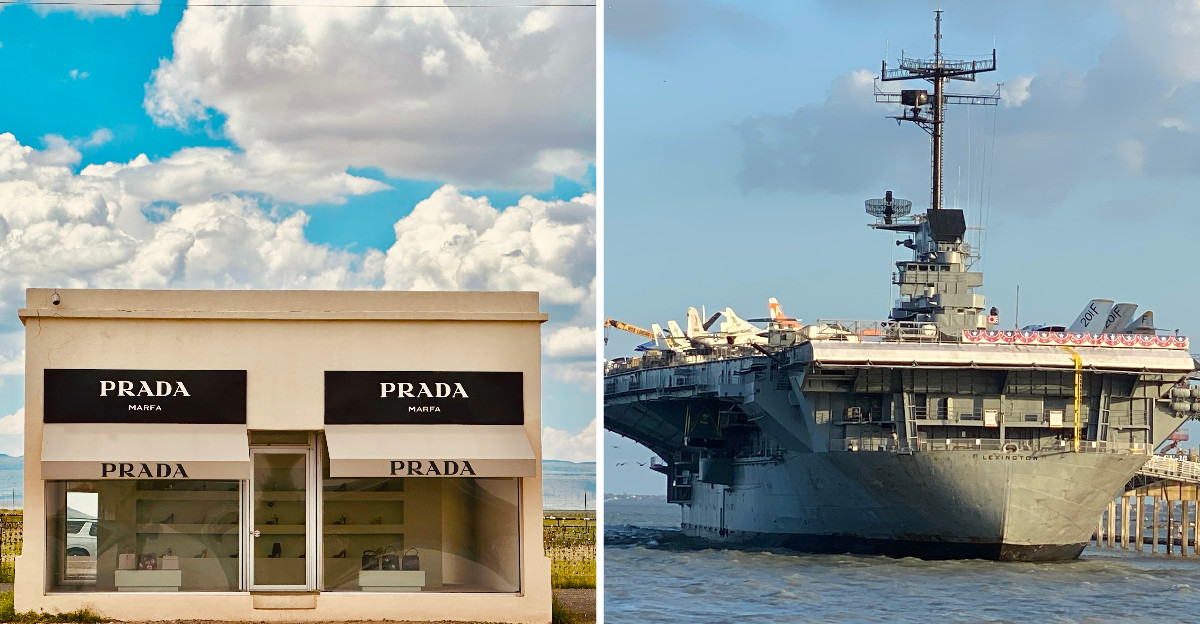
Sixteen decks of steel float quietly in a Texas bay. The USS Lexington Museum lets you board a World War II Essex Class aircraft carrier in Corpus Christi.
The museum says Japanese wartime reports repeatedly declared Lexington sunk, leading propagandists to nickname the returning carrier the Blue Ghost.
Commissioned in 1943, she served 21 months in the Pacific Theater.
Eleven battle stars mark that record. Decommissioned in 1991, the carrier arrived here as a museum in 1992 and became a National Historic Landmark.
Funding comes from grants, donations, and admissions rather than the government. The ship pays her own way.
Up top, the flight deck stretches long enough to hold three football fields. Restored aircraft line the surface, including classic warbirds and a Blue Angels FA-18 Hornet.
Views across Corpus Christi Bay from that deck are excellent at sunset. Five tour routes cover more than 250,000 square feet.
Below deck, the foc’sle reveals anchor machinery, officers’ quarters, and a multimedia Pearl Harbor exhibit. Many staff members are volunteers who once served aboard her.
The museum offers paranormal programs built around reported unexplained sights, sounds, and other experiences aboard the ship. Climb those steep ladders at 2914 N Shoreline Blvd, Corpus Christi.
10. Prada Marfa, Valentine
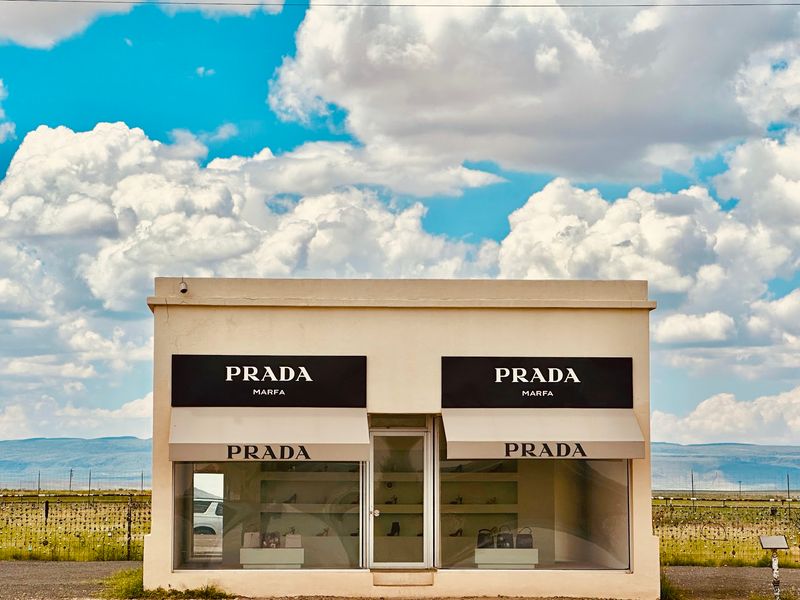
Picture a luxury storefront standing alone in the west desert with no town in sight. Prada Marfa is a permanent sculptural installation, not a shop.
Scandinavian artist duo Elmgreen and Dragset created it in 2005. The Art Production Fund and Ballroom Marfa commissioned the work.
It sits along U.S. Route 90 one mile west of Valentine, roughly 37 miles west of Marfa. Bags and shoes from Prada’s 2005 collection sit behind the glass.
Nobody gets inside, since the adobe building’s front door is completely nonfunctional. Peeking through the windows is the whole experience.
Builders used adobe bricks, plaster, glass, and an aluminum frame at a cost of $120,000. The artists originally conceived it as an intentionally weathering land-art installation rather than a conventional permanent storefront.
Vandals hit it soon after opening, taking contents and adding graffiti. Repairs followed, along with a security system.
The state’s transportation officials raised Highway Beautification Act concerns over its Prada signage before the site was classified as an art museum in 2014.
Its stripped-down look often draws comparisons to Donald Judd’s art in Marfa. Sunrise light here is unbeatable, so set an alarm before driving to 14880 US-90, Valentine.