10 North Carolina Castles And Mansions That Feel Straight Out Of Europe
Europe may want to check the guest list.
A few buildings in North Carolina look like they slipped across the Atlantic without telling anyone.
One turn in the road brings towers above the trees.
Another reveals a mansion that seems far too dramatic for an ordinary afternoon. That is exactly what makes these places fun.
They do not feel like quick sightseeing stops.
They feel like little architectural plot twists scattered across the state. You start with curiosity and end up wondering who needed that many windows.
By the time the road trip is over, staying in America may feel oddly debatable.
10. Biltmore Estate
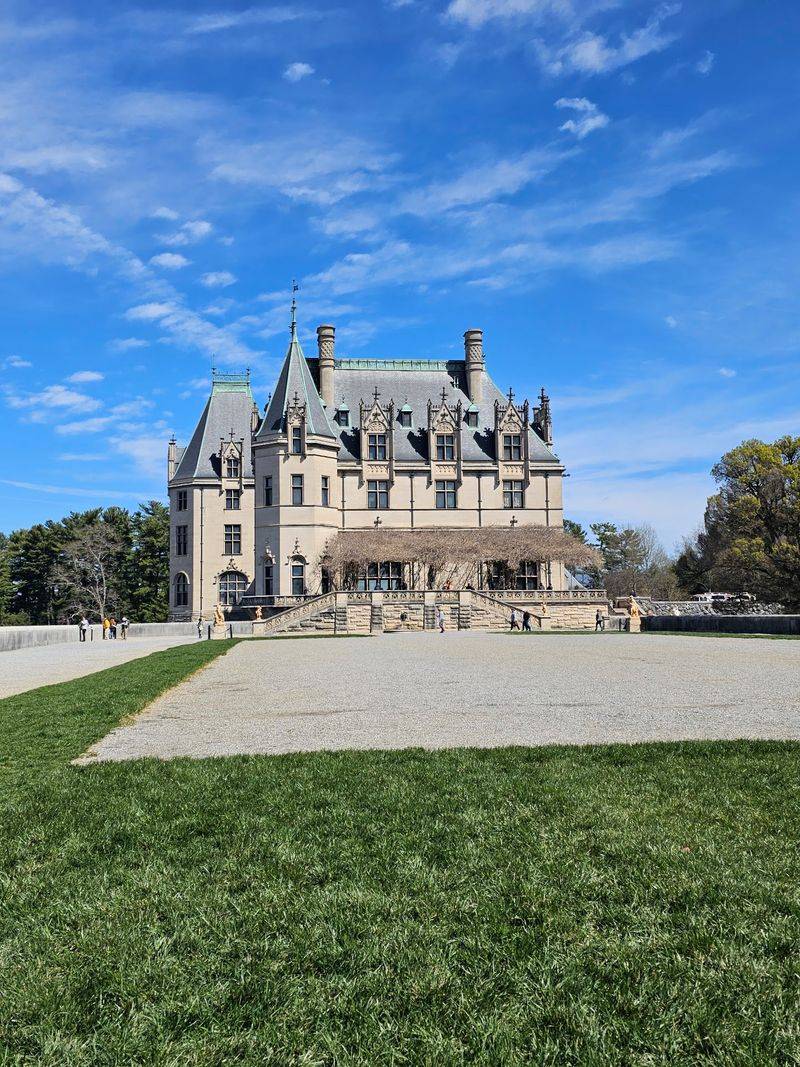
Few American homes can claim 250 rooms, but George Vanderbilt’s mountain retreat does exactly that.
Construction began in 1889 and wrapped up in 1895, with architect Richard Morris Hunt shaping a French Renaissance chateau inspired by Vanderbilt’s travels abroad.
The estate spreads across 8,000 acres in the Blue Ridge Mountains and remains the largest privately owned house in the country.
Frederick Law Olmsted, the mind behind Central Park, designed the grounds, including an Italian Garden with still reflecting pools, an Azalea Garden that blazes with color in spring, and a glass-roofed conservatory warm with tropical greenery.
Biltmore Estate sits at 1 Lodge St in Asheville.
Inside, more than 92,000 collection pieces wait, among them paintings by Monet and Renoir and original Vanderbilt furnishings still in place.
Head downstairs and you will find an indoor swimming pool and a bowling alley, unusual luxuries for the 1890s.
Antler Hill Village rounds out the visit with farm exhibits, walking paths, and shops selling estate honey, preserves, and freshly baked goods.
Give yourself a full day. Mornings are quieter for house tours, and late afternoon light on the front lawn makes the limestone glow amber.
Comfortable shoes matter here, since the gardens alone can add several miles of walking to your day.
9. Castle McCulloch
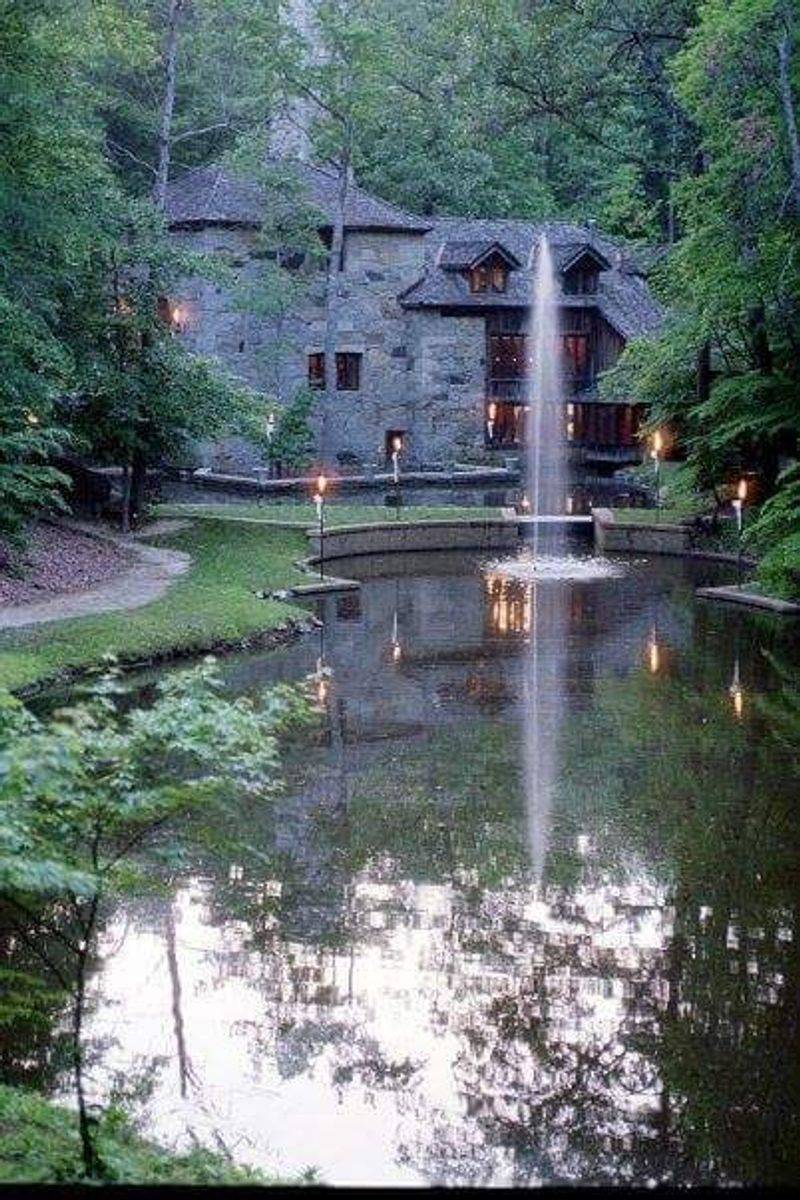
Gold, not royalty, built this castle.
Cornish engineer Charles McCulloch raised the stone structure in 1832 as a gold refinery during the Gold Rush that once buzzed through this part of the Piedmont.
Today the restored property looks far more like a medieval keep than the industrial gold mill that originally occupied the site.
Thick stone walls, arched windows, and pointed turrets blend Gothic and medieval influences, and the Great Hall rises to high ceilings crossed by heavy exposed wooden beams.
Walk the grounds and you will pass clipped gardens, shaded pathways, and a moat that makes photographs look borrowed from another continent.
Castle McCulloch now operates primarily as a private-event venue, with access outside booked events depending on scheduled public programs.
Because the castle hosts celebrations and gatherings throughout the year, checking the event calendar before you go is smart.
Open house days and seasonal festivals are your best bet for wandering freely.
Quirky detail worth knowing: the original refinery processed gold hauled in from nearby mines, meaning this fairy-tale silhouette started life as a working factory.
Bring a light jacket, since the stone interior holds a cool hush even on humid summer afternoons.
Castle McCulloch stands at 3925 Kivett Dr in Jamestown, a short drive from Greensboro and High Point.
8. Castle Ladyhawke
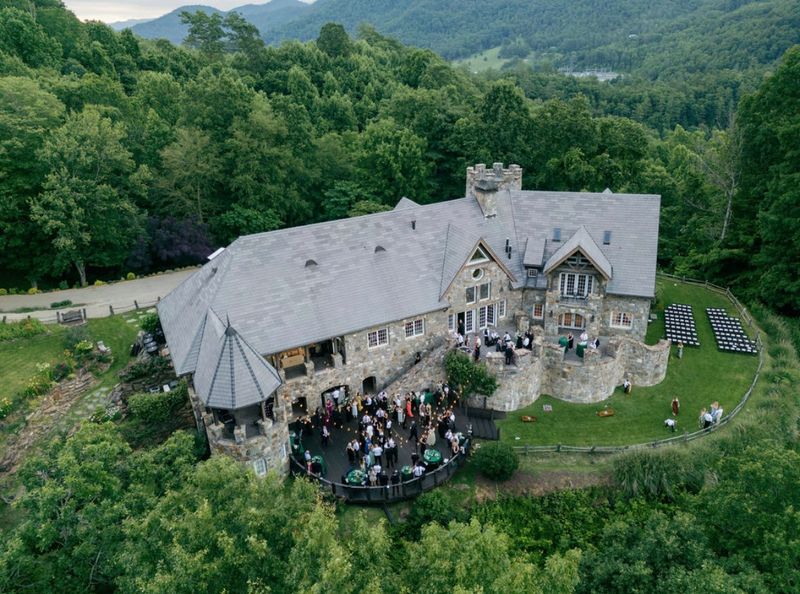
Imagine the Scottish Borders relocated to a ridge above a river valley in the southern Appalachians.
That is the feeling at Castle Ladyhawke, completed in 2005 after retired real estate developer Kim Nord sketched the design herself following trips to Scotland.
Thick rock walls and a classic castle tower give the building genuine weight, not a theme-park imitation.
Sixty acres surround it, opening to long views over the Tuckasegee River Valley and layers of blue mountain ridges that fade into haze by late afternoon.
Step inside and a three-level spiral staircase winds upward past stone walls, leading to guest suites and a great room built for gathering.
Timbered ceilings, iron fixtures, and tall windows keep the mood romantic without feeling fussy.
The castle primarily hosts weddings and private events, with in-person tours available by appointment and most overnight lodging handled through nearby Bear Lake Reserve.
Mountain weather here shifts fast, and clouds sometimes settle below the castle, leaving guests looking down at a white sea.
The tower, Mountain View Lawn, and terraces were positioned to take advantage of sweeping views across the surrounding Blue Ridge landscape.
Castle Ladyhawke rises at 1698 Shook Cove Rd in Tuckasegee, deep in Jackson County.
7. Körner’s Folly
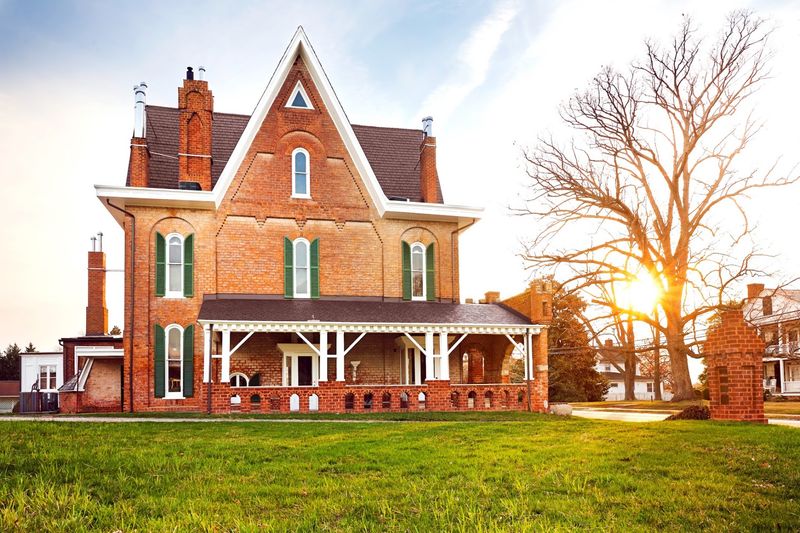
Twenty-two rooms, three floors, and seven different levels.
The math alone tells you Körner’s Folly was never meant to be an ordinary house.
Artist and interior designer Jule Gilmer Körner built the 6,000-square-foot brick home in 1880 as a living catalog for his decorating business, changing it constantly as new ideas struck him.
Ceiling heights swing wildly from five and a half feet to a soaring 25 feet, and doorways appear where you least expect them.
Körner’s Folly welcomes visitors at 413 S Main St in Kernersville.
Fifteen fireplaces are set with American Encaustic tiles, each one patterned differently, while German artist Caesar Milch painted murals across nearly every room.
Original furnishings remain, giving the rooms a lived-in rather than roped-off feeling.
Climb to the top level and you reach Cupid’s Park Theatre, believed to be the first private little theater in America, where performances still happen today.
Tours run self-guided with staff stationed throughout to answer questions, which means you can linger over the tile work as long as you like.
Stairs are steep and narrow in places, so hold the rail.
Visit during the holiday season and the whole house glows with decorations that suit its playful spirit perfectly.
6. Reynolda House
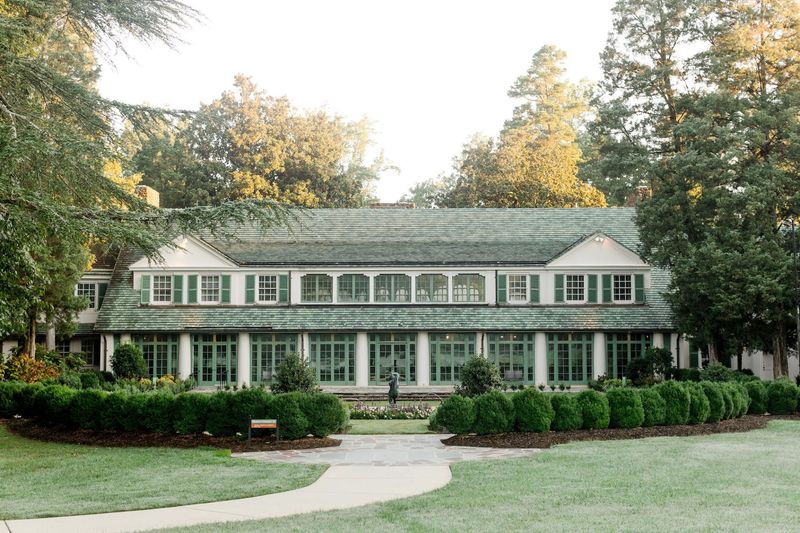
Green tile roofing over bright white stucco walls sets a calmer tone than turrets and towers, and that was exactly the point.
Reynolda House came out of the American Country House movement, a style built around comfort, light, and connection to the land.
Philadelphia architect Charles Barton Keen finished the 64-room home in 1917 for Katharine Smith Reynolds and her husband R.J.
Reynolds, mixing Arts and Crafts warmth with Colonial Revival balance.
The house anchors 170 landscaped and wooded acres.
Inside, galleries hold a celebrated collection of American art spanning three centuries, with canvases by Georgia O’Keeffe and Frederic Edwin Church hanging in rooms that still feel residential.
Outdoors, formal gardens bloom in careful patterns, once part of a 1,067-acre model farm.
Walking trails lead past greenhouses toward a small waterfall where the sound of moving water replaces city noise entirely.
Plan on two to three hours, longer if you picnic on the lawn.
Spring brings tulips and flowering cherries, while autumn turns the wooded paths gold.
Nearby shops and cafes in the old village buildings make an easy stop before you head back out.
Reynolda House Museum of American Art stands at 2250 Reynolda Rd in Winston-Salem, affiliated with Wake Forest University since 2002.
5. Tryon Palace
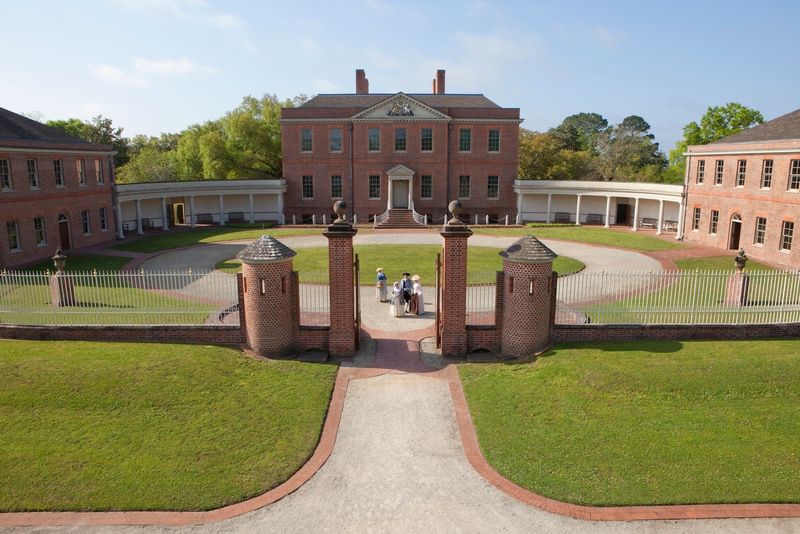
Before there was a state capital in Raleigh, government business happened here, in a brick Georgian building beside the Trent River.
English architect John Hawks designed it, and the original palace was finished in 1770 for the royal governors.
Colonists called it one of the finest public buildings anywhere in the American colonies.
The building visitors tour today is a 1950s reconstruction on the original foundation, recreated from John Hawks’s surviving plans and furnished to reflect its 1770 appearance.
Tryon Palace sits at 529 S Front St in the heart of New Bern’s historic district.
Sixteen acres of gardens wrap the property, laid out in formal 18th-century British fashion with clipped hedges, gravel paths, and beds that change color through the seasons.
Tulips in April are a local event unto themselves.
Several additional historic homes belong to the site, including the Dixon House and Stanly House, each adding another layer to the story.
A One Day Pass covers the Palace, gardens, museum galleries, and scheduled historic-building access, which can vary because some houses remain closed.
Afterward, downtown New Bern is a five-minute walk, with waterfront benches, bakeries, and shops selling local preserves.
The whole neighborhood smells faintly of river water and blooming magnolia in late spring.
4. Bellamy Mansion Museum
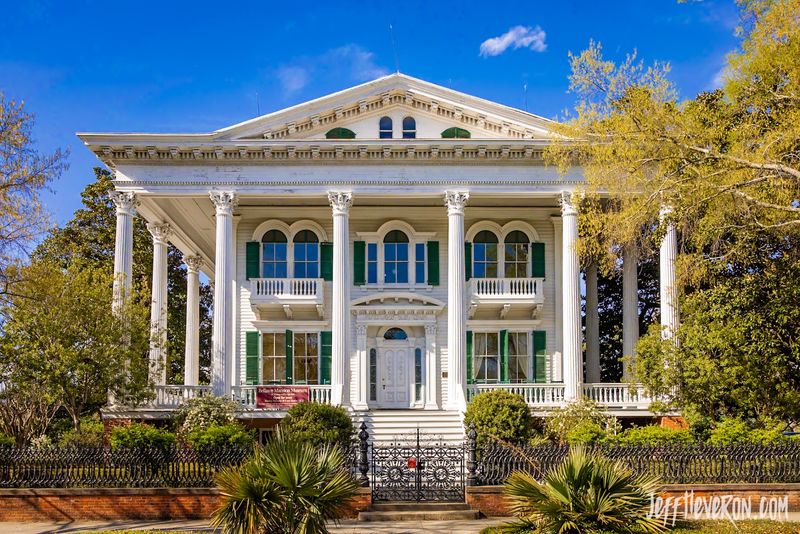
Fourteen towering columns announce this house long before you reach the front steps.
Built between 1859 and 1861 in downtown Wilmington, the Bellamy Mansion blends Greek Revival grandeur with Italianate detailing across 10,000 square feet.
Dr. John Dillard Bellamy, a physician and planter, commissioned the home, and it was raised by both free and enslaved Black artisans whose craftsmanship shows in the plasterwork, joinery, and ironwork.
During the Civil War, Federal troops used the house as headquarters while occupying the city.
Tours cover the main floors, the recreated gardens, and the restored quarters where enslaved people lived, one of the few surviving urban examples in the region.
That building changes how you read everything else on the property.
Exhibits focus on history and design arts, with rotating programs, lectures, and community events throughout the year.
Give yourself roughly 90 minutes, then wander the surrounding streets where live oaks arch over brick sidewalks and Victorian porches lean toward each other.
Riverfront restaurants serving shrimp and grits or fresh catch of the day are an easy walk.
Afternoon tours catch the best light through the tall parlor windows.
The museum welcomes visitors at 503 Market St, a few blocks from the Cape Fear River.
3. Blandwood Mansion
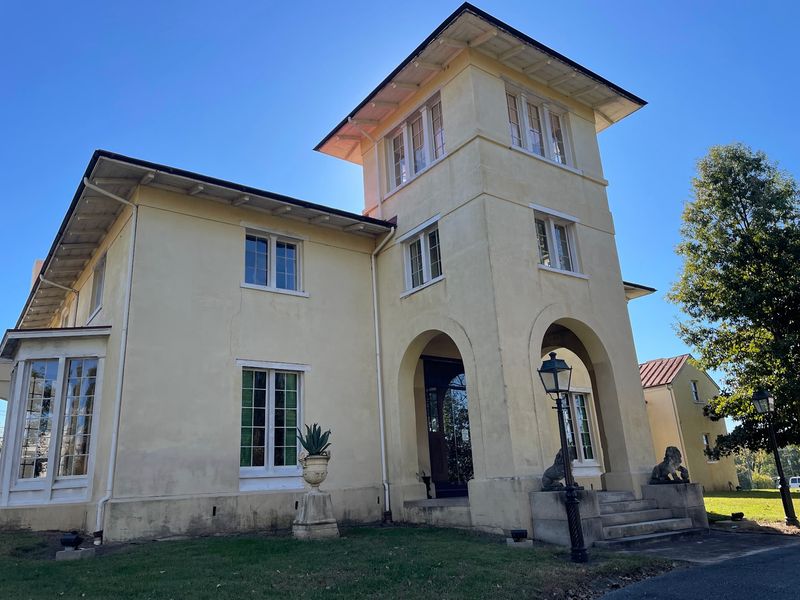
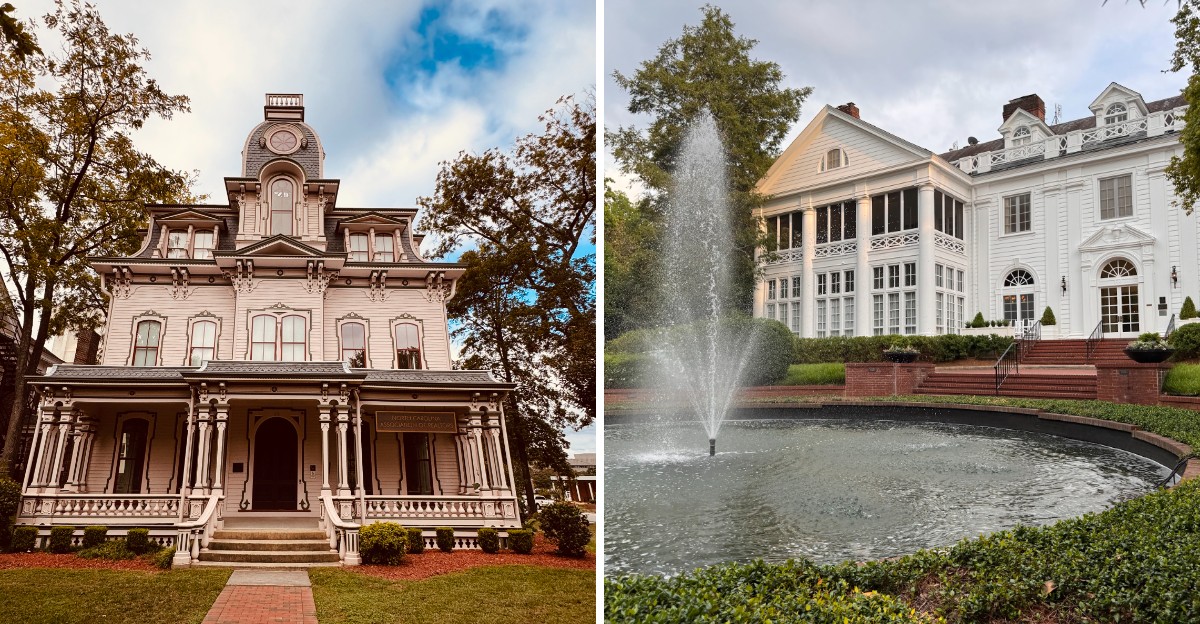
The transformation that gave Blandwood its groundbreaking Tuscan Villa appearance was completed in 1846.
Blandwood is believed to be the oldest surviving example of Italian Villa style architecture in the United States.
The story starts smaller.
A four-room farmhouse dating to about 1795 formed the core before John Motley Morehead commissioned architect Alexander Jackson Davis to transform it into a Tuscan Villa-style residence.
Davis added the projecting central tower, smooth stucco walls, and a low roofline that together created a template copied across the country for decades afterward.
Rooms hold a strong collection of mid-19th-century decorative arts and period furnishings, arranged to show how the Morehead family actually lived.
Guides connect the architecture to Morehead’s push for railroads, schools, and industry in the growing state.
Blandwood is currently open Saturdays from 11 a.m. to 4 p.m. for self-guided tours, making it easy to combine with other downtown stops. The adjacent carriage house and grounds are pleasant for a quick stroll.
Look up at the tower windows as you leave, since the proportions are easier to appreciate from the sidewalk than from the lawn.
Blandwood Mansion stands at 447 W Washington St in downtown Greensboro, now a National Historic Landmark.
2. Duke Mansion
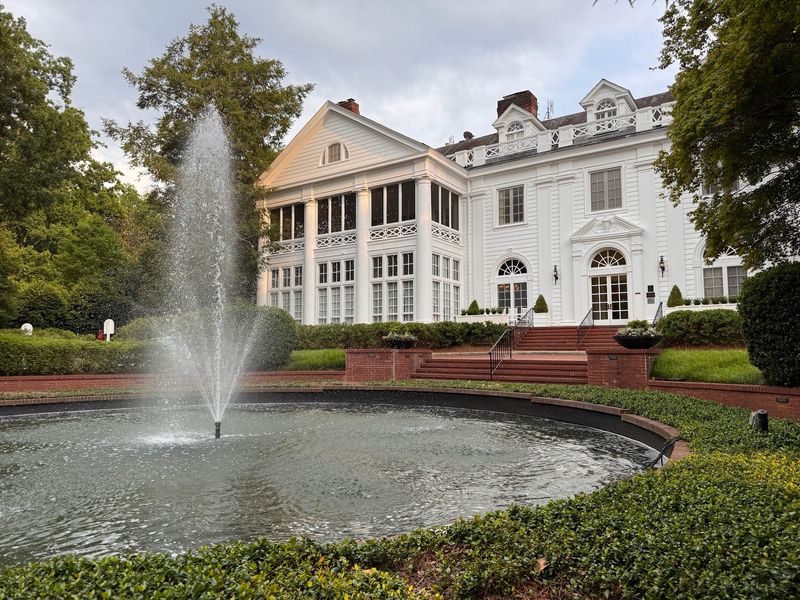
Some historic houses you tour. This one you can sleep in.
Built in 1915 and later enlarged by James Buchanan Duke, the mansion in Charlotte’s Myers Park neighborhood served as the setting where several of Duke’s lasting projects, including Duke University, were shaped.
It now operates as a nonprofit inn and meeting place listed on the National Register of Historic Places.
The Duke Mansion welcomes guests at 400 Hermitage Rd.
Twenty guest rooms are individually decorated, and a few open onto shared sleeping porches where ceiling fans turn slowly above wicker furniture.
Breakfast is served in the dining room, and the whole house carries the quiet creak of old hardwood.
Four and a half acres of grounds, known as the Mary D.B.T. Semans Gardens, wrap the property.
Historic trees shade brick paths, seasonal beds draw butterflies and bees, and benches hide in corners where traffic noise simply disappears.
The gardens were renovated for the mansion’s centennial and stay open for daylight strolling, even if you are not an overnight guest.
Spring dogwoods and azaleas are the showstoppers, though autumn light through the oaks runs a close second.
Street parking is prohibited and on-site parking is limited, so visitors should check in with the mansion when arriving to explore the property.
1. North Carolina Executive Mansion
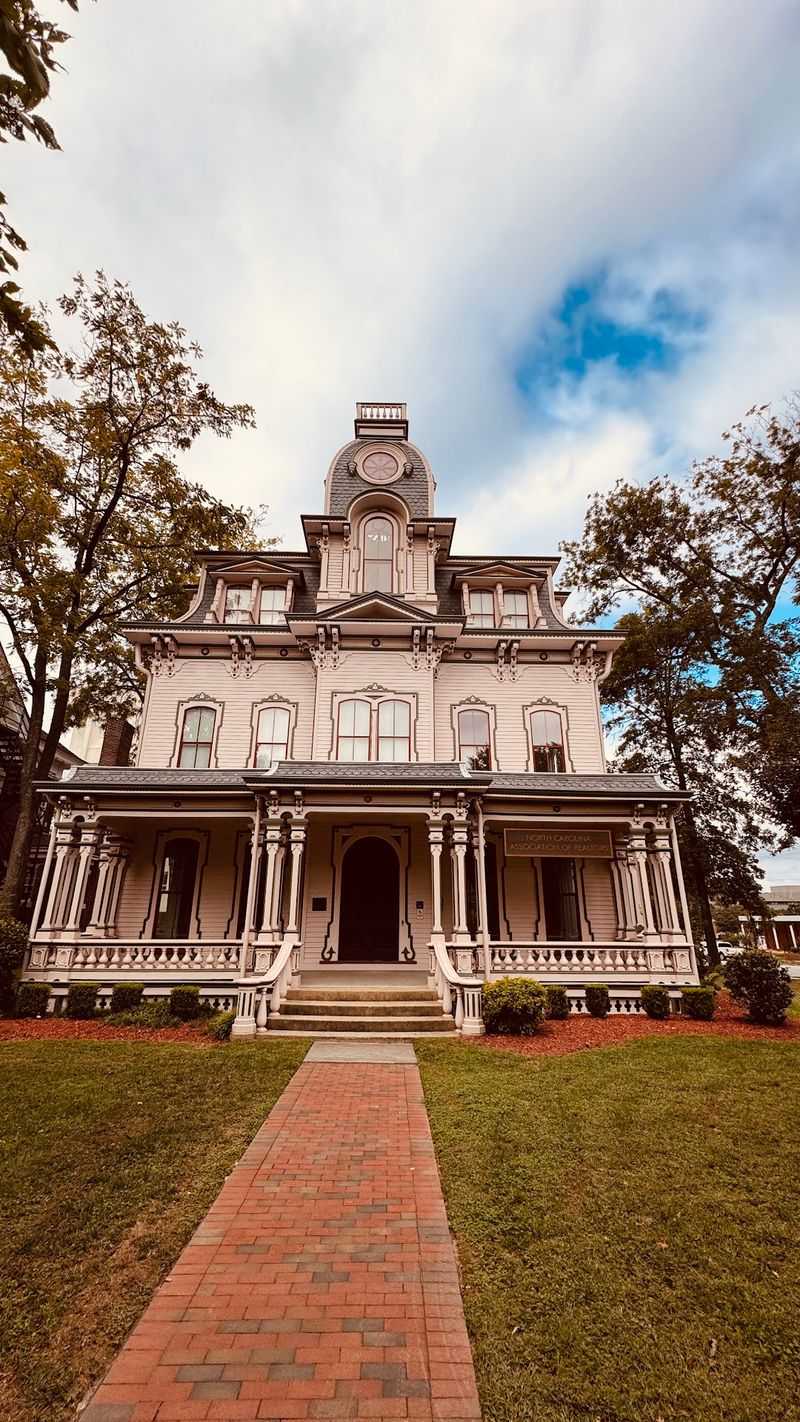
Locals call it the people’s house, and free public tours back up the nickname.
The official residence of the governor took eight years to finish, with construction starting in 1883 and wrapping in 1891.
Queen Anne style Victorian architecture shows in the gables, turrets, and deep porches, and nearly everything came from close to home.
Bricks were made from Wake County clay, and the sandstone trim was quarried in Anson County.
President Franklin Delano Roosevelt reportedly called the interior the most beautiful governor’s residence interior in America, and the woodwork, chandeliers, and hand-carved details still make that claim easy to understand.
Tours cover the public rooms, historical exhibits, and the surrounding gardens, offering a look at both design and the political history of this southeastern state.
Reservations are required in advance, and hours shift with the seasons.
Spring and fall tours catch the gardens at their fullest, while December visits reveal the house dressed in holiday greenery, ribbon, and candlelight.
Afterward, the museums and food halls of downtown Raleigh are an easy walk, making this a natural final stop on a grand house road trip.
The mansion stands at 200 N Blount St in downtown Raleigh, just blocks from the State Capitol.