Some Of Idaho’s Most Fascinating Lava Tubes Hide Beyond The Usual Turnaround Point
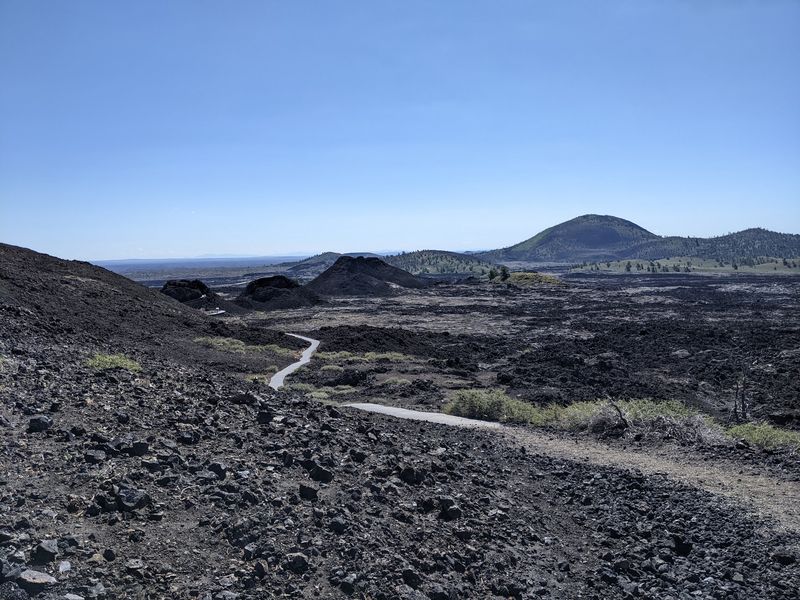
Black rock stretches so far in every direction that your brain briefly forgets it’s still on Earth. Most folks drive the paved loop, snap a few photos of the cinder cones, and roll back toward the highway within an hour or two.
That’s the mistake, because the strangest and most rewarding parts of this place sit just past where the crowds turn around. Here’s what slips by nearly everyone on Idaho’s Snake River Plain.
An Ocean Of Frozen Rock
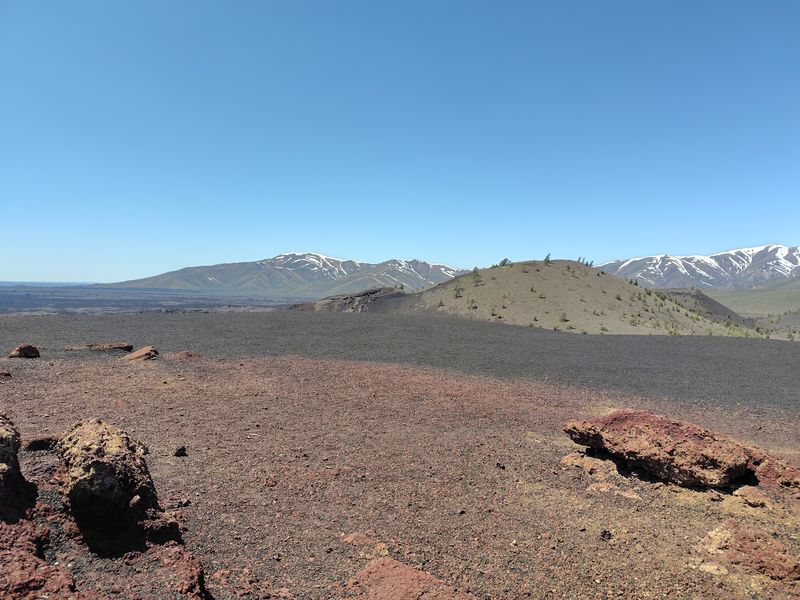
Miles of hardened lava roll out flat and dark, broken only by sagebrush pushing up through the cracks. Nothing about the drive from Arco prepares you for the moment the desert suddenly turns to stone as far as you can see.
Sitting on the Snake River Plain in south-central Idaho, this is the largest young basaltic lava field in the contiguous United States. The formations aren’t ancient in geological terms, having taken shape somewhere between 15,000 and 2,000 years ago.
What makes the spot so unusual is how open and exposed it is. Because it sits in high desert, no thick forest hides the rock, so every ropey flow, spatter cone, and jagged ridge stands in plain view.
Visitors often describe the walk as feeling like another planet, and they’re not exaggerating. The mix of flat ground, easy walkways, and roads means you can get right up against formations that elsewhere would take serious effort to reach.
It’s raw, quiet, and genuinely humbling.
Wilderness Past The Turnaround
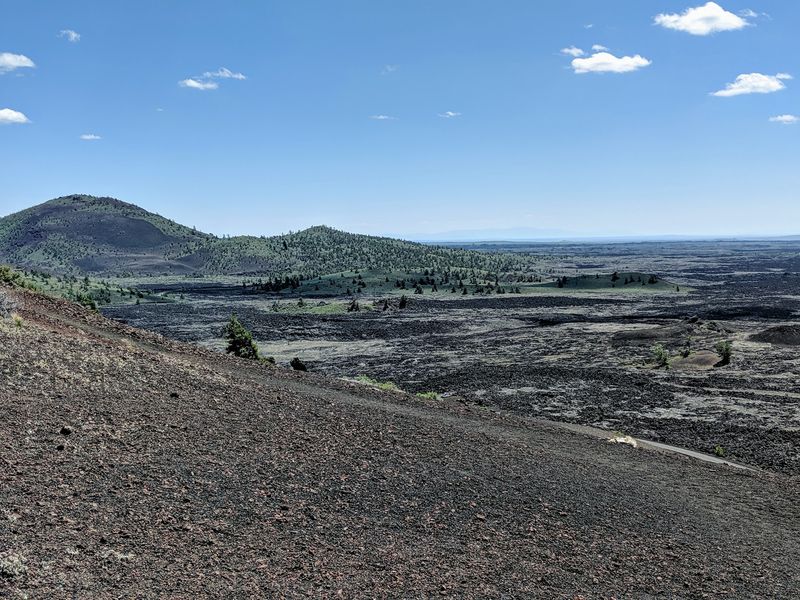
The seven-mile scenic loop feels like the whole show, but it barely scratches the surface. Beyond the pavement lies a backcountry so large that most people never realize it exists.
The Monument and Preserve covers a staggering 750,000 acres, much of it managed by the Bureau of Land Management. Primitive roads suited to high-clearance, four-wheel-drive vehicles push into remote corners where you can go hours without seeing another soul.
Solitude out here is the real reward. Even during busy stretches, the paved loop stays manageable, and the moment you venture off it, the crowds vanish entirely.
Winter transforms the whole place. When snow blankets the flows, the loop road closes and the field becomes a silent white expanse ideal for cross-country skiing and snowshoeing.
Shoulder seasons offer their own magic. Early spring visitors often find the loop already open for driving with hardly anyone around, trading warm weather for wide-open quiet.
If you want the Idaho backcountry mostly to yourself, aim for the edges of the calendar rather than the peak of summer.
A Sky Full Of Stars
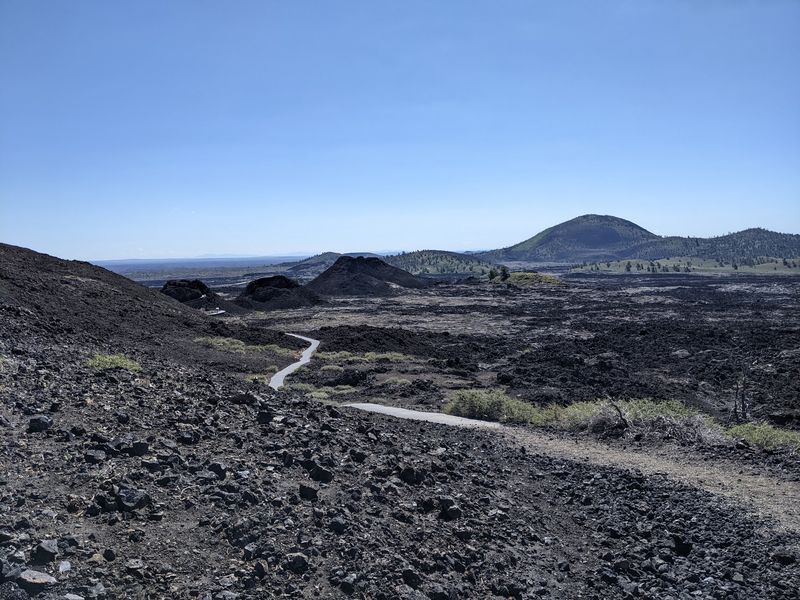
Once the sun drops behind the flows, the black rock disappears and the sky takes over. Away from city glow, the darkness here runs deep enough to reveal the Milky Way stretched clean across the heavens.
Officially designated an International Dark Sky Park in 2017, this corner of Idaho ranks among the country’s finest stargazing spots. Visitors who linger past sunset often set up cameras and capture the galaxy arcing over the cinder cones.
Timing your visit for late afternoon into evening pays off twice. You get the softer light on the lava during golden hour, then the star show as night settles in.
Park rangers and volunteer astronomers host special gatherings like Full Moon Hikes and Star Parties throughout certain seasons. These events pair the eerie nighttime landscape with telescopes and expert guidance.
One traveler admitted their only regret was driving back to town in the dark instead of camping under that sky. Staying overnight lets you skip the drive and soak in a view most people never bother to wait for.
Where Astronauts Trained
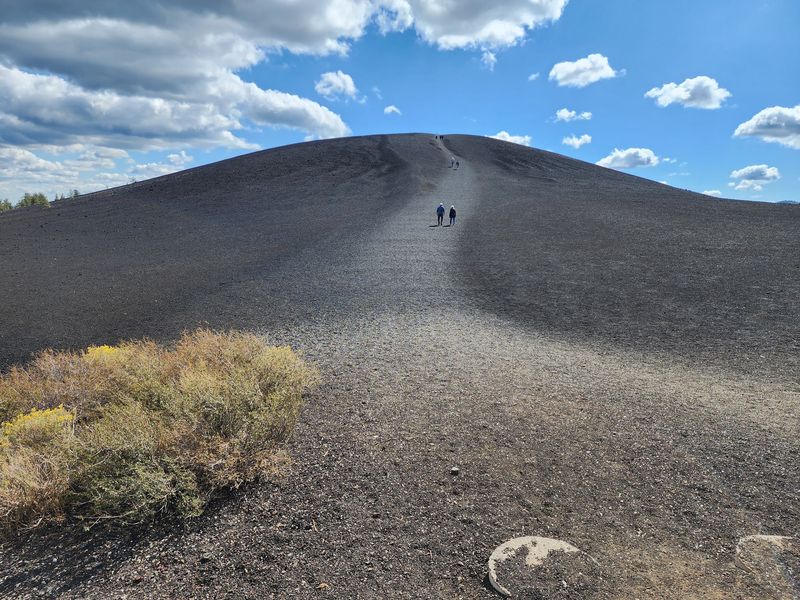
The rugged surface underfoot once doubled as a classroom for humans headed to the moon. It’s a piece of history almost nobody notices while scrambling over the rocks.
Back in 1969, a group of Apollo astronauts came here for geology training. The crew included Alan Shepard, Edgar Mitchell, Joe Engle, and Eugene Cernan, all preparing for missions beyond Earth.
They walked these very flows, studied the volcanic formations, and practiced spotting and describing rocks the way they’d need to on the lunar surface. The terrain’s resemblance to the moon made it ideal for sharpening those observation skills.
Standing where they stood adds a strange thrill to the whole visit. The same jagged ground that feels alien to you helped real people rehearse for the ultimate journey.
The connection links Idaho’s high desert directly to the space program in a way few landscapes anywhere can claim. Next time you crest a cinder cone, remember that astronauts once did the same thing here, taking notes for a trip to a world 240,000 miles away.
Life In The Cracks
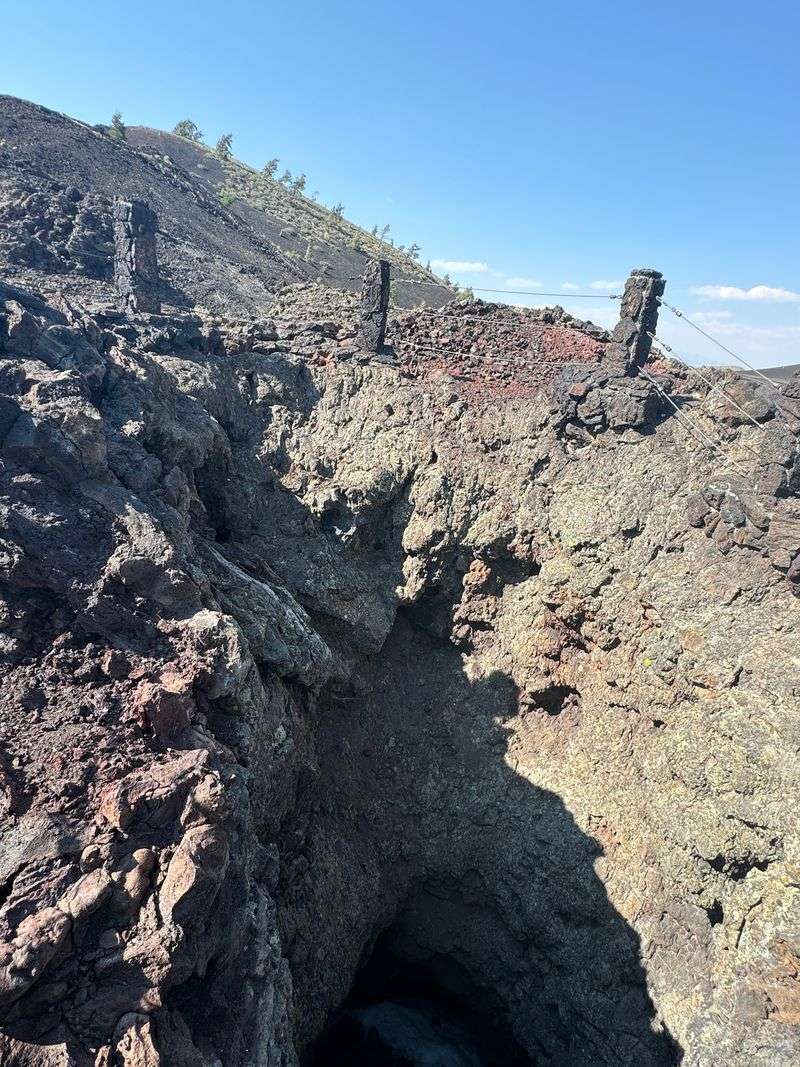
At first glance the field looks lifeless, all rock and wind and nothing living. Look closer and the cracks tell a different story.
Hidden among the flows are animals found nowhere else on the planet, including unique subspecies of the Great Basin pocket mouse and yellow pine chipmunk. A distinct population of pikas tucks into the fractured rock, while specialized beetles live inside the lava tubes.
Most of the larger residents keep to the night. Woodrats, skunks, bobcats, and mountain lions all roam here after dark, which makes any daytime glimpse a rare treat.
Watch for the kipukas, too. These are islands of older soil and vegetation stranded by newer lava flows, and they shelter native plants and animals in undisturbed pockets of green.
Spotting this life takes patience most visitors don’t bring. Slow down, scan the shadows between rocks, and listen for the sharp squeak of a pika.
What seems like empty desert is actually a stubborn, quiet ecosystem clinging to one of Idaho’s harshest neighborhoods, and it rewards anyone willing to really look.
The Great Rift Underfoot
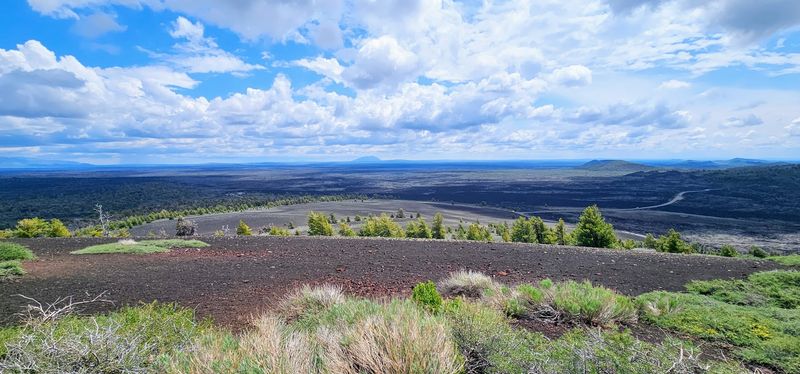
Every cone and flow you see traces back to one enormous crack in the ground. It runs 52 miles long and it’s the reason this whole landscape exists.
Known as the Great Rift, this deep fissure is a rare spot where Idaho’s continental crust is actively thinning and pulling apart. Molten basaltic rock has poured up through it over thousands of years.
The activity across the past 15,000 years built the largest young basaltic lava field in the lower 48 states. That’s not ancient history frozen in place, either.
Geologists expect the rift to erupt again sometime within the next thousand years, which means the ground beneath your feet is only resting, not finished. The whole place is essentially between chapters of an ongoing story.
You won’t grasp this from a quick loop drive, and that’s exactly the point. The most powerful feature here is largely invisible, a slow-motion split in the Earth that keeps reshaping the surface.
Knowing the rift is down there changes how the silence feels. It’s not stillness, it’s a pause.
Color Hidden In The Black
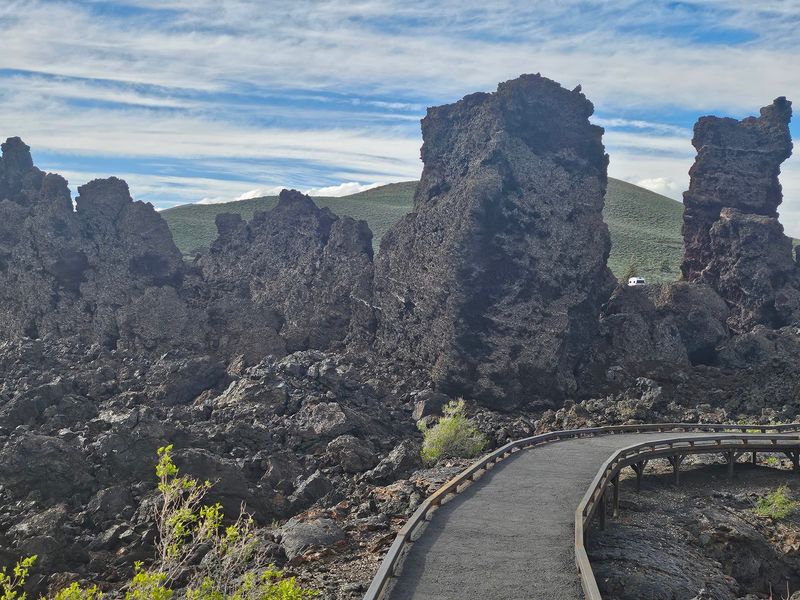
From a distance it’s all one shade: black, black, and more black. Kneel down and study a single flow, though, and the rock quietly falls apart into a whole palette.
Look closely and you’ll catch blues, purples, oranges, and reds threaded through the stone. These colors come from different mineral makeups, the way each patch cooled, and years of weathering.
The variety turns what looks like a plain gray sea into a natural mosaic. It’s the kind of detail that only shows up when you stop rushing and let your eyes adjust.
Different formations across the field carry different tints, so no two stretches of rock look quite the same up close. Morning and evening light bring these hues out even more, warming the reds and deepening the purples.
Most visitors miss all of it because they’re scanning the horizon instead of the ground. The reward for patience is a landscape far richer than the postcard version.
Bring your attention down to rock level, and Idaho’s most monochrome-looking place turns into a surprising splash of color.
Ghosts Of Ancient Trees
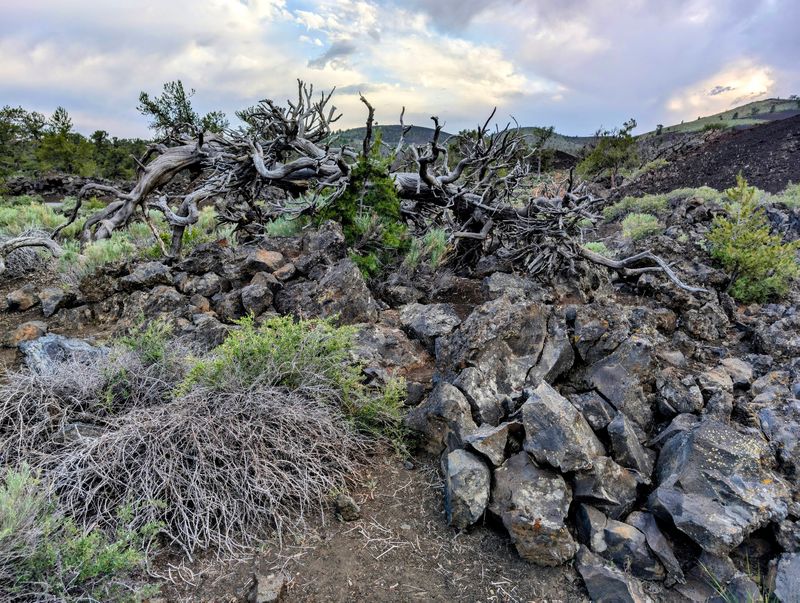
Scattered across the flows are strange hollow shapes pressed into the solid rock. They mark spots where living trees once stood before the lava rolled through.
Called tree molds, these are the empty impressions left when molten rock surrounded a tree, hardened around it, and the wood inside burned away. What remains is a perfect cast of something that vanished thousands of years ago.
Each mold is a small time capsule. Peer into one and you’re looking at the exact outline of a forest that stood here before the eruptions rewrote the whole area.
They’re easy to walk right past if you don’t know to look for them, which is why so few visitors seek them out. A dedicated trail leads to a cluster of them, rewarding anyone who makes the short detour.
The molds capture something the rest of the field only hints at: the raw, destructive, world-remaking force of the flows. Where else in Idaho can you stand inside the shadow of a tree that met the lava head-on and left nothing but its shape behind?
Into The Lava Tubes
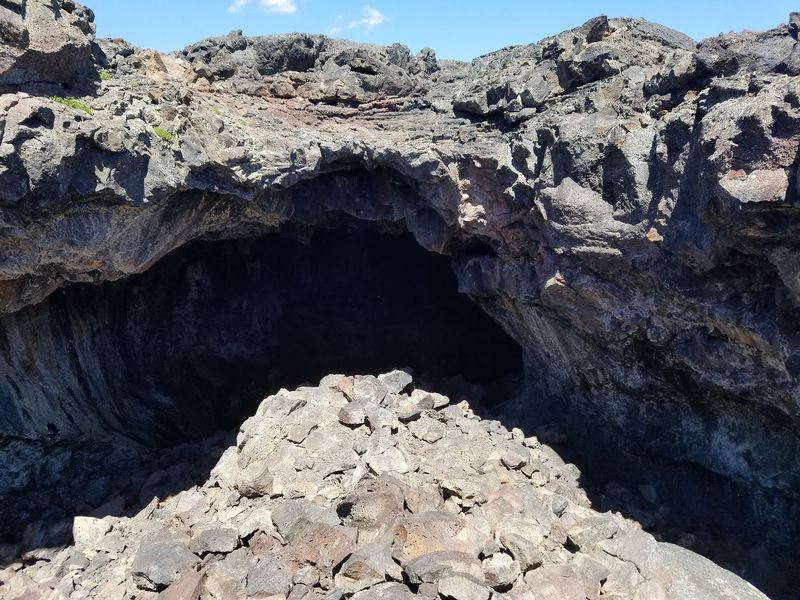
Beneath the surface, the real adventure opens up. Hollow tunnels left behind by draining lava snake through the ground, cool and dark and wide enough to walk through.
The lava tube caves rank as many people’s favorite part of the whole visit. Indian Tunnel is the standout, a massive tube with openings that let light spill in, while the Bat Caves trail leads to more tight passages worth scrambling through.
There’s one crucial step first: you need a free cave permit from the visitor center before you head underground. Grab it on your way in so you don’t have to backtrack.
Timing matters here. The caves usually stay closed until around June because of the bats’ breeding season, so early-spring travelers may find the tubes off-limits even when the loop is open.
Bring a headlamp, stick to the paved paths where they exist, and don’t be surprised by the occasional bat fluttering past. Visitors describe the experience as otherworldly and just a touch spooky, which is exactly what makes crawling into these Idaho tunnels so memorable.
A Mission Patch For Kids
Young visitors get their own special quest here, and it’s far cooler than the usual coloring booklet. It plays right off the park’s astronaut history.
The Lunar Ranger program invites kids and families to follow in the footsteps of the space explorers who trained on these flows. By finishing a set of hands-on activities, children earn an official Lunar Ranger Mission Patch to take home.
The theme ties the geology, the caves, and the moon connection into one adventure that keeps restless kids genuinely curious. Parents often report their children racing between the story boards to learn about each type of lava formation.
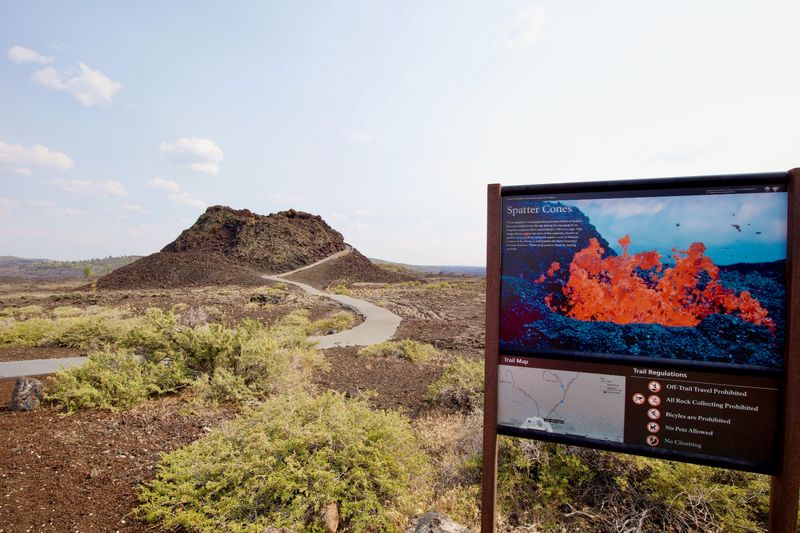
Speaking of those signs, the whole park is dotted with clear, kid-friendly displays explaining how the tubes and cones took shape. It turns a walk into a real lesson without feeling like homework.
Families who visited while their kids were studying volcanoes in school found it clicked everything into place. If you’re bringing children through Idaho, this is the rare outdoor stop where they’ll leave with a badge, a story, and a genuine grasp of how the ground under them formed.
Planning The Practical Details
The wind is the first thing to plan around. Gusts can howl fierce enough to test a tent all night, and rangers will tell you that kind of blow isn’t unusual, so campers should come prepared.
Heat is the second. The black rock soaks up sun and radiates it back, so a comfortable 70-degree morning can feel like 90 on the flows by mid-morning.
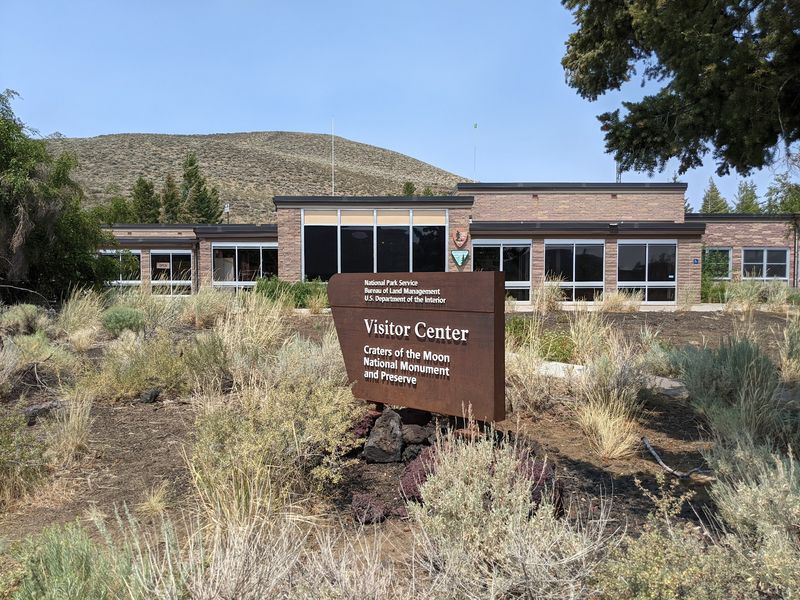
Early starts and plenty of water are the move, and you can refill bottles at the visitor center.
There’s an entrance fee, though a national park annual pass covers it, so bring yours if you have one. The Lava Flow campground runs on a first-come, first-served basis at a modest nightly rate.
Getting here means a bit of a drive; the monument sits off the beaten path in south-central Idaho, roughly an hour and a half for many travelers. Stop at the visitor center first, since the rangers are genuinely helpful and hand out those free cave permits.
Check current conditions before you set out.
Why It Sticks With You
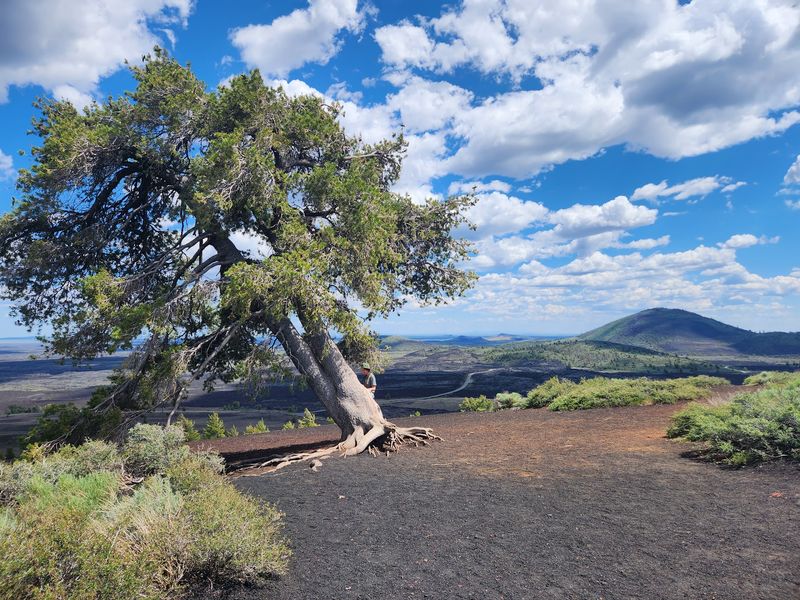
Standing on top of Inferno Cone with a sea of black flows spreading out below, most people finally understand why photos never do this place justice. Videos flatten it; being there does not.
Repeatedly called one of the most underrated stops in the entire national park system, this monument overdelivers for the effort it takes to reach. The trails are short and accessible, so you can hit the main sights in a few hours or stretch it into a full day or two.
A single afternoon works if that’s all you’ve got. Indian Tunnel, the North Crater Flow trail, and the Inferno Cone climb together make a strong sampler of everything the field offers.
What lingers afterward isn’t one grand feature but the whole strange sum: the color in the rock, the tubes underground, the astronaut ghosts, the stars.
If you’re driving across Idaho and hesitating over the detour, don’t. This is the kind of stop you’ll bring people back to, just to watch their faces when the desert turns to stone.