Catch A Film Beneath The Painted Ceiling Of This 1927 Idaho Movie Palace
Painted stars and ancient symbols look down from the ceiling long before the lights dim, and that alone makes this Idaho spot feel unlike any other place to catch a show. A local visionary built it in the 1920s to whisk audiences somewhere far grander than everyday life.
Nearly a century later, it still pulls off the trick. Come for a film, a comedian, or a candlelight concert, and stay for the walls.
A Desert Bloom In Downtown
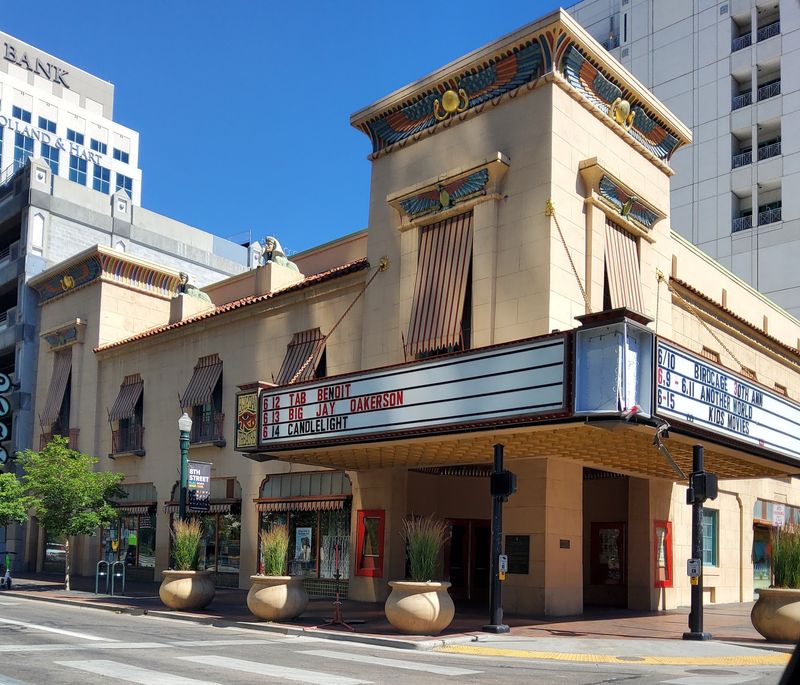
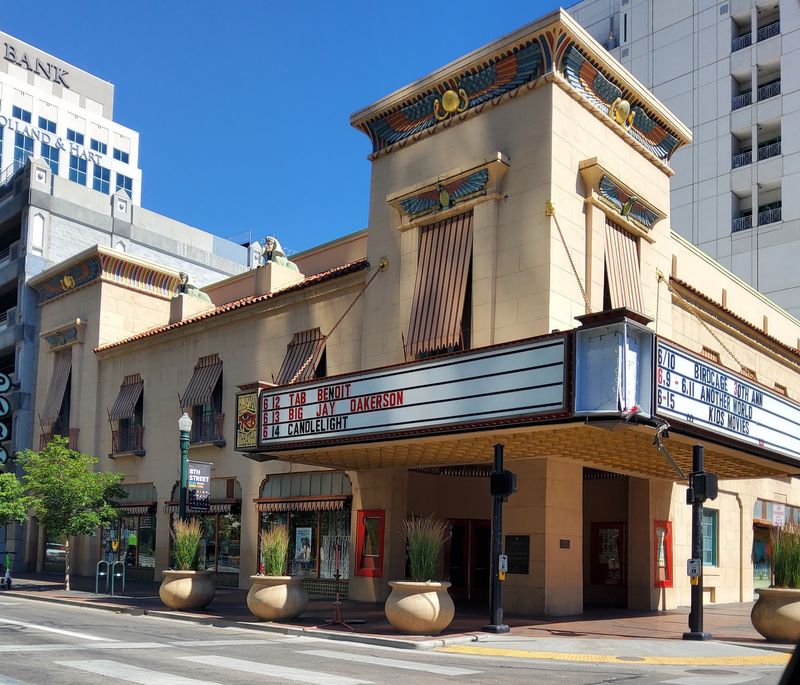
Egyptian Revival architecture in the middle of the Treasure Valley sounds like a story someone made up, yet there it stands in downtown Boise. Towering columns, sun-baked color, and a marquee that has been drawing eyes since the Roaring Twenties.
Back then, Boise was a busy crossroads where fresh ideas met old habits, and a local visionary saw a chance to build something that would carry audiences far from ordinary Idaho evenings. The doors first opened on April 19, 1927.
The timing was no accident. King Tutankhamun’s tomb had been uncovered only a few years earlier, and the whole world caught Egypt fever.
Movie palaces across the country borrowed the look, but few survived, which makes this one a genuine rarity.
What greets you outside is only a hint of what waits within. The building reads as part temple, part theater, a deliberate blend meant to make walking through the door feel like an event.
Step off the sidewalk and the century seems to fold in on itself.
Where The Lotus Pillars Stand
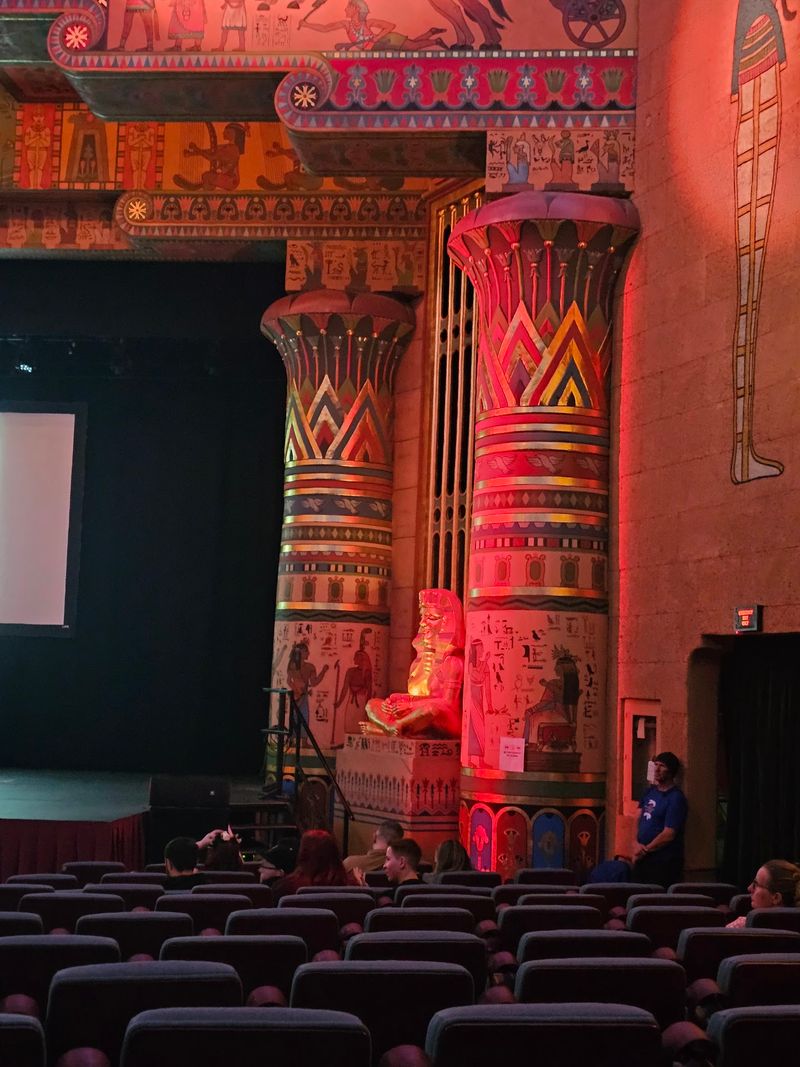
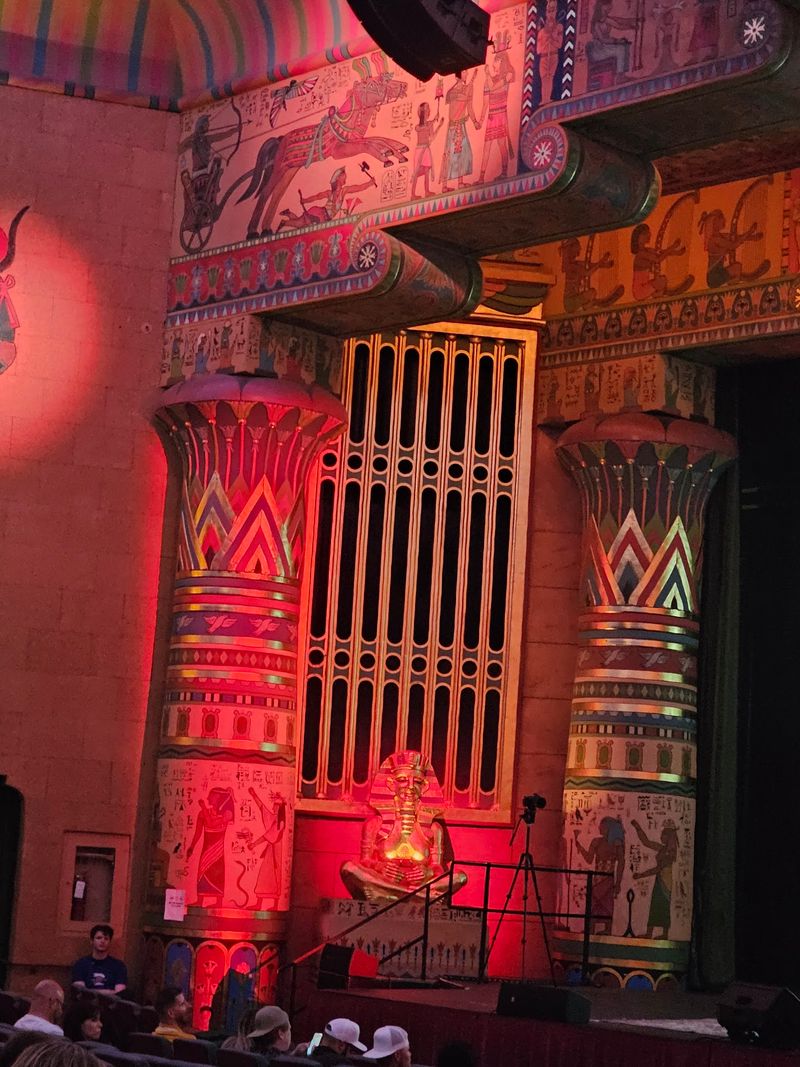
Lotus bud pillars flank the screen like something lifted straight from the temples at Karnak, their painted frescoes glowing under warm light. The world outside vanishes the moment you settle into your seat.
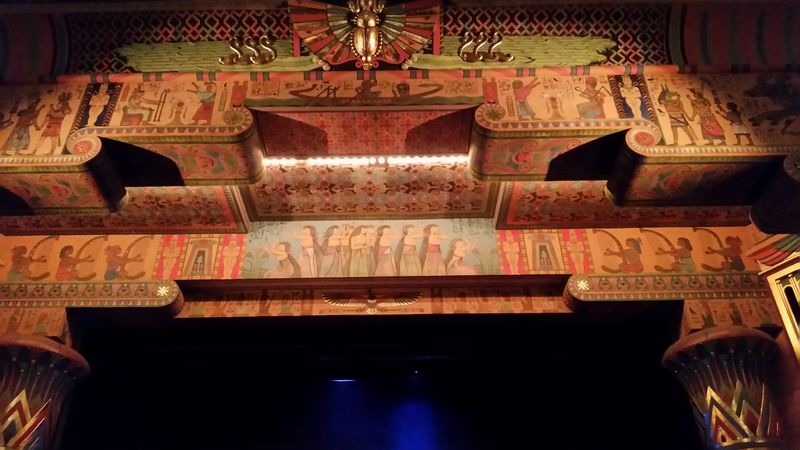
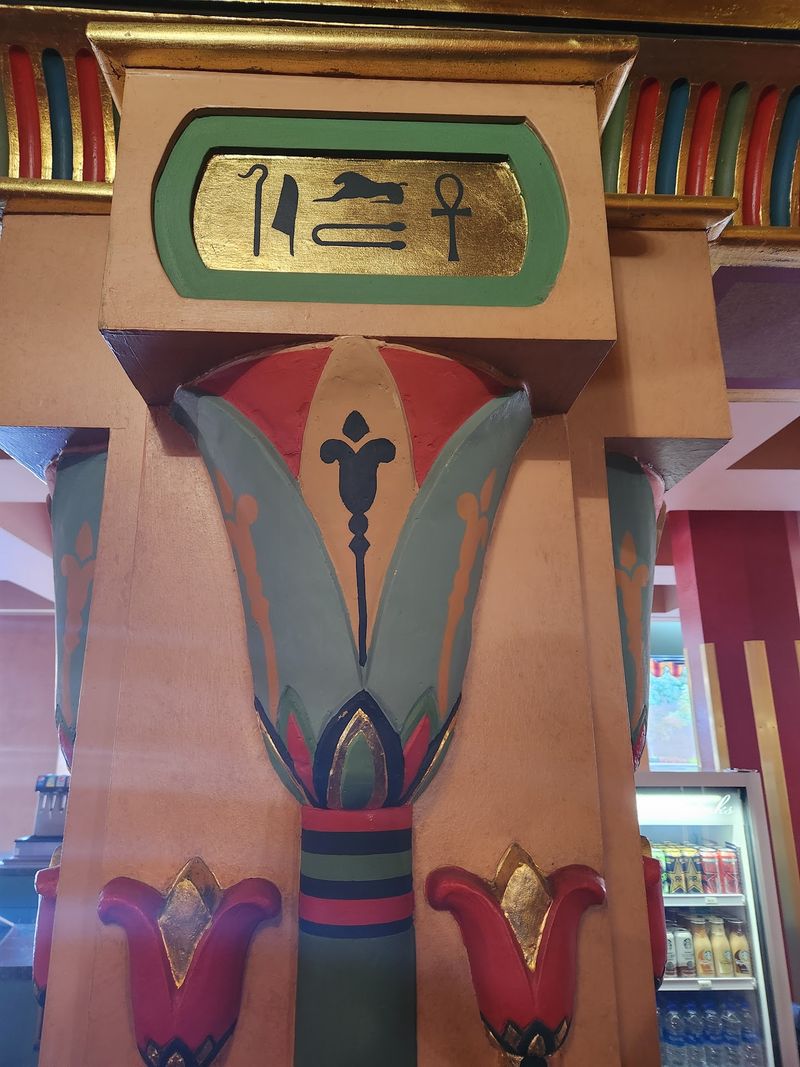
Every surface earns a second look. Detailed bas reliefs and hieroglyphics run along the walls, and the proscenium arch framing the stage shows off a large winged scarab, a golden sun disk, and gracefully arching reed bundles set beside swan-like figures.
There is a small twist hiding in plain sight, too. Red tiles on the roof carry a whisper of Spanish influence, a leftover from the architect’s first design preference before the Egyptian theme won out entirely.
The address, for anyone ready to see it in person, is 700 West Main Street in Boise. Visitors often describe the space as intimate, and it is.
Every seat sits close to the stage, so the artistry surrounds you rather than looming at a distance.
Look up, look around, and you start noticing details you missed the first three times.
Echoes Of Many Names
Four different names have hung over this same stretch of Main Street, each one a chapter in the building’s long life. The story of Idaho cinema is written right into its signage history.
It opened simply as the Egyptian Theatre. Then in 1929 it briefly became the Fox Egyptian Theater, soon shortened to just “the Fox” as ownership and fashions shifted.
The 1930s brought the biggest change of all. Rechristened the Ada Theater, it carried that name for more than four decades, a whole generation of Boiseans knowing it by no other.
Then in 1979 came a homecoming. The theater proudly reclaimed its original Egyptian identity, the name that matched its painted walls and lotus columns all along.
Each swap mirrored the changing world of movie-going in the Treasure Valley, from silent pictures to talkies to the multiplex era. Tracking those names is a bit like reading tree rings.
Ask longtime locals what they called it growing up, and the answer often reveals exactly which decade they came of age.
Saved From The Sands Of Time
Demolition nearly claimed this landmark, the same fate that swallowed so many grand movie houses across the country by the 1970s. Losing it would have erased a real piece of Idaho’s cultural memory.
The wrecking crews never came, thanks to one determined person. A preservationist named Earl Hardy recognized the building’s irreplaceable worth and stepped in to secure its future.
His passion did more than keep the doors open. It protected the painted ceiling, the frescoes, and the ornate detailing that could never have been recreated once gone.
Formal recognition followed. In 1974, the theater’s historical importance was cemented when it earned a place on the National Register of Historic Places, a stamp that helped guard it for good.
Stories like this are the emotional heart of Idaho’s old buildings, the ones that came within a breath of disappearing and somehow made it through. Every time the lights go down here, that near miss is part of the show.
Sitting in one of these seats feels a little different once you know how close it came to never happening.
A Canvas Reclaimed
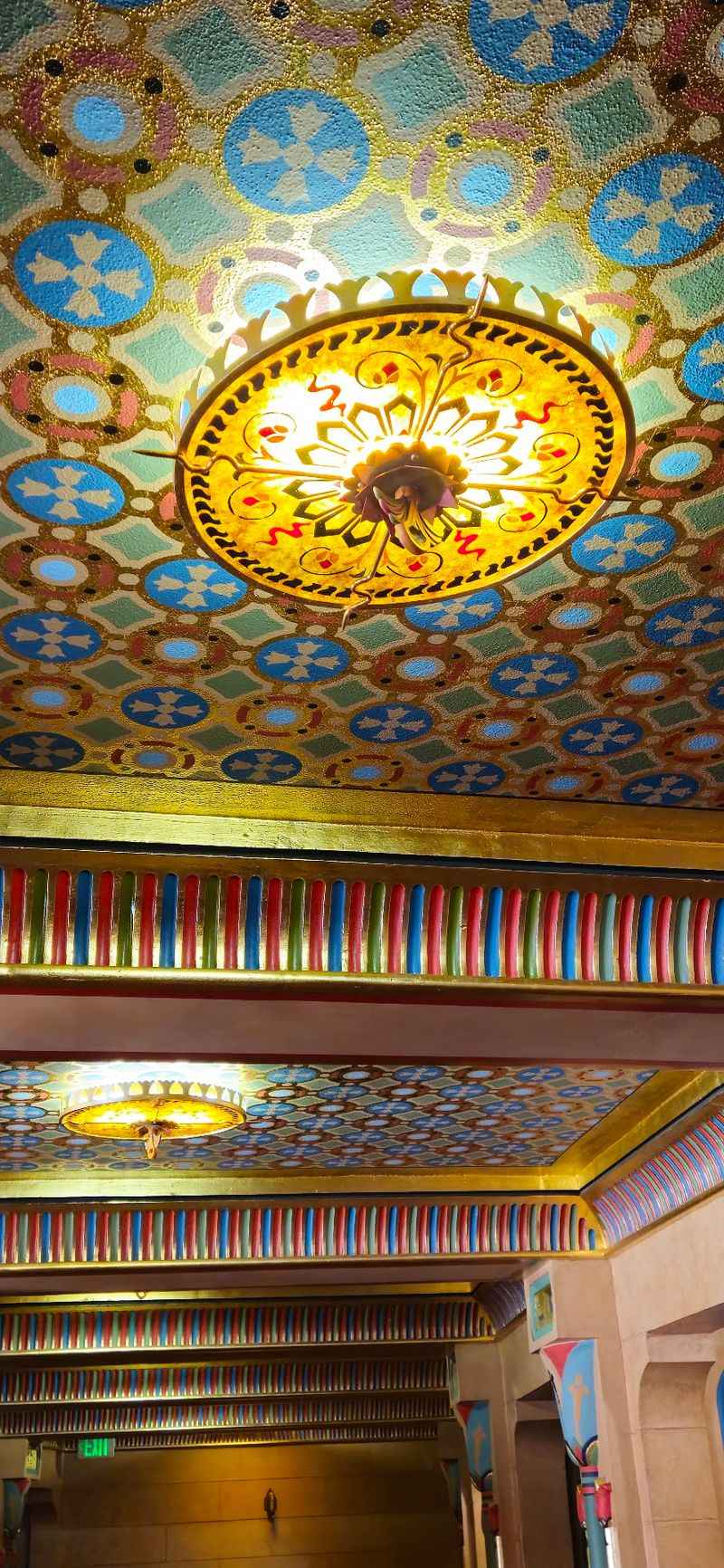
Layers of plain paint once covered some of the vibrant interior artwork, and portions of the ornate ceiling had begun to show their age. For a stretch, the original splendor sat hidden under decades of wear and changing taste.
The fix came in 1999. The Hardy Foundation commissioned a thorough restoration, determined to return the building to the way its creators intended it to be seen.
Architect Gregory Kaslo guided the work. His team carefully brought back the interior and exterior detailing, coaxing the frescoes, columns, and painted ceiling back to full color without cutting corners on the artistry.
Visitors today often single out how well the restoration holds up. The old theater feels lovingly cared for rather than merely patched, and that attention shows in every gilded corner.
Restoration work like this is quiet and painstaking, the kind of effort most people never see. What they do see is the payoff overhead when they tip their heads back before the film starts.
The result is a room that looks less restored and more simply well kept across a full century.
Beyond The Silver Screen
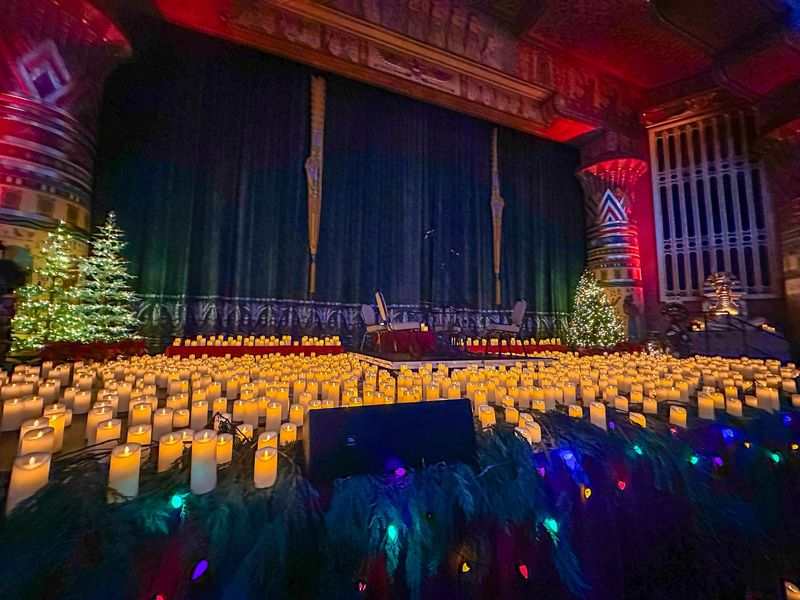
Films still roll here, but they share the calendar with a whole lineup of live acts. Comedians, opera productions, guest speakers, and full film festivals all take turns beneath the painted ceiling.
Music fills the room often. Visitors mention seeing string quartets and orchestras run through tributes to Fleetwood Mac, the Beatles, Queen, and ABBA, the acoustics earning steady praise across a wide range of shows.
Comedy nights pack the place too. Touring headliners draw crowds who leave grinning, and the intimate size means even balcony seats feel close to the action.
As one of the few remaining single-screen movie palaces left in downtown, it anchors the arts scene in a way a modern venue simply cannot. History is baked into the experience.
The variety is the point. On any given week the marquee might promise a classic film, a candlelit concert, or a stand-up set, so there is nearly always a reason to wander back downtown.
Check what is playing before you plan a night out, because the schedule shifts constantly.
An Evening Lit By A Thousand Candles
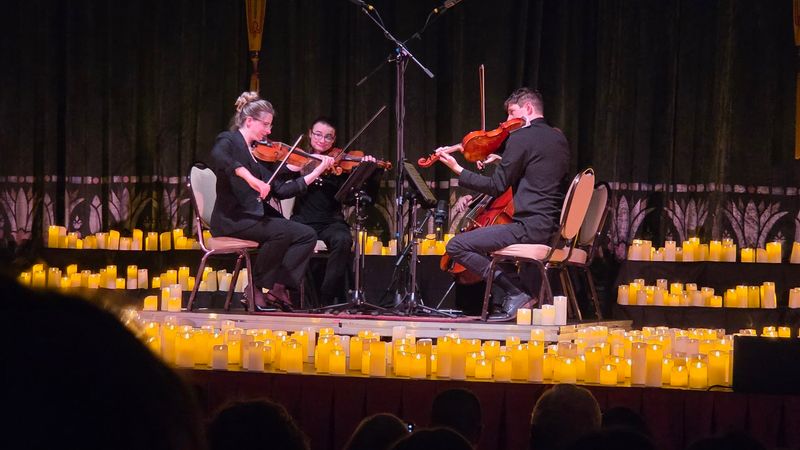
Hundreds of flickering candles line the front of the stage during the Candlelight Concert series, turning an already remarkable room into something out of a dream. One guest counted roughly a thousand of them glowing at once.
The music matches the setting. Local string quartets and small ensembles play arrangements that visitors describe as playful, beautiful, and genuinely moving, from tribute programs to classical favorites.
Queen versus ABBA has been a crowd-pleaser, and the candlelit staging draws almost as much admiration as the performers themselves. The soft light and the painted walls make an unforgettable pairing.
People often call these evenings the best way to experience the space. The intimacy of the theater means the sound wraps around you, and the candles supply an atmosphere no ordinary concert hall can fake.
Owners and staff earn warm words for greeting guests and keeping concessions moving even on packed nights. That personal touch adds to the charm.
If a Candlelight show lands on the schedule during your visit to Boise, it is worth building an evening around.
Comfortable Seats And Easy Parking
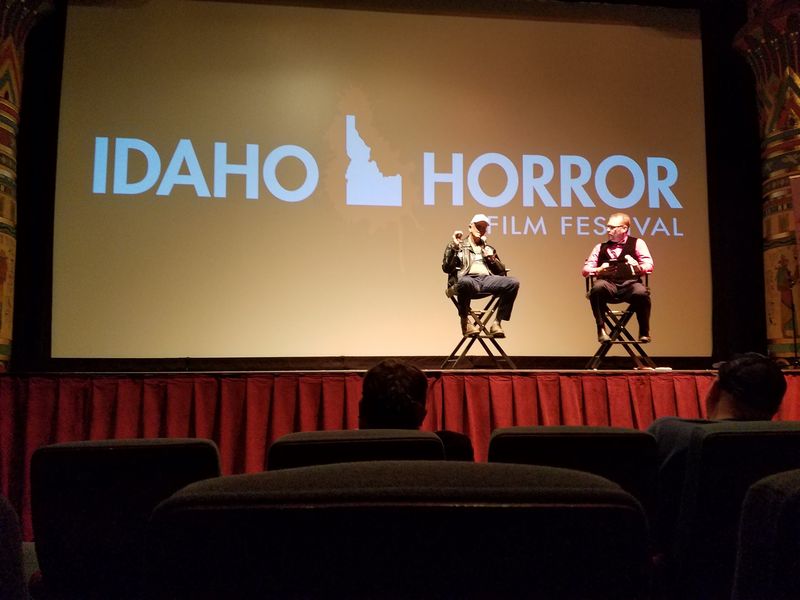
Every seat here is a good seat, a rare thing in a venue this old. The room is small enough that sightlines stay clean and the stage never feels far away, though the front balcony row sits slightly behind a rail, so plan accordingly.
Comfort gets high marks. Visitors call the seating cozy and note the theater stays warm inside, meaning you can leave the heavy coat in the car during Idaho’s chillier months.
Parking, often the deal-breaker downtown, is refreshingly simple. Two parking garages sit right beside the building, so circling the block is not part of the plan.
The location doubles as a launch pad for a full evening. Restaurants line the surrounding streets within easy walking distance, making a dinner-and-a-show night effortless.
Concessions keep things basic, mostly popcorn, candy, and drinks, so a snack tucked in your pocket is a smart move for longer shows.
Accessibility matters here too. Staff readily assist guests using wheelchairs, and the general flow of the crowd earns steady appreciation from those who have visited.
Worth The Trip Downtown
Fair prices and a room full of history make this an easy recommendation for a night in Boise. Visitors consistently mention the affordability, calling it a place where you can catch a quality show without stretching the budget.
The building’s daytime hours run through midday and early afternoon on weekdays, with weekends closing earlier, but the real magic happens during scheduled events at night. Always check what is on before you drive out.
Who fits here? Date-night couples, curious first-timers, longtime Idahoans who want to revisit a landmark, and anyone who appreciates a space that treats its own history with care.
Regulars talk about returning again and again, drawn back by the acoustics, the intimate scale, and that ceiling of painted stars overhead. It leaves an impression.
Located at 700 West Main Street, it sits within walking distance of plenty of dinner options, so the whole outing comes together in one downtown block.
Between the architecture, the restoration story, and the steady stream of concerts and films, this 1927 palace remains one of the most rewarding places in the Treasure Valley to spend an evening.