Wild Zebras And Rhinos Roam Beside Your Car At This Florida Drive-Through Safari
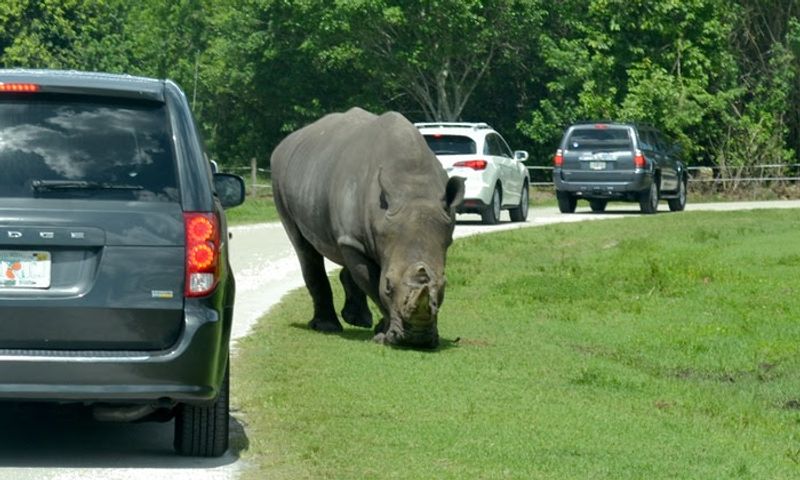
I packed snacks for what I assumed would be a quick hour of looking at animals through a fence. Four hours later I was still in Florida, windows up, watching a rhino decide whether my front bumper was interesting.
Somewhere between the zebra herd and the giraffe with a paintbrush habit, the afternoon turned into the kind of day you talk about for weeks. Bring a full tank of gas and an empty schedule, because this one earns both.
A Savanna Off The Turnpike
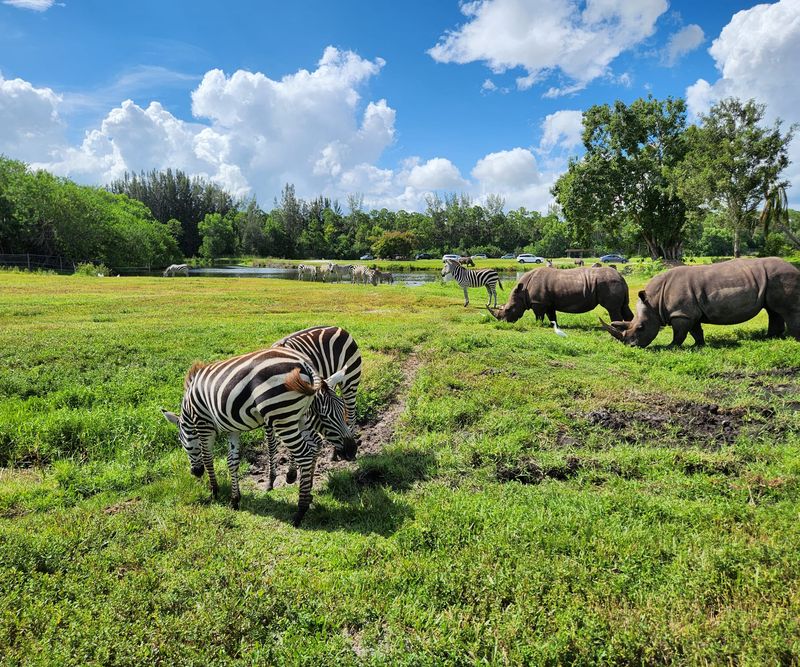
Palm trees, pine flatwoods, and then suddenly a wildebeest. The transition from ordinary western Palm Beach County road to open savanna happens faster than seems reasonable.
Lion Country Safari sits in Loxahatchee, roughly half an hour west of downtown West Palm Beach and about an hour from Miami. It bills itself as a cageless drive-through animal expedition, which in practice means you stay in your vehicle while more than a thousand animals move through open habitats on both sides of the road.
The setup covers over 600 acres, with a four-mile loop through seven themed sections. Lions and chimpanzees have their own secure areas within the route, but zebras, rhinos, giraffes, ostriches, and antelope share the same wide ground you drive across.
There is a second half too: a walk-through park called Safari World waiting at the far end of the loop, so the drive is only the opening act.
Getting there is simple enough from either major highway, with the Florida Turnpike and I-95 both feeding toward Southern Boulevard. The address is 2003 Lion Country Safari Rd, Loxahatchee, FL 33470.
How A Cageless Zoo Took Root Here
Back in 1967, a group of entrepreneurs looked at South Florida’s warm, flat interior and saw East Africa. Their pitch was simple: give families the feeling of an African safari without the airfare, the visas, or the long flight.
What opened that year was billed as the country’s first cageless zoo, flipping the usual arrangement so the animals had the run of the land and people stayed enclosed in their cars. It was a strange idea at the time.
It stuck.
Decades of growth followed, expanding the preserve past 600 acres and building out the herds that now define the place. One review mentioned a first visit thirty years earlier; the layout has changed, but the core concept has not.
Windows-down snack feeding from the car, once part of the experience, was retired in favor of keeping the habitats calm and the animals on natural diets.
Florida has plenty of attractions built on fantasy. This one was built on geography, on the fact that the climate here happens to suit a rhinoceros surprisingly well.
Zebras That Play Chase Beside Your Bumper
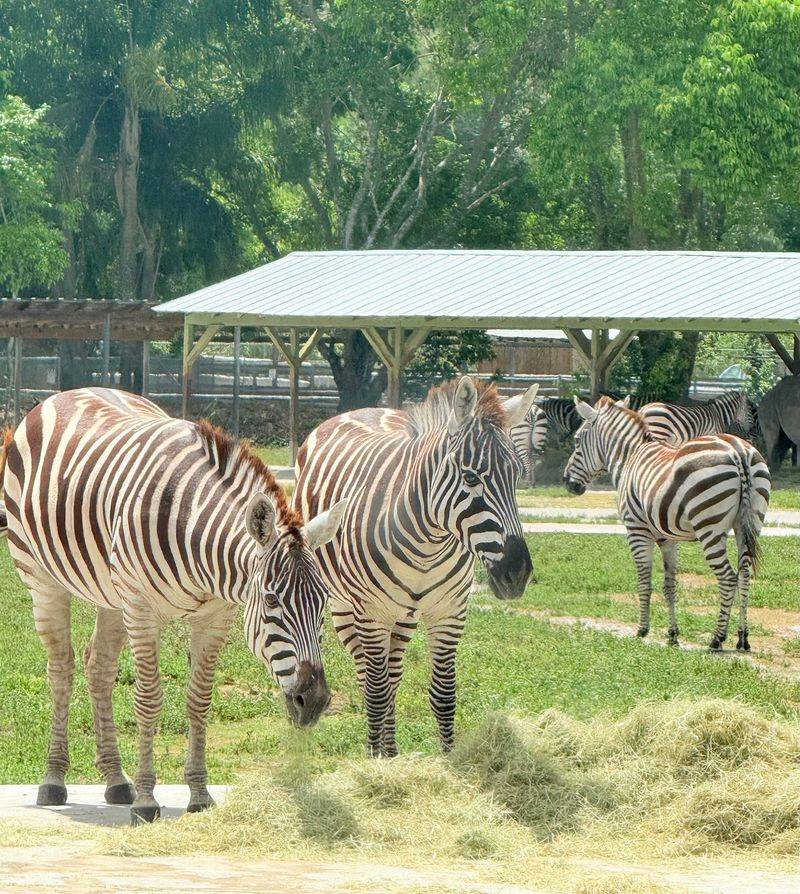
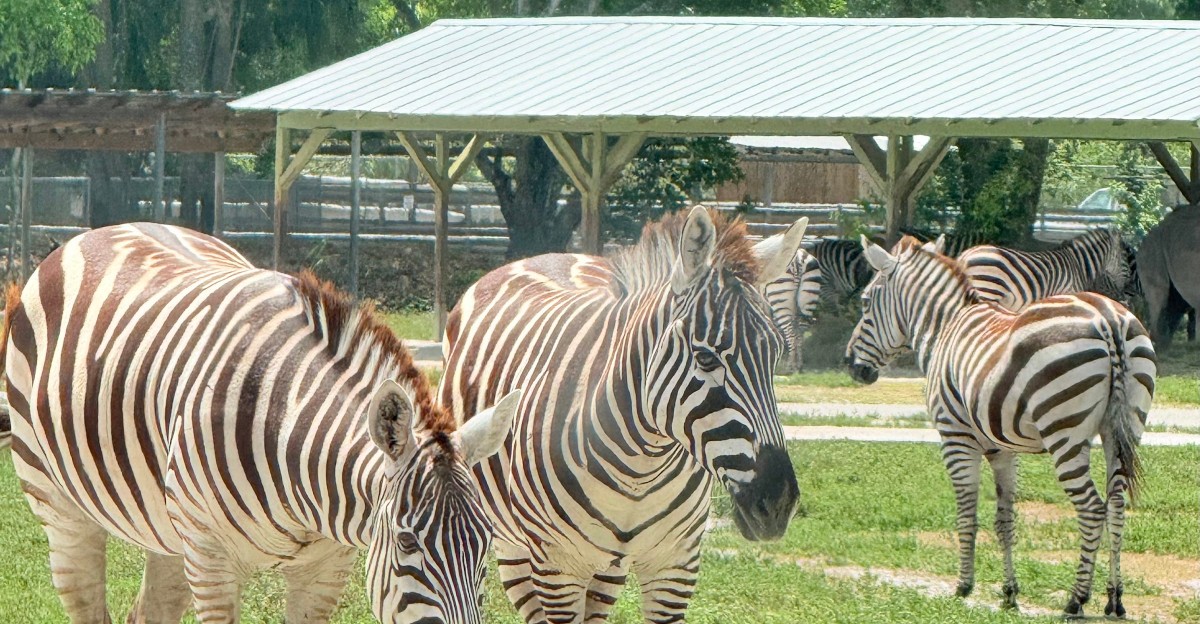
Watching a zebra sprint sideways for no reason at all is a small gift. They do it often here, kicking up dust and cutting across the grass in bursts, then settling back into grazing as if nothing happened.
The park keeps one of the largest zebra herds recorded in North America, and the numbers show. Stripes appear in clusters, sometimes dozens deep, sometimes a single animal standing close enough to the pavement that you can see the individual hairs along its mane.
Their coats look sharp and clean, the black nearly glossy in morning light. Zebras come up in review after review for exactly that reason, often paired with the giraffes as the biggest surprise of the drive.
Roll past slowly and you will catch the playful behavior: two young ones nipping at each other, another rolling in a patch of sand.
A tactic that pays off here is stopping the car entirely when a herd is near, engine idling, and just waiting. Movement pulls their attention away.
Stillness brings them closer.
Southern White Rhinos In The Open
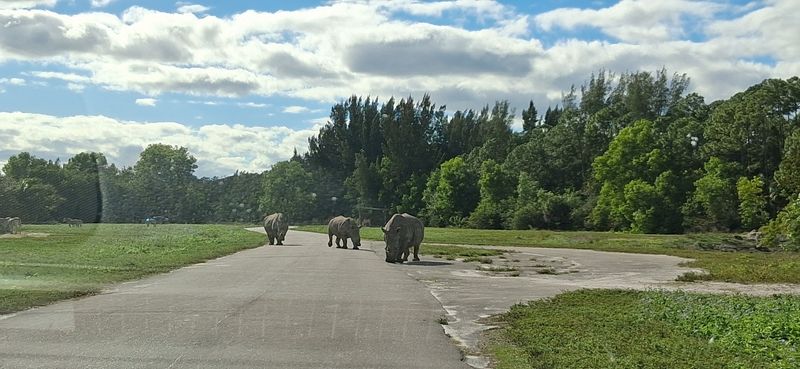
Nothing prepares you for the scale. A southern white rhino standing ten feet from a sedan makes the sedan look like a toy, and the animal barely acknowledges it.
The preserve maintains a significant population of southern white rhinos, a species with real conservation weight behind it, and they are among the easiest large animals to spot along the loop. They graze in loose groups, heads down, horns catching the light, occasionally crossing the road with the unhurried confidence of something that has never needed to rush.
Rhinos and giraffes together are the pair that tends to catch people off guard. Seeing them from a car window, without glass or moat or railing in between, changes the whole feeling of the encounter.
Calves show up in the herd from time to time, trotting close to their mothers on absurdly stubby legs.
Keep your foot near the brake. A rhino deciding to amble across the pavement sets the pace for everyone behind you, and honking is not an option here.
Seven Habitats, Four Miles, One Slow Lap
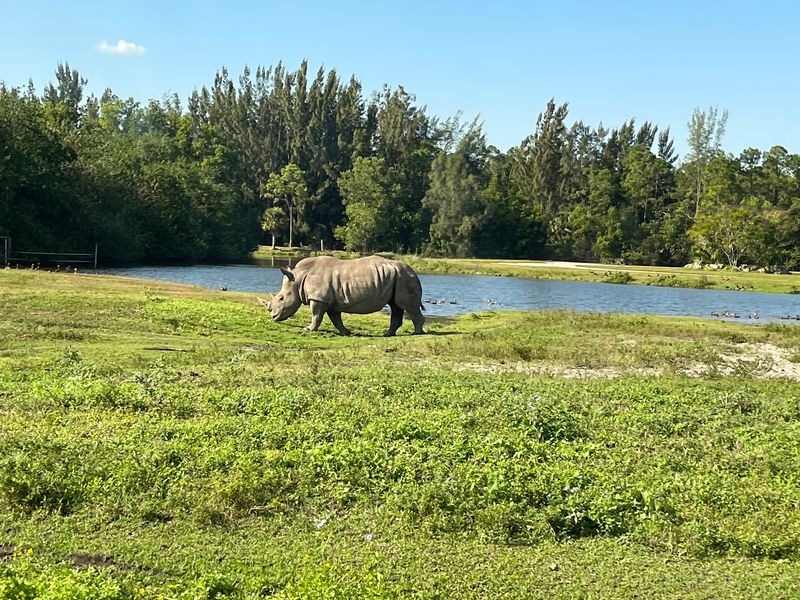
Five miles per hour is slower than it sounds. The drive-through loop runs roughly four miles through seven distinct themed habitats, and the posted limit turns that into something closer to ninety minutes, sometimes two hours if the animals are cooperative.
Rules are straightforward and enforced at the gate: windows and doors stay closed, nobody exits the vehicle, and convertibles and soft-top cars are not allowed through. Ticket staff walk through the whole list before you roll in.
A streaming audio narration runs alongside the route, keyed to each section, explaining what you are looking at and why it behaves the way it does. Playing it in the car is the single best upgrade to the experience, and it keeps kids oriented between sightings.
Lions occupy a fenced section with water barriers, and the chimpanzees live on an island system, rotating between islands day to day to echo their nomadic movement in the wild.
Wildebeest, ostriches, antelope, and waterbuck fill the gaps. Nothing here is choreographed, so two laps rarely look the same.
Lions Behind The Fence Line
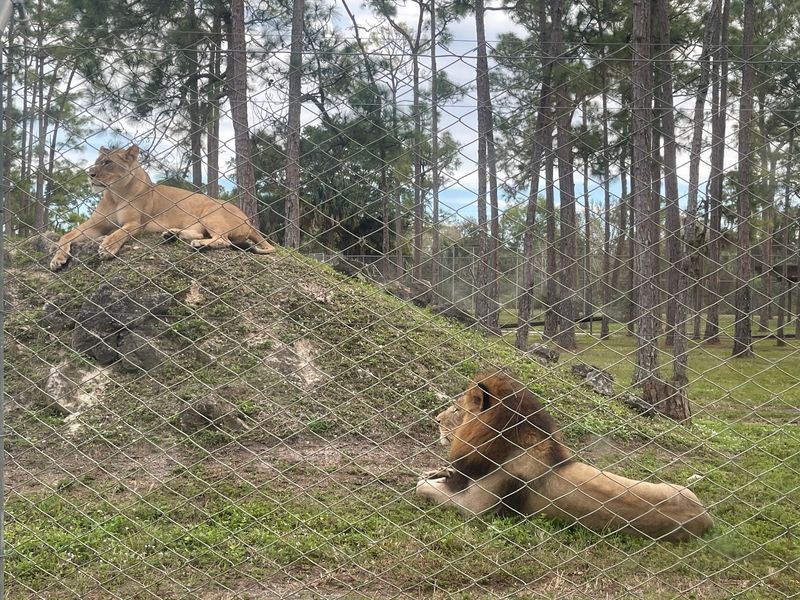
Hearing a lion roar from inside a closed car is a physical sensation. It arrives through the floorboards before it reaches your ears.
The pride here lives in a dedicated section along the drive, secured with fencing and water barriers so the cats stay separate from the free-roaming herds and from traffic. You still pass close enough to pick out faces, manes, and the slow blink of an animal that has decided the heat wins.
Midday tends to mean lions flopped in shade, tails twitching. Cooler mornings bring more movement, more pacing, better odds of a roar rolling across the enclosure.
Some of the pride stays out of sight on any given visit, which is how it goes with cats anywhere. The ones you do see usually make up for the ones you miss.
Every other large animal on the route wanders loose, which makes the lion section feel like the one deliberate exception. That contrast is the point, and it lands the moment you reach the far side of the gates.
Feeding A Giraffe By Hand
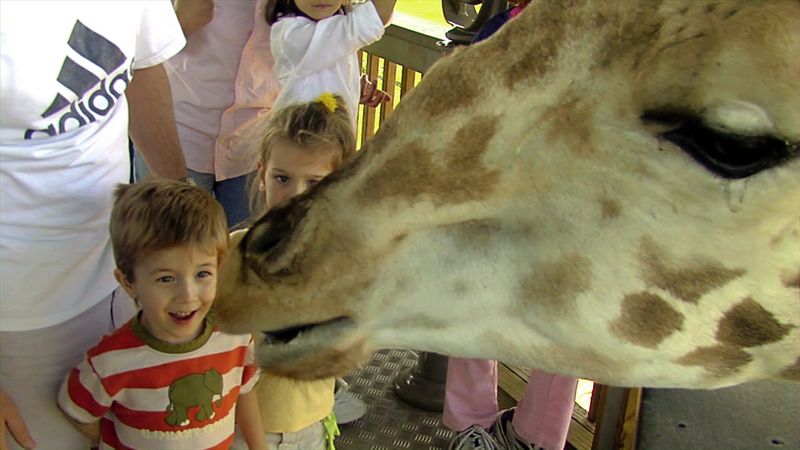
A giraffe tongue is longer, darker, and stranger than you expect, and it will wrap around a lettuce leaf held in your fingers with startling precision.
The giraffe feeding platform in Safari World is the most talked-about single moment at the park, mentioned in hundreds of reviews, and it runs for a small extra fee on top of admission. You stand at rail height, they lower their heads, and the photos take themselves.
Giraffes dominate the conversation here for good reason. They are the most mentioned animal on the property by a wide margin, and seeing one at eye level explains why.
One resident giraffe named Bahkari paints, and his original works are sold on site. Somebody drove home with a giraffe painting, which is a sentence that only makes sense once you have been.
Get in line early in the day. Lettuce supplies are finite, the platform draws a crowd by afternoon, and the giraffes take their own breaks regardless of who is waiting.
Safari World Waiting At The Exit
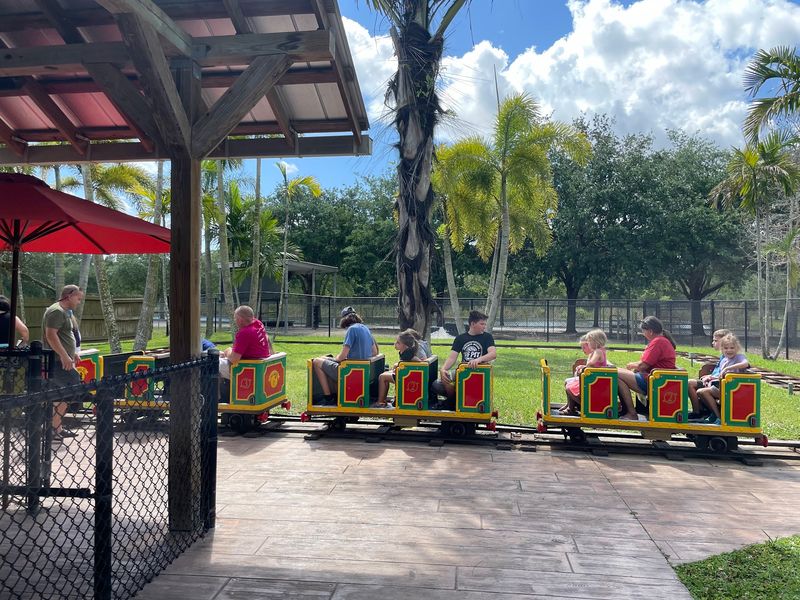
Most people assume the drive is the whole thing. Then you park, walk through the gate, and find a second park entirely.
Safari World is the walk-through half: exhibits with flamingos, macaws, alligators, goats, and monkeys, plus a petting area and feeding stations for farm animals, parakeets, and lorikeets. The lorikeet feeding gets loud in the best way, with birds landing on arms and shoulders.
Rides included with general admission cover the Rio Grand Train, a flying elephant ride, a maze, and a short lake boat tour that runs ten to fifteen minutes. Mini golf and paddle boats round out the options.
Feeding stations carry small extra charges, but nearly everything else is folded into the ticket price, which is unusual for a Florida attraction of this size.
Two hours of walking after two hours of driving is a realistic plan. Between the exhibits, the rides, and the water play, this side of the fence is what turns a safari stop into a full day out.
Splash Pads And Slides For The Florida Heat
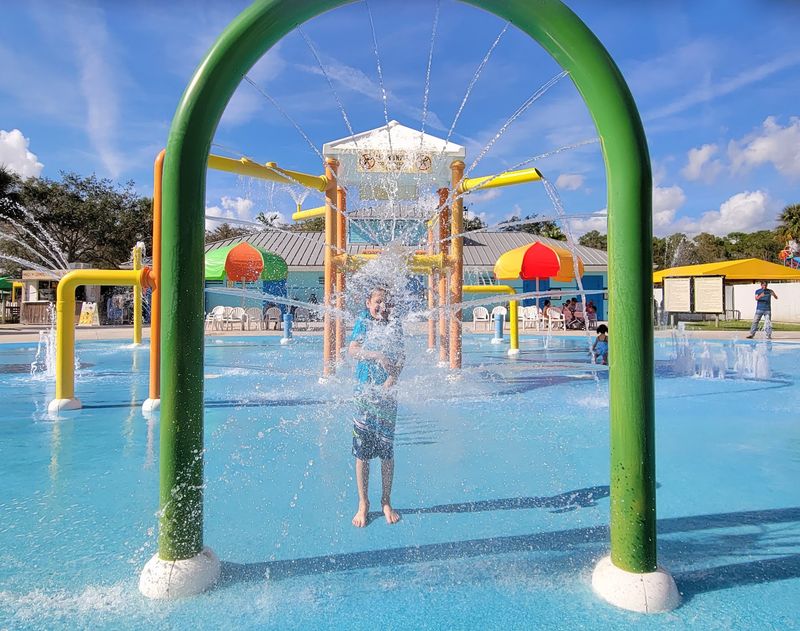
Florida in summer does not negotiate. By noon the humidity settles in, and a water park in the middle of a safari suddenly looks less like a novelty and more like planning.
Safari Splash Sprayground handles the youngest kids, with a lifeguard on duty at the splash area, and there are water slides for those who want more than a spray. Swimsuits belong in the car for any visit between spring and fall.
The water areas come up constantly in reviews, often described as the thing that saved an afternoon. Changing facilities near the splash zone are basic, so pack towels and a dry set of clothes rather than counting on showers.
Shade is available around the picnic areas, and the park allows outside food, drinks, and rolling coolers, with several designated spots to spread out and eat.
On-site cafe food gets good marks but runs expensive, so a packed lunch plus a cooler is the move for families watching the tab.
Who Gets The Most Out Of A Day Here
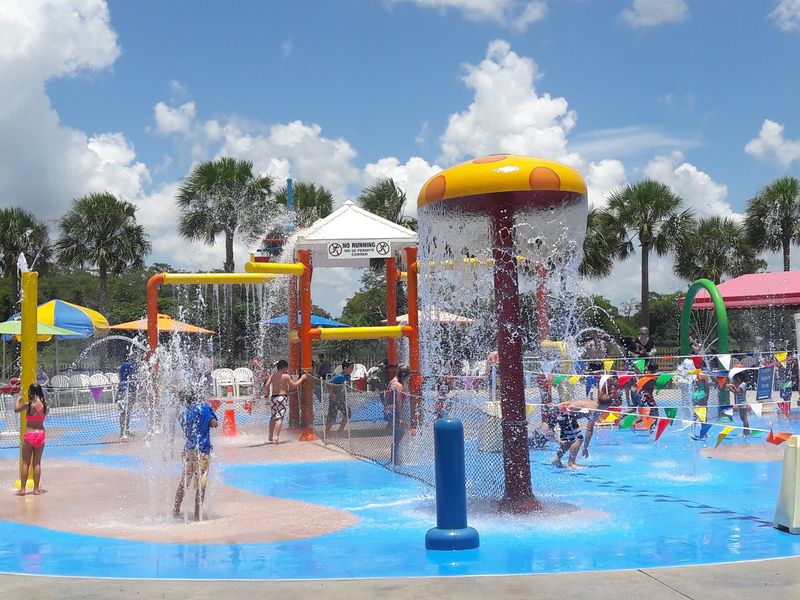
Kids lose their minds, in a good way. Between the free-roaming animals, the train, the birds landing on their arms, and the splash pad, there is almost no dead time for anyone under twelve.
Grandparents do well here too, since the main attraction happens from an air-conditioned seat with no walking required. Anyone with mobility limits can experience the entire drive-through portion without leaving the car.
The slow pace suits adults traveling without children as well. Four miles at five miles per hour leaves plenty of room for conversation, and the animals provide the interruptions.
Photographers should bring a zoom and expect glass reflections, since windows stay closed the whole way.
People who have already done a genuine African safari may find the price steep for what it delivers, and that is a fair read. For everyone who has not stood beside a wild rhino, the comparison hardly matters.
School groups show up on weekdays, though the property absorbs them easily. A midweek visit around midday can still feel quiet.
Planning The Drive Out To Loxahatchee
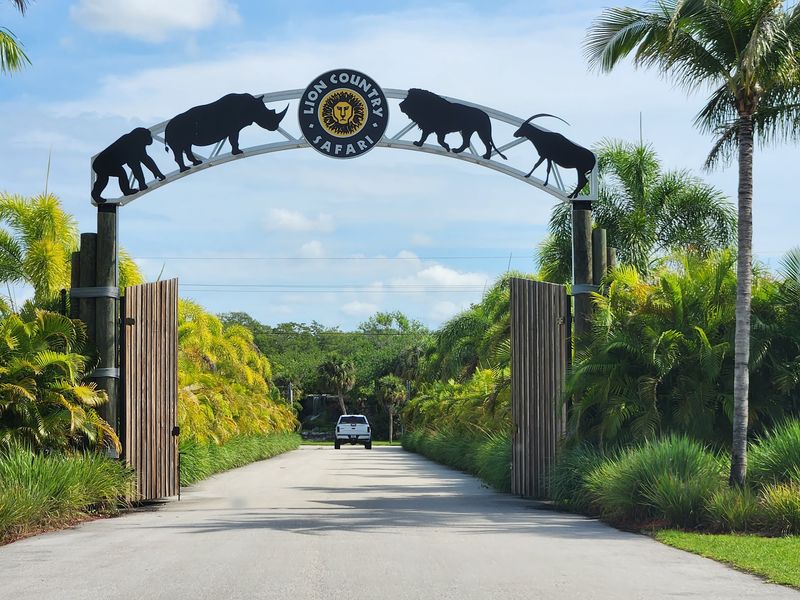
Timing matters more than anything else. Arrive close to opening, when cooler air keeps the animals near the road and feeding activity draws herds into view before they drift toward shade for a midday rest.
Getting there is easy from either direction: the Florida Turnpike at Exit 97, or I-95 at Exit 66 toward Southern Boulevard, then west. On-site parking is free and sits right by the entrance.
Gates open in the morning and the park runs every day of the week, but closing times and last vehicle admission shift with the season. Check the official calendar before driving out, especially during hurricane season from June through November.
General admission covers both the drive-through and Safari World, and advance online tickets often come cheaper than the gate. Annual passes make sense for anyone living in Palm Beach County.
Pets cannot ride through the safari for obvious reasons, though kennels are available on site.
Convertibles and soft-tops are turned away, so borrow a hard-top vehicle if that is what you drive.
The Verdict After Four Hours Behind The Wheel
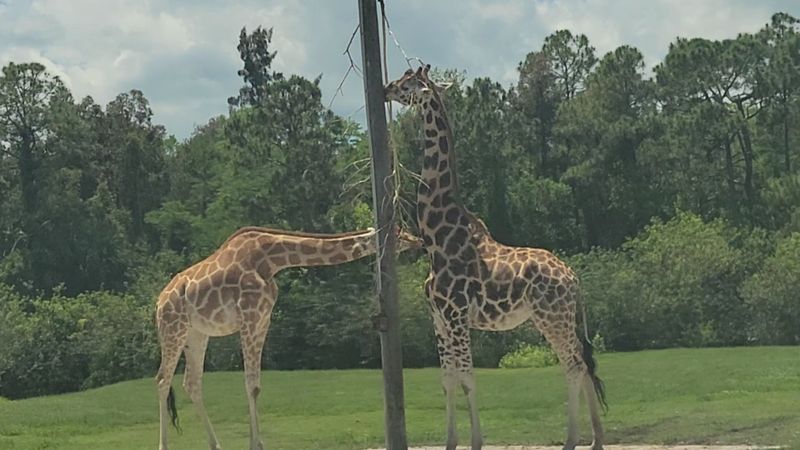
Four hours in, windows still up, I had stopped taking photos and started just watching. A giraffe crossed in front of the hood, took its time, and the whole line of cars behind me sat perfectly content to wait.
What makes this place hold up is the ratio of real animals to manufactured spectacle. Nothing performs.
The herds do what herds do, and you happen to be driving through the middle of it.
Nearly 15,000 reviews average 4.6 stars, which is a hard number to hit for an attraction that has been running since 1967. Clean grounds, healthy-looking animals, staff who explain the rules before you roll in: those details add up.
Bring a cooler, download the audio guide, and give yourself the full day rather than squeezing it between other stops.
South Florida has no shortage of ways to spend an afternoon. Few of them end with a rhino twenty feet from your door and a lorikeet on your shoulder, and fewer still leave you planning the return drive before you have reached the exit.