A Free Nebraska Museum Is Packed With The World’S Largest Collection Of Roller Skates
The plan was a quick detour off the interstate, maybe twenty minutes to stretch our legs before getting back on the road across Nebraska. Instead, a plain office building turned into a two-century tour of roller skates, including pairs made for bears, a jetpack prototype from the 1950s, and costumes that sparkle under glass.
It holds the world’s largest collection of its kind, and it costs nothing to walk in. Anyone who ever spun around a rink on a weekend night will want to hear about it.
Where Nebraska Keeps Its Roller Skating Past
On a quiet stretch of South Street in Lincoln, a modest office building holds something no other museum on the planet can claim. Inside sits the world’s largest collection of historical roller skates, along with costumes, films, artwork, and memorabilia gathered over more than four decades.
The National Museum of Roller Skating charges nothing at the door. Admission is free, parking is free, and a donation bin near the exhibits helps keep the lights on and the collection growing.
Why Lincoln, of all places? The answer comes down to company: the museum shares its home with USA Roller Sports, the national governing body for roller sports, which makes the capital city a kind of headquarters for everything on wheels.
Small in square footage but enormous in scope, the museum covers more than 200 years of skating history in a space most people can walk through in under an hour. Some linger much longer.
The exhibits trace the sport from clunky early prototypes to the sleek skates of today’s comeback, with detours through derby, disco, and the Olympics.
Picture shelves lined with leather boots, wooden wheels, and sparkling competition outfits, arranged so the story unfolds one case at a time.
Four Decades of Preserving a Sport on Wheels
The museum was established in 1980, and its doors opened to the public on April 13, 1982. From the start, the goal was simple: preserve roller skating’s long history and share it with anyone curious enough to walk in.
What does it take to build the largest collection of its kind? Mostly patience, plus a steady stream of donated artifacts from people across the skating world.
Imagine someone handing over a pair of skates worn through a lifetime of Friday nights at the local rink. Pieces like that land here, alongside patents, photographs, programs, and postcards showing rinks from towns all over the country.
Plenty of museums freeze their displays for years at a time. Here, artifacts rotate, so a return trip can turn up items that were in storage the last time around.
Nellie Anderson Lillie, Vice President, put the mission plainly when talking about expanded hours: “We are looking forward to the new hours giving even more visitors the chance to explore our wonderful collections and learn something more about roller skating.” That welcoming spirit runs through the whole place.
The 1936 Colonial Revival Building on South Street
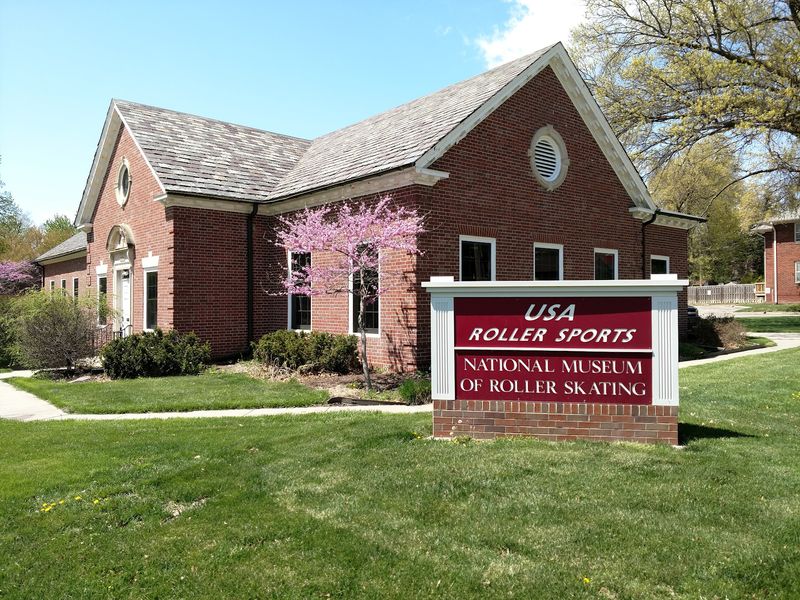
The tidy, orderly lines of Colonial Revival design mark the building from the street, a style that was popular when it went up in 1936. It hardly looks like a place full of disco costumes and bear skates.
Before skates moved in, the structure served as a utility warehouse for a Lincoln telegraph company. Stock and supplies that once kept communication lines running have long since given way to glass cases and exhibit panels.
Does a warehouse make a good museum? In this case, the answer leans yes, since the building’s practical bones leave room for displays that run from the 1800s right up to the present.
From the outside, the setup can feel a little puzzling. The museum sits toward the rear of what now functions largely as an office building, and wandering past desks and doorways on the way in is part of the experience.
Once inside the exhibit space, though, the mood shifts. Skates line the walls, costumes hang in cases, and the office hum fades behind a room fully given over to rolling history.
It’s an unusual pairing that somehow fits.
Next Door to the National Governing Body
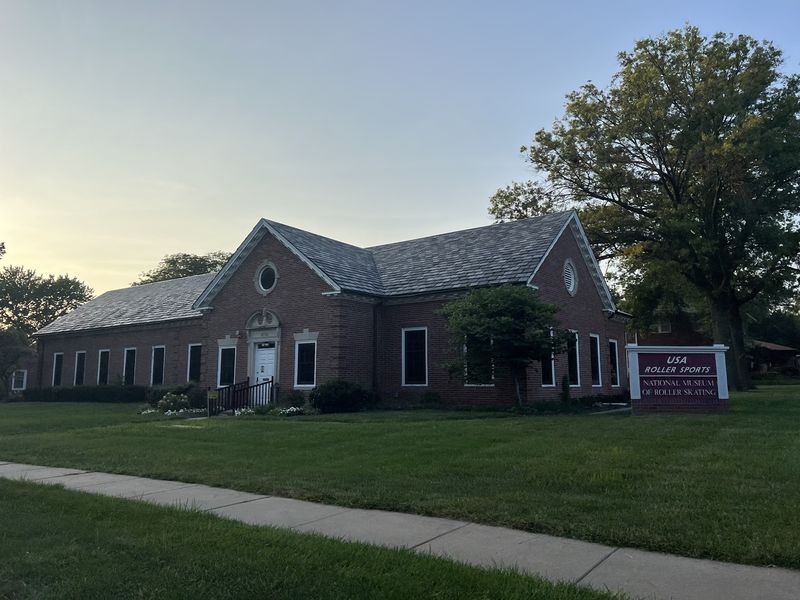
How many museums share a hallway with the organization that runs the sport they celebrate? This one does.
USA Roller Sports, the national governing body for roller sports, occupies the same building, which ties the collection directly to the competitive world it documents.
That arrangement explains the hall of fame element woven into the exhibits. Champions and innovators who pushed skating forward get their due here, with photographs, uniforms, and gear telling their stories.
National championships bring skaters and their families to Lincoln, and the museum makes an easy stop between events.
Pure history buffs will find plenty to study. Active skaters get something different: a chance to see where their own discipline came from and how the equipment on their feet evolved.
Look for derby memorabilia contributed by leagues from other states, including items like advertising cards and jacket pins that tie present-day teams to the archive.
Even a casual walk-through makes one thing clear. Roller skating has a governing body, a record book, and a paper trail, and much of it ends up right here in Lincoln.
The connection gives the whole collection weight.
The 1819 Skate and Other Early Experiments
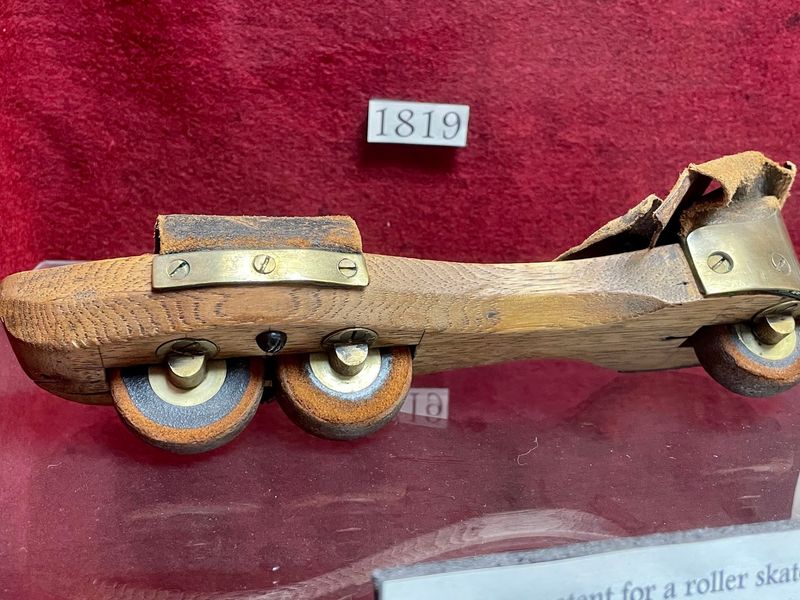
Who knew the very first roller skates were inline? The earliest designs look nothing like the four-wheeled quad skates that filled rinks in the twentieth century.
One of the oldest pieces in the collection dates to 1819, a skate built long before paved sidewalks or polished rink floors were common. Seeing it up close makes the leap from that contraption to modern gear feel huge.
The early cases feature wood and metal, with narrow wheels and simple straps that look far from forgiving on the ankles.
Early skates were awkward and hard to steer, yet inventors kept tinkering. Displays walk through that trial and error, showing how designers experimented with wheel placement, materials, and ways to turn.
Stand in front of the timeline long enough and the story starts to click. Each new patent answered a problem the last one created, from balance to braking, and the museum preserves models and paperwork that show those fixes in action.
For anyone who grew up on skates, this corner offers a fresh sense of how much engineering sits under every pair.
Tara Lipinski’s 1991 Championship Skates
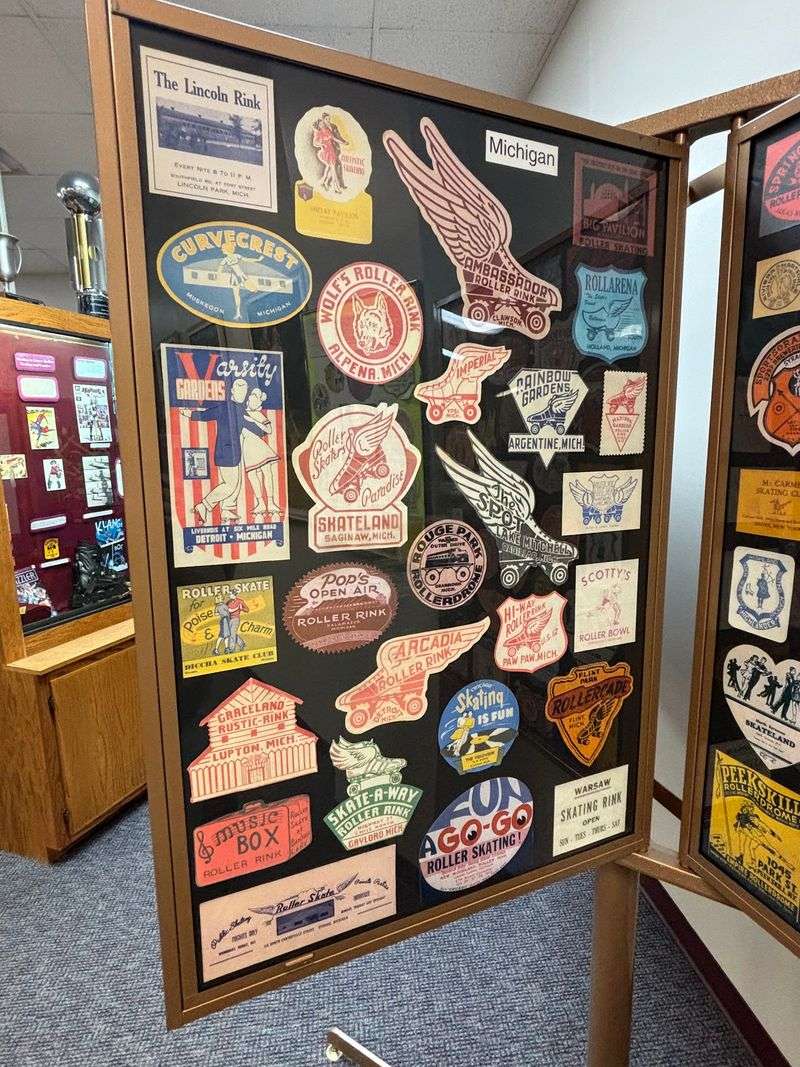
Long before Olympic gold on ice, Tara Lipinski competed on roller skates. Her 1991 championship skates and outfit sit in the collection, a small but striking reminder of where a famous career began.
Is roller skating a pipeline to the Winter Olympics? For some athletes, yes.
Apolo Ohno also got his start on wheels before turning into a speed skating star on the ice.
A young skater glides through a routine at a roller championship in 1991, costume catching the arena lights, years before the world learns her name.
The outfit looks modest next to later competition wear, yet it carries a surprising amount of history. It connects artistic roller skating to figure skating in a way that makes the two sports feel like close cousins.
Nearby displays expand on artistic skating as a discipline, with costumes and gear from competitors who spent years perfecting spins, jumps, and dance patterns on rink floors.
For young skaters in the family, this section lands hard in the best way. Seeing that an Olympian started out doing the same thing they do on Saturday afternoons can spark big ambitions.
Jetpacks, Stilts, and Skates Built for Bears
A 1956 jetpack skating prototype might be the most eyebrow-raising object in the building. It looks like a mid-century dream of the future, when strapping a propulsion unit to your back and rolling down the street seemed like a reasonable plan.
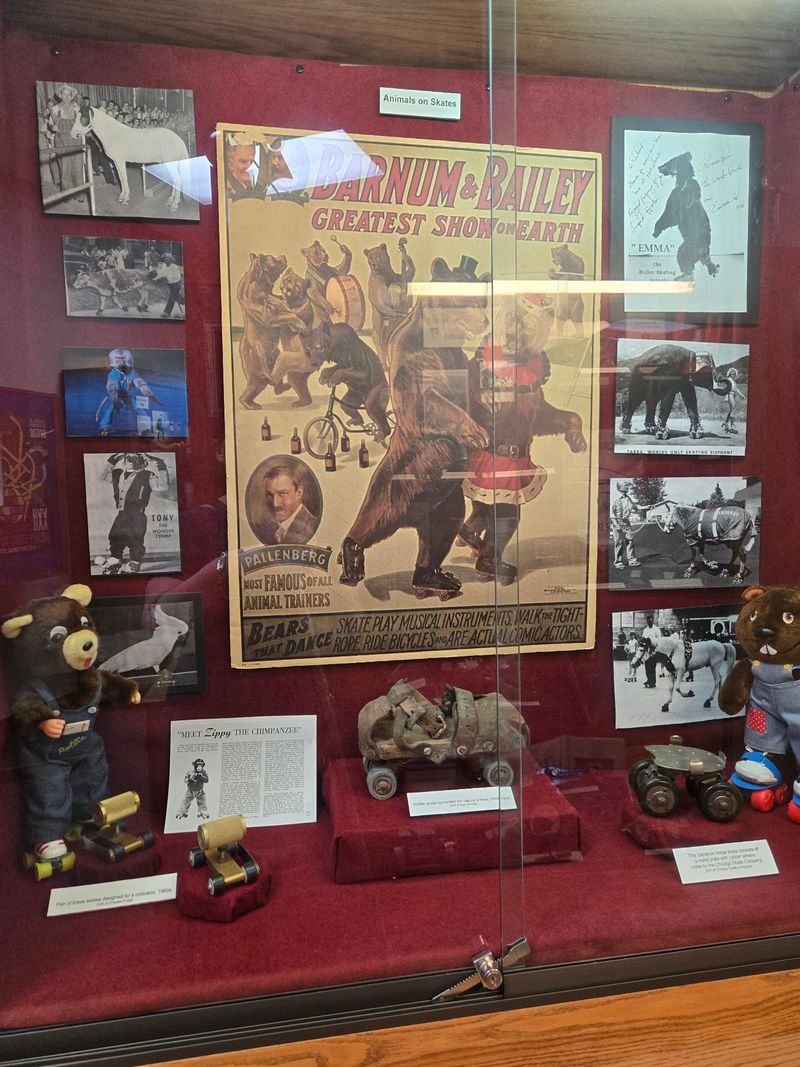
Then there are the animal skates. How exactly do you fit a horse with roller skates, and why would anyone try?
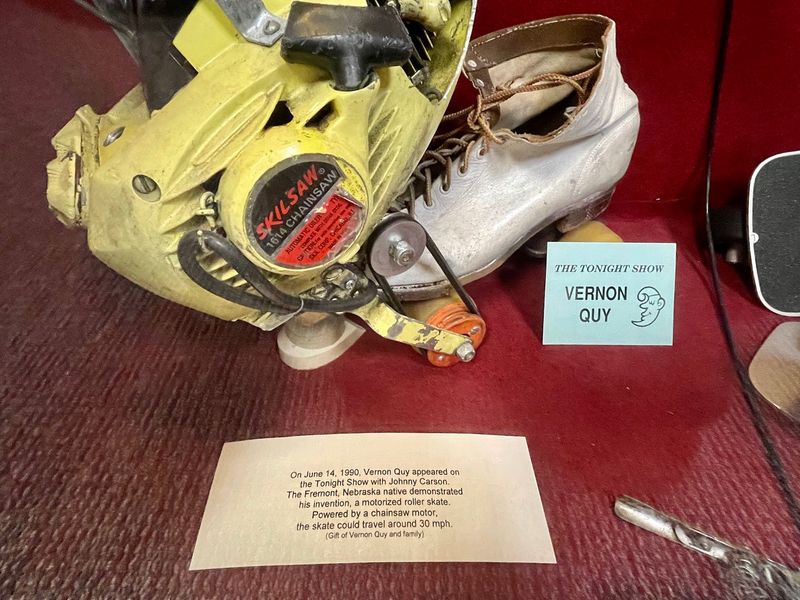
The collection includes skates reportedly designed for horses, birds, and bears, a lineup that sounds like a tall tale until you see the displays. They speak to an era when skating fever ran high enough to put wheels on just about anything.
Stilt skates stand nearby, lifting the wearer well off the ground. Staring at them, it’s hard not to picture a performer wobbling across a stage while the crowd holds its breath.
Not everything odd is ancient. A pair of skates worn by Usher during a performance proves that roller culture still has star power, and it sits comfortably alongside relics that predate electricity in most homes.
Oddities like these make the museum a hit with kids who might otherwise drift toward the exit.
Derby, Speed, Artistic, and Hockey Gear
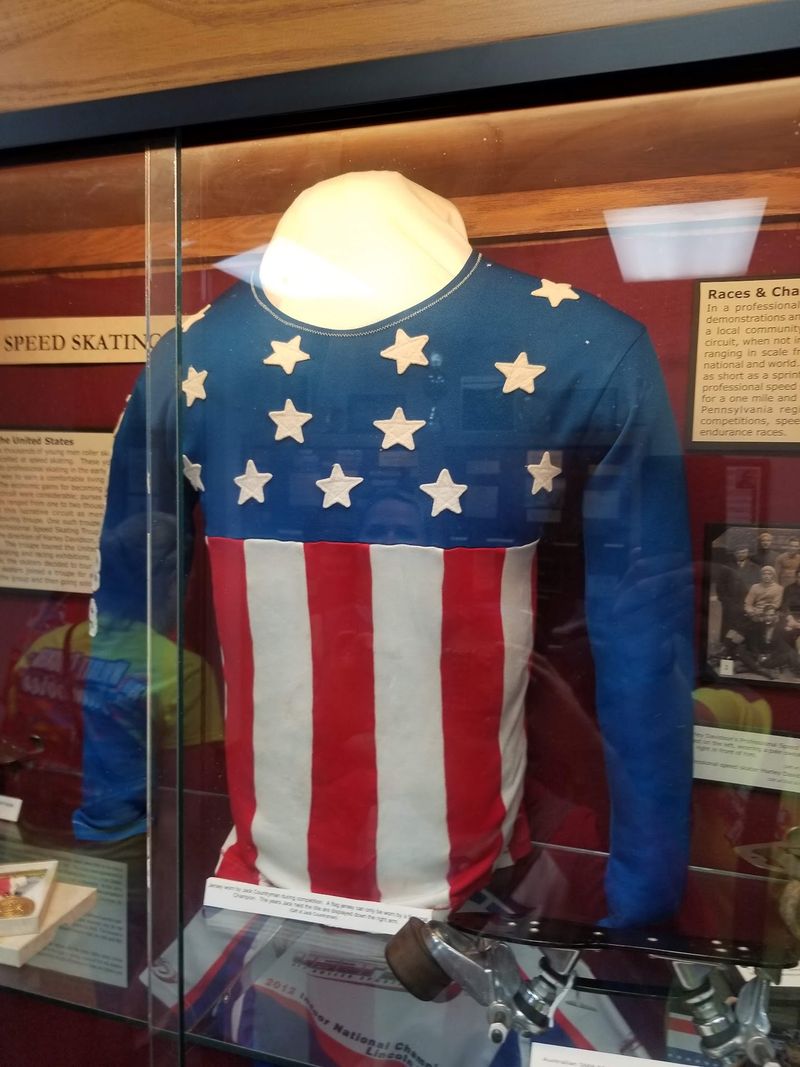
Roller skating splits into several competitive disciplines, and the museum gives each one its moment. Roller derby, artistic skating, speed skating, and roller hockey all have dedicated displays.
Team pins, promotional cards, and bold league logos bring derby to life, capturing the sport’s scrappy, do-it-yourself spirit. The derby display keeps growing as skaters from other leagues send pieces from their own teams.
Ever heard of Harley Davidson the speed skater? He has no connection to the motorcycle company, yet he earned a spot in skating history for his quickness on wheels.
Speed skating equipment looks lean and purposeful, while artistic costumes shimmer with sequins and flair. Side by side, the gear shows how one basic invention branched into sports with completely different goals.
Roller hockey rounds out the lineup with gear built for quick stops and sharp turns.
Anyone who plays one of these sports will probably spot a familiar name or piece of equipment. Newcomers get a crash course in how deep the competitive side runs, from local clubs to national titles.
It’s a lot of ground covered in a compact space.
Roller Disco, Movie Moments, and a Hammond B3 Organ
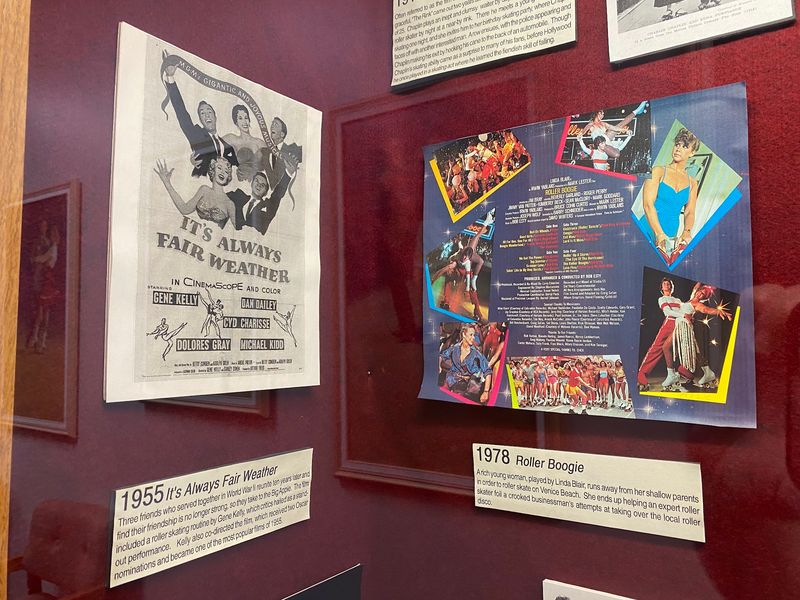
Glitter and mirror-ball energy define the roller disco portion of the museum, a tribute to the craze that turned rinks into dance floors.
Music and skating have been partners for generations. A Hammond B3 organ on display nods to the instrument’s role in providing live music at early rinks, long before DJs and sound systems took over.
Remember couples skate? For anyone who spent weekends circling a rink as a kid, the organ and the disco displays hit a nostalgic nerve.
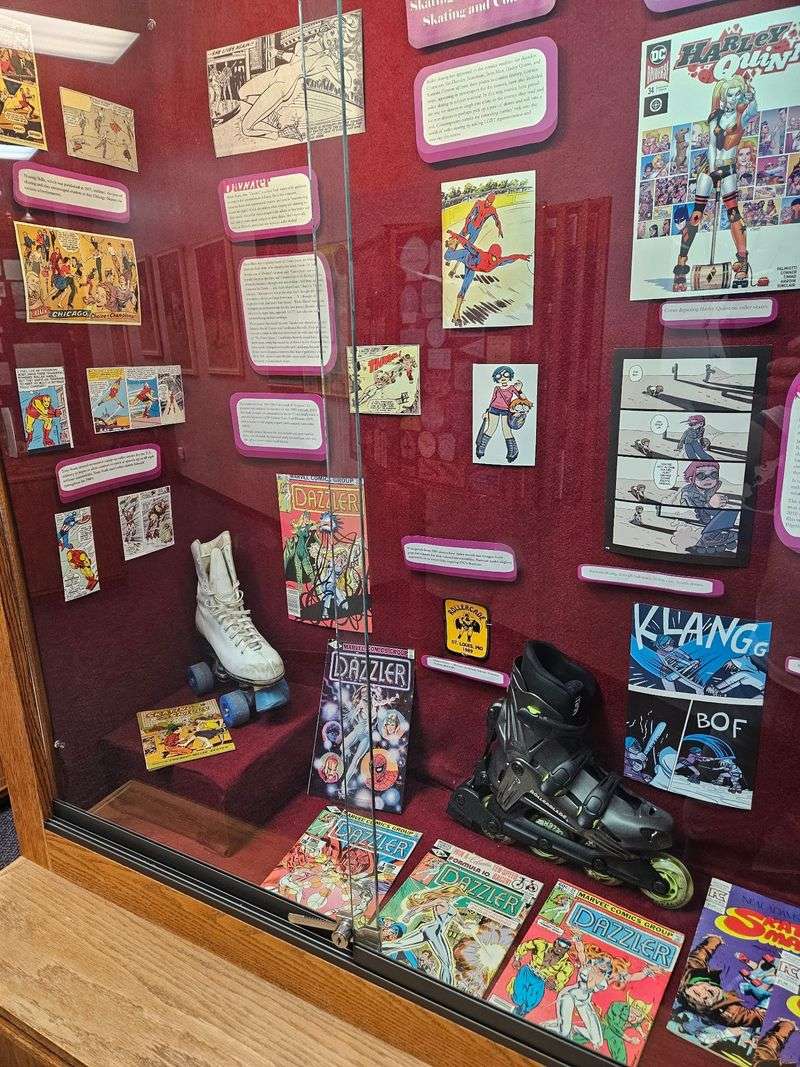
Skating was never just a sport. It showed up on movie screens again and again, and the museum tracks those film appearances alongside the athletic history.
A family walks past the organ, and a grandparent stops to explain what rink music sounded like decades ago. Moments like that happen easily in this corner of the building.
Postcards from old rinks across the country add another layer. Some show buildings long gone, while others capture places still spinning records today.
Taken together, this section explains why skating keeps coming back: it has always been tied to music, friends, and a good time.
Sequins, Uniforms, and a Wall of Old Photographs
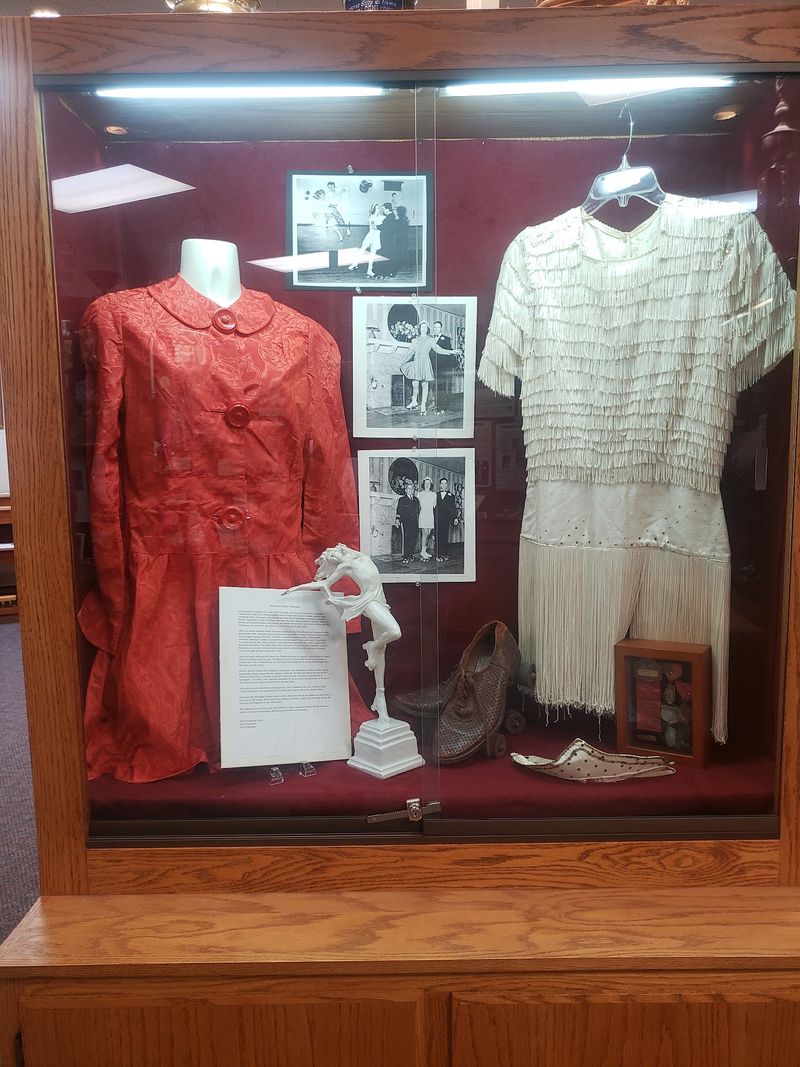
What did skaters wear before spandex? The costume collection answers that and much more, covering outfits for competition, performance, and plain fun.
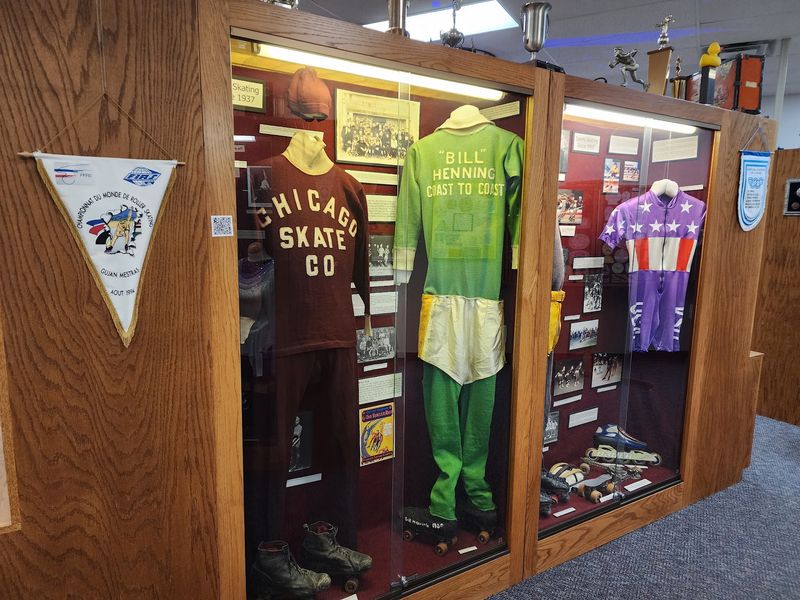
Sequined dresses, tailored uniforms, and team gear fill the cases, each piece tied to a particular era or discipline. The stitching and fabrics alone tell a story about how skating style changed over the decades.
Costumes are only one piece of it. The archive also holds films, artwork, and a large trove of photographs, many showing skaters and rinks from the early 1900s and even earlier.
Old photographs capture crowded rinks and posed club portraits, frozen moments from a time when skating was a social event.
A modern skater’s gear seems almost weightless next to the outfits of earlier generations. Comparing them makes the evolution easy to see, even for kids with no skating background.
Keep an eye out for small surprises in the displays. Advertising cards, pins, and souvenirs from programs like Derby Lite turn up alongside the headline pieces, and there’s a decent chance of spotting a rink or league from your own past.
Those personal connections are half the fun.
Moving at Your Own Pace With the Audio Tour
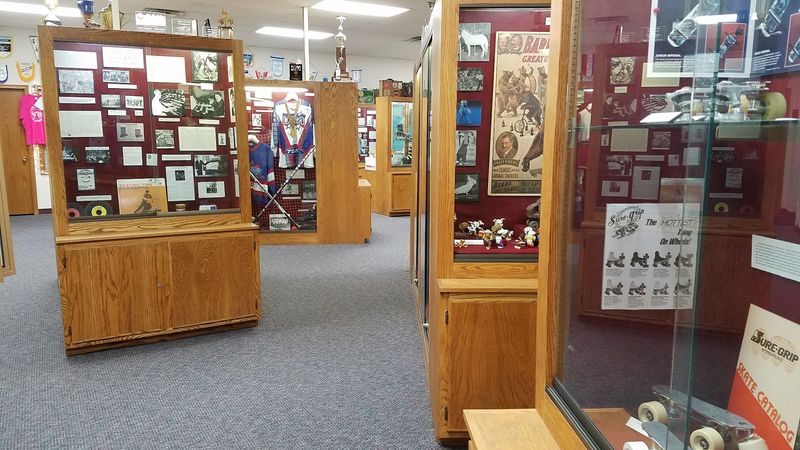
The museum is self-guided, so there’s no schedule to follow and no tour group to keep up with. Wander, backtrack, or park in front of a single case for ten minutes.
An audio tour plays on your own device, which means headphones are the one item to pack before leaving home. Tracks accompany the displays and add depth that the labels alone can’t cover.
Some segments run long, which suits devoted fans more than quick browsers. Skipping ahead is easy, and dedicated skaters get a thorough companion packed with names, dates, and backstory.
How long does a visit take? A quick pass runs about 30 minutes, though it’s easy to stretch that past an hour once the stories start pulling you in.
The staff brings deep knowledge and a friendly manner, often adding context no label could provide. The operation reportedly leans heavily on volunteers, which gives the place a personal, community-run feel.
The room stays calm and uncrowded most of the time, with the soft click of footsteps and the occasional recorded voice from someone’s phone. It’s an easy space to think in.
Who Gets the Most Out of a Visit
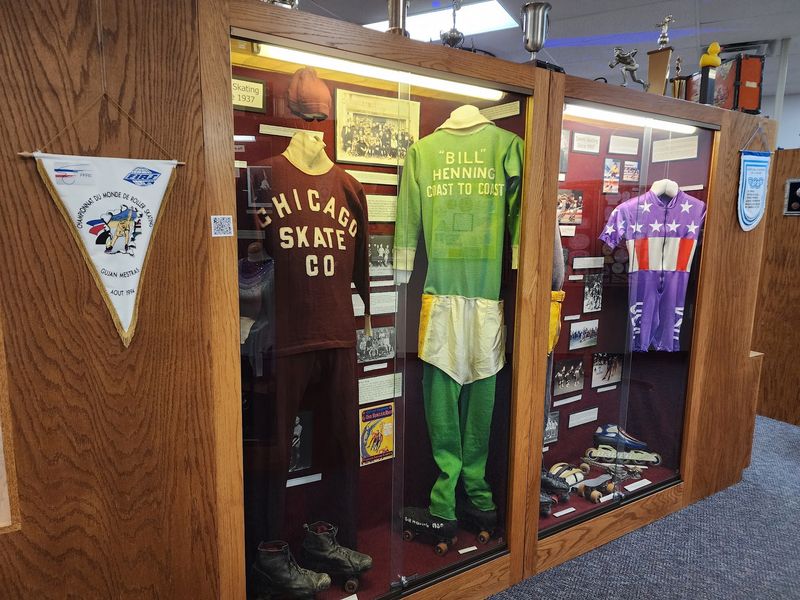
A retiree who skated every weekend in high school pauses at a case of vintage quads and starts telling stories to anyone within earshot. Moments like that sum up the audience here.
Anyone who skated as a kid will find plenty to enjoy. The museum works as a nostalgia trip for adults and a quirky learning outing for children, all without spending a dime on admission.
Traveling across Nebraska on Interstate 80? Lincoln sits right along the route, and the museum makes a smart leg-stretcher for families heading west toward Colorado or east toward Omaha.
Hardcore collectors and competitive skaters get serious value from the archive. Yet someone with zero skating experience can walk in cold and leave knowing who invented what and which animals were reportedly fitted with wheels.
Kids who get restless at bigger museums tend to do fine here, since the scale is manageable and the oddball objects hold attention.
It also fills a rainy afternoon or a cold winter day with something indoors, low-key, and easy on the wallet.
Hours, Parking, and Getting There
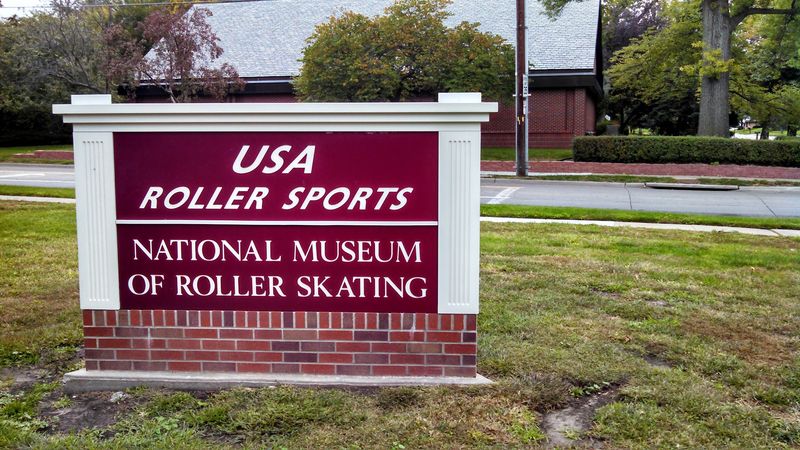
The museum sits at 4730 South Street in southeast Lincoln. Opening days typically fall midweek, with the doors open from late morning into the afternoon.
Posted schedules and real-world hours don’t always line up at a small, volunteer-supported museum, and the lineup of open days has shifted over the years. Checking the official website or calling ahead before a long drive saves disappointment.
Where do you park? Head around to the back of the building, where the free lot sits, since GPS directions tend to point toward the front entrance, which has no parking.
Admission costs nothing. A donation bin near the exhibits supports preservation work, and the small gift shop sells skating-themed items for anyone who wants a souvenir.
Arriving during a quiet stretch, you might need to flag down someone from the offices to ring up a gift shop purchase.
Plan on anywhere from 30 minutes to a couple of hours inside. Pack headphones for the audio tour, and toss a quarter or two in your pocket, since spare change comes in handy during the visit.
A Free Nebraska Stop That Rolls Past Expectations
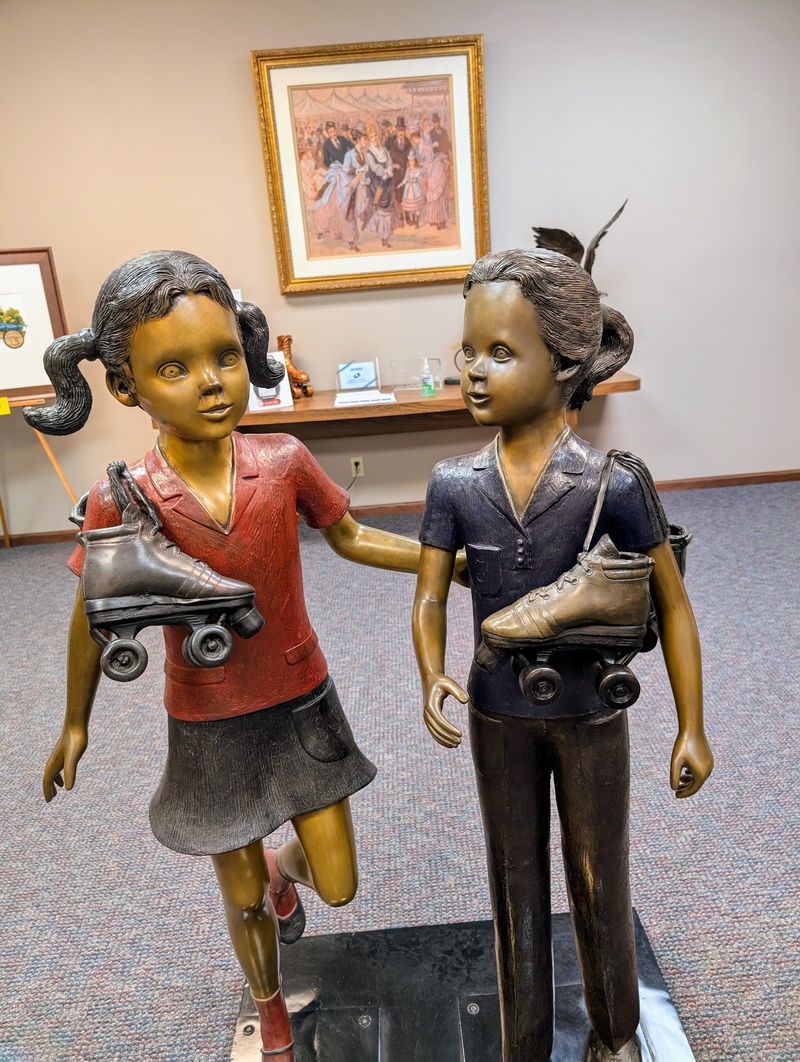
Plenty of attractions charge a hefty fee and deliver less. This one asks for nothing at the door and hands back two centuries of skating history, from an 1819 relic to modern gear built for today’s comeback.
What sticks after leaving? Probably the jetpack prototype, the animal skates, or the sight of Tara Lipinski’s early championship outfit, depending on who’s asking.
Nebraska rarely gets credit as a center of skating culture, yet Lincoln holds the world’s largest collection of roller skating artifacts. That alone makes the museum a point of state pride worth bragging about.
A family pulls into the back lot on a weekday afternoon, planning a quick look, and leaves an hour later arguing over which display was the strangest.
Donations keep the whole thing running, so dropping a few dollars in the bin helps ensure the next curious traveler finds the doors open and the cases full.
For former rink rats, current derby skaters, and kids who have never laced up a pair, the museum delivers a rich afternoon for little more than the price of a tank of gas to get there.